Malaysia’s LGBTQ Community Lives In Fear As Raids Drive Them Underground

Read more at South China Morning Post.

In Chow Kit, a crowded district of Kuala Lumpur forever caught between progress and prejudice, Amy* moves quietly through narrow alleys – a transgender outreach worker tending to lives the city prefers not to see.

Her evenings begin with small rituals: a backpack filled with condoms, test kits and pamphlets; a quick text to let her friends know that she is safe.

Then, when she steps out, much of her work happens in passing conversations – careful not to draw too much attention.

“The girls know they’re high-risk,” Amy said of the transgender sex workers she visits. “They want to stay healthy. But also … they just want to live.”

Yet even basic healthcare work can feel dangerous when you’re constantly looking over your shoulder. And furtiveness comes naturally if your very existence can be construed as a crime. Some of the women worry about being seen entering clinics for fear of who might recognise them.

“When people are scared to be seen, they stop showing up,” Amy told This Week in Asia. “Fear doesn’t just affect our lives; it affects public health.”

Malaysia does not legally recognise LGBTQ identities. Same-sex relations are federally banned under colonial-era anti-sodomy legislation, while parallel Islamic laws in Muslim-majority states prohibit cross-dressing and “posing” as another gender.

Such laws are often used not to intimidate as much as to prosecute. Over the years, Amy has watched how enforcement ebbs and flows – and how it always seemingly comes back stronger.

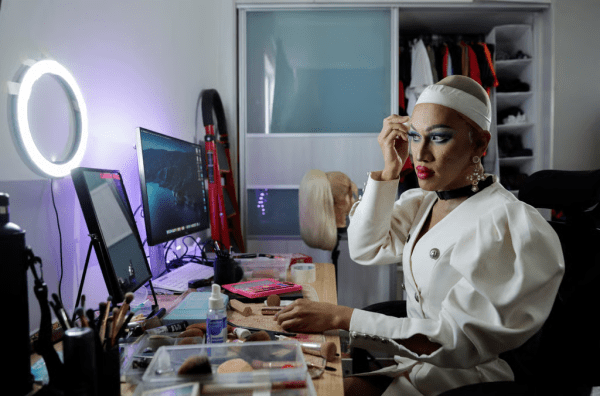
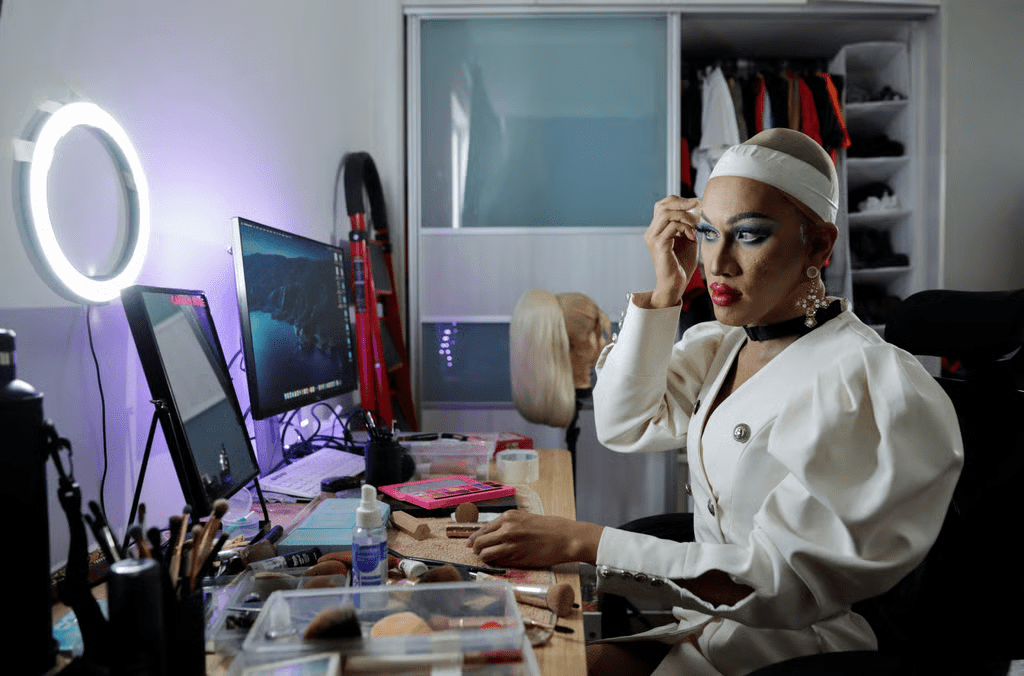
Few know that cycle better than Erina*, 55, a transwoman who spent decades performing in Kuala Lumpur’s drag circuit. She remembers when the scene was small but defiant, when glitter and high heels meant joy instead of danger.

“There was a time when we could perform without constantly looking over our shoulders,” she said. “It wasn’t easy, but there was space. That space has shrunk.”

The contraction feels literal now. Venues where she once worked have closed. Others stopped booking drag performers, terrified of raids. The most recent ones, on November 28 and 29, still ripple through the LGBTQ community. Police and religious officers stormed two men-only spas in Chow Kit and Penang, detaining hundreds.

It was the largest crackdown on queer spaces since a Halloween-themed party raid in 2022, activists say.

‘Shells of people’

Police later released the men who were rounded up in Kuala Lumpur, saying they had found no evidence of exploitation, coercion or “abnormal sexual activity”. Muslim detainees remained under investigation by Islamic authorities, however.

In Penang, the spa owner was fined 8,000 ringgit (US$1,960) after pleading guilty to owning obscene material and exposing others to HIV. Several other men were charged with offences ranging from gross indecency to possessing pornography.

For the community, the raids came as a shock. “People are now more afraid to go out,” Erina said. “Honestly, we’re not asking for special treatment … we’re asking to live without fear.”

Community groups rallied in support of the detainees. Members of Jejaka – a network supporting gay and bisexual men in Malaysia – gathered outside the police station in Kuala Lumpur where the men were being held, joined by volunteers, lawyers and family members calling for their release. They also pooled resources to provide legal aid, food and temporary housing.

In a statement, the group condemned the raids, arguing that the law used to justify them was “a relic of colonial morality” wielded to “target, stigmatise and endanger LGBTQ communities”.

“People are hiding,” said Pang Khee Teik, co-founder of LGBTQ organisation Seksualiti Merdeka (Sexuality Independence). Discriminatory laws had reduced members of the community to “shells” of people who “are navigating life with constant vigilance”, he said.

“It’s very sad to see that this is what we have done to our fellow Malaysians in the name of protecting ‘morality’.”

Amir*, a gay man in his twenties, remembers the brief sense of liberation he felt dancing in a club before what he called “the infamous raid”.

“It felt empowering,” he told This Week in Asia. “For a moment, I forgot I was in Malaysia. That’s how free it felt.”

Now, such gatherings are invite-only, with locations shared selectively through personal networks, often at the last minute. Amir says he has stopped going after the raids.

“This is Malaysia,” he said. “Hatred towards the LGBTQ community isn’t just normalised, it’s encouraged.”

Upholding morality

Authorities insist enforcement actions are necessary to uphold public morality. Days after the raids, members of the Malay nationalist group Pekida gathered outside one spa, plastering stickers and planting banners describing the venues as “immoral”.

Home Minister Saifuddin Nasution Ismail later said Malaysia might “revisit” certain provisions of its Penal Code, but only in ways consistent with “religious and moral values”.

Prime Minister Anwar Ibrahim has ruled out legal recognition of LGBTQ rights during his tenure.

Advocates say the result of the crackdown has been a deepening atmosphere of fear. In June, police raided what NGOs said was an HIV awareness event in Kelantan, calling it a “gay sex party”. Authorities have also cracked down on cultural symbols, seizing rainbow-themed Swatch watches and banning books deemed to “promote” LGBTQ lifestyles.

Through it all, Amy keeps walking her route through Chow Kit, never knowing when the next knock on a clinic door might provoke suspicion, or when a familiar face might vanish for weeks.

*Name changed to protect interviewee’s identity
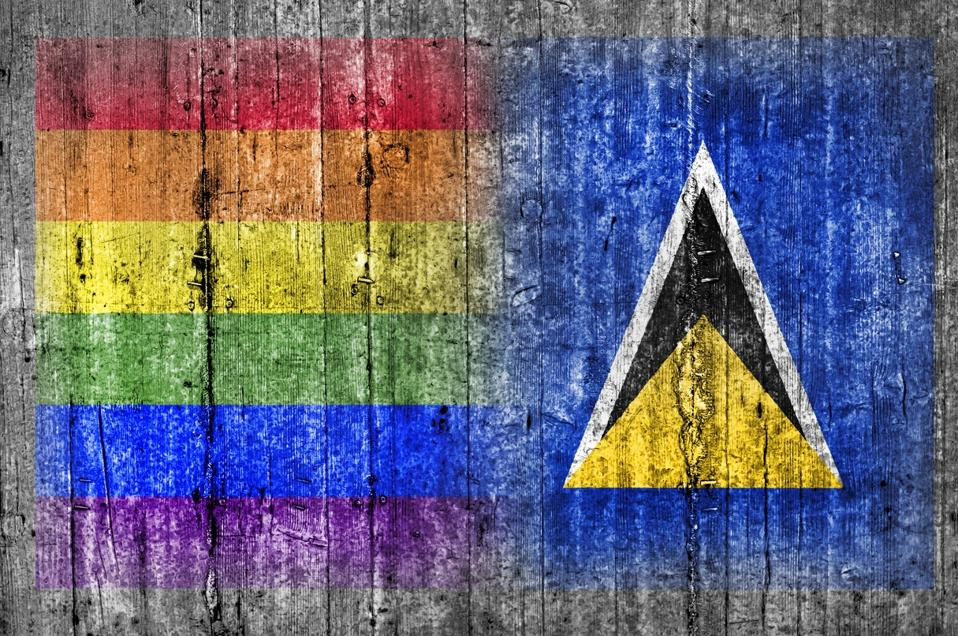
St. Lucia Strikes Down Colonial-Era Sodomy Law, Marking Major Win For LGBTQ Rights In The Caribbean

Read more at Forbes.

“These provisions… exacerbate, if not condone, the stigmatisation of homosexual persons in civil society and engender feelings of hostility fueled by persons who are inclined to take the moral high ground,” stated Eastern Caribbean Supreme Court Judge Shawn Innocent in his late July ruling striking down St. Lucia’s ban on same-sex intimacy.

The ruling coming down from the Heraldine Rock Building sparked swift, though not unanimous, reaction. The Caribbean’s LGBTQIA community celebrated the long-overdue victory, while religious conservatives issued dire warnings.

As Judge Innocent explained on the bench, many islanders and Caribbean citizens continue to navigate the fault lines between a dated colonial inheritance and a modern identity.

“It is the law itself which violates their constitutional rights,” Innocent’s ruling said. “They do not have to await prosecution under those sections to experience a violation. Without any equivocation, his liberty has been emasculated and abridged.”

The ruling made St. Lucia the latest in a growing list of Caribbean nations—including Barbados, Dominica, Antigua and Barbuda, and St. Kitts and Nevis—to decriminalize consensual same-sex relations through the courts. In doing so, it affirms what many legal scholars and LGBTQIA activists have long argued: that the region’s colonial-era sodomy laws are not just outdated, they are unconstitutional.

The win in St. Lucia comes at a time when the Caribbean LGBTQIA movement appears to not only be making progress in changing laws, but changing attitudes. This stands in contrast to the United States, where movement workers are fighting back against regressive measures, state-based legislation, and attempts by the Trump administration to gut federal civil rights protections.

For Glenroy Murray, St. Lucia’s policy change, part of a nearly decade-long strategy led by the Eastern Caribbean Alliance for Diversity and Equality (ECADE) and other local organizing groups, is the product of years of sustained advocacy.

“In the Caribbean, queer activists are saying: we deserve space, and we’re going to claim it—despite prevailing attitudes that have existed in this region for a long time,” said Murray, the Caribbean lead for Human Dignity, a legal advocacy organization that provides technical, legal, and communications support to queer organizations and governments worldwide.

What began as a debate among legal scholars, researchers, and grassroots LGBTQIA activists about the countries most ripe for a legal challenge to colonial-era sodomy laws has since evolved into a broad-based movement to decriminalize sexuality and fight for human rights across the region.

For the Caribbean movement, the struggle has been twofold: first, dismantling outdated “saving law clauses” that shield colonial-era statutes from constitutional challenge. Found in several post-independence constitutions, these clauses preserve pre-existing laws—even if they conflict with modern human-rights protections. In practice, they’ve made it far more difficult to overturn criminal statutes against same-sex intimacy. Activists argue that true equality cannot be achieved without dismantling these legal shields.

Compounding this are well-funded, transnational conservative movements determined to make LGBTQIA rights in the Caribbean harder to secure. Angelique Nixon, senior lecturer and researcher at University of the West Indies, St. Augustine Campus’ Institute for Gender and Development Studies, said that these actors, backed by U.S.-based evangelical and faith-based groups, frame equality as a Western imposition and deploy religious and moral rhetoric to stir cultural resistance.

“Globally, we’re seeing the rise of well-funded, transnational anti-rights movements that actively export homophobic and transphobic ideologies across borders, often under the guise of protecting traditional values or religious freedoms,” Nixon said.

“This transnational dimension makes our struggle particularly challenging,” she emphasized.

The American religious right has directly targeted the Caribbean: groups affiliated with the American Center for Law and Justice (ACLJ) have conducted legal training in Belize, while Alliance Defending Freedom (ADF) and other U.S. advocacy networks have bolstered local opposition to reform.

Meanwhile, Family Watch International—designated a hate group by the Southern Poverty Law Center—has expanded its regional influence, launching campaigns in Africa and elsewhere.

Earlier in 2025, Trinidad and Tobago’s Court of Appeal overturned a 2018 ruling decriminalizing consensual same-sex intimacy, citing its “saving law clause.” While the court reduced penalties from 25 years to five years’ imprisonment, it emphasized that only the legislature could fully repeal the provisions, a move Nixon warns will further endanger queer people.

“Without strong political leadership, these laws will stay in place and continue to justify stigma, discrimination, and violence—even if they’re not enforced,” Nixon said. “The mere existence of these laws creates a chilling effect. Legal ambiguity and inaction can silence LGBTQI+ people and make them more vulnerable.”

Murray underscored that these laws are rooted in colonial imposition. “Many of the laws against sodomy, buggery, and so-called ‘unnatural offenses’—in other words, laws criminalizing sexuality—were imposed across the Caribbean by the British,” he said. “In Jamaica, the law criminalizing intimacy between men dates back to 1864, and it remains in effect today.”

Quick not to lay all the blame on colonial powers, Murray added: “I won’t let Caribbean governments off the hook. They could have changed these laws a long time ago—there have been repeated calls to repeal them. In some cases, governments have not only retained these provisions but made them worse. And at times, there’s been a clear intentionality to keeps them in place.”

While legal reform remains paramount, organizers have also worked diligently to change hearts and minds—advancing broader issues like health equity, education, and housing.

In its fight against liberal American misconceptions about Caribbean homophobia, the movement’s organizing strategy has centered on balancing the region’s often-professed anti-LGBTQIA identity with lived experiences that are far more varied. Murray explained that this nuance does not discount the violence, displacement, and harm faced by LGBTQIA people, but it has remained front of mind for organizers.

“For a time, much of our culture was not pro-gay, but it still allowed for a type of existence,” Murray said. “Over time, as queer people became more visible, violence escalated—and that’s when the region became known for being homophobic.”

Despite stigma, advocates have advanced regional efforts like the Pan-Caribbean Partnership Against HIV/AIDS, housing access expansion, and educational equity.

“In general, our leadership across the region is clear: they don’t support discrimination,” Murray said “When we talk about housing, we make it inclusive. When we talk about healthcare, we make it inclusive. And that matters.”

Murray’s analysis came with a caveat.

“But on hot-button issues like discrimination protections or relationship recognition, leaders tend to be far more cautious—often because of misperceptions about voters,” he said.

Beyond policy and legal reform, organizers recognize that shifting public opinion is essential. A 2023 survey by the Equality for All Foundation/J-FLAG, Jamaica’s leading LGBTQIA rights group, found that 50 percent of Jamaicans support changing laws to ensure equal rights, a dramatic shift from 2018, when 69 percent predicted strong resistance.

This change, advocates say, stems from grassroots organizing, increased visibility of LGBTQIA people, and the political engagement of younger voters. Nixon believes the movement could benefit from even greater international support.

“We need solidarity rooted in care, justice, and long-term commitment,” Nixon said. “Effective support must go beyond symbolic gestures to include sustained material and strategic assistance. That means funding community-led initiatives, creating safe spaces for healing and organizing, and backing the grassroots work that makes all this possible.”

The Trump administration is poised to abandon LGBTQ individuals in Africa

This blog is originally appeared at Washington Blade American’s LGBT News Source

Ugandan officials have expressed support for the incoming U.S. president.

As the results of the U.S. presidential election were revealed on November 5, showing that former President Donald Trump had secured a second term, homophobic political leaders in Uganda celebrated 7,000 miles away, in the capital city of Kampala.

“The sanctions are gone,” said Anita Among, Uganda’s parliamentary speaker, addressing members of parliament. She was referring to her previous U.S. travel ban imposed by the Biden administration on June 16, 2023, after Uganda passed the controversial “Kill The Gays” law on May 28, 2023.

The law, officially named the Anti-Homosexuality Act, was signed into effect by President Yoweri Museveni on May 28, 2023. The legislation imposes life imprisonment for same-sex acts, up to 20 years in prison for “recruitment, promotion, and funding” of same-sex “activities,” and the death penalty for those convicted of “attempted aggravated homosexuality.”

As the results of the U.S. presidential election were revealed on November 5, showing that former President Donald Trump had won a second term, homophobic political leaders celebrated 7,000 miles away in Uganda’s capital, Kampala.

“The sanctions are gone,” said Anita Among, Uganda’s parliamentary speaker, referring to the fact that she had been barred from entering the U.S. by the Biden administration on June 16, 2023, following Uganda’s passage of the “Kill The Gays” law on May 28, 2023.

The law, officially called the Anti-Homosexuality Act, was signed into law by President Yoweri Museveni on May 28, 2023. It mandates life imprisonment for same-sex acts, up to 20 years in prison for the “recruitment, promotion, and funding” of same-sex “activities,” and the death penalty for those convicted of “attempted aggravated homosexuality.”

On May 8, Among declared that the law’s enactment proved “the Western world will not come and rule Uganda.” The following day, she tweeted: “The president … has assented to the Anti-Homosexuality Act. As the parliament of Uganda, we have answered the cries of our people. We have legislated to protect the sanctity of [the] family. We have stood strong to defend our culture and [the] aspirations of our people,” thanking Museveni for his “steadfast action in the interest of Uganda.”

Among further stated that Ugandan MPs had resisted pressure from “bullies and doomsday conspiracy theorists” and urged the country’s courts to enforce the new law. The passage of this bill, along with Among’s and other African homophobes’ celebrations of Trump’s re-election, indicates the likely direction for Africa’s LGBTQ+ community over the next four years.

For years, political and religious leaders across Africa, including both Christian and Muslim zealots, have exploited homophobia to consolidate political and religious power. They claim that same-sex relations and gay rights are foreign imports from the West and use homophobia to position themselves as defenders of African values. By stoking fear and division, they galvanize popular support and votes.

However, as others have pointed out, homophobia itself is a Western import, rooted in colonial history. From sodomy laws inherited from colonial rule to the parliaments passing these laws today, the tools used by homophobes in Uganda and elsewhere in Africa are themselves colonial legacies.

And homophobia in Africa is intensifying.

In mid-March 2023, Museveni told the Monitor newspaper that “Western countries should stop wasting the time of humanity by imposing their social practices on us.” Kenyan President William Ruto echoed these sentiments in the same month, declaring that “our culture and religion does not allow same-sex marriages.”

On April 2, 2023, Museveni called on African leaders to reject “the promotion of homosexuality,” claiming that homosexuality posed a “big threat and danger to the procreation of the human race.” He further asserted that “Africa should provide the lead to save the world from this degeneration and decadence, which is really very dangerous for humanity.”

On December 29, 2023, Burundian President Evariste Ndayishimiye, speaking in Cankuzo province, made a defiant statement that powerful nations “should keep” their aid if it came with an obligation to extend rights to LGBTQ+ people. He added, “If we find these people in Burundi, they should be taken to stadiums and stoned, and doing so would not be a crime.”

In Ghana, lawmakers have been debating the Proper Human Sexual Rights and Ghanaian Family Values Bill, which was introduced in August 2021. Under current law, same-sex relations are punishable by up to three years in prison. However, the new bill criminalizes even identifying as LGBTQ+, outlaws being transgender, and introduces jail sentences of up to 10 years for advocating for LGBTQ+ rights. It also mandates that all citizens report perceived LGBTQ+ individuals or activities to the authorities.

The bill passed in the Ghanaian parliament on February 28, though President Nana Addo Dankwa Akufo-Addo has not yet announced whether he will sign it, pending the outcome of two Supreme Court cases challenging its constitutionality. On July 17, the Supreme Court postponed a ruling on the bill until all legal challenges are resolved.

Former Ghanaian President John Dramani Mahama, a leading candidate in the upcoming elections, expressed his opposition to same-sex marriage and transgender rights. He stated during a meeting with clergy in eastern Ghana, “The faith I have will not allow me to accept a man marrying a man, and a woman marrying a woman.” He also rejected the notion of someone changing their gender, stating, “I don’t believe that anyone can get up and say I feel like a man although I was born a woman and so I will change and become a man.”

In Kenya, opposition parliamentarian Peter Kaluma introduced the Family Protection Bill in February 2023. The bill, which mirrors aspects of Uganda’s law, would impose prison sentences of up to 10 years or even the death penalty for same-sex relations. The bill is currently being reviewed by a parliamentary committee, with a full vote expected soon. President William Ruto, an evangelical Christian, has endorsed this legal crackdown on LGBTQI+ rights.

In Mali, the National Transitional Council, effectively the country’s legislature after a military coup in 2020, approved a new penal code on October 31 that criminalizes same-sex relations by 132 votes to one. The exact penalties for same-sex acts remain unclear, but the Justice and Human Rights Minister, Mamadou Kasogue, confirmed that “anyone who indulges in this practice, or promotes or condones it, will be prosecuted.”

Trump’s foreign policy advisors are already preparing an explicitly anti-LGBTQ+ rights agenda for his second term. The Project 2025 report, crafted under the guidance of the Heritage Foundation, proposes that the U.S. “stop promoting policies birthed in the American culture wars” and cease pressuring African governments to respect human rights, including LGBTQ+ rights, women’s rights, and abortion rights.

The report claims that “African nations are particularly (and reasonably) non-receptive to the US social policies such as abortion and pro-LGBT initiatives,” and suggests that the U.S. should focus on “core security, economic, and human rights engagement” without promoting “divisive policies that hurt shared goals.”

The implementation of this policy shift on LGBTQ+ rights in Africa will be overseen by Trump’s nominee for Secretary of State, Marco Rubio, and his selection for Assistant Secretary of State for African Affairs. They will be tasked with promoting and funding homophobic groups across the continent, a strategy that is expected to be pursued with enthusiasm.

While African leaders claim they are defending the continent from Western influences, they are in fact advancing their own agendas, often in partnership with right-wing Christian nationalists in the West. However, LGBTQ+ communities in both Africa and the West share a common interest in resisting these attacks, and civil society groups, along with human rights advocates, are increasingly active. As LGBTQ+ activist Eric Gilari from Kenya stated, “One day we shall defeat these assaults on our human rights and triumph in equality and inclusion for LGBTQ persons within African countries. This ideal must be our guiding light in this moment of darkness and tears.”

The Great LGBTQ+ Migration: Moving from Red States to Blue States and Beyond

This blog is originally appeared at Texas Pride Realty

In recent years, an increasing number of LGBTQ+ individuals have been relocating from red states to blue states, and in some cases, even moving abroad. This video examines the factors behind this migration, the challenges faced by those making the move, and the effects on both the states they leave and those they settle in. We’ll explore the political and social forces fueling this exodus, the economic impacts, and the potential long-term consequences for the LGBTQ+ community and society at large. Join us as we share the personal stories of those who have made this difficult decision and reflect on the communities they’ve left behind.

https://www.FleeRedStates.com
https://www.LGBTQWorldMap.com

Blog at WordPress.com.

Up ↑