

This blog is originally appeared at THEM.

Donald Trump triumphed over Kamala Harris early Wednesday morning in a presidential election marked by the Republican candidate’s anti-trans and anti-immigrant rhetoric.
On what may go down as one of the darkest days in U.S. history, a twice-impeached former president, who is both an accused rapist and a convicted felon, has been elected to the White House once again.
Donald Trump defeated Vice President Kamala Harris early Wednesday morning in an election dominated by the Republican candidate’s anti-trans and anti-immigrant rhetoric. Trump secured crucial battleground states—North Carolina, Georgia, Pennsylvania, and Wisconsin—after weeks of polling that showed him and Harris in a tight race.
“Trump was expected to declare victory even if he had lost, but his actual win now paves the way for what promises to be one of the most extreme presidential agendas in U.S. history. The consequences of another Trump presidency will be particularly dire for LGBTQ+ Americans, with his campaign platform outlining a full-scale assault on queer rights. On his 2024 campaign website, Trump vowed to implement a federal ban on gender-affirming care for minors and to redefine gender at the federal level, recognizing only male and female as legitimate genders—based solely on birth assignment. His platform also called for national “Don’t Say Gay” policies targeting LGBTQ+ students in schools and vowed to “keep men out of women’s sports.” Trump’s running mate, J.D. Vance, a former senator, introduced a bill that would imprison doctors who provide gender-affirming care to trans youth.
These policies would continue the trajectory of Trump’s first term, which was marked by a relentless assault on the LGBTQ+ community. Among the most significant actions were the ban on transgender people serving in the military, the removal of LGBTQ+ references from federal websites, the rollback of protections for trans students, and the opposition to workplace protections for LGBTQ+ employees. His administration also implemented a ban on people living with HIV from military deployment, disbanded the Presidential Advisory Council on HIV/AIDS, and cut global funding for HIV prevention and treatment.
During his 2024 campaign, LGBTQ+ Americans were once again bombarded with anti-LGBTQ+ messaging. Trump ran on a platform of staunch opposition to trans rights, supported by millions of dollars in ads from right-wing groups that portrayed the trans community as a threat to public safety and decency. One of the most widely circulated ads of the election cycle declared: ‘Kamala is for they/them. President Trump is for you.’ In his first and only debate with Harris, Trump made headlines by falsely claiming that she supported ‘transgender operations on illegal aliens in prison’—a statement LGBTQ+ advocates later clarified was a misrepresentation of the legal requirement to provide medically necessary care to incarcerated individuals. He also falsely accused Harris’ running mate, Tim Walz, of being ‘very heavy into transgender issues.'”
As advocates have consistently warned, the impact of Trump returning to the White House will be devastating for many vulnerable and marginalized groups. While Trump has repeatedly wavered on whether he supports national restrictions on abortion and contraception following the 2022 overturning of Roe v. Wade, his running mate, J.D. Vance, has made it clear that he ‘would like abortion to be illegal nationally.’ Trump has also floated the idea of defunding schools that teach the history and legacy of slavery, and he has persistently called for the disbanding of the Department of Education. Furthermore, his mass deportation agenda, aimed at expelling thousands of undocumented workers from the U.S., would reportedly cost the federal government millions of dollars each year.
In addition to these proposals, Trump’s allies—such as House Speaker Mike Johnson—have signaled plans to launch another attempt to repeal and replace the Affordable Care Act. This could jeopardize critical healthcare protections for seniors, pregnant patients, people with disabilities, and LGBTQ+ individuals, potentially leaving millions without access to vital services.
While it will be months before a second Trump administration fully takes shape, the public already has a clear sense of how he plans to govern. Throughout his volatile presidential campaign, Trump vowed to act as a dictator ‘on day one,’ promising to dismiss Jack Smith, the special prosecutor overseeing numerous criminal cases against him. In recent weeks, he has suggested using the National Guard to target American citizens, even fantasizing about journalists being shot, while repeatedly labeling those who oppose his fascistic views as the ‘enemy from within.’ Trump has also reportedly offered key positions in his administration to figures like Elon Musk and Robert F. Kennedy Jr.—the latter being an outspoken conspiracy theorist who has advocated for banning vaccines and removing fluoride from public drinking water.
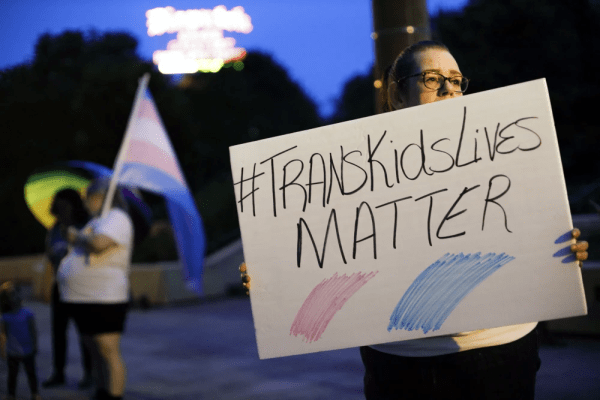
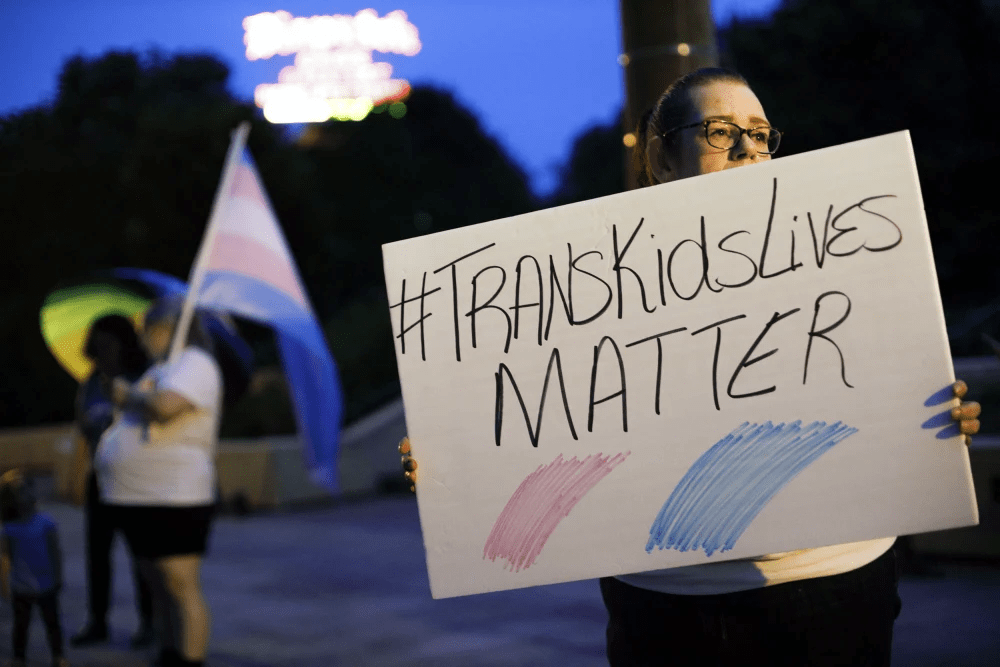
In response to the looming threat of a second Trump term, some LGBTQ+ U.S. residents—particularly families of trans youth—have already fled the country out of fear for their safety and well-being. However, many others who would be directly impacted by his policies will not have the privilege of leaving. As during his first presidency, LGBTQ+ advocates are expected to continue their fight through the courts, the legislature, and public protests, standing firm against a wave of harmful policies that threaten their rights and freedoms.
 fleeredstates.blog
You must be logged in to post a comment.