Under newly announced policy changes, the Ministry of Data and Statistics will recognise same-sex couples living in the same household in the Population and Housing Census.
The government confirmed on Tuesday (21 October) it would allow same-gender housholds to pick “spouse” and “cohabiting partner” options on the census, which circulates every five years.
Previous iterations flagged the options as errors and rejected, according to Rainbow Action Korea – a coalition of 49 LGBTQ+ organisations.
“In past surveys, couples of the same gender could not select ‘spouse’ even if they lived together as such. The system would return an error,” They said in a statement reported by Straits Times.
“This is the first step towards having LGBTQ+ citizens fully reflected in national data.”
Same-sex marriage is not currently legal in South Korea. As of 2023, cohabiting couples can receive spousal coverage under the National Health Insurance Service (NHIS).
A 2024 ruling upholding same-sex couple’s rights to access health insurance benefits was heralded as a “significant step” towards LGBTQ+ equality, with many arguing it paves the way towards legalising same-sex marriage.
The centre-left Justice Party similarly commended the government’s decision to update the census, arguing it could lead to “further change.”
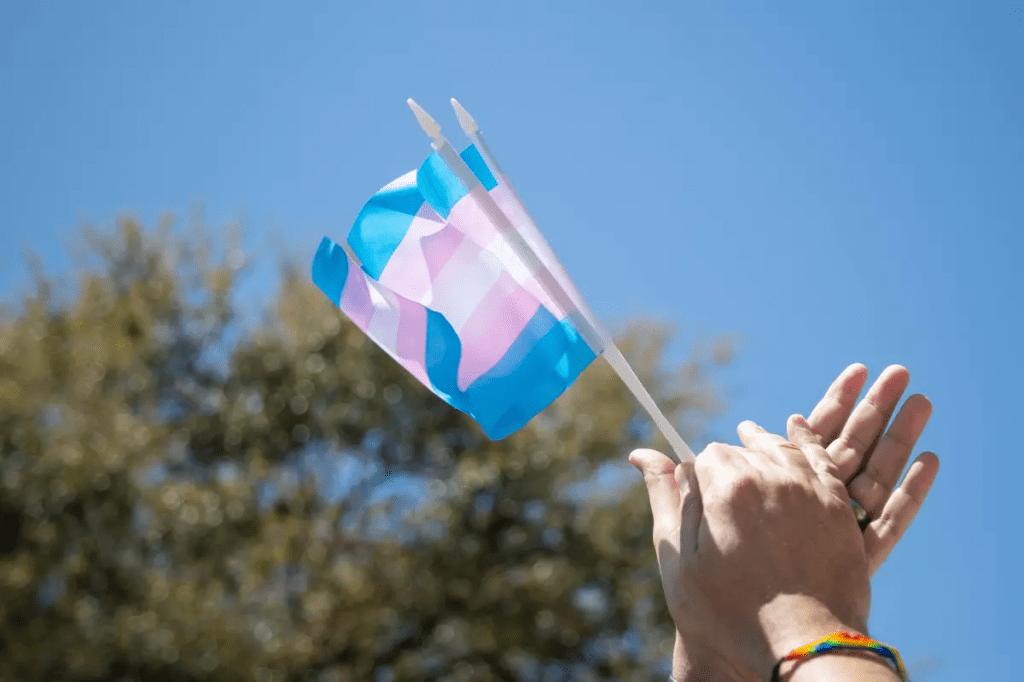
“The day will come when even transgender citizens are visible in national statistics,” a spokesperson continued.
LGBTQ+ rights progress remains slow in the East Asian country. LGBTQ+ people are banned from adoption and military service, while hate crime protections are non-existent.
While legally changing gender has been permitted without sterilisation since 2020, gender-affirming care remains heavily restricted.
An Ipsos survery found that, as of May 2025, 31 per cent of South Koreans are anti-LGBTQ+, while 51 per cent oppose same-sex public displays of affection.
Despite this, nearly a quarter believe the country is a “good place” for LGBTQ+ people.
Rainbow Action argued that, while the move was a positive step, the government hadn’t done enough to inform the public about the change which could limit participation.
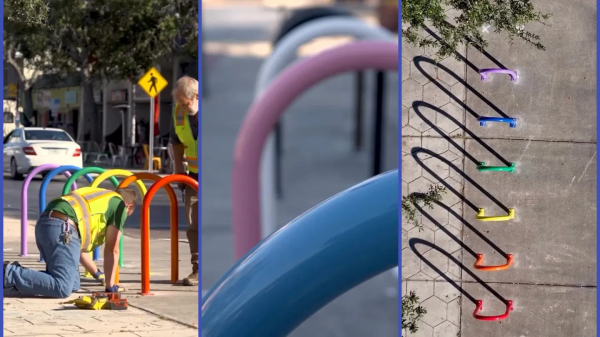
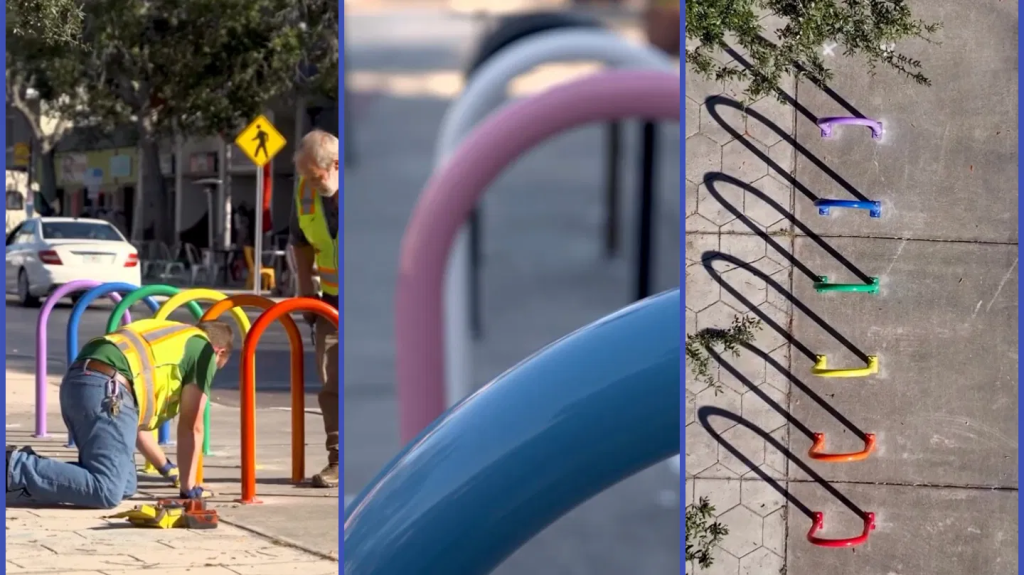
In response to Gov. Greg Abbott’s order that cities remove rainbow crosswalks, Oak Lawn United Methodist Church is painting its front steps in rainbow colors.
Oak Lawn United Methodist Church is a long-standing inclusive faith community in Dallas and a reconciling congregation.
The governor’s order claims that crosswalks are a distraction to drivers. However, studies have shown fewer accidents involving pedestrians happen in rainbow crosswalks.
For OLUMC, located at the corner of Oak Lawn Avenue and Cedar Springs Road which is the site of one of the crosswalks, church leaders say this act is not one of defiance, but of faith.
“It’s important because silence is not neutral — silence in the face of harm always sides with the oppressor,” said OLUMC Senior Pastor Rachel Griffin-Allison. “Painting our steps in the colors of the rainbow is a visible witness to the gospel we preach: that every person is created in the image of God and worthy of safety, dignity and belonging.”
In a written statement, the church’s leadership said it hopes the rainbow steps will serve as both a statement of solidarity and a sanctuary of hope for the LGBTQ+ community and allies across Dallas.
Members of the church, led by Robert Garcia Sr., began painting the steps on Tuesday morning, Oct. 21. Garcia said it would take four or five coats of paint before a non-slip sealer is added to preserve the rainbow.
Garcia said work on the steps should take about two weeks.
Major changes are underway in Houston’s Montrose neighborhood, where crews have removed the city’s rainbow crosswalks — long considered a symbol of Pride, remembrance, and unity.
By sunrise Monday, the bright colors at Westheimer and Taft were gone, replaced with fresh asphalt. Crews began work around 2:30 a.m., and by late morning, the intersection had reopened.
The removal follows a directive from Governor Greg Abbott calling on transportation departments statewide to eliminate what he described as “political ideologies” from roadways. That guidance traces back to a federal directive from the Trump administration earlier this year.
Tense overnight protests
As work began, dozens of protesters gathered near the intersection. Several were arrested just after 4 a.m. after standing in the street to block crews from starting the removal process.
“This is a memorial for someone who was killed in a hit-and-run,” said protester Ethan Hale. “This is more than just the LGBT community.”
Community members have long said the rainbow crosswalks were originally painted in honor of a person killed in that intersection years ago, giving them special meaning beyond Pride symbolism.
Another protester, Andy Escobar, said the directive was a distraction from real issues.
“We know we have some of the worst air quality, we have people disappearing in the bayous, we have urgent matters that need to be attended to, and we are wasting time on a distraction and a vilification of lesbian, gay, bisexual, trans people,” Escobar said.
Brenda Franco, another community advocate, echoed that frustration.
“This is just a distraction. We are wasting time and money,” Franco said. “We should be elevating our communities and amplifying the work that we’re doing here.”
City, METRO, and state responses
City officials confirmed the equipment used in the removal was provided by METRO, but as of Monday, the transit agency had not yet responded to KHOU 11’s request for comment.
Houston Mayor John Whitmire said the city was informed that the Texas Department of Transportation threatened to withhold federal funding if the crosswalks weren’t removed — a factor that likely accelerated the timeline.
The city councilmember representing the district, Abbie Kamin, said she was supposed to be notified before the work began but instead learned about it from residents who spotted the heavy equipment Sunday night.
Community reaction and history
This marks the second time in less than two months that the Montrose crosswalks have been removed. METRO previously stripped the paint for road repairs before it was repainted weeks later.
Many residents spent the night leaving Pride flags, flowers, and chalk art along the sidewalks — acts of defiance and remembrance for what they describe as a safe-space symbol that connected the Montrose community.
“Even losing the crosswalk doesn’t mean that the work we do ends,” said Kevin Strickland with Walk and Roll Houston. “It’s a beginning for us, not an end.”
What’s next
As of Monday afternoon, no official timeline has been shared for whether the intersection will remain asphalt or be repainted with a different design.
KHOU 11 has reached out to METRO and the Texas Department of Transportation for further comment.
U.S. Virgin Islands (USVI) Gov. Albert Bryan Jr. (D) submitted a bill to the legislature last year that would have allowed trans and intersex people in the territory to change the gender marker on their official documents. The measure didn’t advance past a committee hearing.
So, last Wednesday, the governor enacted the policy anyway by signing an executive order, making the change to USVI policy. His order marked the first instance ever of official recognition of trans people in the territory, according to Transitics.
“Virgin Islanders have reached out to our administration seeking a way to have their documents reflect who they truly are,” Gov. Bryan said in a statement following the signing ceremony. “This Executive Order provides a fair and compassionate process where none existed before. It ensures that our government recognizes and respects the lived realities of all our residents.”
Intersex Virgin Islanders and trans individuals with a court order stating they’ve had “surgical, hormonal, or other treatment for the purpose of gender transition,” can now easily revise the gender markers on both their birth certificates and government-issued ID cards.
The Virgin Islands counts itself as one of the friendlier territories for the trans community. It’s the only U.S. territory that prohibits discrimination based on sexual orientation and gender identity, and there have been no known attempts to restrict gender-affirming care in the USVI. There are no restrictions on trans student-athletes in girls’ sports in the territory’s schools, and no bathroom bans relating to gender identity.
Six states and no U.S. territories deny citizens the ability to change a gender marker on birth certificates, including Texas, Florida, Tennessee, Iowa, Kansas, and Oklahoma. That number drops to four for state IDs.
Revised documents on island will now use the term “gender” rather than “sex” for the new designations.
Under the new process, an individual aged 18 or older, or a parent or guardian on behalf of a minor, may request a gender marker change from the issuing agency in writing.
One of two alternative documents must accompany the request: a statement, “signed under penalty of perjury,” from a licensed healthcare provider who has treated or evaluated the individual, confirming they have an “intersex condition” and that a gender designation change is appropriate; or, a judicial order from the Virgin Islands or another jurisdiction granting a gender change designation may be submitted in lieu of a healthcare provider’s statement.
A requirement for a healthcare provider’s attestation that an applicant has had surgery or gender-affirming care was deemed unfair by critics of Bryan’s 2024 legislative proposal, who called it a burden on individuals lacking health insurance.
The governor noted his action aligns the Virgin Islands with at least 25 states, Puerto Rico, and the District of Columbia, which have adopted administrative procedures for amending gender designations on birth certificates, and more than 30 states, Puerto Rico, and D.C., which have similar processes for driver’s licenses.
“Our administration remains committed to fairness, dignity, and respect for every Virgin Islander,” Gov. Bryan added. “This Executive Order brings the Virgin Islands in line with modern standards of inclusion and ensures that all residents have access to accurate and affirming government identification.”
The Church of Norway apologized on Thursday to the country’s LGBTQ+ community for decades of discrimination, Reuters reports.
Presiding Bishop Olav Fykse Tveit acknowledged the church’s regret at the London Pub in Oslo, site of a shooting during Pride celebrations in June 2022. Two people died in the homophobic attack.
Tveit said the Evangelical Lutheran church, the largest denomination in Norway, had caused harm to gay people and thanked those who campaigned for change.
“The church in Norway has imposed shame, great harm, and pain,” the bishop said. “This should not have happened, and that is why I apologize today.”
A similar acknowledgment by the church’s bishops in 2022 addressed past discrimination, including a description of gay people by the Norwegian Bishops’ Conference in the 1950s as a “social danger of global dimensions.”
Seventy years later, same-sex couples can marry in the Church of Norway.
A service was scheduled to follow the bishop’s remarks at the Oslo Cathedral on Thursday evening.
The church’s acknowledgement of institutional discrimination follows several over recent years by other Christian denominations.
In 2023, the Church of England apologized for “shameful” treatment of the LGBTQ+ community. The Protestant church represents 85 million Anglicans worldwide.
“We want to apologize for the ways in which the Church of England has treated LGBTQI+ people — both those who worship in our churches and those who do not,” the bishops said in a statement.
“For the times we have rejected or excluded you, and those you love, we are deeply sorry. The occasions on which you have received a hostile and homophobic response in our churches are shameful, and for this we repent.”
At the same time, bishops have refused to allow same-sex marriages in Anglican churches. Just this week, bishops turned back plans to officiate discrete blessings for same-sex couples, although these can take place within routine church services.
In August, the United Church of Canada, the largest Protestant denomination in the country, acknowledged harms to the two spirit and LGBTQ+ communities in Canada.
“We have failed to celebrate and delight in all of your beautiful Creation. We have wounded people instead of seeking wholeness. We are sorry,” said the Rev. Michael Blair, the church’s General Secretary, in a message accompanying the official apology.
“We, The United Church of Canada, express our deepest apologies to all those who have experienced homophobia, transphobia, and biphobia within The United Church of Canada,” it read in part.
Those institutional expressions of regret have been accompanied by recent individual apologies by church leaders, many in the Catholic Church.
In January, Catholic Cardinal Wilton Gregory of Washington, D.C., issued a personal apology from the pulpit.
“I apologize for my own failure to emulate Christ’s compassion,” he said. “The way that we have treated our LGBTQ brothers and sisters has brought them tears, and to many of us, disgrace.”
“I apologize from the heart for the hurt that has resulted in the loss of so many of our family members who belong to God no less than I do,” he said.
Last year, a Catholic bishop in Germany apologized for the church’s mistreatment of LGBTQ+ people, encouraging congregants to be more supportive of equality and inclusion.
“We want to be a diocese that values diversity,” Bishop Stephan Ackermann said during what he called a “public confession.” The next month, Archbishop Heiner Koch of Berlin also apologized, labelling homophobia an “unholy line of tradition.”
In 2016, Pope Francis said in a gaggle with reporters aboard the papal plane that Christians owe apologies to gay people and others who have been offended or exploited by the church.
“I repeat what the Catechism of the Catholic Church says: that they must not be discriminated against, that they must be respected and accompanied pastorally,” Francis said.
“The Church must ask forgiveness for not behaving many times – when I say the Church, I mean Christians! The Church is holy, we are sinners!”
A formal apology from the Catholic Church has not been forthcoming.
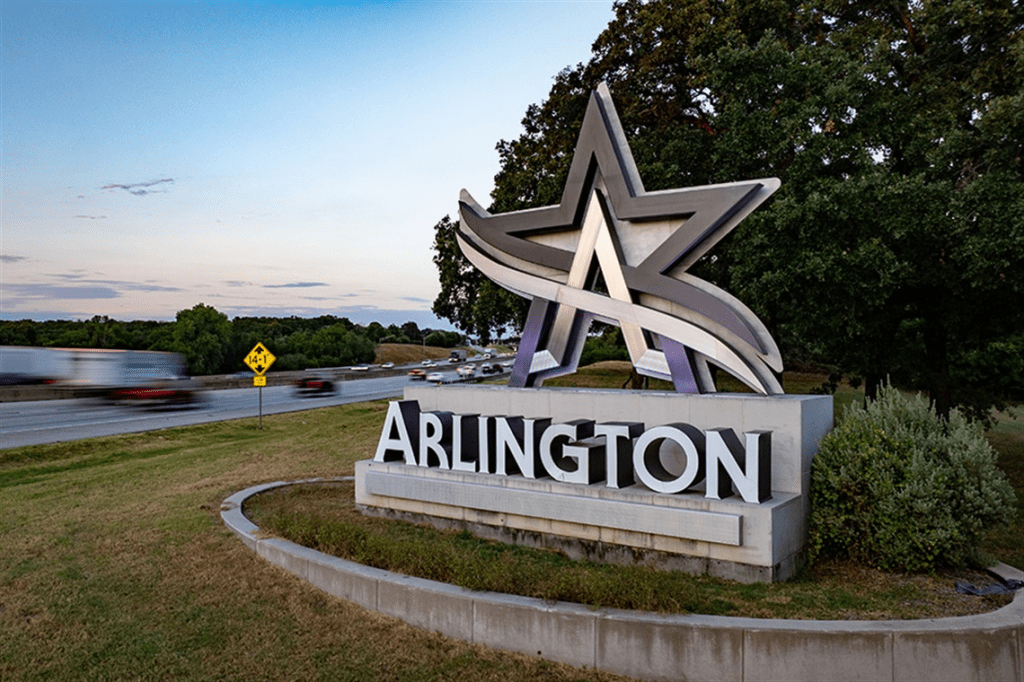
The Arlington City Council will consider removing protections for LGBTQ+ residents Tuesday as part of the changes to its anti-discrimination ordinance. In early September, the City Council voted to temporarily suspend the anti-discrimination ordinance until city staff could propose amendments to it removing specific diversity, equity and inclusion language. Had this not taken place, the city would be at risk of losing $65 million in federal grant money.
Tuesday night, the council will be presented with an edited anti-discrimination clause. The changes include deleting “Gender Identity and Expression” and “Sexual Orientation” from the definition of discrimination. But a leader in the LGBTQ+ community said the proposed change leaves a class of residents without local protections. Previously, the ordinance said discrimination is “any direct or indirect exclusion, distinction, segregation, limitation, refusal, denial, or other differentiation in the treatment of a person or persons because of a race, color, national origin, age, religion, sex, disability, sexual orientation or gender identity.”
If the council approves the amendments Tuesday, anyone experiencing discrimination due to their sexual orientation or gender identity will not be able to look to the city for help. DeeJay Johannessen, CEO of the HELP Center for LGBT Health and Wellness, said this is not necessary to keep grant funding. “Out of the 395 cities with sexual orientation, gender identity in their list of protected classes, not one other city is doing it,” Johannessen said. “In fact, historically, no city has ever removed sexual orientation from their list of protected classes. So Arlington would be the first.” When a municipality receives grants from the U.S. government, it enters into a contract with various stipulations on the allocation of those funds. Those contracts have been updated since President Donald Trump took office to prohibit “advancing or promoting DEI” in decision-making, City Manager Trey Yelverton said at the Sept. 2 meeting. In Fort Worth, the City Council voted to end diversity, equity and inclusion programs to protect federal funding in August. The city code still includes sexual orientation, transgender, gender identity or gender expression as protected classes from discrimination. Sana Syed, a spokesperson for the city of Fort Worth, said due to how the ordinance was written, “no changes were needed to adhere to new federal requirements and none are planned at this time.”
An attorney who Johannessen consulted with regarding Arlington’s proposed anti-discrimination code changes said removing sexual orientation, gender identity and gender expression as protected characteristics from the current ordinance “reflects a fundamental and profound misunderstanding of the law. “The inclusion of ‘gender expression’ in this list is somewhat telling, since the term does not appear in the Current Ordinance,” Daniel Barrett, the Fort Worth lawyer Johannessen consulted, wrote in a statement. “Its inclusion exposes the staff’s analysis of the situation as sloppy or, perhaps, based upon something other than legal considerations.” Under the original ordinance, if someone is made to leave an establishment because of their gender identity or sexual orientation, they could go to the city and file a complaint. With the exclusion of those kinds of discrimination in the amended ordinance, the only way to rectify the issue would be through the federal government, Johannessen said. Johannessen was part of the focus group who helped make gender identity and sexual orientation protected classes in Arlington’s anti-discrimination chapter in 2021. “It passed unanimously, and there was not even any public comment voting against it,” Johannessen said. “It sailed through. So that’s why it’s so surprising now that there’s so little push back about having to make this change, even if it was required for them to make this change, there’s no angst about it.”
The City Council will vote on the amendments at the 6:30 p.m. meeting on Tuesday.
Juan Viana recalls having a happy childhood in a Christian community in Bogotá but when he came out as gay at age 18, that all changed.
“Unfortunately, that community of support became a place of deep repudiation of who I really was,” said Viana, now 48.
His family took him to a center for ‘conversion therapy’ — aimed at changing a person’s sexual orientation or gender identity — on the advice of a psychologist.
“I was told that homosexuality was a disease, that it was caused by a demonic force that was going to destroy my family,” Viana said.
He said he went to the center willingly and stayed for months, thinking he was protecting his loved ones from destruction but found himself living in a nightmare.
“They break you in all senses: physically, mentally,” he said.
Several times he thought of taking his own life and tried once, he said.
“They were the darkest moments of my life,” he said.
Such traumatic experiences could become illegal in Colombia, where an estimated one in five LGBTQ people have undergone conversion therapy, according to the government’s Ombudsman’s Office.
Lawmakers are considering a bill to ban conversion therapy in the South American nation. Other countries where it is permitted include China, South Africa and the United Kingdom.
An unknown number of unlicensed rehabilitation clinics in Colombia and elsewhere in Latin America offer such therapy based on the idea that homosexuality, bisexuality and transgender identities are a mental illness that needs to be cured, rights groups said.
The World Health Organization removed homosexuality from its list of mental illnesses in 1990.
In Colombia, LGBTQ advocates have documented a range of conversion therapy practices that include humiliation, exorcism, food deprivation, electroshocks, waterboarding and rape of lesbian women.
The new legislation aims to criminalize the therapy in the conservative and Catholic country, where activists say faith is often used to mask the practices.
“We hope that more and more Colombians will understand that this is what the right to liberty, the right to intimacy and the right to having an identity looks like,” said Carolina Giraldo, a lawmaker for the center-left Green Alliance and a proponent of the bill.
Third time’s the charm?
Two previous proposed bans were defeated after conservative lawmakers and evangelical and Catholic groups mobilized in opposition.
They argued that a ban on conversion therapy could land priests and parents in prison, and some said LGBTQ groups wanted to turn children gay and trans.
Such a ban “infringes upon family autonomy by preventing parents from guiding their children,” said conservative senator Maria Fernanda Cabal after voting against last year’s bill.
From Brazil and Mexico to Spain and Vietnam, at least 17 countries have nationwide legislation in the works targeting the practice, according to ILGA-World, an international LGBTQ rights group.
LGBTQ activists in Colombia hope the third time is the charm.
“When we first started to talk about these practices, people just didn’t believe something like this could still happen in Colombia,” said Danne Belmont, executive director at GAAT, a Bogota-based trans rights group.
Belmont, a trans woman, said she was given testosterone as a child and underwent exorcisms in efforts to change who she was.
Advocates have altered their approach since the first bill was introduced in 2022, trying to broaden its appeal.
In the current rendition, the campaign is not only that LGBTQ people have “nothing to heal” but it asks their parents to “always love them,” Belmont said.
“This bill is aimed at Colombia’s families, at offering safe spaces where people can ask questions about their sexual orientation and gender identity,” she said.
Contrary to claims made by some Catholic lawmakers and ultra-Catholic groups, Father Carlos Guillermo Arias Jimenez of Colombia’s Bishop’s Conference said the latest bill does not contradict religious freedom.
“The church could not accept, nor has it ever taught, the practice of actions aimed at changing or reversing people’s sexual orientation,” he said.
Colombia’s Evangelical Confederation did not reply to several requests for comment.
In Congress, the bill passed its first reading in April with support from members of various political parties, but it must pass two more readings before next year’s elections.
Survivors, not victims
Belmont said trauma often prevents many LGBTQ people from realizing they have undergone conversion therapy until they hear stories from their peers.
A national network was set up in May of more than 50 people who have undergone conversion therapy to share their stories on social media and at events in hopes they will help others.
“Sometimes conversion therapy is a gradual, sophisticated process that mixes religion, spirituality and psychology that lays the ground,” David Zuluaga, 27, who was raised in the small town of Antioquia.
What started as manipulation and social isolation at age 12 turned into being hit in the stomach at age 14 to make him “vomit the spirit of homosexuality,” he said.
The conversion therapy lasted until he was 17, but it took him far longer to understand what had happened, let alone speak about it.
“Fear has to change sides. We used to be ashamed of having gone through this,” said Zuluaga, now an out gay man.
“But they should be the ones who are ashamed of having done this, of still doing this — mistreating, abusing and torturing people.”
According to research by the United Nations’ independent expert on LGBTQ rights, which has documented conversion therapy in at least 100 countries including Uganda, the Philippines and the United States, the practices leave deep physical and psychological traces.
“It broke my relationship with my family, with spirituality, with my body,” said Viana, who added that it has taken decades to rebuild bonds with his family, trust people and find love.
“Darkness needs to be total to exist. For light to exist, a single spark is enough,” he said.
“The work we’re doing is to multiply these sparks along the way… which we all light up together.”
In June 2025, the Supreme Court issued a landmark ruling allowing parents to opt out of classes that teach material conflicting with their religious beliefs. The decision, which could affect lessons on everything from evolution to cultural diversity, was driven primarily by challenges to classroom instruction about LGBTQ+ people. The case, Mahmoud v. Taylor, originated in Maryland’s Montgomery County School District—the state’s largest—which had previously required lessons on LGBTQ+ inclusion without permitting opt-outs. The ruling was celebrated by far-right activists as a major victory in a deep-blue state. But months later, the results are in: of more than 160,000 students enrolled, only 43 families chose to opt out of LGBTQ+ education districtwide.
In a report released on October 2, the Montgomery County School District approved just 58 opt-out requests from 43 families—under 0.03 percent of the district’s 160,000 students. In other words, 99.97 percent of families, even when given the option, chose to let their children learn about LGBTQ+ people.
The books targeted by the handful of families include Uncle Bobby’s Wedding, about the marriage of two gay men; Intersectional Allies: We Make Room for All, which features a genderfluid character; and Planting the Rainbow: Places of LGBTQ+ History in Maryland, which teaches about key moments in the state’s queer history.
For the families choosing to opt out, their children will be placed in separate classrooms or given alternate assignments when LGBTQ+ topics arise. The arrangement underscores a point the school district made during the court fight: creating entirely new materials for such a vanishingly small group is disruptive to classrooms and burdens teachers with unnecessary extra work—all to accommodate the religious beliefs of a tiny minority. Still, because of the Supreme Court’s ruling, those accommodations will now have to be made.
Meanwhile, in Republican-controlled states, officials have taken a far more oppressive approach to LGBTQ+ education. Rather than offering families the option to opt out, many states simply ban the material outright. Under “Don’t Say Gay or Trans” laws—first popularized in Florida and now enacted in 19 states—teachers are prohibited from acknowledging LGBTQ+ people in class instruction at various grade levels. In Texas, several colleges have gone even further, barring professors from recognizing that transgender people exist at all. When contrasted with the minuscule number of families opting out when given the choice, these policies look less like a reflection of public will and more like a top-down morality ban—one that would almost certainly be rejected if parents actually had the freedom to decide for themselves.
Anti-LGBTQ+ school policies remain among the most unpopular measures pushed by Republicans in red states and by the Trump administration. A Navigator Research poll published in August 2023 found that fewer than 25 percent of Democrats and independents—and only half of Republicans—named “protecting children from being exposed to woke ideologies about race and gender in school” as a major priority. Book bans ranked even lower: 92 percent of respondents said such bans were concerning. A more recent Knight Foundation poll echoed those findings, with two-thirds of Americans opposing efforts to restrict books in public schools.
Respondents from Montgomery County, Maryland expressed frustration and vindication after hearing the results of the opt-out process. “Every single one of these ‘anti-woke’ lawsuits and headlines comes from one or a few people making a stink,” said one commenter in a local subreddit dedicated to the county. “Imagine living in Montgomery County and thinking you can opt out of cultural diversity,” said another.
“It looks like most were from elementary schools, but there’s a few from middle schools and two from a high school. Can you imagine what these students’ classmates will think of them?” added a third.
The Supreme Court’s decision is just the latest example of how religious exemptions are being weaponized to roll back civil rights under the guise of “freedom.” Each new ruling gives a single person the power to disrupt an entire classroom, claiming that their beliefs are incompatible with learning about LGBTQ+ people, racial diversity, or any worldview outside their own. These carve-outs have already spread far beyond schools—empowering business owners to deny service to queer customers and pharmacists to refuse medication. But the data out of Montgomery County, Maryland makes one thing unmistakably clear: this crusade is not a mass movement. It’s the obsession of a vanishingly small minority, inflated by a Republican Party that has turned resentment of diversity—and especially of LGBTQ+ people—into the centerpiece of its politics.
In Iran, where being gay can carry the death penalty and the idea of marriage equality is an abomination, gender transition-related medical care has long been a booming business serving locals and foreigners alike.
Part of the Islamic Republic’s expertise in the field comes from 40 years of forcing gay people to choose between transitioning and death.
But now, in a desperate search for currency in the cash-strapped country, the government is luring patients from around the world with steep discounts and luxury lodging, The New York Times reports.
Crippled by war and economic sanctions, Iran has launched a PR blitz promoting its expertise to a global audience, luring foreigners with trans-themed packages including budget-conscious surgeries, luxury hotel stays, and sightseeing tours.
Iran’s theocratic government has set a goal of generating more than $7 billion from medical tourism annually, according to Iranian state news media, a seven-fold increase over a year ago.
In addition to nose jobs and hair transplants, glossy brochures and a social media campaign are offering vaginoplasties, mastectomies, and penis constructions for a song.
“We handle everything from start to finish, providing the best medical services to ensure a stress-free experience,” said Farideh Najafi, the manager of two medical tourism companies. “This includes booking hotels, hospitals, transportation, and more.”
According to one operator, while the cost of comprehensive surgery in the U.S. could be “around $45,000, and in Thailand, it’s approximately $30,000,” patients can pay “less than $12,000” in Iran. A government hospital stay can go for as low as $4,500.
The cut-rate prices are luring patients from wealthier countries like Australia, the United States, and Europe, according to medical tour operators and surgeons, despite the dark backdrop to the country’s transgender expertise.
Many gay and lesbian Iranians who are not trans are “pressured into undergoing gender reassignment surgery without their free consent,” according to a United Nations Human Rights Council report issued in March, and the alternative can be execution.
Amnesty International says more than 5000 gay people have been put to death in the Islamic Republic since the Iranian Revolution in 1979. Public flogging is even more common.
A British Home Office report in 2022 found that roughly 4,000 people underwent transition surgery each year in Iran, compared to just under 13,000 in the U.S. in 2020, which has a population four times greater. The vast majority of patients come from inside Iran, experts say.
The extraordinary number has its basis in a fatwa issued by Ayatollah Khomeini, the founding supreme leader of the Islamic Republic. He declared in the 1980s that transgender individuals could gain legal recognition of their identifying gender on the condition that they underwent transition surgery.
The volume of surgeries has come with a questionable safety record. A 2015 U.N. report described botched procedures like “abnormally shaped or located sexual organs.” Some activists have likened the country’s gender clinics to “butcher” shops.
Raha Ajoudani, a 20-year-old trans woman and activist, fled Iran rather than submit to a forced transition.
“I never wanted to undergo gender reassignment surgery,” she said. “I’ve defined myself outside of this binary. I didn’t want to live according to the governmental definition of cultural expectations of being a woman or a man, nor did I submit to Khomeini’s fatwa.”
Eric, a 45-year-old trans man living in Canada, did take advantage of Iran’s expertise in the field, but acknowledged competing feelings over his choice and the plight of gay people in the country.
“I have heard a lot, especially among trans women, that because they are gay, and they cannot be gay in Iran, they try to do the surgery,” he said. “I’m really sad that gays and lesbians are not recognized in Iran, but on the other hand, I’m happy for trans people because they can do what they’re willing to do.”
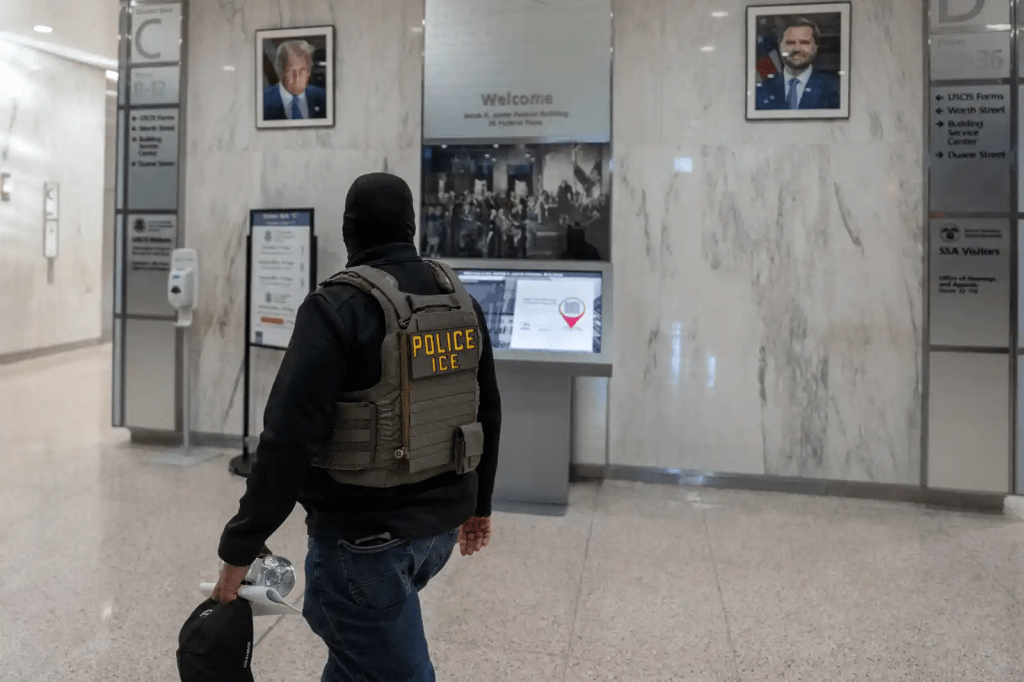
On Friday, the Trump administration began massive layoffs throughout the Department of Health and Human Services (HHS). As part of that, they completely removed the Office of Population Affairs, which was responsible for a wealth of public health programs, including specific initiatives for the LGBTQ+ community.
“This wasn’t a budget decision — it was ideological,” a former member of the Biden administration told The Advocate. “These are the programs that centered reproductive and queer health, and now they’re gone.”
Donald Trump has welcomed the government shutdown as an opportunity to cut what he has called “Democrat Agencies” to shrink the government. The process is being led by Russ Vought, the head of the Office of Management and Budget (OMB) and key author of Project 2025, which advocated for such cuts. However, he has also tried to blame those government cuts on the Democrats.
Vought took to X/Twitter on Friday to announce the start of the “Reduction in Force,” or RIF. His office confirmed via Politico that federal employees were being permanently fired, not temporarily furloughed for the duration of the shutdown: “Can confirm RIFs have begun and they are substantial. These are RIFs, not furloughs.”
Adrian Shanker, who served as deputy assistant secretary for Health Policy during the Biden administration, told The Advocate that while the Office of Population Affairs often had its programs politicized, this is “the first time that the office itself is being cut.”
The Office of Population Affairs manages a huge range of public health initiatives. Those include Title X family planning services and grants; programs for adolescents that cover issues such as pregnancy prevention, mental health, and substance abuse; the Embryo Adoption Awareness and Services program; screenings and treatment for sexually transmitted infections and information on preventing the spread of HIV; and LGBTQ+ health initiatives, including information on gender-affirming care.
As well as restricting programming targeted specifically at the LGBTQ+ community, these cuts will restrict access to family planning programs that LGBTQ+ people are more likely to make use of to grow their families.
The cuts to the Office of Population Affairs will leave us lacking when it comes to sex education and with less support for LGBTQ+ youth, Shanker noted, saying it “leaves us more vulnerable to health inequities and worsened health outcomes.”
Wider cuts to the HHS will have broader effects as the CDC is losing over a thousand employees, including the elimination of entire departments. “CDC is over. It was killed,” said Dr. Demetre Daskalakis, the out gay former director of the CDC’s National Center on Immunization and Respiratory Diseases, after 1000 scientists, doctors, and public health officials were fired from HHS on Friday. Daskalakis, an infectious diseases expert, resigned in protest of the administration’s war on science-based public health earlier this year.
“This administration only knows how to break things. They have made America at risk for outbreaks and attacks by nefarious players. People should be scared.”
Previous federal layoffs have been litigated in court, with some resulting in court rulings that the people cannot be fired, while other courts have allowed the dismissals to proceed. That process, if it occurs here, will take time, during which public health will suffer a setback.
“Without these people in place, it’s unlikely that a lot of these programs will be able to continue even after the government reopens,” predicted Shanker.
You must be logged in to post a comment.