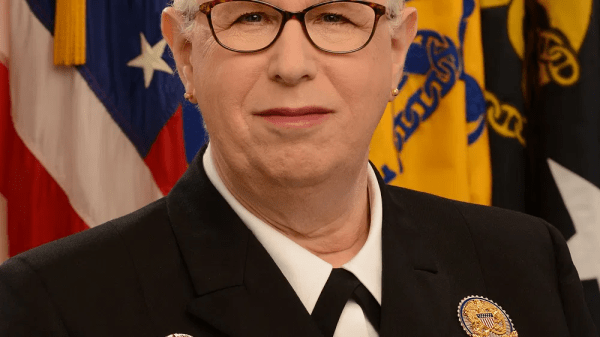
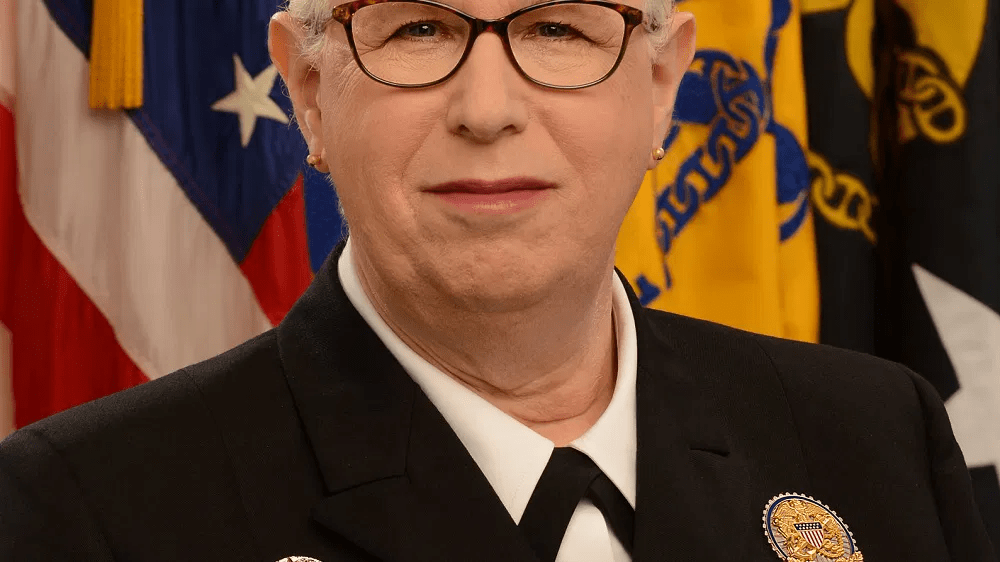
The Department of Health and Human Services (HHS) has altered the official portrait of Adm. Rachel Levine, the out transgender former assistant secretary for health under President Joe Biden, to display Levine’s deadname — a needless act of transphobia that Levine has called “petty.” Her portrait hangs in the HHS office alongside those of other federal officials who have led the U.S. Public Health Corps.
“During the federal shutdown, the current leadership of the Office of the Assistant Secretary for Health changed Admiral Levine’s photo to remove her current legal name and use a prior name,” Levine’s spokesperson Adrian Shanker, former deputy assistant secretary for health policy under Biden, told NPR. Shanker called the move an “unprecedented” act “of bigotry against her.” Though Levine said, “I’m not going to comment on this type of petty action.”
When asked about the alteration, HHS spokesperson Andrew Nixon told the aforementioned news outlet, “Our priority is ensuring that the information presented internally and externally by HHS reflects gold standard science. We remain committed to reversing harmful policies enacted by Levine and ensuring that biological reality guides our approach to public health.”
An anonymous HHS staffer told NPR that they considered the change “disrespectful,” adding that it exemplifies “the erasure of transgender individuals by this administration.” Upon taking office, the president issued numerous executive orders denying all federal recognition of trans people and kicking trans people out of the military for being selfish, dishonorable, deceitful, and undisciplined.
Levine was the first out trans person to receive Senate confirmation. On October 19, 2021, became the first out trans four-star officer in the U.S. Public Health Service Commissioned Corps, a noncombatant service of the nation’s eight uniformed services which promotes public health and safety. She resigned on the current president’s first day in office.
The current assistant secretary for health is Adm. Brian Christine, MD, who was appointed in November.
When the full schedule was confirmed the next day, Vancouver was selected for New Zealand’s clash with Belgium, leaving Seattle with the awkward situation of its “Pride Match” featuring Egypt and Iran — two nations with atrocious LGBTQ human rights records.
Both Egypt and Iran criminalize gay relationships. In Iran, capital punishment is still the maximum penalty under the law.
According to the Human Dignity Trust, there is evidence in recent years of the enforcement of their respective laws in each of the two nations.
A match between countries that vociferously oppose Pride presents a complex scenario for Seattle organizers, who have set up a Pride Match Advisory Committee (PMAC) to “shape the communications, community activations, and cultural programming” for the festivities.
With Lumen Field hosting six World Cup fixtures in total, there might have been scope to alter the Pride Month plans.
However, the USMNT’s match with Australia on June 19 has already been designated to mark Juneteenth, while the other group matches in Seattle on June 15 and June 24 feature either Egypt or Qatar, which is another country that imprisons gay people.
There will also be a round-of-32 game featuring the winner of Group G at Lumen Field on July 1, and a last-16 match on July 6.
World Cup Pride Match with Egypt and Iran could be ‘good thing’
Despite the obvious challenges, Seattle FWC26 have indicated they will proceed with their plans for the Pride Match on June 26.
In a statement provided to Outsports, a spokesperson for the PMAC said: “The Pride Match has been scheduled to celebrate and elevate Pride events in Seattle and across the country, and it was planned well in advance.
“It is a Host City–led expression of Seattle and Washington State’s commitment to creating a welcoming and inclusive environment where everyone belongs: players, fans, residents, and visitors alike.
“Soccer has a unique power to unite people across borders, cultures, and beliefs. We are honored to host a Pride Match and to celebrate Pride as part of a global football community. This match reflects our ongoing commitment to respect, dignity, and unity for all.”
Eric Wahl, the brother of the late soccer journalist Grant Wahl, is a member of the Seattle PMAC. He is an advocate for public health and human rights, an out gay man, and a public speaker.
Following the fixture announcement, Wahl said on social media that the match-up of two countries where it is illegal to be gay is actually a “good thing” for the Pride Match.
City organizers do not want to pass up the opportunity to send out a strong message of welcome to LGBTQ people everywhere, having stated that with “hundreds of thousands of visitors and billions of viewers worldwide, this is a once-in-a-lifetime moment.”
Hedda McLendon is Seattle FWC26’s Senior Vice President of Legacy. She told Outsports that organizers are “working with small businesses so the region’s LGBTQ+-owned enterprises are ready to benefit from the tournament’s unprecedented visitor surge.”
Katie Wilson, the Democratic mayor-elect of Seattle who will assume office on Jan. 1, expressed similar hopes on social media after Saturday’s fixture confirmation. She referred to the Juneteenth and Pride themed matches, saying: “We get to show the world that in Seattle, everyone is welcome. What an incredible honor for our city!”
Created by local artists from Washington State, the designs capture “Seattle’s identity as a diverse, inclusive community and a leader in LGBTQ+ rights,” according to organizers.
It is understood that the PMAC’s preparations are not being made in conjunction with FIFA. On a webpage carrying information about the Pride Match Design Contest, a disclaimer stated that the creation “is not affiliated with or endorsed by FIFA.”
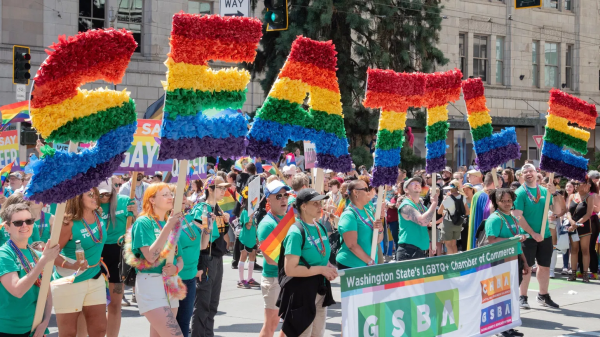
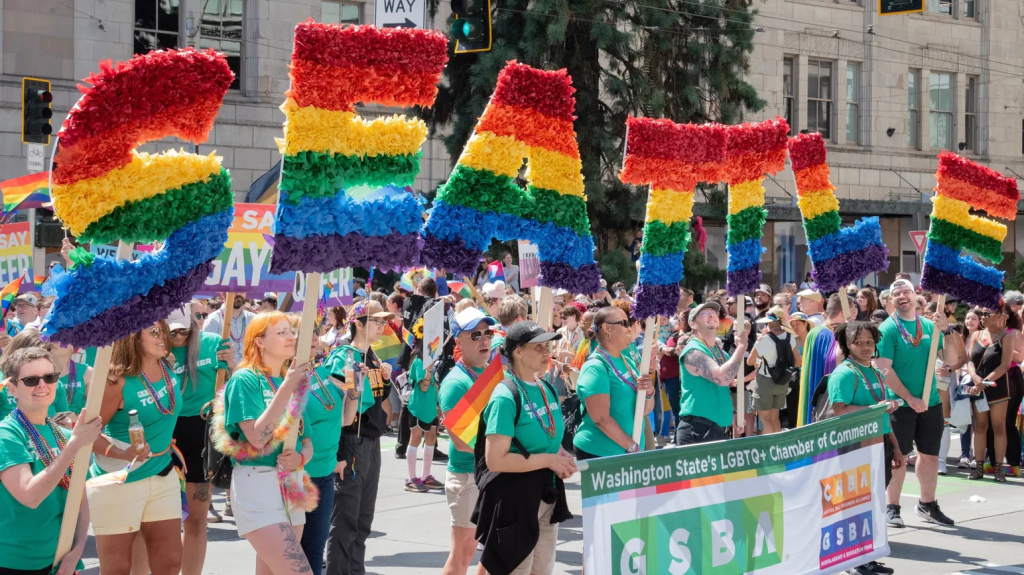
Seattle’s local organizing committee for World Cup 2026 has been preparing to stage a historic “Pride Match” at Lumen Field on June 26, the Friday of Pride Weekend. The themed fixture would be the first of its kind at a FIFA World Cup. The anniversary of the Stonewall riots is on June 28.
A few were even temporarily detained and harassed while being questioned about the items, including Grant Wahl. The journalist was told by guards to remove his T-shirt at a stadium and later reported on his distressing experience.
In recent days, a coalition of groups and organizations including the Sport and Rights Alliance has raised serious concerns about FIFA’s approach to human rights at World Cup 2026, including on the issue of LGBTQ safety.
As part of this, Athlete Ally ambassador Matt Pacifici, a former pro goalkeeper with Columbus Crew who came out publicly as gay in 2019, has criticized FIFA’s lack of anti-discrimination messaging at last summer’s Club World Cup tournament in the U.S. and also called for “enforceable protections” for LGBTQ players and fans.
Outsports has approached FIFA for comment, but by the time of publication, no response had been received.
Missouri State Sen. Joe Nicola (R) introduced a bill that would ban “social transition” in schools and forcibly out any transgender and nonbinary students to their potentially unsupportive parents if the students ask a school staff member to address them by a name or gender identity different from the sex assigned to them at birth.
The bill would also allow teachers to be fired and banned from teaching, as well as schools to be sued for affirming trans and nonbinary students’ gender identities, even if a parent approves of their child socially transitioning.
S.B. 1085, one of 21 anti-LGBTQ+ bills recently introduced by Missouri State Republicans, requires school staff members to inform the principal or a designee within 24 hours if any student asks them to “participate in or support” their social transition by having them address them by a name or gender identity that differs from those they were assigned at birth. The principal or designee would then have 72 hours to inform the student’s parents.
The bill would forbid school staffers and counselors from affirming a student’s trans or nonbinary gender identity or teaching about such identities. School districts would also be forced to fire teachers who violate the law and begin proceedings to revoke those teachers’ teaching licenses. Parents and the state attorney general may also pursue a civil lawsuit against any school or school district that violates the law.
The bill has no exception for parents who approve of their child’s social transition. This essentially forces educators to continue misgendering trans students and invalidating their identities even if they personally support trans and nonbinary students. Studies have shown that social transitioning improves the overall health and well-being of trans children.
Trans journalist Erin Reed wrote that the bill “underscores a shift in how anti-trans legislation is being sold to the public.”
“For years, supporters of bathroom bans, sports bans, and ‘don’t say gay’ policies framed their efforts as battles for ‘parental rights.’ Increasingly, though, that language has fallen away as lawmakers move to strip supportive parents of any authority at all, mirroring the approach in medical transition bans that override parental consent entirely.”
Nicola’s bill is just one of numerous anti-LGBTQ+ bills introduced in the state legislature. The other proposed bills would require the state to deny all legal recognition of non-cisgender identities; roll back nondiscrimination protections for transgender people; ban trans students from accessing school facilities or sports teams matching their gender identities; ban schools from displaying Pride flags; and allow anyone working with schools to misgender other employees’ trans/nonbinary gender identities.
The other proposed bills would also forbid state agencies from allowing gender changes on government-issued identity documents; ban trans people from using public facilities matching their gender identities; ban teachers from being a member of any sports organizations that allow trans participation; ban all “obscene” content from schools (including LGBTQ+ educational materials); forbid all gender-affirming care for minors; and designate all drag performances as “adult cabaret” performances (whose viewing by children can be criminally charged).
In April, Nicola voiced support for a state bill that would ban trans and nonbinary people from using “bathrooms, locker rooms, sports facilities, various crisis centers, prisons,” and other sex-segregated spaces that match their gender identity.
When a doctor testified against the bill, noting that such bans negatively affect trans people’s well-being, Nicola replied, “I’m not going to listen to doctors that say one thing that disagrees with a God of creation. You want to kind of berate me a little bit by saying we should listen to what doctors have to say, what your schooling has to say, over what the scripture has to say — it’s not happening with me.”
Nicola may not realize that the Bible has several scriptures that theologians interpret as being supportive of trans people and their identities.
Aubrey and her wife are preparing to leave the United States for Costa Rica in January – a decision they haven’t taken lightly, after building a life as homeowners in upstate New York.
She says months of unease about the political climate in the United States – from debates over LGBT rights to concerns about basic safety – finally tipped them into making a plan to leave.
Her story is far from unique, according to a recent survey by US analytics firm Gallup which suggests 40% of American women aged 15 to 44 would move abroad if they had the opportunity.
These figures reflect aspirations rather than intentions, but they appear to highlight a trend that Gallup says began more than a decade ago – a growing number of younger American women reassessing where they see their futures.
The rise has also created the largest gender gap in migration aspirations that Gallup has ever recorded, with only 19% of younger men saying they want to leave the US.
Although Aubrey’s decision crystallised in the last few months, under the Trump presidency, the trend has been apparent for many years – starting at the end of the Obama administration, according to Gallup.
Pressures have been building on women from the left and the right, says Nadia E Brown, professor of government and chair of the women’s and gender studies at Georgetown University.
“It’s not just partisan politics,” says Professor Brown. “Women feel caught between expectations from both sides – traditional roles promoted by conservatives, and the pressures of progressive working life. Neither path guarantees autonomy or dignity, and that leaves women considering alternatives like moving abroad.”
Economic reasons like student loans, the rising cost of healthcare and the cost of home ownership are also factors in shaping young women’s decisions to forge a life in another country, she adds.
A recent survey from the Harris Poll – a US market research firm – suggested 40% of Americans have considered moving abroad, with many citing lower living costs as their main reason. The largest demographic groups thinking of moving were Gen Z and Millennials.
‘No strong work-life balance in US’
Kaitlin, 31, who moved from the US to Portugal four years ago, says there wasn’t one big reason why she decided to move abroad but she felt compelled to ditch her day job to explore a new life somewhere else.
“I was working a 9-to-5 in Los Angeles, and every day felt exactly the same. There’s not a strong work-life balance in the US. I wanted to live somewhere with a different pace, different cultures, and learn a new language.”
She now lives in Lisbon, works remotely as a freelancer, and says the lower cost of living and strong social culture have made her feel “more like a whole person again”.
“I can’t imagine ever going back to the US”, she says.
Despite the non-political nature of decisions made by people like Kaitlin, a clear political divide emerged in 2017, with those who disapproved of the Trump presidency far more likely to want to leave, according to the Gallup data, which was based on 1,000 interviews.
The number of young women expressing an interest in leaving actually fell this year compared with Biden’s final year in office but the gender gap has now reached its widest level.
Interest in moving abroad is also rising among Americans using platforms that help plan relocations and explore new countries. Expatsi, which offers scouting trips, expert consultations, and relocation services, has reported a spike in younger women’s interest in recent years.
“Expatsi data shows a clear gender trend,” says its co-founder Jen Barnett. “Our clientele has always been two-thirds or more women, but our first big bump in traffic came after Roe v Wade was overturned.”
‘Women’s rights were being stripped away in real time’
For Alyssa, a 34-year-old mother who moved from the US to Uruguay earlier this year, the decision to leave wasn’t just about lifestyle – it was a response to political and social pressures that felt immediate and personal.
She first began seriously thinking about leaving three years ago, after the US Supreme Court overturned the Roe v Wade ruling – ending the constitutional right to abortion in the US – but didn’t make the move until early 2025.
“I have children and I don’t plan on having more, but the increasing governance of women’s bodies terrified me. I felt like women’s rights were being stripped away in real time,” she explains.
As a Latina, she felt unsafe because of rhetoric around immigration in the US, even as a US citizen. “I genuinely feared being detained in front of my kids,” she says.
Confidence in major US institutions drops
Another related issue on which a gender divide appears to have widened is the matter of Americans’ trust in institutions, including the Supreme Court.
This has also sunk to historic lows, according to data from Gallup. Just 26% of Americans say they trust the presidency, 14% trust Congress and fewer than half express confidence in the court.
But the decline has been especially precipitous among young women.
Their scores have fallen by 17 points since 2015 – the sharpest decline of any demographic. Confidence dropped during both the Trump and Biden administrations.
Some women are also weighing practical concerns like healthcare, and climate – factors that can tip the balance when considering a move abroad.
Marina plans to leave the US for Portugal next May with her boyfriend. “Healthcare not being a human right in this country is a huge part of why we’re leaving.”
“We also want to live somewhere where gun violence is unlikely,” she added, citing a decades-old issue in America. “In Portugal it’s much harder to get a gun – that alone makes life feel safer.”
For Marina and her boyfriend, the challenges at home have made the decision to leave the US more urgent – including the nightmare of his house flooding during increasingly extreme weather, another issue that has intensified in recent decades.
“We’re tired of the climate here – it’s become unbearably hot, and it feels like there’s a natural disaster every year now.”
Her concerns reflect a broader mix of economic, environmental and safety pressures drawing younger women towards Europe and elsewhere.
A global trend
Younger American women were previously less likely than those in other advanced economies to see their futures abroad, Gallup has documented, a trend that has reversed since the late 2000s and early 2010s.
But Professor Brown says this “isn’t just a US problem”.
“Women in many countries are navigating similar challenges. The US just happens to be one where these pressures are particularly visible and acute,” she says.
Access to subsidies for childcare and healthcare, which are more common in Europe, can impact an American woman’s decision to move abroad.
“People don’t realise how far behind the US is on maternal care, parental leave, and healthcare,” Alyssa says, “until they leave the country.”
Across the country, LGBTQ+ Americans, people of color, women, religious minorities, and others who feel newly vulnerable under the second Trump administration are quietly constructing “Plan B” escape strategies: securing second residencies, lining up alternate passports, moving assets offshore, scouting communities abroad, or mapping literal escape routes to sanctuary states or neighboring countries.
Some are wealthy enough to buy investment visas in Europe. Others are applying for digital nomad permits that require little more than proof of remote income. Still others are assembling go-bags, stockpiling medication, or rehearsing how they would reach the Canadian border if federal restrictions tightened.
But the phenomenon, a blend of dread, pragmatism, and resignation, is unmistakably rising. None of the people interviewed for this story wants to leave their country. All emphasized that they hope their Plan B remains unused.
They are preparing anyway, because, they say, preparation now feels like survival.
A business built on American anxiety
Eric Major, CEO of the London-based global migration firm Latitude, says his American business has undergone a transformation.
“What used to be a 90 percent, ‘I’m not moving, but I want an insurance policy,’ is now turning into, ‘No, I am moving,’” Major said. “People are saying, ‘I don’t like what I’m hearing or what I’m living or what I’m experiencing.’”
Major, whose company operates across Europe and the Americas, says the shift began in late 2023 and accelerated after Trump’s second inauguration in January, when the administration moved quickly to reinstate the transgendermilitary ban, strip LGBTQ+ recognition from federal websites, and target health care and civil rights protections.
For LGBTQ+ clients, timelines are now one of the first concerns.
The timeline: from 30 days to two years
Major stressed that processing times vary dramatically depending on the country, the type of visa, and how overwhelmed that nation is by American demand.
He says some countries operate at almost lightning speed: Costa Rica, Panama, and other smaller jurisdictions can process residency in as little as 30 to 60 days, depending on background checks and documentation. Malta, too, can process a residency application in approximately three months, making it one of the faster European programs, Major said.
Meanwhile, he noted, countries like Portugal offer popular pathways but now struggle under the sheer volume of applicants. Major said that Portugal’s processing time ranges from six months on the low end to nearly two years on the high end, describing it as a country “victim of its own success.”
Canada, from where Major is originally from, he added, has become similarly stretched; in his experience, no one should expect to receive anything there in under 18 months.
He also emphasized the importance of timing and planning in the application process. Suppose clients know they cannot move until a certain date. In that case, he says the firm essentially reverse-engineers the application, starting preparations early but holding submission to align with a client’s planned departure. Some countries require newly approved residents to arrive almost immediately after approval, he said, which means planning a move is as important as qualifying for one.
‘America is not a safe place in my mind right now’
For “Mark,” not his real name, a gay New Yorker who works as both a physician and a consultant, the ability to pursue multiple residencies is directly tied to his financial circumstances, something he is quick to acknowledge.
He describes himself as “speaking from a very affluent gay perspective,” noting that he has the freedom to work remotely, the savings to invest abroad, and the professional flexibility to relocate. “I have the ability to do such things,” he said. “For me, it was a very no-brainer decision.”
He said the speed at which he could leave mattered as much as the destination.
“When Trump was in office first, I saw the writing on the wall,” Mark told The Advocate in an interview. “I decided one needed an escape mechanism from the United States.”
Mark obtained residency in Portugal, formed a company to gain residency in Panama, and secured status in a Caribbean country. These routes required financial resources, but he stressed that even many of his patients, including those with modest means, are pursuing lower-cost options such as digital nomad visas or temporary residency permits.
Mark said that a significant portion of his own patient population is preparing similar contingency plans. “At least 40 percent of my patients, and 100 percent of my gay patients, all have other residencies now.”
He pointed to Spain’s digital nomad visa, noting that one only needs to show roughly $3,000 in monthly income to qualify. In that program, he said, people can obtain residency and health care after a few years, then become eligible for citizenship after that.
The process brought him a profound sense of security.
“America is not a safe place in my mind right now,” he said. “I’m not going to allow my rights to be taken away from me by some insane lunatic.”
For trans Americans, the calculus is existential
For transgender Americans, the stakes feel even sharper.
Robert, a transgender man in his 60s living in a blue coastal state, began planning immediately after Trump’s inauguration, when the administration reimposed the transgender military ban and targeted trans people’s access to accurate passports and federal recognition.
“I thought we were headed down an authoritarian path — maybe even fascist,” Robert said. “The probability wasn’t zero.”
He initially researched so-called golden passports in the Caribbean, but quickly realized two issues: several of the countries selling them were not LGBTQ+ friendly, and the programs often required investments of $200,000 to $300,000 without guaranteeing a safe environment.
He instead turned to residency programs in Europe and selected Malta, which he identified as one of the most LGBTQ-protective countries in the world. Robert is now deep into the process: he has submitted all documentation, paid the first government fee, and is awaiting final approval before traveling for a required biometric appointment.
But immigration paperwork is only part of his Plan B. Robert has also stockpiled testosterone, a controlled substance, in case access becomes restricted. He has consulted attorneys to secure his real estate holdings, mapped out strategies for exiting the country if his passport is invalidated, and established protocols with his financial institution so that, with a single trigger phrase, his liquid assets can be moved or protected. He said the financial professionals he spoke to did not consider him paranoid; instead, they viewed these preparations as reasonable under the circumstances.
He also acknowledged that his preparation is not something every trans person can do. “My situation is privileged and unique,” he said. “The only thing I tell other trans folks is to at least make a Plan B, even if it’s just knowing how to get to a sanctuary state or across the border.”
For Robert, the red line that would prompt immediate departure is if the government starts signaling that transgender people’s passports could be restricted or invalidated. He said that any move toward requiring trans people to carry identifying markers or any early signs of authoritarian control would also trigger his exit. “Anything akin to the initial steps taken by a fascist regime,” he said.
A new American story
Beyond the logistics and financial planning, the emotional weight of this new reality is heavy.
“People don’t think of what their choices do to people like me,” Robert said. “There’s this level of apathy.”
Mark expressed a similar warning. “Don’t be too late,” he said. “When they start taking passports away and closing borders, it’s too late.”
Major sees this shift reflected in nearly every conversation he has with American clients today. While the process begins with lifestyle questions, financial disclosures, and paperwork, he says the deeper shift is psychological. “Americans are asking: If it gets really bad, where do I go?”
Everyone interviewed emphasized the same hope: that they will never need to use their Plan B.
But preparation itself has become a form of survival.
“I feel it’s a good feeling to be prepared,” Robert said. “I hope I never have to use it. But I’m not willing to gamble my future.”
Mark echoed him, reflecting on how drastically the national mood has shifted. “People usually moved to the United States for better lives. Now people are leaving the United States for better lives.”
The Kansas Attorney General’s Office has sent letters to more Kansas school districts, including Wichita’s, warning of possible legal action over LGBTQ policies. Along with Wichita Public Schools, the letters were also sent to the Lawrence Public School District, the Cherryvale School District in southeast Kansas, and the State Board of Education.
The letters alleged that the school districts were not following state and federal laws regarding school policies for LGBTQ students and libraries. “I am writing to warn you that these policies make you vulnerable to lawsuits and the loss of federal funding, endanger your students, and violate the constitutional and legal rights of parents, students and your employees,” the letter to USD 259 read. The letters are similar to those sent by Attorney General Kris Kobach to some northeast Kansas school districts, which are now under federal investigation. A letter addressed to Wichita Public Schools alleges that East High and “possibly other schools” were engaging “in gender transitioning of minors without parental knowledge or consent.” Without going into specifics, it also alleges that the district “may have additional transgender policies” that don’t align with state and federal law.
Earlier this year, the district quietly removed language regarding diversity from its website and online policy handbook after the Trump administration published a letter to public schools threatening federal funding if they continued diversity, equity and inclusion programs. In a statement to the Eagle, Wichita Public Schools said the district follows Kansas and federal law. The largest school district in Kansas also said it wasn’t aware of what allegations were made to the AG’s office to prompt the letter. The attorney general’s office has not responded to an Eagle inquiry about why it sent the letters to those school districts and the State Board of Education. “The letter made several broad recommendations – from policies to student support to parental review of instructional materials – which the Board of Education has not had the opportunity to fully discuss,” the statement read. The letter gives the district a Jan. 2 deadline to revise its policies and to identify books and other materials in schools that are “religiously objectionable.” Letters sent to the other school districts and the state board make similar statements and recommendations, but the letter sent to Lawrence Public Schools makes more pointed recommendations. The attorney general’s letter to the Lawrence School District specifically called on it to take down its “LGBTQ Advisory Guide” from the district’s website.
That guide was still available on its site as of Thanksgiving week. It also wants the district to ensure students use locker rooms for the gender they’re assigned at birth, as well as allowing only “biological females” to play in girls sports. The state legislature recently passed a law banning transgender student athletes from girls sports. Cherryvale and Lawrence Public Schools have yet to respond to a request for comment – but both of the school districts’ calendars show that they’re closed for Thanksgiving break. A letter addressed to the State Board of Education makes similar allegations about several other school districts in the state, but doesn’t name them. “As of today, the State Board has not issued any comment,” the board’s spokesperson said in a statement to the Eagle.
The grim consequences for transgender students in Texas are coming into focus three months after the state’s sweeping new Don’t Say Gay legislation went into effect in September.
Texas Gov. Greg Abbott (R) signed the so-called “Bill of Parental Rights” in June, a draconian right-wing wishlist of MAGA priorities banning discussion of LGBTQ+ identity and race in classrooms, shutting down gay-straight student alliances (GSAs) on school campuses, and explicitly prohibiting school staff from supporting trans students, alongside other restrictive measures.
The prohibitions around social transition mean kids known to their classmates and teachers by their preferred name and identity for years are now being deadnamed and forced to assume an identity they’d abandoned long ago.
Ethan Brignac, a trans student at Wylie East High School northeast of Dallas, has been known by his chosen name since seventh grade. With the new legislation in effect, the high school senior lobbied teachers to continue using it.
“In the first week of school, when I was kind of trying to convince my teachers to call me Ethan, I was like, ‘Hey, look, it’s still on my ID.’”
“Then one of my teachers this year said, ‘Okay, they’re gonna fix that soon.’”
Three weeks later, school administrators called him to the library and gave him a new ID. Ethan was now officially identified by his deadname.
He says some teachers seem to make a point of working his legal name into every interaction, he told the Texas Tribune, outing him to peers and rekindling the dread he felt in his time before Ethan.
“It was definitely a big change having my deadname kind of sprawled everywhere,” he said, “It was like, wow, okay, that wasn’t just a social media post I saw, this is real life.”
A school spokesperson confirmed the change was “to ensure full compliance with state law, including Senate Bill 12.”
In the Leander school district north of Austin, faculty may continue to call students by their preferred name, if it was done prior to SB 12’s implementation. But for new students, the use of their chosen names and pronouns is banned. Parents can request a name change, but those updates are only allowed if they’re unrelated to social transitioning, said Conner Carlow, a classroom support specialist in the district.
Carlow grappled with his own sexuality as a middle schooler and recalled how hard it was.
“I wasn’t telling my parents what was going on, so I imagine these kids aren’t either,” Carlow said. “The fact they’re willing to tell us before even the parents is a big deal, and now the fact that we have to just not accept them, I mean, it’s awful.”
The school board in Conroe, Texas, north of Houston, was among the first in Texas to bar teachers from using gender-affirming names and pronouns.
At Woodlands High School in the district, junior Cassie Hilborn had planned to come out as trans, but the onslaught of anti-LGBTQ+ legislation stripped her of her confidence, she says.
“It feels like every day I look at the news and then the headline just reads, ‘Sorry, more things you’ve lost.’”
Cassie takes refuge at the school’s Dungeons & Dragons club, where classmates and a faculty adviser call her by her chosen name. She lodges a small protest against SB 12 by hiding the deadname on her school ID under blue masking tape.
But Cassie remains discouraged, she said.
“Now, even teachers that might have respected my identity have been told that they unequivocally are not allowed to do so,” Cassie said.
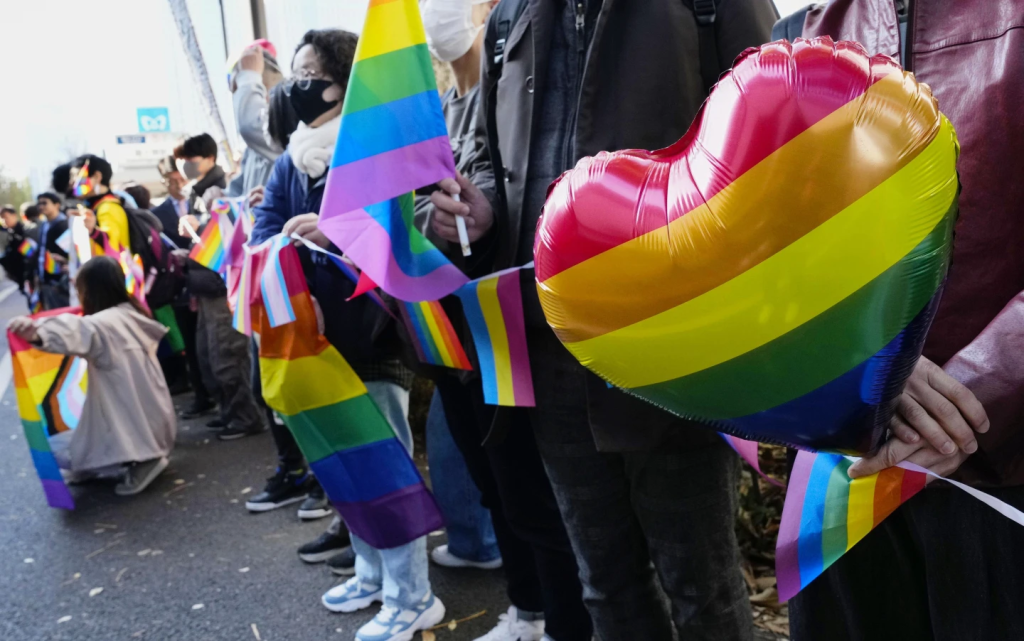
A court found Japan’s refusal to legalize same-sex marriage was constitutional Friday in the last of six cases that are expected to be brought to the Supreme Court for a final and definitive ruling, possibly next year.
The Tokyo High Court said marriage under the law is largely expected to be a union between men and women in a decision that reversed a lower court ruling last year and was the first loss at high courts in the six cases brought by those seeking equal marriage rights.
Judge Ayumi Higashi said a legal definition of a family as a unit between a couple and their children is rational and that exclusion of same-sex marriage is valid. The court also dismissed damages of 1 million yen ($6,400) each sought by eight sexual minorities seeking equal marital rights.
Plaintiffs and their lawyers said the decision was unjust but they were determined to keep fighting through the Supreme Court.
“I’m so disappointed,” plaintiff Hiromi Hatogai told reporters outside the court. “Rather than sorrow, I’m outraged and appalled by the decision. Were the judges listening to us?”
“We only want to be able to marry and be happy, just like anyone else,” said another plaintiff, Rie Fukuda. “I believe the society is changing. We won’t give up.”
With all six high court cases done, the Supreme Court is expected to handle all appeals and make a decision.
Though discrimination still exists at school, work and elsewhere, public backing for legalizing same-sex marriage and support in the business community have rapidly increased in recent years.
Japan is the only member of the Group of Seven industrialized countries that does not recognize same-sex marriage or provide any other form of legally binding protection for LGBTQ+ couples.
Prime Minister Sanae Takaichi ‘s conservative ruling Liberal Democratic Party is the main opponent of same-sex marital rights in Japan. The government has argued that marriage under civil law does not cover same-sex couples and places importance on natural reproduction.
More than 30 plaintiffs have joined the lawsuits on marriage equality filed across Japan since 2019. They argue that civil law provisions barring same-sex marriage violate the Constitutional right to equality and freedom of marriage.
Friday’s ruling was only the second that found the current government policy constitutional after the 2022 Osaka District Court decision.
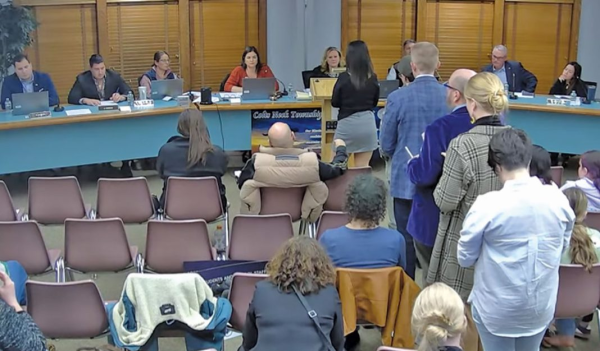
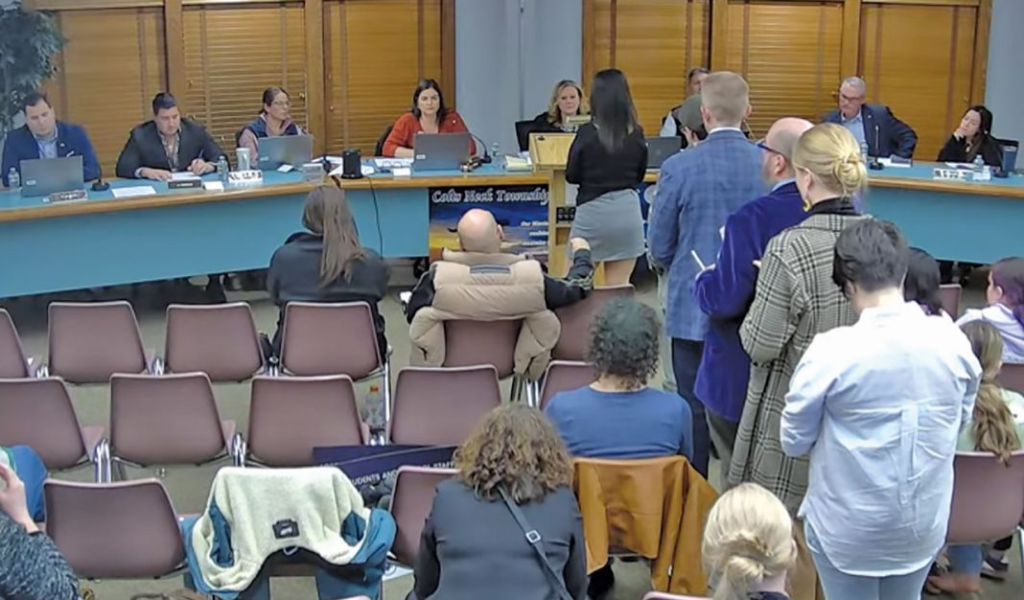
The Colts Neck Township Schools Board of Education on Nov. 19 unanimously passed a “Parental Bill of Rights,” which among other things allows parents to obtain information surrounding their child’s gender identity and allows them to opt their child out of lessons they find morally objectionable.
The adoption of the policy for the preschool through eighth-grade school district was seen as a victory for parents who believe they should have a say in what their child is learning, but drew criticism from LGBTQ advocates who believe the policy is discriminatory and will hurt students who are sexual or gender minorities.
Lucas Manrique, a mental health professional who spoke during the public comment portion of the meeting before the vote took place, said the BOE’s policy would “operate in direct opposition” to New Jersey Department of Education Policy 5756, which provides guidance to schools on how to treat transgender and gender nonconforming students.
“It is my ethical responsibility as a therapist to provide testimony where I see the potential for harm,” said Manrique, who identified himself as a licensed associate counselor and a nationally certified counselor from Middlesex County.
“5756 was created to protect young people by preventing forced outing. Outing students without their consent is psychologically damaging, is discrimination, and is illegal in New Jersey. I implore you to recognize that as a body, it is your responsibility to protect every student and reinforce the rights protected by law,” he said.
However, Val Mendez of Marlboro said she strongly supports the policy. She said that she cares deeply about transparency and that schools should not be a replacement for parents.
“What I appreciate most about this … is that it’s not about politics; it’s about restoring trust, strengthening communication, and ensuring that parents and schools work together,” said Mendez, who emphasized she was speaking as a parent and not as a member of any board to which she belongs.
The policy contains eight articles and outlines parents’ and legal guardians’ rights in the school district. The parts of the policy that sparked the most controversy deal with sexuality and gender, including resources and curricula containing LGBTQ content.
Article 3.3 of the policy addresses the issue of gender identity. It says that the BOE affirms the rights of a child’s parents or legal guardians to ask staff members and receive from them “truthful and to the extent known information” about their child, including changes to their child’s gender identity, pronouns, and name. A child’s legal caretakers, according to the policy, are also entitled to know the sports teams and activities “organized by sex” in which their child is participating and what “sex-specific” facility, such as a bathroom or locker room, their child is using.
Article 4.1 of the policy entitles parents or legal guardians to excuse their child from any “instructions in health, family life education or sex education” that conflict with their “conscience, or sincerely held moral or religious beliefs.”
Article 4.2 of the policy allows a child’s legal caretakers to prevent their child from exposure to a resource or curriculum content that they believe “substantially interferes” with their child’s religious development.
And Article 4.3 allows parents or legal guardians to prevent their child from participating in surveys, questionnaires, or research projects involving personal family information, beliefs, sexual behavior, mental health, or other “sensitive areas.”
Other school districts in the state have written similar policies that have been met with legal challenges. New Jersey Attorney General Matthew J. Platkin filed lawsuits alleging the policies violate the state’s Law Against Discrimination against at least three school districts. The attorney general’s office declined to comment on the matter in Colts Neck. A spokesperson for the LGBTQ civil rights organization Garden State Equality said the organization is “carefully considering any and all possibilities.” A spokesperson for the American Civil Liberties Union of New Jersey said the organization is looking into the policy.
Shawn Hyland, director of advocacy at the New Jersey Family Policy Center, which describes itself on its website as a “Christ-centered organization” and has offices in Trenton and Warren, thanked the board for considering what he called a “common-sense policy.”
“Thank you for recognizing that the parents in Colts Neck genuinely want what’s best for their children and that school policies should reflect that reality. Parents are not only taxpayers; they’re the primary stakeholder in public education. They nurture, protect, and guide their children every day, and they deserve transparency. Let me be clear: Parents are not the problem,” he said.
However, that is not always the case, according to Manrique, who said The Trevor Project, a national nonprofit organization focused on suicide prevention and crisis intervention for LGBTQ youth, found that in 2024, 40 percent of unhoused LGBTQ youth reported that they were kicked out of their parents’ home or were abandoned because of their LGBTQ identity. Also, 35 percent of homeless youth reported attempting suicide, Manrique said.
Still, Hyland said it is “deeply offensive” to suggest moms and dads should have no right to know what curriculum is being taught, to access student records, to be notified of health-related decisions, and to opt out of “intrusive surveys.”
“It is both unethical and dangerous to advocate for that extreme position, yet sadly some do.” Hyland said, adding that the BOE’s policy does not create rights; it simply recognizes the rights already protected under existing federal law. He added that “keeping secrets from parents” violates the federal Family Educational Rights and Privacy Act and the Protection of Pupil Rights Amendment.
Hyland said 77 percent of New Jersey adults believe parents should be fully informed about what’s happening in school. “This is not a fringe position; it’s a mainstream conviction,” he said.
However, Dr. Brian Kaufman, a psychologist with expertise in adolescent development and human sexuality from Asbury Park, told the board that outing students before they are prepared “could lead to the indelible stain of blood on your hands. You can always choose to introduce additional conversations and lessons, but you cannot undo the physical and emotional trauma that results from ignorance.”
Kaufman directs a nonprofit organization called “Rainbow Quest.” Its mission, stated on its website, is to distribute “affirming and educational resources to promote social and intercultural skills.” The organization offers training workshops for educators and therapists and “community-building” events that are intended to “reduce bullying, discrimination, and intolerance and help build and maintain healthy, safe communities, homes, schools, and workplaces.”
He said the organization also aims to educate about “historical and cross-cultural heroes who advanced humankind, LGBTQ role models.
“We rarely learn about these heroes’ sexual orientation or gender identities in school, but every election cycle, we can’t avoid being bombarded with angry, ignorant rhetoric that portrays LGBTQ+ community members as inferior, deviant, and less deserving of respect and love than their gender-conforming peers.”
The exclusion of positive content about LGBTQ people and their contributions to society “leaves the public with a one-sided, negative perception of our gender-diverse youth,” Kaufman said, adding that much more is known now about human sexuality and gender than in the past.
Larissa Garcia, community organizer for GSE, who also identified herself as a Middlesex County resident, read a statement to the board from GSE Senior Director of Advocacy and Organizing Lauren Albrecht.
In it, Albrecht criticized the BOE and its policy committee chairman, Robert Scales, saying she is “keenly aware” of the board’s “disingenuously named ‘Parental Bill of Rights.’” Albrecht said Scales previously told her when she contacted the district months ago about the policy to register a complaint about it that it was dishonest of her to do so without reading it.
“I knew what it would say due to my professional experience and knowledge, and that coupled with the fact that I field regularly occurring calls from families in your district who are concerned by your board’s actions, which is an unusual occurrence for community members from a specific school district to regularly reach out to us about your board’s words, your board’s votes, and what your board members post on social media, about the tone and the climate that has been created for LGBTQ students in your schools by these words and actions,” Albrecht’s statement said.
She continued by saying she has since seen the policy and said it was “verbatim” the same as other policies introduced around the country by “right-wing extremists.”
Albrecht said the policy begs the question: “‘What is the end game here?’ What is the message that Colts Neck is trying to send to LGBTQ students and the school staff who serve them? Parents have always had rights. That has not changed nor been altered. And LGBTQ students have the right to be safe and supported at school so that they can focus on learning and just being kids. Just because you can introduce a policy like this, and you can, because the law still stands, absolutely does not mean that you should.”
Before the vote was taken, BOE President Angelique Volpe read a statement that said the policy’s adoption makes the board’s position “unmistakably clear” that the rights of parents will stay at the forefront of every decision the board makes.
“Parents are the primary authority in their children’s education, and this district will never sideline that role,” Volpe said. “Every child in Colts Neck will be protected, respected, and treated equally without exception, and we will not permit any sexual content, ideology, or identity to take priority over the rights of our families or the educational mission of our schools. No group’s sexuality will override the values or rights of others. Period.
“This board stands firm, united and unwavering. Our commitment to academic excellence, child safety, and parental authority is absolute, and we will defend these principles without hesitation.”
The European Court of Justice has issued a ruling that all nations in the European Union (EU) must recognize lawful same-sex marriages that were performed in other EU countries. Previously, a country could refuse to recognize a marriage if it had taken place in another country and did not align with its own laws.
The court declared that EU citizens have a right to “a normal family life” regardless of borders. “When they create a family life in a host member state,” they said, “in particular by virtue of marriage, they must have the certainty to be able to pursue that family life upon returning to their member state of origin.”
Citizens of the European Union have the right to freedom of movement between the different nations within the union. The court suggested that this right, as well as the right to “respect for private and family life,” would be breached if one country could refuse to acknowledge a lawful marriage from another country.
The court added in a press release, “Member States are therefore required to recognize, for the purpose of the exercise of the rights conferred by EU law, the marital status lawfully acquired in another Member State.”
The case was brought to the Luxembourg-based court on behalf of a Polish couple who had been married in Berlin, Germany, where same-sex marriage is recognized. When, years later, they returned to their home country, they submitted their marriage certificate, which was in German, to the Polish government to be transcribed and recognized in the Polish civil register.
The Polish government denied their request, as the country does not recognize same-sex marriages. With this new ruling, they will no longer be able to refuse legally.
Of the 27 EU member states, only 18 have legalized same-sex marriage.
LGBTQ+ rights have taken some big hits in Poland in recent years. The far-right Law and Justice Party held power from 2015 to 2023 and enacted a range of anti-LGBTQ+ policies during that time. It was only in April of this year that the last “LGBT-free” zone created by the party was finally repealed.
Poland is currently led by a coalition government. The prime minister, Donald Tusk, campaigned on introducing same-sex civil unions and has pushed for such legislation to be passed. However, Poland’s president, Karol Nawrocki of the Law and Justice Party, has said that he would veto any legislation that would legalize same-sex marriage.












 fleeredstates.blog
You must be logged in to post a comment.