The city council of Southlake, Texas — one of the wealthiest cities in the US — voted unanimously on Tuesday night to deny a permit to Pride So-Kel, a community Pride festival planned for October 3 on the 10-acre property of St. Martin-in-the-Field, an Episcopal church.
While one person at the council meeting reportedly opposed the festival, council members didn’t discuss the event or ask any questions of city staff or organizers before voting to deny the event permit, The Dallas Morning News reported. Neither Southlake Mayor Shawn McCaskill nor city council members responded to the publication’s request for an explanation; a city spokesperson said they didn’t know why the council denied the permit.
The Pride event was held on the church’s property last year. It featured food trucks, vendors, performances by Dallas’ Oak Lawn Band, a B-52s cover band called “Bikini Whales,” and a drag queen singing songs about the difficulties of growing up trans in Texas’ rural city of Odessa.
Around the time of last year’s event, the then-mayor of the neighboring city of Keller, Armin Mizani, said his municipality didn’t condone the festival. The 2025 event itself was protested by a street preacher with a bullhorn asking “graphic questions about gay sex,” the aforementioned publication noted, as well as activists with the Texas Coalition for Kids, an anti-LGBTQ+ organization that purports to defend children from “the woke left.”
Last year’s event, however, didn’t require a city permit because its attendance was estimated at fewer than 1,000 people. Public events in Southlake with more than 1,000 people legally require a permit.
April Dreyson, who founded the Pride event, said she began the event with her wife to show gay and transgender people living in suburban Tarrant County that they are not alone. “We wanted to create a space where everyone could feel safe and loved. LGBTQ people have become a point of political fodder. Our existence is not political,” she said.
Rev. Alan Bentrup, who leads the church, offered to host the event since Dreyson doubted whether she could get a local city to permit the event.
Dreyson said she’s still exploring other options in hopes of hosting the event. “It’s not going to be that easy to make us go away,” she said.
Southlake’s school board recently approved policies banning trans-inclusive policies regarding pronouns and restroom use in local schools.
The December after last year’s event, the city of Keller rescinded its invitation for Bentrup to lead an opening prayer before its city council meeting. The city’s mayor said leading the prayer “is a privilege, not a right” and added that his city wouldn’t “elevate an individual who offended a large majority of our residents.”
The Seattle City Council voted unanimously on Tuesday to pass an ordinance officially recognizing non-monogamous and polyamorous relationships, as well as multigenerational households, as protected classes.
The measure will amend sections of the Seattle Municipal Code to “recognize genders outside the gender binary, recognize pansexuality and asexuality as orientations, and include consensual relationships with multiple partners as an element of attitudes, preferences, and practices pertaining to sexual orientation.”
Seattle is the 10th and largest city in the United States to pass protections for polyamorous relationships, The Guardian reported. The law will take effect on June 1, 2027.
The protections will apply to employment, housing, business licensure, places of public accommodation, park usage, and “bias-free policing,” according to the proposal. Under the law, residents facing unfair treatment could file complaints and seek remedy through Seattle’s Office for Civil Rights.
The bill’s sponsor, Alexis Mercedes Rinck, said the update helps the law “reflect how our neighbors define themselves and define their families.” Rinck added that the ordinance is part of a “decades-long process” in the city of establishing protected classes with “a degree of inclusivity.”
Seattle resident Jessa Davis reportedly led a grassroots movement to pass the measure after her partner was discriminated against at work due to being non-monogamous. “If we’re not expanding the circle of protections, we are leaving ground for people who aren’t being quiet about the fact that they are coming for marriage equality next,” Davis told The Guardian.
Last year, the Seattle Human Rights Commission wrote a letter to the council supporting the bill, emphasizing the “urgency” to pass it.
“People in multi-parent or multi-partner families, multi-generational households, chosen families, single parents, intentionally single individuals, and those in consensually nonmonogamous, asexual, or aromantic relationships continue to face discrimination in housing, employment, and public life simply because their family structures fall outside outdated norms,” the letter stated.
“By explicitly recognizing family and relationship structure as a protected class, the City affirms that safety, housing stability, employment access, and public participation should not depend on whether someone’s life fits a traditional mold. The proposed amendments do not create special treatment. They ensure equal treatment, closing loopholes that currently allow exclusion, harassment, and denial of opportunity to persist unchecked.”
The Commission also communicated the “cascading impacts” of housing and employment discrimination: “It destabilizes families, limits economic mobility, and undermines public trust in institutions meant to serve all residents.”
Somerville, Massachusetts, near Boston, became the first city in the country to recognize polyamorous relationships in 2020, with an expanded domestic partner ordinance. That legislation granted poly partners the same rights as married couples, including hospital visitation and conferring health insurance benefits. In 2023, the city extended specific anti-discrimination protections in employment and for police interactions.
As well as Somerville, Portland, Berkley and West Hollywood, Cambridge, Massachusetts; Oakland, California; Olympia, Washington; Astoria, Oregon; and Hazel Park, Michigan have all instituted similar protections.
Turkish authorities cracked down on multiple LGBTQ+ groups and individuals early Sunday morning, detaining dozens of members, breaking into association offices and raiding popular hangouts.
In an escalation of its decade-long hostility toward LGBTQ+ groups, particularly in the lead-up to elections, simultaneous police raids beginning at 1 a.m. took place in the major cities of Istanbul, Ankara, Izmir, Aydin and Mersin.
Justice Minister Akin Gurlek announced on social media that the investigation into 162 suspects, nine associations and 13 businesses was to “protect children, the institution of the family, and public order” in line with President Recep Tayyip Erdogan’s 10-year executive order relating to families and children.
“As per the duty to protect families and children given to the state by the constitution, no criminal organization, abuse network or illegal activity which targets children, youths or families will be tolerated!” Gurlek said.
The raids targeted both current and former members of multiple prominent LGBTQ+ rights and HIV awareness groups. The organizations’ websites were also blocked.
Gurlek also noted that such associations were found to receive significant funding from international sources and agencies.
The Human Rights Association condemned the raids. “This is not a judicial investigation; it is a political operation aimed at forcing society into a monolithic family model and purging LGBTI+ and independent civil society under the guise of protecting the family and children,” it said.
“To include unrelated charges such as ‘forming a criminal organization,’ ‘drugs,’ ‘prostitution’ and ‘obscenity’ serves not to reveal the truth but to incriminate the entire community.”
The religious conservative Justice and Development Party has been increasingly vocal against LGBTQ+ groups to play up to the more conservative elements of its base. In 2015, it banned Istanbul Pride, which had tens of thousands of attendees in previous years prior. Since then, authorities have violently dispersed any attempted gatherings for Pride.
This summer, an LGBTQ+ cruise ship that tours the Mediterranean and has docked in Turkey multiple times in the past was refused permission to dock there.
The Ottoman Empire, predecessor to the modern republic of Turkey, decriminalized homosexuality in 1858, however there is still significant social discrimination.
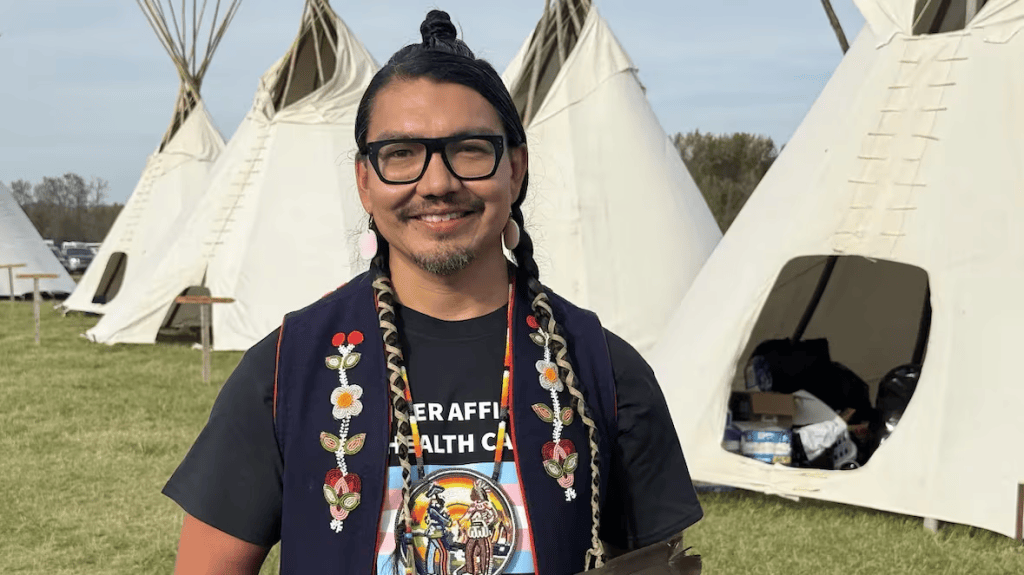
A First Nation says it aims to defy Alberta Premier Danielle Smith’s government by establishing a safe haven for gender-affirming medical care.
Leaders of the Saddle Lake Cree Nation say access to health care is a treaty right and falls under its inherent jurisdiction.
Late last year, Smith’s United Conservative Party government used the Charter’s notwithstanding clause to shield its legislation from court challenges.
The law prohibits doctors from prescribing puberty blockers or hormone therapy to transgender and gender diverse children under 16.
The premier has said its aim is to protect children and their fertility. Doctors and national medical associations have pushed back, noting puberty blockers don’t render a person infertile.
This week, during a gathering to mark 150 years since the signing of Treaty 6, Saddle Lake Chief Dale Steinhauer said the law is one of many that are dehumanizing.
“No longer will our children and families have their rights taken away,” she announced at Fort Pitt Provincial Park, Sask., on Wednesday.
“When one group’s rights are removed, we are all affected.”
The nation, located 170 kilometres northeast of Edmonton, said it’s working to attract clinicians to provide care on its reserve land.
It has also started fundraising to develop its health law and defend it against potential legal challenges.
Steinhauer said clinicians who provide gender-affirming care on reserve land would be exempted from sanctioning by regulatory bodies.
“To the medical profession and regulatory bodies like the College of Physicians and Surgeons of Alberta: when will you stop this violence?” she said.
An email statement from the college said the organization respects Steinhauer and recognizes the treaty rights of all First Nations, as well as the rights and interests of transgender minors and their families.
“CPSA will continue to support regulated members in understanding their professional responsibilities while providing respectful, compassionate and evidence-informed care within the bounds of applicable legislation, including laws that apply to the treaty rights of First Nations.
When asked on Thursday, Smith said she doesn’t have any authority over the First Nation and respects its sovereignty.
“They are an independent nation, so I’ll be interested to see if they’re able to attract a doctor to do that,” Smith said while attending the Alberta Industrial Heartland Association annual conference in Edmonton.
‘I would have loved to have me as a doctor’
Dr. James Makokis, a two-spirit family physician from Saddle Lake Cree Nation, became emotional at the announcement while speaking about the impact of violence against two-spirit and transgender people, including self-harm.
“That is a public health emergency that has to stop,” said Makokis.
“When there’s a threat to the buffalo calves in the herd, all of the adult buffalo form a circle around those young ones, because they’re the next generation.”
Makokis said providing young two-spirit people with proper gender-affirming care is one way to combat high rates of suicide and other “horrible statistics” affecting the community.
“If I had someone that looked like me, that had braids like me, that spoke Cree like me, that understood our medicine and our ways of being, that would have been incredible,” said Makokis.
“I would have loved to have me as a doctor.”
For parents like Tyler Youngchief, councillor for Kehewin Cree Nation, Steinhauer’s announcement hits close to home. His seven-year-old son, Presley Miyoskwam Napew Youngchief, came out as transgender at the age of three.
“The moment he started vocalizing he was a boy and that’s who he is, there was no hesitation between my spouse or myself or his siblings,” Youngchief told CBC News. “It was just full-on acceptance right from our whole family.”
But both Youngchief and Makokis know the road to creating a gender-affirming care safe haven won’t be easy.
Youngchief said bullying in the form of homophobia and transphobia directed at Presley are his biggest concerns for the future.
Makokis added that fear is a familiar feeling for marginalized groups like trans and two-spirit people.
“It’s really important for us as individual clinicians, as individual physicians, as citizens of this democratic country known as Canada, for people to stand up,” said Makokis.
“Sometimes that means as individuals we have to risk losing some of our own individual freedoms, and in my case that could be my medical licence.”
Steinhauer cited the medicine chest clause unique to Treaty 6, which says the Crown will keep a medicine chest in the home of each federal government agent working on or near a reserve.
It’s widely understood by First Nations to be a commitment to provide comprehensive health care, and Indigenous leaders have criticized the Crown for failing to live up to the promise.
Steinhauer asked how the Alberta government could stop First Nations doctors from practising, or accessing the medicine chest.
“Have the colonial governments not learned enough from their own history?”
Alberta’s health-care law is one of three from the UCP government impacting transgender people across the province.
Another requires parental consent for students under 16 to change their names or pronouns at school. The third bans transgender athletes 12 and older from participating in amateur competitive female sports.
NDP MLA Brooks Arcand-Paul, who represents Edmonton-West Henday and is shadow minister for Indigenous relations, said the Alberta NDP support Saddle Lake Cree Nation’s exercise of sovereignty.
“As a two-spirit person, I wish I had this protection when I was younger. I wish I had this understanding that our two-spirit kin are scared,” Arcand-Paul told CBC News. “I wish I didn’t have to think I did not belong here.”
The Swiss government says it supports a uniform, national ban on so-called conversion therapy, and it’s moving ahead to consider federal legislation to outlaw the discredited practice.
A report from the government published last week details a number of current national regulations addressing the practice, as well as a patchwork of laws or procedures in various cantons (independent member states) across the country, which include their own administrative or criminal measures and corresponding legislative proposals that have been initiated, the Swiss Broadcasting Corporation reports.
Zurich is the latest canton to initiate government action banning the practice. Anyone practicing the so-called therapy in that canton would face a fine, according to the government council’s proposal.
The patchwork of Swiss laws makes a national ban on the practice worth considering at the federal level, the government said.
It’s unclear how widespread conversion therapy is in Switzerland, but several individuals offering it have earned the public’s attention over the last several years, including a homeopathic doctor in Geneva and Vaud who, in 2018, offered to “cure homosexuality,” and also a psychiatrist in Schwyz who, in 2020, recommended himself for the reparative “therapies.”
Conversion therapy, which seeks to change the sexual orientation of those subjected to it, is well known to cause psychological distress, anxiety and depression, and impair self-esteem and social relationships.
Michigan agreed in August to abandon its ban on anti-LGBTQ+ conversion therapy following a federal judge’s decision against it, making it the first state to say it will stop enforcing its ban in the wake of the Supreme Court’s ruling.
Cantonal parliaments in Switzerland that have already spoken in favor of a ban include Schaffhausen, St. Gallen, Valais, Vaud, and Bern. Others expressing support for a national ban include Aargau, Basel-City, and Lucerne among them.
Switzerland is made up of 26 full and half cantons. Neuchâtel became the first Swiss canton to ban conversion therapy in 2023.
The European Commission recommended earlier this year that all EU countries ban conversion therapy.
While Switzerland is not an EU member, neighboring Germany outlawed conversion therapy for minors and nonconsenting adults in 2020.
Several other EU countries, including Belgium, Cyprus, France, Malta, Norway, Portugal and Spain, have banned the practice outright. Greece banned it for minors in 2022.
The latest EU nation to address the practice is the Netherlands, where the Dutch Senate in June approved a bill to ban it, following the parliament’s lower house approving the measure in September 2025.
Read more at CNBC. *Editors note– only some of these states are ranked as LGBTQ friendly, so please keep that in mind.
One of the many signs that the Covid pandemic is slipping further into the past is that companies are paying closer attention to the quality of life in locations where they are considering setting up shop.
“Where are people moving? Where have they gone post-Covid?” said veteran site selection consultant Tom Stringer of Stringer Site Selection in New York. “It’s largely going to be an attractive place to live. You’re seeing corporate industry chasing people now rather than people chasing jobs.”
So, it stands to reason that in their campaigns to lure business, states are increasingly touting their quality of life. As a result, CNBC is giving more weight to the Quality of Life category in this year’s America’s Top States for Business study. It is our annual ranking of every state’s business climate, now in its 20th year. Under this year’s methodology, the category makes up 11.6% of a state’s overall score, up from about ten percent last year.
To score the states for quality of life, we use hard data on factors like crime rates, air quality and healthcare. We also consider the cost and availability of childcare, inclusiveness of state laws, and reproductive rights. Some states do not make the grade when it comes to providing a great place for residents to live and work. The following states are America’s best places to live this year.
Nebraska
A rider competes in the saddle bronc event during the town’s annual Independence Day holiday rodeo on July 03, 2026 in Sutherland, Nebraska.
Scott Olson | Getty Images
Nebraska’s Prescription Drug Monitoring Program, in place since 2017 to combat the opioid epidemic, is one of the most extensive in the nation. It requires the reporting of every prescription in the state — not just controlled substances. Then-State Senator Sara Howard, who introduced the legislation, said at the time, “My goal is to make Nebraska one of the leading states in the nation in the fight against opioid addiction and abuse.” She succeeded. No state had fewer drug deaths per capita in 2023, according to the United Health Foundation, just 8.7 deaths per 100,000 people. It is one reason that the Cornhusker State is among America’s healthiest. It also helps that Nebraska has exceptionally clean air, according to data from the American Lung Association and First Street Foundation.
2026 Quality of Life score: 184 out of 290 points (Top States grade: B)
Strengths: Health, Air Quality
Weaknesses: Reproductive Rights, Inclusiveness
Massachusetts
Hilltop view in the Berkshires, New England in Fall.
Suefeldberg | Istock | Getty Images
Massachusetts is America’s healthiest state, in part because it has more primary care physicians per capita than any other state, according to the United Health Foundation. That may have something to do with the fact that no state has a smaller percentage of people without health insurance, which experts contend has everything to do with the historic healthcare reform championed by then-Gov. Mitt Romney 20 years ago. “Romneycare,” passed in 2006, mandated that every resident must have health insurance or pay a tax penalty, established a marketplace where they could buy insurance, and created subsidies to make it affordable. The United Health Foundation notes that as of last year, 53.4% of Bay State residents surveyed said their health was good or excellent — second only to Vermont. Massachusetts is also a leader in worker protections, mandating paid sick leave and protecting the right to organize.
2026 Quality of Life score: 184 out of 290 points (Top States grade: B)
Strengths: Health, Worker Protections, Inclusiveness, Reproductive Rights
Weaknesses: Air Quality, Childcare
North Dakota
Fargo, North Dakota.
Tiago_fernandez | Istock Editorial | Getty Images
No state does better than North Dakota when it comes to the availability of childcare at a reasonable price. The Peace Garden State has 478 licensed childcare centers in a state of fewer than 800,000 people, according to Child Care Aware of America. The average cost is just 9% of the median income for a family with two working parents, or half the cost in Hawaii. Whether the state can continue that record is an open question, however. State childcare assistance has in some ways been a victim of its own success. Late last year, facing budget pressures due in part to high enrollment, the state reduced some of its subsidies. It also eliminated its Working Parents Child Care Relief program, which offered matching payments for employer-led childcare. The final matching payments will go out in August.
2026 Quality of Life score: 186 out of 290 points (Top States grade: B+)
Strengths: Childcare, Health, Air Quality, Crime
Weaknesses: Worker Protections, Reproductive Rights
Virginia
The Downtown Mall in Charlottesville, Virginia.
Denistangneyjr | E+ | Getty Images
With just 218 incidents per 100,000 residents in 2024, Virginia had one of the lowest violent crime rates in the nation, according to FBI statistics. Ceasefire Virginia, launched in 2022 under Gov. Glenn Youngkin and Attorney General Jason Miyares, both Republicans — and continuing under their Democratic successors, Abigail Spanberger and Jay Jones — targets gun violence in 13 municipalities in the Commonwealth with increased penalties for possession and use of firearms by convicted felons. An analysis of the program last year by Virginia Commonwealth University’s Center for Public Policy credited it with a 10% decrease in homicides statewide through 2024, including a 24% reduction in homicides in Ceasefire localities.
2026 Quality of Life score: 189 out of 290 points (Top States grade: B+)
Strengths: Crime, Air Quality, Health
Weakness: Childcare
New Hampshire
Lake Winnipesaukee, New Hampshire.
Denistangneyjr | E+ | Getty Images
“Live Free or Die” is New Hampshire’s famous motto. And in the Granite State, the first part of that motto almost always wins. A broad range of residents live free from discrimination under the state’s very inclusive statutes. (One exception, however, is its election laws. New Hampshire is one of only three states— the others are Mississippi and Alabama — that do not offer in-person early voting.) Violent crime is practically non-existent, with just 110 offenses per 100,000 residents in 2024. Perhaps even more impressive, the violent crime rate is down 44% since 2014.
2026 Quality of Life score: 189 out of 290 points (Top States grade: B+)
Strengths: Crime, Childcare, Inclusiveness
Weaknesses: Health, Worker Protections
Hawaii
Hawaii surfers on waikiki beach in Honolulu, Hawaii.
Maridav | Istock | Getty Images
Hawaii spent many years at or near the top of this list, with low crime, a pristine environment, and welcoming state laws. Then, in 2022, we began factoring in the cost and availability of childcare. The U.S. Chamber of Commerce Foundation calls it “more than a family issue — it’s an economic imperative.” The state has been trying since 2023 to address the need with its “Ready Keiki” program (Keiki means child in Hawaiian). In October, the state celebrated the opening of the 100th pre-school classroom under the program, in Kailua. But the need is still enormous — and so is the cost, the highest in the nation at 18% of median income, according to Child Care Aware.
2026 Quality of Life score: 191 out of 290 points (Top States grade: B+)
Strengths: Crime, Air Quality, Inclusiveness
Weaknesses: Childcare, Health
Connecticut
Hartford, Connecticut.
Sean Pavone | Istock | Getty Images
Like most of its New England neighbors, Connecticut is remarkably healthy, and its residents practice healthy habits. Illicit opioid use is the lowest of any state. The Nutmeg State even leads the nation in the percentage of adults who reported visiting a dentist in the past year, according to the United Health Foundation. The state has the nation’s third-lowest violent crime rate. Air quality is poor, however, with high levels of ozone, according to the American Lung Association, and high levels of particulate matter, according to the nonprofit First Street Foundation.
2026 Quality of Life score: 205 out of 290 points (Top States grade: A–)
Strengths: Crime, Health, Worker Protections
Weakness: Air Quality
Minnesota
Canoeing in the Boundary Waters Area Wilderness in Minnesota.
Georgepeters | Istock | Getty Images
Minnesota offers among the nation’s strongest guarantees of reproductive rights, according to analysis by the Guttmacher Institute. While there are few issues more divisive than abortion, the economics of it are becoming increasingly clear-cut since the Supreme Court’s Dobbs decision returned the jurisdiction to the states in 2022. A 2025 study by the National Bureau of Economic Research found abortion bans “increase net migration outflows” and that ”(t)he effects are more prominent for single-person households than family households, which may reflect larger effects on younger adults.”
The North Star State also offers strong protections against discrimination, and it earns a near-perfect score from Oxfam America for its worker protections such as the right of workers to organize. And the home of the Mayo Clinic is appropriately among America’s healthiest states.
2026 Quality of Life score: 210 out of 290 points (Top States grade: A)
Strengths: Reproductive Rights, Inclusiveness, Health
Weakness: Childcare
New Jersey
Manasquan is a borough in Monmouth County, New Jersey.
Denistangneyjr | Istock | Getty Images
Yes, New Jersey. If the Garden State is not the first place that comes to mind when you think about great quality of life, you are not looking closely enough, according to the data. According to the United Health Foundation, New Jersey has the second-lowest rate of premature deaths after Massachusetts, helping to make New Jersey one of America’s healthiest states. It ranks third nationally for healthy lives, according to the Commonwealth Fund’s 2025 Scorecard on State Health System Performance. But like so much else in New Jersey, the state’s health system has serious affordability issues. First-term Gov. Mikie Sherrill has proposed fining employers that do not provide health insurance for their employees, and she is seeking reform in the State Health Benefits Program, which she says has been “pushed to the brink” of insolvency.
2026 Quality of Life score: 223 out of 290 points (Top States grade: A+)
Maine has America’s lowest violent crime rate, with just 100 incidents per 100,000 people in 2024. After a horrific mass shooting spree in 2023 in Lewiston that left 18 people dead, Maine legislators passed a series of reforms that earned the state “most improved” honors in 2024 from the Giffords Law Center to Prevent Gun Violence. The Pine Tree State’s laws offer a wide range of protections against discrimination. But the state has some challenges when it comes to health. Maine ranks No. 42 for drug deaths and No. 35 for frequent mental distress, according to the United Health Foundation.
2026 Quality of Life score: 232 out of 290 points (Top States grade: A+)
Strengths: Crime, Inclusiveness, Air Quality
Weakness: Health
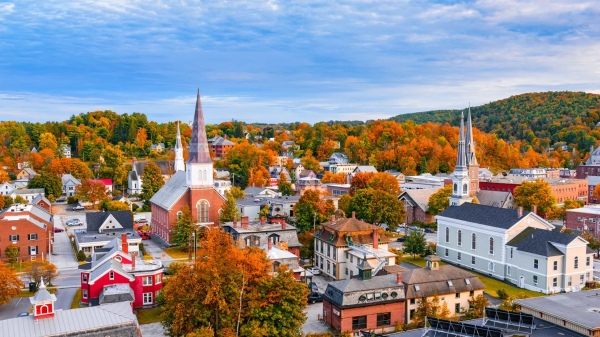
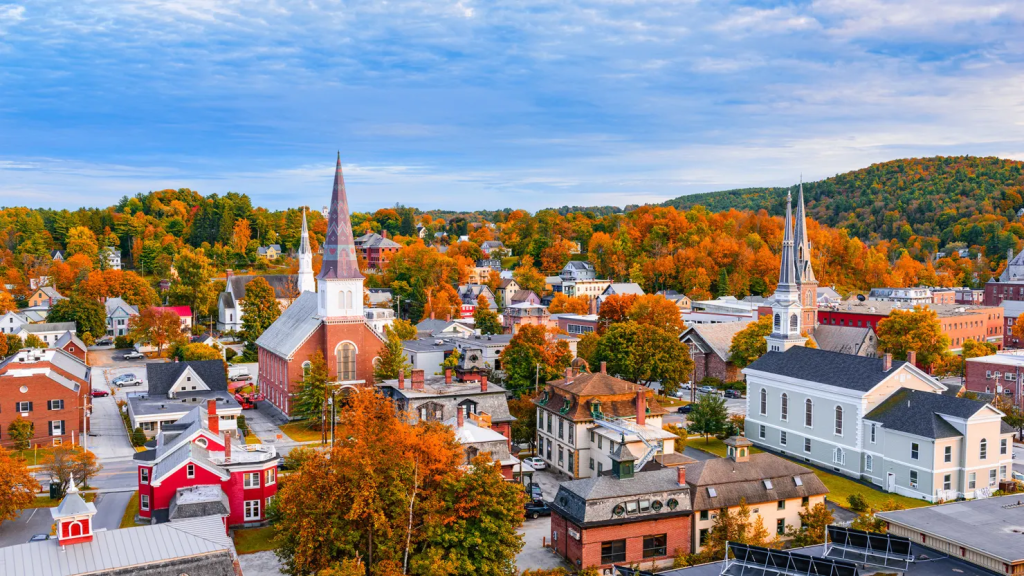
America’s Best Place to Live in 2026: Vermont
Montpelier, Vermont.
Sean Pavone Photo | Getty Images
People are feeling good in Vermont. Fifty-four percent of Vermonters surveyed by the United Health Foundation in 2024 reported that they were in good or excellent health — more than in any other state. Crime is low, and, as is common throughout the region, the Green Mountain State fiercely protects its residents’ rights. But one area where the state falls badly short is homelessness. Vermont ranks No. 47 for homelessness, according to the United Health Foundation. By the state’s most recent count, more than 3,000 people were unhoused as of January 2025, in a state with just 644,000 people. So, in a rare moment of agreement, Republican Gov. Phil Scott signed a bill passed by the Democratic-led legislature to overhaul the state’s system to manage the situation. The bill sets aside some $83 million to establish a range of shelter options, with less emphasis on unused hotel rooms. The new law aims to make sure that in America’s top state for quality of life, more people have a place to live.
2026 Quality of Life score: 233 out of 290 points (Top States grade: A+)
Strengths: Reproductive Rights, Health, Crime, Inclusiveness, Air Quality
Thinking about moving to Portugal or Europe from the United States? For LGBTQ+ Americans concerned about civil rights, politics, healthcare, safety, and their long-term future in the U.S., Portugal has become one of the destinations getting serious attention.
In this episode of the Flee Your Red States Podcast, Bob McCranie and Leslie welcome back Josh in Lisbon, an American who has now lived in Portugal for three years, for an update on what relocating to Portugal actually looks like in 2026.
Josh says something important has changed. Many of the Americans contacting him aren’t simply looking for an overseas adventure anymore. They’re considering leaving the United States because they’re afraid of what may happen next.
We talk about the realities behind that decision: Portugal’s growing international community, LGBTQ+ life in Europe, immigration and residency changes, learning Portuguese, integrating into a different culture, healthcare, employment, bureaucracy, and the financial realities of building a life outside the United States.
Josh also explains some of the differences between buying real estate in Portugal and the United States and what Americans should understand before assuming that purchasing a home overseas works the same way it does back home.
The conversation goes beyond Portugal.
With the 2026 U.S. midterm elections approaching, we discuss what the results could mean for LGBTQ+ migration. Will a political shift convince people to stay? Could further restrictions accelerate the number of Americans considering Europe? And for people who have already decided that their long-term future may be elsewhere, does the election even change the decision?
We also discuss one of the most overlooked parts of international relocation: moving somewhere is very different from becoming part of somewhere.
Language matters. Culture matters. Employment matters. Healthcare matters. And the experience of visiting Portugal is very different from actually building a life there.
Josh shares what he has learned after three years in Lisbon—and what he wishes more Americans understood before packing their bags.
Topics include: moving to Portugal from the USA, LGBTQ+ migration to Europe, living in Lisbon, Portugal immigration and residency, Portuguese citizenship, LGBTQ+ rights and safety, healthcare in Europe, working in Portugal, cultural integration, buying property in Portugal, the 2026 midterm elections, and why Americans are considering leaving the United States.
For information about relocating to Portugal or Portuguese real estate, visit Josh in Lisbon and find Josh on social media at @joshinlisbon.
The Flee Your Red States Podcast explores relocation options for LGBTQ+ people and others concerned about whether their civil rights will continue to be protected where they live. Our goal isn’t to tell people that they should leave. It’s to help people understand what their options are if they decide they need them.
The adult entertainment portal Erobella, responsible for the Sexually Liberal City Index, just released a new study ranking U.S. universities by how LGBTQ+-inclusive they are.
Erobella recently published the Out on Campus: The LGBTQ+ College Index 2026, which measures how “supportive and inclusive” the universities across the country are. The study examined whether universities have professionally staffed LGBTQ+ centers, provide gender-inclusive housing, have written policies that protect trans students from discrimination, have a student health insurance plan that covers gender-affirming care, and allow chosen names and pronouns to be used on official records.
Out on Campus also analyzed the city where the school is located by measuring its score on the Human Rights Campaign’s Municipal Equality Index, the number of LGBTQ+ venues nearby, and whether there is a local PFLAG chapter.
“For LGBTQ+ students, knowing how supportive and inclusive a university really is can make a meaningful difference,” said Brenda Jensen from Erobella’s data and research team. “With the Out on Campus Index, we want to create greater transparency and show which universities are providing concrete support and resources for LGBTQ+ students — while also highlighting where there is still room for improvement.”
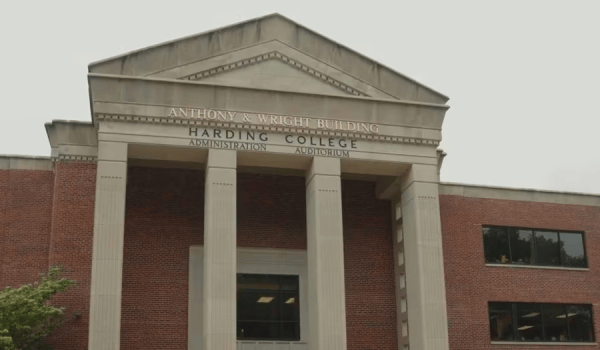
Since the Campus Pride Index was shut down after serving as the go-to source for finding LGBTQ+-friendly universities for the past 18 years, this study is more important than ever for students seeking a four-year institution that provides trans and other LGBTQ+ students with support and protection.
New York University came out on top as the most LGBTQ+ friendly university in the country, while at the other end of the spectrum, 81 colleges hold or have sought religious exemptions under Title IX to legally permit discrimination based on sexual orientation and gender identity. Every school in the bottom 15 is also a religious institution from the South, while not a single Southern school made it into the top ten.
All 1,718 schools in the study started with a score of zero and earned points for the support they provide to LGBTQ+ students and for how LGBTQ+-friendly the city is, but the bottom 15 schools never scored a single point.
A coalition of blue states has come together to file a lawsuit against the Trump administration challenging its plan to strip federal funds from gender-affirming care for minors. The lawsuit alleges that the administration is overstepping its authority by trying to dictate what medical procedures can and can’t be covered by federal funding.
“[The Department of Health and Human Services (HHS)] has disregarded the law and its own policy precedent in another attempt to restrict transgender individuals’ access to crucial care,” California Attorney General Rob Bonta said in a statement. “We will not stand by as the Trump administration oversteps its authority and twists the facts to justify its bad-faith agenda against transgender Americans. We will continue to fight to secure access to medically necessary care and protect transgender individuals’ abilities to prosper as their authentic selves.”
The lawsuit targets Robert F. Kennedy Jr. as the head of HHS, as well as Dr. Mehmet Oz in his role as administrator of the Centers for Medicare & Medicaid Services (CMS). Last month, the departments finalized a plan to prevent federal Medicare and Medicaid plans from covering gender-affirming care for anyone under the age of 18, and to bar plans under the federal Children’s Health Insurance Program (CHIP) from covering the care for anyone under 19.
The plan spent months in a public comment period during which is received nearly 35,000 comments, over 90% of which opposed the plan. Despite this, the rule is set to go into effect on October 13 with little change to the text of the final document.
The lawsuit wastes no time highlighting to the US District Court for the District of Massachusetts that the administration’s new plan is not about healthcare, but an attack on trans people.
The introduction states, “The Administration seeks such broad and unprecedented powers in part to advance its social policy agenda, a key component of which involves relentless attacks on a small and vulnerable population—transgender individuals—whose very existence the President scapegoats to stoke national division.”
The lawsuit makes a case that the proposed rule oversteps states’ rights by regulating the practice of medicine, a responsibility that both Congress and existing legal precedent have made clear is reserved for the states themselves. The suing states also say that HHS has cherry-picked its evidence and failed to make a case for its ban on gender-affirming care funding, and that the plan change violates the Social Security Act and HHS precedent by excluding care that has been deemed medically necessary by the states.
The lawsuit also highlights that Congress left the decision for what should be covered by Medicare and CHIP to the states, and therefore the federal government cannot simply impose a rule to prevent the states from exercising their own will.
“The federal government does not have the authority to dictate what medically necessary care New York provides to its residents,” said New York Attorney General Letitia James in a statement. “This unlawful rule threatens access to health care for transgender young people and undermines states’ ability to administer our own Medicaid programs. New York will continue to stand up for patients and defend our authority to provide the care they need.”
The lawsuit additionally includes a nod towards a longstanding argument that banning gender-affirming care is discrimination based on sex, as under the proposed rule cis patients will still be able to receive coverage for the same treatment and care that is being denied to trans patients.
In his statement, Attorney General Bonta was keen to highlight that this proposed rule does not stop anyone from practicing gender-affirming care in any state where it is still legal (which includes California). The only restriction is on the use of federal funds, and the rule explicitly still allows for state funds to be used for the care.
An earlier HHS attempt saw the department pushing a rule that would have barred hospitals and clinics that provided gender-affirming care from receiving any form of federal funding at all. However, a judge struck that rule down in April and the Trump administration seemed to back off from trying to appeal that ruling in July.
Trans journalist Erin Reed called the states’ lawsuit “the next major step in the fight to protect transgender healthcare,” since the removal of federal funding would be ” a virtual death sentence for any hospital system.”
Reed noted that over “40 hospitals and health systems have stopped or paused their programs in capitulation” to the administration despite there being no federal law against the care. Some of these institutions have stopped providing the care in violation of state or local laws that explicitly protect transgender people from healthcare discrimination.
For nearly two decades, LGBTQ+ students looking for a college could turn to the Campus Pride Index for something most college rankings didn’t provide: a way to evaluate how welcoming and safe a campus might actually be for them.
Launched in 2007, the free database evaluated participating colleges on more than 50 measures across eight areas, including LGBTQ-inclusive policies, housing, campus safety, student life, counseling, health services and institutional support. Students and families could search hundreds of participating schools and compare their LGBTQ+ resources and policies.
However, there are some with short lists of favorites.
The Princeton Review publishes a list of 25 LGBTQ-friendly colleges based on student surveys, while BestColleges released a 2026 list of schools meeting criteria including nondiscrimination protections, gender-inclusive housing and restrooms, and an LGBTQ+ resource center. The Consortium of Higher Education LGBT Resource Professionals also maintains a directory of campus LGBTQ+ centers.
But those resources don’t allow a student to investigate and compare hundreds of individual campuses using the same detailed criteria. A 2025 study published in the Journal of Homosexuality examined 1,756 four-year nonprofit U.S. colleges and universities and found that only 14 percent had a dedicated LGBTQ+ resource center.
College admissions professionals have begun discussing how to fill the void that Campus Pride created. In a 2026 newsletter for the New York State Association for College Admission Counseling, Erica Padilla and Marie Nocella called the Campus Pride Index “a useful tool” and noted that, for many LGBTQ+ students, “this was the only tool at their disposal, especially if their environment lacked supportive adults.”
Students with supportive families can share that work with parents or guardians. Students who aren’t out at home may have to conduct it quietly and alone. For them, determining whether a college is affordable and academically appropriate may not be enough. They also have to answer another question: Will I be safe here?
Unless someone else creates a comprehensive solution, much of the work will continue to fall on students. That can mean digging through individual college websites for nondiscrimination policies, gender-inclusive housing, healthcare, LGBTQ+ organizations, bias-reporting procedures and other indicators of campus climate. For LGBTQ+ students, these steps add layers of research — and uncertainty — to an already complicated and stressful college search.












You must be logged in to post a comment.