The Slovak government on Wednesday indefinitely postponed a proposed constitutional amendment that would limit the rights of same-sex couples and toughen rules surrounding gender transition.
The amendment would also see national law take precedence over European Union law.
The government admitted to “not having secured enough votes” to pass the contentious text in parliament and postponed it indefinitely.
Following the amendment’s publication in late January, nationalist Prime Minister Robert Fico invoked “the traditions, the cultural and spiritual heritage of our ancestors” to construct a “constitutional barrier against progressive politics” and restore “common sense”.
“There are two sexes, male and female”, defined at birth, the proposal states — an echo of US President Donald Trump’s inauguration speech.
“Sex cannot be modified except for serious reasons, according to procedures that will be established by law,” it continues.
The amendment only authorises adoption for married couples, with rare exceptions.
It also states that Slovakia’s “sovereignty” regarding “cultural and ethical questions” should override EU law.
A pair of Christian couples in Massachusetts are suing the state, saying their rights were violated when they lost their foster licenses over their views on gender and sexuality.
The couples — Audrey and Nick Jones, in Worcester County, and Greg and Marianelly Schrock, in Middlesex County — argue their First Amendment rights to freedom of religious exercise and freedom of speech are being violated in the lawsuit filed in federal court this month.
Their argument hinges on a state requirement that foster parents sign an agreement that they will “support, respect, and affirm the foster child’s sexual orientation, gender identity, and gender expression” — and that refusing to do so forced them out of the foster parent role.
The case comes as Massachusetts faces a dire shortage of families willing to serve as foster parents. The Joneses and Schrocks would provide a loving home for any child — including a gay or transgender child, their attorney told GBH News.
But, as Audrey Jones told their licensing agent, she and her husband “cannot support a child dating someone of the same sex or affirm a child who wanted to use different pronouns.” They argue the policy is unconstitutionally restrictive and ultimately harms foster children who have no place to go.
LGBTQ+ advocates told GBH News they were saddened and outraged by the case and worry it will test the strength of anti-discrimination laws. They specifically point to the vulnerability of LGBTQ+ youth in foster care: Nationally, 40% have run away or have been kicked out of their homes for being LGBTQ+, and LGBTQ+ youth who are in foster care are three times more likely to attempt suicide than LGBTQ+ youth who are not, according to the Trevor Project.
“These are already traumatized kids facing additional trauma because of their identity — and this isn’t about the foster parents,” said Tanya Neslusan, the executive director of MassEquality. “When you are parenting children, it is never about the parents — it is about the children and making sure that their needs are prioritized. And if you can’t in good conscience do that, then that’s really what it comes down to.”
This lawsuit follows a similar case filed two years ago by Mike and Kitty Burke, a Catholic couple from Southampton. They sued after being denied a foster care license because they would “not be affirming to a child who identified as LGBTQIA,” per court filings. Attorneys for the state recently asked the court to dismiss that case since the Burkes have since moved to Florida.
“Because it’s a state-run system, the state has to have some leeway to make some decisions about … what it means to keep a child emotionally safe and healthy while that child is in state custody.”
Josh Gupta-Kagan, Columbia Law School
Mallory Sleight, an attorney on the Jones-Schrock case who works for the Alliance Defending Freedom’s parental rights team, says her organization has been contacted by six Massachusetts families about this issue. The Joneses and Schrocks, she says, previously served as foster parents without issue and want their licenses back. But she said requiring them to sign the agreement violates their religious beliefs.
“DCF has said that these families are required to agree ahead of time that they would use any chosen pronouns,” she said. “And by using chosen pronouns, you are agreeing that a boy is in fact a girl, or a girl is in a fact a boy. And biblically, these families simply do not hold that belief. And by speaking that belief, especially to a child, they are violating their own religious convictions.”
Legal experts say this case follows more than a century of legal battles and legislation about the role religion can play in the foster care system — and, in the last few years, how that overlaps with LGBTQ+ foster children. Experts agreed that the U.S. Supreme Court’s recent openness to religious discrimination lawsuits could give the plaintiffs reason to hope.
In the lawsuit, the families suggested a less restrictive policy that would give the Department of Children and Families discretion about which children are placed with which parents. Department leadership could choose to not revoke foster parents’ licenses and instead just give social workers leeway to not place gender non-conforming children with such parents — a stance the Boston Globe Editorial board endorsed last week.
“If the department wants to, the department can specifically match them with children that they think would be good fits for their homes. So that could be religious children — because there are religious foster children who would love to be with religious foster parents who they could go to church with and be in Sunday school and read the Bible with,” Sleight told GBH News.
“By using chosen pronouns, you are agreeing that a boy is in fact a girl, or a girl is in a fact a boy. And biblically, these families simply do not hold that belief.”
Mallory Sleight, an attorney representing the Joneses and Schrocks
Still, some experts doubt the merits of the case. They say the rights of the legal parent or guardian and the child’s right to health and safety will outweigh the rights of a foster parent acting as a temporary caretaker.
“This is not like going to speak in the town square,” said Josh Gupta-Kagan, a Columbia Law School professor who focuses on children and families issues. “Because it’s a state-run system, the state has to have some leeway to make some decisions about … what it means to keep a child emotionally safe and healthy while that child is in state custody.”
And advocates say they want LGBTQ+ children to feel safe and comfortable in their foster homes.
“We would hope that the goal of every foster parent coming into the system to help … we hope that everyone comes in thinking: ‘I will affirm every child no matter their race, their gender identity, their sexual and their sexual orientation,’” said Shaplaie Brooks, executive director of the Massachusetts Commission on LGBTQ Youth.
Brooks said the Department of Children and Families has been “moving the needle” on helping LGBTQ+ youth in the foster care system — but says that big steps still need to be taken. Her commission has been helping support couples fostering LGBTQ+ children, connecting them with gender-affirming care resources.
“Especially as of late … DCF has tried to center the needs of each child as best as possible in their care,” she said.
In fact, Gupta-Kagan imagines a hypothetical lawsuit if the policy didn’t exist and the state allowed foster parents to not affirm or support LGBTQ+ youth — a lawsuit “that the state is not fulfilling its obligation to keep children in its custody safe.”
A spokesperson for DCF told GBH News it does not comment on pending litigation. State attorneys have not responded to the complaint in court, and an initial hearing hasn’t been set yet in the case.
Six months after Iowa removed gender identity as a protected class from its civil rights laws, the state now must pay $85,000 to LGBTQ+ students ejected from the Iowa Capitol in 2020, among them trans students who were denied access to the building’s bathrooms.
Iowa Safe Schools, an LGBTQ+ youth advocacy group, sponsored the visit of about 150 Iowa students and chaperones to the Capitol to meet with legislators in 2020. The group’s then-executive director, Nate Monson, told the Iowa Register that, at the time, Iowa State Patrol troopers told several transgender students they couldn’t use one of the bathrooms and had to use a gender-neutral restroom instead.
When Monson intervened, arguing that the troopers’ directions were inconsistent with state law, the entire group was ordered to leave.
“I went up to the trooper and said, ‘No, that’s not what the law says,’” Monson said. “The civil rights code includes gender identity. He told me it did not. Then I told him yes, it did. And he said, ‘Well it doesn’t include bathrooms.’”
The students were then told to leave the Capitol altogether, that they had been banned from the Capitol grounds, and they would be arrested if they returned.
The students and several Iowa Safe Schools leaders filed suit in 2022, alleging sex-based discrimination, harassment, and unlawful retaliation.
Under terms of a settlement agreement — filed in July and approved by the Iowa State Board of Appeals on Tuesday — the state will pay the students and group leaders to settle the case without admitting any wrongdoing.
“These individuals were exercising their constitutional and civil rights when they were singled out and removed from the Iowa Capitol solely because of their identity and their affiliation with an LGBTQ+ organization,” said Devin C. Kelly, an attorney for the plaintiffs, following the Board of Appeals approval.
“At a time when LGBTQ+ Iowans and their families continue to face growing challenges, this settlement reaffirms a simple truth: all Iowans are equal under the law,” Kelly added.
In a letter to the Board of Appeals, state attorney Jeffrey Peterzalek made it a point to say that the plaintiffs’ legal claims “would now not be allowed” under the updated Civil Rights Act.
With Republican Gov. Kim Reynolds’ signature in February, Iowa became the first state in the nation to remove a previously protected class from its civil rights laws. The change took effect July 1.
The law, which took effect Sept. 1, bars schools from sponsoring a “student club based on sexual orientation or gender identity.” It also forbids schools from providing instruction, guidance or programming on sexual orientation or gender identity. Schools are barred from helping in the social transitioning of a transgender child, which can include using new names or pronouns.
A former faculty sponsor for a Gender and Sexuality Alliance in Plano ISD; a Houston high schooler; the Gender and Sexuality Alliances Network, a nonprofit that represents GSA clubs in Texas schools; and advocacy group Students Engaged in Advancing Texas say their freedom of speech and expressive association “will be irreparably suppressed” under the new law.
Texas AFT, the teachers’ union, joined the lawsuit as a plaintiff Sept. 15.
“S.B. 12 is one of the most extreme education censorship laws in the country, undermining the free speech rights of Texas students, parents, and educators,” said Brian Klosterboer, senior staff attorney at the ACLU of Texas, who filed the suitin the U.S. District Court for the Southern District of Texas.“We’re challenging this law in court because our schools should be places of truth, inclusion, and opportunity — not fear and erasure.”
The lawsuit names Texas Education Commissioner Mike Morath as a defendant, as well as Plano, Katy and Houston ISDs.
“Plano ISD is obligated to comply with the law as written unless or until the courts provide further direction,” said Zoheb Hassanali, the district’s assistant director of communications, public relations and social media.
He said district staff have received training to ensure compliance with the law.
“Our focus continues to be on educating and supporting our students, and we will not allow external litigation to distract us from that responsibility,” he added.
Houston ISD’s press office said the district does not comment on pending litigation.
Representatives from Katy ISD and the Texas Education Agency did not respond to emailed requests for comment.
The legal action comes as school districts across Texas are adopting policies to comply with the state law, which prohibits diversity, equity and inclusion efforts in K-12 schools.
Rep. Jeff Leach, R-Allen, who introduced the legislation, said it ensures parents are at the “head of the table when it comes to their kids’ education.”
In addition to the ban on LGBTQ clubs, the legislation requires schools to get a parent’s permission before a child can join any school club.
“Our schools should be about teaching history and reading, writing and math and civic responsibility,” Leach said as he advocated for the bill in the Legislature. “We need to get away from some of the more toxic social issues.”
If the law is not blocked, all 22 student-run Gender and Sexuality Alliance clubs registered with the GSA Network will likely shut down, according to the filing.
Leach criticized the organizations during legislative discussions, calling them “school-sponsored and school-sanctioned sex clubs.” Supporters and members of the clubs say they provide safe and welcoming spaces for students.
The groups in the lawsuit say the ban “ostracizes” students “who have a sexual orientation or gender identity that differs from other students.” It also “harms allies of LGBTQ+ students who seek to learn about issues impacting their friends and advocate for a safer and more inclusive school environment,” according to the filing.
At least one Gender and Sexuality Alliance in Plano ISD disbanded ahead of the law’s implementation date, according to court documents. Students tried to start a new club, but school administrators said it would not be allowed.
One student decided to be homeschooled because the club shut down “and the fact that their affirming name and pronouns will no longer be respected by teachers and staff,” court documents read.
The law has created “a climate of fear and discrimination” in the Plano ISD school, “where the voices of LGBTQ+ students and educators are suppressed.” The school is not identified in the lawsuit, and the teacher and student plaintiffs go by pseudonyms to protect them from retaliation.
The Plano ISD teacher, who was also the faculty sponsor of the now-disbanded Gender and Sexuality Alliance, said the law’s “vague and broad” requirements create “a massive gray area about how and whether she can support her transgender students.”
Texas AFT, the teachers’ union, said it has already received a “high volume of inquiries” from members on its grievance hotline about what the law means, its “harsh professional consequences and the harm it is causing their relationships with their students and concerned parents.”
For a Houston high schooler at Kinder High School for the Performing and Visual Arts, the law could mean she can’t join or start a Gender and Sexuality Alliance at her new school.
The high schooler participated in GSA in middle school, where she “found community and support in her own experience of coming out as an LGBTQ+ student and felt safer and happier,” the filing reads.
Under the law, she worries she won’t have that same experience. She already feels the law “is suppressing her ability to speak with teachers” about certain topics, including social transitioning.
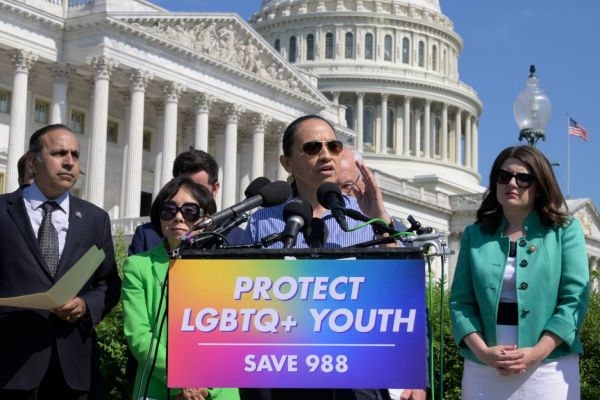
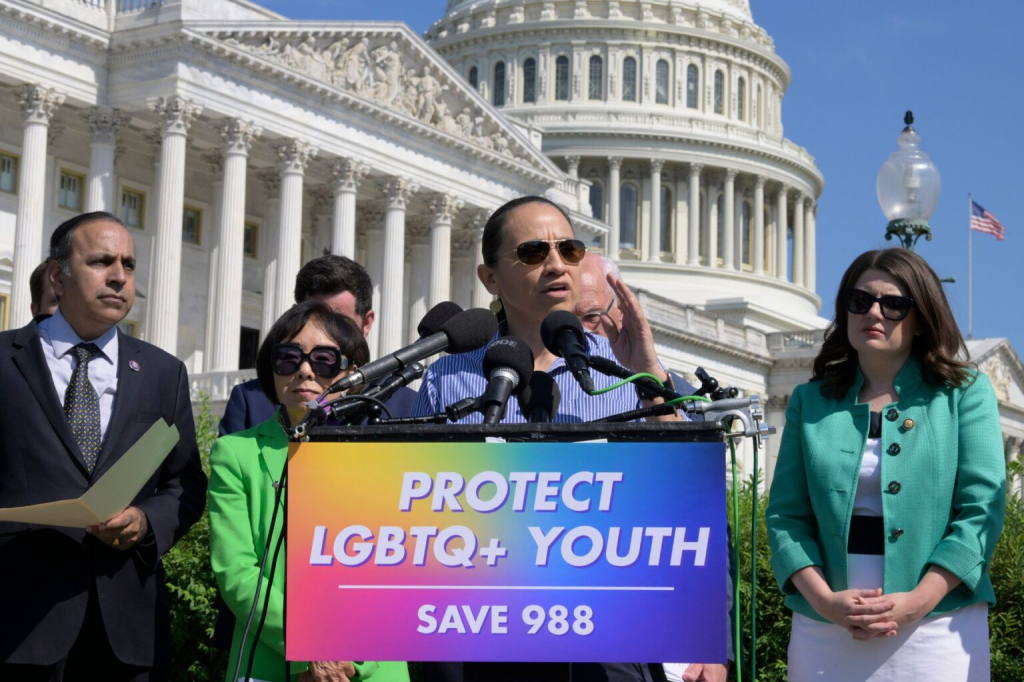
Sens. Tammy Baldwin, a Democrat, and Lisa Murkowski, a Republican, introduced a bipartisan bill on Wednesday to re-establish national emergency suicide prevention services for LGBTQ+ youth — which have been stripped by the Trump administration at a time when the vulnerable group needs it most.
In July, the Trump administration terminated the 988 hotline’s LGBTQ+ services, which connected young people in crisis with counselors trained in supporting LGBTQ+ youth. This new bill, backed by the LGBTQ+ youth suicide prevention organization Trevor Project as well as the American Foundation for Suicide Prevention, would modify the Public Health Service Act to reinstate those services and require the Secretary of Health and Human Services to maintain them. The bill now moves to committee.
The Trevor Project estimates that more than 1.8 million LGBTQ+ young people seriously consider suicide each year in the United States, as they face high rates of bullying, assault and discrimination. And when the 2024 presidential race was called for Donald Trump, calls and texts to the Trevor Project’s own crisis hotlines spiked by 700 percent, as LGBTQ+ youth felt afraid about the outcome of the election.
“Given that LGBTQ+ youth are more than four times as likely to attempt suicide than their peers, the need for these services remains pressing,” said Jaymes Black, CEO of The Trevor Project, in a statement. “This is not about politics, or identity; this is about doing what is best to support our country’s highest risk populations — and save young people’s lives nationwide.”
During his first term in 2020, President Trump signed a bipartisan law to create 988 as a more accessible resource for mental health emergencies. The free hotline launched in July 2022. Since then, millions of people in crisis have turned to 988. And nearly 1.5 million of those calls, texts and chats were sent by young Americans seeking specialized LGBTQ+ services.
“We are in the middle of a mental health crisis, and the 988 lifeline saves lives, plain and simple,” said Baldwin, who wrote the original legislation to create the 988 hotline. Cutting funds for specialized services within 988 puts the lifeline in jeopardy, she said in a statement.
“There is absolutely no good reason that Donald Trump took away this specialized help for our LGBTQ youth. Mental health does not see partisan lines or geography,” the Wisconsin Democrat added.
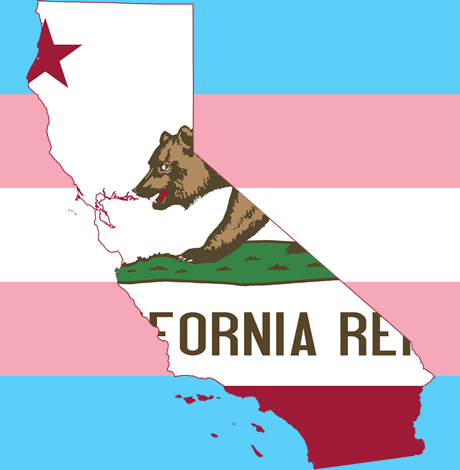
California lawmakers passed legislation this week to prevent health providers from releasing transgender patients’ confidential medical records in investigations of gender-affirming care in states that ban treatment for minors.
Senate Bill 497, introduced in February by Sen. Scott Wiener, a Democrat representing San Francisco, builds upon a 2022 state law that established California as a state of refuge for transgender people. That law, also authored by Wiener, prevents states that have banned gender-affirming care for minors from taking legal action against trans youth, their families and their doctors over treatment administered in California.
The latest bill would require law enforcement requesting health information about transgender people in California to provide a warrant, according to Wiener’s office. It would also bar medical providers from complying with out-of-state requests, including subpoenas, for information related to gender-affirming care.
“California must do everything in our power to protect the transgender community, and I’m confident that the Governor will continue his longstanding leadership on trans issues,” Wiener said in a statement on Thursday after the bill passed.
The California Senate voted 30-10 on Wednesday to pass Wiener’s bill, which the state Assembly passed earlier this week. A spokesperson for California Gov. Gavin Newsom (D) declined to comment, saying the governor’s office does not typically remark on pending legislation.
Newsom must sign or veto the measure by Oct. 13.
The vote on Wiener’s bill comes after the Justice Department announced in June that it had sent more than 20 subpoenas to doctors and clinics “involved in performing transgender medical procedures on children” in investigations of alleged health care fraud and false statements. A subpoena sent to the Children’s Hospital of Philadelphia that was made public in a court filing last month requested patients’ birth dates, Social Security numbers and home addresses, as well as “every writing or record of whatever type” from doctors related to the provision of gender-affirming care to adolescents younger than 19 years.
The subpoena requested information dating back to January 2020, more than a year before transition-related care was banned anywhere in the U.S.
On Tuesday, a federal judge blocked an effort by the Trump administration to subpoena medical records of transgender patients who received gender-affirming care at Boston Children’s Hospital, calling the Justice Department’s investigation improper and “motivated only by bad faith.”
In an email on Friday, a spokesperson for Wiener said Senate Bill 497, if signed, would “strengthen the case for any medical provider who wishes to fight Trump’s vicious assault on the transgender community.”
President Trump and administration officials have broadly sought to ban gender-affirming care for minors. A Jan. 28 executive order states that the U.S. “will rigorously enforce” laws that ban transition-related care for anyone younger than 19.
Laws adopted by more than half the nation since 2021 ban gender-affirming care for minors, which major professional medical groups say is medically necessary and often lifesaving for transgender youth and adults. In June, the Supreme Court ruled that states can ban treatment for minors, finding that Tennessee’s prohibition on puberty blockers, hormones and rare surgeries for adolescents does not constitute sex discrimination.
Ready to call Spain your new home? Join the thousands of Expats who have successfully relocated to Spain with our expert advice, resources, insider knowledge and handpicked network of service providers.
We ran into Alastair & Alison Johnson through the Expatsi organization. Find out everything you need to know about moving to Spain in this informative talk from people who know! Check them out at https://movingtospain.com/
Thinking about moving to Spain to escape political extremism in the U.S.? As part of the Flee Red States project, we sit down with Alastair Johnson of MovingToSpain.com , who has lived in Spain for many years with his wife and adult son.
In this interview, Alastair shares his first-hand experiences about:
🏳️🌈 The acceptance and visibility of the LGBTQ community in Spain
🏥 Easy access to Spain’s public healthcare system
🏡 Lifestyle, culture, and why Spain is a welcoming choice for American expats
🌞 The benefits of living abroad in a progressive, inclusive country
If you’re considering moving to Spain from the USA, becoming an American expat in Europe, or simply curious about LGBTQ rights in Spain, this video gives you practical insights and inspiration.
“These provisions… exacerbate, if not condone, the stigmatisation of homosexual persons in civil society and engender feelings of hostility fueled by persons who are inclined to take the moral high ground,” stated Eastern Caribbean Supreme Court Judge Shawn Innocent in his late July ruling striking down St. Lucia’s ban on same-sex intimacy.
The ruling coming down from the Heraldine Rock Building sparked swift, though not unanimous, reaction. The Caribbean’s LGBTQIA community celebrated the long-overdue victory, while religious conservatives issued dire warnings.
As Judge Innocent explained on the bench, many islanders and Caribbean citizens continue to navigate the fault lines between a dated colonial inheritance and a modern identity.
“It is the law itself which violates their constitutional rights,” Innocent’s ruling said. “They do not have to await prosecution under those sections to experience a violation. Without any equivocation, his liberty has been emasculated and abridged.”
The ruling made St. Lucia the latest in a growing list of Caribbean nations—including Barbados, Dominica, Antigua and Barbuda, and St. Kitts and Nevis—to decriminalize consensual same-sex relations through the courts. In doing so, it affirms what many legal scholars and LGBTQIA activists have long argued: that the region’s colonial-era sodomy laws are not just outdated, they are unconstitutional.
The win in St. Lucia comes at a time when the Caribbean LGBTQIA movement appears to not only be making progress in changing laws, but changing attitudes. This stands in contrast to the United States, where movement workers are fighting back against regressive measures, state-based legislation, and attempts by the Trump administration to gut federal civil rights protections.
For Glenroy Murray, St. Lucia’s policy change, part of a nearly decade-long strategy led by the Eastern Caribbean Alliance for Diversity and Equality (ECADE) and other local organizing groups, is the product of years of sustained advocacy.
“In the Caribbean, queer activists are saying: we deserve space, and we’re going to claim it—despite prevailing attitudes that have existed in this region for a long time,” said Murray, the Caribbean lead for Human Dignity, a legal advocacy organization that provides technical, legal, and communications support to queer organizations and governments worldwide.
What began as a debate among legal scholars, researchers, and grassroots LGBTQIA activists about the countries most ripe for a legal challenge to colonial-era sodomy laws has since evolved into a broad-based movement to decriminalize sexuality and fight for human rights across the region.
For the Caribbean movement, the struggle has been twofold: first, dismantling outdated “saving law clauses” that shield colonial-era statutes from constitutional challenge. Found in several post-independence constitutions, these clauses preserve pre-existing laws—even if they conflict with modern human-rights protections. In practice, they’ve made it far more difficult to overturn criminal statutes against same-sex intimacy. Activists argue that true equality cannot be achieved without dismantling these legal shields.
Compounding this are well-funded, transnational conservative movements determined to make LGBTQIA rights in the Caribbean harder to secure. Angelique Nixon, senior lecturer and researcher at University of the West Indies, St. Augustine Campus’ Institute for Gender and Development Studies, said that these actors, backed by U.S.-based evangelical and faith-based groups, frame equality as a Western imposition and deploy religious and moral rhetoric to stir cultural resistance.
“Globally, we’re seeing the rise of well-funded, transnational anti-rights movements that actively export homophobic and transphobic ideologies across borders, often under the guise of protecting traditional values or religious freedoms,” Nixon said.
“This transnational dimension makes our struggle particularly challenging,” she emphasized.
The American religious right has directly targeted the Caribbean: groups affiliated with the American Center for Law and Justice (ACLJ) have conducted legal training in Belize, while Alliance Defending Freedom (ADF) and other U.S. advocacy networks have bolstered local opposition to reform.
Meanwhile, Family Watch International—designated a hate group by the Southern Poverty Law Center—has expanded its regional influence, launching campaigns in Africa and elsewhere.
“Without strong political leadership, these laws will stay in place and continue to justify stigma, discrimination, and violence—even if they’re not enforced,” Nixon said. “The mere existence of these laws creates a chilling effect. Legal ambiguity and inaction can silence LGBTQI+ people and make them more vulnerable.”
Murray underscored that these laws are rooted in colonial imposition. “Many of the laws against sodomy, buggery, and so-called ‘unnatural offenses’—in other words, laws criminalizing sexuality—were imposed across the Caribbean by the British,” he said. “In Jamaica, the law criminalizing intimacy between men dates back to 1864, and it remains in effect today.”
Quick not to lay all the blame on colonial powers, Murray added: “I won’t let Caribbean governments off the hook. They could have changed these laws a long time ago—there have been repeated calls to repeal them. In some cases, governments have not only retained these provisions but made them worse. And at times, there’s been a clear intentionality to keeps them in place.”
While legal reform remains paramount, organizers have also worked diligently to change hearts and minds—advancing broader issues like health equity, education, and housing.
In its fight against liberal American misconceptions about Caribbean homophobia, the movement’s organizing strategy has centered on balancing the region’s often-professed anti-LGBTQIA identity with lived experiences that are far more varied. Murray explained that this nuance does not discount the violence, displacement, and harm faced by LGBTQIA people, but it has remained front of mind for organizers.
“For a time, much of our culture was not pro-gay, but it still allowed for a type of existence,” Murray said. “Over time, as queer people became more visible, violence escalated—and that’s when the region became known for being homophobic.”
Despite stigma, advocates have advanced regional efforts like the Pan-Caribbean Partnership Against HIV/AIDS, housing access expansion, and educational equity.
“In general, our leadership across the region is clear: they don’t support discrimination,” Murray said “When we talk about housing, we make it inclusive. When we talk about healthcare, we make it inclusive. And that matters.”
Murray’s analysis came with a caveat.
“But on hot-button issues like discrimination protections or relationship recognition, leaders tend to be far more cautious—often because of misperceptions about voters,” he said.
Beyond policy and legal reform, organizers recognize that shifting public opinion is essential. A 2023 survey by the Equality for All Foundation/J-FLAG, Jamaica’s leading LGBTQIA rights group, found that 50 percent of Jamaicans support changing laws to ensure equal rights, a dramatic shift from 2018, when 69 percent predicted strong resistance.
This change, advocates say, stems from grassroots organizing, increased visibility of LGBTQIA people, and the political engagement of younger voters. Nixon believes the movement could benefit from even greater international support.
“We need solidarity rooted in care, justice, and long-term commitment,” Nixon said. “Effective support must go beyond symbolic gestures to include sustained material and strategic assistance. That means funding community-led initiatives, creating safe spaces for healing and organizing, and backing the grassroots work that makes all this possible.”
Texas Attorney General Ken Paxton withdrew the state’s lawsuit against pediatric endocrinologist Dr. Hector Granados on Thursday after finding no evidence that he violated the state’s ban on gender affirming care for trans youth.
Paxton sued Granados in October 2024, accusing him of providing puberty blockers and hormones to patients as young as 12 in treatment for gender dysphoria. Paxton accused Granados of falsifying medical and billing records to mislead pharmacies and insurance providers into covering the care.
Paxton initially called Granados a “scofflaw who is harming the health and safety of Texas children,” and Granados wasn’t notified before the lawsuit’s filing, in worries that he might try to destroy relevant records, The Hill reported.
However, Granados said he stopped providing gender-affirming care in May 2023, after the state’s legislature passed the law. Now that Paxton’s office has dropped its charges against him, Paxton’s office will now “focus on other ongoing cases against doctors who illegally provided harmful ‘transition’ treatments and drugs to children,” an attorney general spokesperson said, according to The Hill.
The state has also sued May Lau and M. Brett Cooper, two medical providers from the University of Texas’ Southwestern Medical Center in Dallas. If found guilty, both could possibly lose their medical licenses and face hundreds of thousands of dollars in fines.
Despite Paxton’s claim about gender-affirming care being “harmful,” the medications used in such care have been used safely in children for decades for the purposes of gender transition and to treat other medical issues in cisgender children as well. In fact, Texas’ law stands in opposition to the best care practices for treating gender dysphoria recommended by every major American medical association. These associations agree that such care is safe, effective, and essential for the overall well-being of trans people.








 fleeredstates.blog
You must be logged in to post a comment.