Trans refugee speaks about fleeing brutal anti-LGBTQ+ persecution in Russia-occupied territories

Read more at LGBTQ Nation.

Six months into Russia’s invasion of Ukraine in 2022, Lilia Khvylka had a decision to make.

The transgender Ukrainian, who grew up on the Crimean Peninsula, was already living under Russian occupation; Vladimir Putin invaded and annexed that Ukrainian territory in 2014.

Now Khvylka was under house arrest for posting pro-Ukrainian messages on social media, she told Mezha, an independent Ukrainian news outlet.

“They opened a case against me under Article 207.3 of the Criminal Code of the Russian Federation – discrediting the Armed Forces of the Russian Federation. This is a very serious crime, which they classify as terrorism. They were going to set a preventive measure for me literally in the coming days.”

Khvylka had already been outfitted with an ankle bracelet to monitor her movements.

She recalled taking part in the Revolution of Dignity in 2014, which ousted pro-Russian President Viktor Yanukovych and restored the 2004 Constitution of Ukraine.

The same year, Putin invaded Crimea.

“When the Russian authorities arrived, freedom of speech completely disappeared. Ukrainian activists and journalists immediately began leaving or disappearing,” Khvylka said.

At the same time, Khvylka was navigating her transition.

“At 16, I already knew I would undertake a transgender transition, because I am a girl. But I was very afraid to go to doctors in Russia or talk to anyone about it.”

In Crimea, she was forced to hide her identity; there, she was known as Illya Gantsevskyi.

Facing the prospect of 15 years in prison for her posts and terrified her true identity would come to light, Khvylka fled. The so-called head of the Republic of Crimea, Sergey Aksyonov, had already declared war on LGBTQ+ people.

“I cut off my bracelet and ran away,” she said.

Khvylka left the peninsula through Russia and Belarus, holding only a Ukrainian birth certificate. Volunteers, whom she found online through an underground network of supporters, helped in her getaway.

With her flight to freedom, Khvylka avoided a fate that other LGBTQ+ Ukrainians have been unable to escape.

“This included torture, torment, public humiliation, bodily injuries, and sexual violence,” said human rights lawyer Karolina Palaychuk.

Documented testimonies from people in the Kherson region, occupied by Russia for nine months at the start of the war, confirm the terror inflicted on LGBTQ+ people in the Russian-occupied territory.

“One of the people who gave these testimonies said that he was stopped at a checkpoint, his phone was checked, they saw the relevant content, and they immediately threw him into a basement,” said Iryna Yuzyk, manager for the Center for Human Rights, ZMINA. “There, they beat him, forced him to wear a red dress, took him to interrogations in a red dress, naked, they tormented him. He was lucky to survive.”

Another captive was Diana, a 24-year-old lesbian.

“She used to work as a shop assistant. She had colorful hair; they drew attention to her. They came with searches to her home, found a rainbow flag, and also threw her into the basement, where there were another 15 people. Then they lined them up and shot them at random. Only four survived.”

Human rights advocates are advising all LGBTQ+ Ukrainians — in particular activists who have a history of advocacy in conflict with Russia’s 2023 Supreme Court ruling declaring the LGBTQ+ community a “terrorist organization” — to leave the occupied territories, where protection under Ukrainian law no longer applies.

According to NGO Prozhektor, at least 50 people who’ve left the occupied territories have endured torture and violence due to their LGBTQ+ identity.

Seven victims have filed statements; thirteen are witnesses to other crimes.

Supreme Court allows trans kids in South Carolina to use the right bathrooms in school

Read more at LGBTQ Nation.

The U.S. Supreme Court said Wednesday that South Carolina cannot enforce its anti-trans bathroom ban against one transgender student while his challenge to the law moves through the courts.

The law, which went into effect in 2024, requires students in South Carolina public schools to use bathrooms that align with their “biological sex … as objectively determined by anatomy and genetics existing at the time of birth.”

Last year, a 13-year-old transgender boy identified in court documents as John Doe was suspended for using the boys’ restroom at his Berkeley County school. Despite none of his peers objecting to his use of the boys’ restroom, when Doe returned from suspension, school staff were instructed to police his bathroom use, and teachers began dividing students into “boys” and “girls” lines before restroom breaks to enforce the policy.

Faced with constant harassment by teachers and the threat of another suspension, Doe’s parents withdrew him from the school and enrolled him in an online program.

The following November, Doe’s family, along with LGBTQ+ advocacy group Alliance for Full Acceptance, filed a class action suit challenging the South Carolina law. As MSNBC notes, a district court judge in the state halted the case in July after the Supreme Court announced it would hear two cases related to transgender women’s participation in sports. Doe appealed to the U.S. Court of Appeals for the Fourth Circuit, which issued an injunction in the boy’s favor in August, preventing the state, the school district, and other defendants from enforcing the law against him while the appeal proceeds through the courts.

According to MSNBC, the three-judge panel cited the court’s 2020 ruling in Grimm v. Gloucester County School Board that trans students are entitled to use restrooms aligned with their gender identity. However, George W. Bush-appointee Steven Agee stipulated that the Grimm decision was the only reason he sided with Doe and expressed hope that the Supreme Court would overturn that case, which he described as having been decided wrongly.

That same month, South Carolina asked the Supreme Court to lift the Fourth Circuit’s injunction, arguing in its emergency relief application that Grimm was wrongly decided and that the Fourth Circuit should have considered the Supreme Court’s recent decision in United States v. Skrmetti, which upheld Tennessee’s restrictions on gender-affirming care for trans youth. The state argued that it, the school district, and students were “suffering actual, ongoing, material harms” due to Doe being allowed to use the boys’ restroom at school.

On Wednesday, a six-justice majority denied South Carolina’s request, with Republican appointees Clarence Thomas, Samuel Alito, and Neil Gorsuch saying they would have sided with the state, according to HuffPost.

In its order, the Court wrote that its denial of South Carolina’s application was “not a ruling on the merits of the legal issues presented in the litigation.” Rather, the justices wrote, “it is based on the standards applicable for obtaining emergency relief from this Court.”

LGBTQ Russians flee Putin’s crackdown to build new lives in Spain

Read more at NBC News.

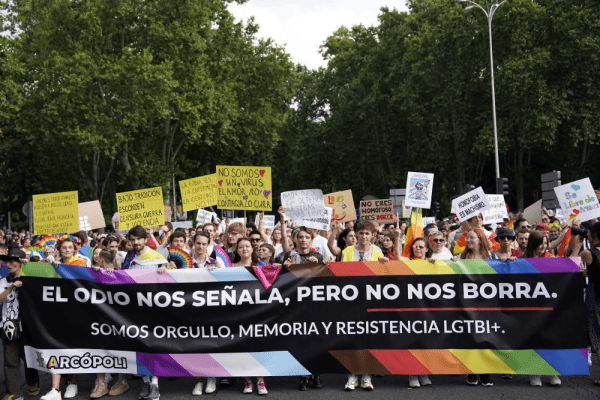
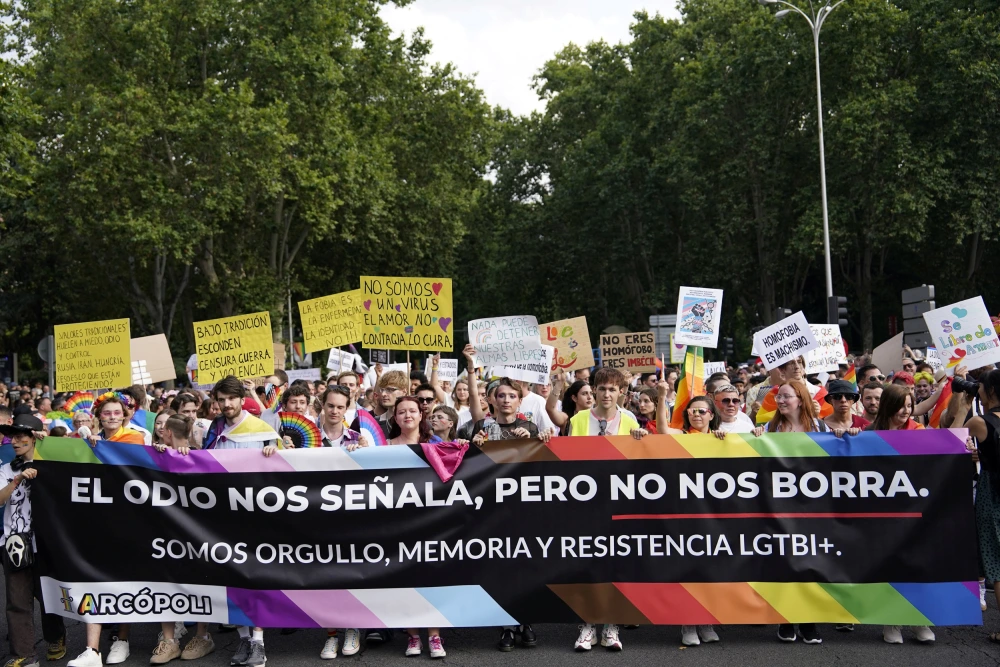
When Diana, a bisexual Russian asylum seeker, took part in her first Madrid Pride festival last year, she was delighted to see people waving the white-blue-white flag that has become a symbol of Russian opposition to its war on Ukraine.

She was also ecstatic to be among around 100 Russians who were waving LGBTQ flags and chanting, “Russia without Putin.” It felt surreal, said the 24-year-old, who did not want to give her last name for fear of retaliation.

“I couldn’t believe I would not be sent to prison. Everyone around was so happy,” she recalled as she marched again for Pride in the Spanish capital in July.

Also taking part was Ilia Andreev, who was vigorously waving a bright pink Mr Gay contest flag as the float he was perched on crept slowly through the crowds. For the 23-year-old, who fled Russia’s anti-LGBTQ laws in 2023, it was a moment to savour.

“I can be proud,” he said in Spanish.

The occasion was a far cry from the repression that drove him and other LGBTQ Russians out of their homeland in recent years, with many seeking refuge in Spain, which ranks fifth in the 2025 ILGA-Europe Rainbow Index, which ranks countries’ legal and policy practices.

“Spain is internationally recognized as a country that respects human rights and in particular the rights and freedoms of the LGBTQI+ community,” said Elma Saiz, the minister for Inclusion, Social Security and Migration, on International LGBTQI+ Pride Day in June.

Asylum applications from Russians more than doubled to 1,694 in 2023 from 684 in 2022, with Russia becoming one of the top 10 origin countries for applications in Spain, according to the Spanish Commission for Refugees (CEAR).

Of those processed, 59.7% received refugee status.

Elena Munoz, coordinator of the legal team at CEAR, said there had been a rise in Russian LGBTQ-related applications, although data on specific motives for asylum applications are not yet being collected.

The main reasons Russians gave for leaving their home included forced recruitment into the armed forces and the deteriorating human rights situation, including regarding gender identity and sexual orientation.

As well as introducing a raft of anti-LGBTQ laws, Russian President Vladimir Putin has been using the LGBTQ community as a political scapegoat, said Marc Marginedas, a journalist and expert in Russian affairs.

“Propaganda has fostered a climate comparable to Nazi Germany,” Marginedas said, saying Putin was using an “external enemy” to rally society and distract from military failures.

Legal crackdown in Russia

In 2013, Russian lawmakers passed a government-sponsored ban on distributing “propaganda of nontraditional sexual relationships” among minors.

In December 2022, after Russia launched its invasion of Ukraine, Putin signed an amendment to the law, extending the prohibition to all age groups.

The crackdown has led to the arrest of journalists, lawyers and human rights activists, with many others leaving the country.

Andreev, who worked as a TV journalist in the city of Kazan in southwestern Russia, said he had to hide his identity after he was accused of spreading “LGBTQ+ propaganda.”

“When I once wore earrings on air, I was called in by the news director and the executive program producer. She told me they had received many calls complaining about so-called gay propaganda because of the earrings,” he said.

He decided to come to Spain in 2023 on the recommendation of a friend, who had also moved.

Diana said she was fired after her boss saw her kiss her partner. She did not want to give details of her job or where she lived for fear of retribution.

While on holiday in Georgia in 2022, her home in Russia was visited by authorities because of her volunteer work with Ukrainians in Russian-occupied areas, and she decided she could not return. Growing anti-LGBTQ rhetoric in Georgia pushed her to move to Spain two years later.

Red tape and barriers

Andreev and Diana both applied for asylum and are still waiting for a ruling.

The legally mandated six-month process often stretches much longer, even up to two years. After six months, asylum seekers are allowed to seek work.

But it can take months to get an initial appointment with immigration authorities, and without this, asylum applicants cannot access state aid or support from organizations like CEAR.

Delays are also driving an illegal black market.

According to NGOs, Spanish police and officials, criminals collect immigration appointments using bots and then sell these so-called “mafia de citas,” or mafia appointments, for hundreds of euros on WhatsApp or Telegram to desperate asylum seekers.

And now things are getting for Russians hoping to submit asylum claims in Spain.

From July 12, Spain requires Russian citizens to obtain transit visas to pass through the country.

In the past, Russians would buy a ticket with a layover in Spain and then seek asylum during their stopover.

“It makes it difficult to reach safe territory, in this case Spain, because they no longer have a legal and safe route,” said Munoz, adding that reforms were needed to make the system more efficient.

The Ministry of Foreign Affairs, which is responsible for visa policy, did not respond to requests for comment.

While they await their asylum decisions, Diana and Andreev are rebuilding their lives.

Andreev, who volunteers in an LGBTQ rights group, has found a home in a small town near Madrid and is working on his Spanish — he hopes to return to journalism one day. But he has struggled to build new relationships.

The stress of job hunting and trying to get all the documents he needs, plus the time it takes up make it hard to focus on building connections, he said.

Diana now has stable online work and says she has found her chosen family in Madrid, mainly thanks to online networks of LGBTQ+ Russians who offer each other support.

She feels free, even if she still fears Russian retaliation.

“If I want, I can date women, I can date men, I can date whoever. I’m not in a hurry. Why would you be in a hurry? The Spanish lifestyle relaxes you a little bit.” 

The president was sued for deleting “radical” LGBTQ+ webpages. He just lost.

Read more at LGBTQ Nation.

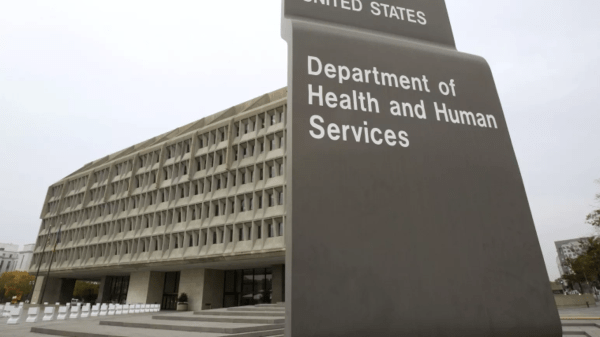
As part of a legal settlement with medical associations and advocacy groups, the current presidential administration has agreed to restore more than 100 websites and online resources related to gender identity and diversity, equity, and inclusion (DEI).

“I am extremely proud of the health care community in Washington state and our partners in this case for pushing back on this egregious example of government overreach” said Dr. John Bramhall, president of the Washington State Medical Association (WSMA), the lead plaintiffs in the lawsuit. “This was not a partisan issue-open data benefits everyone and ensuring its availability should be a bipartisan priority.”

In January, the president issued an executive order directing federal agencies to eliminate references to “gender” and “gender identity” from federal policies, documents, and public-facing materials. In response, the Department of Health and Human Services (HHS) removed public health data from federal websites, including information on pregnancy risks, painkiller addiction, and the AIDS crisis. Hundreds of webpages addressing health concerns relevant to the LGBTQ+ community, including the National Institutes of Health’s (NIH) HIV risk-reduction tool, were removed.

“This action proves the … administration’s goal of making it as difficult as possible for LGBTQ Americans to find federal resources or otherwise see ourselves reflected under his presidency,” GLAAD’s President and CEO Sarah Kate Ellis said in January.

Physicians, scientists, and other medical professionals who relied on these resources were left scrambling. The Washington State Medical Association (WSMA) and other groups filed suit, arguing that the removals were “arbitrary, capricious, and unreasoned,” and violated federal transparency laws.

“This was trusted health information that vanished in a blink of an eye-resources that, among other things, physicians rely on to manage patients’ health conditions and overall care,” said Dr. Bramhall. “Not only was our ability to provide care to our patients compromised, but our trust in our federal health institutions has also been badly shaken.”

As part of the agreed settlement finalized earlier this month, the government must restore these webpages and cease deleting other resources. Graham Short, a spokesperson for WSMA, told the Associated Press that the organization expects the websites to be fully restored in the coming weeks.

Despite the settlement, HHS stated that it “remains committed to its mission of removing radical gender and DEI ideology from federal programs, subject to applicable law, to ensure taxpayer dollars deliver meaningful results for the American people.”

Separately, in July, a judge overseeing a similar lawsuit brought by Doctors for America ordered the government to restore additional websites that were removed. The Associated Press reported that 167 of those sites had been reinstated, while 33 were still under review.

Creator of the trans flag is fleeing U.S. due to LGBTQ+ persecution

Read more at The Advocate.

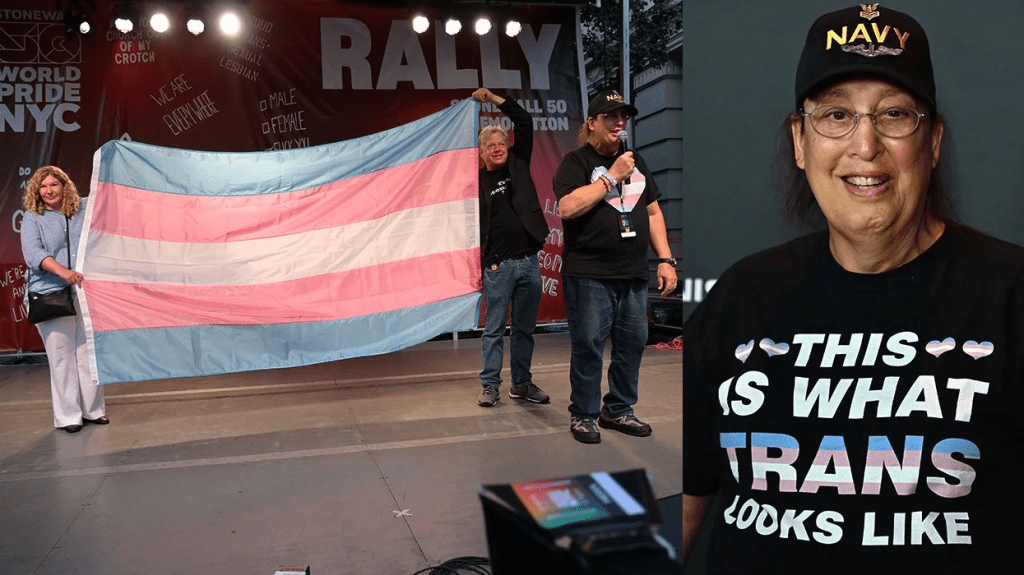
Monica Helms, the Navy veteran and creator of the original transgender pride flag, is fleeing the country due to anti-LGBTQ persecution.

She and her wife, Darlene Wagner, launched a GoFundMe earlier this year to facilitate their move abroad.

“We are worried there’s a possibility something could happen where we end up getting arrested just for being who we are,” Helms said in an interview with the Bay Area Reporter when the fundraiser first kicked off.

The couple currently lives in Georgia, which Erin in the Morning’s newest risk assessment map labeled as a “high risk” area for transgender people. Helms is by no means the only transgender refugee fleeing the United States. In May, a Williams Institute poll found that nearly half of all trans adult respondents had considered moving out of state or out of the country.

Since 2023, almost three dozen anti-trans bills have been introduced in Georgia, four of which have passed, according to the Trans Legislation Tracker. There was a ban on trans girls playing on scholastic women’s sports teams, a ban on using state funds to provide transition-related health care to incarcerated people, a ban on providing evidence-based medical treatment for minors with gender dysphoria, and the Georgia Religious Freedom Restoration Act—which does not explicitly target trans people, but is likely to make it easier to discriminate against them using religion as a legal defense. (Thankfully, there have been some successful and ongoing legal challenges to many of these policies.)

However, “even blue states are starting to see problems,” Helms told the Bay Area Reporter. California’s governor reportedly moved to kill pro-LGBTQ bills behind the scenes; New Jersey school boards have engaged in a coordinated effort to forcibly out trans students to hostile parents; and hospitals located within Democratic strongholds across the country are violating state equal protections laws to deny trans kids access to health care, capitulating to Trumpian threats.

NBC’s Jo Yurcaba profiled families of trans kids moving to places like Australia and New Zealand. Hannah Kreager, a 22-year-old trans woman from Arizona, filed a groundbreaking asylum claim in Canada earlier this year; if granted, it would mark the first time a trans person from the United States would be given asylum in another country due to their LGBT status.

Of course, all of these stories come with the presumption of privilege. Trans people in these scenarios may have had familial support and/or a source of income or wealth that enabled them to uproot their lives to a safer place. Others resort to bouncing from state to state to receive care, uprooting their lives to live in a more tolerant community or traveling across state or international lines periodically to access health care.

As for Helms, she vowed to continue to fight for trans people no matter where she lives. “We will not abandon our activism,” she wrote in her GoFundMe.

Helms designed the transgender pride flag after having a conversation with the creator of the bisexual pride flag in 1999, she told the Bay Area Reporter. She has said it is important to her that it remains open and free to use for the public. The pink, white, and blue flag has become a household symbol for trans people and their loved ones.

“No matter how you fly it, it’s always correct, which signifies finding correctness in our own lives,” Helms said.

US appeals court rejects Trump bid to restore passport policy targeting transgender people

Read more at Reuters.

A federal appeals court on Thursday declined to allow U.S. President Donald Trump’s administration to refuse to issue passports to transgender and nonbinary Americans that reflect their gender identities.

A three-judge panel of the Boston-based 1st U.S. Circuit Court of Appeals declined, opens new tab to put on hold an injunction issued by a trial judge barring the U.S. Department of State from enforcing a policy it adopted at Trump’s direction.

“We’re thankful the court rejected this effort by the Trump administration to enforce their discriminatory and baseless policy,” said Li Nowlin-Sohl, a lawyer with the American Civil Liberties Union, which pursued the case.

The White House had no immediate comment.

The lawsuit is one of several concerning an executive order Trump signed after returning to office on January 20 directing the government to recognize only two biologically distinct sexes, male and female.

The Republican president’s order also directed the State Department to change its policies to only issue passports that “accurately reflect the holder’s sex.”

The State Department subsequently changed its passport policy to “request the applicant’s biological sex at birth,” rather than permit applicants to self-identify their sex, and to only allow them to be listed as male or female.

Before Trump, the State Department for more than three decades allowed people to update the sex designation on their passports.

In 2022, Democratic President Joe Biden’s administration allowed passport applicants to choose “X” as a neutral sex marker on their passport applications, as well as being able to self-select “M” or “F” for male or female.

Transgender, nonbinary and intersex people represented by the ACLU sued, arguing the policy unlawfully prevented them from obtaining passports consistent with their gender identities or with an “X” sex designation.

U.S. District Judge Julia Kobick agreed, saying the State Department’s policy was arbitrary and was rooted in an irrational prejudice toward transgender Americans that violated their equal protection rights under the U.S. Constitution’s Fifth Amendment.

Kobick, a Biden appointee, initially issued a narrow injunction covering six individual plaintiffs but in June expanded it nationwide after granting the case class action status.

The 1st Circuit panel, comprised of three Biden appointed judges, said the administration failed to make a strong showing that an agency action implementing a presidential directive was unreviewable or meaningfully engage with Kobick’s conclusion the policy reflected “unconstitutional animus toward transgender Americans.”

DOJ mulling rule that could restrict transgender individuals from owning guns

Read more at ABC News.

Senior Justice Department officials have held internal deliberations in recent days over potentially issuing a rule that could restrict transgender individuals from being able to own firearms, two officials familiar with the discussions confirmed Thursday to ABC News.

The policy discussions, which are believed to be in their early stages and driven in part by chatter in right-wing media, follow last week’s Minneapolis Catholic church shooting that the FBI has said was carried out by a transgender woman.

Such a proposal could face significant pushback not only from civil rights groups but from gun rights organizations, which have historically been resistant to the issuance of any regulations restricting people’s access to firearms.

There is no evidence to suggest transgender people are more likely to be violent than the general population. However, transgender people are far more likely than average to be the victim of a violent crime.

Still, the discussions have percolated in recent days among top officials in the Justice Department, including in the Office of Legal Counsel, which provides legal advice to all executive branch agencies.

The American Psychiatric Association (APA) and other major medical associations do not consider being transgender a mental illness and recognize transgender and gender diverse identities as normal variations in human expression. The APA distinguishes gender dysphoria — which is defined as “clinically significant distress or impairment” that transgender individuals may experience when they feel a difference between their assigned sex at birth and their gender identity — as a separate diagnosis, and supports gender-affirming care while opposing practices that try to change a person’s gender identity.

DOJ officials have debated whether having a diagnoses of gender dysphoria could disqualify someone under a federal law that restricts people who are “adjudicated as mental defective” from owning guns, sources said.

The possible move would be the latest escalation in an ongoing push by the Trump Administration to restrict the rights of transgender individuals — and would appear to conflict with other moves by the Justice Department to lift what it has argued are unfair burdens restricting Americans’ Second Amendment rights to bear arms.

Among its efforts, the DOJ has proposed a new rule that could restore gun ownership rights to certain people with felony convictions, and has said it would pursue civil rights investigations into cities that it says engage in a pattern or practice of depriving local citizens of their Second Amendment rights.

Laurel Powell, director of communications at the Human Rights Campaign, told ABC News in a statement, “The Constitution isn’t a privilege reserved for the few; it guarantees basic rights to all. Transgender people are your neighbors, classmates, family members, and friends — and we deserve the full protection of our nation’s laws, not anti-American nonsense from the White House.”

“If rights can be stripped from one group simply because of who they are, they can be stripped from anyone,” Powell said.

A Justice Department spokesperson told ABC News, “The DOJ is actively evaluating options to prevent the pattern of violence we have seen from individuals with specific mental health challenges and substance abuse disorders. No specific criminal justice proposals have been advanced at this time.”

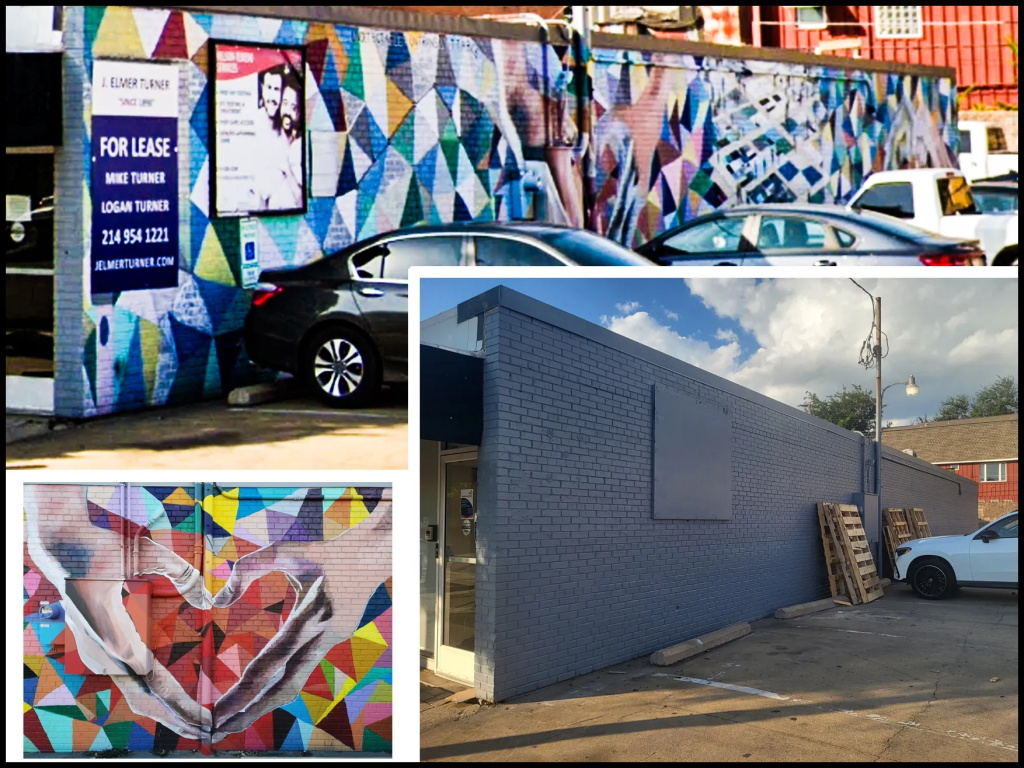
New Dallas office tenant at 4014 Cedar Springs paints over AIDS mural

Read more at the Dallas Voice.

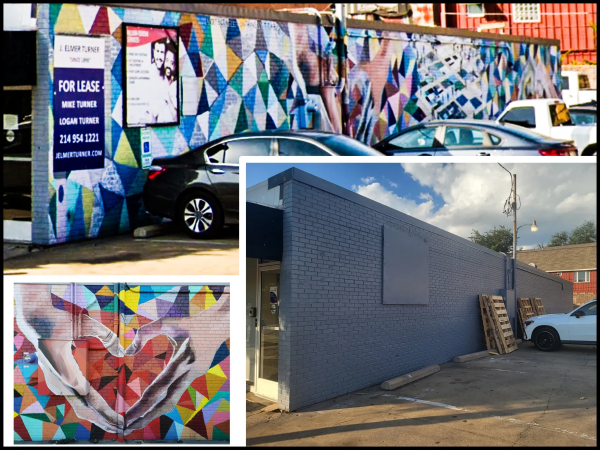
Social media posts made Tuesday evening show the south side of the building at 4014 Cedar Springs Road, the former home of Resource Center’s Nelson-Tebedo Health Center, painted a dark, dull gray. The blank slate wall came as a shock to many of the area’s residents, visitors and business who were used to seeing a vibrant, multi-color mural honoring the LGBTQ+ community and the fight against HIV/AIDS.

As Lee Daugherty noted in a post to the Friends of Oak Lawn page on Facebook, “Today a new tenant on Cedar Springs at the old Nelson-Tebedo [clinic] took it on themselves to paint over a 2018 mural of the AIDS quilt, a solemn remembrance and a dedication that we take care of each other. I’m unaware which clinic is moving in at this time, but it’s brave to move into a community and immediately erase it.”

The mural, known as Dallas Red Foundation’s HIV/AIDS Commemorative Mural, was conceived as a joint project between Dallas Red Foundation’s REDucate Committee and the community art group Arttitude, designed by Arttitude muralist Lee Madrid “after talking with community leaders and employees of Resource Center’s Nelson-Tebedo Clinic upon which the mural is painted. The mural offers a message of hope and community while acknowledging the HIV/AIDS crisis and the continued need for HIV/AIDS to be at the forefront of public attention,” John Anderson, secretary of Dallas Red Foundation and a member the REDucation Committee, explained in a January 2019 Voices column in Dallas Voice.

Anderson told Dallas Voice Tuesday night that the new tenant in the building is the AIDS Healthcare Foundation clinic. He wrote in a post on his own Facebook page, “A LOT of work was put into this by a few different local organizations. Community art is not something you can just erase. Someone has some explaining to do.”

In his 2019 column for Dallas Voice, Anderson explained that the mural was designed, with input from community leaders and employees of Resource Center’s Nelson-Tebedo Clinic, to “offer a message of hope and community while acknowledging the HIV/AIDS crisis and the continued need for HIV/AIDS to be at the forefront of public attention.”

He said that the mural featured “four diverse hands coming together to create red heart shapes” intended as the perfect backdrop for selfies. In addition, “References to the decline in deaths over time and the ever-increasing number of individuals living with HIV [were] incorporated between multicolored, geometric shapes” painted in colors “reminiscent of the quintessential rainbow motif common in LGBTQ art and culture. A large portion of the mural depict[ed] silhouettes looking over sections of the NAMES Project AIDS Memorial Quilt, created as a memorial celebrating the lives of people who have died of AIDS-related causes.”

Dallas Voice Senior Staff Writer David Taffet has written several articles chronicling the conception of the mural and its progress along the way. Read some of them herehere and here.

Dallas Voice will be contacting AHF to ask why the mural was painted over and who made the decision to do so. When we hear from them, we will update this post.

Nation of Burkina Faso will start throwing gay people in jail

Read more at LGBTQ Nation.

The West African nation of Burkina Faso’s ruling junta unanimously passed a law banning homosexuality yesterday.

“The law provides for a prison sentence of between two and five years as well as fines,” said Justice Minister Edasso Rodrigue Bayala. “If a person is a perpetrator of homosexual or similar practices, all the bizarre behavior, they will go before the judge.”

He said that foreigners will be deported under the law.

Burkina Faso has been under the rule of a military junta since September 2022, when former Interim President Paul-Henri Sandaogo Damiba – who himself came to power in a coup d’état several months earlier – was removed from his office. The civil unrest is a result of the government’s inability to contain an Islamist insurgency.

The Muslim-majority nation had been among the 22 out of 54 African states where same-sex relations were not criminalized. The one-time French colony didn’t inherit anti-homosexuality laws found in many former British colonies.

But the bill to ban homosexuality was supported by 71 unelected members of the transitional parliament yesterday as part of a wider set of family and citizenship law reforms “popularized through an awareness campaign,” officials said. The bill was initially approved by the military government’s leader, Captain Ibrahim Traoré, last year. Traoré has been shifting the country’s focus away from its close relationship with France and toward Russia.

The law goes into effect immediately.

Human rights groups have accused the government of cracking down on human rights with mass arrests and conscripting critics into the military.

In late 2024, neighboring Mali also banned homosexuality. Two other African nations – Ghana and Uganda – increased the punishments for homosexuality in recent years.

“Bathroom bill” aimed at trans people approved by Texas House after decade of failed attempts

Read more at the Texas Tribune.

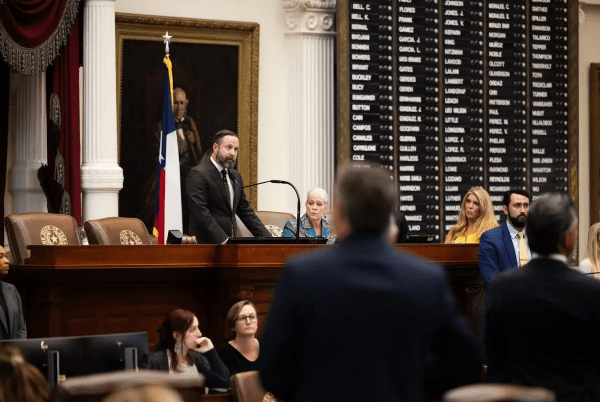
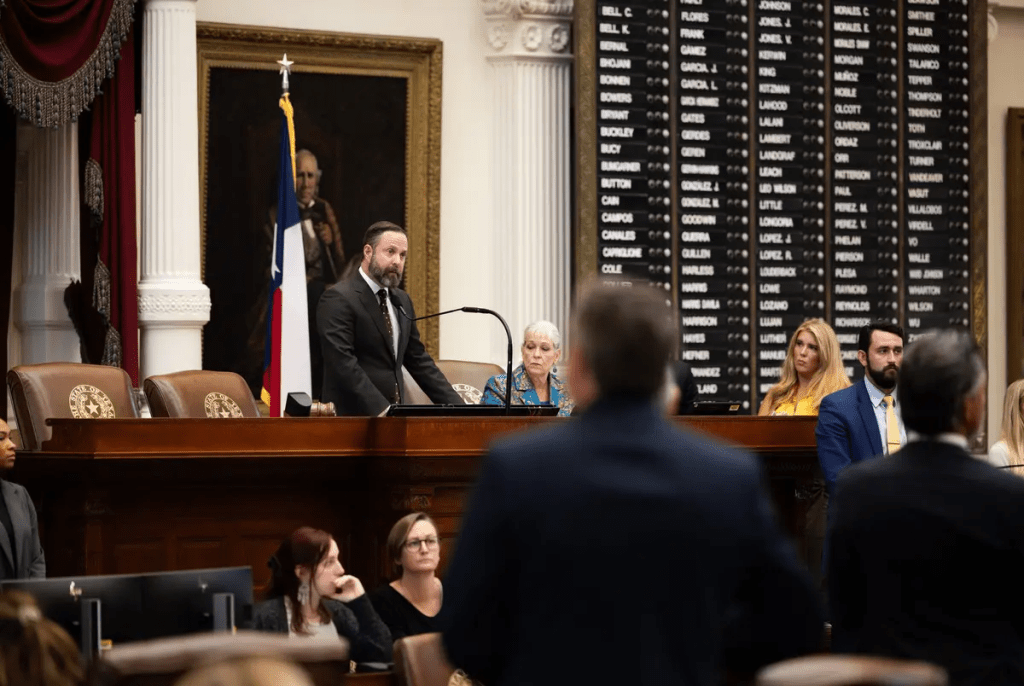
Texas House members clashed over a bill that would restrict which restrooms transgender people can use in government buildings and schools, but ultimately approved it late Thursday.

Representatives approved Senate Bill 8 on a 86-45 vote after several hours of tense debate that was at times interrupted by people in the gallery shouting insults at lawmakers who supported the bill. The House gallery, where visitors can watch proceedings, was emptied out by staff and Department of Public Safety officers after the disruptions continued.

SB 8 would restrict bathroom use in government-owned buildings, public schools and universities based of sex assigned at birth and would not allow exceptions for transgender inmates’ housing in prisons and jails. It would also bar those assigned male at birth from accessing women’s domestic violence shelters, unless they are under 17 and the child of a woman also receiving services.

Bathroom bills proposing civil or criminal penalties for entering restrooms not matching biological sex have been proposed in Texas for more than a decade, and 19 other states have successfully passed their own proposals. The Texas House, however, has largely failed to garner traction for bathroom bills after a tense battle over one proposal in 2017. The Texas Senate has passed six different bathroom bills since 2017.

A last-minute amendment from Rep. Steve Toth, R-Conroe, raised the proposed fines to $25,000 against institutions where violations occur, and $125,000 for any subsequent violations. The raised penalties would make SB 8 the most financially punitive bathroom bill in the country. The amendment was adopted without debate.

Supporters of SB 8, which has also been called the “Texas Women’s Privacy Act,” have said the bill is necessary to ensure safety and comfort for women in intimate spaces like changing rooms and bathrooms. The bill’s House sponsor, Rep. Angelia Orr, R-Itasca, said the goal of the bill is to prompt political subdivisions to create their own policies to ensure bathrooms are secure.

“The preference of someone’s sexual appearance does not override the safety and privacy of a biological female,” Orr said.

Orr said the bill does not affect privately owned or funded businesses, and will not create penalties against individuals.

Opponents of the bill have called the restrictions unnecessary, and that the bill would incite harassment against trans people and cisgender people falsely accused of entering the wrong facility. Rep. Jessica Gonzalez, D-Dallas, said she personally had been accused of entering the wrong restroom in the Texas Capitol, which already has a policy similar to SB 8’s proposal.

Questioning from Democrats who opposed the bill attempted to zero in on how the bill would be enforced, as it outlines that agencies will take “every reasonable step” to ensure the policy is followed. Orr said during questioning that it would be up to agencies how to enforce their policy. Previously when the bill was heard in committee, Orr said the policies would be determined based on how someone looked.

“Who do you think is more uncomfortable in the bathroom today? A cis woman, or a trans woman wondering if she’s about to be harassed?” Rep. Erin Zwiener, D-Driftwood, asked.

During testimony in both chambers through the session and on the House floor on Thursday, tensions between lawmakers for and against the bill flared. Several members argued in small groups multiple times and were separated by staffers as debate continued on the floor. At one point, Toth heckled Rep. Rafael Anchia, D-Dallas, for using Bible quotes as he spoke on a failed amendment designed to kill the bill. Toth was warned by a House staffer for the remarks.

Anchia later argued with Rep. Hillary Hickland, R-Belton, away from the floor debate after she chastised his use of the Bible and countered with her own quotes as she expressed support for the bill. Other members cited religion several times after to channel their support and opposition to the bill.

“Everyone is born a child of God, and everyone who is born into this life deserves to be treated that way,” Rep. John Bryant, D-Dallas said. “That is what the Bible says. That is what our hearts tell us. And the only time we act differently is when we get into politics.”

Representatives with family violence shelters expressed concern about the bill’s exclusivity during testimony earlier in the month, and said it could affect not just trans victims of domestic violence, but cisgender women with teenage dependents or adult dependents who are disabled. While four other states have similar sex-based restrictions on shelters, they still allow trans victims to be accepted if they have separate sleeping quarters.

“When you call the hotline, it is often the moment before you believe you will die. I don’t say that with hyperbole,” said Molly Voyles, director of public policy at the Texas Council on Family Violence, during the House State Affairs committee hearing last week when SB 8 was discussed. “Many women fleeing have a son who is 18 still in high school, or a child with a disability over that age for whom they are the primary caretaker. A choice to leave that includes leaving without your child is not a choice at all.”

SB 8 will be sent back to the Senate to approve the changes. Lawmakers have until Sept. 13 to approve any legislation during the second special session.

Blog at WordPress.com.

Up ↑