Hungary’s governing party has proposed constitutional changes that could mean a ban on an annual march celebrating the LGBTQ community and the expulsion of citizens with dual citizenship if they are deemed to pose a threat to the country’s sovereignty.
Nationalist Prime Minister Viktor Orban has repeatedly criticized LGBTQ people and pledged to crack down on foreign funding of independent media and nongovernmental organizations in Hungary in recent weeks, after his ally, U.S. President Donald Trump, paused funding from the U.S. Agency for International Development.
Trump’s steps prompted speculation that Orban would be emboldened and clamp down on media deemed to be unfriendly.
“The corruption network that rules the entire Western world of politics and media must be eliminated,” Orban told parliament on Feb. 24, adding that his government would “go to the wall” with the new laws.
The governing Fidesz party submitted its proposed amendments to the constitution late on Tuesday.
According to the proposed amendments, the constitution would add an amendment emphasizing the protection of children’s physical, mental and moral development over all other rights.
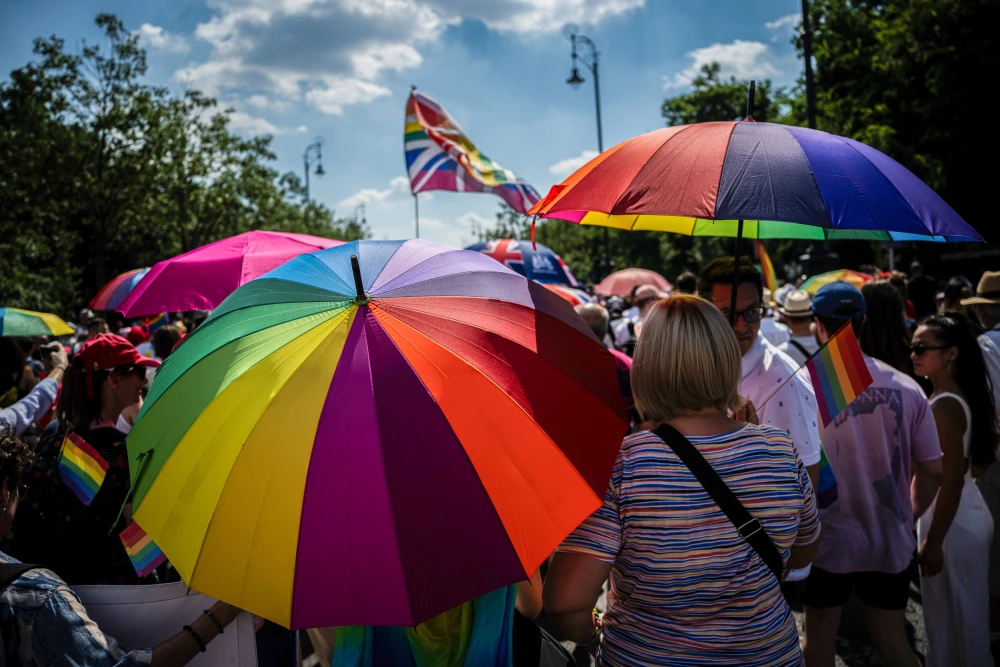
The new law could pave the way for a ban on the annual Pride March by LGBTQ communities as the event could be considered harming children and protecting their development would supersede the right to assemble.
Orban’s government is targeting the Pride March ahead of elections next year.
Another of the amendments states that Hungarian nationals who also hold a citizenship of another country can be expelled “if their actions pose a threat to Hungary’s national sovereignty, public order, territorial integrity or security.”
The changes will also enshrine in the constitution that Hungary will recognize only two sexes, male and female, an idea that Trump has also backed.
The proposed changes will also enshrine the right to cash payments in the constitution, embracing an idea the Hungarian far-right has backed because of a lack of trust in banks, draft legislation on the parliament’s website showed.
Orban, in power since 2010, faces elections in 2026 with the economy just moving out of an inflation crisis and with a surging new opposition party posing the strongest challenge yet to his rule.
City councilors in Boston voted 12-1 Wednesday to make Boston a sanctuary city for members of the LGBTQ+ community.
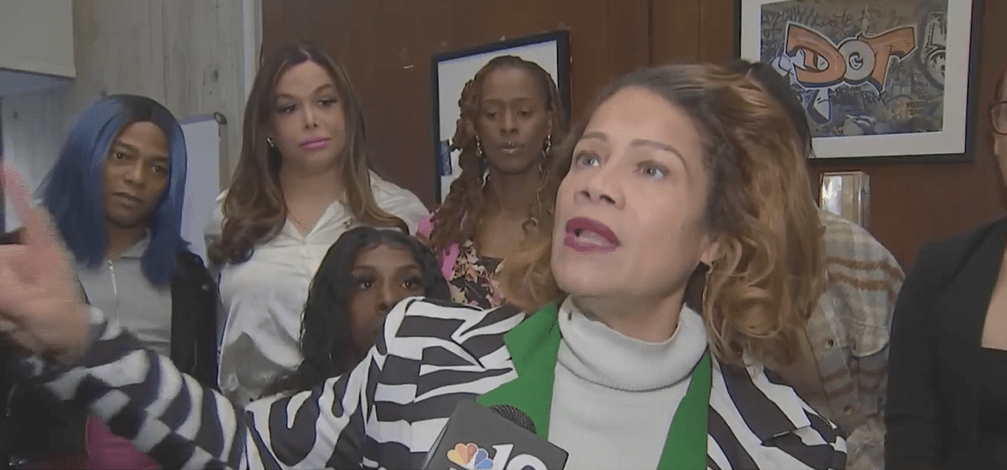
Councilor-at-Large Julia Mejia and District 9 Councilor Liz Breadon called on Boston to adopt the measure supporting transgender people, pointing to what they see as harmful rhetoric coming from President Donald Trump and the White House.
“Boston is not going to back down,” Mejia said Wednesday. “We’re seeing attacks on our trans loved ones, and here on the local level, a lot of folks are feeling helpless.”
City Councilor Ed Flynn was the only member of the body to vote against the measure.
“I would like to learn more about what this resolution does as it relates to sanctuary cities, the Trust Act, what impact it has on city services, what role the city departments will play,” Flynn said, according to The Boston Herald. “I don’t want to be disrespectful to anybody, but it’s just something I would like to have before I vote.”
Sam Whiting of the Massachusetts Family Institute, a group that describes itself as recognizing “the male and female sexes as a real and enduring part of a person’s created nature, not an imaginary social construct,” pushed back on the councilors’ framing of the Trump administration’s actions.
“We think it misrepresents the executive orders, and we do support these orders and the efforts to protect children from the harms of gender ideology,” Whiting told NBC10 Boston.
Mejia said the measure is critical.
“It’s really a love letter and an opportunity to set the groundwork for the legislation,” she said.
North Dakota lawmakers are on the verge of making their state the first to tell the U.S. Supreme Court to overturn its decade-old ruling that legalized same-sex marriage nationwide.
Similar efforts — which would not have any direct sway with the nation’s top courts — have been introduced in a handful of states this year. North Dakota’s resolution passed the Republican-led House in February but still requires Senate approval, which is not assured.
“The original Supreme Court ruling in 2015 went totally against the Tenth Amendment, went totally against the North Dakota Constitution and North Dakota Century Code (state laws),” sponsor Republican Rep. Bill Tveit said. “Why did I introduce it? Every one of us in this building took an oath to uphold the Constitution of the United States and the state.”
When the Legislature considers such resolutions, attorney and North Dakota National Guard member Laura Balliet said she wonders why she stays in her home state. The measure makes her feel unwanted, unwelcome and judged because of who she is, she said. She married her wife in 2020.
“I don’t know what this resolution does other than to tell people like myself, my friends and my family that we’re not welcome here, and I’m angry about that because I want to be welcome here. This is my home,” Balliet told the Senate panel that heard the measure on Wednesday — one in a stream of opponents who testified against it.
A push across states
Massachusetts-based MassResistance, which describes itself as an “international pro-family group” but has been labeled “anti-LGBTQ hate group” by the LGBTQ advocacy organization GLAAD, is pushing the resolution across the country.
Massachusetts became the first state to recognize same-sex marriage, in 2004. Over the next 11 years, most states began to recognize it through laws, ballot measures or court decisions before the Supreme Court made it legal nationwide.
Outside of Idaho and North Dakota, the measures have not progressed far, according to an analysis of legislation collected by the bill-tracking service Plural.
By contrast, there have been additional protections for same-sex marriage over the years, including a federal law in 2022. Since 2020, California, Colorado, Hawaii and Nevada have repealed old constitutional amendments that defined marriage as being allowed only between a man and a woman, and Virginia lawmakers advanced a similar measure this year. It could be on the ballot there in 2026.
Differing views
The North Dakota measure states that the Legislature “rejects” the 2015 Obergefell v. Hodges decision and urges the U.S. Supreme Court “to overturn the decision and leave unaddressed the natural definition of marriage as a union between one man, a biological male, and one woman, a biological female.”
In the court’s 2022 ruling that overturned the constitutional right to an abortion, Justice Clarence Thomas said the court should reconsider its precedents in the marriage decision and other past cases.
Soon after the measure passed the North Dakota House last month, several Republican state reps who voted for it stated they meant to vote no or regretted voting yes.
Republican Rep. Matt Ruby said he wished he had voted against the measure, saying his yes vote was for a different intent he realized wasn’t going to happen. The vote sent a bad message “that your marriage isn’t valid and you’re not welcome,” Ruby said. He said he supports the right for same-sex couples to be married.
Republican Rep. Dwight Kiefert said he voted for the resolution because of his Christian faith and that the institution of marriage was established in the Bible in the Garden of Eden between Adam and Eve.
‘Slap in the face’
The measure is a slap in the face to North Dakotans who are happily married and invested in their state, said Democratic Sen. Ryan Braunberger, who is gay and sits on the Senate panel that heard the resolution. The measure sends a dangerous message as North Dakota wants to grow its population and expand economically, he said.
“We want to make sure that we bring everybody in the best of the crop, and that runs the gamut of all sorts of different races, ethnicities, sexual orientations through that,” Braunberger said.
The measure is a declaration, if passed, that lawmakers would want to define marriage through what is arguably a religious lens, which dangerously gets close to infringing upon the Establishment Clause of the U.S. Constitution, said Cody Schuler, advocacy manager for the American Civil Liberties Union’s North Dakota chapter.
“Marriage defined as ‘one man, one woman’ is a particular religious view. It is not held by all religions, all societies or by nonreligious people, and so therefore it is dangerous to be making that kind of statement because it puts legislators on record as to how they might vote on law, on a binding law versus this nonbinding resolution,” Schuler said.
Kentucky state Representative David Hale, a Republican, has introduced legislation aimed at overturning a 2024 executive order issued by Democratic Governor Andy Beshear that bans conversion therapy. This controversial practice, which attempts to change a person’s sexual orientation or gender identity, has been widely discredited by medical and psychological experts. Despite numerous opponents testifying against Hale’s bill, the lawmaker insists that his research supports the need for the legislation, although he declined to disclose the organizations that helped him draft the bill.
Governor Beshear’s Executive Order and Its Impact
In September 2024, Governor Beshear signed an executive order that outlaws conversion therapy for minors in Kentucky. The executive order not only prohibits state-funded programs from supporting the practice, but it also calls for licensing boards for counselors to consider disciplinary action against those who engage in conversion therapy. Beshear’s order aims to protect minors from a practice that has been shown to have detrimental effects on mental health.
At the time of signing the order, Beshear emphasized that conversion therapy “has no basis in medicine or science” and cited research linking the practice to increased rates of suicide and depression. “This is about doing what is right and protecting our children,” Beshear said in a statement. “Hate is not who we are as Kentuckians.”
Hale’s Proposed Bill and its Justifications
On February 15, 2025, Hale introduced House Bill 495, a measure designed to reverse Beshear’s executive order. Hale, who is known for his conservative stances, argues that his bill would protect counselors, therapists, and pastors who offer conversion therapy from government interference. He insists that parents should have the right to seek therapy that aligns with their beliefs and the needs of their children.
During a committee meeting, Hale claimed that his bill would protect mental health providers offering “therapy to relieve discomfort or distress caused by an individual’s sex or romantic or sexual attraction.” He further added that the bill would also safeguard practitioners who offer other forms of therapy, including pro-LGBTQ or gender-affirming care. Despite the claims, Hale did not specify which organizations assisted in drafting the bill’s language.
The bill, which was approved in a 15-4 party-line vote by the committee’s Republican members, is now one step closer to being debated by the full Kentucky legislature. Some Republicans on the committee argued that the bill would ensure mental health professionals could offer care that respects both LGBTQ+ individuals and those seeking therapy to change their sexual orientation.
Opposition Voices and Concerns
Numerous witnesses spoke out against Hale’s bill, citing the harm caused by conversion therapy and the damage it can do to vulnerable individuals. Eric Russ, a licensed clinical psychologist and executive director of the Kentucky Psychological Association, testified that the bill “directly threatens the trust between a mental health provider and our clients” by legitimizing practices that are widely considered harmful.
Rev. Brandon Long, an ordained minister and former victim of conversion therapy, shared his personal experience of being subjected to the practice after coming out as gay. He described how conversion therapy had attempted to alter his sexual orientation by blaming it on childhood trauma and demonic influence. “Conversion therapy weaponized sacred pastoral practices,” Long said, adding that it was “spiritual and psychological abuse.”
Chris Hartman, executive director of the Fairness Campaign, an LGBTQ+ rights group, questioned why the committee responsible for overseeing state government functions was involved in passing legislation related to mental health care.
Hale, who said he had found “no evidence” supporting the personal testimonies of those who spoke against his bill, went on to shake hands with several of the witnesses who had opposed it. Rev. Long refused to shake his hand, accusing Hale of dismissing their lived experiences and framing their testimony as lies.
Political Landscape and Future of the Bill
Hale’s bill is part of a broader culture war in Kentucky, where conservative lawmakers have made several attempts to restrict LGBTQ+ rights. In 2023, Kentucky Republicans successfully passed a ban on gender-affirming medical care, though it is currently on hold due to ongoing court challenges. While this ban focuses on medical care, it does not address gender-affirming psychological counseling.
Conversion therapy has been banned in 23 states, and the practice has faced widespread condemnation from major U.S. medical and psychological associations. Research has consistently shown that conversion therapy leads to increased emotional distress, including depression and suicidal thoughts, particularly among LGBTQ+ youth. According to the Trevor Project, nearly 21% of LGBTQ+ youth in Kentucky have reported being subjected to conversion therapy, with 83% of those experiences occurring before the age of 18.
A Divisive Issue for Kentucky’s Future
Hale’s bill comes at a time when Republicans hold supermajorities in both chambers of Kentucky’s legislature, which could threaten the future of Beshear’s executive order. If passed, the bill would reverse the protections set forth by Beshear, allowing the practice of conversion therapy to continue in the state.
As the bill moves through the legislative process, it is clear that the debate over conversion therapy is far from settled. Advocates for LGBTQ+ rights are committed to fighting the bill, while opponents argue that parents should have the freedom to choose therapeutic options that align with their values. With the state’s political climate increasingly polarized, Kentucky’s legislature is set to remain at the center of a larger national conversation about the rights of LGBTQ+ individuals and the role of government in regulating mental health practices.
For those struggling with issues related to conversion therapy, several resources are available, including the Trevor Project (1-866-488-7386) and the Trans Lifeline (1-877-565-8860). These organizations provide safe, confidential support for LGBTQ+ youth and adults.
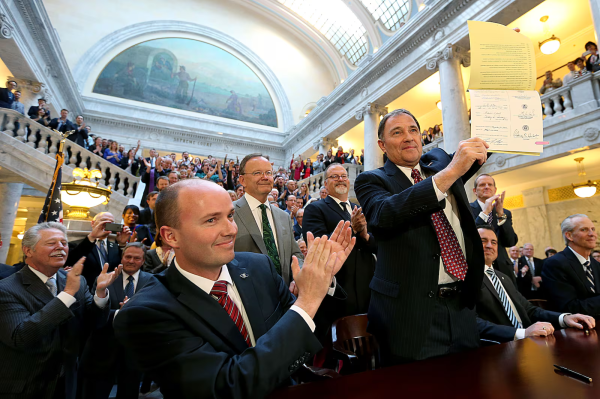
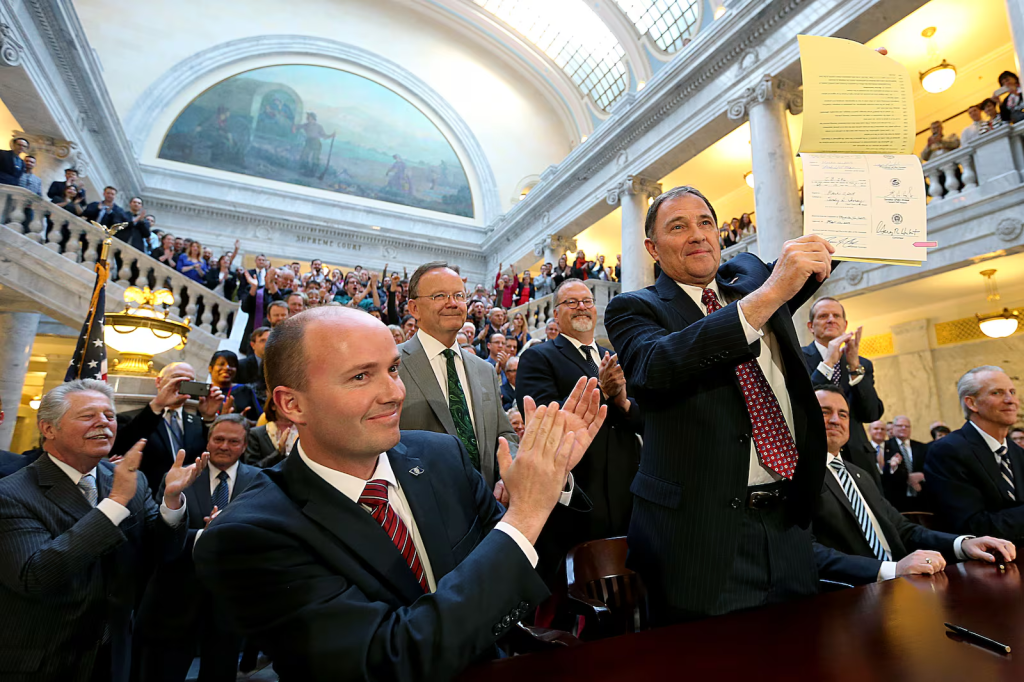
Ten years ago, Utah passed a landmark pair of bills that combined religious freedom protections with LGBTQ nondiscrimination protections.
Five years ago, many of the people behind what became known as the Utah Compromise spoke to me about why their balanced approach to religion and LGBTQ rights hadn’t yet caught on nationwide.
Last week, I checked in again with one of the key players to hear about where things stand today and whether she’s still hopeful that Utah’s “fairness for all” approach will spread to other states.
Robin Fretwell Wilson, a professor of law at the University of Illinois College of Law, told me that Utah remains united behind the Utah Compromise and has passed several more carefully constructed religion-related policies in recent years on topics like adoption and conversion therapy.
But she added that today, just like five years ago, it’s rare to find a lawmaker outside the Beehive State who is willing to plant their flag in the middle ground between opposing groups and champion balanced solutions to contentious conflicts.
“Right now, we’re mining a streak of meanness,” Wilson said. “Fairness for all doesn’t feel like it’s in the air.”
From 2015 to 2020, Wilson and other stakeholders met with policymakers from 10 to 15 other states about the fairness for all approach to lawmaking.
That list hasn’t grown over the past five years, and the federal Fairness for All Act from 2019, which drew inspiration from the Utah Compromise, hasn’t advanced in Washington.
However, the act’s supporters did score a big win in December 2022 when federal lawmakers passed the Respect for Marriage Act, which strengthened legal protections for married same-sex and interracial couples while affirming religious freedom rights.
The Respect for Marriage Act built on aspects of the Fairness for All Act and Utah Compromise, and it likely wouldn’t have passed if work hadn’t been done in the years preceding its introduction to educate lawmakers about the value of balancing religious freedom and gay rights, Wilson said.
But although it was significant, it feels like a missed opportunity to Wilson and others.
That’s because, instead of holding it up as an example of what’s possible when religious liberty advocates and LGBTQ rights advocates work together, the Biden administration chose to put the spotlight on the importance of protecting gay marriage.
“You can’t be doing something that marries up the interest of gay folks and religious folks on that scale and forget to say anything about the religious folks,” said Wilson, who was at the White House ceremony for the law.
Even before that event, Wilson placed her hope in state rather than federal policymakers because she’s long believed they’re better-positioned to find balance.
Today, as in 2020, as in 2015, she believes that states like Utah will lead the way to a world in which people of faith and LGBTQ individuals — and LGBTQ individuals who are people of faith — can live authentically in public and private without fear of retribution.
“I’ve never really placed my hopes in Congress. I’ve always placed my hope in state legislators,” Wilson said. “I’m hopeful because I’ve seen fairness for all become a script for Utah.”
Celebrities are every day people just like the rest of us. They too have felt the need to either flee a red state or even flee the country altogether.
Rosie O’Donnell announced she has moved to Ireland and is working on obtaining Irish citizenship. She and her 12 year old moved just before Trump was sworn into office. O’Donnell said she would consider returning to America when “it’s safe” and all citizens have “equal rights.”
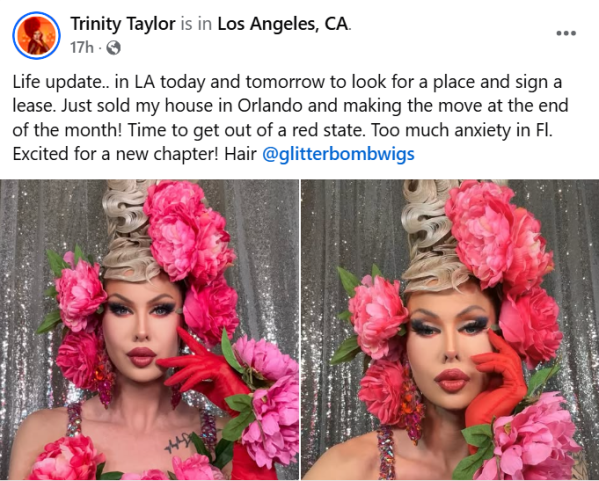
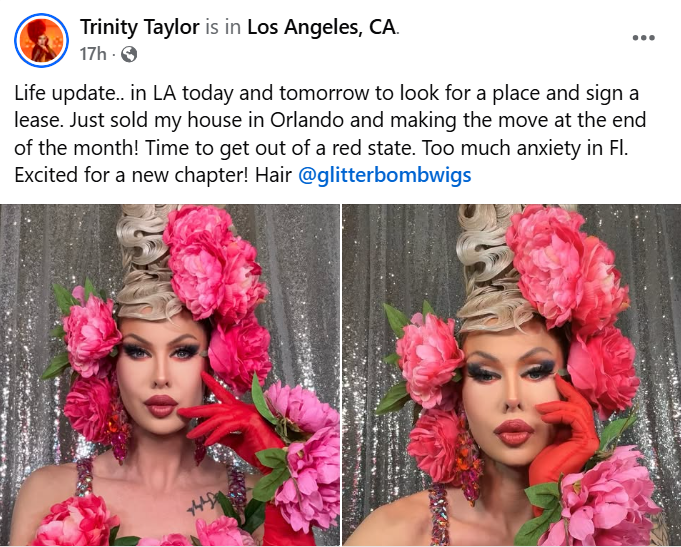
In a Facebook post yesterday, drag queen Trinity “The Tuck” Taylor has fled Florida for Los Angeles. She stated “Just sold my house in Orlando and making the move at the end of the month! Time to get out of a red state. Too much anxiety in Fl.”
While many celebrities have the privilege to come and go as they please with little effect on their finances, there are still options for every day citizens to make that move to another state or leave the country. You can find some helpful resources at FleeRedStates.com.
*The Hill is reporting the unpopular Texas Congressman Keith Self has no sense of decorum on his own committee. Read below.
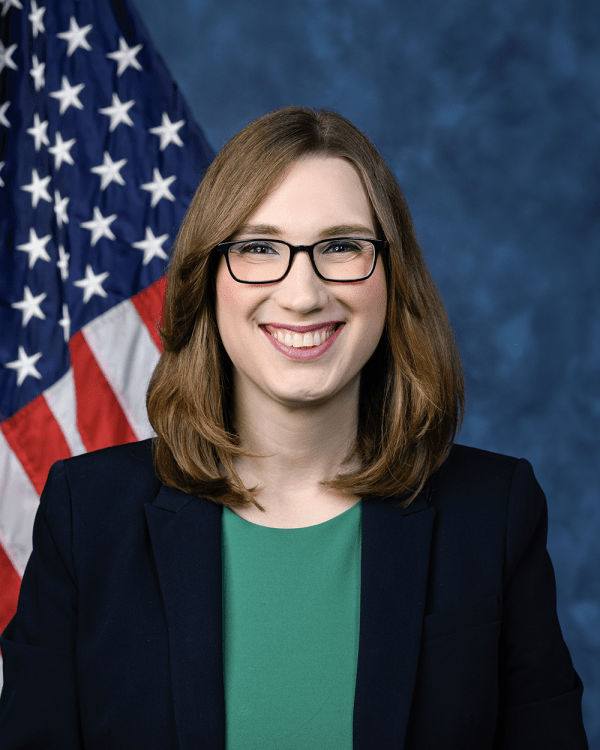
A House Foreign Affairs subcommittee hearing ended abruptly Tuesday after Rep. Keith Self (R-Texas) referred to Rep. Sarah McBride (D-Del.), the first transgender person elected to Congress, as “mister.”
Self, who chairs the subcommittee on Europe, introduced McBride as “the congressman from Delaware” during a hearing on arms control and U.S. assistance to Europe. McBride responded by calling Self “Madam Chair.”
As McBride delivered her remarks, ranking member Bill Keating (D-Mass.) interjected, asking Self to repeat his introduction.
“Mr. Chairman, you are out of order,” Keating said. “Mr. Chairman, have you no decency? I mean, I’ve come to know you a little bit, but this is not decent.”
“We will continue this hearing,” Self responded.
“You will not continue it with me unless you introduce a duly elected representative the right way,” Keating said.
Spokespeople for Keating and McBride did not immediately return requests for comment.
Self’s intentional misgendering of McBride is not the first time the first-term lawmaker has faced jabs from her Republican colleagues over her identity. On Feb. 7, ahead of McBride’s first floor speech, Rep. Mary Miller (R-Ill.) introduced McBride as “the gentleman from Delaware.”
McBride brushed off Miller’s introduction. “FWIW, there’s an entire speech after I’m recognized by the acting speaker that’s worth a watch much more than the 15 second video of me being called on,” she wrote on X after a video of the introduction went viral.
Other House GOP members have referred to McBride as “a man” on social media and moved to bar her from women’s restrooms on Capitol grounds. In interviews and social media posts, McBride has called Republicans’ targeting of her and the trans community “an attempt to distract” from issues like the rising cost of living.
“I think we are all united that attempts to attack a vulnerable community are not only mean-spirited, but really an attempt to misdirect,” McBride told CBS News’s “Face the Nation” in a November interview.
Still, McBride has signaled a willingness to work with Republicans in Congress. She introduced her first bill, legislation to tackle fraudulent practices in the credit repair industry, with Rep. Young Kim, a California Republican.
Check out this slideshow put together and posted to MSN.
While some places still make same-sex marriage complicated (or even illegal), others celebrate it fully, offering welcoming venues and stunning locations for your big day. If you’re looking for somewhere unique, safe, and unforgettable to say “I do,” these destinations offer the perfect mix of charm, romance, and friendliness toward the queer community.
The cities mentioned in the slideshow are:
Amsterdam Netherlands
Queenstown New Zealand
Toronto Canada
Cape Town South Africa
Reykjavik Iceland
Barcelona Spain
Valleta Malta
Sydney Australia
Mexico City Mexico
Copenhagen Denmark
Each town on the slide deck has a short excerpt about why the author included them. Be sure to read it.
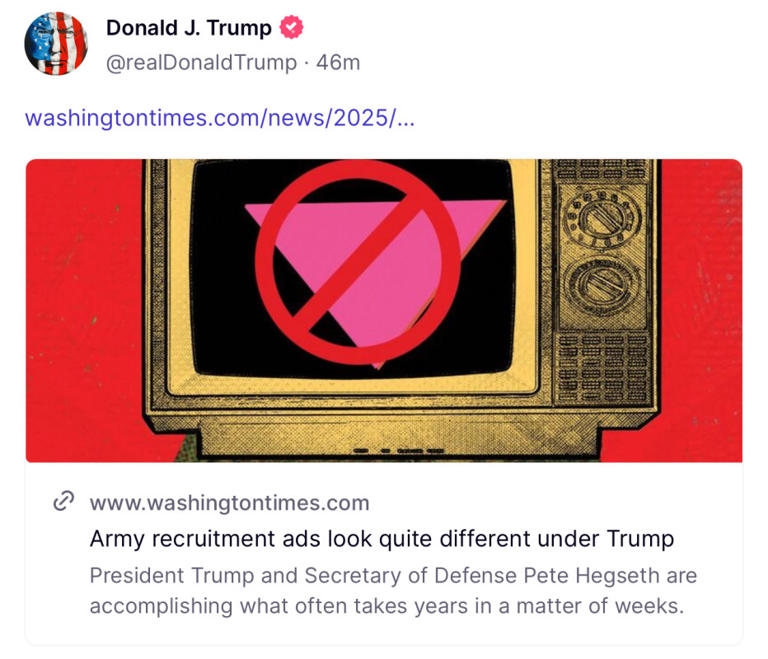
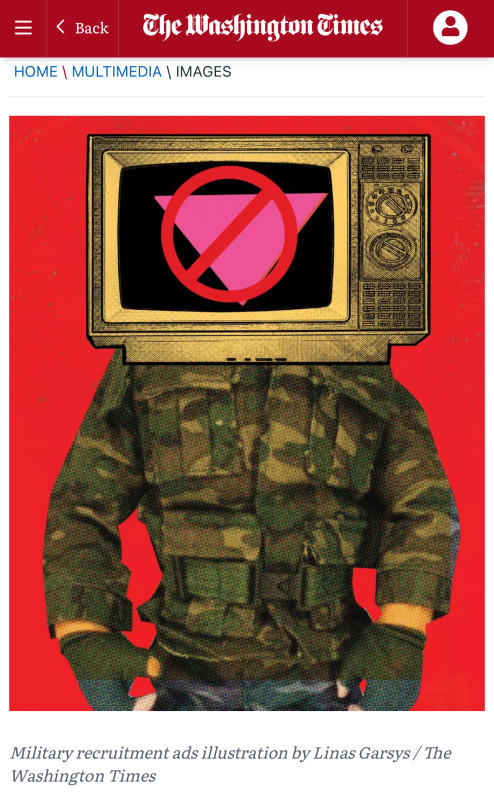
Trump posted an article to his Truth Social account this weekend featuring a deeply troubling image: a pink triangle—the Nazi-era symbol used to identify and persecute gay men in concentration camps—covered with a red prohibited sign. Historically, the LGBTQ+ rights movement reclaimed the pink triangle as a symbol of resistance, pride, and remembrance.
The article itself titled, “Army recruitment ads look quite different under Trump,” published by the Washington Times praises Trump and Defense Secretary Pete Hegseth for refocusing the military on “lethality” and reversing Biden-era policies that embraced diversity, including ads featuring LGBTQ+ soldiers.
The image, placed in the context of military recruitment, strongly suggests a rejection of LGBTQ+ service members, at least in the terms of recruitment, under Trump’s leadership.
He has long opposed LGBTQ+ inclusion in the military, previously criticizing the repeal of Don’t Ask, Don’t Tell.
Now, under his leadership, Trump appears to be reinforcing the idea that LGBTQ+ individuals are unwelcome in the armed forces—not just through policy but through amplifying symbolic messaging with disturbing historical roots.
Trump’s amplification of a Nazi-era symbol to promote this shift sends a message signaling a return to exclusionary policies that many believed were left in the past.
The Supreme Court announced Monday it will hear a case regarding whether state bans on “conversion therapy” trying to change minors’ sexual orientation or gender identity are legal—a case that could carry billions of dollars in repercussions, as a 2022 study found conversion therapy carries an economic burden of approximately $9 billion annually for patients and their families.
Key Facts
The Supreme Court took up Chiles v. Salazar, a case challenging Colorado’s ban on LGBTQ “conversion therapy” for minors, which asks the justices to more broadly decide whether laws that “[censor] certain conversations between counselors and their clients based on the viewpoints expressed” are constitutional.
LGBTQ “conversion therapy,” as it’s commonly known, refers to any practices—including both emotional efforts, like talk therapy, or physical efforts, like electroconvulsive therapy—that aim to influence a patient’s sexual orientation or gender identity, which are typically framed as efforts to “cure” homosexuality or being transgender.
Repeated studies have shown such efforts are ineffective at changing people’s sexual orientation or gender identity and carry a variety of harmful effects—such as elevated risks for suicide, drug abuse and mental health issues—which has led to bans on conversion therapy for minors being enacted in more than 20 states.
Conversion therapy and its negative effects also have an economic impact, as a 2022 study published in JAMA Pediatrics found conversion therapy and its “associated harms” result in an economic burden of approximately $9.23 billion per year.
Conversion therapy alone costs approximately $650 million for participants annually in the U.S., with individuals who undergo it paying an extra $97,985 for treatment as compared with people who don’t undergo any counseling, according to the study, which was based on data from LGBTQ youth ages 13-24.
There are also significant costs associated with knock-on effects from conversion therapy and the study estimates each conversion therapy patient pays an extra $83,366 on average to treat the “downstream consequences” associated with the procedure, which combined raise the total economic burden of conversion therapy to $9.2 billion.
What To Watch For
The Supreme Court will hear the case on conversion therapy at some point during its next term, which begins in October, so any ruling in the case is likely more than a year away.
What Did The Study Conclude?
The study, which was conducted by pro-LGBTQ rights organization The Trevor Project and research group Cytel, concluded there is a “high economic burden and high societal costs” that come along with conversion therapy, which the study refers to as sexual orientation and gender identity change efforts (SOGICE). Researchers analyzed the difference in costs between patients who underwent conversion therapy, LGBTQ youth who received no therapy and those who received therapy that affirmed their sexual orientation or gender identity. The study found conversion therapy carried the highest economic burden: In addition to the $650 million per year in total attributed to the therapy itself, there are also total annual costs of $190 million related to anxiety or “severe psychological distress” among those that underwent conversion therapy, $1.36 billion related to depression, $2.42 billion from suicide attempts, $1.17 billion from fatal suicides, $1.26 billion from alcohol use disorder and $2.18 billion from substance abuse. The likelihood of those negative outcomes was largely markedly higher among those who underwent conversion therapy as compared with other LGBTQ populations—except alcohol use disorder, where those without any therapy registered the highest number by one percentage point (42.26% among those with no intervention versus 41.26% among conversion therapy patients). As a result, the total costs incurred by conversion therapy patients were higher than the $4.85 billion in total annual costs among those who hadn’t received any treatment, and $3.04 billion among those who received affirmative therapy.
Contra
Researchers noted there were some limitations with the study’s methodology that may affect its results, such as being based on studies in which patients self-reported their experiences. That means it might not be fully representative of all LGBTQ patients, as many people may be unwilling to discuss their experiences. It also assumes the risks are the same across the LGBTQ population and for various types of conversion therapy, which may not be the case. Researchers argued they took a “conservative approach” with their findings, however, and noted the $9 billion figure is likely an underestimate of the total economic impact. The study only looked at adverse impacts from conversion therapy for three years after the treatment, for instance—though such effects could likely extend for much longer—and did not examine some other potential impacts, like post-traumatic stress disorder or medical consequences from various medications or electroconvulsive therapy.
Big Number
13%. That’s the share of LGBTQ youth who have either been subjected to or threatened with conversion therapy, according to a 2024 survey conducted by The Trevor Project among more than 50,000 Americans ages 13-24. That includes 5% who have been subjected to the therapy and 8% who were threatened with it. The 5% share is down from 10% who said in 2020 they were subjected to the therapy, though that number could rise again should the Supreme Court outlaw state bans.
Key Background
The Supreme Court case was brought by Kaley Chiles, a licensed counselor in Colorado who said in a court filing “she believes that people flourish when they live consistently with God’s design, including their biological sex.” Chiles objects to Colorado restricting her from counseling clients to change their sexual orientation or gender identity, claiming it violates her First Amendment rights and classifying state bans on conversion therapy as “silenc[ing] counselors’ ability to express views their clients seek on a topic of ‘fierce public debate.’” Chiles asked the Supreme Court to take up the case after a federal appeals court upheld Colorado’s policy restricting conversion therapy, ruling that it was regulating counselors’ professional conduct, rather than chilling First Amendment-protected speech. The case is the latest in a string of major cases related to LGBTQ rights the 6-3 conservative-leaning court has decided in recent years—such as cases over businesses being allowed to discriminate against same-sex couples or discriminate on the basis of sexual orientation and gender identity—and the court is deliberating on a case this term over gender-affirming care for minors.








 fleeredstates.blog
You must be logged in to post a comment.