No evidence of hate crime in ‘torture’ killing of transgender man in upstate New York

*This is being reported by ABC News

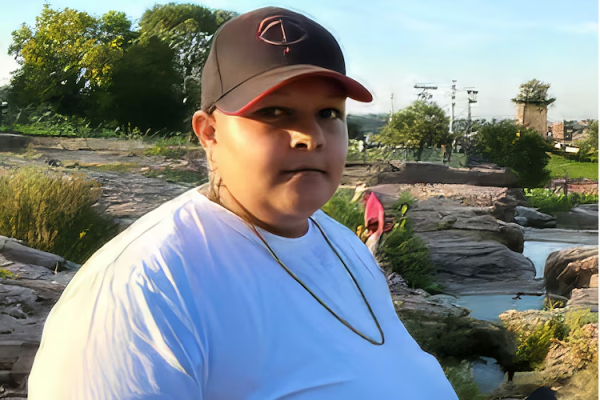
Investigators probing what they described as the torturous killing of a 24-year-old transgender man in upstate New York, allegedly at the hands of five people, say they have found no evidence that the homicide was a hate crime.

The remains of the victim, identified as 24-year-old Sam Nordquist of Minnesota, were discovered on Wednesday in a field in Benton, New York, in Yates County, according to Capt. Kelly Swift, a New York State Police investigator.

Swift said investigators suspect that Nordquist was tortured and killed in neighboring Ontario County and moved “in an attempt to conceal a crime.”

“Based on evidence and witness statements, we have determined that Sam endured prolonged physical and psychological abuse at the hands of multiple individuals,” Swift said Friday during a news conference.

A criminal complaint obtained by Rochester, New York, ABC affiliate WHAM alleged that the suspects sexually assaulted Nordquist with a “table leg and broomstick.” The complaint further alleges that the suspects subjected Nordquist to “prolonged beatings by punching, kicking and striking [Nordquist] with numerous objects, including but not limited to sticks, dog toys, rope, bottles, belts, canes and wooden boards.”

According to the complaint, the torture allegedly took place in room 22 at Patty’s Lodge in Hopewell, New York, in Ontario County between Jan. 1 and Feb. 2.

Swift said investigators executed a search warrant at the hotel on Thursday, specifically searching room 22 for evidence.

“In my 20-year law enforcement career, this is one of the most horrific crimes I have ever investigated,” Swift added. “My thoughts are with Sam’s family during this time.”

Suspects charged with murder

The suspects arrested in the case were identified by Swift as Precious Arzuaga, 38, of Canandaigua, New York; Jennifer Quijano, 30, of Geneva, New York; Kyle Sage, 33, of Rochester, New York; Patrick Goodwin, 30, also of Canandaigua; and Emily Motyka, 19, of Lima, New York.

Ontario County District Attorney James Ritts said all five suspects have all been charged with second-degree murder under the state’s depraved indifference statute. He said the suspects have been arraigned and are being held without bail at the Ontario County Jail.

It was unclear if the suspects had hired or were appointed attorneys to represent them.

No indication of a hate crime

In a joint statement released on Sunday, the state police and Ritts addressed whether investigators are pursuing hate crime charges against the suspects.

“At this time we have no indication that Sam’s murder was a hate crime,” the joint statement reads. “To help alleviate the understandable concern his murder could be a hate crime, we are disclosing that Sam and his assailants were known to each other, identified as LGBTQ+, and at least one of the defendants lived with Sam in the time period leading up to the instant offense.”

Authorities said they released the information after getting “multiple inquiries from across our community, New York State and the entire nation.”

In the statement, officials noted that under the New York State penal code, a hate crime is defined as an offense committed “in whole or in substantial part because of a belief or perception regarding the race, color, national origin, ancestry, gender, gender identity or expression, religion, religious practice, age, disability or sexual orientation of a person regardless of whether the belief or perception is correct.”

“We are still in the early stages of this investigation,” the joint statement reads. “While significant evidence has been obtained, we are continuing to follow up on leads brought to State Police. We urge the community not to speculate into the motive behind the murder as we work to find justice for Sam.”

Governor described the killing as ‘sickening’

New York Gov. Kathy Hochul said in a statement released Sunday that she had directed the State Police to provide any support and resources to Ritts’ office “as they continue their investigation, including into whether this was a hate crime.” The statement further said that Hochul had directed the New York State Division of Human Rights Hate and Bias Prevention Unit to offer assistance and support “to all community members affected by this terrible act of violence,” adding, “There must be justice for Sam Nordquist.”

Hochul also said that she had instructed the New York State Office of Victim Services to offer support to Nordquist’s family.

“The charges against these individuals are sickening and all New Yorkers should join together to condemn this horrific act,” Hochul said in the statement. “We are praying for Sam Nordquist’s family, community and loved ones who are experiencing unimaginable grief.”

‘Beyond depraved’

“The facts and the circumstances of this crime are beyond depraved,” Ritts said Friday during the press conference. “This is by far the worst homicide investigation that our office has ever been part of. No human being should have to endure what Sam endured.”

Nordquist’s family filed a missing person report with the Canandaigua Police Department on Feb. 9, after last hearing from Nordquist on Jan. 1, according to a missing-person flyer issued by the Missing People in America organization.

According to the flyer, Nordquist’s family said he left Minnesota on Sept. 28, 2024, with a round-trip plane ticket to New York. The family, according to the flyer, alleged that he met a woman online who convinced him to visit her.

The family, according to the flyer, claimed Nordquist was planning to fly back to Minnesota within two weeks, but never boarded his return flight.

“I don’t understand why someone would do that to another person,” Kayla Nordquist, Sam’s sister, told Saint Paul, Minnesota, ABC affiliate KSTP. “Sam was amazing and would give the shirt off his back to anyone.”

When asked Friday about the missing-person flyer, Swift declined to comment.

Swift would not disclose details of the abuse, saying the investigation is in its early stages. However, she said, Nordquist was “subjected to repeated acts of violence and torture in a manner that ultimately led to his death.”

Swift said more arrests were possible and asked anyone with information about the crime to contact state police investigators.

Ritts said he anticipates a grand jury will take action in the case “very quickly.”

Multiple vigils for Nordquist are being scheduled this week in several states, including one Monday evening at the Wood Library in Canandaigua, New York, according to Family Counseling Service of the Finger Lakes, which is hosting the event. Two other vigils are planned for Monday night in Nordquist’s home state of Minnesota, including one outside the Minnesota State Capitol building in Saint Paul.

On Tuesday evening, vigils are scheduled to take place at the Phelps Arts Center in Phelps, New York, and at The Presbyterian Church in Geneva, New York. On Thursday, a vigil is scheduled to take place on the Main Plaza in downtown New Braunfels, Texas, about 30 miles northeast of San Antonio.
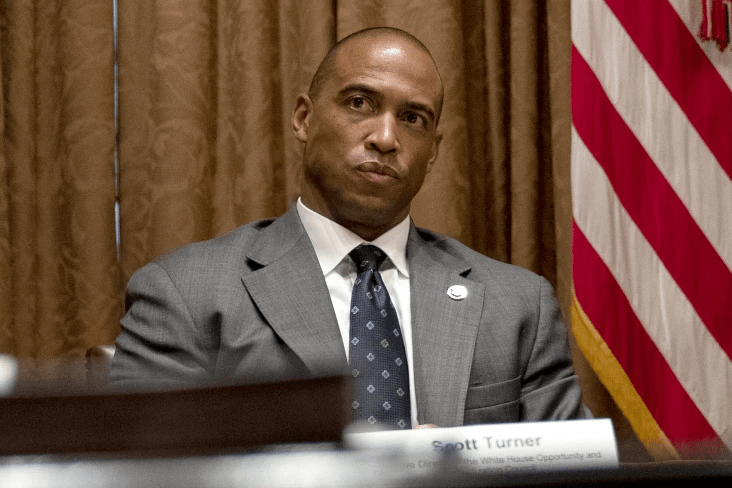
HUD Secretary Turner Halts Equal Access Rule Enforcement

*This is reporting by NILHC.org


On February 7, HUD Secretary Scott Turner announced HUD will stop enforcing the 2016 Equal Access Rule, which requires housing, facilities, and services funded through HUD’s Office of Community Planning and Development (CPD) to ensure equal access to programs for individuals based on their gender identity without intrusive questioning or being asked to provide documentation. Secretary Turner stated that the action “will ensure housing programs, shelters and other HUD-funded providers offer services to Americans based on their sex at birth.” NLIHC will continue to advocate for equal access and fair housing for LGBTQ+ people. 

In a press conference following Secretary Turner’s first address to HUD, Turner stated, “I am directing HUD staff to halt any pending or future enforcement actions related to HUD’s 2016 Equal Access Rule, which, in essence, tied housing programs, shelters and other facilities funded by HUD to far-left gender ideology.” Turner continued: “We, at this agency, are carrying out the mission laid out by President Trump on January 20th when he signed an executive order to restore biological truth to the federal government.” 

Weakening the Equal Access Rule and its enforcement mechanisms is unacceptable. Access to shelter is a basic, fundamental necessity. LGBTQ youth are more than twice as likely to experience homelessness than their non-LGBTQ peers, and black LGBTQ youth have the highest rates of youth homelessness. One in three transgender people will experience homelessness in their lifetime, and 70% of trans people who have used a shelter have experienced harassment. NLIHC will continue to work with LGBTQ advocates to ensure that everyone has access to safe, decent, affordable housing. 

Read the statement from Secretary Turner here

View the press conference here.  

Read more about the Equal Access Rule here.

Pro-LGBTQ Protests in Berlin Germany

Pro LGBTQ protesters took to the streets of Berlin Germany to march in support of left wing political parties that support LGBTQ rights and safety, ahead of the German Bundestag elections that will be held on February 23, 2025.

The centrist party Central Democrats hold a lead in the polls, however gains have been made by the far right party Alternative for Germany. The ruling central left party Social Democrats have lost 12 points since the last election and are currently polling 3rd.

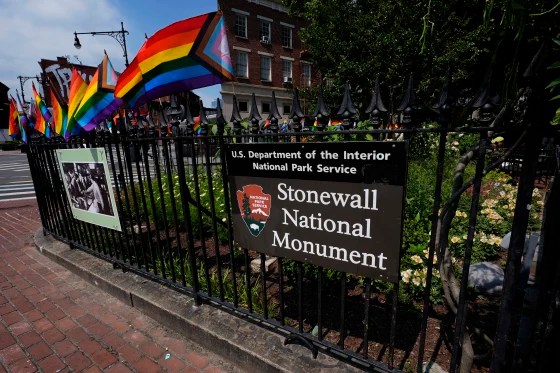
References to transgender and queer removed from Stonewall National Monument’s web page

*This was first reported by NBC News.

References to transgender and queer people were erased from the Stonewall National Monument’s web page, marking one of the latest moves of the current administration after President Donald Trump said the government would recognize male and female as the only biological sexes.

The page used to say “LGBTQ+,” according to an archived version of the National Park Service’s website. It now only says “LGB.”

Stacy Lentz, co-owner of the Stonewall Inn and the chief executive of the nonprofit Stonewall Inn Gives Back Initiative, said the Trump administration was trying to “erase trans people from history and from existing.” A protest is scheduled for noon on Friday.

“There is no Pride without Trans folks leading that fight! Trying to erase them from the Birthplace of the modern LGBTQ+ rights movement will not happen! We need to show up and speak out for our trans and nonbinary siblings who are under attack,” Lentz wrote in an Instagram post announcing the protest.

In a joint statement, the Stonewall Inn and the Stonewall Inn Gives Back Initiative said it was “outraged.”

“This blatant act of erasure not only distorts the truth of our history, but it also dishonors the immense contributions of transgender individuals – especially transgender women of color – who were at the forefront of the Stonewall Riots and the broader fight for LGBTQ+ rights,” the statement read.

“Let us be clear: Stonewall is transgender history. Marsha P. Johnson, Sylvia Rivera, and countless other trans and gender-nonconforming individuals fought bravely, and often at great personal risk to push against oppressive systems,” it continued. “Their courage, sacrifice, and leadership were central to the resistance we now celebrate as the foundation of the modern LGBTQ+ rights movement.”

The statement said removing the word transgender is an attempt to marginalize the people who fought for change in the community. They called it a “direct attack on transgender people” and demanded the word be added back to the website.

Trans youth care ban vetoed by Kansas governor again

*This was published by ABC News.

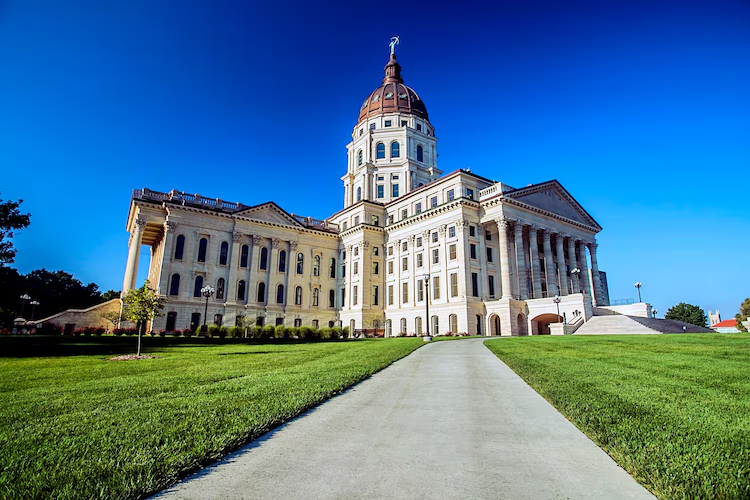
Kansas Gov. Laura Kelly has vetoed Senate Bill 63, which would have restricted gender-affirming care for transgender youth.

“Right now, the legislature should be focused on ways to help Kansans cope with rising prices,” Kelly said in a statement emailed late Tuesday. “That is the most important issue for Kansans. That is where my focus is.”

The bill would bar health care providers from administering gender-affirming medical care – including puberty suppressants and hormone therapies – for someone under the age of 18, only for the purposes of gender transitioning. The ban would also apply to gender-affirming surgeries.

“Infringing on parental rights is not appropriate, nor is it a Kansas value,” said Kelly in her veto message. “As I’ve said before, it is not the job of politicians to stand between a parent and a child who needs medical care of any kind. This legislation will also drive families, businesses, and health care workers out of our state, stifling our economy and exacerbating our workforce shortage issue.”

This is the third time Kelly has vetoed similar transgender youth care bills, but the bill may now have the support to pass.

The bill passed the state legislature with flying colors – passing the House 83-35 and the Senate 32-8.

In 2023, the attempt to override a past trans care ban veto lost in the House 82-43.

State Republicans quickly denounced Kelly’s veto.

“The governor’s devotion to extreme left-wing ideology knows no bounds, vetoing a bipartisan bill that prevents the mutilation of minors,” said State Sen. Ty Masterson in an online statement. “The Senate stands firmly on the side of protecting Kansas children and will swiftly override her veto before the ink from her pen is dry.”

Top national medical associations such as the American Medical Association, American Academy of Child and Adolescent Psychiatry, and American Academy of Pediatrics and more than 20 others argue that gender-affirming care is safe, effective, beneficial, and medically necessary for transgender populations.

Kelly joins governors past and present in Ohio and Arkansas in vetoing bills that targeted gender-affirming youth care. However, both of their vetoes were overridden.

Across the country, trans youth care restrictions have faced legal hurdles in their enforcement.

The battle and debate has most recently made its way to the national stage, with the Supreme Court considering U.S. v. Skrmetti, which will decide if Tennessee’s law banning some gender-affirming care for transgender minors violates the Equal Protection Clause of the U.S. Constitution.

Worcester MA leaders vote to become a sanctuary city for trans community

*This was published by NBC Boston.

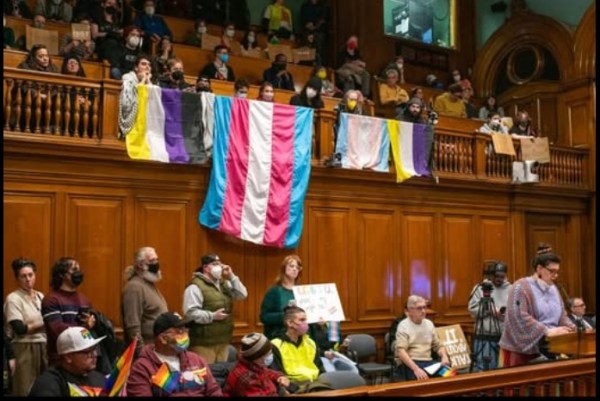
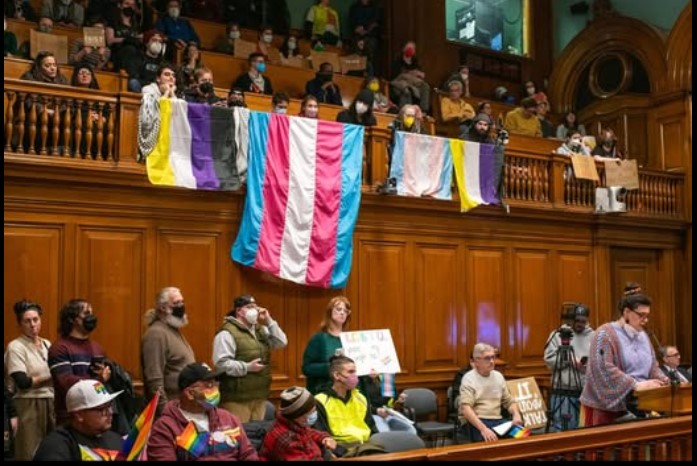
There’s a new safe haven for those who identify as transgender in the Bay State, after Worcester officially became a sanctuary city for that community during a lengthy city council meeting on Tuesday night.

This meeting lasted about five hours and there were about 200 people who showed up to voice their support.

It was standing room only inside council chambers – as dozens of residents spoke before the city council in favor of making Worcester a sanctuary city for those who identify as transgender or of other diverse genders.

This campaign comes on the heels of the first openly nonbinary member elected to the council — Worcester City Councilor-at-Large Thu Nguyen — taking a hiatus from the council, after they say the environment was transphobic.

Local organization Queer Residents of Worcester and Our Allies filed the petition asking councilors to make Worcester a sanctuary city for transgender and gender diverse people.

The petition specifically asks the city to not cooperate with federal and state policies aimed at harming transgender and gender diverse people, and to ensure that the LGBTQ+ community here has access to healthcare, housing, education, and employment without fear of discrimination.

“You have an incredible opportunity as a community to support our children, you have an opportunity to decrease the rates of depression and suicide by showing our children that their safety and dignity are a priority,” one meeting attendee said.

“It is your responsibility to stand up and fight for our people, for your people, for the people,” another added.

The city council approved it by a vote of 9-2.

Donald Trump stops giving PrEP to gay men & sex workers, ensuring HIV outbreaks abroad

*This was originally published by LGBTQNation.com

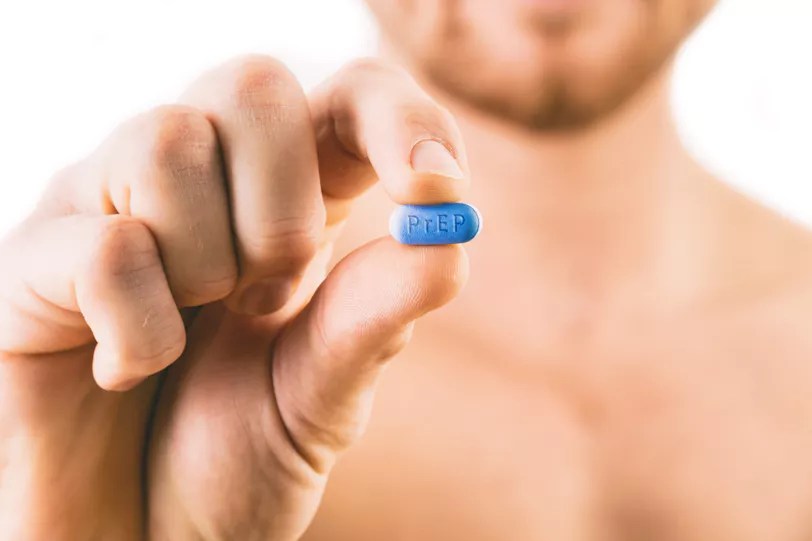
The U.S. State Department has issued a memo stating that the President’s Emergency Plan for AIDS Relief (PEPFAR), a program to prevent HIV in low- and middle-income foreign countries, can only offer HIV-preventing pre-exposure prophylaxis (PrEP) medications to pregnant and breastfeeding women (PBFW) rather than to LGBTQ+ people, sex workers and other groups at high-risk for contracting HIV.

The memo circulated by the State Department’s Global Health Security and Diplomacy program states, “People other than PBFW who may be at high risk of HIV infection or were previously initiated on a PrEP option cannot be offered PEPFAR-funded PrEP during this pause of U.S. Foreign Assistance or until further notice.”

The “pause” mentioned in the memo refers to a 90-day hold on all foreign aid issued by President Donald Trump’s executive order on “reevaluatig and realigning” U.S. foreign aid. The State Department added that Trump’s order is “rooting out waste” and “blocking woke programs” to ensure that funding only benefits efforts “fully aligned” with Trump’s foreign policy.

“We are outraged by the Trump Administration’s puritanical distribution of life-saving medication that brazenly discriminates against anyone not having sex exclusively for procreation,” said Wayne Besen, executive director of the LGBTQ+ advocacy organization Truth Wins Out. “This… could cruelly lead to the infection, and eventual death, of hundreds of thousands of people worldwide.

“There is no other explanation for these guidelines other than cruel, vindictive behavior meant to cause pain and suffering to vulnerable communities disfavored by President Trump’s right-wing base,” Besen continued, adding, “Aren’t conservatives supposed to be pro-life, or do they only care about ‘life’ for those who are just like them?”

Secretary of State Marco Rubio issued a waiver for lifesaving medicines and medical services affected by the pause, but his memo explained that PEPFAR funds will be restricted in various ways. In addition to denying PrEP medications to all but PBFW, Rubio’s restrictions also prohibit surveys and systems tracking the spread of HIV and child abuse in regional populations, as well as any projects scheduled beyond December 31 of this year.

As a result, the program’s HIV-prevention drugs are reportedly still not reaching their intended recipients, many clinics have ceased offering services, and healthcare workers haven’t been paid, the Kaiser Family Foundation (KFF) reported. These all increase the likelihood of rising HIV rates, outbreaks, and HIV-related deaths abroad, KFF and Besen said.

The freeze and restrictions on PEPFAR funding have coincided with the dismantling of USAID – the independent U.S. international development agency that implements most U.S. global health programs – by Trump’s unofficial Department of Government Efficiency (DOGE). DOGE, which is not an official federal department created through required congressional approval, is headed by the world’s richest man, Elon Musk.

Musk has made the elimination of the agency a top DOGE priority, stating, “USAID is a criminal organization. Time for it to die,” without citing any evidence. Although USAID is the primary source of funding for HIV/AIDS relief for over 25 million people in 54 countries, the agency’s website has since been disabled.

A large portion of USAID’s personnel have been furloughed or fired; PEPFAR recipients have been left with no way to reach longtime contacts or access guidance. The Trump administration announced its intention to remove almost all USAID workers from their jobs and out of the field worldwide. Rubio said recipient organizations would have to apply for waivers to restart the funding.

Opponents have called Trump and Musk’s actions against PEPFAR and USAID illegal and unconstitutional. Lawsuits against the dismantling of the agency have been filed by USAID contractors – who say that the Trump administration owes them millions in unpaid bills that had been pledged in the last congressional budget – and also by a pair of nonprofit organizations, including the AIDS Vaccine Advocacy Coalition (AVAC), an HIV-prevention nonprofit.

The State Department is blocking new passports for trans Americans

*This was originally published on 19thNews.org

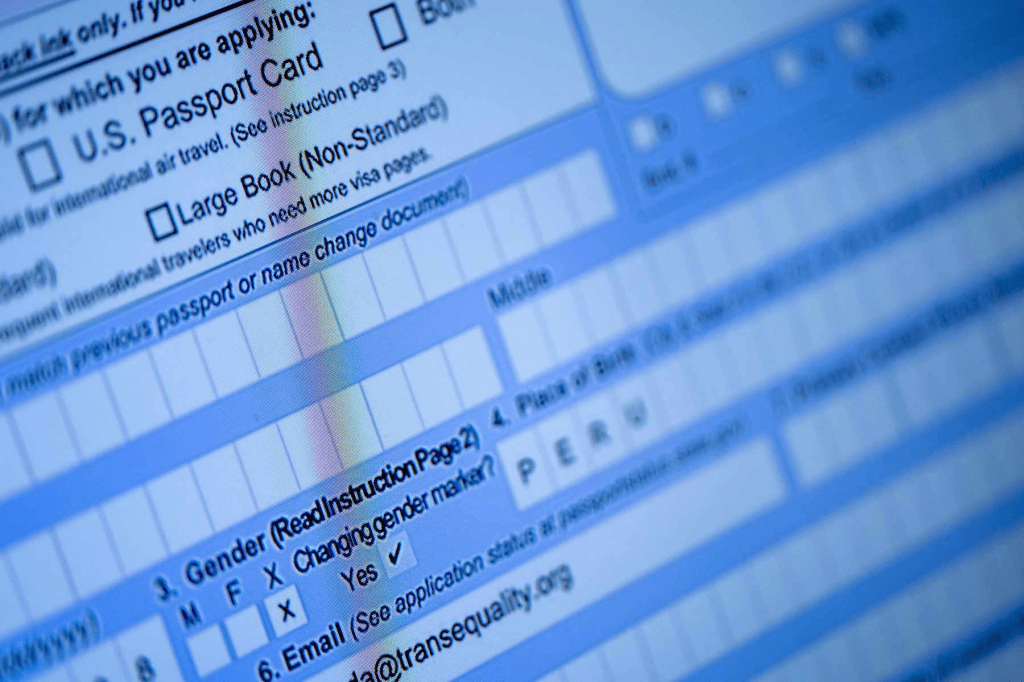
The State Department is no longer issuing U.S. passports with “X” gender markers and has suspended processing all applications from Americans seeking to update their passports with a new gender marker. This suspension, made in response to President Donald Trump’s executive order signaling his administration’s opposition to gender diversity, affects all transgender and nonbinary Americans, including those currently traveling or overseas. 

The agency says that it will issue guidance on previously issued passports with an “X” marker and that more information will be available on its travel website. However, no formal policy has been released, which is fueling confusion among trans and nonbinary people trying to update their documents. 

That includes Ash Lazarus Orr, a trans activist living in West Virginia. Orr applied to update their name and gender marker on their passport on January 16 — days before Trump was sworn into office. He paid $300 for expedited service, but his paperwork wasn’t processed until January 22. When Orr called the agency’s hotline for Americans waiting on passports who have upcoming international travel, they were told that the agency had no guidance to offer and that their documents had been “set aside.” 

Now Orr is without his passport, without his birth certificate and without his marriage license. Over the phone, he was told that his documents are being held in San Francisco, where they were originally being processed. 

“They have my documentation that is very personal to me, and they cannot tell me if I’m going to be getting that back,” they said. 

The American Civil Liberties Union has warned trans and nonbinary Americans that if they submit a new application to change the gender marker on their passport, they risk losing access to their passport and supporting documents while their application is being processed. An ACLU spokesperson attributed this information to reports of discrimination received through the organization’s online intake form, as well as direct conversations with people who have described this happening to them. 

Trump’s executive order directed federal agencies to require that government-issued identification documents, including passports and visas, reflect sex assigned at birth. Since this order states that it is the policy of the United States to recognize two sexes, male and female, and that these sexes are not changeable, “the department’s issuance of U.S. passports will reflect the individual’s biological sex,” an agency spokesperson said in an emailed statement on Friday evening. Under Trump’s executive order, “sex” explicitly excludes gender identity.

Secretary of State Marco Rubio reportedly instructed agency staff on Thursday to implement that executive order as it pertains to passports immediately, as first reported by The Guardian and The Intercept. Now, Orr is without his personal identity documents six weeks before pre-planned international travel and in the middle of planning a move out of West Virginia. 

The Biden administration made it easier for trans and nonbinary people to update their federal identity documents. Accurate and consistent gender markers on identity documents dramatically reduces the risk that trans people will face violence, harassment and discrimination, according to the Movement Advancement Project, which tracks LGBTQ+ policy.

The dismantling of this policy has radical consequences, said a former State Department official who spoke on condition of anonymity due to fear of lingering retaliation from the agency under the Trump administration. Not only does it force transgender people to carry identity documents that don’t accurately reflect their identity, this move also signals globally that U.S. policy on trans rights is moving backward, they said. 

“The confusion that this decision creates is intentional. It is designed to make things harder for trans and nonbinary people,” they said.

When The 19th called the National Passport Information Center on January 23 to ask for more information, an employee on the technical support desk said that the State Department is aware of Trump’s executive order and that guidance will be posted online once information is available. 

Erin Ryan Heyneman, a nonbinary person living in Massachusetts, called that same hotline. They don’t need to renew their passport; they said they just wanted to find out what was going on. Although they feel safe in their state, which has nondiscrimination protections in place for LGBTQ+ people, they still felt the need to act because of the way confusion can endanger their wider community.

“People just really don’t know who to believe or what to believe,” they said. More LGBTQ+ people need to seek information from trusted sources, they said. But when trying to seek that information from an official source, Heyneman was met with more uncertainty. The employee on the phone was sympathetic, but they had no information about passports being confiscated. 

As Orr waits to learn whether they will get their passport back due to federal anti-trans policies, they are facing down the prospect of leaving their home because of transphobia within the state. 

West Virginia has become increasingly hostile to trans and nonbinary people like himself amid a surge in anti-trans rhetoric across the country, and Orr expects a surge in state anti-trans bills introduced in West Virginia’s next legislative session. After receiving death threats and recently being attacked inside a men’s bathroom, he doesn’t leave the house without his spouse. 

“I can’t stay in the state. And it’s heartbreaking, because I love it here. I love the people, but it is truly, at this point in time, it’s either I leave or I die,” they said.

I was misgendered for having “female breasts” as a kid. Here’s why it hurt.

*This commentary by Matt Keeley was originally published by LGBTNation.

Some cisgender people think the recent Republican fad of banning of transgender people from sports and bathrooms won’t affect them, and that if people just conform closely to gender stereotypes, they won’t have trouble. But these don’t realize that random nuts have confronted cis women in the ladies’ room just for wearing pants and having short hair.

Gender policing goes from controlling how we look to controlling how we behave. And cis people who have never been misgendered may not realize just how much it can hurt… but as a cis man who has been misgendered, I do.

As a kid, I had gynecomastia, a condition where prominent breasts develop on a boy or man. And my breasts were indeed prominent — probably a C- or D-cup in bra size. It started around when I was 10 or so. While we never figured out the reason, it doesn’t really matter when you’re in middle school and kids confront you in the bathroom, calling you “titty boy.” 

Even friends would make the occasional crack to my chagrin. I remember once talking about how my uncle’s internal organs were backwards; one of my friends immediately joked, “And you’ve got two hearts: here and here,” gesturing at each breast. It didn’t feel great!

I hated my breasts. I often fantasized about chopping them off. It was never gory or gross in my mind — it usually was more like picking off a scab — a little bit of pain at first, but then perfectly fine with a normal chest just like every other boy.

The teasing changed my relationship with my body. My nipples usually inverted into my areolas by nature. But whenever they weren’t, I’d push them back in because, in my weird kid mind, women’s breasts had outward-facing nipples for babies to feed. If mine pointed inward, then that meant they weren’t breasts like what women had, and were…. something different.

I didn’t know the word “dysmorphia” at the time, but looking back, it seems like a manifestation of that. Most of all, I wanted to ignore that my breasts even existed. I hated even using the word “breast” in any context. While taking swimming lessons, I’d refer to the breaststroke as the “whip-kick stroke” based on the leg movements. When I wore collared shirts, they had chest pockets — men had chests, women had breasts.

While the teasing and bullying was bad, unintentional cruelty was somehow even worse. One expects bullies to be mean and to focus on one’s flaws. But if someone unintentionally misgendered me, it felt like they couldn’t help but hurt me, based solely on my appearance, infringing on my misguided attempts to ignore and feel indifferent to my own body.

One moment that’s seared in my brain (and will be for the rest of my life) happened around age 11 one afternoon at an office supply store. I needed a new graphing calculator for math class. I approached a worker kneeling on the floor, re-stocking the bottom shelf. 

“Pardon me, do you know where the graphing calculators are?” I asked.

“Oh, sure, sir,” he said, turning and seeing my shoes. 

His eyes raised to my chest and said, “…ma’am…”

His eyes then hit my face and he quickly went back to “sir,” before telling me where they were located.

I could tell he wasn’t being mean, he was just processing the visual stimuli in the order presented. I could tell he was embarrassed and neither of us wanted to call attention to his error, so I thanked him, and went to pick up the TI-85 calculator I needed. 

I have no idea if he remembers that day at all. Probably not. But it’s a moment I relive over and over. I was wearing my standard uniform of jeans and a loose-fitting green/yellow Hypercolor T-shirt — it was the early ‘90s after all.

It’s hard to explain why it hurt so much to be mistaken for a woman. It wasn’t merely that it proved I was “different” from other boys. It wasn’t shame at being seen as a woman or less than “manly” — in fact, I don’t think real-or-perceived misogyny played a part in what happened or how I felt. I’ve always had various “feminine”-coded interests even as a kid: In first grade, I loved The Baby-Sitter’s Club book series (which features mostly girl characters) and I’d often pretend to be the magical Mrs. Piggle-Wiggle from the classic children’s novels.

The misgendering bothered me more so because it just wasn’t me — I wasn’t being perceived correctly. I couldn’t put it into words; I wasn’t necessarily “manly” and had no real desire to be seen as such, but I was a man (or at least, I would be one day when I grew up).

I was lucky; I was able to get a breast reduction — top surgery in trans masc parlance — the summer I turned 13. My surgeon, Dr. Kropp — whose name somewhat matched his surgical specialty — was excellent, and confirmed that I had excess breast tissue, not just fat. 

That fall, I came into a new school as a high school freshman, and no one ever commented on my chest again; I was thankfully average. Friends even seemingly forgot about it, and no one asked about the change.

It took me a very long time to get over it — my chest was the one thing I was sensitive about. I’m pushing 45 now; it’s been 30 years, and the wounds have finally scabbed over. (The figurative ones, I mean. As for the actual surgical scars, those healed very nicely and relatively quickly after the procedure.)

But it took decades for me to get over the misgendering. And I immediately “passed as male” otherwise, if you wanted to call it that. It was just: one day boobs, one day none. So I can only imagine the pain that accumulates over when a trans person gets misidentified for so long, sometimes even after transitioning. 

Misgendering can lead to depression and psychological distress. (It certainly did for me.) It can also create a sense of emotional exhaustion. I know that when I came home from a particularly bad day at school, I just wanted to shove everything out of my mind, and just veg in front of the TV. But the teasing made me think about self-obliteration. I never attempted suicide — but the idea of just not existing for a while definitely appealed to me.

Truthfully, these days, when I start feeling very anxious, stressed, or depressed, the idea of not existing for a while still appeals to me. And I can’t help but think that this desire to disappear first began when people mocked and mistook me for having “female” body parts.

I have just a glimpse of how cruel Trump and his transphobic followers have been in their constant crusade to demonize and misgender trans people. I can’t imagine feeling the full force from a lifetime of this meanness — the years I endured it was enough for me.

LGBTQ advocates fear Iowa bill targeting ‘obscenity’ would deter drag performances

*This was originally published by the Des Moines Register.

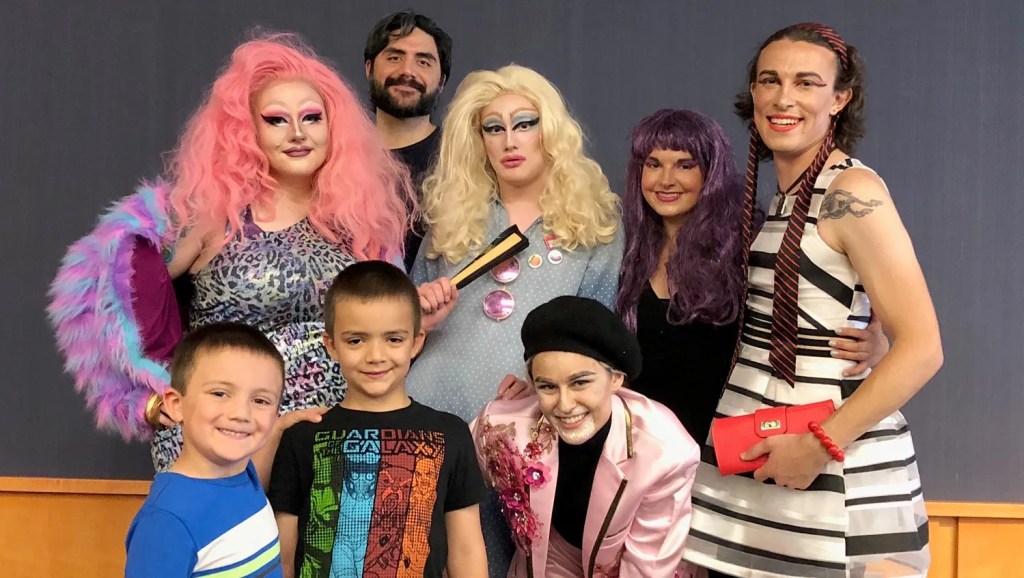
Exposing minors to an “obscene performance” would be a crime under a bill winding through the Iowa Senate that critics fear could discourage drag shows and spur lawsuits against venues offering LGBTQ pride programming.

The legislation, Senate File 116, would make knowingly exposing anyone younger than 18 to such a performance an aggravated misdemeanor, as well as knowingly selling a ticket or admitting a minor to a venue where such a performance is held.

Similar to legislation that was introduced but did not pass last year, the bill that advanced out of subcommittee Wednesday defines “obscene performance” as one that exposes genitals, invokes sexual acts or “appeals to the prurient interest and is patently offensive.”

“I brought this bill forward because I had constituents complain to me about performances that, if not meeting the definition of obscenity in our law, at least approach that definition, and concerned about this in our communities and the exposure of minors to it,” said Sen. Sandy Salmon, R-Janesville, who was part of a group of GOP lawmakers who introduced the legislation.

Critics argue the bill would encourage frivolous lawsuits

Keenan Crow, policy and advocacy director for One Iowa, a statewide LGBTQ advocacy organization, raised concerns with a provision establishing a private civil cause of action allowing parents of minor children to sue to determine whether something is obscene.

The bill states “a cause of action may be brought against any person that has knowingly disseminated or exhibited obscene material to the minor or who engaged in or caused or allowed a person to knowingly engage in an obscene performance in the presence of the minor.” It sets the minimum award of damages at $10,000.

While drag shows are not explicitly labeled in the bill as obscene performances, those opposed to the legislation fear it would target drag performances.

“What we are doing is we are allowing parents to target these venues for SLAPP suits, Strategic Lawsuits Against Public Participation, which are not designed to actually win the suit,” Crow said. “They are designed to make venues spend money and to reconsider hosting drag events entirely, lest they be sued on the off chance that it meets the obscenity definition, which obviously Drag Story Time does not.”

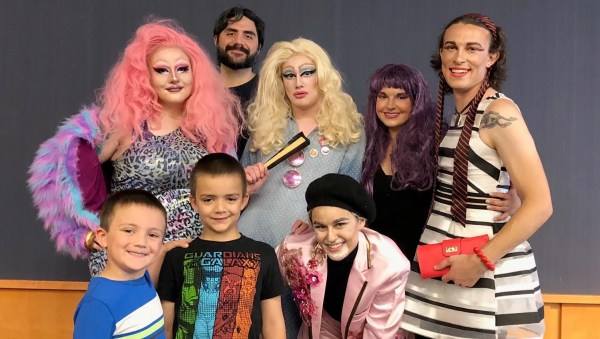
Drag Story Time events are sometimes held at libraries or other venues where drag performers read stories to children. In recent years, the events have increasingly been at the center of a larger GOP-led effort to restrict public drag events as conservative critics suggest they “sexualize” children.

Sen. Janice Weiner, D-Iowa City, said she worried the provision would incentivize frivolous lawsuits.

“This bill, as written, could encourage potential frivolous or bad actors to shake down local governments and private businesses, and that’s the taxpayer on the hook,” said Weiner, who opposed the bill.

Elizabeth Hall, a local trans woman, said bills targeting the LGBTQ population create “an aura of fear” among trans people that has pushed those she knows into psychiatric care.

“We fear for our communities,” Hall said. “We fear for our lives, and even if the particulars of how this bill would come into effect aren’t necessarily like that extreme, that fear still has a tangible effect on our lives and has caused so many people that I know to reach ends that I fear have continued to lead to detrimental effects.”

Supporters say the bill ensures performances shown to minors are ‘age appropriate’

Ryan Benn, a lobbyist for the conservative religious group The Family Leader, said the group supported the law because obscene materials that may be illegal to show children in movies or other material are not illegal to perform.

“I think it fixes that loophole,” Benn said.

Sen. Jeff Taylor, R-Sioux Center, said he would like to see a more clear definition of a “performance,” but overall obscenity is rarely prosecuted.

“In general, obscenity does not have constitutional protection in terms of freedom of speech,” Taylor said. “Something that’s obscene is, by definition, not protected by the First Amendment, and that’s regardless whether you’re sharing that with adults or with children. But to me, especially in the case of children, I feel like this is appropriate.”

Sen. Cherielynn Westrich, R-Ottumwa, said she supported the bill to protect children from obscenities.

“I think that what the one thing that we all in this room have agreed on is that we need to protect children from those sort of obscene or performances that are sexual in nature,” Westrich said.

Bill would repeal exemptions for public institutions

Melissa Peterson, with the Iowa State Education Association, said the group opposed the bill, especially a proposal to repeal an Iowa code section that allows minors to access appropriate material for educational purposes, at art exhibitions or in public libraries.

She said Senate File 496, the 2023 state law that requires school staff to remove books depicting sex acts, already sought to establish what content was age appropriate by existing obscenity standards.

“We worked closely together in a compromised fashion to come with what we thought would be considered age appropriate, and we would really like to see that exemption maintained for public institutions that are public spaces,” Peterson said.

Weiner also opposed repealing the exemption for public institutions.

“To repeal it is in some ways to admit that this bill really isn’t about obscenity,” Weiner said.

Blog at WordPress.com.

Up ↑