In recent years, an increasing number of LGBTQ+ individuals have been relocating from red states to blue states, and in some cases, even moving abroad. This video examines the factors behind this migration, the challenges faced by those making the move, and the effects on both the states they leave and those they settle in. We’ll explore the political and social forces fueling this exodus, the economic impacts, and the potential long-term consequences for the LGBTQ+ community and society at large. Join us as we share the personal stories of those who have made this difficult decision and reflect on the communities they’ve left behind.
The educator aimed to create a safe space for LGBTQ+ students, but some parents labeled it “perverted.”
A middle school community in Virginia is pushing back after their principal was dismissed for launching an “LGBTQ+ Kindness” flex-time class designed to offer a safe space for LGBTQ+ students.
Dr. Jerry Putt, who had served as principal of Frederick County Middle School since 2017, was removed from his position following a contentious school board debate over his actions, according to The Winchester Gazette.
The controversy erupted during a Frederick County School Board meeting on Tuesday, where a conservative group of parents and board members argued that the “LGBTQ+ Kindness” class strayed from state-approved curricula and labeled it “inappropriate.”
The leader of the opposition to the class, Chris Davey, a Back Creek District resident, called the optional “LGBTQ+ Kindness” class “perverted.” He criticized Dr. Putt for offering the course without prior parental notice and brought his concerns to the school board, where he found support.
In response, the board issued a warning to school staff, stating that any “unsanctioned curriculum” additions would not be tolerated and could result in termination. Just two days later, the board made an example of Dr. Putt by removing him from his position.
On Thursday, the school community received a notice from district superintendent Dr. George Hummer announcing Dr. Putt’s removal, with no explanation given, and the appointment of an interim principal.
Wendy Werner, a former counselor at the school, called the decision “appalling” and criticized the parents at the meeting as “hateful and uninformed.” In response, she and other community members have launched a grassroots campaign to reinstate Dr. Putt, starting with an online petition that has already gathered nearly 1,300 signatures in the small town. The petition has become a platform for community members to speak out about what they view as a campaign of anti-LGBTQ+ hate by the board and certain parent groups.
Local resident Luke Mason called the school board’s decision misguided. “The principal is out because he created opportunities for ALL students during the school day, and that was ‘off script,’” Mason wrote, questioning whether other extracurricular activities, like the “four-wheeler club” or pep rallies, would face similar scrutiny.
Sonia Marfatia-Goode raised concerns about discrimination, pointing out that one parent wanted the LGBTQ+ flex-time class canceled but had no objection to other flex-time offerings. “I wouldn’t be surprised if the division was sued over this,” she warned, highlighting potential legal repercussions.
Marfatia-Goode also noted that the increasingly divisive atmosphere at recent school board meetings was having a negative impact on students. “Children pay attention, and they are finding out that if you don’t want something, you yell and yell until you get your way,” she wrote.
Donald Trump triumphed over Kamala Harris early Wednesday morning in a presidential election marked by the Republican candidate’s anti-trans and anti-immigrant rhetoric.
On what may go down as one of the darkest days in U.S. history, a twice-impeached former president, who is both an accused rapist and a convicted felon, has been elected to the White House once again.
Donald Trump defeated Vice President Kamala Harris early Wednesday morning in an election dominated by the Republican candidate’s anti-trans and anti-immigrant rhetoric. Trump secured crucial battleground states—North Carolina, Georgia, Pennsylvania, and Wisconsin—after weeks of polling that showed him and Harris in a tight race.
“Trump was expected to declare victory even if he had lost, but his actual win now paves the way for what promises to be one of the most extreme presidential agendas in U.S. history. The consequences of another Trump presidency will be particularly dire for LGBTQ+ Americans, with his campaign platform outlining a full-scale assault on queer rights. On his 2024 campaign website, Trump vowed to implement a federal ban on gender-affirming care for minors and to redefine gender at the federal level, recognizing only male and female as legitimate genders—based solely on birth assignment. His platform also called for national “Don’t Say Gay” policies targeting LGBTQ+ students in schools and vowed to “keep men out of women’s sports.” Trump’s running mate, J.D. Vance, a former senator, introduced a bill that would imprison doctors who provide gender-affirming care to trans youth.
These policies would continue the trajectory of Trump’s first term, which was marked by a relentless assault on the LGBTQ+ community. Among the most significant actions were the ban on transgender people serving in the military, the removal of LGBTQ+ references from federal websites, the rollback of protections for trans students, and the opposition to workplace protections for LGBTQ+ employees. His administration also implemented a ban on people living with HIV from military deployment, disbanded the Presidential Advisory Council on HIV/AIDS, and cut global funding for HIV prevention and treatment.
During his 2024 campaign, LGBTQ+ Americans were once again bombarded with anti-LGBTQ+ messaging. Trump ran on a platform of staunch opposition to trans rights, supported by millions of dollars in ads from right-wing groups that portrayed the trans community as a threat to public safety and decency. One of the most widely circulated ads of the election cycle declared: ‘Kamala is for they/them. President Trump is for you.’ In his first and only debate with Harris, Trump made headlines by falsely claiming that she supported ‘transgender operations on illegal aliens in prison’—a statement LGBTQ+ advocates later clarified was a misrepresentation of the legal requirement to provide medically necessary care to incarcerated individuals. He also falsely accused Harris’ running mate, Tim Walz, of being ‘very heavy into transgender issues.'”
As advocates have consistently warned, the impact of Trump returning to the White House will be devastating for many vulnerable and marginalized groups. While Trump has repeatedly wavered on whether he supports national restrictions on abortion and contraception following the 2022 overturning of Roe v. Wade, his running mate, J.D. Vance, has made it clear that he ‘would like abortion to be illegal nationally.’ Trump has also floated the idea of defunding schools that teach the history and legacy of slavery, and he has persistently called for the disbanding of the Department of Education. Furthermore, his mass deportation agenda, aimed at expelling thousands of undocumented workers from the U.S., would reportedly cost the federal government millions of dollars each year.
In addition to these proposals, Trump’s allies—such as House Speaker Mike Johnson—have signaled plans to launch another attempt to repeal and replace the Affordable Care Act. This could jeopardize critical healthcare protections for seniors, pregnant patients, people with disabilities, and LGBTQ+ individuals, potentially leaving millions without access to vital services.
While it will be months before a second Trump administration fully takes shape, the public already has a clear sense of how he plans to govern. Throughout his volatile presidential campaign, Trump vowed to act as a dictator ‘on day one,’ promising to dismiss Jack Smith, the special prosecutor overseeing numerous criminal cases against him. In recent weeks, he has suggested using the National Guard to target American citizens, even fantasizing about journalists being shot, while repeatedly labeling those who oppose his fascistic views as the ‘enemy from within.’ Trump has also reportedly offered key positions in his administration to figures like Elon Musk and Robert F. Kennedy Jr.—the latter being an outspoken conspiracy theorist who has advocated for banning vaccines and removing fluoride from public drinking water.
In response to the looming threat of a second Trump term, some LGBTQ+ U.S. residents—particularly families of trans youth—have already fled the country out of fear for their safety and well-being. However, many others who would be directly impacted by his policies will not have the privilege of leaving. As during his first presidency, LGBTQ+ advocates are expected to continue their fight through the courts, the legislature, and public protests, standing firm against a wave of harmful policies that threaten their rights and freedoms.
Omar Guido Chávez, the 51-year-old owner of Sodoma NightClub, a popular LGBTQ+ gogo bar in Tijuana, Mexico, was discovered dismembered in the trunk of his own car on October 18.
Authorities have indicated that evidence linking the Sinaloa drug cartel to the crime was found in Chávez’s vehicle. While police have arrested two suspects, they are not treating the murder as a hate crime.
In the back seat of the car, investigators found a “narco-banner,” a message commonly used by drug cartels to convey threats and warnings.
On Friday, two suspects, identified in reports as “Gabriel N.” and “Juan Diego N.,” were taken into custody. Surveillance footage reportedly connected Gabriel N. to Chávez’s abandoned vehicle. The suspects allegedly attempted to flee when stopped by police for driving without headlights and seatbelts, running from the scene on foot.
Baja California homicide prosecutor Miguel Ángel Gaxiola stated there is no evidence suggesting that anti-LGBTQ+ bias played a role in the murder, noting that there were no prior threats against Chávez or the nightclub. Investigators believe the murder may be linked to ongoing conflicts between rival drug cartels.
In a heartfelt Instagram post, Sodoma NightClub expressed their sorrow over Chávez’s passing, remembering him as a beloved friend and outstanding leader. “We will always remember his smile, love for life, and noble heart,” the club wrote, extending condolences to his family and friends.
On the night of October 27, the nightclub hosted a showcase of guest artists as a tribute to Chávez.
Local LGBTQ+ organization Comunidad ABC shared an open letter on Facebook, calling on authorities to ensure the safety of all individuals in Baja California. The letter emphasized the need for thorough investigations, sensitivity towards diverse communities, and a commitment to preventing future tragedies. “We will not cease our pursuit of justice for Omar Guido and all victims of violence in our community,” it stated.
The vice-presidential candidate received an even lower score than Rep. Marjorie Taylor Greene.
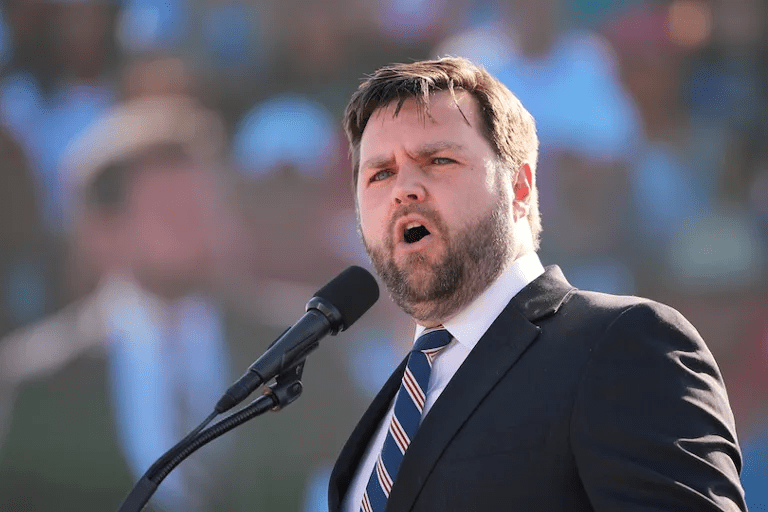
Republican vice-presidential candidate Sen. J.D. Vance (R-OH) received a zero rating on the Human Rights Campaign’s (HRC) newly released Congressional Scorecard for the 118th Congress.
This biannual report evaluates each member of Congress on their record regarding LGBTQ+ rights, assigning scores out of 100. Vance’s zero score indicates he did not support HRC’s stance on any LGBTQ+-related legislation.
This comes as no surprise, as Vance recently attributed America’s educational challenges to transgender inclusion, alleging that teachers are too occupied with “radical ideas” about gender to focus on fundamental academics. He also opposed the federal Respect for Marriage Act and, last year, refused to confirm U.S. foreign ambassadors, claiming they lacked sufficient opposition to LGBTQ+ rights. Additionally, Vance introduced Senate legislation aimed at banning gender-affirming care for trans youth and limiting access for trans adults.
Sen. Vance’s close alignment with Donald Trump—who worked to dismantle LGBTQ+ rights during his first term—further underscores his adversarial stance toward LGBTQ+ people.
Other senators who scored zero on the HRC report include Mitt Romney (R-UT), Ted Cruz (R-TX), Lindsey Graham (R-SC), Josh Hawley (R-MO), and Marco Rubio (R-FL). In the House, members receiving zeros included Reps. Lauren Boebert (R-CO), Jim Jordan (R-OH), James Comer (R-KY), Greg Steube (R-FL), Dan Bishop (R-NC), and House Speaker Mike Johnson (R-LA), who is noted for his outspoken anti-LGBTQ+ positions.
Interestingly, Rep. Marjorie Taylor Greene (R-GA), despite her frequent opposition to LGBTQ+ rights, scored an 8 for supporting HRC’s position on four bills—having voted against larger spending bills containing anti-LGBTQ+ measures. However, the report did not analyze her reasons for these votes.
On the opposite end of the spectrum, 217 members of Congress scored 100, demonstrating a full commitment to advancing LGBTQ+ rights and countering anti-LGBTQ+ legislation. Among those with perfect scores were senators Tammy Baldwin (D-WI), Bernie Sanders (D-VT), John Fetterman (D-PA), Tammy Duckworth (D-IL), and Laphonza Butler (D-CA), the first Black lesbian to serve in the Senate. Independent Sen. Kyrsten Sinema (I-AZ) scored a 93, as she missed two votes and did not co-sponsor specific anti-discrimination bills.
In the House, representatives like Adam Schiff (D-CA), Ayanna Pressley (D-MA), Jamie Raskin (D-MD), and Steny Hoyer (D-MD) achieved scores of 100. Every out LGBTQ+ House member also received a perfect score. Former Rep. George Santos (R-NY) was excluded from the scorecard due to his expulsion before completing his term.
Steny Hoyer, celebrating his perfect score, highlighted Congress’s duty to combat discrimination, especially against LGBTQ+ Americans facing hostility from MAGA Republicans. “I will continue to work with Democrats to advocate for LGBTQ+ Americans and their rights,” Hoyer stated.
HRC president Kelley Robinson underscored the increasing attacks on LGBTQ+ inclusion in Congress, condemning the addition of anti-LGBTQ+ measures to key legislation. She also noted the success of organizers in blocking over 100 anti-LGBTQ+ riders. “With a record-high 75 million Equality Voters nationwide, informed voting and representation matter now more than ever,” Robinson affirmed, emphasizing the LGBTQ+ community’s resilience and the Senate’s critical role in protecting rights against extreme measures from the House.
For decades, LGBTQ+ rights have been leveraged as a tool to mobilize conservative voters.
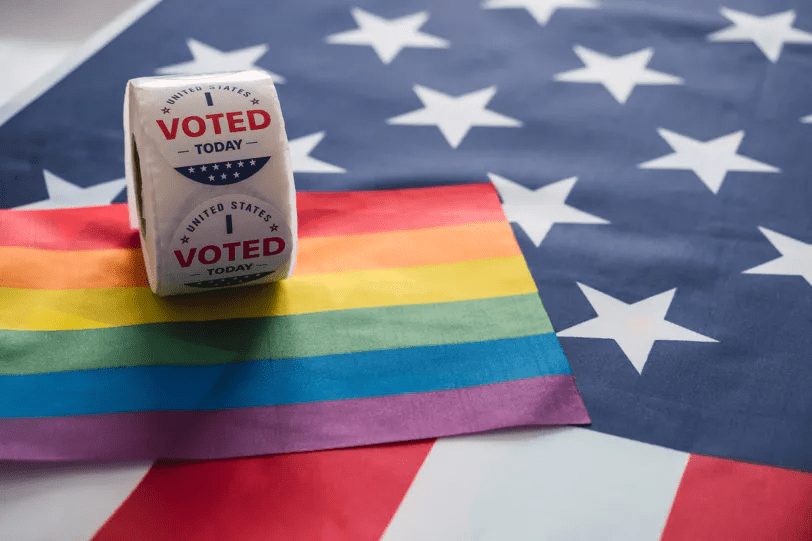
LGBTQ+ ballot initiatives have often served as a wedge issue to galvanize conservative voters, impacting freedoms typically protected by the government. The 2024 election continues this trend, with November marking another instance of LGBTQ+ civil rights being subject to public debate.
In New York, voters will decide whether to include sexual orientation, gender identity, and gender expression in the state constitution’s anti-discrimination amendment. Additionally, reproductive rights will also be on the ballot in ten states.
Voters in California, Colorado, and Hawaii will determine whether to repeal their states’ constitutional bans on same-sex marriage.
Same-sex unions have consistently been a prominent issue in state referendums, with 34 states presenting the question to voters since 1998, many passing constitutional amendments against same-sex partnerships. This tactic was notably used to rally conservative voters in the 2004 election, when 11 states enacted such amendments in support of George W. Bush.
Until 2012, marriage equality lost at the ballot box every time. That year, voters in Maine, Maryland, Minnesota, and Washington approved same-sex marriage, following a shift in national public opinion that saw support for same-sex marriage surpass 50% around 2009.
Though the Obergefell v. Hodges Supreme Court decision in 2015 invalidated all state anti-marriage equality amendments, many remain in state constitutions. Activists are now working to repeal these amendments, especially in light of concerns that the conservative-dominated Supreme Court could overturn Obergefell, as suggested by Justice Clarence Thomas after the overturning of Roe v. Wade.
“Saving” the Children
The first state ballot initiative related to LGBTQ+ rights emerged in California during the 1978 election. Proposition 6, known as the Briggs Initiative, aimed to ban individuals engaged in “public homosexual activity” from working in California public schools. It drew national attention and condemnation from then-President Jimmy Carter and then-Governor Ronald Reagan. This initiative reflected a broader trend of states repealing anti-discrimination measures, influenced by Anita Bryant’s successful 1977 campaign in Florida to repeal a local ordinance banning discrimination based on sexual orientation. Harvey Milk played a pivotal role in the campaign against Prop 6, which was defeated by a 16-point margin.
Over the years, various state ballot initiatives have sought to either legalize or ban discrimination based on sexual orientation and gender identity, with voters increasingly favoring anti-discrimination measures. For instance, in 1988, Oregon voters revoked the governor’s authority to ban discrimination based on sexual orientation, and in 2018, Massachusetts voters upheld a law prohibiting discrimination based on gender identity.
Maine and Oregon have frequently put LGBTQ+ rights to a vote. In Maine, voters initially blocked same-sex marriage in 2009 but approved it in 2012, both times with 53% of the vote. Anti-discrimination protections for LGBTQ+ individuals in Maine were denied by referendum in 1998 and 2000 but were later approved in 2005. In Oregon, voters defeated a “don’t say gay” measure in 2000 by a 5.7% margin.
The concept of recognizing sexual orientation as a protected identity has also been subject to multiple votes, often as a conservative strategy to prevent the inclusion of “homosexuality” in anti-discrimination ordinances. In the 1990s, voters in Oregon, Idaho, and Maine supported allowing sexual orientation to be a protected identity.
Additionally, ballot-driven voter ID laws in states like Arkansas and North Carolina may hinder voting access for transgender individuals and other marginalized members of the LGBTQ+ community.
Regardless of the specific ballot measures, the state representatives elected this year will greatly influence LGBTQ+ rights. Legislatures controlled by Republican officials have introduced or passed numerous anti-LGBTQ+ bills in recent years, targeting issues such as gender-affirming health care, bathroom access, accurate IDs, inclusive education, and participation in sports. Supporting pro-equality candidates at both the state and local levels will have long-lasting effects on these laws.
Vote Like Your Rights Depend on It
Civil rights for various groups have been subject to public referendum numerous times since 1868, similar to questions regarding the legality of discrimination based on race, sex, and disability. Initially, voters supported discriminatory measures, but over time, support for equal rights has increased. Women’s rights gained traction in the 1970s, while support for LGBTQ+ rights began to emerge in the 2000s.
The determination of civil rights is increasingly influenced by courts and legislatures, which are becoming more conservative. The notion that constitutional rights can be dictated by public opinion has permitted racism, sexism, homophobia, and other forms of discrimination to become codified into law.
Public opinion on LGBTQ+ rights, particularly for LGB and transgender individuals, remains conflicted and volatile. While the majority currently supports anti-discrimination laws, relying on ballot measures is not a guaranteed path to securing rights.
As LGBTQ+ rights are again on the ballot, it is crucial to vote this year—both on referendums concerning LGBTQ+ rights and for candidates who can promote pro-equality legislation.
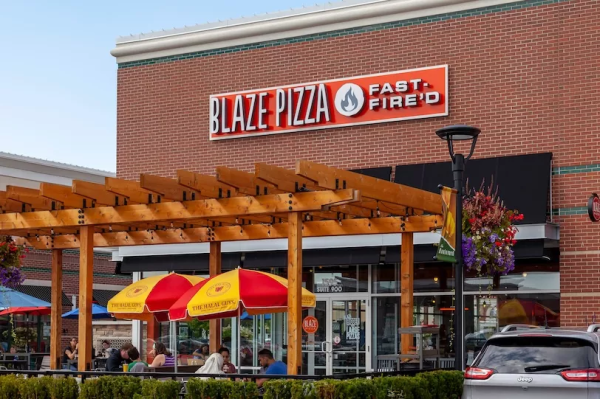
Police in Roseville, California, are searching for three suspects in connection with a hate crime at a Blaze Pizza restaurant, where workers were assaulted after one suspect tore down a Pride flag on display. The assault was captured on a smartphone video.
The incident took place at 10:50 p.m. on a Thursday when a food delivery driver entered the restaurant, noticed the Pride flag near the register, and threw it to the ground. When the store manager and employees confronted him, the man allegedly used a homophobic slur before leaving. He later returned with two other men, who then attacked the restaurant staff.
Haters yelled obscenties, sent a threatening letter, and vandalized their Pride flag and political signs. But the reaction has emboldened the targeted men.
A witness named Chance Chacon told KCRA that the manager and employee had defended the flag’s display, but then, when the three assailants returned, “It was like a mob. They were just kind of swinging at him.”
A video captured inside the restaurant shows one worker repeatedly shouting at the assailants, “Get the f**k out of here!” while another employee urges a co-worker to “Call the cops.”
The three men fled the scene before police arrived, but an ambulance later transported one employee on a stretcher. This worker was taken to the hospital, where he was briefly treated for a concussion and head trauma but has since been released.
A still image from the footage shows a shoeless, light-skinned suspect wearing a torn dark-colored t-shirt and hand wraps commonly used in mixed martial arts.
Police have asked for the public’s help in identifying the assailants involved in the September 20 incident. Anyone with information can submit an anonymous tip online or contact their non-emergency line at 916-774-5000.
Ruby Shields, a lesbian who owns a restaurant in the nearby town of Granite Bay, told The SacramentoBee that she doesn’t consider the area LGBTQ+ friendly. She has been too scared to display a rainbow flag at her own restaurant, and is often mistaken as the wife of her male business partner, even though she has a wife.
“We’ve been looked at with respect, but it’s always on the back of your mind, you know, ‘Should I be saying this?’” Shields said of not knowing whether to come out to restaurant patrons. “It’s not even something that I really even want to put out there because you never know. I mean, it’s horrible that it’s so close to home. Roseville is right down the street from where we’re at.”
This wouldn’t be the first time that an anti-LGBTQ+ person has committed violence in California after tearing down a Pride flag. Last August, Travis Ikeguchi — a 27-year-old man who posted anti-LGBTQ+, antisemitic, anti-vaccination Christian Nationalist content online — murdered Laura Ann Carleton, a 66-year-old LGBTQ+ ally and mother of nine, complained about the Pride flag hanging in front of her Cedar Glen, California business.
Police killed Ikeguchi shortly afterward.
Paul Feig — the director of Bridesmaids, Ghostbusters (2016), and other films — wrote, “We are all devastated for her husband Bort and her family and the LGBTQ+ community, for whom Lauri was such a true ally…. This intolerance has to end. Anyone using hateful language against the LGBTQ+ community has to realize their words matter, that their words can inspire violence against innocent loving people. Let’s all keep moving forward with tolerance and love. Let’s not let Lauri’s tragic death be in vain.”
Carleton’s friend, director Paul Feig, wrote of the incident, “Lauri Carleton was my friend. She was a wonderful person who did so much for the LGBTQ+ community as well as the community at large. What happened to her is an absolute tragedy. If people don’t think anti-gay & trans rhetoric isn’t dangerous, think again.”
Subscribe to the LGBTQ Nationnewsletter and be the first to know about the latest headlines shaping LGBTQ+ communities worldwide.
In recent weeks, as awareness of Project 2025 has grown, Donald Trump has attempted to distance himself from this concerning set of policies, developed by the far-right, anti-LGBTQ+ Heritage Foundation, for a potential second term. On July 6, Trump posted on his social media platform, Truth Social, claiming he knew nothing about Project 2025. He said he disagrees with some of its proposals and considers others “absolutely ridiculous and abysmal.”
Given Trump’s well-documented history of dishonesty and misinformation, it’s hard to take his claims about Project 2025 at face value. This plan, among other radical proposals to reshape the federal government in a far-right, Christian nationalist image, includes efforts to dismantle federal protections for LGBTQ+ individuals.
Related:
Trump attempts to distance himself from Project 2025—the far right’s agenda for a second term.
Biden recently condemned the plan, which is closely tied to several former Trump officials.
However, even if we were to take Trump’s word on Project 2025, his own proposed agenda for a second term remains equally troubling for LGBTQ+ Americans.
The Trump campaign has outlined many of its anti-LGBTQ+ plans under “Agenda 47” on its website, including videos of Trump detailing his proposals. Among these plans, Trump promises to pass a federal law banning what he calls “child sexual mutilation” (despite gender-affirming surgeries rarely being performed on minors) and to push Congress to permanently halt federal funding for such procedures.
He also vows to seek a congressional bill defining genders as strictly male and female, assigned at birth, and to instruct the Department of Education to enforce severe consequences on states and school districts if any teacher suggests to a child that they might be in the wrong body. This could include potential civil rights violations for sex discrimination and loss of federal funding.
Additionally, Trump pledges to eliminate federal DEI (Diversity, Equity, and Inclusion) programs, which he inaccurately describes as enforcing “racist and woke sexual ideology” throughout the federal government.
His “Plan to Save American Education and Give Power Back to Parents” includes cutting federal funding for schools or programs promoting Critical Race Theory, gender ideology, or other content he deems inappropriate. It also proposes adopting a “Parental Bill of Rights” for full curriculum transparency and keeping men out of women’s sports.
This is merely the beginning. As noted by many observers, Trump would enter a second term with a much stronger position to implement his far-right, anti-LGBTQ+, and anti-democratic agenda. Whether it’s through Project 2025, Agenda 47, or a combination of both, the consequences would be dire
During the traffic stop, an officer documented that Republican state Rep. Nico Rios became “verbally abusive, displaying homophobic, racially discriminatory behavior.
Recently, North Dakota state Rep. Nico Rios, a member of the Republican party, was arrested for DUI, and during the arrest, he reportedly made homophobic and xenophobic comments to the police.
On December 15, authorities arrested Nico Rios and issued citations for DUI, DUI refusal, and an open container, according to a Williston Police Department report.
The representative was pulled over around 11:30 p.m. after reportedly swerving between lanes, as stated in the report.
The police officers who initiated the stop then administered a Horizontal Gaze Nystagmus test, Walk and Turn test, and One-Leg-Stand test. During these tests, Rios allegedly exhibited “slurred speech and difficulty constructing sentences,” as outlined in the report.
In the report, one of the police officers noted that during the testing, Rios became.
An officer reported that Rios became “verbally abusive, homophobic, racially abusive, and discriminatory” during the tests, leading to his arrest when he refused to undergo a screening test.
“Irrespective of my state of inebriation, my conduct and words toward law enforcement that night were entirely unacceptable,” Rios stated in a comment to CNN. “Just two officers doing their job to keep the community safe when they encountered me on a night when I chose to act foolishly. They did nothing to warrant any form of disrespect. I owe it to myself, my district, and everyone, and I vow to ensure this never happens again.”
In the body camera footage released of the incident, Rios can be seen making the remarks while being transported to jail.
At the traffic stop, Rios can be heard using a homophobic slur and asking the officer about his accent. The officer responds that he is originally from England.
“You’re arresting me for driving home while people come into your country and rape your women? And I’m the bad guy?” Rios says after mentioning that the U.K. is being “taken over” by migrants.
Rios stated to the Associated Press that he was leaving a Christmas party before he was stopped and has “only received support from my colleagues, although a few have yelled at me, for sure I deserved it.”
The legislator was elected last year and currently serves on the House Judiciary Committee, a panel overseeing legislation related to law enforcement.
“Moving forward after this incident, I want to emphasize my complete and total commitment to supporting law enforcement,” Rios stated. “I messed up big time, and I am truly sorry.”
Republican House Majority Leader Mike Lefor stated to the AP that he hadn’t watched the video but had heard sufficient details about it.
He mentioned that he is assessing the available options and plans to have a discussion with Rios before providing further comments on the incident. Lefor didn’t disclose whether he had already requested Rios’s resignation.
“We are profoundly concerned about Rep. Rios’ reckless choice to drive under the influence and his comments to law enforcement officers,” stated North Dakota Republican Party Chairwoman Sandi Sanford in a text message to the news wire. “His actions do not reflect the values of the NDGOP.”
Rios is scheduled for a pretrial conference in municipal court on February 5th.















You must be logged in to post a comment.