A far-right political action committee says it has collected enough signatures to potentially get a trans sports ban onto Washington state’s ballot in November, and that ban would require girls to undergo physical examinations to participate in school sports.
As the Washington State Standard reports, Let’s Go Washington collected 445,187 signatures in support of Initiative Measure No. IL26-638, exceeding the 386,000 needed to advance the measure. The initiative would ban transgender girls from competing in girls’ school sports statewide
IL26-638 interprets existing state law as requiring students “to undergo a routine physical examination prior to participation in interscholastic sports, which includes documentation of the student’s sex assigned at birth.” It would require school districts and nonprofit entities to “prohibit biologically male students from competing with and against female students in athletic activities with separate classifications for male and female students.”
Under the proposed measure, students who want to participate in girls’ sports would be required to provide “a health examination and consent form or other statement signed by the student’s personal health care provider that verifies the student’s biological sex, relying only on one or more of the following: The student’s reproductive anatomy, genetic makeup, or normal endogenously produced testosterone levels.”
As journalist Erin Reed notes in her newsletter Erin in the Morning, trans sports bans with similar requirements have been highly controversial, as they could potentially result in minors being subjected to invasive physical exams simply to participate in school sports.
Reed cites the failure last March of the so-called Protection of Women and Girls in Sports Act, which would have amended Title IX — the federal civil rights law prohibiting sex discrimination in government-funded schools and education programs — to prohibit schools from allowing trans female athletes to participate in athletic programs or activities “designated for women or girls.” The Congressional Equality Caucus noted that the bill could have forced “any student to answer invasive personal questions about their bodies & face humiliating physical inspections to ‘prove’ that they’re a girl.”
Along with the signatures in support of IL26-638, Let’s Go Washington also submitted 416,201 signatures in support of a measure repealing changes to another of the PAC’s recent initiatives. The Let’s Go Washington-backed Initiative 2081, approved in 2024, codified the rights of the parents of public school students into law. As Reed notes, however, state lawmakers watered down provisions that would have reportedly mandated that schools out trans students to their parents.
According to Reed, Let’s Go Washington’s IL26-001 would restore language to the 2024 parental rights law that would effectively require the forced outing of trans students to their parents.
As the Washington State Standard reports, Let’s Go Washington submitted signatures in support of both measures to the Washington Secretary of State’s office on Friday. The Secretary of State’s office told the outlet that it may take up to four weeks to verify the signatures for the initiatives. Once verified, the initiatives will go before the state legislature, which can either approve them or reject them. If the state legislature rejects them, they will either appear on the November ballot on their own or alongside alternatives proposed by lawmakers.
Brian Heywood, the millionaire hedge fund manager and Republican megadonor who leads Let’s Go Washington, claimed that roughly half of the signatures the PAC had collected in support of the initiatives were from independent voters and Democrats. “This is not a partisan issue, this is a common sense issue,” Heywood said, according to the Standard. “This has broad support.”
However, in a statement issued by WA Families for Freedom, Gender Justice League board member Sophia Lee accused Let’s Go Washington of “playing political games with the lives of vulnerable trans and queer kids.”
Reed, meanwhile, notes that the trans sports ban is likely to face constitutional challenges should it become law. But it’s unclear whether the measure would succeed on the ballot. Reed notes that anti-trans messaging from Republicans last year coincided with significant GOP losses across the country in November’s off-year elections.
The US Supreme Court agreed to consider whether scores of state and local governments are violating the Constitution by barring licensed counselors from trying to change a child’s sexual orientation or gender identity.
The justices said they will hear a challenge to Colorado’s ban on what critics call “conversion therapy.” A counselor says the 2019 law violates her free speech rights.
The case adds to a growing list of culture-war clashes the Supreme Court has agreed to hear. The justices are already assessing a Tennessee law that outlaws certain medical treatments for transgender children. And in April they will hear a dispute over the use of LGBTQ-friendly books in the classroom and a case over efforts to create the country’s first religious public charter school.
Twenty-eight states and more than 100 other jurisdictions either fully or partially ban the disputed practice, according to Movement Advancement Project, an LGBTQ advocacy group that tracks laws around the country. The Supreme Court rejected a challenge to Washington state’s ban in 2023.
The Colorado law is being challenged by Kaley Chiles, a licensed counselor who says she views her work as an outgrowth of her Christian faith. She is represented by the Alliance Defending Freedom, a Christian legal group that has been behind some of court’s highest profile cases in recent years, including the successful effort to overturn the constitutional right to abortion.
In a call with reporters, Chiles said the law “silences diverse perspectives and interferes with my ability to serve my clients with integrity.” One of her lawyers, ADF’s Jim Campbell, said Chiles had turned away multiple clients because of the law, though he didn’t disclose how many.
In upholding the law, the Denver-based 10th US Circuit Court of Appeals said it legitimately regulates professional conduct and only incidentally affects speech. Colorado officials urged rejection of the appeal, likening the measure to malpractice laws and informed-consent requirements.
The Constitution “allows states to reasonably regulate professional conduct to protect patients from substandard treatment, even when that regulation incidentally burdens speech,” Colorado argued.
The court will hear arguments and rule in the case in the nine-month term that starts in October.
Morocco: Morocco has been under a long-term project to revise its legal system, and this year published reforms to the code of criminal procedure that ought to at least make the justice system more fair and limit pre-trial detention. Then again, we’ve also heard reports this year of continued crackdowns on queer people for pro-LGBT expression on the internet. [See “Coalition demands release of Morocco LGBT activist after 100 days in prison” (November 2025)]
Morocco also intends to revise its penal code, and some campaigners have been pushing to delete its sodomy and extramarital sex provisions when that happens, but no progress was made this year. I think the likelihood Morocco actually deletes its sodomy law is very slim.
Meanwhile, in October, the UN Security Council backed Morocco’s plan to resolve the dispute over the Western Sahara/Sahrawi Arab Democratic Republic, which would make it autonomous under Moroccan rule. The UN called on both sides to negotiate an actual settlement, but this seems like a big step toward eliminating an entire country from the map (which would decrease by one the number of states that criminalize homosexuality).
Chad: The government launched a commission on reinstating the death penalty, which was abolished in 2020.
West Africa
Burkina Faso, Mali and Niger: These three states run by military juntas following coups over the past half-decade took steps to deepen their integration into the Alliance of Sahel States (yes, the ASS), which is something between a supranational organization and a proto-state in its own right. They all withdrew from the Economic Community of West African States (ECOWAS), and they announced their intention to withdraw from the International Criminal Court. The states are motivated in part by antipathy to France and the West, Islamic faith, and support for and from Russia, all of which is exemplified in their pursuit of anti-LGBT policies.
Burkina Faso is also considering reinstating the death penalty as it overhauls its penal code, which ought to be a worrying sign. The new code also includes a crime of “promotion of homosexual practices and similar acts.”
Niger held a national conference that voted to extend the junta’s rule by five years and also to oppose any effort to legalize same-sex marriage.
Worryingly, some other neighbors, Chad and Togo (which both criminalize gay sex) have publicly mused about joined the ASS and have even taken some steps to integrate with them.
Of course, if the ASS ever does replace these three to five states, it would at least reduce the number of criminalizing states on the chart.
Ghana: A draconian anti-LGBTQ bill modelled after Uganda’s Anti-Homosexuality Act was reintroduced to parliament after a previous version lapsed without the president’s signature before the end of the term. This one is sponsored by a group of opposition MPs, but the government has said it intends to introduce its own version at some point. The current president has strongly suggested he will sign it.
Ghana also ratified the Treaty on the Prohibition of Nuclear Weapons.
The Trump administration used Ghana and Togo as places to deport asylum seekers, including at least one who was seeking asylum due to his sexual orientation.
The constitution review committee proposed an amendment to specifically bar the use of the death penalty. Ghana abolished the penalty in 2023 for ordinary crimes only, and the repeal was not retroactive, so those on death row still face execution.
Liberia: The government undertook a review of its laws for gender discriminatory effects – particularly around marriage, citizenship, rape, and children’s rights – but the review did not take sexual orientation or gender identity into account. I haven’t heard of further action being taken on this file.
The government intervened in the United Methodist Church over its support of same-sex marriage, including a senate investigation and even police detention. The local church has made clear its opposition to same-sex marriage.
A lawmaker was removed from a session of parliament after he disruptively attempted to introduce an anti-LGBT bill that would have imposed criminal penalties on same-sex marriage. Watch out for this to come back.
Nigeria: In a climate of regular violence against queer people, the governor of Kano state submitted a bill to the legislature to criminalize same-sex marriage. It’s already criminalized federally.
The senate was also considering a bill to expand the use of the death penalty.
Gabon: A constitutional ban on same-sex marriage, passed in 2024, took effect in 2025.
Eastern Africa
Kenya: In August, the high court directed the government to protect transgender peoples’ rights, including recognition of their chosen gender and dignified treatment in government custody. The court ordered the government enact a specific Transgender Protection Rights Act or add amendments to that effect to the Intersex Persons Act.
Meanwhile, an MP vowed to bring forward a bill to criminalize LGBTQ advocacy, but he hasn’t done so yet. Parliament was also considering a bill to abolish the death penalty.
Uganda: The World Bank has ended its suspension of lending to Uganda, which was imposed in 2023 after the passage of the Anti-Homosexuality Act. The Bank now claims it has put in place mitigation measures to ensure its funds won’t be used to discriminate, which, frankly doesn’t make a lot of sense.
Tanzania: The government has announced it is moving forward with toughening existing criminal laws banning same-sex intercourse to further ban same-sex relationships and marriages, but I haven’t actually seen legislation come forward yet.
Rwanda: Parliament passed a new health care law that specifically excludes same-sex couples from accessing surrogacy and assisted reproduction.
Mauritius: The UK and Mauritius finalized and published a treaty on the handover of the British Indian Ocean Territory, with the UK maintaining sovereignty over the military base on Diego Garcia. While the treaty hasn’t yet been ratified, once it does the BIOT will cease to exist as a separate jurisdiction where same-sex marriage is legal – unless the UK recreates it in some form to cover Diego Garcia only.
Comoros: Joined the Biological Weapons Convention.
Eritrea: Ratified the Convention on the Rights of Persons with Disabilities.
Southern Africa
Botswana: A lesbian couple filed a constitutional challenge seeking the right to marry, saying the current ban violates various sections of the constitution guaranteeing the right to equality. The high court struck down Botswana’s sodomy law in 2019, in part after finding that the constitutional prohibition on sex discrimination included sexual orientation discrimination, a decision that was upheld by the court of appeal in 2021.
Namibia: We’re still waiting on a ruling from the supreme court on the government’s appeal of 2024’s lower court decision decriminalizing sodomy.
The former president officially vetoed a bill that aimed to criminalize same-sex marriage and LGBT advocacy before leaving office (he signed a different bill late in 2024 that banned same-sex marriage, however). His successor – the country’s first female president – says she’ll fight for equality for everyone but has avoided saying anything about LGBT people. Meanwhile, Equal Namibia was seeking couples who want to challenge the country’s ban on same-sex marriage.
South Africa: The government continued to work on a unified marriage act which will combine several marriage laws for different religious communities and the same-sex Civil Union Act into a single law. It has not yet cleared parliament.
Eswatini: The leading LGBT advocacy group Eswatini Sexual and Gender Minorities went back to court to challenge the government’s decision to deny them a company registration. The supreme court had ordered the government to reconsider their application back in 2023, but the minister’s decision remained the same.
Malawi: The Minister of Justice said the country is committed to abolishing the death penalty, having already completed public consultations, but no bill has been brought forward yet.
Zambia: The constitutional court dismissed a challenge to the country’s sodomy laws, ruling that the court lacked jurisdiction as the challenge needed to be filed before the country’s high court first. The Zambia Civil Liberties Union says they will refile the case.
Zimbabwe: In July, the government launched a legal reform process to recognize the rights of intersex people. We’ll see what comes of this.
The ruling party’s national conference also vowed to intensify and enforce laws banning homosexuality in late 2024, though no new legislation has been put forward.
Japan: The long slow march to eventual same-sex marriage continued in Japan in 2025, with resolution still looking a year or more away. Three more high courts ruled on the constitutionality of the same-sex marriage ban. Those in Nagoya and Osaka found the ban unconstitutional, but a Tokyo high court ruled it constitutional. Together with three other courts that found the ban unconstitutional, that creates a circuit split that will have to be resolved by the supreme court, where a case has already been filed.
A further case has also been filed to the supreme court by a transgender woman who is seeking to have her legal gender changed without ending her marriage to her wife. Lower courts in Kyoto and Osaka ruled against her this year.
In what’s perhaps a bad sign for all this, the supreme court ruled against a married binational same-sex couple who were seeking a residence visa for the non-Japanese partner.
But that hasn’t stopped other progress on relationship recognition. Following last year’s supreme court ruling that same-sex partners should be entitled to surviving family benefits for victims of crime, the government announced in January that dozens of laws that applied to common-law couples would now apply to same-sex couples. These included domestic violence laws, leases and rents, and disaster support, but excluded over 120 laws such as social security and pensions. And the government proposed an assisted reproduction bill that specifically excludes same-sex couples and bans surrogacy.
And Okinawa prefecture enacted a same-sex partnership registry in 2025, while Nagasaki has announced plans to introduce one in 2026. That’ll bring the total to 32/47 prefectures and more than 500 municipalities representing more than 90% of the population.
Japan elected its first female prime minister this year, and she’s a conservative hardliner who has expressed strong opposition to same-sex marriage, so the odds of legislative advancements look slim for the next few years.
China: The government’s attitude toward the LGBTQ community turned icy again this year, with a deepening crackdown on queer expression, including ordering the removal of gay networking apps from app stores, censorship of foreign films to remove queer characters, and arrests of gay erotica writers.
In Hong Kong, the government failed to meet a court-imposed deadline to enact a civil partnership bill, after the legislature voted down the government’s very weak bill in September by a 71-14 margin. It’s unclear what couples can do from here.
Earlier in the year, a Hong Kong court ruled that banning trans people from using gender appropriate toilets was unconstitutional.
Taiwan: The government introduced bills that would open assisted reproduction to single women and same-sex couples, although it does not include surrogacy, which it says will be considered later.
A lawsuit was filed challenging the surgery requirement to change legal gender.
Taiwan was supposed to host WorldPride this year, but it withdrew back in 2022 when WorldPride ordered that it should not use the name “Taiwan” in the event name. The event was instead held in Washington, DC.
South Korea: A life partnership bill was proposed but has not advanced at all in the legislature. Meanwhile, two couples filed a case at the supreme court seeking same-sex marriage rights. And the government announced it would count same-sex couples as “spouses” in its next census.
The newly appointed minister for gender equality said she would make passing a long-stalled anti-discrimination bill, with protections for LGBT people, a priority. So far, no news on that front.
Thailand: Last year’s same-sex marriage and adoption law came into effect in January 2025, making Thailand the first place in southeast Asia to legalize it. Still, married couples continue to face legal discrimination when it comes to accessing surrogacy and residency permits for binational couples.
But a promised gender recognition law never materialized.
Vietnam: The government cracked down on some gay events this year, following a change in leadership of the Communist Party. Talk of expanding LGBT rights and possible same-sex marriage is likely dead for a while.
A long-stalled gender affirmation bill did not advance in 2025.
The government reduced the number of crimes that are eligible for the death penalty from 18 to 10, which it is explicitly pitching as a step toward abolition.
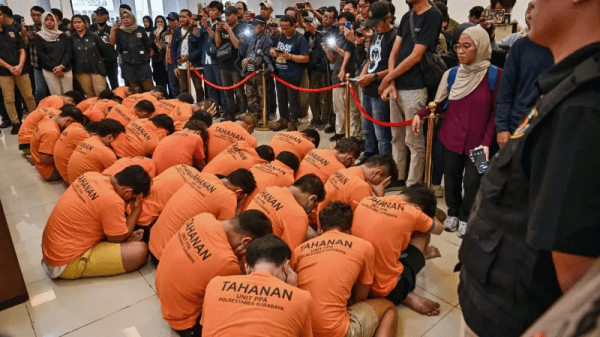
Indonesia: Multiple raids took plays on gay events and gay bars, in what looks like a deepening crackdown on queer people. A bill was also introduced that would ban LGBTQ behavior online.
Indonesia’s new criminal code moves the death penalty from the primary form of punishment to an alternative punishment, which is a baby step toward abolition.
Malaysia: You guessed it, crackdowns on gay events here, too.
Kelantan state amended its shariah-based criminal code to remove sections on sodomy, which the constitutional court said were redundant considering it’s already covered under federal law.
One bright spot – the government is beginning a study in the new year on full abolition of the death penalty. It took a step toward this in 2023 by abolishing mandatory death penalties from its criminal code.
Singapore: Parliament passed a workplace discrimination law that specifically excludes protections for LGBTQ people.
The high court dismissed an appeal seeking abolition of mandatory death penalties from the criminal code, but plaintiffs have said they will appeal.
Philippines: The supreme court ruled that homosexuality was grounds for annulment of a marriage.
Aklan province passed a non-discrimination ordinance.
Timor-Leste: The country joined the ASEAN bloc, and also the Southeast Asian Nuclear Weapons Free Zone.
Central and South Asia
Kazakhstan: The nation enacted a Russia-inspired “LGBT propaganda” law, which includes punishments of a fine and ten days in prison.
Krygyzstan: The government attempted to reintroduce the death penalty for sex crimes involving children this year – which seems to me like a common pretext for a witch hunt against queer people. Fortunately, the president submitted the proposed constitutional amendments to the constitutional court, which ruled that they were unconstitutional, as the current constitution explicitly prohibits reintroducing the death penalty, and doing so would violate Kyrgyzstan’s obligations under international treaties it has signed.
Kyrgyzstanalso signed, but has not ratified the Treaty on the Prohibition of Nuclear Weapons.
Afghanistan: In July, the International Criminal Court issued warrants for two Taliban leaders for their alleged crimes against women, girls, and the LGBTQ community – the first time the ICC has sought warrants for crimes against LGBTQ people.
Pakistan: The government introduced a bill to eliminate the death penalty for two crimes, part of an association agreement with the European Union.
India: The central government took steps to ensure equality for same-sex couples under a number of laws and programs – though it still opposes same-sex marriage. The government was ordered to review all laws and promote equality when the supreme court shot down a marriage case in 2023. The court also considered and refused a petition to revisit that decision this year. Still, lots of other laws are being challenged in the courts by queer couples, including a domestic violence law which is phrased such that it only applies to husband-and-wife pairs, and equal income tax treatment.
Also this year, the court directed the government to review how it is implementing rights for trans people and to review sex education to ensure it is inclusive. A separate case was filed at the supreme court seeking distinct legal recognition for intersex people, as apart from transgender people. The high court of Andra Pradesh state ruled that transgender women are women under domestic violence law. The Kerala high court ruled that the state must issue a birth certificate to a child of a trans person that identifies its parents as “parents,” not “mother and father.” A judge in Madras ruled that same-sex couples have a right to a family life together, and cannot be forcibly separated by disapproving parents.
Karnataka state passed a hate crime and hate speech law that includes protections for LGBT people, and issued new regulations banning anti-LGBTQ discrimination in child protection services. Tamil Nadu state has made LGBTQ sensitivity training mandatory for all doctors.
Bangladesh: I must’ve edited a dozen or more stories about violent attacks on queer people in Bangladesh at 76crimes.com this year.
Bhutan: The government issued a set of film regulations that includes a prohibition on incitement to hatred or violence based on sexual orientation or gender.
Nepal: We still haven’t gotten a final decision from the supreme court on same-sex marriage, but the leading LGBT organization has counted 17 same-sex couples who’ve gotten married in the country since the 2023 ruling legalized it. Nevertheless, Wikipedia editors continue to claim that Nepal is not a same-sex marriage country.
The first gender-affirming surgery was performed in the country in June, and it is now considered available there.
Sri Lanka: There has been no progress on a bill to decriminalize gay sex – and the local Catholic bishop is whipping up conspiracy-based opposition to it. Last year, the island passed a Women Empowerment Act that included a prohibition on discrimination based on sexual orientation or gender identity.
Middle East
Israel: Well, at least the war in Gaza has mostly cooled down this year, although it’s clear that the suffering continues and it looks like we’ve just reached a pause in hostilities rather than a cessation.
On LGBT issues, Israel registered its first adoption by a same-sex couple in January. Same-sex adoption had been legal on paper for years, but in practice, the administration threw up so many roadblocks, it couldn’t happen until a supreme court ruling last year ordered the government to stop putting same-sex couples at the back of the adoption queue.
The opposition brought a bill to create civil (secular) marriage (including same-sex marriage) and a couples registry to a vote in the Knesset last week, but despite getting some cross-party support, it failed to pass.
Israel is expected to go to vote on a new Knesset by October 2026, and polling is currently very tight between the government and opposition blocs, but ten months is a long time in Israeli politics. While we can all hope that Netanyahu and his allies are given a thumping defeat next year – anything would be better than this government’s record on Palestinian and LGBTQ rights – the opposition may not be able to deliver same-sex marriage, as its current leading figure has stated his opposition to it in the past.
Lebanon: The state ratified the Convention on the Rights of Persons with Disabilities.
Oman: The country ratified the International Covenant on Civil and Political Rights, effective Feb 2026. This is a pretty major development, as international jurisprudence holds that the ICCPR requires decriminalization of sodomy.
Costa Rica: The constitutional court recognized the right of same-sex couples to share maternity leave, just like heterosexual couples can.
The government has proposed a gender recognition bill, but the state Social Security Fund rejected a part of it that would require it to cover sex reassignment surgery. It’s still being debated.
The ministry of education announced it was eliminating sex education and policies around homophobic bullying in schools, and also eliminating the position of LGBTI commissioner.
Honduras: The country emerged as another locus of far-right drift after US President Trump intervened in the presidential election to declare his preferred candidate. The close election still hasn’t declared a winner nearly a month later. Whoever is ultimately declared winner will be further to the right of outgoing president Xiomara Castro, who had vocally supported LGBTQ rights (though didn’t accomplish much in the face of a hostile congress).
El Salvador: The country’s dictator has gotten cozy with Trump, hosting the CECOT detention and torture center where America is deporting its undesirable migrants.
Caribbean
St. Lucia: The biggest positive development in the region was the court ruling that decriminalized gay sex in Saint Lucia. This court case was part of a coordinated strategy by Caribbean LGBTQ activists who filed simultaneous cases in five states challenging their sodomy laws, and this was the fourth positive ruling. Unlike other rulings in this series, the court did not find that the constitution specifically bars sexual orientation discrimination. We’re still waiting on a ruling from Grenada, which could come any day now. Or a year from now. Look, the court operates on Caribbean time.
An unrelated sodomy case in St. Vincent and the Grenadines failed in 2024, and I have not heard anything about an appeal. And another unrelated case…
Trinidad & Tobago: And the shock negative development of 2025. In March, the court of appeal overturned a 2018 ruling that decriminalized sodomy in the country. Caribbean time is Caribbean time, but overturning a seven-year-old decision is crazy. The case is now headed to the Judicial Committee of the Privy Council in London for a final ruling, and it’s really unclear how it’ll rule.
The case turns on the “savings clause” in the constitution, which insulates pre-independence laws from court scrutiny, and whether it applies. The plaintiff said it didn’t apply, since the legislature had repealed the pre-independence sodomy law with a stronger one in 1986 and 2000. The court found that the savings clause applied, but reverted the law to the pre-independence version, which sounds like pure legislating from the bench to me!
The Privy Council has been pretty strongly in favor of upholding savings clauses in the recent past, but this one is quite a pretzel. They ought to also be bound by international treaty obligations (of both the UK and Trinidad) to decriminalize sodomy. In all likelihood, we won’t see a ruling until 2027 or later, fully a decade after the original case was filed.
Cuba: The National Assembly passed a law allowing gender change by self-identification, and also recognized common-law marriage for the first time.
Dominican Republic: The biggest news was that the Constitutional Court struck down laws that criminalized police officers and military personnel who have gay sex. The ruling also clearly established for the first time that the Dominican constitution bans discrimination based on sexual orientation, both in government services and in employment. It’s likely that over time this will become a foundational ruling to assert further LGBTQ rights in the country.
This is also fortunate, because congress also passed a new penal code this year over the objections of civil society groups, because it failed to include prohibitions on discrimination and hate crimes, and didn’t decriminalize abortion.
The court ruling also prompted me to do a bit of a Wikipedia dive updating entries on LGBTQ rights in numerous Caribbean countries, to clarify or update that they no longer bar gay servicemembers in their laws.
Dutch Territories: Sint Maarten is the last Netherlands territory where same-sex marriage is not yet legal, after the constitutional court made it legal in Aruba and Curacao last year. It seems like all it will take is a court challenge to bring equal marriage to Sint Maarten, but I don’t believe one has been filed yet.
UK Territories: Gays scored a surprise win in Turks and Caicos Islands, where a binational couple won a court of appeal ruling that the government must recognize overseas same-sex marriages for the purposes of immigration. The court explicitly did not rule on whether same-sex marriage must be legalized or recognized – the constitution specifically restricts it.
In the Cayman Islands, the UK Privy Council upheld the territory’s civil partnership law, which was imposed by the governor in 2020 after a similar bill failed in the legislature by one vote.
A long-threatened referendum on banning same-sex marriage in the UK Virgin Islands’ constitution failed to materialize. The territory is in the process of overhauling its constitution, and it may eventually emerge as part of a reform package.
None of Britain’s Caribbean territories recognize same-sex marriage.
South America
Argentina: The country’s far-right drift continued with the encouragement of the US President. In February, President Javier Milei banned gender care for minors by decree, but the federal court overturned the ban two months later. Legislators have since proposed an omnibus anti-trans bill, which we should watch out for in 2026.
Earlier this month, the government introduced a bill that would stiffen penalties for anti-LGBT hate crimes as part of a broader crime reform bill.
Brazil: The superior court of justice ruled in favor of a nonbinary person who wished to have their gender recorded as such in the civil registry. The decision was limited to the individual plaintiff, but ought to form a precedent for future cases. Brazil already allows a X marker on passports.
The supreme court also invalidated local laws that banned discussion of sexual orientation or gender identity in schools, and ruled that a domestic violence law that was originally drafted to only apply to women in heterosexual couples also applies to same-sex couples and trans women.
Meanwhile, the federal council of medicine issued a regulation banning gender-affirming care for minors, but simultaneously lowering the minimum age for genital surgery from 25 to 21. The regulation is being appealed.
Congress is also very slowly debating a bill that would finally codify same-sex marriage and adoption into federal law, following the supreme court ruling on the issue way back in 2013. Look for this to come to a vote in late 2026/27.
Chile: Another country that’s fallen to the extreme right-wing regional drift following presidential elections last month.
But before that happened, outgoing President Boric signed a new adoption law that finally ends discrimination against same-sex couples and couples in civil unions in adoptions. Previously, married heterosexual couples were given priority in adoptions.
Congress defunded the Gender Identity Support Program over the objections of the President Boric. It’ll continue for now under the Ministry of Health, but is a likely target of incoming President Kast, whose objections to LGBTQ rights are well documented. The constitutional court ruled in favor of the mother of a 10-year-old trans girl who wanted to update her daughter’s legal identity, although the law only allows that after age 14. The ruling was limited to the specific case.
Colombia: Congress failed again to pass a conversion therapy ban, though a new bill is pending.
Guyana: LGBTQ issues became a surprise issue in national elections this year, with nearly all parties pledging to repeal the country’s sodomy law. Reelected President Ali pledged to work with the local queer advocacy group on repealing the law and improving laws for the community, though same-sex marriage appears off the table for now. One to watch in 2026.
Guyana has become an incredibly rich nation basically overnight due to the new exploitation of off-shore oil fields, which has led to an influx of visitors, investors, and tourism, which may be helping drive some of this – not to mention the string of successful court challenges to sodomy laws in the near Caribbean. But that attention also came with a threat of annexation by neighboring Venezuela earlier in the year, though that appears to have subsided amidst ongoing threats of a US invasion of that country.
Peru: Bills seeking civil unions or same-sex marriage failed to advance in congress in 2025, but an administrative court for the first time recognized a same-sex marriage for the purposes of dividing property. About eleven cases are pending in courts across the country seeking same-sex marriage or recognition of foreign marriages.
Congress passed a bill that eliminates the concept of “gender” from law and replaces it with biological sex only. The law also eliminates the goal of “gender equality” and replaces it with “equity” and “equality of opportunity.” The law has been roundly condemned by the international community as retrograde and endangering the rights of women and girls.
Congress was also working on a bill to ban trans women from public bathrooms.
Suriname: In February, a review panel overturned a 2023 ruling by the constitutional court and ordered the government to record two same-sex couples who’d married overseas into the civil registry, essentially requiring recognition of same-sex marriage. The ruling also ordered the government to amend legislation to allow it, although a new civil code that came into effect in May specifically bans same-sex marriage. For now, the ruling only applies to the two couples, but others can sue for the right to be registered as well. The decision can still be appealed, but I haven’t seen any news on it since.
With less than 48 hours remaining in office, outgoing Mayor Eric Adams rolled out a plan to distribute $2 million in what the city is describing as “emergency funding” to 20 organizations serving transgender, gender non-conforming, and non-binary individuals in a bid to counteract federal budget cuts.
The Department of Health and Mental Hygiene will administer the funding across organizations delivering the most pressing community services, including in the areas of health and wellness, legal advocacy, youth and family support, safety and crisis response, community building, and economic empowerment, according to the mayor’s office.
Organizations are eligible to receive up to $92,000, which can be used for staff, travel, supplies, and services — so long as most of the clients are transgender, gender non-conforming, or non-binary.
Organizations seeking to apply for the grant must fill out an application by Monday, Jan. 5 at 5 p.m.
CitizensNYC, a non-profit which helps cut through red tape and act as an intermediary between the city and applicants to disburse city funding to various organizations in a timely manner, is partnering with the city to help facilitate the funding, though the city will ultimately determine which organizations receive it.
The funding follows a tumultuous year during which the Trump administration repeatedly moved to slash funding for LGBTQ community services in New York City and elsewhere.
After President Donald Trump issued several executive orders early this year targeting funding for LGBTQ organizations and other groups, federal agencies warned non-profits that their budgets could be slashed if they served transgender individuals or conducted what officials described as “equity-related” work. Lambda Legal, which led a lawsuit against the Trump administration in February, later won a court order restoring $6 million in funding for nine nonprofits serving LGBTQ people and individuals living with HIV.
In September, the Trump administration announced it was cancelling around $36 million in funding for the city as punishment for its policies protecting transgender individuals — a move that prompted the city to sue the Trump administration.
Most recently, the Trump administration issued multiple proposed rules that would require healthcare providers participating in Medicare and Medicaid programs to stop providing gender-affirming care for youth.
“We saw a need after federal budget cuts, and we are responding to it,” First Deputy Mayor Randy Mastro said in a written statement. “There are essential services at stake for this community. Therefore, it was an imperative for us to take action and fill that need.”
In a written statement, Adams said the city is “putting our money where our values are and stepping up to serve those who need our care.”
Dr. Michelle Morse, the acting city health commissioner, said the federal government’s attacks on trans and gender non-conforming individuals are “unconscionable.”
“Supporting New York’s community organizations that provide lifesaving services and are eligible for the emergency funds is a key part of the Health Department’s commitment to supporting the health and well-being of all New Yorkers,” Morse explained.
The mayor’s announcement comes roughly three months after Adams sparked widespread criticism when he attacked trans-inclusive bathroom policies in a series of comments. At the time, Adams said he opposed what he described as “girls and boys using the same restroom,” saying he would evaluate his “authority” to change laws on that issue, but ultimately conceded he lacked the power to do so.
Advocates for the LGBTQ+ community say the new limits on the food assistance program, SNAP, may make it especially difficult for many LGBTQ people battling food insecurity.
SCOTT DETROW, HOST:
2025 was a tumultuous year for the Supplemental Nutrition Assistance Program, or SNAP, between changes enacted as part of President Trump’s One Big Beautiful Bill Act and then the government shutdown that interrupted benefits. As Rebecca Smith with member station KBIA in Columbia, Missouri, reports, these changes are having a disproportionate effect on one already vulnerable group, LGBTQ people.
REBECCA SMITH, BYLINE: Emilia Stauffer walks towards the back of the GLO Center in Springfield, Missouri, carrying a heavy box of canned vegetables to a small closet that’s packed to the brim with boxes of shelf-stable foods, hygiene products and more.
EMILIA STAUFFER: So this is where everything gets stored.
SMITH: Stauffer is the community services specialist for the GLO Center, which supports the LGBTQ+ community throughout Southeast Missouri. In early 2025, the center recognized the rising need in their community for help accessing resources such as housing, health care and food.
STAUFFER: We have a population that is underemployed, underinsured, either not able or scared to access services.
SMITH: In a 2025 report, the Williams Institute at the UCLA School of Law, which studies LGBTQ+ law and policy, reported that 2.1 million LGBTQ+ adults were enrolled in SNAP nationwide. But now, following the passage of Trump’s One Big Beautiful Bill, which puts limits on the food assistance program, it could be harder for them to receive and retain benefits. Stauffer says for her clients, that’s not a new challenge. Many don’t seek out help due to fear of discrimination or the risk of violence.
STAUFFER: They’re literally terrified. I know we’re here to talk about food, but just even the idea of being flagged as trans is terrifying.
SMITH: People often have to present identification at food banks and pantries, which could inadvertently out transgender and gender-nonconforming people whose identities may not match the gender on their IDs. Plus many food pantries are tied to religious groups. One 2022 analysis, published in the BMC Public Health journal, found that more than 60% of U.S. food pantries were affiliated with faith-based groups.
STAUFFER: Not all faith organizations are the same, but when one has experienced religious trauma, it’s easier to overgeneralize than to make that risk.
SMITH: Because of this, Stauffer meets with groups in the area to determine if they would be safe and welcoming for her clients, but she says it can still be hard for people to go into spaces that historically have been unwelcoming. Brad Sears agrees. He’s one of the founders of the Williams Institute and studies food insecurity in the LGBTQ+ community. He says there’s many reasons beyond just fear of discrimination that LGBTQ+ people are food insecure and less likely to use SNAP than their straight or cisgender peers, such as higher rates of poverty and less of a support system.
BRAD SEARS: And, you know, the vast majority of people overall and in the LGBT community who rely on SNAP are either disabled, or they’re raising young children.
(CROSSTALK)
SMITH: Since March 2025, the GLO Center in Springfield has worked with at least 250 individuals and families. As Missouri implements SNAP changes, which reduces benefits for some and makes others ineligible altogether, the center has already seen a fourfold increase in need. Here’s executive director Aaron Kitchens.
AARON KITCHENS: The queer community is – we’re known for our resilience. And so we want to take action not just ’cause it’s the right thing to do, but also because these are our friends and family. Like, this is our community.
SMITH: Kitchens says the center will continue to find ways to provide direct care to the LGBTQ+ community in the region. All folks have to do is call or drop by. For NPR News, I’m Rebecca Smith in Springfield, Missouri.
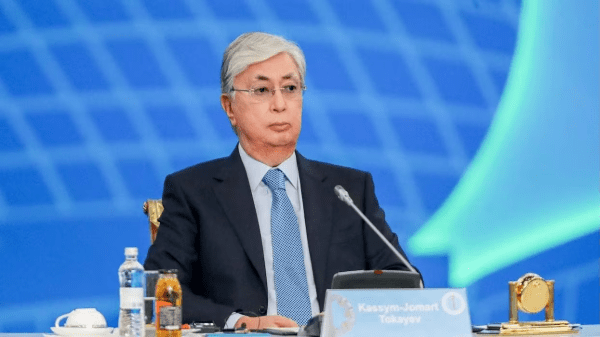
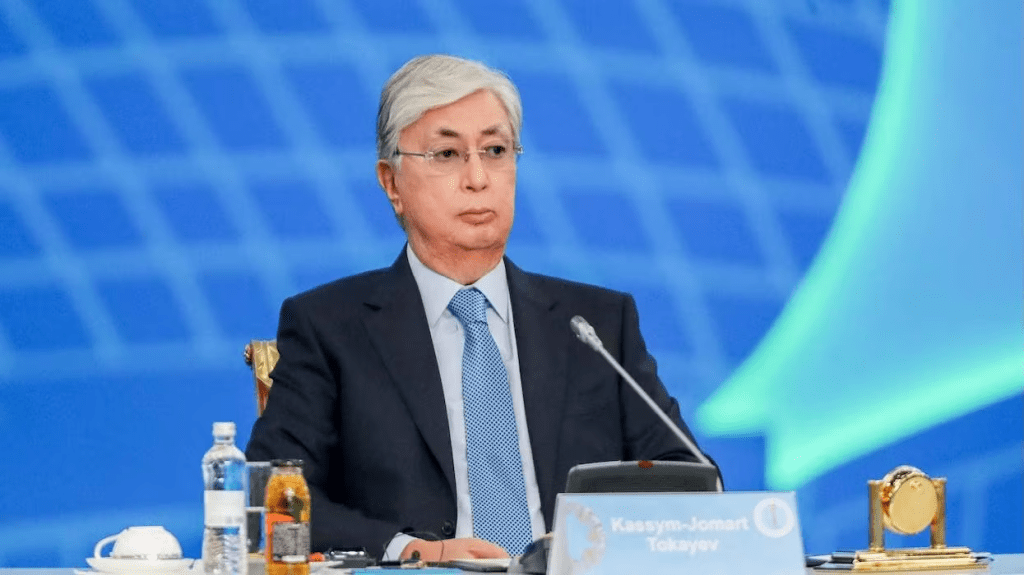
The Central Asian country of Kazakhstan has joined its neighbor Russia in banning so-called LGBTQ+ propaganda.
President Kassym-Jomart Tokayev signed a bill to that effect into law Tuesday, news service Anadolu Agency reports. It bans “pedophilia propaganda” as well, according to the service. Punishment for violations include a fine of 144,500 Kazakh tenge ($280) and jailing for up to 10 days.
Kazakh citizens had submitted a petition about a year and a half ago urging the government to ban anything considered pro-LGBTQ+ propaganda. The Senate had passed the bill December 18 and the lower chamber of Parliament, the Majilis, approved it in November.
When the Senate was considering the legislation, Sen. Ruslan Rustemov described it as “banning the use of media, literature, entertainment, and other events that promote nontraditional sexual relations and pedophilia,” according to Kazakh news outlet Vlast.kz, as translated by The Diplomat, a newsmagazine covering the Asia-Pacific region.
“An analysis of international experience shows that many countries around the world have adopted legislation that ensures the protection of national values and traditions, including those that provide for the protection of the institution of the traditional family,” Rustemov said.
Vice Minister of Justice Botagoz Zhakselekova “tried to split hairs,” The Diplomat notes, saying LGBTQ+ identity will not be illegal, but “public promotion of LGBT rights” will be. “How this doesn’t violate Kazakh citizens’ basic constitutional rights to the freedom of expression and association isn’t clear,” The Diplomat’s reporter commented.
An international coalition of human rights organizations had condemned the legislation while it was pending. Access Now; Civil Rights Defenders; Eurasian Coalition on Health, Rights, Gender and Sexual Diversity; Helsinki Foundation for Human Rights; Human Rights Watch; International Partnership for Human Rights; and Norwegian Helsinki Committee issued a statement against the measure in November, saying it “would violate fundamental human rights and increase the vulnerability of lesbian, gay, bisexual, trans, intersex, and other queer people (LGBTIQ+) in Kazakhstan.”
“Adopting a ‘LGBT propaganda ban’ would blatantly violate Kazakhstan’s international human rights commitments, including children’s rights to education, health, and information,” the statement continued. “Discriminatory and rights-violating provisions like those being proposed have no place in any democratic society, which Kazakhstan aspires to be.”
Kazahkstan’s government additionally has been interfering with journalists in the nation, searching their offices and detaining reporters, and the LGBTQ+ propaganda law will only make this worse, said a December press release from Human Rights Watch and eight other groups. It is “a direct threat not only to people identifying as LGBTI (lesbian, gay, bisexual, transgender and intersex), but also to journalists, academics, artists, human rights defenders, and civil society actors who risk administrative sanctions for reporting on or advocating for the rights of these groups, or for expressing positive views of LGBTI rights publicly or online,” the release pointed out. What’s more, it goes against Kazahkstan’s constitution, which guarantees freedom of expression, and directives from international bodies such as the United Nations, the organizations added.
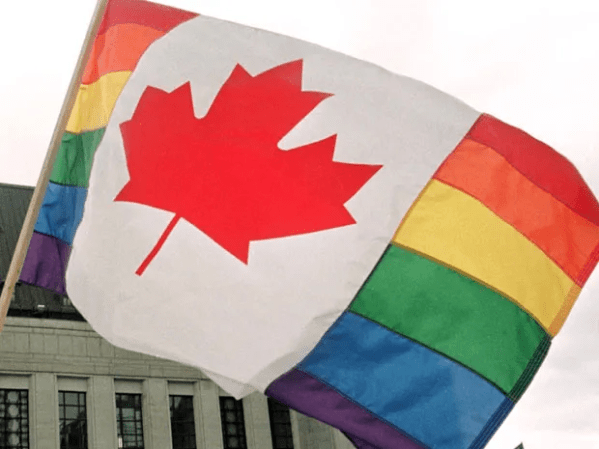
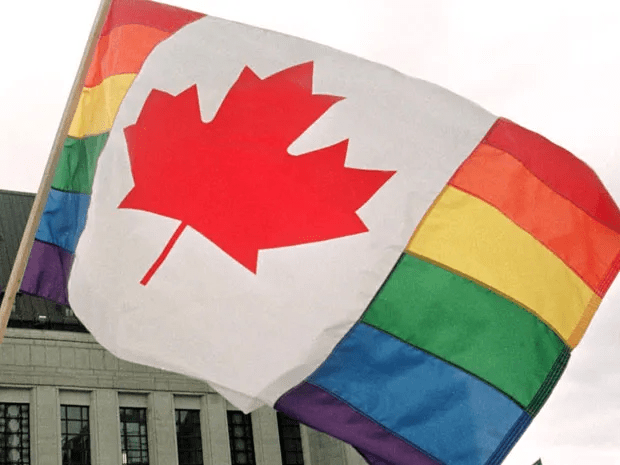
Canada has a proud history of providing protection to and helping resettle those most in need. That includes those in the lesbian, gay, bisexual, transgender, queer, intersex, and additional sexually and gender diverse (LGBTQI+) community.
When Mara Berton and June Higginbotham imagined their future, it always included children. What they did not imagine was a $45,000 bill standing between them and the family they dreamed of building.
The Santa Clara County couple, both lesbians, discovered that while their heterosexual colleagues’ fertility treatments were largely covered by insurance, they were excluded from the same benefits. To conceive, they were forced to pay entirely out of pocket, a financial burden that reshaped their timeline, their choices and their emotional well-being.
Last week, that inequity cracked open.
In a landmark national settlement approved by U.S. District Judge Haywood Gilliam Jr., Aetna agreed to cover fertility treatments such as artificial insemination and in vitro fertilization for same-sex couples on the same terms as heterosexual couples. The agreement applies nationwide across all Aetna plans, making it the first case to require a major insurer to implement such a policy uniformly.
An estimated 2.8 million LGBTQ members will benefit, including about 91,000 Californians. The settlement also requires Aetna to pay at least $2 million in damages to eligible California-based members, who must submit claims by June 29, 2026.
“We knew it wasn’t right,” Berton said in an interview with CalMatters. “What we’re fighting for is about family building and having kids. It was really important to both of us that other couples not have to do this.”
Before the settlement, Aetna’s policy required enrollees to engage in six to 12 months of “unprotected heterosexual sexual intercourse” before qualifying for fertility benefits, according to the class action complaint. Women without male partners could only access coverage after undergoing six to 12 unsuccessful cycles of artificial insemination, depending on age, a requirement medical experts say is excessive and clinically unnecessary.
The policy, attorneys argued, treated LGBTQ members fundamentally differently and effectively denied them a benefit that can be prohibitively expensive.
“This was an issue of inequality,” said Alison Tanner, senior litigation counsel for reproductive rights and health at the National Women’s Law Center, which supported the litigation. “Folks in same-sex relationships were being treated differently.”
In an email, Aetna spokesperson Phillip Blando said the insurer is committed to equal access to infertility and reproductive health coverage and will continue working to improve access for all members.
For Berton, the policy felt personal and dehumanizing. After consulting with a fertility clinic and deciding to move forward with donor sperm, she was told by Aetna that she did not meet the definition of infertility. Multiple appeals were denied. Insurance required her to attempt 12 rounds of artificial insemination,even though her doctors recommended no more than four.
Sean Tipton, chief advocacy and policy director for the American Society for Reproductive Medicine, said policies like that are designed to discourage people from using their benefits. While many doctors recommend three to four cycles of insemination before IVF, studies also show it can be more efficient and cost-effective to move directly to IVF.
In 2023, the society updated its medical definition of infertility to explicitly include LGBTQ people and individuals without partners, a shift aimed at preventing insurers from denying claims like Berton’s.
“It takes two kinds of gametes to have kids,” Tipton said. “Regardless of the cause of that absence, you have to have access to care.”
The settlement comes as California prepares to expand fertility coverage further. A new state law taking effect in January will require most state-regulated health plans to cover fertility care for same-sex couples and single people by broadening the definition of infertility. While that law does not apply to Aetna’s national plans, advocates say the momentum is unmistakable.
And it could not come at a more urgent time.
As LGBTQ rights are increasingly rolled back across the country, from bans on gender-affirming care to restrictions on queer families in schools and public life, access to reproductive health care has become another contested frontier. Who is allowed to build a family, and under what conditions, is no longer just a medical question but a political one. This settlement affirms that queer families are not exceptions to be managed but lives to be supported.
Berton and Higginbotham ultimately moved forward without coverage, pulling together money from family and enduring the physical and emotional toll of fertility treatments, including a miscarriage. Today, they are raising twin girls who love the swings and pulling every book off the shelf for story time.
They built their family before the lawsuit concluded. Still, Higginbotham said the victory matters deeply.
“I know people who don’t have children because this isn’t covered,” she said. “The settlement is such a huge step forward that is really righting a huge wrong.”
In a moment when so much is being taken, the ruling stands as a reminder; equality is not abstract. Sometimes, it looks like a family finally being allowed to exist.






 fleeredstates.blog
You must be logged in to post a comment.