7 million queer elders are coming. These 21 LGBTQ+ retirement communities are ready.

Read more at LGBTQ Nation.

An estimated 3.6 million LGBTQ+ people over the age of 50 live in the United States, and by 2030, that number will grow to 7 million. Despite those growing numbers, LGBTQ+ older adults continue to face inequities in health care, housing, and economic security due to discrimination and stigmatization from legislators, elder care workers, and medical professionals, as well as a lack of access to culturally competent healthcare and gender-affirming care.

Because all of these factors contribute to higher rates of depression, dementia, and chronic health conditions among queer elders, the need for queer-inclusive senior housing is rising. As such, the need for dedicated LGBTQ+-affirming retirement communities is more than a luxury — it’s a necessity.

Why inclusive senior housing matters

The aforementioned inequities are compounded by the fact that LGBTQ+ seniors are twice as likely to live alone and four times less likely to have children than their heterosexual peers, creating an even greater reliance on supportive housing solutions. This lack of traditional family support, combined with a lifetime of stigma and discrimination, can make aging especially isolating.

According to SAGE (Services & Advocacy for GLBT Elders), LGBTQ+ seniors in elder care facilities have been denied the right to share a room with their partner, pressured to hide their identities, or mistreated by staff unfamiliar with queer lives. The fear of going “back in the closet” in a care facility remains a real and painful possibility.

Inclusive retirement communities aim to address these challenges by:

  • Ensuring cultural competency training for staff: including the use of affirming language and pronouns; asking respectful and open-ended questions about relationships and family; understanding why LGBTQ+ people might not want to disclose their identities; and acknowledging the unique economic, social, physical, and mental healthcare needs (and relationship styles) of aging queers.
  • Creating environments where residents can live openly and authentically: Providing awareness training to help facility staff recognize and minimize implicit biases in themselves, their professional colleagues, and other facility residents; teaching community members how to respectfully engage with LGBTQ+ people; and providing various opportunities for LGBTQ+ residents to seek support.
  • Building spaces for social connection and belonging: Creating community events and opportunities to express and explore queerness through socializing, learning, and artistic engagement; providing a mediator, counselor, office, or ombudsman to assess/address any LGBTQ+ community needs; understanding how isolation and discrimination can uniquely affect queer seniors.

These factors are critical for both the mental and physical health of older LGBTQ+ adults.

LGBTQ+ retirement homes across the U.S.

While the number of communities remains relatively small compared to mainstream options, there are now dedicated LGBTQ+ senior housing developments and retirement villages in multiple states. Here are 21 around the United States:

Many of these developments include independent living, assisted living, or affordable housing options —reflecting the diversity of financial and medical needs among LGBTQ+ elders.

Alternatives to dedicated LGBTQ+ retirement communities

Not every queer elder has access to a specialized retirement community, but there are other options:

  • LGBTQ+-friendly senior living facilities: More mainstream retirement communities are adopting anti-discrimination policies, staff training, and LGBTQ+ resident programming.
  • Nonprofit support: Organizations like the National Resource Center on LGBT Aging and SAGE connect seniors with inclusive housing and care resources.
  • Inclusive cities: Urban areas with strong LGBTQ+ networks — such as San Francisco, Chicago, Atlanta, and Philadelphia — often provide supportive social services and affirming healthcare options, especially through their queer community centers or others elder care services.

Looking ahead

The U.S. is on the cusp of a demographic shift. By 2030, all Baby Boomers will be over the age of 65, and that includes millions of openly LGBTQ+ adults. Ensuring they can age with dignity requires policy changes, cultural shifts, and investment in inclusive housing.

LGBTQ+ retirement communities represent one part of the solution. They offer safety, visibility, and belonging at a stage of life when many people need it most. But expanding access — through both dedicated communities and wider adoption of affirming practices in mainstream senior housing —remains essential.

Massachusetts replacing Sun Belt as retirement paradise

Read more at Boston Agent Magazine.

The Bay State attracted 20% of interstate retirees in 2024, surpassing traditional snowbird destinations like Florida. That’s according to a new study from AInvest that used data from sources like the U.S. Census Bureau and U.S. News & World Report to analyze trends among older homebuyers.

The AI investment company identified several reasons that retirees are increasingly choosing to move to Massachusetts, including excellent healthcare, relative safety from climate-related risks, cultural and outdoor appeal and opportunity for investment.

In suburbs like Worcester or Salem, homes fetch median prices of $400,000–$500,000. These prices are significantly more affordable than Boston’s median home price of over $800,000 and offer rental yields around 5%.

“A seismic demographic shift is reshaping U.S. real estate markets, as retirees increasingly prioritize affordability, healthcare access and climate resilience over sun-soaked climates,” researchers said in the report. “This trend opens compelling opportunities for investors to capitalize on undervalued regions poised for growth.”

55+ LGBTQ+ Seniors Look More and More to CoHousing Communities

LGBTQ+ Americans have always been here, but as sector of society has largely been ignored until recently. LGBTQ+ seniors are continuing to increase in number, with the need for services that make them comfortable in their golden years becoming a growing issue.

According to surveys by SAGE and the Williams Institute, there are an estimated 2.7 million LGBTQ+ adults aged 50 and older in the United States, including 1.1 million who are 65 and older. By 2030, this number is projected to grow to around 7 million. Baby Boomers and Gen X, no longer plagued by the near certain early death sentence of AIDS, and contributing to growing numbers of elderly LGBTQ people.

There are a few projects across the country that have started to look at retirement community living for this sector of the population. We recently shared reporting of places in Boston MA and Austin TX. An alternative to apartment style living are single story units of housing, such as in Durham NC at the Village Hearth.

Village Hearth is located just 15 minutes from downtown Durham NC, one of NC’s major cities part of the Research Triangle. 28 homes surround a village green. For those willing to purchase their own home and be part of an HOA, this type of housing is an option.

CBS News recently profiled the village. Check out their report below.

Austin breaks ground on new affordable housing for LGBTQ+ seniors

*This is reported by KVUE.

 On Wednesday, an Austin-based group broke ground on a new affordable housing development geared toward LGBTQ+ senior citizens.

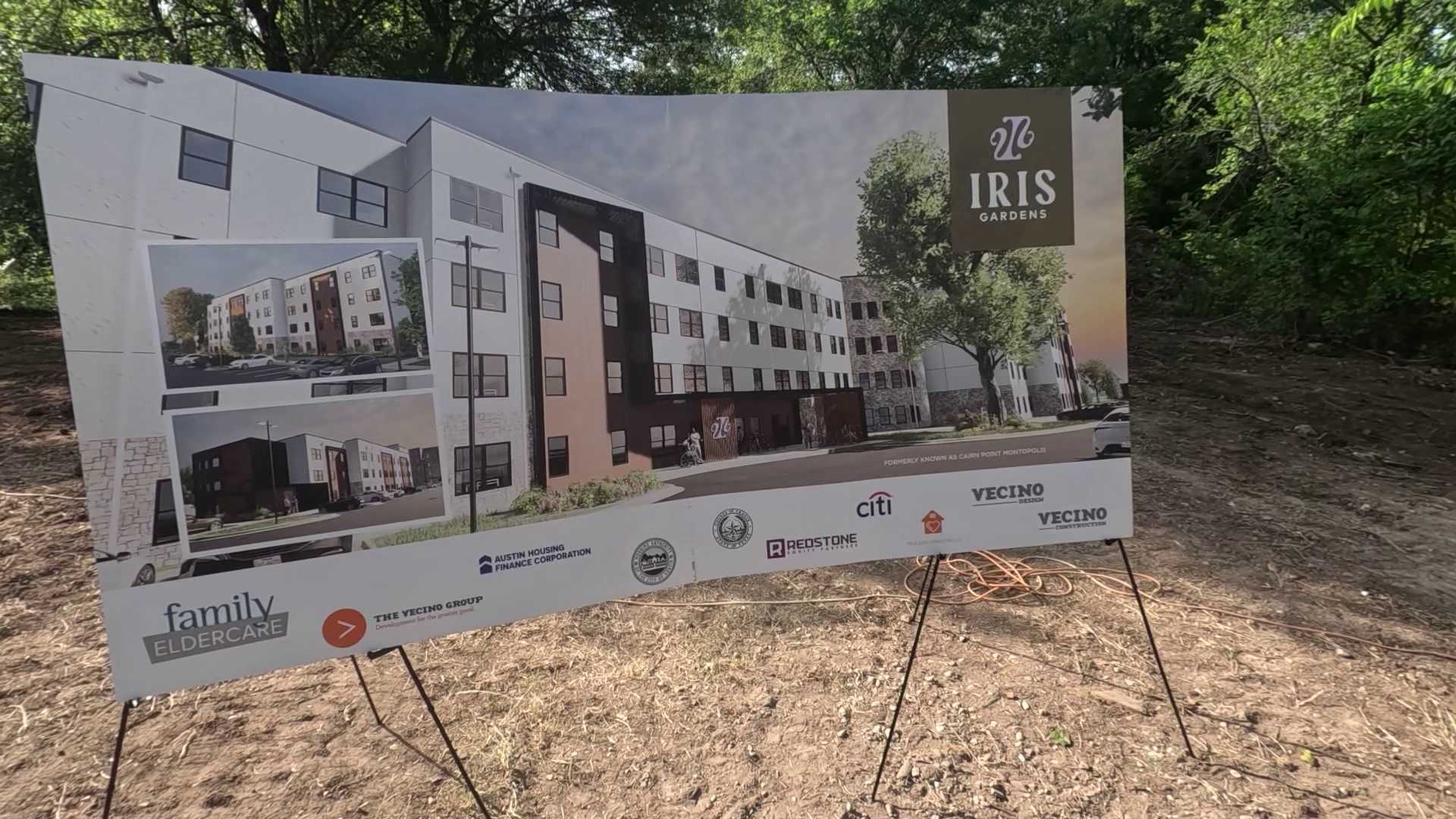
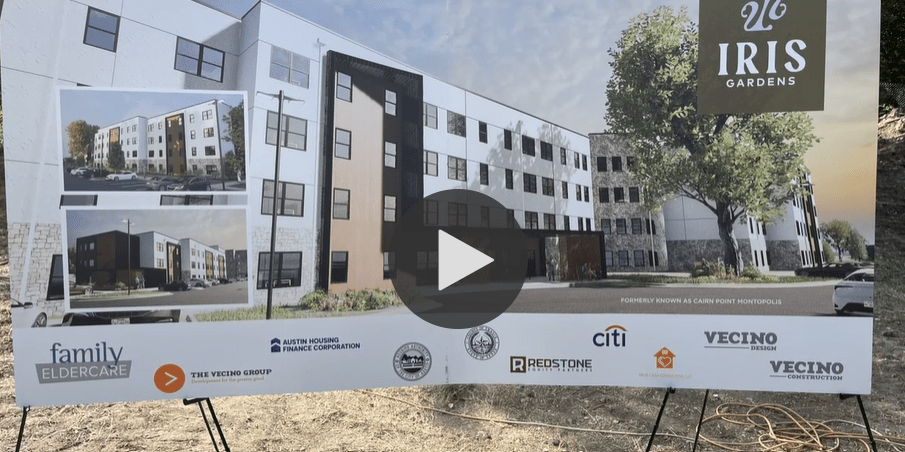
The development, which will be known as Iris Gardens, is located at 1013 Montopolis Drive in southeast Austin. It will consist of 150 units for people aged 55 and older and will be considered a first of its kind for Austin through a partnership with Family Eldercare and the national housing developer, Vecino Group.

It will also offer on-site services, including mental wellness and social connection programs.

“This project just felt like it was the right thing to do,” Family Eldercare CEO Dr. Aaron Alarcon said.

Alarcon said people who are at or below the 30% to 60% area median income will be accepted. The goal is to give people who live at the complex a safe and affordable space.

At the moment, there’s an uptick of elderly people experiencing homelessness, according to Austin’s Homeless Strategy Officer David Gray.

“Oftentimes, what happens is seniors are on a fixed income, but the cost of living in our city and in our county is going up,” Gray said.

Gray said his office plans to lend a helping hand to reduce barriers and will have a list of people set to move in. Those barriers include moving expenses, helping get identification and clearing old debt.

When it comes to adding more affordable housing in Austin, Gray noted that the city is on track to to add 1,200 units by 2026 as part of its homeless response system. 

Other barriers people face as they try to gain access to affordable housing are criminal backgrounds and evictions. Gray said that one tool with landlords is to reduce screening criteria by looking past criminal history and past evictions.

However, when it comes to Iris Gardens, Gray said the city wanted to focus on a community that was not being properly served.

“While this is the groundbreaking for this development, this is not the first [and] this is not going to be the last. And we’re really excited to have more of these celebrations in the future,” Gray said.

Other organizations, like Rainbow Connections ATX, will also help with outreach.

“I feel that this is necessary; it’s a long time coming,” said Annie Saldivar, project manager for Rainbow Connections ATX.

The four-story building has a price tag of $51 million, with money coming from the Austin Housing Finance Corporation, Travis County, CITI Bank and Redstone Equity.


Local News

Austin breaks ground on new affordable housing for LGBTQ+ seniors

Iris Gardens in southeast Austin is set to be completed by spring 2027.

Austin breaks ground on new affordable housing for LGBTQ+ seniors

Author: Kelsey Sanchez

Published: 4:56 PM CDT June 18, 2025

Updated: 9:13 PM CDT June 18, 2025

Facebook

AUSTIN, Texas — On Wednesday, an Austin-based group broke ground on a new affordable housing development geared toward LGBTQ+ senior citizens.

The development, which will be known as Iris Gardens, is located at 1013 Montopolis Drive in southeast Austin. It will consist of 150 units for people aged 55 and older and will be considered a first of its kind for Austin through a partnership with Family Eldercare and the national housing developer, Vecino Group.

It will also offer on-site services, including mental wellness and social connection programs.

“This project just felt like it was the right thing to do,” Family Eldercare CEO Dr. Aaron Alarcon said.

Alarcon said people who are at or below the 30% to 60% area median income will be accepted. The goal is to give people who live at the complex a safe and affordable space.

At the moment, there’s an uptick of elderly people experiencing homelessness, according to Austin’s Homeless Strategy Officer David Gray.

“Oftentimes, what happens is seniors are on a fixed income, but the cost of living in our city and in our county is going up,” Gray said.

Gray said his office plans to lend a helping hand to reduce barriers and will have a list of people set to move in. Those barriers include moving expenses, helping get identification and clearing old debt.

When it comes to adding more affordable housing in Austin, Gray noted that the city is on track to to add 1,200 units by 2026 as part of its homeless response system. 

Other barriers people face as they try to gain access to affordable housing are criminal backgrounds and evictions. Gray said that one tool with landlords is to reduce screening criteria by looking past criminal history and past evictions.

However, when it comes to Iris Gardens, Gray said the city wanted to focus on a community that was not being properly served.

“While this is the groundbreaking for this development, this is not the first [and] this is not going to be the last. And we’re really excited to have more of these celebrations in the future,” Gray said.

Other organizations, like Rainbow Connections ATX, will also help with outreach.

“I feel that this is necessary; it’s a long time coming,” said Annie Saldivar, project manager for Rainbow Connections ATX.

The four-story building has a price tag of $51 million, with money coming from the Austin Housing Finance Corporation, Travis County, CITI Bank and Redstone Equity.

The development is set to be completed by spring 2027.

How a vacant Boston school was transformed into thriving housing for LGBTQ+ seniors

*This is reported by NBC News.

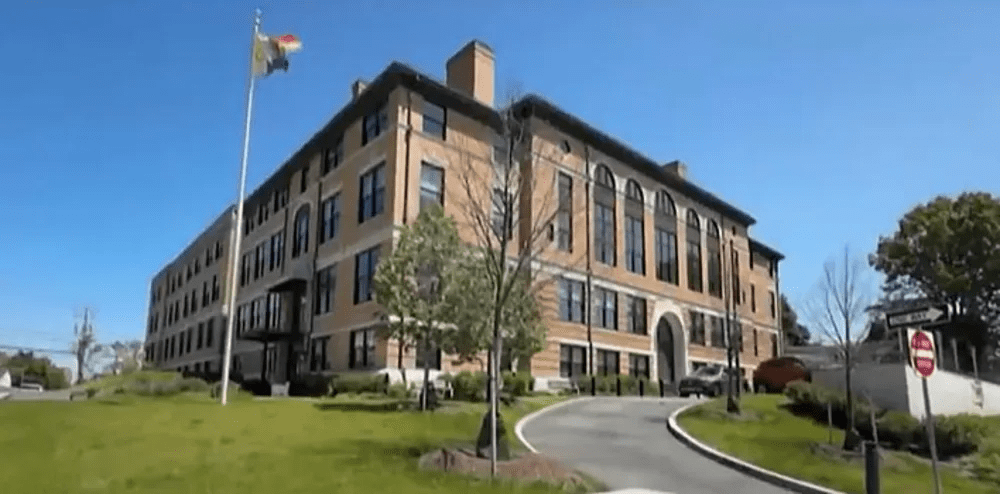
An old school building in Boston’s Hyde Park neighborhood, once vacant and “creepy,” is now buzzing with life while teaching new lessons in community and inclusion.

Exactly one year after opening its doors, The Pryde has transformed the historic 1902 structure into New England’s first LGBTQ+ welcoming affordable senior housing community.

Karmen Cheung, Pennrose New England Regional VP, recalled the building’s previous state.

“I remember walking in and doing a tour of the building when it was vacant for the first time,” Cheung said. “It was actually kind of creepy, cold, dark.”

The vision, however, was clear: to turn an historic building into an independent living space where LGBTQ+ seniors could feel a strong sense of belonging. The result is a vibrant community that residents like Brian Salvaggio deeply appreciate.

“It’s bright, it’s open, it’s lively,” Salvaggio said. “It’s really the first group of people that’s lived here, so you feel part of something.”

For many residents, The Pryde offers a much-needed haven.

“As we get older and we want more community around us and we want more support around us, that’s really what brought us here,” resident Pat Xavier said.

The 100% accessible building addresses a critical need for a generation of LGBTQ+ elders who grew up without the legal protections and societal acceptance now afforded to younger generations, according to Gretchen Van Ness, executive director of LGBTQ Senior Housing.

“This generation of LGBTQ elders has faced such losses that they come into their elder years with a much smaller safety net than a lot of other folks are lucky to have,” Van Ness said.

The journey to create The Pryde was a dedicated nine-and-a-half-year collaboration between LGBTQ Senior Housing and Pennrose Management. Throughout the renovation, developers diligently preserved the building’s historic charm, retaining elements like original chalkboards and bell systems.

“Every unit is actually a little different because of those historic pieces,” Cheung said.

The Pryde is open to anyone over 62 who qualifies for affordable housing, though demand has far outstripped availability.

“We are 100% occupied,” Van Ness said. “This community is full and it’s hopping and there’s a million things going on.”

For residents, the most significant impact is the feeling of safety and liberation from discrimination and isolation.

“That’s just a wonderful feeling because, you know, there’s no more hiding,” Brian Salvaggio said. “Not at our age. We want to be who we are and enjoy the time we have.”

After a year of operation, residents and representatives alike believe The Pryde stands as a powerful blueprint for LGBTQ+ senior living communities everywhere, demonstrating how inclusive spaces can transform lives.

LGBTQ seniors in Argentina face uncertain future

*This is being reported by the Washington Blade.

Argentina has undergone significant changes in its economic and social policies since President Javier Milei’s inauguration in December 2023. These changes have had a significant impact on various sectors of society, especially retirees and the LGBTQ community.

Mercedes Caracciolo, a 79-year-old sociologist and lesbian activist, shared her experience with the Washington Blade on how the new measures have affected her quality of life.

“Since Milei’s arrival in government, which began with a brutal devaluation, I am more careful in my spending than I was before,” she said.

Although Caracciolo has additional income from rental properties, she recognizes the situation is much more critical for those who exclusively depend on a pension.

With more than 7 million people receiving pensions, many find themselves “scratching the poverty line” due to the loss of purchasing power. The libertarian government’s economic policies have drastically affected their welfare, leading to a wave of protests across the country.

The reduction of social programs and the lack of LGBTQ-specific public policies have deepened the difficulties that seniors already face. The loss of economic stability particularly affects those who have historically lived on the margins, with fewer job opportunities and limited access to a decent retirement. Many older LGBTQ people, who have spent their lives unable to form traditional families, now find themselves without a support network and with an increasingly less present State.

The advance of conservative discourses has also generated a climate of insecurity and fear.

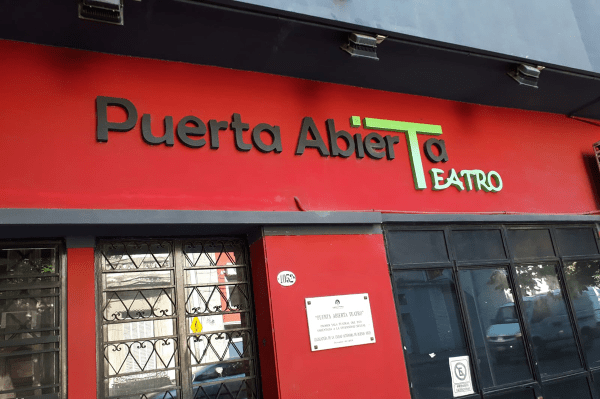
“There is no more sense of security and stability in old age,” Graciela Balestra, a psychologist who is the president of Puerta Abierta a la Diversidad, the first home for LGBTQ seniors in Argentina, explained. “Many LGBTQ+ retirees fear that there are fewer and fewer rights. They see what is happening in Argentina and globally with the advance of the right wing, and they feel that what they worked so hard to achieve is in jeopardy.”

In addition to economic difficulties, the LGBTQ community has faced additional challenges.

Caracciolo noted many supportive spaces have had their government subsidies reduced or eliminated, weakening community networks essential to the well-being of LGBTQ seniors.

“Community networks are also weakened because many of them require state support for certain types of expenses,” she noted.

Balestra warned about the psychological impact.

“Obviously it impacted mental health. There is much more anxiety, there is fear. People who say ‘I’m afraid they’ll kill me’ or ‘I’m afraid to show myself,’” she said. “Before, they used to walk down the street holding hands with their partner, and now they don’t do it anymore. A lot of hopelessness.”

For Balestra, the concern goes beyond the LGBTQ community.

“The economic issue, the rights issue, the fear that something similar to the dictatorship will return. All of this is very scary. And besides, the hopelessness of believing that this is going to continue, that it is not going to change even in the next elections,” she said.

Civil society organizations have denounced an “adjustment” in policies related to gender and diversity that Milei’s government has undertaken. Pride marches in Argentina have become a stage for protests against the president’s policies, especially over his speeches that activists consider hateful towards the LGBTQ community.

Balestra stresses the fear is not only individual, but collective.

“Human rights no longer exist anywhere, women no longer have the place they used to have, they are once again objectified, machismo is on the rise again,” she said. “This brings a lot of despair to older people.”

Despite the climate of uncertainty, Balestra emphasizes resistence forces are still in force.

“We continue working, as always,” she said. “For 25 years at Puerta Abierta we have been doing reflection groups, cultural workshops, social meetings, all with respect to being able to make LGBT people aware of their rights. We never stop meeting, but lately we are talking more and more about these things that we had already left a little behind. The issue of coming out, fear, visibility. Now we have to talk about it again.”

First D.C. LGBTQ seniors home ready to open

*This is being reported by the Washington Blade.

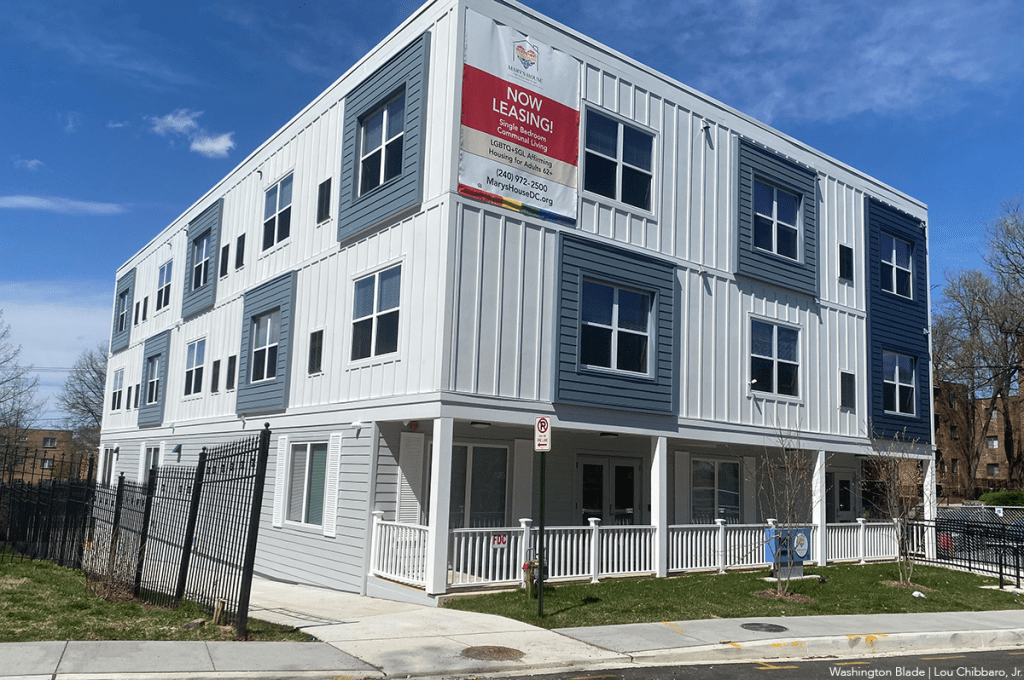
The first nine residents of Mary’s House For Older Adults, D.C.’s first LGBTQ home for seniors, are expected to move into the newly built group home within the next week or two, according to Mary’s House founder and CEO Imani Woody.

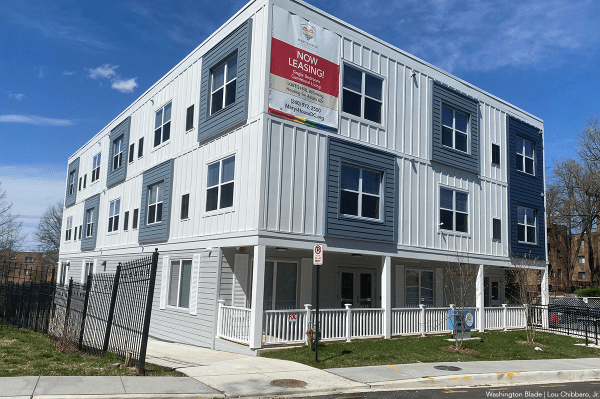
Located at 401 Anacostia Rd., S.E. in the city’s Fort Dupont neighborhood, a write-up on its website says the house includes 15 single-occupancy residential units and more than 5,000 square feet of shared communal living space.

Woody said construction of the three-story house was completed in January and leases have been obtained by the first nine of the 15 residents, with the remaining six still available for interested seniors. She points out that Mary’s House, which is a nonprofit operation, is not an assisted living facility.

A large sign hanging near the top of the front wall of the Mary’s House building says, “Now Leasing! Single Bedroom Communal Living—LGBTQ+ Affirming Housing for Adults 62+”

The sign also includes the Mary’s House phone number and website address that Woody said interested seniors or those who may know a senior who would be interested should use to contact the LGBTQ supportive seniors residence.

Woody said each of the individual units or suites includes a sleeping area, living room, bathroom, and kitchenette with a sink, microwave, and refrigerator but no stove. According to the Mary’s House website, the shared communal areas of the house include a “fully equipped kitchen, separate dining area and living room.”

It says the communal area also includes a computer room, arts and crafts room, an exercise room, laundry facilities, community meeting space for gatherings, a “tranquil quiet room for relaxation,” and an outdoor terrace with seating.

Woody said the monthly rent for Mary’s House residents, depending on their income, is currently set at $812 or $886.

“Our mission extends beyond providing housing,” a statement on the Mary’s House website says. “We strive to build welcoming communities that address affordability, accessibility, and the unique needs of LGBTQ/SGL [Same Gender Loving] older adults.”

The statement adds, “Through health and wellness programs, connections to community services, and advocacy efforts, Mary’s House for Older Adults endeavors to ensure that all elders, regardless of identity, can enjoy fulfilling and secure lives in their golden years.”

Woody said a ribbon-cutting ceremony to celebrate the opening, to be led by D.C. Mayor Muriel Bowser is planned for early May, with a specific date to be announced soon. 

Further information about Mary’s House, including a lease application, can be obtained at MarysHouseDC.org or at 240-972-2500.

North Texas’s First LGBTQIA+ Affordable Senior Housing Development Completed

*This was first published for The Architect’s Newspaper

The U.S. has always been a difficult country to “age in place”—seniors who can’t find lodging with a loved one are often relegated to nursing homes, if they can afford the fees. The situation gets even more precarious for LGBTQIA+ seniors, who commonly see bias in the rental application process, and get turned down for apartments at high rates.

Things are especially dire in Texas, where state law doesn’t protect individuals from housing discrimination based on their sexual orientation, although LGBTQIA+ individuals are still protected under the federal Fair Housing Act. This exacerbates the problem and puts even more people at risk of poverty and social isolation.

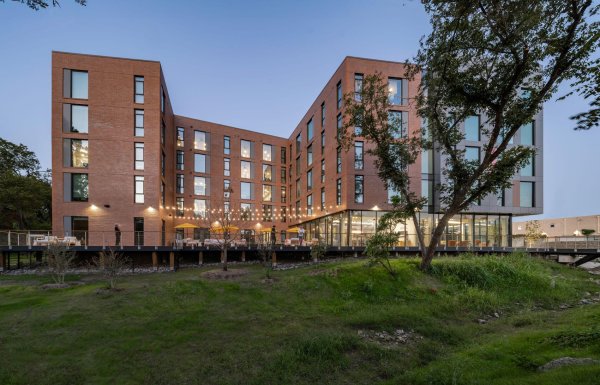
Perkins&Will’s Dallas studio recently completed a new affordable housing project to help combat this public health crisis. Today, Oak Lawn Place in Dallas represents north Texas’s first affordable housing development of its kind, the architects shared. It offers 100 percent affordable housing for LGBTQIA+ seniors, 55 years of age and older.

Karen Chen of Sunshine Studios created a bespoke mural on every floor of the building. (James Steinkamp)

The Dallas neighborhood of Oak Lawn has been the beating heart of north Texas’s LGBTQIA+ community for decades. Oak Lawn Place was built with the developer Matthews Southwest, Volunteers of America, and Resource Center, one of the largest LGBTQIA+ community centers in the country and a key north Texas HIV/AIDS service organization.

“I’m seeing Oak Lawn Place transform people’s lives,” Resource Center CEO Cece Cox said in a press statement. “A project like this elevates everyone and makes Dallas a better place.”

In plan, Oak Lawn Place is shaped like a C. This was meant to increase natural light exposure within every unit; this feature also provides a protective wing that surrounds an outdoor deck, hidden from public view. The deck has great views of the site’s sloping topography and a nearby creek.

Mural by Karen Chen of Sunshine Studios (James Steinkamp)

Karen Chen of Sunshine Studios created a bespoke mural on every floor of the building, which helps with wayfinding. Oak Lawn Place was designed with maximum accessibility in mind—everything from the hallway seatings, elevator lobbies, to wheelchair-friendly doorways are meant to provide a positive user experience.

The design of Oak Lawn Place is economical and efficient, yet still manages to have splashes of color here and there; the facade has a rainbow flag to signify all are welcome. The 80,000-square-foot building has a total 84 units. It’s within walking distance of public transit options and Resource Center’s Community Center.

The building has a shared kitchen and other community-building amenities. (James Steinkamp)

“Oak Lawn Place helps make Dallas a more inclusive, inviting city—for those considering moving here and for those wondering, as a queer person, ‘Will I truly feel welcome? Are there spaces in Dallas for me?’ We are honored and proud to bring this project to life,’” Cox continued.

A new healthcare facility, Resource Center Health, will open across the street from Oak Lawn Place later this year.

Blog at WordPress.com.

Up ↑