The Hungarian parliament has voted to amend child protection laws, scrapping measures that stigmatise gay and transgender people. LGBTQ and human rights activists warmly welcomed the move, but called for changes to other Orbán-era laws.
The 2021 Child Protection Law, passed by the large Fidesz majority of then-Prime Minister Viktor Orbán, banned the “portrayal or promotion of homosexuality or transgenderism”.
Since Orbán’s April election defeat, the Tisza government of Péter Magyar has been working to dismantle the previous government’s legacy.
Minutes after Tuesday’s vote, Budapest said the EU had agreed to release €4.2bn (£3.5bn) of funds frozen in the last years of the Fidesz government.
The European Commission said last month that the Magyar government had addressed a number of “rule of law breaches affecting the EU budget”, and urged EU leaders to unlock the funds and readmit Hungary to two key EU programmes – Erasmus+ and Horizon Europe.
Hungary’s 2021 law had affected a wide range of other laws, including education and the right of assembly.
Magyar’s Tisza party commands the same two-thirds majority that Orbán’s party used to have, and the measures passed on Tuesday were bundled together by the new government in a package of laws designed to unravel the Fidesz legislation.
“We are very happy that this got adopted,” Tamás Dombos of civil rights group the Háttér Society told the BBC. “We’ve been fighting this so-called child protection law for five years. There have been problems with the bill submitted to parliament, but most of those problems have been fixed.”
Both the Fidesz and Tisza governments made child protection central to their image.
But while Fidesz under Viktor Orbán appealed to the conservative electorate by identifying gay and transgender people as a threat to public morals, Tisza under Prime Minister Péter Magyar is trying to remove or soften legislation, without actually identifying as a liberal-minded government in favour of full equality.
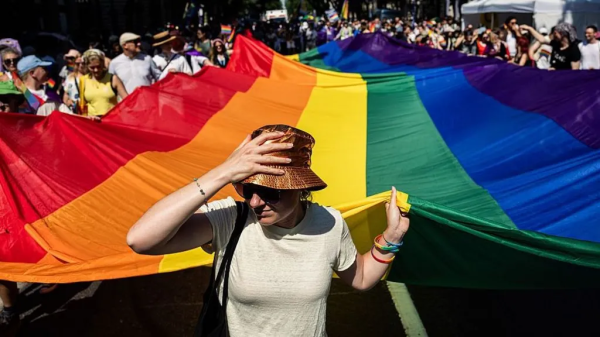
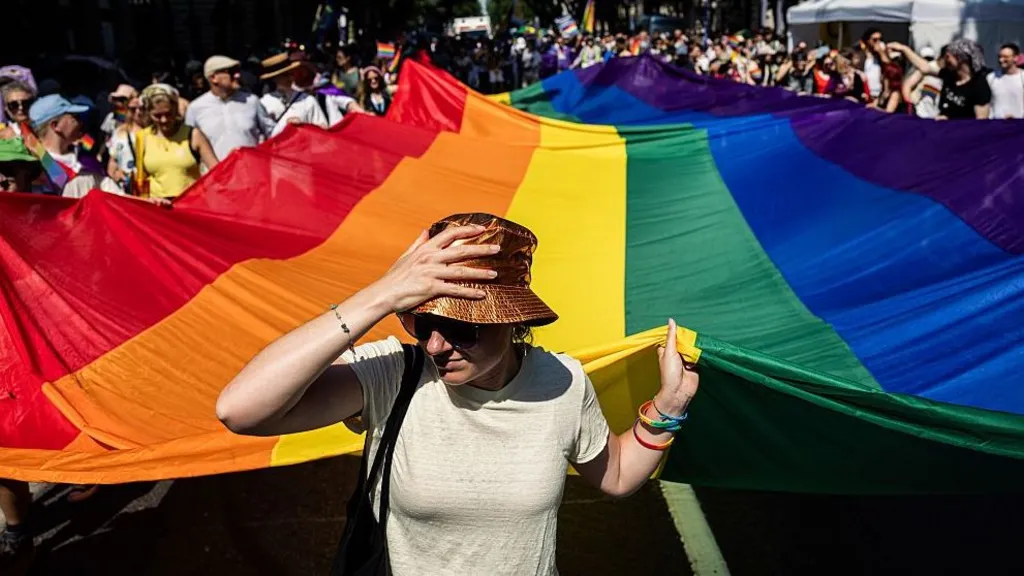
In June 2025, the Gay Pride march through Budapest drew an estimated quarter of a million people, despite a promise by then-Prime Minister Viktor Orbán to his supporters that he would prevent it happening.
Police stood aside despite an official ban, and proceedings against the city mayor and others for organising the festival were later dropped. This year’s event went ahead without restrictions.
The child protection issue turned from being a strong card in Orbán’s hand to become his Achilles heel, when the public found out that his government had supported the pardon of the deputy head of a children’s home who had been found guilty of covering up the paedophile crimes of his boss.
In his own election campaign, Péter Magyar presented his party as a champion of the rights of children in state care, while painstakingly avoiding the issues of gay and transgender rights, for fear of alienating right-wing voters.
“We are still knocking on a closed door,” Dombos told the BBC, “but at least they are listening on the other side.”
This marked a major improvement on the Orbán years, he said, where his community felt constantly targeted. Other issues he wanted addressed include the full recognition of same-sex marriage, same-sex couples’ rights to adopt children, and the restoration of the right of transgender people to change their names in official documents.
“I’m very cautious,” Magyar said in an interview published in Finnish daily Helsingin Sanomat on Saturday. “As prime minister, it’s my duty to represent all Hungarians, and we have sensitive issues, such as the situation of sexual minorities.”
Fidesz and its sister party, the Christian Democrats, voted against the new amendments to the law on Tuesday.
“There is no place for the promotion of LGBTQ content in schools or the media,” the Christian Democrats said in a statement on their website.
Paris Lee was shot six times and killed by Samuel Ward Jr.; this is an indisputable fact. Ward was convicted of voluntary manslaughter in May 2025. He claimed it was self-defense, but the jury didn’t buy it.
This week, however, the Tennessee Court of Criminal Appeals reversed his conviction. A three-judge panel declared that the jury was under the impression Lee was cisgender; that in not disclosing the victim’s status as a trans woman, the trial judge “misled” the jury; and that Ward was entitled to a new trial where he could use this fact to bolster his claim of self-defense.
This story was first reported by independent journalist Jamie Satterfield. Other outlets and LGBTQ organizations also reported on Lee’s death at the time, with some referring to her as Kitty Monroe, which was her name on social media.
“After a short deliberation, a Shelby County jury found Samuel Ward guilty of voluntary manslaughter in the shooting death of Paris Lee, concluding a case that revealed inconsistencies between the defendant’s claims and the physical evidence presented in court,” a May 2025 press release from the Shelby County District Attorney reads. “Ward claimed self-defense throughout the trial, but the jury rejected his narrative and found him guilty.”
The appellate judges did not contest any of the evidence. Rather, they took issue with one facet of the trial in particular: The original court had disallowed the defense from disclosing Lee’s sex assigned at birth to the jury, finding that it would cause an undue prejudice against the victim.
Ward’s defense appealed, and a panel of judges was tasked with answering several procedural questions: Did Ward have a right to use his victim’s sex assigned at birth as part of his defense? Moreover, did the trial judge dilute Ward’s right to defend himself by striking references to Lee’s assigned sex from the record?
“A deadly weapon is a deadly weapon is a deadly weapon,” the judge explained at trial. “Whether that person has a vagina or a penis has no bearing on the deadliness of a firearm.”
But the panel disagreed. They found that prohibiting the disclosure of Lee’s transgender status was prohibiting potentially exculpatory evidence for Ward.
“The State conceded that if the proof showed the victim’s assigned sex was the reason for the altercation between Defendant and the victim, it would be relevant to the adequate provocation element of voluntary manslaughter,” court documents read. “However, the State argued, the proof at trial would establish that the victim ‘was a large woman’ who was armed with a [firearm] and, therefore, the victim’s assigned sex was not relevant to the issue of self-defense.”
Conversely, Ward’s lawyers argued that Lee’s status as a trans woman impacted “how much fear” Ward felt, and therefore, how justifiable his actions were in the moment that he killed her.
What’s more: During trial, Ward waived his right to testify. He refused to take the stand unless he was allowed to call Lee’s gender into question, explicitly stating that he thought he would be judged more harshly by jurors for killing a presumed-cisgender woman than a transgender one.
The defense also argued that, while a jury may hold prejudice against Lee as a trans woman, Ward would face equal amounts of discrimination on the basis of his decision to sleep with transgender women.
According to the press release from the DA, the killing occurred after Ward went to Lee’s home, and a verbal altercation ensued. Lee asked Ward to leave, and he reportedly refused. Ward then claims that Lee pointed a gun at him.
In Ward’s telling, this caused him to fall backward down a staircase, with Lee still standing at the top. At the bottom of the stairs, he said he drew his gun and fired upward at Lee.
Ward shot Lee six times. Police found only one bullet casing from Lee’s gun; if she fired her weapon at all, she only did so once. Ward was wholly uninjured.
Physical evidence and expert testimony from the medical examiner “contradicted Ward’s version of events,” the press release continues. “The trajectories of the gunshot wounds did not align with the defendant’s statement. Additionally, Ward had no visible injuries, undermining his claim of self-defense.”
After killing Lee, Ward “left the scene and drove approximately 30 minutes to his home before calling 911—leaving Lee to die at the foot of her staircase,” the DA’s office concluded.
Even before killing Lee, Ward was a known entity to trans women in the area, according to Kayla Gore, who is the executive director of My Sistah’s House — a Memphis-based organization that supports Black and Brown trans people fleeing violence. Gore said Ward largely pursued relationships with transgender women.
After Lee’s death, Gore said she received countless calls about the case and spoke extensively to Lee’s loved ones. The crime left everyone terrified in its wake.
“What concerns me as a community organizer is what happens when a courtroom treats a Black trans woman’s identity as a material explanation like for someone’s fears,” Gore told Erin in the Morning. “They want that as evidence presented to the jury or the judge as a deciding factor on whether or not this was self-defense. It sends a message far beyond the courtroom.”
That message, she said, is that trans women can be harmed and killed with impunity — especially Black trans women, who are more likely than almost any other demographic to be the victims of hate crimes and domestic violence, while being the least likely to have resources available to them in the aftermath.
“I understand what the appellate court was addressing with the defendant’s right to present a defense,” Gore continued, “but there is a profound difference between saying evidence may be relevant to a legal defense, and saying that a transgender woman’s identity somehow makes her inherently more threatening.”
The case is a bitter reminder of the ways LGBTQ people have had their identities weaponized by the courts in the past, most notoriously through a legal defense tactic known as gay or trans “panic.”
According to the LGBTQ+ Bar Association, the trans “panic” defense is a legal strategy wherein someone charged with violent crimes uses their victim’s real or perceived gender identity to reduce or evade criminal liability, in tandem with other legal lines of defense — such as claiming provocation or an insanity plea.
“The LGBTQ+ ‘panic’ defense is usually employed to bolster a self-defense claim when the victim’s behavior does not meet the threat of serious bodily harm standard or when the defendant used greater force than reasonably necessary to avoid danger,” the LGBTQ+ Bar’s primer on the topic says. “This strategy requires the defendant to argue that their victim’s LGBTQ+ identity made them a greater threat than a heterosexual and/or cisgender person.”
This argument can be hugely consequential during a trial because self-defense claims rely on evaluating a defendant’s perceived risk of harm. This determines how justifiable deadly force might be.
So in Lee’s case, the argument stands to be that she was more dangerous than a cisgender woman, or that Ward otherwise had more reason to fear her because she was trans.
“We live in a society where Black trans women are stereotyped as dangerous, deceptive, threatening,” Gore said. She called the case’s remand “a slap in the face of all survivors.”
The New York City Department of Health and Mental Hygiene (NYC DOHMH) will provide almost $9 million to nonprofits in the city that provide gender-affirming care for minors to fill the gap left by major hospitals that have capitulated to the Trump administration and stopped providing these essential services.
City records explaining the funding emphasize the “compelling need for gender-affirming care services” that necessitates the expedited process NYC DOHMH plans to use – called a negotiated acquisition.
“NYC Health will contract with organizations providing or facilitating the provision of gender-affirming care to patients under age 18,” the department states. “This includes the prescription and administration of puberty-blockers and hormone replacement therapy to all minor patients for whom such services are medically necessary based on the prevailing standards of care. Services will be performed by qualified medical providers with current New York State licensure, and will be provided consistent with state laws governing parental consent.”
The department has identified two potential groups, Callen-Lorde Community Health Center and Nonprofit Organization for Philanthropic Initiatives (NOPI), to enter into a three-year contract to help direct funds to vendors that offer the proper services. The contract would begin on February 1, 2027. The department also invited others who believe they can provide these services to email Tamala Watson at twatson2@health.nyc.gov by October 16 at 2:00 pm.
According to Gothamist, the money is part of Mayor Zohran Mamdani’s (D) $15 million plan to expand access to gender-affirming care for trans youth. Announced in June, the plan includes three initiatives: establishing a direct access care fund; creating a call and text line to connect people with resources; and research to identify health care access gaps.
Trans journalist and activist Erin Reed celebrated the $9 million investment on Bluesky. “I do believe the city can be doing much more, but this is a wonderful start from Mayor Mamdani,” she said.
News of the funding dropped only two weeks after dozens of protesters – including trans actor Elliot Page – gathered outside NYU Langone Health, one of three New York City hospitals that recently caved to the Trump administration by ending gender-affirming care for trans youth. Two weeks before that, hundreds gathered outside New York City’s Mount Sinai Hospital to express their anger at its decision to permanently stop gender-affirming care for youth in a move many said was “bending the knee” to the Trump administration.
The DOJ began issuing civil subpoenas to hospitals around the country in 2025, attempting to obtain personal medical records for trans youth and threatening federal funding for hospitals that continued to provide the care.
According to the DOJ, its “nationwide investigation into the child gender-transition industry” has examined “potential violations of the Food, Drug, and Cosmetic Act, the False Claims Act, and other federal health care laws, including fraudulent billing practices such as the use of false diagnosis codes to obtain payment from federal health care programs and private insurers.”
But critics say these investigations amount to “fishing expeditions” aimed at finding reasons to prosecute health care providers in states where pediatric gender-affirming care remains legal, and to intimidate providers into ending pediatric gender-affirming care programs.
The Trump administration has reportedly deported dozens of LGBTQ immigrants who sought or were granted asylum for their sexuality and gender to third countries where they face danger of persecution and criminalization, a new report says.
In an investigation published this week, Reuters identified 40 cases where these LGBTQ individuals were sent to countries that either criminalize same-sex relations or have been designated by the State Department as dangerous for LGBTQ people.
All of these people were granted legal protection in the U.S. for fleeing persecution for their LGBTQ status in their countries of origin, per Reuters. However, more than half of them were ineligible for asylum because of a restrictive Biden-era transit ban on asylum seekers.
Individuals tracked in the report have been deported to countries including Sierra Leone, Cameroon and Eswatini, three countries where same-sex acts are criminalized. In Sierra Leone, same sex acts carry a punishment of up to life in prison. Other countries that have signed deportation agreements with the U.S. have seen abuses against LGBTQ people like conversion therapy and “corrective rape,” the report notes.
The Trump administration has signed third country deportation agreements with at least 35 countries, and has deported over 25,000 people this way, sending them to places that they have no affiliation with. Many governments in Africa and central and South America have signed agreements to receive such deportees, often in exchange for direct funding or other financial incentives.
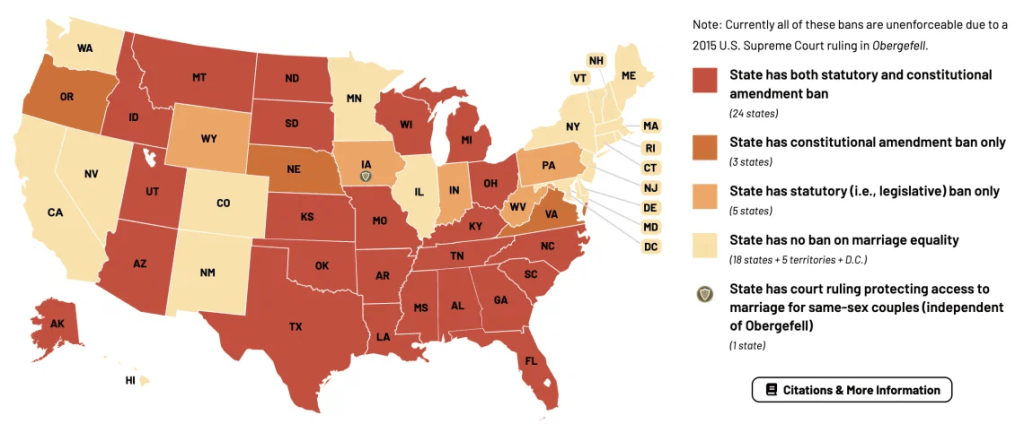
This November, voters in six states will decide on eight LGBTQ+-related ballot measures, including four anti-trans sports bans in Colorado, Arizona, Nebraska, and Washington; two measures restricting gender-affirming care for transgender youth in Colorado and Missouri; a measure that could out LGBTQ+ kids to their potentially unsupportive parents in Washington; and one pro-LGBTQ+ measure to remove a state same-sex marriage ban in Virginia.
“This isn’t actually about giving voters a say in democracy. It’s a political tactic by a small but vocal minority of extremists who want to turn out their base, driven by the fear and misunderstandings about people who are transgender,” said Adam Snipes, the director of strategic partnerships at the Ballot Initiative Strategy Center, during a September 30 GLAAD media briefing attended by LGBTQ Nation.
Snipes is correct: anti-trans measures are being used as “ballot candy” to increase Republican turnout at the polls.
But statewide anti-trans proposals have dramatically increased since 2015, the year that the US Supreme Court legalized marriage equality. In 2016, North Carolina passed an anti-trans bathroom bill. Since then, similar anti-trans measures have expanded to sports, educational policies, healthcare, and other areas.
Approximately 91% of anti-trans bills fail in state legislatures, GLAAD’s senior director of news and campaigns Barbara Simon said. But such legislation and ballot measures give anti-LGBTQ+ politicians and activists “a permission slip” that emboldens them to use marginalizing and dehumanizing rhetoric that harms vulnerable youth, Simon said.
“This is really part of a national MAGA playbook, which is about distracting voters from real issues facing families — like high healthcare costs, gas costs, housing costs — and instead just flaming fears about a small, really already vulnerable group of people… in this case, LGBTQ+ kids,” Washington’s first out lesbian state House Speaker, Rep. Laurie Jinkins (D), told the press briefing.
Anti-trans sports bans in Colorado, Arizona, Nebraska, & Washington
Colorado, Arizona, Nebraska, and Washington are all considering ballot measures with nearly identical language that would ban students who are transgender from playing school sports on sex-segregated teams that differ from the sex they were assigned at birth. None of these measures take intersexuality into account, leaving intersex students unsure about their place on the sports field.
Generally speaking, these measures fall largely on young girls and women to “prove” their sex, often with invasive medical exams that aren’t usually part of standard athletic exams. (Athletic medical exams usually focus on athletes’ eyesight, bone health, as well as respiratory, cardiovascular, or other issues that could affect overexerted athletes.)
Medical examinations to verify athletes’ sex can violate the privacy of all young girls and women — causing a decrease in their sports participation overall. Furthermore, such exams may not be covered by patients’ health insurance plans, adding an extra financial burden for low-income families.
These measures undermine local control by overriding policies and recommendations already put in place by local school boards and associations that have articulated what’s best for their students’ needs. These ballot measures also do nothing to address the sexism, abuse, and poor funding that harm girls and women and discourage them from participating in sports to begin with.
Arizona’s Proposition 318
Based on a 2022 Arizona law that federal courts had blocked from enforcement (before the US Supreme Court ruled such bans as constitutional last June), the so-called “Protect Girls’ Sports in Arizona Act” would require K-12 schools and private sports leagues to designate which sports are sex-segregated and then decide participation based on the sex listed upon each player’s birth certificate.
Additionally, schools and private leagues would have to ban trans athletes from restrooms, showers, and locker rooms that don’t match the sex they were assigned at birth. The measure would allow athletes to sue schools or leagues that violate its provisions.
Darrell Hill, the policy director for ACLU of Arizona, told KTAR that facilities and cities could interpret the law too broadly and restrict restroom and locker room access to trans kids and adults in various situations that have nothing to do with sports participation. “It can really act as a big barrier for trans people to participate in public life,” he said.
While the measure seems to “verify” athletes’ sex via birth certificates, state Sen. Mitzi Epstein (D) said it would “subject girls to invasive inspections and questions about their gender,” effectively harming all girls and women (and communicating that they are less valued than boys and men), “in an effort to score political points by discriminating against trans girls.”
The Arizona Interscholastic Association says no trans student-athletes have tried to compete in the state since the 2022 law was signed. It’s unclear whether any tried to compete before the 2022 law was signed.
Colorado’s Proposition 134
Proposition 134 would then require K-12 schools, colleges, and athletic associations to designate sex-segregated and co-ed sports and then forbid boys from participating on girls’ teams and vice versa.
The measure would define girls as people with female reproductive organs and boys as those with male reproductive organs, but it’s unclear how sex would be determined. While some supporters say a doctor-signed form or a DNA cheek swab could suffice, opponents warn that it could subject girls to invasive genital inspections.
Z Williams, a school parent and director of Bread and Roses Legal Center, told The Colorado Sun, “Kids have been playing sports with trans kids for decades…. Playing sports is an important and healthy part of growing up: People building a sense of who they are, learning how to work with a team, learning to lose. To take that away from kids simply for who they are is absurd. It is socially and politically cruel.”
Chris Cook, the father of an 11-year-old transgender girl, told the aforementioned publication, “It would tell kids that simply participating in school sports could mean being questioned, scrutinized, or subject to invasive gender inspections to prove who they are. No child should have to live with that fear, and this doesn’t affect (just) transgender kids. When schools are asked to police students’ gender, any child who looks too tall, too strong, or doesn’t fit someone’s idea of what a girl should look like could be singled out.”
Nebraska’s Measure 442
Measure 442 would write into the state constitution a 2025 law, sponsored by state Sen. Kathleen Kauth (R), that already requires public K-12 and college athletes to play on teams matching their sex at birth. The measure defines one’s sex at birth as having a reproductive system that “does or at some point will produce, transport, and utilize” either eggs ( for a woman or girl) or sperm (for a man or boy).
The measure would apply to all athletic teams or sports sponsored by public schools, postsecondary educational institutions, private schools, or educational institutions that compete against public schools.
Interestingly, the state Supreme Court recently heard arguments challenging the measure’s legality. Opponents say that the ballot measure’s sponsors failed to “adequately inform the public of what they are trying to accomplish” when collecting signatures for the effort. The measure will appear on ballots regardless of the court’s decision; if the court rules against it, all votes upon it will simply be invalidated.
Washington’s Initiative IL26-638
IL26-638 would bar students who are “biologically male” from competing in K-12 schools and nonprofit sports teams designated for girls and women. The initiative would require every student who wants to compete in girls’ sports to obtain a signed statement from a health care provider verifying their sex. Students wanting to play on boys’ teams wouldn’t have to obtain any such statement.
The initiative permits three verification methods: genetic testing, testosterone measurement, or a visual examination of reproductive anatomy. Seeing as the first two methods are expensive and not covered by insurance, most parents will likely go for the third option, requiring kids to expose their genitals to adult medical professionals.
Over 100 doctors and other medical professionals recently released a statement against the initiative, with some saying they would refuse to conduct invasive exams to verify the sex of young girls and women.
“IL26-638 would make every girl in Washington who wants to compete in a female-only interscholastic sport prove her sex to a doctor, regularly, in order to play,” the Washington State PTA noted, calling the initiative “discriminatory,” “harmful,” and “disproportionate.”
Trans journalist Erin Reed noted that even if the measure passes, it could still face constitutional challenges under the longstanding legal precedent of Washington laws protecting trans students.
“Washington adopted an Equal Rights Amendment in 1972 declaring that ‘equality of rights and responsibility under the law shall not be denied or abridged on account of sex,’” Reed wrote. “That provision triggers strict scrutiny for claims of sex discrimination, a standard that would likely render a categorical ban on transgender participation in sports unconstitutional — particularly given the state’s more liberal judiciary.”
Restricting gender-affirming healthcare in Colorado and Missouri
Two states, Colorado and Missouri, both have ballot measures to restrict gender-affirming healthcare for trans youth. However, they differ in significant ways.
Colorado’s Proposition 135
Colorado’s Proposition 135 is a vaguely written measure that would forbid doctors from performing surgeries on anyone under 18 “for the purpose of altering biological sex characteristics,” including changes to sexual organs, body shape, facial appearance, or voice (even though such surgeries on minors are rare to nonexistent).
The measure would also ban state or federal funds, Medicaid, and private insurance from paying for these surgeries. Though the measure’s language doesn’t specifically mention transgender youth, its restrictions would apply to any young person. However, the law wouldn’t place any restrictions on prescribing hormone therapy, puberty blockers, counseling, or support for social transition.
The measure includes exceptions for male circumcision, people born with a “medically verifiable disorder of sex development,” and “acquired physical or chemical abnormalities,” meaning that intersex individuals could still be eligible for augmenting surgeries.
Nevertheless, the Colorado Medical Society opposes the measure (along with dozens of other LGBTQ+ and allied organizations statewide), saying it would interfere with doctors’ medical judgment. The measure is backed by Protect Kids Colorado, an organization led by anti-LGBTQ+ activist Erin Lee.
Jax Gonzalez, political director at One Colorado, said the measure’s vague language around a minor’s “perception of sex or gender” leaves both patients and providers unclear about what procedures would be prohibited.
“All of us have gender and have lots of ideas about that, and so, does that mean that if a patient brings up a conversation about their own gender, regardless of their general identity, does that mean that that provider can’t treat them anymore?” Gonzalez, who is trans, told News From the States.
Missouri’s Amendment 3
Missouri’s Amendment 3 main purpose is to repeal the abortion-rights amendment that voters approved in 2024 and to make most abortions illegal in the state, except for ones that are conducted in cases of medical emergencies, fetal anomalies, and within the first 12 weeks of pregnancies caused by rape or incest.
The final clause in the measure would “prohibit gender transition procedures for minors,” which is curious, seeing as the state has banned gender-transition surgeries for minors since August 2023. The measure would also ban puberty blockers and hormone replacement therapy for minors.
Currently, state law forbids any new prescriptions of the aforementioned medications for trans youth until 2027; the measure would write this ban into the state constitution, meaning it would continue indefinitely.
Forcibly outing trans students to their parents in Washington
Washington voters will consider IL26-001, a measure that would repeal the state’s current parents’ rights laws and replace them with language taken verbatim from Louisiana. The measure would give parents unrestricted access to school, medical, and mental health counseling records without requiring student consent, including information on confidential conversations about a child’s sexual orientation or gender identity.
“When a student … is dealing with anxiety, they need trusted adults and mental health resources they can turn to that help them make sense of their world,” the American Civil Liberties Union (ACLU) of Washington wrote in opposition to the measure. “[Allowing parents to view sensitive counseling records is a] violation of privacy [that] can undermine the relationships that students may have with counselors and other trusted adults in schools.”
“The sad truth is not all students have a supportive adult they can turn to and talk about their sexuality, gender identity, or mental health without fear. Allowing schools to disclose private health information — as IL26-001 proposes — would severely impact a student’s stability at home, at a time when they need love and support, not punishment and rejection,” the ACLU of Washington added.
Indeed, statistics show that 40% of homeless queer youth say they were kicked out of their homes when their families learn of their identities, meaning that the measure could worsen at-home conflicts for LGBTQ+ students with unsupportive or abusive parents.
This initiative and the state’s ballot measure banning trans athletes are opposed by state Gov. Bob Ferguson (D), the state’s US Sen. Patty Murray (D), the Washington State Parent-Teachers Association (PTA), by the Washington State Nurses Association, the League of Women Voters, and domestic violence prevention groups, because they put kids at greater risk of violence and harm.
Defending marriage equality in Virginia
A bright spot on the somewhat gloomy horizon, Virginia’s Question 2 asks voters to remove the state’s 2006 constitutional ban on same-sex marriage and to add a right to marry regardless of a partner’s sex, gender, or race.
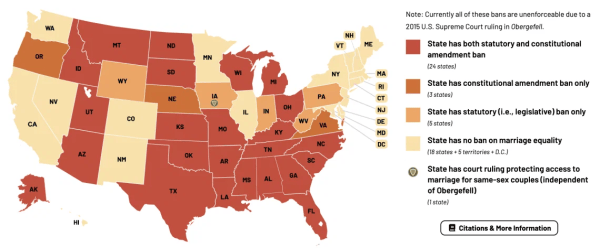
The state’s current ban, rendered inactive by the US Supreme Court’s 2015 Obergefell v. Hodges decision legalizing marriage equality, defines marriage as “only a union between one man and one woman” and bans any union, partnership, or legal status for unmarried couples that carries the rights and benefits of marriage. Question 2 would remove all of this language and acknowledge that “Marriage is one of the vital personal rights essential to the orderly pursuit of happiness.”
Virginians approved their state’s same-sex marriage ban in 2006, with 57% voting yes. A federal judge struck it down in 2014, but it stayed in the state constitution. State election officials say the ban would become enforceable again if the US Supreme Court ever overturned Obergefell v. Hodges, as some of the court’s conservative justices have threatened.
Currently, 24 states have dormant bans against same-sex marriage in both their state constitution and their statutes, five have such a ban in their statutes only, and three have such a ban in their constitution only, according to the Movement Advancement Project.
Since 2020, voters in four states have voted to repeal previously approved same-sex marriage bans. Nevada did in 2020, and California, Colorado, and Hawaii all did the same in 2024.
These ballot measures are about LGBTQ+ involvement in civic life
“As somebody who grew up trans, sports and other activities represented more than just competition,” Adrianna Suluai, the Policy & Advocacy Director at UTOPIA Washington, an organization dedicated to uplifting queer and transgender Pacific Islanders, told the press briefing.
“They were opportunities for me to participate, build confidence, and be around other young people and feel like I was a part of something. And when you’re a young person who may already feel different, sometimes simply having a place where you can show up and belong means everything,” Suluai added.
Suluai’s comment applies not only to the sports field but also to LGBTQ+ youth in classrooms, doctors’ and counselors’ offices, and the general public.
Because these ballot measures are often sold as ways to “protect children’ and strengthen “parental rights,” it’s all the more imperative that LGBTQ+ voters and allies understand them and share their potentially harmful consequences with other sympathetic voters.
Around 100 members of Taipei’s LGBTQ+ community protested on Sunday after police raided a gay bar the day before and detained its customers, a highly unusual move given that Taiwan prides itself on its liberal image and legal support for sexual minorities.
Taiwan legalised same-sex marriage in 2019 in a first for Asia and is normally a bastion of tolerance in a region where LGBTQ+ rights are often either suppressed or outlawed.
Taipei holds its main Pride event later this month, the largest in East Asia.
Taipei police raided the Commander D gay bar in the city’s Wanhua district on Saturday afternoon, taking 51 people in for questioning, and arresting the bar’s owner. Reuters could not reach him for comment.
Precinct spokesperson Chen Yu-cheng told Reuters police had acted on a search warrant for suspected “offences against public morality”.
Chen said the 51 people were suspected of violating a law that prohibits “wantonly exposing one’s naked body or presenting a lascivious posture in a public place or publicly accessible place”.
Protesters marched peacefully but noisily to the precinct police station on Sunday afternoon.
“They raided the place violently. It was very scary,” one of those detained, who asked to be identified only by his family name Wen, told Reuters.
The Taipei city government referred Reuters to a separate police statement, which said police received a complaint alleging that the bar could be violating public decency laws.
Mayor Chiang Wan-an from the main opposition party, the Kuomintang, who faces an election next month, has previously attended Taipei Pride and expressed his support for the LGBTQ+ community.
The precinct chief, who did not give his name, came out to speak to protesters briefly.
“We respect the culture of a pluralistic society and will protect the rights of every citizen,” he said, as protesters shouted their disapproval at him.
Protester Kang Yang said he was angry the raid had happened, particularly during Pride month.
“I’m not cool with this,” he said. “This city used to claim that it was queer friendly.”
Taiwan was under martial law until 1987 and same-sex relations were a largely taboo issue at the time.
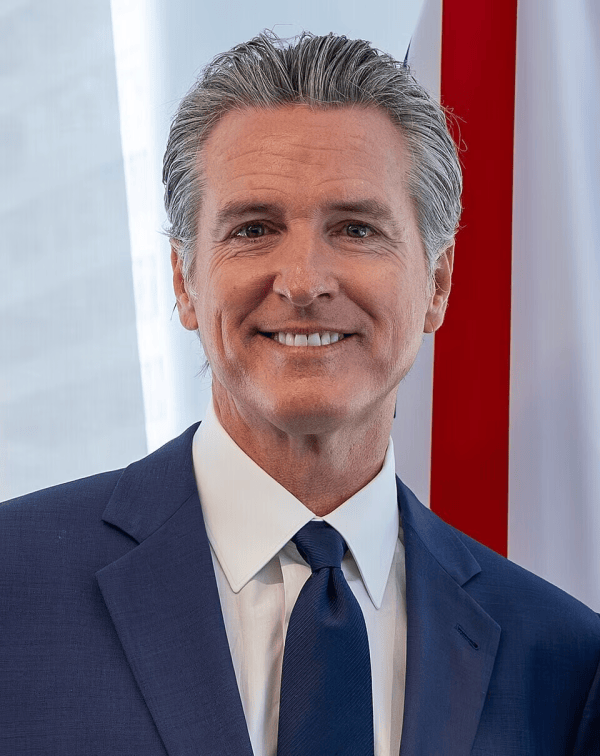
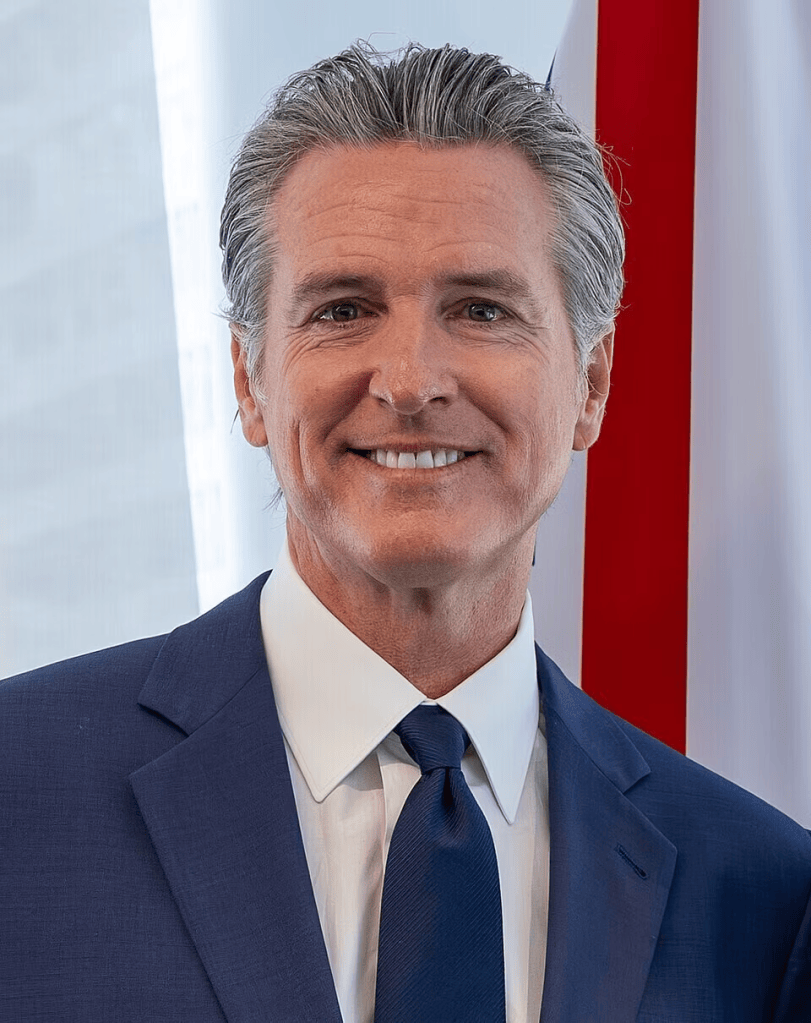
California Gov. Gavin Newsom (D) signed six pro-LGBTQ+ bills into law on Saturday, some of which were crafted as a direct response to the Trump administration’s relentless attacks on the community.
“The Trump administration has launched an all-out assault on the LGBTQ community, using medical records to target U.S. servicemembers and civilians alike, hurting countless people and betraying hard-won trust,” Newsom said in a statement on the bill package. “California will not stand for it.”
One bill, AB 1930, seeks to protect trans Californians’ medical records by barring state or local agencies from “cooperating with or providing information to an individual or agency from another state or a federal law enforcement agency… regarding a legally protected health care activity that is lawful in this state and performed in this state.”
The bill requires any agency that receives a subpoena, discovery request, or similar request to report it to the attorney general, who will assess whether the request meets certain requirements before deciding whether the information can be provided.
One such requirement is that “the requested information is related to an investigation or proceeding regarding activity that is unlawful under California civil or criminal law, and it identifies the California law under which the activity is unlawful.” The bill also protects the medical information of folks who have terminated a pregnancy.
The law is a response to the Trump administration’s efforts to intimidate hospitals across the country into ending gender-affirming care services for trans youth. The administration has subpoenaed the private medical records of trans youth from more than 20 hospitals in hopes of using them to prosecute health care providers, even in states that don’t ban gender-affirming care for trans youth. In some cases, judges have rejected the administration’s attempts. In others, hospitals have agreed to shutter their programs in response or have even complied with providing the records.
The other bills ban conversion therapy for minors; strengthen protections and resources for LGBTQ+ college students; limit out-of-state entities from accessing state data on LGBTQ+ people; reduce hurdles for insurance companies to cover HIV prevention medication; and, in response to the administration’s trans miliary ban, help military veterans who “received a discharge solely as a result of a specified executive order” to upgrade to an honorable discharge and prioritize those “who are able to demonstrate their less than honorable characterization of service was connected to a mental health condition, traumatic brain injury, sexual assault or harassment, or sexual orientation or… gender identity.”
Last week, Newsom vetoed a bill that would have prevented California from extraditing patients or providers as part of another state’s investigations into gender-affirming or reproductive care, explaining that it would “prohibit future governors from recognizing a request for extradition of a person subject to criminal liability based on allegations that the person engaged in specified healthcare activities.”
He acknowledged the importance of the bill’s goals and emphasized he does “share the author’s views on the importance of protecting these important healthcare services,” but also said that “extradition is an exclusively executive function” and he felt “troubled by the precedent that would be set if an outgoing administration agreed with the Legislature to erode the executive authority of an incoming Governor based on their shared policy preferences, regardless of how righteous and well-intended those actions may be.”
“This caution came precisely as red states were escalating their crackdowns, enacting increasingly hostile laws,” Reed wrote. “California could have served as a bulwark—a safe ground—but instead, Newsom hit the brakes.”
In other comments highlighted by Reed, Newsom said he’s “trying to understand as … the whole ‘pronoun’ thing,” and suggested that 25 might be too young for someone to transition.
The Education Department announced Monday it has formally rescinded the Biden-era Title IX interpretation that gave sex-based discrimination protections to students on the basis of sexual orientation and gender identity.
Schools now must go back to the Title IX code as held under the previous Trump administration in 2020, which the department says will protect women’s sports.
“Thanks to today’s action, the published Title IX regulations faithfully reflect court orders and Congressional intent — reducing confusion for parents, students, and educational institutions. We will continue to relentlessly champion equal opportunity for all Americans and hold accountable any school or college that violates the rights, privacy, or athletic opportunities of our women and girls,” Education Secretary Linda McMahon said.
And the administration has pursued its own definition since President Trump returned to office, making deals with schools such as the University of Pennsylvania to take transgender athletes out of their women’s programs.
Opponents of the move say it will harm transgender athletes and weaken protections for sexual assault victims.
“Sexual harassment and assault continue to be pervasive in schools and, to the fullest extent possible, we should be working to enforce the laws that protect student survivors of sexual violence. Yet, Education Secretary Linda McMahon and the Trump administration have decided to ignore what survivors need, instead weaponizing Title IX to attack trans students,” said Shiwali Patel, senior director of education justice at the National Women’s Law Center.
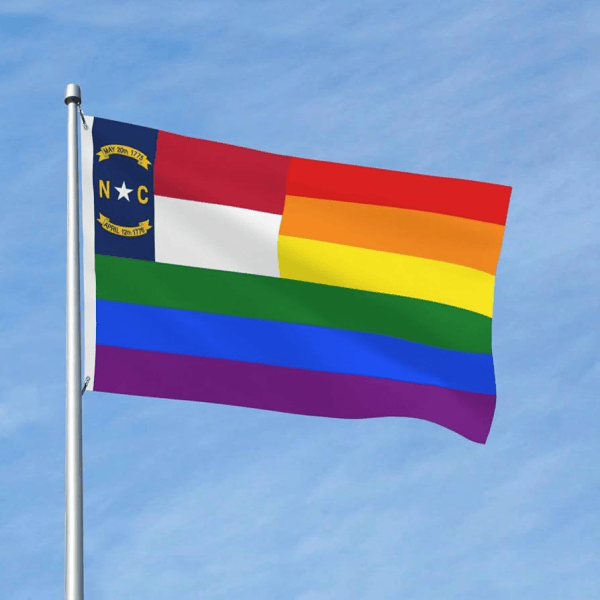
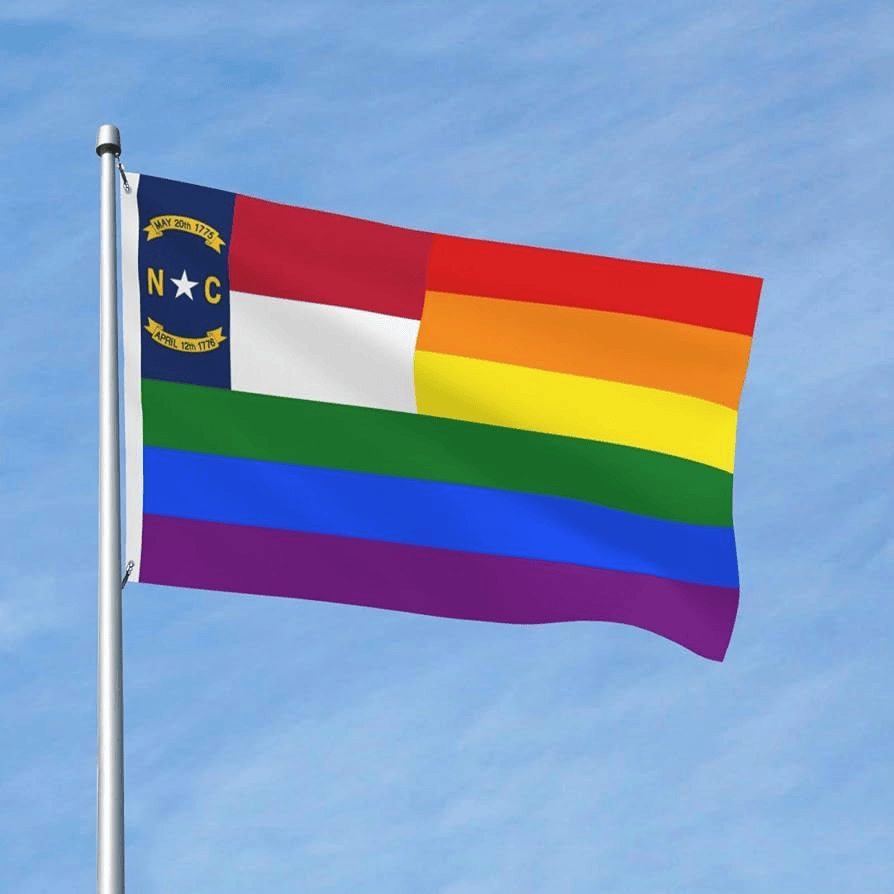
Whereas, North Carolina is home to a proud and diverse community of veterans, service members, military families, and civilians who contribute to the strength, security, and civic life of the state and nation; and
Whereas, LGBTQ North Carolinians are part of the state’s military, veteran, and civic communities and have served the United States Armed Forces in every generation; and
Whereas, LGBTQ veterans and service members have contributed to the defense, resilience, and prosperity of the United States through their courage, sacrifice, professionalism, and commitment to duty; and
Whereas, September 20 marks the anniversary of the repeal of “Don’t Ask, Don’t Tell,” an important milestone in the history of military service and public life in the United States; and
Whereas, recognizing LGBTQ veterans affirms the dignity of service, honors the contributions of all who have worn the uniform, and strengthens the bonds of community, belonging, and civic trust; and
Whereas, North Carolina recognizes the importance of honoring military veterans from all backgrounds and celebrating the many ways veterans continue to serve their families, communities, and state;
Now, Therefore, I, Josh Stein, Governor of the State of North Carolina, do hereby proclaim September 20, 2026, as “LGBTQ Veterans Day” in North Carolina and commend its observance.
In Witness Whereof, I have hereunto set my hand and affixed the Great Seal of the State of North Carolina at the Capitol in Raleigh this eighth day of September in the year of our Lord two thousand and twenty-sixth and of the Independence of the United States of America the two hundred and fifty-first.
Washington Gov. Bob Ferguson has officially come out against a conservative-backed initiative to rewrite the state’s so-called “parents bill of rights” law.
“It’s my strong sense that many Washingtonians aren’t aware of some of the facts around this initiative,” Ferguson said at a press conference Thursday morning.
He joined other Democrats and pro-LGBTQ campaigners to speak out against Ballot Initiative 001, which asks voters to roll back changes the state Legislature made to the law last year. Those changes give schools more time to turn over materials like classroom curricula and other records to parents who request them, and keeps student’s medical and mental health records private.
Campaigners who want to keep those changes say they’re meant to protect LGBTQ youth from abuse. Supporters of the initiative say it will strengthen communications between schools and parents.
“Teachers, counselors, school leaders all know that partnering with parents is crucial, and the rhetoric from this initiative is politically charged,” said state Rep. Monica Stonier (D-Vancouver), who was one of the lead sponsors of the changes made to the “parents bill of rights” last year. “Let’s Go Washington’s focus on demonizing schools hasn’t changed, but this time it’s resulted in a law that is so badly written that it takes away some of those parental rights.”
Conservative political action committee Let’s Go Washington and its founder Brian Heywood are behind the initiative to roll back the law.
“ I think that parents are first the primary stakeholders in raising their kids. That’s number one. And this seeks to restore that,” Heywood said. “There is this responsibility that’s given to schools and to teachers to watch over and and educate our kids during the day, and to have a side that’s excluding parents from that process by keeping secrets from them destroys the very trust that is required to do what’s in the best interest of the child.”
Heywood was also responsible for bringing an earlier version of this law before the legislature in 2024. Lawmakers passed that version and amended it last year. The original 2024 version said parents should get copies of their children’s school records within 10 days of requesting them; subsequent changes allowed for more time.
The Seattle Times editorial board recently noted that Heywood’s new initiative lifts language directly from an existing law in Louisiana and called out a section on reporting abuse in schools. Washington’s current law requires that parents be notified of abuse at school as soon as a report is filed, but the initiative proposes vague wording that recommends notifying a parent as soon as criminal action is “deemed to have been committed.”
“I’m speaking partly as a governor, of course, but also as a father of two teenagers who cares deeply about protecting parents’ rights,” Ferguson said. “Initiative 001 — no matter how hard the other side tries to spin it — it actually weakens existing laws by removing parents’ rights.”
Let’s Go Washington argues that its initiative would give parents more control over their children’s records, saying that the new wording “expressly gives parents the right to receive immediate notification if a criminal action is deemed to have been committed against their child or by their child.” The group says that parents would receive information more quickly with their initiative’s rewrite. Heywood himself has said that he believes the opposition is “splitting hairs” on the wording.
”If I’m a school administrator and I realize something’s happened to a kid, I’m calling a parent, right? That’s what my law allows them to do,” he said.
LGBTQ activists have also argued that this initiative could “out” students to their parents before they wish, which could lead to dangerous situations at home.
“In middle school, I lived alone with my mother, who subjected me to physical abuse and neglect due to mental health issues and alcohol abuse. I felt alone, struggled academically, and did not know where to run for support,” Gabriel Neuman, an LGBTQ advocate and transgender man, said, adding that he worried that the new initiative could put hundreds of students at higher risk for abuse at home. “I opened up the moment the school counselor assured me that our meetings were confidential.”
Let’s Go Washington has said their initiative does not require a school to notify a parent if their child is LGBTQ+ or transgender. But the initiative does expand parental access to records if a child is receiving medical care, and it will allow parents to access students’ mental health records. It could also allow for parents to see more information regarding a student’s gender identity.
If voters pass the initiative this fall, the state Legislature would have to wait two years before it could amend the new law in any way.













You must be logged in to post a comment.