Puerto Rico Supreme Court recognizes ‘X’ as third gender for birth certificates in landmark decision

*This is reported by The Advocate.

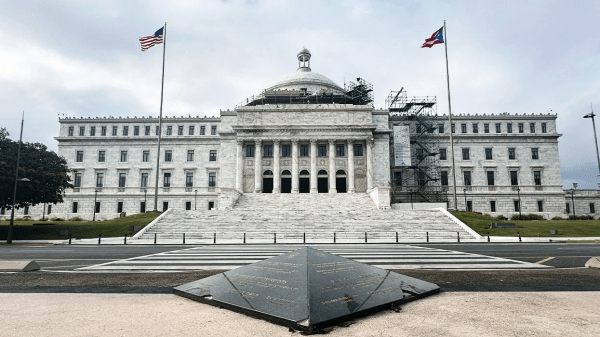
Puerto Rico’s Supreme Court has mandated that the government include an “X” gender marker on birth certificates in a ruling issued on Monday. A group of nonbinary Puerto Ricans filed the case, and the ruling allows for the representation of those who identify outside of the gender binary.

“Puerto Rico’s current Birth Certificate Policy is not supported by a rational basis, and therefore violates the Equal Protection Clause of the Fourteenth Amendment,” the justices wrote in their 19-page decision.

The court found that while the government might have a legitimate interest in maintaining an accurate record of each citizen’s sex assigned at birth, lawyers for the government “failed to articulate why this particular interest is furthered by treating nonbinary individuals differently than binary individuals.”

Puerto Rico’s Supreme Court has mandated that the government include an “X” gender marker on birth certificates in a ruling issued on Monday. A group of nonbinary Puerto Ricans filed the case, and the ruling allows for the representation of those who identify outside of the gender binary.

Keep up with the latest in LGBTQ+ news and politics. Sign up for The Advocate’s email newsletter.

“Puerto Rico’s current Birth Certificate Policy is not supported by a rational basis, and therefore violates the Equal Protection Clause of the Fourteenth Amendment,” the justices wrote in their 19-page decision.

The court found that while the government might have a legitimate interest in maintaining an accurate record of each citizen’s sex assigned at birth, lawyers for the government “failed to articulate why this particular interest is furthered by treating nonbinary individuals differently than binary individuals.”

RELATED: Trump’s ‘two genders’ executive order will hurt millions of Americans: study

A federal court in 2018 ordered Puerto Rico to permit transgender individuals to change their gender markers, but nonbinary individuals were left unable to accurately reflect their gender identity on official records. Six nonbinary plaintiffs filed suit in court, and the court on Monday ruled in their favor.

Puerto Rico’s Supreme Court has mandated that the government include an “X” gender marker on birth certificates in a ruling issued on Monday. A group of nonbinary Puerto Ricans filed the case, and the ruling allows for the representation of those who identify outside of the gender binary.

Keep up with the latest in LGBTQ+ news and politics. Sign up for The Advocate’s email newsletter.

“Puerto Rico’s current Birth Certificate Policy is not supported by a rational basis, and therefore violates the Equal Protection Clause of the Fourteenth Amendment,” the justices wrote in their 19-page decision.

The court found that while the government might have a legitimate interest in maintaining an accurate record of each citizen’s sex assigned at birth, lawyers for the government “failed to articulate why this particular interest is furthered by treating nonbinary individuals differently than binary individuals.”

RELATED: Trump’s ‘two genders’ executive order will hurt millions of Americans: study

A federal court in 2018 ordered Puerto Rico to permit transgender individuals to change their gender markers, but nonbinary individuals were left unable to accurately reflect their gender identity on official records. Six nonbinary plaintiffs filed suit in court, and the court on Monday ruled in their favor.

“Their request is simple: to be permitted to have a gender marker on their birth certificate that reflects their true gender identity, like everyone else,” the justices wrote of the plaintiffs in their decision. “Specifically, Plaintiffs request the Court to order the Demographic Registry of Puerto Rico to modify its application to amend a Puerto Rican birth certificate, to include an option to change one’s gender marker to an ‘X.’”

The justices found the government’s current birth certificate gender identification policy discriminatory and that there was no rational reason to deny the plaintiff’s request.

“The current Birth Certificate Policy of the Commonwealth of Puerto Rico arbitrarily distinguishes between binary and nonbinary individuals and subjects nonbinary individuals to disfavored treatment, without any justification for doing so,” the justices concluded in their ruling. “In such cases, it is the duty of the federal courts to intervene, to guarantee the equal protection of all persons under the law.”

Puerto Rico’s Republican Governor Jenniffer González Colón indicated that she would consult with government lawyers before determining her future course of action.

Puerto Rico Representative Jorge “Georgie” Navarro Suárez announced he was introducing a non-binding resolution condemning the ruling.

“The Federal Court’s ruling represents a challenge to the administrative and social stability of Puerto Rico,” Navarro Suárez said in a statement announcing the resolution. “While we fully respect human dignity and rights, we firmly believe that traditional gender identification based on male and female provides essential clarity and consistency in the administrative processes of the Demographic Registry.”

Navarro Suárez is a member of the New Progressive Party (PNP), which advocates for statehood with the U.S. Both of Navarro Suárez’s brothers were recently arrested on federal corruption charges. Edgardo Navarro Suárez and Ricardo Luis Suárez were arrested in April and charged with financial fraud and money laundering of federal funds meant for relief during the global economic shutdown. Prosecutors claim the two brothers and a third man attempted to bribe a bank official to help facilitate over $2 million in allegedly bogus COVID-19 relief funds.

Hegseth orders renaming of ship named after gay rights icon Harvey Milk

*This is reported by CNN

Secretary of Defense Pete Hegseth has ordered the secretary of the Navy to rename the oiler ship USNS Harvey Milk, according to a defense official.

The ship, which was launched in 2021 and named after the gay rights activist and Navy veteran, who was made to resign from the force because of his sexual orientation, is set to be officially renamed later this month, the official said. It is not clear what the new name will be, but the timing is notable given that June is Pride Month.

Military.com first reported the expected name change.

The Office of the Secretary of Defense did not respond to a request for comment.

It is rare for a ship to be renamed, and it has not happened on the orders of a defense secretary in recent memory.

The last time a ship was renamed in 2023, the move was based upon the recommendation of a congressional commission established to review names across the military with ties to the Confederacy. As a result of the study, the Navy decided to rename the cruiser USS Chancellorsville and research ship USNS Maury.

The USNS Harvey Milk is part of the John Lewis class of oiler ships that are named after civil rights leaders. Other ships in this class include the USNS Earl Warren, USNS Robert F. Kennedy, USNS Lucy Stone and USNS Sojourner Truth.

Enter your email to sign up for CNN’s “What Matters” Newsletter.

close dialog

CNN
What matters

Do you want the latest in US politics summarized each day?

Sign up for CNN’s What Matters newsletter.Sign me up

By subscribing you agree to our Privacy Policy.

The move is in line with Hegseth’s focus on reestablishing a “warrior culture” across the military, which he has mainly tried to do by eliminating diversity, equity and inclusion programs and content throughout the Defense Department and finding creative ways to revert military bases back to their original, Confederate-linked names.

Chief Pentagon Spokesperson Sean Parnell issued a statement saying decisions to rename any vessels would be announced when internal reviews are complete.

“Secretary Hegseth is committed to ensuring that the names attached to all DOD installations and assets are reflective of the Commander-in-Chief’s priorities, our nation’s history, and the warrior ethos. Any potential renaming(s) will be announced after internal reviews are complete,” Parnell said.

In a statement, former House speaker Nancy Pelosi of California said that “the reported decision by the Trump Administration to change the names of the USNS Harvey Milk and other ships in the John Lewis-class is a shameful, vindictive erasure of those who fought to break down barriers for all to chase the American Dream. Our military is the most powerful in the world – but this spiteful move does not strengthen our national security or the ‘warrior’ ethos. Instead, it is a surrender of a fundamental American value: to honor the legacy of those who worked to build a better country.”

Who was Harvey Milk?

At the time the ship was launched, the Biden administration had a very different stance on diversity.

“He made a difference. That’s the kind of naval leader that we need,” then-Secretary of the Navy Carlos Del Toro said of Milk during the christening ceremony in November 2021.

The ship was co-sponsored by then-Sen. Dianne Feinstein, a California Democrat who was the president of the San Francisco Board of Supervisors when Milk served on the board. She publicly announced Milk’s assassination in 1978 at the age of 48. Milk was one of the first out gay politicians elected to office in the United States, and the first out gay official elected in California.

Milk served in the Navy as a diving officer during the Korean War, at a time when gay service members were not allowed to openly acknowledge their sexuality.

During his time as a diving instructor in San Diego in the 1950s, his supervisors caught him at a park popular with gay men, according to his nephew Stuart Milk.

In 1955, after the Navy officially questioned Milk about his sexual orientation, he was made to resign with the rank of lieutenant junior grade.

After moving from New York to California, Milk helped start the Castro Village Association, one of the first predominantly LGBTQ-owned business groups in the country. In 1977, he was elected to San Francisco’s Board of Supervisors.

While serving as a city supervisor, Milk introduced legislation to protect the gay community, including a gay rights ordinance in 1978 to ban discrimination against LGBTQ people in housing or employment. He and other activists also succeeded in striking down Proposition 6, which would have mandated the firing of gay or lesbian teachers in California.

Less than a year after Milk was inaugurated as city supervisor, he and Mayor George Moscone were shot to death in the San Francisco City Hall by a former fellow city supervisor over a job dispute.

When his killer was sentenced to seven years, riots broke out over what many perceived to be a lenient sentence.

What are the safest places for gay and trans people? See where your state ranks

*This is reported by USA Today.

As Oklahoman legislators push to restrict trans rights and overturn the 2015 Supreme Court decision legalizing gay marriage, Zane Eaves says his identity as a transgender man has put a target on his back in his home state.

One of 18,900 trans adults in Oklahoma, Eaves has received death threats as has his wife of 10 years and their two children.

“All the hatred and political stuff going on” are driving this Oklahoma lifer from the place he was born and raised, Eaves, 35, said. He has only crossed the state line three times in his life, but in recent weeks, he made the difficult decision to move his family to North Carolina to be closer to friends and allies. 

“I am just trying to stay alive and keep my marriage,” Eaves said.

Oklahoma ranks 44th in the nation on a list released Monday of the most and least welcoming states for lesbian, gay, bisexual, transgender and queer Americans.

More and more, the question of where LGBTQ+ people feel safe is one of blue vs. red, according to advocacy group Out Leadership.

LGBTQ+ equality fell across the board for the third straight year, according to Out Leadership’s State LGBTQ+ Business Climate Index shared exclusively with USA TODAY. But the sharpest declines came in Republican-led states. 

While progressive strongholds championed supportive policies and protections, conservative states elected a slate of leaders who openly oppose gay and trans rights and sponsored an unprecedented wave of anti-LGBTQ+ legislation, Out Leadership CEO and founder Todd Sears said.

So-called “Don’t Say Gay” bills, religious exemptions and other legislation tanked the rankings of 19 red states in the Out Leadership index, according to Sears. 

Today, the divide between states that roll out the welcome mat and less hospitable parts of the country is wider than ever, he said.  

The least and most welcoming LGBTQ+ states

Each year for the last seven, Out Leadership has released the State LGBTQ+ Business Climate Index to gauge the overall climate for gay and transgender people state by state, mapping out where they will face the most and the least discrimination and hardship. 

Out Leadership’s index measures the impact of state government policies and prevalent attitudes about the LGBTQ+ community, weighing factors such as support for young people and families, health access and safety, political and religious attitudes, work environment and employment and nondiscrimination protections.

The Northeast had six of the 10 highest-ranked states, while the Southeast had six of the lowest-ranked.

Massachusetts, led by the nation’s first openly lesbian governor, Democrat Maura Healey and New York, which guaranteed gender-affirming care and LGBTQ+ refugee protections, tied for first place in this year’s index, with Connecticut and New Jersey close behind.

The least LGBTQ+ friendly state was Arkansas, which ranked last for the third straight year. South Carolina, Louisiana, South Dakota and Alabama also received low scores.

The states that had the largest gains in the index were Kentucky and Michigan, which Out Leadership attributed to “pro-equality” leadership from governors Andy Beshear and Gretchen Whitmer, both Democrats. The steepest declines were in Ohio, Florida and Utah, all led by Republican governors.

Where are the safest places to live?

The Out Leadership index was created as a LGBTQ+ inclusion reference guide for business leaders. But gay and trans people soon began using it to figure out where they should – and should not – live and work, never more so than now as rights rollbacks from the Trump administration and red statehouses hit close to home.

Opposition to transgender rights was a central plank in Trump’s presidential campaign and since taking office he has signed a series of executive orders recognizing only male and female genders, keeping trans athletes out of women’s sports, banning trans people from serving in the military and restricting federal funding for gender-affirming care for trans people under age 19. 

Even states seen as safer for LGBTQ+ people have been navigating these edicts around trans athletes. Trump threatened to cut federal funding to California if a trans girl competed in a state track and field event held Saturday.

AB Hernandez, a junior from Jurupa Valley High School in Riverside County, shared first place in the high jump and triple jump and second in the long jump. She shared the awards podium with her cisgender competitors under a new rule drafted by state athletics officials days before the event to mollify critics.

Republican-led states have been in the vanguard of anti-trans legislation, causing greater geographic polarization and prompting fears among LGBTQ+ residents, even those who live in liberal cities.

Jordan McGuire, a 27-year-old gay man in North Dakota, said the years he spent living in the Deep South taught him about the repressive discrimination routinely faced by gay and genderqueer people. 

At the same time, socially progressive cities in conservative states like Fargo and Grand Forks are no longer the safe havens they once were, he said. 

Now that his fiancee is transitioning to female, the couple is exploring a move to a “sanctuary” state that will be safer for them. 

“It feels like five or 10 years ago, trans people were not under the same microscope they are now and that has definitely influenced our move,” McGuire said. “Yeah, people were prejudiced but it wasn’t a witch hunt. They weren’t looking for people in bathrooms and schools. But now things are so polarized.”

That rising anxiety was captured in a post-election survey from UCLA’s Williams Institute which found that nearly half of transgender people had already fled unsupportive communities and nearly 1 in 4 were considering uprooting their lives. 

The most frequently cited reasons for wanting to move were concerns about LGBTQ+ rights – 76% – the sociopolitical climate – 71% – anti-trans rhetoric and climate – 60% – and anti-trans laws and policies – 47%. 

LGBTQ+ Americans on the move

Interest in relocating to friendlier states is even higher today than it was after Trump’s reelection, say nonprofit workers who aid trans and gender-diverse people relocate to more liberal states with broader protections. 

So far in 2025, Rainbow Railroad in Canada has received more than 3,000 requests from LGBTQ+ people living in the United States, up more than 1,000% from the same time last year, according to communications director Timothy Chan.

Nearly all requested international relocation support. For now, Rainbow Railroad can’t aid Americans with resettlement services because of immigration restrictions, Chan said. 

TRACTION has heard from a record number of people from states as far away as Texas, Oklahoma and Arkansas with many of them reporting being threatened or feeling unsafe in their homes and neighborhoods, said Michael Woodward, the executive director of the trans-led organization in Washington state. 

Trans and gender-diverse people historically face financial hardship due to systemic oppression and discrimination, and need assistance finding jobs and housing as well as with interstate moving expenses that can run tens of thousands, Woodward said.

TRACTION used to get a few applications a week until Trump won a second term. In the two weeks following the election, “we received as many requests for assistance as we’d received in the entire life of the project thus far,” he said. 

After the inauguration, TRACTION started getting three to five applications every day. With one employee and a handful of volunteers, his organization is struggling to keep up with demand, Woodward said.

Jonathan Joss Dead at 59; Husband Alleges Hate Crime

*This is reported by Instinct.

Actor Jonathan Joss, best known as the voice of John Redcorn in King of the Hill, has died following a fatal shooting in San Antonio, Texas. He was 59. The tragic news was first reported by TMZ, citing a dispute between neighbors as the initial cause of the altercation.

Joss, also known for his role as Ken Hotate on Parks and Recreation, was shot on the afternoon of June 1 near his home on Dorsey Drive. According to a police report from the San Antonio Police Department, officers were dispatched to the scene in response to an active shooting. When they arrived, they found Joss with gunshot wounds to the neck and torso. Witnesses say three shots were fired. He later succumbed to his injuries.

The suspect, identified as Sigfredo Ceja Alvarez, was alleged to have shot Joss after what appeared to be an altercation. Though early police statements cited a disagreement as a possible motive, Joss’s husband, Tristan Kern de Gonzales, has since claimed the shooting was a hate crime fueled by ongoing homophobic harassment.

In a heartfelt public statement shared via Joss’s official Facebook page, Tristan detailed the harrowing moments leading up to the shooting. He wrote that the two were at the site of their former home, which had burned down earlier in January. While retrieving mail, the couple came across the skull and harness of one of their beloved dogs, sparking visible grief.

“We began yelling and crying in response to the pain of what we saw,” Tristan said. “While we were doing this, a man approached us. He started yelling violent homophobic slurs at us. He then raised a gun from his lap and fired.” Tristan claimed Joss saved his life by pushing him out of the way.

Tristan went on to describe years of harassment from individuals in the area and repeated threats to burn their home down, which he says were reported to law enforcement but not acted upon.

The San Antonio Police Department, however, has publicly stated that there is currently “no evidence to indicate that Mr. Joss’s murder was related to his sexual orientation.” The statement posted to X (formerly Twitter) emphasized that SAPD investigators “handle these allegations very seriously” and will reclassify the charges if new evidence supports a hate crime motive.

Still, the area’s residents noted that Joss had struggled publicly in recent months. SAPD confirmed that they had responded to at least 40 calls involving Joss’s residence since January 2024, ranging from mental health checks to neighborhood disturbances and a house fire. Yet between February and the fatal June incident, no additional calls were logged.

Despite these complexities, many neighbors expressed sadness over Joss’s death. One long-time resident told San Antonio News,

“He was just very loud, very loud. But we knew how he was… we wouldn’t disturb him. Even if he looked at us, talked mess to us, we just ignored him because we knew that’s how he was.”

For fans around the world, Joss will be remembered as a cultural icon who gave voice to underrepresented communities. His performances — rich, bold, and deeply human — left a mark on television history. His husband’s words paint a picture of a man who, despite personal struggles, deeply valued love, community, and legacy.

“He gave me more love in our time together than most people ever get,” Tristan said. “Jonathan saved my life. I will carry that forward. I will protect what he built.”

Joss’s death is currently under active investigation.

Moving company employee terminated after attacking trans woman in Nashville

*This is reported by WSMV 4. We have removed the repeated misuse of the word “allegedly” from the story.

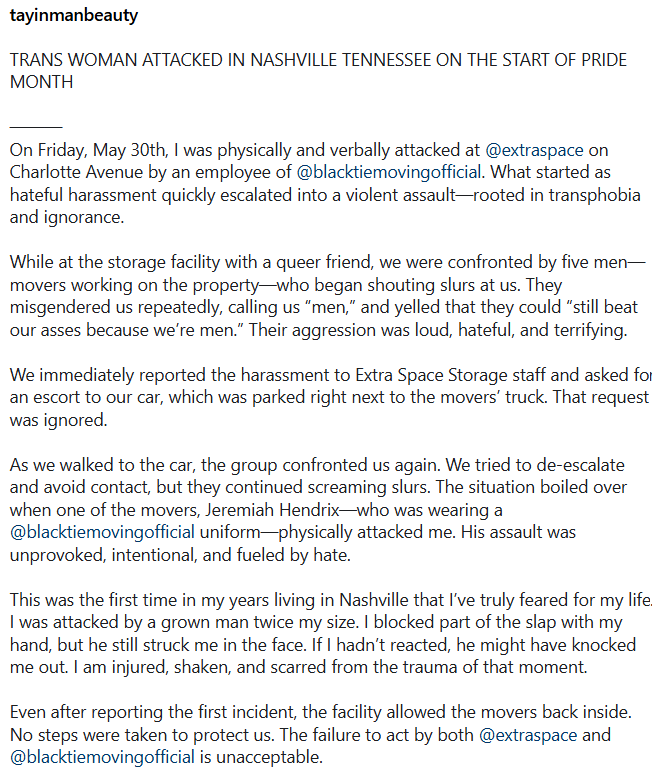
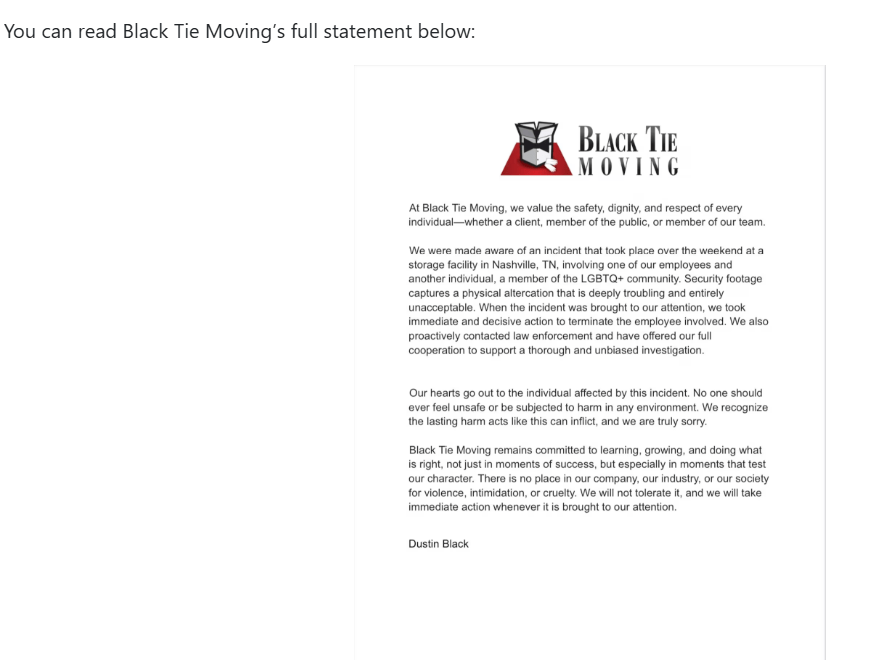
 A Nashville moving company has confirmed to WSMV4 that it has terminated one of its employees after a recent attack against a transgender woman.

Black Tie Moving released a statement on Monday confirming the employee’s termination and condemning the assault.

“We were made aware of an incident that took place over the weekend at a storage facility in Nashville, TN, involving one of our employees and another individual, a member of the LGBTQ+ community,” Black Tie Moving said. “Security footage captures a physical altercation that is deeply troubling and entirely unacceptable.”

Black Tie Moving added that the employee was immediately terminated and the company is fully cooperating with the Metro Nashville Police Department’s investigation into the incident.

Following the incident, MNPD confirmed that its Specialized Division is investigating the attack at the Extra Space Storage facility on Charlotte Avenue on Friday.

Extra Space Storage confirmed to WSMV4 that it’s turned over the security camera footage of the incident to police for the Specialized Division’s investigation.

“While the property has security features like video surveillance, cylinder locks, and coded doors and gates, we do not have on-site security. At the time, the store was staffed by a single employee,” the facility told WSMV4.

The victim also made the following post about the assault:

A trans teen is fleeing the country after enduring years of hate for being good at track

*This is reported by LGBTQ Nation.

A teenage trans athlete is fleeing the country with her mother after experiencing severe bullying and harassment by right-wing media, fellow athletes, and politicians.

11th grader Ada Gallagher currently runs on the girls’ track team at Portland, Oregon’s McDaniel High School. She first became part of the national debate over trans athletes in 2023 when she won the state championship in the 200-meter race. A report from that time said the crowd met her victory with a chorus of boos, a sentiment that quickly spread across the country as the anti-trans right got its hands on the story.

Gallagher, who now competes with a security guard by her side, has endured years of death threats and vile insults, and she has also been a focal point of conservative media outlets.

Most recently, a video of Gallagher winning a March 19 400-meter race in a landslide was shared widely among conservatives. She also won the 200-meter race at the same meet.

Prominent anti-trans activist Riley Gaines – who has built an entire career off of tying for 5th place with a trans athlete three years ago – shared the video on X and misgendered Gallagher, writing, “Does he have no shame? Do his PARENTS have no shame?”

Gallagher’s mother, Carolyn, was not able to celebrate her daughter’s win like any mother should, as she knew the hate it would bring. She told Oregon Live she thought, “I know the optics of this are going to be horrible.”

But she wished people understood that the meet consisted of a total of three schools and that neither of the other two had strong competitors in the race Gallagher won so easily. She also wished people knew that, despite what Fox News claimed, Gallagher did not set a season record in the 400-meter race and actually ran a massive five seconds slower than she did in the same event at state the previous year, where she got second place.

For as long as she could, Gallagher tried to rise above it all, to keep her head in the game and just do what she loves: run.

But it has finally become too much.

“When they call me a predator, that’s the worst one. I hate it so much,” Gallagher told Oregon Live.

Only six days after Gallagher’s victory in March, the U.S. Department of Education’s Office for Civil Rights began investigating Portland Public Schools and the Oregon School Activities Association (OSAA), alleging the organizations are violating Title IX by allowing trans athletes to participate in sports on the teams that align with their gender (OSAA policy states it “endeavors to allow students to participate for the athletic or activity program of their consistently asserted gender identity while providing a fair and safe environment for all students”).

A statement from Portland Public Schools Superintendent Kimberlee Armstrong in the wake of the lawsuit expressed a dedication to protecting vulnerable students.

“I stand firm in our legal responsibilities, and I deeply value every student’s right to be treated with dignity, safety, and respect. PPS is in full compliance with Oregon state law, which may differ from federal guidance. We are actively working with our legal and state partners to navigate this complex legal landscape.”

“While I am limited in what I can share at this time due to the sensitive nature of the matter and our duty to protect student privacy, I want to be clear: my commitment—and our district’s commitment—to doing what’s right for all students, especially those most vulnerable, remains unwavering.”

But Gallagher and her mother hope all the noise will quiet down once they leave for Canada, where Carolyn was born and raised, despite the fact that Gallagher is devastated to leave her team, her friends, and especially, her girlfriend.

As Oregon Live states, Gallagher “joined the track team last spring not because she believed she would win, not out of some desire to manipulate the system and compete where she could win, but because her friends urged her to. Because they wanted her there.”

Now the team captain, she says the team is “the only place where people really know me.”

“I think people think I want to be this spotlight for trans people,” she said. “Not at all. I just like running.”

While competing is what also leads her to endure all this hate, she said it all goes away during the 23 or so seconds she is running.

“You hear the feet around you hit the ground,” she said. “Senses are heightened. There’s nothing to think about, it’s just track.”

Democrats lash out as Texas Legislature bans school clubs that support gay teens

*This is reported by the Texas Tribune

Democrats took to the floor of the Texas House on Saturday to label a ban on clubs that support gay teens the work of “monsters” and to say the ban endangers children and strips them of their dignity.

The Democratic representatives grew emotional in opposition to a bill that would ban K-12 student clubs focused on sexuality and gender identity.

Senate Bill 12, authored by Sen. Brandon Creighton, won final legislative passage Saturday after lawmakers in both chambers adopted the conference committee reports that specifically clarified that schools will be banned from authorizing or sponsoring student clubs based on sexual orientation or gender identity.

Backers proclaimed that the bill enshrines a parent’s rights and puts the parent not just at the table, but at the head of the table where the child’s best interests are decided. They also targeted diversity, equity and inclusion (DEI) policies, claiming that they project ideologies on students and put too much focus on race, sexuality and gender identity instead of the quality of education.

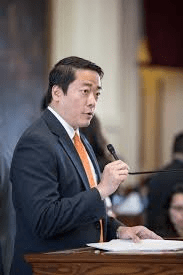
Rep. Gene Wu, D-Houston, emphasized that these clubs exist because of a long history of oppression against the LGBTQ+ community. He warned against demonizing students and teachers for discussing gender and sexuality.

“The real monsters are not kids trying to figure out who they are,” Wu said during the House discussion. “The monsters are not the teachers who love them and encourage them and support them. They are not the books that provide them with some amount of comfort and information. The real monsters are here.”

Lawmakers shared personal stories about LGBTQ+ youth. Rep. Rafael Anchía said his daughter was a vice president of a pride club at her school. He stressed that these clubs “are no more about sex than 4-H or ROTC or the basketball team.”

“It wasn’t a sex club,” Anchía said. “They’d get together and they’d watch movies. They’d color. They’d go to musicals. It was about a kid who felt weird who found her people and everything about it was good. I don’t know why grown-ups in this body are so triggered with my daughter getting together with her classmates in a school-sponsored activity.”

Anchía also told the Texas Tribune he “didn’t sign up for five anti-LGBT bills this session.”

Rep. Jolanda Jones, D-Houston, shared her experience as a Black woman and a lesbian, saying she didn’t come out until the age of 50 because she knew “the world wasn’t safe.” She warned that banning LGBTQ+ clubs could worsen bullying.

“And we have the nerve to say that we care about mental health,” Jones said. “We’ve passed bill after bill about access to care, about youth suicide, about prevention and treatment. But this bill makes kids sicker, sadder, more alone. This bill doesn’t protect children. It endangers them. It doesn’t give parents more rights. It strips children of their dignity.”

SB 12 is often referred to as the “Parental Bill of Rights” because it claims to give parents more control over their children’s schools. But Rep. Erin Zwiener, D-Driftwood, addressed those who are “afraid that your kids or your grandkids might grow up queer,” warning that the bill could harm family relationships.

“Getting silence in schools from the LGBTQ community, which is what this bill is designed to do, will not stop your kids from being gay,” Zwiener said. “It will just make them afraid to come out. It will make them afraid to live their lives as their full selves. It will make them afraid to tell you when they figure out that they’re LGBTQ and it might damage your relationship with them forever.”

Rep. Nicole Collier, D-Fort Worth, argued that allowing religious organizations in schools but banning “clubs that allow students to be who they are, is a double standard that flies in the face of the principles you say you support.”

“An LGBTQ person can’t change who they are any more than the fact that I can’t change that I’m Black,” Collier said. “What you’re saying to students today is that you will be accepted as long as you are who we say you should be.”

If signed by the governor, the bill will become law on Sept. 1.

Texas Senate approves bill strictly defining man and woman based on reproductive organs

*This is reported by The Hill.

The Texas Senate has sent legislation to Gov. Greg Abbott (R) that would strictly define genders across state law based on male and female reproductive organs — potentially creating new hurdles for transgender and intersex Texans whose gender identity would revert to the sex they were assigned at birth in state records.

Abbott spokesman Andrew Mahaleris confirmed to The Hill on Wednesday that the governor plans to approve the measure.

“The State of Texas recognizes only two sexes — male and female,” Mahaleris said. “Governor Abbott looks forward to reaffirming this universal truth and signing HB 229 into law.”

Supporters of the legislation said that it follows a directive Abbot issued earlier this year that state government in “Texas recognizes only two sexes — male and female.”

Abbott cited in the directive an executive order that President Trump signed shortly after his January inauguration that designates male and female as the only sexes recognized by the federal government and on a biological basis.

“All Texas agencies must ensure that agency rules, internal policies, employment practices, and other actions comply with the law and the biological reality that there are only two sexes—male and female,” Abbott wrote in his January letter to state agencies.

The latest Senate-approved bill, dubbed the “Women’s Bill of Rights,” defines sex as “an individual’s biological sex, either male or female.” Under the legislation, a woman or female is an “individual whose biological reproductive system is developed to produce ova” and a male or man is “someone whose reproductive system is developed to fertilize the ova of a female.”

Additionally, it defines “mother” as “a parent of the female sex.”

Critics of the measure argue that the bill oversimplifies sex, gender and a broad spectrum of personal experiences.

“If a law forces non-binary Texans, who are real people, into categories that don’t reflect their lived experiences or identities … that would actually become discrimination in practice,” state Sen. José Menéndez (D) said during the floor debate on the bill before its passage. “That’s a concern that I have.”

State Sen. Mayes Middleton (R), who sponsored the bill, said that it would preserve women’s designated spaces, like restrooms and prisons, based on “biological reality.” He noted that it carries no criminal or civil penalties.

“For our entire history we never had to define this because common sense dictated we didn’t, but unfortunately, that seems to have changed,” he said in the floor debate.

Abbott has previously pushed back against past criticism for signing laws that target LGBTQ people. He approved legislation in 2023 and 2021 to bar transgender athletes from competing in women’s and girls sports in Texas schools and colleges.

Trans man says he was detained after using women’s restroom in South Carolina

TRENDING

LGBTQ+ VoicesPoliticsTransgenderVideoBecome a MemberScroll To Top

By continuing to use our site, you agree to our Private Policy and Terms of Use.

Accept

News

Trans man says he was detained after using women’s restroom in South Carolina

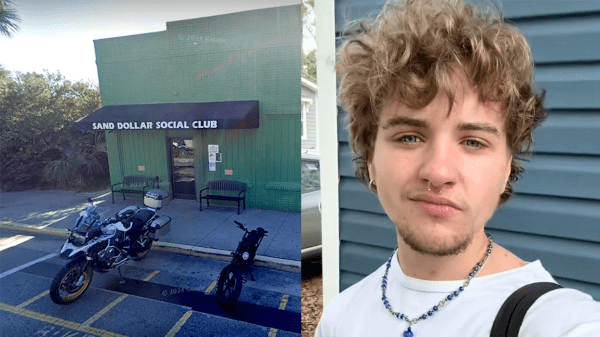
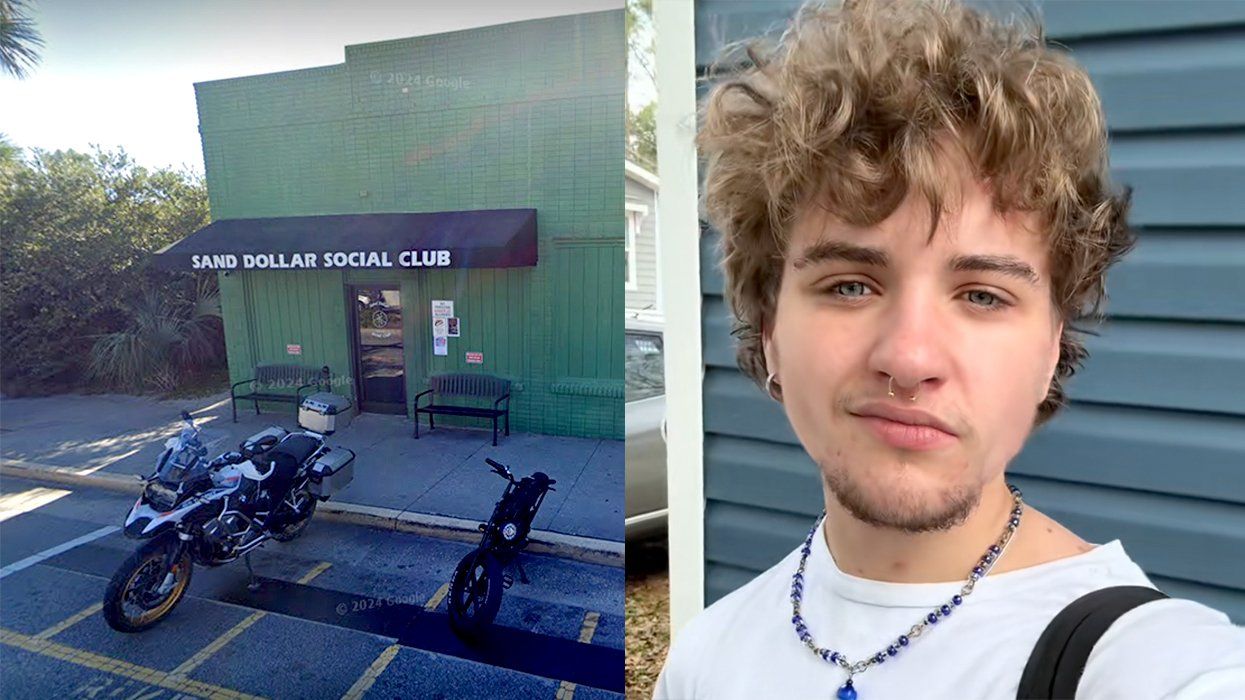
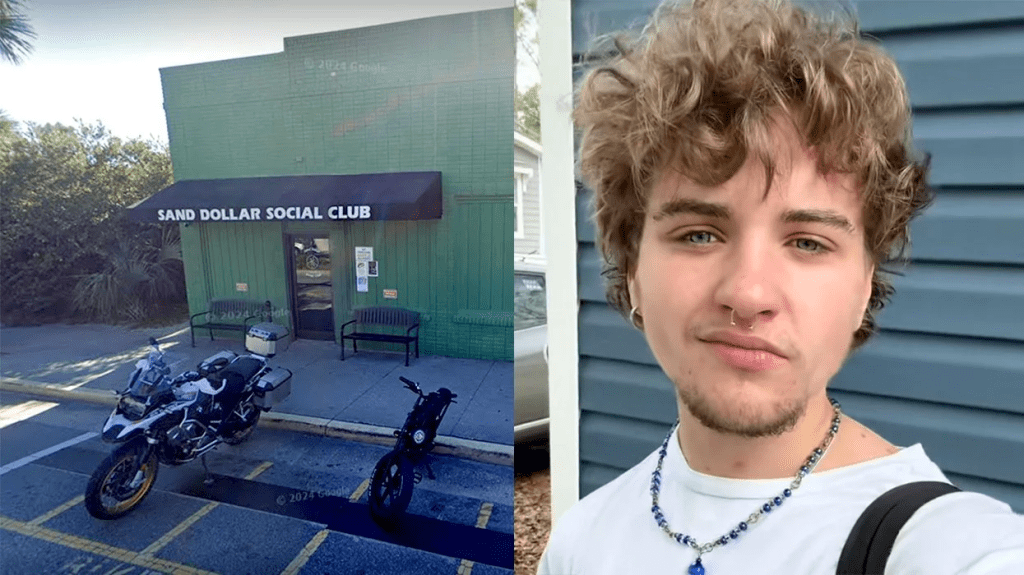
Sand Dollar Social Club Folly Beach South Carolina alongside footage still of trans man Luca Strobel

©2025 Google Maps Data; footage still via tiktok @fulltimecowboy

Sand Dollar Social Club (left) and Luca Strobel

Anti-trans lawmakers want to force trans men to use the women’s restroom. Here’s what happened when one did.

*This is reported by The Advocate.

A 25-year-old South Carolina trans man has gone viral on TikTok, saying he was accosted in a bar by staff, called slurs, and detained by police after using the women’s restroom.

Luca Strobel, who posts under the Tiktok handle @FulltimeCowboy, said he had gone to pick up his friend, Caroline Frady, also 25, at Sand Dollar Social Club in Folly Beach on the night of Friday, May 16, to be her “sober ride” home.

After a lengthy drive to the bar, Strobel said he stepped inside to use the men’s room. However, there were no stalls—only urinals, rendering it inaccessible to him as a trans man.

At first, an employee warned both Strobel and his friend against entering the bathroom of the “opposite” sex, but after a brief back-and-forth, Strobel said he believed he had permission to do so. He also said he and Frady were the only two people in the restroom, which Frady confirmed to Erin in the Morning.

That’s when a man who said he was the bar owner burst into the women’s room, peering over the stall to look at Strobel as he used the restroom.

“They’re looking over the top of the stall at me without my clothes on,” Strobel said in the video. “They can fully see me naked other than me having my shirt on, and they just start screaming that there’s ‘a man’ in here.”

He said the owner and employee ejected him and his friend from the bar — grabbing and pushing them out as they reportedly called Strobel anti-trans slurs. The police were waiting at the door, Strobel said.

The officer cuffed him “so tight that I can’t even feel my fingers,” Strobel said. “I still have a bruise on my knuckle.” Meanwhile, his arresting officer allegedly kept calling him a “little girl.”

“We didn’t get booked, but we did get cuffed, and when we got to the station, we were asking a bunch of questions that they refused to answer,” Strobel said. “They just kept saying, ‘Take it up in court, take it up in court, take it up in court.’”

Sand Dollar Social Club could not be reached for comment. The Folly Beach Public Safety Department did not respond to a request for comment.

In a follow-up video, Strobel said he was released on $500 bond, hit with a trespass notice barring him from entering Sand Dollar Social Club, and issued a ticket for public intoxication and disorderly conduct. Frady said she received the same.

In an interview with Erin in the Morning, Strobel emphasized that he had not consumed a single drink — he was there for the sole purpose of being the designated driver. He says officers did not breathalyze him.

There is no state law in South Carolina preventing a trans man (or any man) from using the women’s room in public accommodations, such as a bar. However, there has been an avalanche of anti-trans bills nationwide seeking such mandates, including in South Carolina, where lawmakers enacted a version of this policy targeting schools in 2024, and re-introduced it in 2025.

In other words, Strobel was using the bathroom that many conservative lawmakers and anti-trans pundits want to force him to use — and he got arrested anyway, seemingly because of the panic surrounding gendered bathrooms.

This kind of harassment is no stranger to trans and gender nonconforming people—in April, a trans girl in Florida was arrested for using the women’s bathroom in an act of protest against that state’s anti-trans bathroom bill. She washed her hands in the sink before being escorted out by police. In February, cisgender lesbian in Arizona made headlines after documenting her own experience having police interrogate her gender while she was using a women’s restroom.

Erin in the Morning’s 2025 anti-trans legislation risk map designates South Carolina as a “high risk” state to travel to. Last year, Republican Gov. Henry McMaster signed a trans-affirming health care ban for minors into law.

Strobel says he believes the bar staff knew he was trans because his shirt revealed his top surgery scars. Nonetheless, he said he refuses to “go stealth,” or hide his trans identity, because he believes that trans visibility in the South is important.

“Of course my safety is important to me, but at the end of the day, I want people to know that we exist,” Strobel told Erin in the Morning. “I want people to know that it’s OK, that just because you live here doesn’t mean that you can’t be who you are.”

On the other hand, Strobel said this recent incident has made him feel that he may no longer have a choice; that the risk of further transphobic violence is too great to remain. Strobel said he is raising funds to relocate somewhere that he can finally, after all these years, not just feel authentic, but be safe.

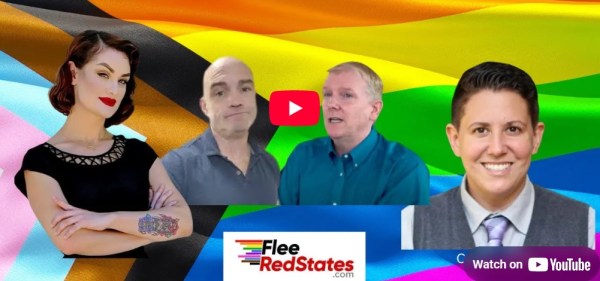
Trans Activism in Real Estate – LGBTQ REALTORS Discuss Red States ,Blue States and Better Countries

What happens when real estate meets resistance, advocacy, and identity? In this candid conversation, LGBTQ+ real estate professionals Callen Jones, Bob McCranie, Kimber Fox, and Leslie Wilson sit down to discuss the evolving challenges of being openly queer in an industry—and a country—facing political pushback.

🏳️‍🌈 Topics covered include: How anti-LGBTQ+ legislation affects clients and agents The role of advocacy in real estate Why “just doing business” isn’t neutral anymore Personal stories from the frontlines of inclusion in housing

📍 Whether you’re an agent, ally, or advocate, this video unpacks the real stakes of LGBTQ+ visibility in today’s market.

Blog at WordPress.com.

Up ↑