Maryland Governor Signs “Freedom to Read Act” Into Law | Truthout

This blog originally appeared at TRUTHOUT.

“Maryland takes a bold step forward in safeguarding the rights and dignity of LGBTQ+ youth and educators.”

On Thursday, Maryland Gov. Wes Moore (D) enacted HB 0785, known as the Freedom to Read Act, into law, prohibiting libraries that receive state funding from banning books.

“Schools should be working to build inclusive environments that reflect the diversity of their student body and community. It is especially critical that state leaders like Governor Moore rise up for policies that foster inclusive learning when resources and supports for LGBTQI+ youth continue to be targeted by extremists across the country,” GLSEN’s Executive Director Melanie Willingham-Jagger said in a statement emailed to Truthout.

HB 0785 safeguards the autonomy of libraries that receive state funding by prohibiting the censorship of books based on the creator’s background, origin, or viewpoints, as well as partisan disapproval. The bill also ensures protection for school and public library staff who adhere to the state library standards outlined in the bill, shielding them from retaliation. Violation of these provisions could result in the loss of state funding for libraries.

“This session, I wanted to put some safeguards and best practices in place to prevent intolerance and hate from taking further root in our state institutions and schools,” said Speaker Adrienne Jones (D), one of the sponsors of the bill.

In the previous year, Maryland witnessed 148 book challenges in both public schools and libraries, placing the state among the 17 nationwide to exceed 100 contested titles. According to the Maryland State Library Agency, there has been a 133 percent surge in formal challenges to library collections since 2019. The agency’s research revealed that 53 percent of librarians felt hesitant about acquiring specific books, despite believing they would benefit students, while 52 percent expressed that book challenges have added complexity to their roles.

“We are protecting libraries, librarians and literature,” said state House Delegate Dana Jones (D).

According to the American Library Association, nearly half of the challenged titles in 2023 revolved around themes involving LGBTQ+ individuals or Black, Indigenous, and other people of color. Banning books with these themes leads to the “othering” of students who share these identities, advocates say.

“Our public schools should help our children pursue their dreams, learn new ideas, and understand different perspectives. That means giving students an honest and accurate education without banning books and politically motivated censorship,” the Maryland State Education Association said in a statement. “At a time when we’re seeing record levels of attempted book bans, which are all too often motivated by extremist politics, it’s time to take a stand for an honest and accurate education by supporting the Freedom to Read Act.”

Moore also signed HB 1386, a bill requiring anti-bias training for all school employees, into law. The bill mandates the implementation of a program developed in consultation with the State Department of Education and the Professional Standards and Teacher Education Board. These guidelines must be culturally sensitive and inclusive, meeting the diverse needs of educators and students. Additionally, school boards are tasked with providing training to public school employees who frequently interact with students as part of their duties.

“With Governor Moore’s signature on HB785, the ‘Freedom to Read Act,’ and HB1386, instituting vital anti-bias training for school employees, Maryland takes a bold step forward in safeguarding the rights and dignity of LGBTQ+ youth and educators,” Willingham-Jagger said.

This article is licensed under Creative Commons (CC BY-NC-ND 4.0), and you are free to share and republish under the terms of the license.

7 suspects identified in brutal campus anti-LGBTQ+ attack. They can’t be charged with a hate crime. | LGBTQNation

This blog originally appeared at LGBTQ NATION.

Following this crime, Michigan Attorney General Dana Nessel strongly criticized the state legislature for its failure to designate LGBTQ+ individuals as a protected class.

Michigan State University police have pinpointed seven suspects linked to an assault on two university students inside the school library on Monday. The group reportedly made derogatory comments regarding the victims’ sexual identity before the attack occurred.

“The suspects assaulted two victims, with indications suggesting they targeted the victims due to their sexual orientation,” stated MSU Police and Public Safety in a release on Tuesday.

University officials confirmed that “none of the suspects are affiliated with MSU” and stated they will request prosecutors to press charges once the investigation concludes.

The victims faced harassment near the library’s entrance on the first floor, as reported by MSU spokesperson Emily Guerrant. “The two MSU students then retreated to the third-floor study area to meet with some other friends,” Guerrant told MSU radio station WKAR, detailing how the group of high school-age boys pursued them upstairs. “An altercation ensued at that point,” Guerrant added.

MSU’s library remains open to the public until 6:00 p.m., and the attack occurred at 5:50 p.m. on Monday. Although school officials did not specify the extent of the victims’ injuries, a disturbing video shared on an anonymous message board depicts the altercation amid the library stacks.

Officials emphasized the significance of the attack happening during MSU’s LGBTQ Pride Month. “Discrimination or harassment, including hate crimes, based on protected identities can have a significant impact,” stated school administrators, asserting that everyone deserves to feel safe and respected.

Currently, Michigan state law only considers racial bias for hate crime classification. Legislators have debated expanding these protections to include other groups, such as LGBTQ+ individuals, but no proposal has reached Governor Gretchen Whitmer’s desk.

Michigan Attorney General Dana Nessel highlighted the inability of prosecutors to charge the suspects with a hate crime solely based on anti-LGBTQ+ bias. “It’s not an included class under the Ethnic Intimidation Act,” Nessel explained at a press availability on Tuesday, advocating for legislative action to address this gap.

Nessel criticized proposed bills in the Democrat-controlled Michigan House and Senate as insufficient, particularly regarding sentencing guidelines for hate crime convictions. “Two years is nothing,” Nessel remarked, expressing her dissatisfaction with the proposed penalties.

Last year, Michigan lawmakers passed an “institutional desecration” bill targeting hate-motivated vandalism to various institutions, including those related to the LGBTQ+ community. However, this law only covers anti-LGBTQ+ bias in specific contexts.

As of now, twenty-two states and jurisdictions have LGBTQ+-inclusive hate crime laws, while eleven have laws protecting “sexual orientation” but not “gender identity.”

Former student describes brutal culture of anti-LGBTQ+ bullying at Nex Benedict’s high school | LGBTQNation

This blog originally appeared at LGBTQ NATION.

The sentiment echoed by the student resonates with the experiences of many: officials at Owasso High School turn a blind eye to bullying.

Just over two months following the tragic passing of Nex Benedict, a transgender teenager, the Human Rights Campaign (HRC) has unveiled a new advertisement. In it, an alum of Owasso High School recounts firsthand the culture of anti-LGBTQ+ bullying she encountered at the same school Benedict attended.

Benedict’s passing on February 8 occurred shortly after a violent altercation with three fellow students in an Owasso High School bathroom. While ruled a likely suicide by the Oklahoma state medical examiner, the incident has sparked national attention to the challenges faced by LGBTQ+ students within the Owasso school district and across Oklahoma. Benedict, described by friends as identifying as transgender and predominantly using he/him pronouns, had reported being targeted by the three students, who allegedly assaulted him because of his gender identity until he lost consciousness.

LGBTQ+ advocacy groups have condemned both the school and the Owasso Police Department for their handling of the altercation preceding Nex Benedict’s tragic passing, as well as the pervasive culture of anti-LGBTQ+ bullying reported by current and former students. In February, Human Rights Campaign (HRC) President Kelley Robinson urged Attorney General Merrick Garland to initiate a Department of Justice investigation into Benedict’s death. Robinson also reached out to U.S. Secretary of Education Miguel Cardona, urging the department to utilize its enforcement tools to prevent similar tragedies in the future. In March, the U.S. Department of Education announced an investigation into the Owasso Public School District.

The HRC advertisement, unveiled on Monday, features Marley H., a 2022 Owasso graduate, who sheds light on school officials’ neglect in addressing anti-LGBTQ+ bullying. Recounting an incident on a school trip, Marley describes a teacher’s refusal to intervene when another student repeatedly used derogatory language targeting her and her peers.

“It’s painful to realize that not only do your teachers fail to support you personally, but if a student bullies, harasses, or belittles you, they won’t take action,” she shares. “It fosters an environment where reporting issues feels futile.”

Addressing teachers who turn a blind eye to bullying and harassment, Marley emphasizes, “Consider the consequences faced by students like Nex Benedict. That’s the severity of the situation. That’s the result when you witness something and remain silent.”

Marley’s testimony echoes the sentiments of other current and former Owasso students who participated in a walkout in late February. Despite Owasso Public Schools’ official prohibition of bullying in its student conduct code, students told NBC News they were unaware of the district’s bullying policies and doubted the school’s willingness to address complaints.

“Even if an incident occurs, there’s no incentive to approach administrators or teachers because nothing will change,” remarked Ally, a senior at Owasso and a friend of Benedict’s. “I’ve witnessed this repeatedly with my friends.”

Marley points out a “trickle-down effect,” wherein students are exposed to anti-LGBTQ+ rhetoric from their parents, who, in turn, hear similar rhetoric from Oklahoma Republicans advocating anti-LGBTQ+ legislation. “These children hear their parents’ words. And these children go to school. The rhetoric passed down from elected officials to parents to children then impacts entire school districts.”

At the forefront of these elected officials is Oklahoma’s Superintendent of Public Instruction, Ryan Walters (R), known for his anti-LGBTQ+ stance. Even prior to Benedict’s tragic passing gaining national attention, Walters faced criticism from both Republican and Democratic state lawmakers for appointing Chaya Raichik, the figure behind the anti-LGBTQ+ platform “Libs of TikTok,” to Oklahoma’s library advisory committee in January.

Following Benedict’s death, a letter dated February 28 addressed to the Oklahoma state legislature, signed by over 350 public figures and LGBTQ+ rights groups, called for Walters’ removal. Additionally, in March, the Human Rights Campaign (HRC) initiated “Walters Watch,” a campaign aimed at holding Walters accountable for what the organization perceives as his “extremist rhetoric and mismanagement of Oklahoma schools,” contributing to a climate of anti-LGBTQ+ bullying and harassment.

Kelley Robinson, in a statement, acknowledged the courage of students from Owasso and elsewhere in Oklahoma who have spoken out against bullying and harassment perpetuated by figures like Ryan Walters. Robinson emphasized Marley’s story as both heartbreaking and enraging, asserting that there is a path forward. She emphasized the importance of speaking out against injustices, making it harder for the truth to be ignored. Robinson concluded that the first step towards healing is for Ryan Walters to step down.

For those in crisis or in need of support, assistance is available. You can call or text 988, or chat at 988lifeline.org. The Trans Lifeline (1-877-565-8860) offers support staffed by transgender individuals without involving law enforcement. The Trevor Project provides a safe and judgment-free platform for youth to chat, text (678-678), or call (1-866-488-7386). Support is offered in both English and Spanish at all three resources.

No Charges Will be Filed Over Nex Benedict’s Death or Preceding Fight, DA Says

This blog originally appeared at THEM.

LGBTQ+ advocates persist in urging for an autonomous inquiry into Benedict’s passing.

Tulsa County District Attorney Stephen Kunzweiler announced this week that no criminal charges would be pursued in the case of Nex Benedict’s death, referring to the altercation leading to Benedict’s demise as “mutual combat.” Benedict, a 16-year-old high school sophomore, passed away on February 8 following a confrontation with three alleged bullies the previous day, during which Benedict reported experiencing a momentary loss of consciousness. Kunzweiler, in a press release Thursday using Benedict’s former name, stated that after reviewing police reports, both Benedict and the assailants had been engaging in mutual antagonism for several days prior to the altercation, making juvenile charges untenable.

The District Attorney further referenced the pending report from the state Office of the Chief Medical Examiner, indicating that the autopsy did not reveal any internal injuries consistent with causing Benedict’s death. Instead, Kunzweiler reiterated the preliminary determination that Benedict died from a combined overdose of diphenhydramine and fluoxetine, commonly known as Benadryl and Prozac respectively. While medical experts acknowledge such overdoses are rare, they are not without precedent.

Despite Kunzweiler’s stance, LGBTQ+ advocates and Benedict’s family remain skeptical as more details emerge. The Benedict family’s legal representation, Biby Law Firm, released a statement last week containing additional autopsy findings, including injuries contradicting claims that the assault on Nex was insignificant. These injuries reportedly include lacerations, hemorrhages, and bruising across Benedict’s body.

Amid mounting concerns, suspicions over the credibility of the official autopsy escalated following revelations about the unaccredited status of Oklahoma’s Chief Medical Examiner’s Office since 2009. Advocates have also criticized state Superintendent for Public Instruction Ryan Walters, alleging his anti-trans stance and support for controversial figures created an unsafe environment for LGBTQ+ students in Oklahoma.

GLAAD president and CEO Sarah Kate Ellis condemned various authorities involved in the case, calling for an independent investigation into Benedict’s death and holding leaders accountable for serving their communities with fairness and compassion.

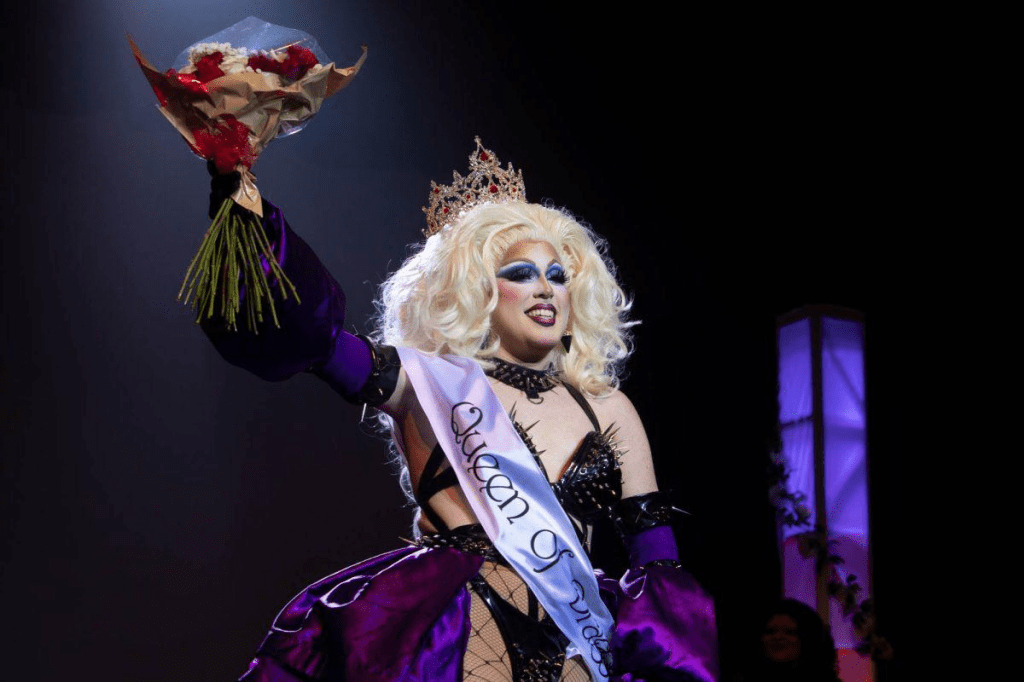
Bomb Threat Interrupts Drag Story Hour Event at Arlington Gay Bar

This blog originally appeared at BLADE.

The event at Freddie’s Beach Bar resumed following a thorough search by police and a bomb-sniffing dog. After ensuring the safety of the premises, the event continued without further interruption.

During a Drag Story Hour event at Freddie’s Beach Bar, a popular gay bar and restaurant in Arlington, Virginia, attendees were unexpectedly evacuated due to a bomb threat received via email on April 6. Parents and children participating in the event were ushered into the rear outdoor seating area and parking lot while law enforcement, including a bomb-sniffing dog, conducted a thorough search of the premises. Fortunately, no explosives were found.

Freddie Lutz, the owner of Freddie’s Beach Bar situated in Crystal City, South Arlington, disclosed that the threatening email arrived during the inaugural Drag Story Hour event. This event, where drag performers read children’s stories to accompanied families, had drawn a sizable crowd of neighborhood residents, including kids, babies, and even a grandmother. Despite the disruption, attendees patiently waited until authorities gave the all-clear signal before returning inside.

During the Drag Story Hour event at Freddie’s Beach Bar, two protesters made their presence known outside the venue. Freddie Lutz revealed that prior to the event, drag performer Tara Hoot had warned him about potential disruptions, as some of her previous Drag Story Hour events had faced bomb threats and protests.

“We were somewhat prepared, mentally at least,” Lutz commented. “As anticipated, we received an unsettling email threatening both the bar and me personally at my residence, although thankfully nothing was found there,” he added, referring to his nearby South Arlington home.

Arlington police responded to the bomb threat report, conducting a thorough search of the premises and finding no evidence of criminal activity. The investigation remains ongoing.

Tara Hoot, who has been organizing Drag Story Hour events in the D.C. area for over a year, revealed that several of her past events have encountered hostile protests or bomb threats, with no actual explosives ever discovered. At the Freddie’s event, two protesters, a man and a woman, invoked religious reasons for opposing the Drag Story Hour, spreading messages of intolerance and attempting to shame parents for attending with their children.

Despite such opposition, Hoot’s performances cater to children’s interests with songs, readings from books like “The Very Hungry Caterpillar,” which promotes positive themes like bravery, and engaging activities like blowing bubbles and using rainbow ribbons. She describes the atmosphere as one of fun, love, and joy.

Originating in San Francisco in 2015 under the auspices of an organization named Drag Story Hour, these events have spread nationwide, occurring in various settings including libraries, bookstores, restaurants, and bars. The organization aims to create spaces where children can witness individuals defying conventional gender norms, fostering a vision of a world where everyone can express their true selves freely.

Kansas Governor Vetoes gender-affirming Trans Youth Care Ban

This blog originally appeared at ABC NEWS.

Last year, Governor Laura Kelly vetoed a comparable bill.

Kansas Governor Laura Kelly, a Democrat, rejected a measure aiming to prohibit gender-affirming medical care for transgender minors within the state.

In her statement on Friday, Kelly denounced the proposed legislation as divisive, asserting that it unfairly targets a small segment of Kansans and imposes governmental interference in parental decision-making regarding child-rearing and healthcare. “I do not view this as a conservative principle, nor does it align with the values of Kansas,” she affirmed.

This isn’t the first time Governor Kelly has stood against such legislation. Almost a year prior, she vetoed a similar bill, citing the adverse economic consequences of discriminatory measures. “Corporations have unequivocally expressed their reluctance to engage with states endorsing discrimination against employees and their families,” she emphasized.

Kelly further emphasized that such bills not only strip away the rights of Kansans but also expose the state to costly legal battles, ultimately undermining its economic prosperity and potential for securing new business ventures.

State GOP legislators are poised to challenge Kelly’s veto, potentially overriding it through legislative means.

To achieve this, the legislature must secure a two-thirds majority vote, equivalent to 84 votes in the House and 27 in the Senate. While the Republican-sponsored bill has garnered sufficient support in the Senate to surpass the threshold required for an override, the situation in the House is more nuanced. In addition to existing support, two House Republicans who were previously marked as absent must also cast their votes in favor of the bill to tip the balance and override the governor’s decision.

The legislation in question places limitations on the use of puberty blockers, a medical intervention utilized by transgender minors to delay the onset of gender-specific characteristics associated with puberty. It’s important to note that puberty blockers are reversible and commonly employed for children undergoing premature puberty.

The bill also places restrictions on hormone therapy, which older minors may utilize to achieve desired changes in certain gender-specific characteristics, such as their body shape, hair distribution, or voice pitch. Unlike puberty blockers, the effects of hormone therapy are less reversible. Additionally, the bill imposes limitations on surgeries, which medical professionals assert are rare for minors and typically only performed in severe cases.

Nevertheless, the legislation provides exceptions for these procedures for minors who are intersex, possess ambiguous sex characteristics, or suffer from disorders of sex development.

Healthcare providers found in violation of these provisions could face civil repercussions and potential revocation of their licenses if the bill becomes law.

Moreover, the bill prohibits state employees or facilities from facilitating a minor’s social transition, which encompasses changes in pronouns, names, attire, and other aspects.

Advocates of gender-affirming care bans argue that such treatments are detrimental to minors. Some proponents advocate for transgender youth to delay accessing gender-affirming care until they reach adulthood.

Kansas Senate President Ty Masterson, a Republican, lauded the legislation’s advancement through the legislature, stating, “The Senate took a firm stand in support of helping and not harming children by making it clear that radical transgender ideology and the mutilation of minors is not legal nor welcome in Kansas.”

Conversely, critics of the gender-affirming care ban characterized the bill as “more extreme and misinformed than similar bills in other parts of the country.” The ACLU of Kansas, in a statement urging Governor Kelly to veto the bill, argued, “In addition to depriving parents and families of medical freedom, this bill actually punishes teachers, doctors, nurses, and more for just doing their jobs by respecting and supporting Kansas kids, including transgender kids.”

Transgender youth, often subjected to gender-related discrimination and experiencing gender dysphoria, are at heightened risk of anxiety, depression, and suicidal ideation and attempts, as per the Centers for Disease Control and Prevention. Moreover, a recent study published in the New England Journal of Medicine concluded that hormone therapy can positively impact the mental health of transgender adolescents and teenagers.

Restrictions on transgender youth’s access to gender-affirming care have been enacted in a minimum of 23 states, with some facing legal contests asserting that these bans infringe upon the rights of the youth, their families, and their healthcare providers. While gender-affirming care bans have been successfully challenged in court in states like Arkansas, Idaho, Florida, and Montana, they have been upheld in others.

The ACLU reports that over 480 bills targeting the LGBTQ community have been introduced nationwide. Of these, at least 135 bills have ceased advancing through state legislatures, as per the ACLU’s findings.

Reyna Hernandez, a Latina Trans Woman Missing Since February, Has Been Found Dead

This blog originally appeared at THEM.

Hernandez, proprietor of Reyna Hair Salon in Renton, WA, has a suspect in custody, according to the police.

Reyna Hernandez, a Latina transgender woman and salon owner from Washington, was discovered deceased in a cemetery in northern Mexico, officials have verified. She was 54 years old.

Initial reports indicate that Hernandez, who owned Reyna Hair Salon in Renton, WA, vanished on February 26. Subsequently, on March 8, authorities in Mexicali, the capital city of Baja California, Mexico, uncovered a body in a cemetery adjacent to the Tijuana Highway. Renton police later confirmed the deceased individual to be Hernandez via a press release on the department’s Facebook page. Additionally, officials disclosed to local news outlet KCPQ that Hernandez had endured apparent torture prior to her demise: alongside a fatal gunshot wound, her extremities were bound, and she was wrapped in a blanket.

Mexican law enforcement has apprehended a suspect, a 61-year-old resident of Renton, on unrelated charges, as stated in the release. Though the individual’s identity remains undisclosed officially, Hernandez’s family informed KCPQ that he was her partner. Several of Hernandez’s salon patrons also informed KCPQ that she had recently displayed signs of physical abuse. Renton police have categorized Hernandez’s death as a domestic violence case, pledging to collaborate with Mexican authorities for potential extradition of the suspected perpetrator if the crime occurred within U.S. jurisdiction. Furthermore, they intend to pursue kidnapping charges irrespective of the location of the offense.

Sara Carillo, Hernandez’s sister, conveyed to KCPQ that Hernandez had been involved with the suspect for three decades and asserted that she was a victim of domestic abuse. Carillo fondly remembered her sister as a hardworking, kind-hearted “dreamer.”

“In stepping into the salon, I am enveloped by her essence, her joy, and the shared narratives of those who visit,” Carillo recounted to the station in Spanish.

Hernandez’s tragic death follows closely after the murders of three other transgender women in Mexico in January alone, all victims of gunshot wounds. Additionally, in November of the previous year, Jesús Ociel Baena Saucedo, Mexico’s first openly nonbinary judge, was fatally stabbed in their Aguascalientes residence.

“Reyna’s horrific murder brings to the forefront the pervasive threat faced by transgender individuals, particularly trans women of color,” expressed representatives of the TransLatin@ Coalition in a statement mourning the recent losses of Hernandez and 16-year-old Nex Benedict. “These incidents underscore the pressing necessity to address how systemic violence manifests as interpersonal violence against our community.”

Emmett Brock, a Trans Man Who Was Beaten by an LA County Deputy, Declared Innocent by Judge

This blog originally appeared at THEM.

Last year, Brock found himself subdued by a sheriff’s deputy, subjected to a beating, and subsequently arrested in a 7-Eleven parking lot.

Emmett Brock, a transgender man, has been declared “factually innocent” of all charges brought against him more than a year after being assaulted and detained by a Los Angeles police officer. The declaration came from a Los Angeles County Superior Court judge on March 8, absolving Brock, 24, of three felonies — mayhem, resisting arrest, and obstruction — along with a misdemeanor charge of failure to obey a police officer. Despite prosecutors dropping the case in August, the recent declaration of “factual innocence” by the court underscores that the evidence alone vindicates Brock.

This development bolsters Brock’s ongoing legal battle against Los Angeles County and its Sheriff’s Department, as he seeks more than $10,000 in damages. “I can finally exhale,” remarked Brock in response to Judge Evan Kitahara’s decision. “It felt like I’d been holding my breath for over a year.”

Despite never being convicted, Brock suffered professional repercussions, losing his high school teaching job shortly after his arrest in February 2023. The incident unfolded when Brock, en route to an appointment, witnessed an officer he believed was mistreating a woman during a traffic stop. Expressing his discontent by gesturing at the officer, Brock was pursued by LA County Sheriff’s Deputy Joseph Benza to a 7-Eleven parking lot, where Benza proceeded to physically assault him. Brock sustained injuries, including a concussion, from the altercation.

Although Benza alleged that Brock attempted to bite him, a medical report refuted this claim. Additionally, Brock was subjected to further indignities, including being held in a women’s jail cell after being forced to expose himself. Investigations into Benza’s conduct by both Los Angeles District Attorney George Gascón and the FBI are underway, with Brock’s lawyer Thomas Beck suggesting potential prosecution for excessive use of force.


In his recent complaint against the Sheriff’s Department, Beck accused five high-ranking department officials of participating in a “cover-up conspiracy.” Allegedly, each member deliberately discriminated against Brock based on his transgender identity while he was in custody. They purportedly ignored Brock’s claims of assault, disregarded evidence of Deputy Benza’s misconduct, and failed to investigate, all forming what Beck termed a “mutually supportive conspiracy.” This conspiracy aimed to fabricate false charges against Brock and shield the department from accountability.

The issue of police brutality is pervasive throughout law enforcement, with Los Angeles having a notorious reputation for excessive force dating back to the 1960s. During that period, then-Chief William Parker oversaw the militarization of the city against its Black population during the civil rights movement. LAPD officers are notorious for underreporting instances of excessive force by fellow officers, often avoiding repercussions for inappropriate conduct.

Brock’s impending lawsuit coincides with heightened scrutiny on the Sheriff’s Department due to several recent allegations of brutality. One such incident occurred in July 2023, where an officer purportedly punched a woman holding a baby in the face. The FBI has launched an official investigation into this case and two other separate incidents. In a noteworthy development from October of the previous year, a jury awarded $13.5 million to the family of Jacobo Cedillo after determining that two officers had used excessive force, resulting in his death by placing their full body weight on his back. The problem of police profiling exacerbates these issues; a 2022 study by the California Racial and Identity Profiling Advisory Board revealed that law enforcement officers in California detained transgender individuals at a rate two and a half times higher than cisgender individuals based on perceived gender identity.

Activists Celebrate New Washington State Law Requiring LGBTQ+ History in Schools

This blog originally appeared at LGBTQ NATION.

The forthcoming inclusive curriculum is scheduled for implementation in the academic year of 2025–2026, aiming to provide a more diverse and equitable educational experience for all students. Additionally, it seeks to foster a greater sense of belonging and understanding among learners from various backgrounds.

Washington state Governor Jay Inslee (D) has officially enacted a bill mandating the inclusion of LGBTQ+ history in school curricula across the state.

Initially proposed in January, S.B. 5462 necessitates that school districts integrate inclusive content and adopt materials that encompass the histories, contributions, and viewpoints of historically marginalized and underrepresented communities. This encompasses individuals from diverse racial, ethnic, religious backgrounds, those with diverse learning needs, disabilities, LGBTQ individuals, as well as those from various socioeconomic and immigration backgrounds, as outlined in the bill.

According to the new legislation, the Washington Office of the Superintendent of Public Instruction and the Washington State School Directors’ Association are tasked with developing the inclusive curriculum by June 1, 2025, to be implemented in the 2025–2026 academic year.

The Washington State LGBTQ Caucus expressed its support for the bill in a recent post, affirming that the inclusion of LGBTQ+ history in public education is essential for the representation and affirmation of LGBTQ+ youth. With the enactment of #SB5462, this representation will soon be realized in schools statewide.

According to reports from KOMO News, Sen. Marko Liias (D), the bill’s sponsor, and Danni Askini, Executive Director of National Programs for the Gender Justice League, highlighted studies indicating that students who find representation in their school curriculum tend to have improved attendance and academic performance.

However, Brian Noble, Executive Director of the Family Policy Institute of Washington, voiced opposition to the bill, expressing concerns about what he perceived as the potential “sexualization of children.”

In response, Askini disputed this assertion, arguing that merely acknowledging LGBTQ+ individuals in educational materials is no more about discussing explicit sexual matters than mentioning mothers is about sexual reproduction.

Askini emphasized that recognizing the existence of LGBTQ+ individuals does not inherently sexualize anyone or promote sexual behavior. She also stressed the importance of including LGBTQ+ parents in discussions about education, pointing out that they make up a significant portion of the population and should be reflected in the curriculum.

She rejected the notion that LGBTQ+ people are separate from the broader community, labeling it as “absolutely false.” Acknowledging the diversity within communities, she asserted, does not equate to advocating for particular behaviors or beliefs.

Blog at WordPress.com.

Up ↑