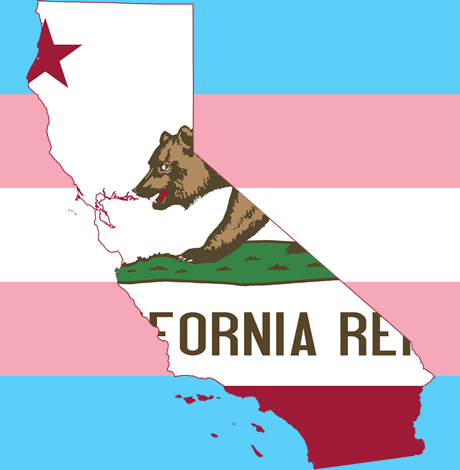
California lawmakers passed legislation this week to prevent health providers from releasing transgender patients’ confidential medical records in investigations of gender-affirming care in states that ban treatment for minors.
Senate Bill 497, introduced in February by Sen. Scott Wiener, a Democrat representing San Francisco, builds upon a 2022 state law that established California as a state of refuge for transgender people. That law, also authored by Wiener, prevents states that have banned gender-affirming care for minors from taking legal action against trans youth, their families and their doctors over treatment administered in California.
The latest bill would require law enforcement requesting health information about transgender people in California to provide a warrant, according to Wiener’s office. It would also bar medical providers from complying with out-of-state requests, including subpoenas, for information related to gender-affirming care.
“California must do everything in our power to protect the transgender community, and I’m confident that the Governor will continue his longstanding leadership on trans issues,” Wiener said in a statement on Thursday after the bill passed.
The California Senate voted 30-10 on Wednesday to pass Wiener’s bill, which the state Assembly passed earlier this week. A spokesperson for California Gov. Gavin Newsom (D) declined to comment, saying the governor’s office does not typically remark on pending legislation.
Newsom must sign or veto the measure by Oct. 13.
The vote on Wiener’s bill comes after the Justice Department announced in June that it had sent more than 20 subpoenas to doctors and clinics “involved in performing transgender medical procedures on children” in investigations of alleged health care fraud and false statements. A subpoena sent to the Children’s Hospital of Philadelphia that was made public in a court filing last month requested patients’ birth dates, Social Security numbers and home addresses, as well as “every writing or record of whatever type” from doctors related to the provision of gender-affirming care to adolescents younger than 19 years.
The subpoena requested information dating back to January 2020, more than a year before transition-related care was banned anywhere in the U.S.
On Tuesday, a federal judge blocked an effort by the Trump administration to subpoena medical records of transgender patients who received gender-affirming care at Boston Children’s Hospital, calling the Justice Department’s investigation improper and “motivated only by bad faith.”
In an email on Friday, a spokesperson for Wiener said Senate Bill 497, if signed, would “strengthen the case for any medical provider who wishes to fight Trump’s vicious assault on the transgender community.”
President Trump and administration officials have broadly sought to ban gender-affirming care for minors. A Jan. 28 executive order states that the U.S. “will rigorously enforce” laws that ban transition-related care for anyone younger than 19.
Laws adopted by more than half the nation since 2021 ban gender-affirming care for minors, which major professional medical groups say is medically necessary and often lifesaving for transgender youth and adults. In June, the Supreme Court ruled that states can ban treatment for minors, finding that Tennessee’s prohibition on puberty blockers, hormones and rare surgeries for adolescents does not constitute sex discrimination.
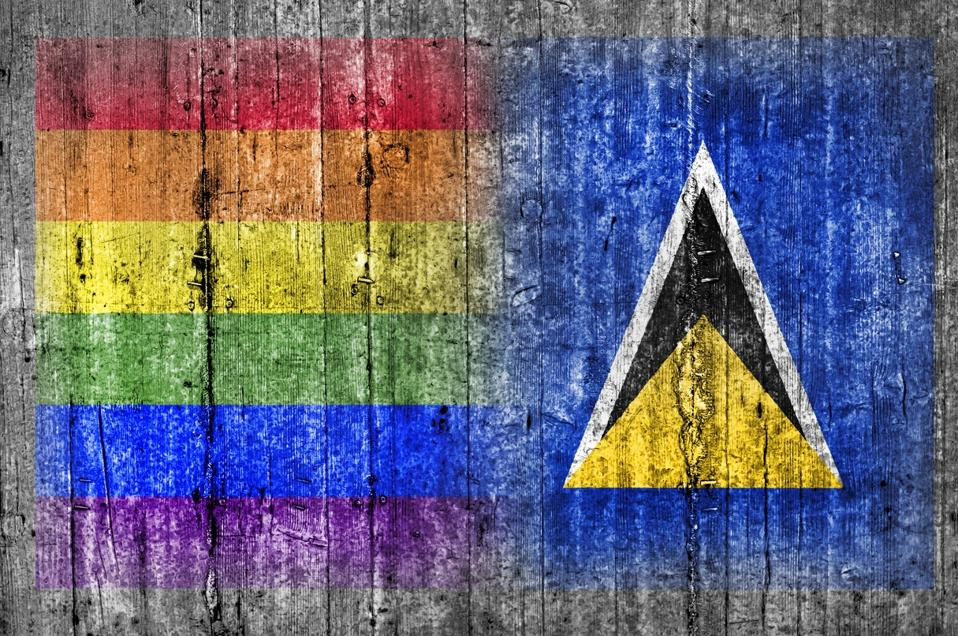
“These provisions… exacerbate, if not condone, the stigmatisation of homosexual persons in civil society and engender feelings of hostility fueled by persons who are inclined to take the moral high ground,” stated Eastern Caribbean Supreme Court Judge Shawn Innocent in his late July ruling striking down St. Lucia’s ban on same-sex intimacy.
The ruling coming down from the Heraldine Rock Building sparked swift, though not unanimous, reaction. The Caribbean’s LGBTQIA community celebrated the long-overdue victory, while religious conservatives issued dire warnings.
As Judge Innocent explained on the bench, many islanders and Caribbean citizens continue to navigate the fault lines between a dated colonial inheritance and a modern identity.
“It is the law itself which violates their constitutional rights,” Innocent’s ruling said. “They do not have to await prosecution under those sections to experience a violation. Without any equivocation, his liberty has been emasculated and abridged.”
The ruling made St. Lucia the latest in a growing list of Caribbean nations—including Barbados, Dominica, Antigua and Barbuda, and St. Kitts and Nevis—to decriminalize consensual same-sex relations through the courts. In doing so, it affirms what many legal scholars and LGBTQIA activists have long argued: that the region’s colonial-era sodomy laws are not just outdated, they are unconstitutional.
The win in St. Lucia comes at a time when the Caribbean LGBTQIA movement appears to not only be making progress in changing laws, but changing attitudes. This stands in contrast to the United States, where movement workers are fighting back against regressive measures, state-based legislation, and attempts by the Trump administration to gut federal civil rights protections.
For Glenroy Murray, St. Lucia’s policy change, part of a nearly decade-long strategy led by the Eastern Caribbean Alliance for Diversity and Equality (ECADE) and other local organizing groups, is the product of years of sustained advocacy.
“In the Caribbean, queer activists are saying: we deserve space, and we’re going to claim it—despite prevailing attitudes that have existed in this region for a long time,” said Murray, the Caribbean lead for Human Dignity, a legal advocacy organization that provides technical, legal, and communications support to queer organizations and governments worldwide.
What began as a debate among legal scholars, researchers, and grassroots LGBTQIA activists about the countries most ripe for a legal challenge to colonial-era sodomy laws has since evolved into a broad-based movement to decriminalize sexuality and fight for human rights across the region.
For the Caribbean movement, the struggle has been twofold: first, dismantling outdated “saving law clauses” that shield colonial-era statutes from constitutional challenge. Found in several post-independence constitutions, these clauses preserve pre-existing laws—even if they conflict with modern human-rights protections. In practice, they’ve made it far more difficult to overturn criminal statutes against same-sex intimacy. Activists argue that true equality cannot be achieved without dismantling these legal shields.
Compounding this are well-funded, transnational conservative movements determined to make LGBTQIA rights in the Caribbean harder to secure. Angelique Nixon, senior lecturer and researcher at University of the West Indies, St. Augustine Campus’ Institute for Gender and Development Studies, said that these actors, backed by U.S.-based evangelical and faith-based groups, frame equality as a Western imposition and deploy religious and moral rhetoric to stir cultural resistance.
“Globally, we’re seeing the rise of well-funded, transnational anti-rights movements that actively export homophobic and transphobic ideologies across borders, often under the guise of protecting traditional values or religious freedoms,” Nixon said.
“This transnational dimension makes our struggle particularly challenging,” she emphasized.
The American religious right has directly targeted the Caribbean: groups affiliated with the American Center for Law and Justice (ACLJ) have conducted legal training in Belize, while Alliance Defending Freedom (ADF) and other U.S. advocacy networks have bolstered local opposition to reform.
Meanwhile, Family Watch International—designated a hate group by the Southern Poverty Law Center—has expanded its regional influence, launching campaigns in Africa and elsewhere.
“Without strong political leadership, these laws will stay in place and continue to justify stigma, discrimination, and violence—even if they’re not enforced,” Nixon said. “The mere existence of these laws creates a chilling effect. Legal ambiguity and inaction can silence LGBTQI+ people and make them more vulnerable.”
Murray underscored that these laws are rooted in colonial imposition. “Many of the laws against sodomy, buggery, and so-called ‘unnatural offenses’—in other words, laws criminalizing sexuality—were imposed across the Caribbean by the British,” he said. “In Jamaica, the law criminalizing intimacy between men dates back to 1864, and it remains in effect today.”
Quick not to lay all the blame on colonial powers, Murray added: “I won’t let Caribbean governments off the hook. They could have changed these laws a long time ago—there have been repeated calls to repeal them. In some cases, governments have not only retained these provisions but made them worse. And at times, there’s been a clear intentionality to keeps them in place.”
While legal reform remains paramount, organizers have also worked diligently to change hearts and minds—advancing broader issues like health equity, education, and housing.
In its fight against liberal American misconceptions about Caribbean homophobia, the movement’s organizing strategy has centered on balancing the region’s often-professed anti-LGBTQIA identity with lived experiences that are far more varied. Murray explained that this nuance does not discount the violence, displacement, and harm faced by LGBTQIA people, but it has remained front of mind for organizers.
“For a time, much of our culture was not pro-gay, but it still allowed for a type of existence,” Murray said. “Over time, as queer people became more visible, violence escalated—and that’s when the region became known for being homophobic.”
Despite stigma, advocates have advanced regional efforts like the Pan-Caribbean Partnership Against HIV/AIDS, housing access expansion, and educational equity.
“In general, our leadership across the region is clear: they don’t support discrimination,” Murray said “When we talk about housing, we make it inclusive. When we talk about healthcare, we make it inclusive. And that matters.”
Murray’s analysis came with a caveat.
“But on hot-button issues like discrimination protections or relationship recognition, leaders tend to be far more cautious—often because of misperceptions about voters,” he said.
Beyond policy and legal reform, organizers recognize that shifting public opinion is essential. A 2023 survey by the Equality for All Foundation/J-FLAG, Jamaica’s leading LGBTQIA rights group, found that 50 percent of Jamaicans support changing laws to ensure equal rights, a dramatic shift from 2018, when 69 percent predicted strong resistance.
This change, advocates say, stems from grassroots organizing, increased visibility of LGBTQIA people, and the political engagement of younger voters. Nixon believes the movement could benefit from even greater international support.
“We need solidarity rooted in care, justice, and long-term commitment,” Nixon said. “Effective support must go beyond symbolic gestures to include sustained material and strategic assistance. That means funding community-led initiatives, creating safe spaces for healing and organizing, and backing the grassroots work that makes all this possible.”
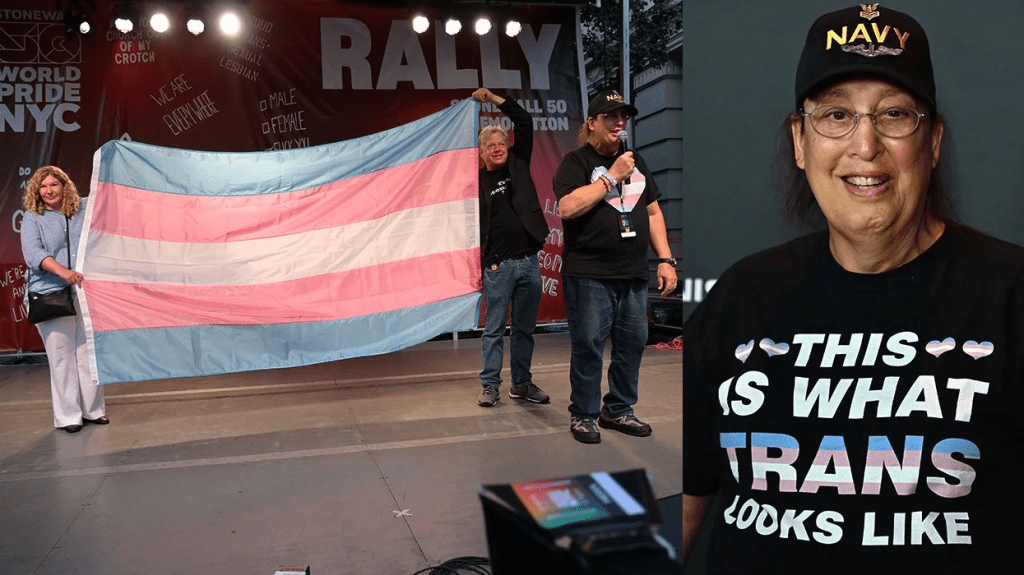
Monica Helms, the Navy veteran and creator of the original transgender pride flag, is fleeing the country due to anti-LGBTQ persecution.
She and her wife, Darlene Wagner, launched a GoFundMe earlier this year to facilitate their move abroad.
“We are worried there’s a possibility something could happen where we end up getting arrested just for being who we are,” Helms said in an interview with the Bay Area Reporterwhen the fundraiser first kicked off.
The couple currently lives in Georgia, which Erin in the Morning’s newest risk assessment map labeled as a “high risk” area for transgender people. Helms is by no means the only transgender refugee fleeing the United States. In May, a Williams Institute poll found that nearly half of all trans adult respondents had considered moving out of state or out of the country.
Since 2023, almost three dozen anti-trans bills have been introduced in Georgia, four of which have passed, according to the Trans Legislation Tracker. There was a ban on trans girls playing on scholastic women’s sports teams, a ban on using state funds to provide transition-related health care to incarcerated people, a ban on providing evidence-based medical treatment for minors with gender dysphoria, and the Georgia Religious Freedom Restoration Act—which does not explicitly target trans people, but is likely to make it easier to discriminate against them using religion as a legal defense. (Thankfully, there have been some successful and ongoing legal challenges to many of these policies.)
NBC’s Jo Yurcaba profiled families of trans kids moving to places like Australia and New Zealand. Hannah Kreager, a 22-year-old trans woman from Arizona, filed a groundbreaking asylum claim in Canada earlier this year; if granted, it would mark the first time a trans person from the United States would be given asylum in another country due to their LGBT status.
Of course, all of these stories come with the presumption of privilege. Trans people in these scenarios may have had familial support and/or a source of income or wealth that enabled them to uproot their lives to a safer place. Others resort to bouncing from state to state to receive care, uprooting their lives to live in a more tolerant community or traveling across state or international lines periodically to access health care.
As for Helms, she vowed to continue to fight for trans people no matter where she lives. “We will not abandon our activism,” she wrote in her GoFundMe.
Helms designed the transgender pride flag after having a conversation with the creator of the bisexual pride flag in 1999, she told the Bay Area Reporter. She has said it is important to her that it remains open and free to use for the public. The pink, white, and blue flag has become a household symbol for trans people and their loved ones.
“No matter how you fly it, it’s always correct, which signifies finding correctness in our own lives,” Helms said.
A federal appeals court on Thursday declined to allow U.S. President Donald Trump’s administration to refuse to issue passports to transgender and nonbinary Americans that reflect their gender identities.
A three-judge panel of the Boston-based 1st U.S. Circuit Court of Appeals declined, opens new tab to put on hold an injunction issued by a trial judge barring the U.S. Department of State from enforcing a policy it adopted at Trump’s direction.
“We’re thankful the court rejected this effort by the Trump administration to enforce their discriminatory and baseless policy,” said Li Nowlin-Sohl, a lawyer with the American Civil Liberties Union, which pursued the case.
The White House had no immediate comment.
The lawsuit is one of several concerning an executive order Trump signed after returning to office on January 20 directing the government to recognize only two biologically distinct sexes, male and female.
The Republican president’s order also directed the State Department to change its policies to only issue passports that “accurately reflect the holder’s sex.”
The State Department subsequently changed its passport policy to “request the applicant’s biological sex at birth,” rather than permit applicants to self-identify their sex, and to only allow them to be listed as male or female.
Before Trump, the State Department for more than three decades allowed people to update the sex designation on their passports.
In 2022, Democratic President Joe Biden’s administration allowed passport applicants to choose “X” as a neutral sex marker on their passport applications, as well as being able to self-select “M” or “F” for male or female.
Transgender, nonbinary and intersex people represented by the ACLU sued, arguing the policy unlawfully prevented them from obtaining passports consistent with their gender identities or with an “X” sex designation.
U.S. District Judge Julia Kobick agreed, saying the State Department’s policy was arbitrary and was rooted in an irrational prejudice toward transgender Americans that violated their equal protection rights under the U.S. Constitution’s Fifth Amendment.
Kobick, a Biden appointee, initially issued a narrow injunction covering six individual plaintiffs but in June expanded it nationwide after granting the case class action status.
The 1st Circuit panel, comprised of three Biden appointed judges, said the administration failed to make a strong showing that an agency action implementing a presidential directive was unreviewable or meaningfully engage with Kobick’s conclusion the policy reflected “unconstitutional animus toward transgender Americans.”
Senior Justice Department officials have held internal deliberations in recent days over potentially issuing a rule that could restrict transgender individuals from being able to own firearms, two officials familiar with the discussions confirmed Thursday to ABC News.
The policy discussions, which are believed to be in their early stages and driven in part by chatter in right-wing media, follow last week’s Minneapolis Catholic church shooting that the FBI has said was carried out by a transgender woman.
Such a proposal could face significant pushback not only from civil rights groups but from gun rights organizations, which have historically been resistant to the issuance of any regulations restricting people’s access to firearms.
There is no evidence to suggest transgender people are more likely to be violent than the general population. However, transgender people are far more likely than average to be the victim of a violent crime.
Still, the discussions have percolated in recent days among top officials in the Justice Department, including in the Office of Legal Counsel, which provides legal advice to all executive branch agencies.
The American Psychiatric Association (APA) and other major medical associations do not consider being transgender a mental illness and recognize transgender and gender diverse identities as normal variations in human expression. The APA distinguishes gender dysphoria — which is defined as “clinically significant distress or impairment” that transgender individuals may experience when they feel a difference between their assigned sex at birth and their gender identity — as a separate diagnosis, and supports gender-affirming care while opposing practices that try to change a person’s gender identity.
DOJ officials have debated whether having a diagnoses of gender dysphoria could disqualify someone under a federal law that restricts people who are “adjudicated as mental defective” from owning guns, sources said.
The possible move would be the latest escalation in an ongoing push by the Trump Administration to restrict the rights of transgender individuals — and would appear to conflict with other moves by the Justice Department to lift what it has argued are unfair burdens restricting Americans’ Second Amendment rights to bear arms.
Among its efforts, the DOJ has proposed a new rule that could restore gun ownership rights to certain people with felony convictions, and has said it would pursue civil rights investigations into cities that it says engage in a pattern or practice of depriving local citizens of their Second Amendment rights.
Laurel Powell, director of communications at the Human Rights Campaign, told ABC News in a statement, “The Constitution isn’t a privilege reserved for the few; it guarantees basic rights to all. Transgender people are your neighbors, classmates, family members, and friends — and we deserve the full protection of our nation’s laws, not anti-American nonsense from the White House.”
“If rights can be stripped from one group simply because of who they are, they can be stripped from anyone,” Powell said.
A Justice Department spokesperson told ABC News, “The DOJ is actively evaluating options to prevent the pattern of violence we have seen from individuals with specific mental health challenges and substance abuse disorders. No specific criminal justice proposals have been advanced at this time.”
The West African nation of Burkina Faso’s ruling junta unanimously passed a law banning homosexuality yesterday.
“The law provides for a prison sentence of between two and five years as well as fines,” said Justice Minister Edasso Rodrigue Bayala. “If a person is a perpetrator of homosexual or similar practices, all the bizarre behavior, they will go before the judge.”
He said that foreigners will be deported under the law.
Burkina Faso has been under the rule of a military junta since September 2022, when former Interim President Paul-Henri Sandaogo Damiba – who himself came to power in a coup d’état several months earlier – was removed from his office. The civil unrest is a result of the government’s inability to contain an Islamist insurgency.
The Muslim-majority nation had been among the 22 out of 54 African states where same-sex relations were not criminalized. The one-time French colony didn’t inherit anti-homosexuality laws found in many former British colonies.
But the bill to ban homosexuality was supported by 71 unelected members of the transitional parliament yesterday as part of a wider set of family and citizenship law reforms “popularized through an awareness campaign,” officials said. The bill was initially approved by the military government’s leader, Captain Ibrahim Traoré, last year. Traoré has been shifting the country’s focus away from its close relationship with France and toward Russia.
The law goes into effect immediately.
Human rights groups have accused the government of cracking down on human rights with mass arrests and conscripting critics into the military.
In late 2024, neighboring Mali also banned homosexuality. Two other African nations – Ghana and Uganda – increased the punishments for homosexuality in recent years.
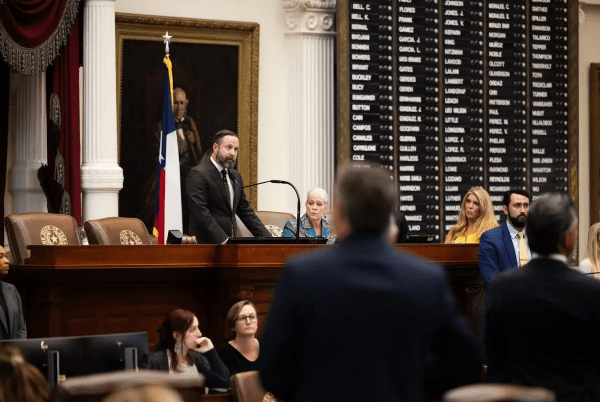
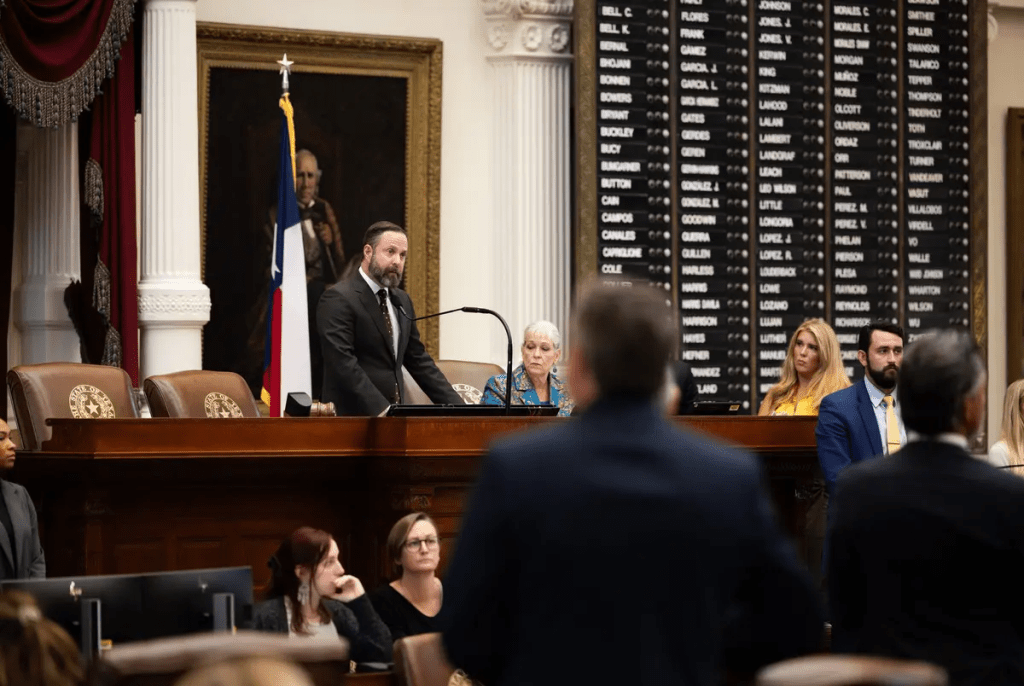
Texas House members clashed over a bill that would restrict which restrooms transgender people can use in government buildings and schools, but ultimately approved it late Thursday.
Representatives approved Senate Bill 8 on a 86-45 vote after several hours of tense debate that was at times interrupted by people in the gallery shouting insults at lawmakers who supported the bill. The House gallery, where visitors can watch proceedings, was emptied out by staff and Department of Public Safety officers after the disruptions continued.
SB 8 would restrict bathroom use in government-owned buildings, public schools and universities based of sex assigned at birth and would not allow exceptions for transgender inmates’ housing in prisons and jails. It would also bar those assigned male at birth from accessing women’s domestic violence shelters, unless they are under 17 and the child of a woman also receiving services.
Bathroom bills proposing civil or criminal penalties for entering restrooms not matching biological sex have been proposed in Texas for more than a decade, and 19 other states have successfully passed their own proposals. The Texas House, however, has largely failed to garner traction for bathroom bills after a tense battle over one proposal in 2017. The Texas Senate has passed six different bathroom bills since 2017.
A last-minute amendment from Rep. Steve Toth, R-Conroe, raised the proposed fines to $25,000 against institutions where violations occur, and $125,000 for any subsequent violations. The raised penalties would make SB 8 the most financially punitive bathroom bill in the country. The amendment was adopted without debate.
Supporters of SB 8, which has also been called the “Texas Women’s Privacy Act,” have said the bill is necessary to ensure safety and comfort for women in intimate spaces like changing rooms and bathrooms. The bill’s House sponsor, Rep. Angelia Orr, R-Itasca, said the goal of the bill is to prompt political subdivisions to create their own policies to ensure bathrooms are secure.
“The preference of someone’s sexual appearance does not override the safety and privacy of a biological female,” Orr said.
Orr said the bill does not affect privately owned or funded businesses, and will not create penalties against individuals.
Opponents of the bill have called the restrictions unnecessary, and that the bill would incite harassment against trans people and cisgender people falsely accused of entering the wrong facility. Rep. Jessica Gonzalez, D-Dallas, said she personally had been accused of entering the wrong restroom in the Texas Capitol, which already has a policy similar to SB 8’s proposal.
Questioning from Democrats who opposed the bill attempted to zero in on how the bill would be enforced, as it outlines that agencies will take “every reasonable step” to ensure the policy is followed. Orr said during questioning that it would be up to agencies how to enforce their policy. Previously when the bill was heard in committee, Orr said the policies would be determined based on how someone looked.
“Who do you think is more uncomfortable in the bathroom today? A cis woman, or a trans woman wondering if she’s about to be harassed?” Rep. Erin Zwiener, D-Driftwood, asked.
During testimony in both chambers through the session and on the House floor on Thursday, tensions between lawmakers for and against the bill flared. Several members argued in small groups multiple times and were separated by staffers as debate continued on the floor. At one point, Toth heckled Rep. Rafael Anchia, D-Dallas, for using Bible quotes as he spoke on a failed amendment designed to kill the bill. Toth was warned by a House staffer for the remarks.
Anchia later argued with Rep. Hillary Hickland, R-Belton, away from the floor debate after she chastised his use of the Bible and countered with her own quotes as she expressed support for the bill. Other members cited religion several times after to channel their support and opposition to the bill.
“Everyone is born a child of God, and everyone who is born into this life deserves to be treated that way,” Rep. John Bryant, D-Dallas said. “That is what the Bible says. That is what our hearts tell us. And the only time we act differently is when we get into politics.”
Representatives with family violence shelters expressed concern about the bill’s exclusivity during testimony earlier in the month, and said it could affect not just trans victims of domestic violence, but cisgender women with teenage dependents or adult dependents who are disabled. While four other states have similar sex-based restrictions on shelters, they still allow trans victims to be accepted if they have separate sleeping quarters.
“When you call the hotline, it is often the moment before you believe you will die. I don’t say that with hyperbole,” said Molly Voyles, director of public policy at the Texas Council on Family Violence, during the House State Affairs committee hearing last week when SB 8 was discussed. “Many women fleeing have a son who is 18 still in high school, or a child with a disability over that age for whom they are the primary caretaker. A choice to leave that includes leaving without your child is not a choice at all.”
SB 8 will be sent back to the Senate to approve the changes. Lawmakers have until Sept. 13 to approve any legislation during the second special session.
House Republicans introduced legislation Tuesday to ban transgender girls from participating in girls’ school sports, moving to advance one of the Trump administration’s top priorities.
The measure, titled the Safety and Opportunity for Girls Act, would define “male,” “female” and “sex” by reproductive function in Title IX, the federal civil rights law against sex discrimination in education. Schools receiving federal funds would be barred from allowing transgender students to use restrooms or locker rooms or play on sports teams that match their gender identity, according to the bill, sponsored by Rep. Mary Miller (R-Ill.).
Miller introduced a similar measure to block locker room access for transgender students in March and spearheaded an earlier effort to reverse former President Biden’s expanded nondiscrimination protections for transgender students under the Congressional Review Act last summer.
A news release from Miller’s office says the latest bill, which has 11 Republican co-sponsors, would preserve Title IX’s “original intent” and shield the decades-old law from reinterpretation “by radical leftists or activist judges.”
President Trump’s administration has argued repeatedly that Title IX already prohibits transgender girls from competing on girls’ sports teams or using girls’ bathrooms and changing rooms at school. More than two dozen investigations into states, schools and athletic associations that accommodate transgender students have been opened since Trump’s return to office in January.
School officials in states including California, Maine, Minnesota and Virginia assert their policies are compliant with state and federal law.
A February executive order signed by Trump states that the U.S. opposes “male competitive participation in women’s sports” as a matter of “safety, fairness, dignity, and truth.” Trump warned schools at a signing ceremony that his administration was putting them “on notice.”
“If you let men take over women’s sports teams or invade your locker rooms, you will be investigated for violations of Title IX and risk your federal funding,” he said.
The Supreme Court agreed in July to decide whether states can ban transgender athletes from competing in girls’ and women’s school sports. Since 2020, more than half the nation has adopted laws barring trans students from participating on teams that match their gender identity.
Laws in four states — Arizona, Idaho, Utah and West Virginia — are blocked by court orders, and New Hampshire’s ban on trans athletes is partially blocked. In February, the two New Hampshire high schoolers suing the state expanded their challenge to include the Trump administration.
House Republicans, joined by two Democrats, passed legislation in January to ban transgender student-athletes from girls’ sports teams — an effort ultimately thwarted by Senate Democrats.
Senate Bill 8, an anti-trans “bathroom bill,” would require government buildings —including public universities — to designate restrooms, locker rooms, and other facilities strictly by “biological sex,” instead of gender identity. SB 8 penalizes institutions, not individuals: a first violation carries a $5,000 fine, with repeat violations rising to $25,000 each. It also empowers the state attorney general to investigate complaints.
“I will say it again: SB 8 does NOT protect women. It is an unconstitutional and a direct attack on the rights of the Trans community,” state Rep. Jessica González (D), who represents District 104 and chairs the Texas House LGBTQ Caucus, wrote on X. “This bill is nothing less than discriminatory and harmful, and it has no place in Texas.”
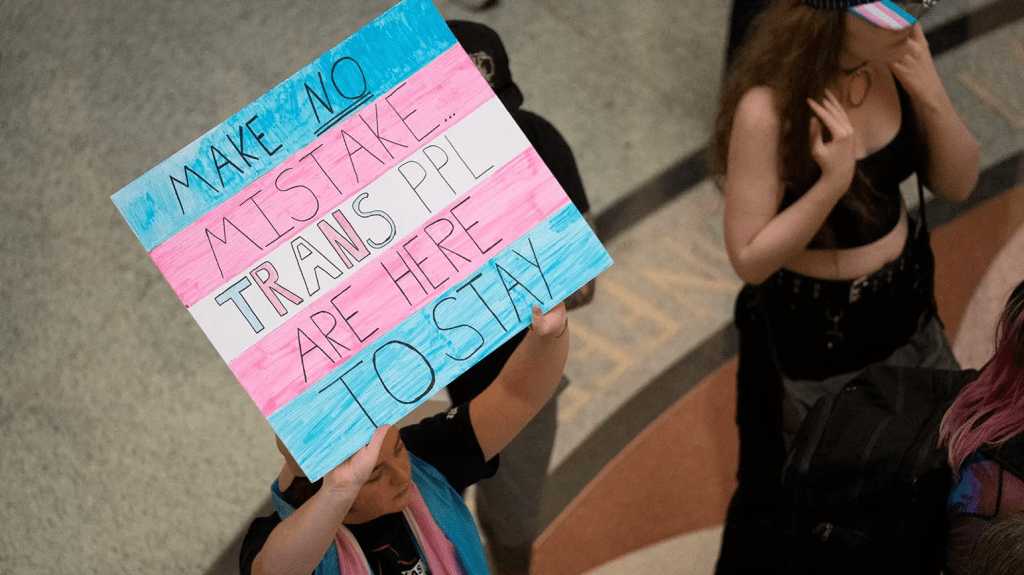
The state Senate approved SB 8 earlier this month, and it was subsequently greenlighted by the House State Affairs Committee on August 22, despite about 100 activists gathering at the Texas Capitol to protest it, with nearly half of the protesters participating in a sit-in.
Cameron Samuels, an incoming student at the Lyndon B. Johnson School of Public Affairs, told The Daily Texan that bills like SB 8 are designed to erase trans lives. “We are the experts of our lived experiences and this hate and bigotry relies on our inability to tell our stories,” Samuels said.
“They are seeking to silence and erase our narratives. But when we are telling our stories and demonstrating a more accurate reflection of what it means to be a transgender Texan, then we bust those myths and we challenge those narratives.”
According to Equality Texas, testimony on the bill was halted after just two hours, leaving nearly 100 people who had signed up to speak without the chance to testify. After Republicans ended the testimony early, Democratic Representatives Jessica González and Donna Howard held a “people’s hearing” in the Texas Capitol auditorium. SB 8 is now awaiting a final vote and debate on the House floor.
Protesters also rallied against House Bill 7, a sweeping measure that seeks to sharply restrict access to abortion medication. HB 7 would allow private citizens to sue anyone who manufactures, mails, prescribes, or provides abortion pills in Texas, with damages starting at $100,000 per violation.
The measure mirrors earlier “bounty” laws but expands them by targeting the most common method of abortion in the United States. On August 25, the House State Affairs Committee passed a revised version of the bill.
“Despite already having a total abortion ban on the books—one that is wreaking havoc on the state’s health care infrastructure and tragically taking the lives of pregnant people—the Texas legislature is voting on SB 7, another horrifying bounty hunter bill,” the Center for Reproductive Rights said on X. “If enacted, one of the very last avenues for Texans to access critical reproductive care will be closed off.”
Lawmakers have until September 13 to pass the bills during the special session. If approved, SB 8 and HB 7 would add to Texas’s growing slate of anti-trans and anti-abortion laws.
A trans woman’s court victory in Kenya could have wide-ranging implications for trans rights in the East African nation, after a judge agreed she suffered inhuman and degrading treatment at the hands of government authorities and directed Parliament to enact protections and recognition in law for trans Kenyans.
The plaintiff, Shieys Chepkosgei, was detained in 2019 and charged with “impersonation,” despite the fact that she had held official documents, including a birth certificate and passport with female sex markers, while living in another country where she had also competed in women’s athletics.
Chepkosgei was arrested by Kenyan police while visiting a teaching hospital, Q Newsreports.
She was remanded to a women’s facility, strip-searched, and ordered by a court to undergo “gender determination,” which included a genital examination, hormone testing, blood sampling, and radiological testing.
Chepkosgei challenged her detention and the nonconsensual medical examinations in court, arguing they were unconstitutional, violated her inherent dignity, and highlighted a legislative gap in the treatment of transgender persons in custody in Kenya.
Justice R. Nyakundi of the Eldoret High Court agreed that Chepkosgei’s rights to dignity, privacy, and freedom from inhuman and degrading treatment had been violated, according to Jinsiangu, a Kenyan intersex, transgender, and gender non-conforming rights group. She was awarded the equivalent of about $8000.
But the judge went a step further, directing the Kenyan government to initiate legislation in Parliament addressing the rights of transgender Kenyans, either with new protections or by amending current legislation on the rights of intersex people currently moving through Parliament.
“This is the first time a Kenyan court has explicitly ordered the State to create legislation on transgender rights, and a first on the African continent,” Jinsiangu’s Lolyne Ongeri told Mamba Online.
“If implemented, it could address decades of legal invisibility and discrimination faced by transgender persons by establishing clear legal recognition of gender identity, protections against discrimination in employment, housing, healthcare, and education, and access to public services without bias or harassment.”
Kenya has a fraught history with LGBTQ+ rights, with colonial-era penalties for same-sex behavior still in effect, and discriminatory legislation modeled on Uganda’s notorious Anti-Homosexuality Act – which allows for the death penalty for homosexuality – introduced in Parliament.
Same-sex relations remain criminalized, with “carnal knowledge against the order of nature” and “gross indecency” punishable by up to 14 years in prison.
Transgender people in Kenya face widespread stigma, discrimination, and violence. Current law bars trans Kenyans from legally changing their gender identity from the one assigned at birth.
While LGBTQ+ people have found relief in the courts, homophobia pervades Kenyan society and the legislature.
In 2023, Kenya’s Supreme Court affirmed a decision granting an LGBTQ+ rights group official status and legal recognition as a non-governmental organization (NGO). The decision ignited protests in the country’s second-largest city, led by clerics and homophobic politicians.








 fleeredstates.blog
You must be logged in to post a comment.