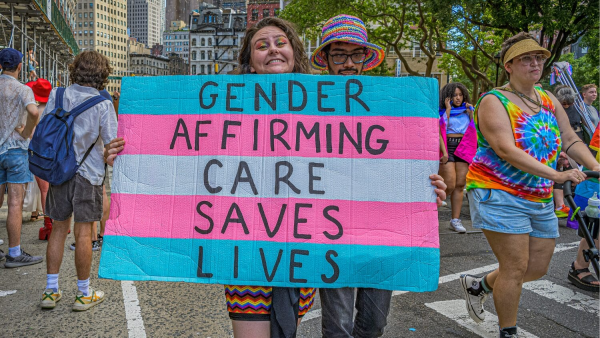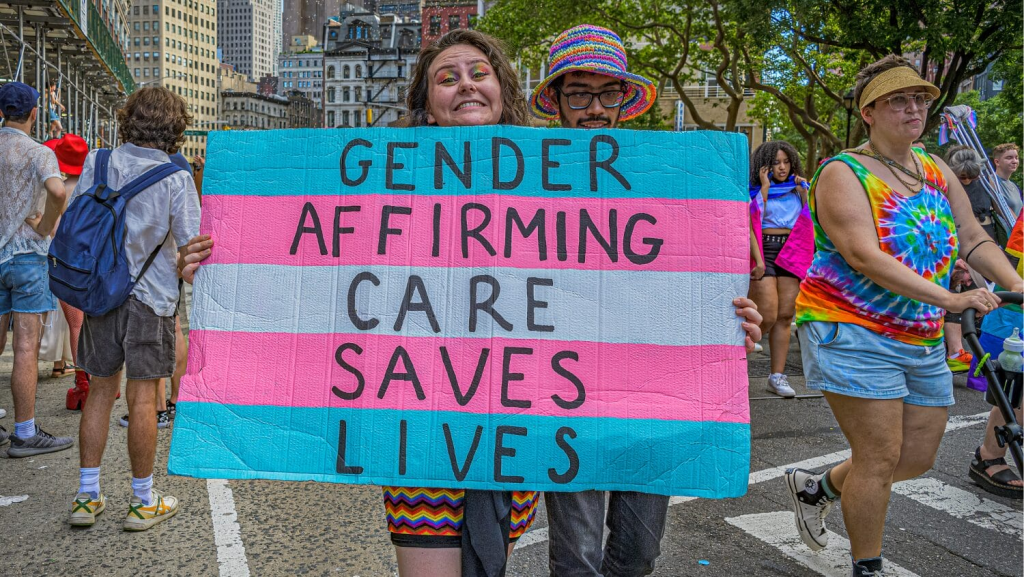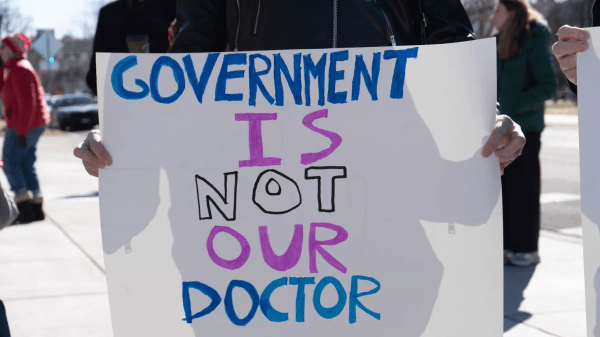
More than 20 hospitals have rolled back gender-affirming care amid anti-trans crackdown

Read more at LGBTQ Nation.

At least 21 hospitals and health systems have suspended or reduced health services for transgender minors and young adults in 2025, according to an NBC News analysis. Many providers cited fears of federal investigations and the potential loss of government funding.

This rollback comes against a backdrop of escalating legal attacks on transgender health care. In recent years, 26 states have passed bans restricting gender-affirming care for minors, with six making it a felony to provide certain treatments. Roughly 40% of trans youth ages 13 to 17 now live in states where access to care is restricted, according to KFF. In June, the Supreme Court upheld Tennessee’s gender-affirming care ban, effectively green-lighting similar laws nationwide.

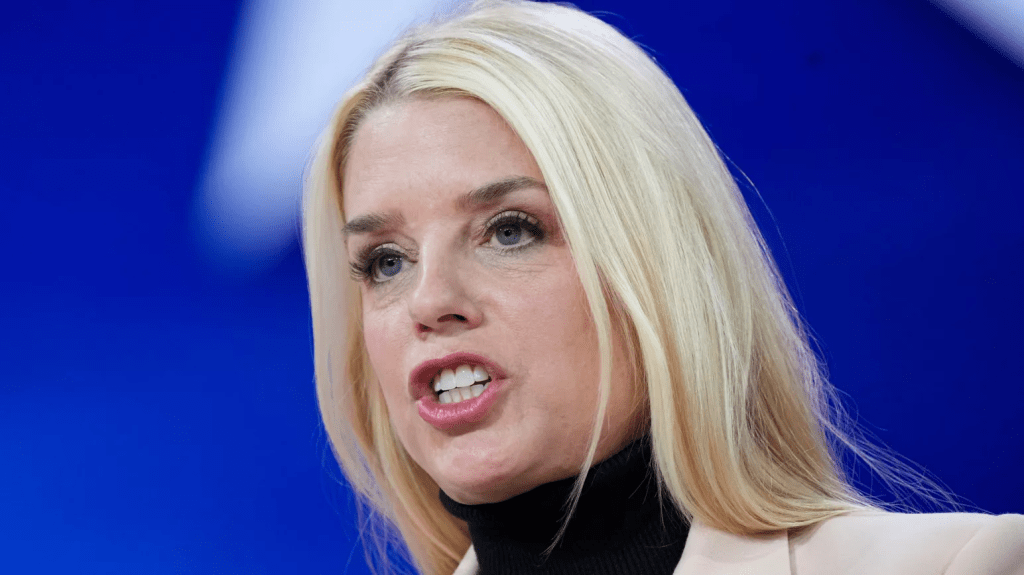
At the federal level, restricting access to transition-related care has become a main policy objective of the administration. In January, the president signed an executive order directing federal agencies to cut off funding for gender-affirming care for minors and instructing the Department of Justice (DOJ) to investigate and criminalize providers and health centers that offer such care. In April, Attorney General Pam Bondi ordered the DOJ to investigate providers, hospitals, and clinics that provide gender-affirming care to trans youth.

The crackdown escalated earlier this summer when federal prosecutors issued subpoenas to more than 20 hospitals and clinics. In August, sixteen states and the District of Columbia filed suit in an attempt to block the administration’s investigations. However, several providers that received subpoenas chose to suspend offering gender-affirming care instead of waiting for the outcome of the lawsuit.

The chilling effect has extended even into Democratic-led “sanctuary” states, where lawmakers have promised protections for transgender people. While attorneys general in those states initially reminded hospitals that scaling back gender-affirming care could violate state anti-discrimination laws, none have pursued enforcement actions. In practice, this has allowed hospitals to quietly eliminate or reduce programs without consequence.

According to the NBC News review, twelve hospitals have either stopped or announced plans to stop prescribing puberty blockers or hormone therapy to patients under 19, four hospitals have ended surgeries for minors, and one facility halted all gender-affirming care for trans youth under 18. At least seven university-affiliated health systems, including Stanford MedicineUniversity of Pittsburgh Medical Center (UPMC), University of Chicago (UChicago Medicine), University of PennsylvaniaRush University Medical Center, the University of Michigan, and Yale New Haven Hospital, have ceased offering some or all trans-related health services.

An additional five hospitals have scrubbed their websites of pages advertising transgender services for minors.

States must ax transgender references from sex ed or risk losing funds, Trump admin says

Read more at NBC News.

The Trump administration directed 40 states, five territories and Washington, D.C., to remove references to transgender people from their sex education programs or risk losing federal funding.

The Administration for Children and Families (ACF), a division of the Department of Health and Human Services, sent letters Tuesday demanding that the health departments in these states and territories remove “all references to gender ideology” from their Personal Responsibility Education Program, or PREP. The program is a federally funded initiative created in 2010 to help prevent teen pregnancy and sexually transmitted infections.

“Accountability is coming,” acting Assistant Secretary Andrew Gradison said in a statement. “Federal funds will not be used to poison the minds of the next generation or advance dangerous ideological agendas. The Trump Administration will ensure that PREP reflects the intent of Congress, not the priorities of the left.”

The 40 states that received letters are: Alabama, Alaska, Arizona, Colorado, Connecticut, Delaware, Georgia, Hawaii, Illinois, Iowa, Kentucky, Louisiana, Maine, Maryland, Massachusetts, Michigan, Minnesota, Mississippi, Missouri, Montana, Nebraska, Nevada, New Jersey, New Mexico, New York, North Carolina, Ohio, Oklahoma, Oregon, Pennsylvania, Rhode Island, South Carolina, South Dakota, Tennessee, Utah, Vermont, Washington, West Virginia, Wisconsin and Wyoming. The five U.S. territories are: Guam, Northern Mariana Islands, Palau, Puerto Rico and the U.S. Virgin Islands.

Links to all 46 letters were included in the administration’s press statement. The ACF’s four-page letter to New York, for example, includes a bulleted list of course content that was flagged during a “medical accuracy review” earlier this year and “must be removed from New York’s PREP curricula and program materials.”

The content flagged for removal includes definitions of gender identity and gender expression and directives that program facilitators allow students to share their pronouns and “demonstrate acceptance and respect for all participants, regardless of personal characteristics, including race, cultural background, religion, social class, sexual orientation or gender identity,” according to the letter.

If New York’s health department declines to comply, it could lose more than $6 million in federal funds, according to data provided by ACF. The other states and territories stand to lose $300,000 to $4.6 million each.

The letters come just days after the ACF terminated $12 million of California’s remaining PREP funding after the state’s health department declined to remove references to trans people from the curriculum, arguing that the references had already been approved by the agency, the materials were medically accurate and relevant to the statute, and ACF does not have the authority to take such an enforcement action, according to ACF’s termination letter to the state.

California’s health department has 30 days to appeal. A spokesperson for the department said in a statement that the state maintains its position that its PREP curriculum “is medically accurate, comprehensive, and age-appropriate.”

“CA PREP sexual health education curriculum promotes healthy relationships and reduces the rates of sexually transmitted infections (STIs) and unintended pregnancy, as well as leads to delayed sexual activity in youth — all outcomes that lead to a healthier state,” the spokesperson said.

In an emailed statement, Elana Ross, a spokesperson for California Gov. Gavin Newsom, said, “If it’s a day ending in y, President Trump is attacking kids’ safety, health, and access to education as part of his culture war.”

The action from ACF is part of the Trump administration’s ongoing effort to prohibit federal recognition of trans people and penalize the use of federal funds for any program that includes or mentions them.

In the first few weeks of his presidency, Trump issued executive orders declaring that there are only two unchangeable sexesprohibiting trans people from enlisting and serving in the military; barring trans girls and women from competing on female sports teams in federally funded K-12 schools and colleges; and barring federal funding from going to hospitals that provide transition-related care to minors. The federal government has taken several actions against providers of transition care, resulting in more than 20 hospitals over the last few months rolling back or ending their gender-affirming care programs for minors and some young adults.

Federal officials have also removed mentions of trans or intersex people from agency websites, including from the website for the Stonewall National Monument commemorating the site of the 1969 Stonewall uprising in New York, which is widely considered a turning point in the modern gay rights movement.

Make the Move to LGBTQ Friendly Malta

Moving to a new country is a big decision, and for LGBTQ Americans, finding a place that is not only welcoming but also legally protective is a top priority. While many European nations have made significant strides in LGBTQ+ rights, one country consistently stands out for its progressive laws and accepting culture: Malta. This tiny island nation in the heart of the Mediterranean has become a beacon of hope, earning a reputation as one of the most LGBTQ-friendly countries in the world.

Malta’s journey to becoming an LGBTQ+ rights leader is a remarkable story of rapid progress. For several years, it has topped the ILGA-Europe’s Rainbow Map, a ranking of 49 European countries based on their legal and policy practices for LGBTQ+ people. This isn’t a fluke; it’s the result of a concerted effort to enshrine equality into law. Same-sex sexual activity was decriminalized in 1973, but the most significant changes have happened in the last decade.

In 2014, Malta legalized civil unions, giving same-sex couples the same rights and responsibilities as married couples, including the right to adopt children. Just three years later, in 2017, the country took the monumental step of legalizing same-sex marriage, a move that replaced the traditional “husband and wife” with the gender-neutral term “spouses”. This wasn’t just a legal formality; it was a powerful statement of inclusion.

Beyond relationship recognition, Malta has also been a trailblazer in other areas. In 2016, it became the first country in the European Union to ban conversion therapy, a harmful and discredited practice [4]. The Gender Identity, Gender Expression and Sex Characteristics Act of 2015 allows transgender people to change their legal gender without the need for surgery or a medical diagnosis, a process based on self-determination [5]. The country also provides gender-affirming care and has banned intersex infant surgeries without medical necessity. These protections extend to employment, housing, and healthcare, ensuring that LGBTQ+ individuals are shielded from discrimination in their daily lives.

While a country’s legal framework is crucial, the lived experience is just as important. Malta’s culture, while traditionally Catholic, has shown a remarkable shift toward acceptance. Public displays of affection are generally well-received, and the LGBTQ+ community is active and visible. Valletta, the capital, and nearby Sliema are known for their vibrant scenes, with dedicated gay bars, clubs, and events, including a lively Pride celebration in September. Rabat has also been mentioned.

So How Do I Get There?

As with any country friendly to immigration, you have options. You can try out living there first simply by applying for a Digital Nomad visa, and become a full time paid blogger. There are other programs to establish residence, which include investing locally. You can buy or rent property as well.

For LGBTQ Americans considering a move abroad, Malta offers a compelling combination of legal protections, a high degree of social acceptance, and a beautiful, sunny, and historic location. The country’s commitment to equality is not just a passing trend; it’s a foundational principle that makes it an ideal place to call home.

Whitehall, Ohio passes LGBTQ-inclusive nondiscrimination protections, bans conversion therapy on minors

Read more at the Buckeye Flame.

The Whitehall City Council voted unanimously to pass an LGBTQ-inclusive nondiscrimination ordinance and a conversion therapy ban at their regular meeting on Tuesday. 

The Columbus suburb became the 37th location in Ohio to pass LGBTQ-inclusive nondiscrimination protections and the 14th location to ban conversation on minors.

Joseph Soza, Equality Ohio’s Central Ohio organizer, lives right on the border of Columbus and Whitehall. 

“I was previously living with the awkward scenario of having legal protections at home, but not in many of the public spaces I frequent in Whitehall,” Soza said in a statement. “Until we achieve statewide nondiscrimination protections, I know that most Ohioans find themselves in a similar situation. While I’m grateful for the initiative taken by cities like Whitehall, it continues to be disappointing that we don’t have these protections statewide.”

Whitehall’s nondiscrimination ordinance covers a range of identities – including sexual orientation, gender identity and gender expression – with protections extending to employment, housing and public accommodations. The ordinance contains an exception for religious institutions to give preference to those who share their religion, provided that such “offerings are not for commercial purposes or supported by public funds.”

Whitehall’s conversion therapy ban prohibits mental health professionals from engaging in “any practices or treatments that seek to change a [minor’s] sexual orientation or gender identity, including efforts to change behaviors or gender expressions or to eliminate or reduce sexual or romantic attractions or feelings toward individuals of the same gender.”

Both the nondiscrimination protections and the conversion therapy ban are housed under Whitehall’s prohibition on “unlawful discriminatory acts or practices.” Violations could result in a civil penalty of up to $2,500. 

Ohio does not have statewide LGBTQ-inclusive nondiscrimination protections, despite decades of attempts by legislators. The Ohio Fairness Act, which would grant these protections, currently sits in the Ohio House (HB 136) and Senate (SB 70), but has not been scheduled for a hearing in either chamber. 

There also is no statewide ban on conversion therapy on minors, despite many years of attempts by legislators. A bill to ban conversion therapy on minors currently sits in the Ohio House (HB 300) and Senate (SB 71), but has not been scheduled for a hearing in either chamber. 

LGBTQ+ advocates point to Whitehall as an example of what can be achieved locally, despite the lack of movement in the Columbus Statehouse.

“Equality Ohio is embarking on a journey to flip the state back to equality through our bold new local advocacy strategy,” said Dwayne Steward, executive director of Equality Ohio. “We have won before. And we will win again. But only if we do so together.” 

Illinois debuts legal hotline for LGBTQ+ support

Read more at Axios.

Illinois continues to buck the federal trend of stripping rights from LGBTQ+ people.

Why it matters: President Trump’s slew of executive orders and policies attacking LGBTQ+ people, including halting funding for HIV research and denying passports that adhere to a person’s gender, have forced LGBTQ+ people to seek legal help.

Driving the news: Launching Monday, IL Pride Connect is a hotline for LGBTQ+ people seeking help with questions about health care, including gender-affirming care, discrimination, identity documents, housing and other legal issues.

  • It was developed by Illinois Legal Council for Health Justice, with support from the Illinois Department of Human Services and private funding.

Context: Gov. Pritzker announced the hotline Thursday after declaring Illinois “one of the most comprehensive systems of legal protection and health equity in the entire nation.”

  • He continues to frame Illinois as a refuge for people under attack by Trump, a regular Pritzker foe.

How it works: Attorneys and legal advocates at the Council will field calls to the 855-805-9200 hotline from 9am–4pm Monday–Thursday. Services are available in English and Spanish.

  • Callers from out of state will be directed to pro-bono legal aid in their own states.

Case in point: Orr v. Trump involves the ACLU suing the Trump administration on behalf of a class of plaintiffs who were denied passports that did not adhere to the person’s sex designation assigned at birth.

  • A judge in April temporarily barred enforcement of the passport policy and this summer expanded who can be included in that lawsuit.
  • IL Pride Connect can tell callers whether they can be included in that class and direct them to the ACLU.

What they’re saying: “We’ve seen all these anti-trans laws percolating in the state houses, and as more of the problems have come to fruition under the new administration, I think the time is just essential,” Council executive director Julie Justicz tells Axios.

  • “We’ve been getting calls from folks saying, ‘What do I do? I’m scared,’ and the time was right, and the political will was there,” referring to Pritzker’s support.

Protestors vow to restore Pulse memorial crosswalk after Ron DeSantis destroys it

Read more at LGBTQ Nation.

About 100 people in Orlando, Florida, protested the recent painting over of a rainbow crosswalk created in memory of the 49 victims of the 2016 Pulse nightclub tragedy. State crews from the Florida Department of Transportation (FDOT) painted over the crosswalk without notifying city officials, at the behest of Florida Gov. Ron DeSantis (R) and orders from the current presidential administration.

Local resident Dallas Perdue used chalk to recreate the crosswalk’s colored rectangles, but rain washed the chalk off by Thursday evening. “I was just fixing what shouldn’t have been, y’know, painted over in the first place,” Perdue told WFTV.

In July, Transportation Secretary Sean Duffy urged governors to remove any political messages, artwork, and markings on intersections not directly related to pedestrian or driver safety. He wrote on social media, “Taxpayers expect their dollars to fund safe streets, not rainbow crosswalks.”

A local activist told WFTV that the commemorative crosswalk followed all FDOT regulations and rules when it was first installed.

Florida Rep. Randy Fine (R) told the news station, “I think there are appropriate places to memorialize people. I don’t think a public street is the place to promote a woke agenda.” He has previously referred to LGBTQ+ people as “perverts who wish to groom our children” and supported numerous anti-LGBTQ+ bills, according to GLAAD.

Activists told the news station that they would continue to fight for the crosswalk’s restoration to its former rainbow colors.

Gov. DeSantis wrote via X, “We will not allow our state roads to be commandeered for political purposes.” He has told cities that if they don’t paint over any municipal rainbow crosswalks, FDOT will do it for them. FDOT painted over the Pulse crosswalk during Thursday’s early morning hours.

In June, DeSantis dropped any mention of LGBTQ+ and Latin people from his remarks on the 9th anniversary of the 2016 tragedy.

Pulse survivor Brandon Wolf told the new station, “The cowards threatened by our lives should feel lucky they didn’t have to bury the ones they love — then watch the state come & bury their memory.”

Administration’s “cruel” & “illegal” policy ends gender-affirming care for all federal employees

Read more at LGBTQ Nation.

The presidential administration has quietly ended federal employees’ insurance coverage for gender-affirming care. An LGBTQ+ legal advocacy organization called the policy “not only cruel, [but] illegal.”

letter sent last Friday from the U.S. Office of Personnel Management Healthcare and Insurance to insurance companies said that the Federal Employees Health Benefits (FEHB) and Postal Service Health Benefits (PSHB) Programs will no longer cover “gender transition” services for people of all ages starting in 2026. The letter says that insurance companies can develop an exemption process for patients currently receiving gender-affirming care “on a case-by-case basis,” though it doesn’t specify how.

However, the programs will still cover “counseling services for possible or diagnosed gender dysphoria,” including “faith-based counseling,” which might be a euphemism for conversion therapy, a widely debunked pseudoscientific practice that purports to change a person’s gender identity or sexual orientation.

The letter also directs insurance companies not to “list or otherwise recognize” providers of gender-affirming care in directories of medical professionals and clinics covered by insurance, Them reported.

In a statement condemning the letter, the LGBTQ+ legal advocacy group Lambda Legal wrote that the “policy violates constitutional protections and multiple federal anti-discrimination laws.”

“This discriminatory policy… is not only cruel—it is illegal,” wrote Lambda Legal Counsel and Health Care Strategist Omar Gonzalez-Pagan.

“The federal government cannot simply strip away essential healthcare coverage from transgender employees while providing comprehensive medical care to all other federal workers,” Gonzalez-Pagan added. “Beyond the fundamental equal protection guarantees enshrined in our Constitution, which prohibit such animus-laden actions, multiple federal laws also prohibit this type of discrimination.”

Lambda Legal pledged to explore all options to respond to the discriminatory policy and asked federal employees harmed by the policy to contact their organization.

While the current presidential administration has sought to eradicate gender-affirming care for trans youth, something the administration calls “chemical or surgical mutilation,” this policy change is one of many that show the administration’s interest in ending gender-affirming care for trans people of all ages.

In January, the president issued an executive order (that has since been blocked by several courts) instructing the Department of Justice to use laws against false advertising to prosecute any entity that may be misleading the public about the long-term effects of gender-affirming care.

On February 7, the Department of Defense issued a memo halting gender-affirming medical procedures for adult military service members. In June, the administration finalized a rule modifying the Affordable Care Act to remove requirements that insurance providers cover gender-affirming care as an essential health benefit. 

Gender-affirming care is supported by all major medical associations in the U.S., including the American Medical Association, the Endocrine Society, and the American Academy of Pediatrics, as safe and life-saving for young people with gender dysphoria.

DOJ demands private info on trans youth patients from 20 gender-affirming medical providers

Read more at LGBTQ Nation.

The Department of Justice (DOJ) has issued subpoenas to medical providers who offer gender-affirming care to transgender youth, demanding that they provide private information on their young patients. The subpoenas demand “billing documents, communication with drug manufacturers, patient’s Social Security numbers, addresses, emails, Zoom recordings, voicemails, encrypted text messages, as well as every writing or record of whatever type” doctors have made from January 2020 to the current day, The Washington Post reported.

While Attorney General Pam Bondi admitted last month to sending 20 subpoenas to hold “medical professionals and organizations that mutilated children in the service of a warped ideology” accountable, she didn’t specify which organizations and individuals received the subpoenas. Anonymous informants told the aforementioned publication that some of the subpoena recipients (who got the subpoenas in June) operate in states with laws protecting gender-affirming care for youth. One trans civil rights activist called the incident an “unprecedented and disgusting violation of medical privacy.”

“[The government] is using its investigative powers to target medical providers based on a disagreement about medical treatment rather than violations of the law,” Jacob T. Elberg, a former federal prosecutor specializing in health care fraud, told The Washington Post. He added that the DOJ must show that the information it demanded is “relevant to a legitimate law enforcement probe.”

The publication contacted numerous clinics and professionals offering gender-affirming care for youth, but none would say whether they had received a subpoena, citing fears of violent threats or government retaliation. Other hospitals have been closing their trans youth clinics and erasing any mention of gender-affirming care from their web pages to avoid federal threats to cut funding or pursue prosecutorial charges.

“The subpoena is a breathtakingly invasive government overreach,” said Jennifer L. Levi, senior director of transgender and queer rights at the LGBTQ+ legal advocacy group GLAD Law. “It’s specifically and strategically designed to intimidate health care providers and health care institutions into abandoning their patients.”

Fewer than 3,000 teens nationwide receive puberty blockers or hormone replacement therapy, according to a 2025 JAMA analysis of private insurance data, The Post noted.

Responding to the news, transgender civil rights lawyer Alejandra Caraballo wrote via Bluesky, “This is an unprecedented and disgusting violation of medical privacy,” adding, “The fact that no lawsuit has been commenced challenging these subpoenas in court is ominous. My best guess is that many of the providers have complied and now DOJ is potentially sitting on the records of thousands of trans youth covering everything from therapy notes to pre- and post-op photos.”

Though there is no federal law banning gender-affirming care, the current presidential administration has sought to eradicate the practice through a January executive order (that has since been blocked by several courts). The order instructed the DOJ to extend the time that patients and parents can sue gender-affirming doctors and to use laws against false advertising to prosecute any entity that may be misleading the public about the long-term effects of gender-affirming care.

In April, Bondi issued a memo to DOJ employees, telling them to investigate and prosecute cases of minors accessing gender-affirming care as female genital mutilation (FGM); even though hospitals don’t conduct such female genital surgeries. The memo threatened to jail doctors for 10 years if they provide gender-affirming care to young people.

Gender-affirming care is supported by all major medical associations in the U.S., including the American Medical Association, the Endocrine Society, and the American Academy of Pediatrics, as safe and life-saving for young people with gender dysphoria.

One doctor interviewed by The Washington Post called the federal government’s crusade against gender-affirming care a “toxic plan” that will force some patients to detransition, potentially forcing them into adverse psychological and physical effects, including increased anxiety, depression, and the development of unwanted physical changes.

“This goes way beyond any degree of moral or ethical dilemma that any of us have ever experienced,” the doctor said. “It is completely scientifically and medically unfounded.”

Republican attorneys general in Texas and Tennessee have demanded similar patient information from providers of youth-centered gender-affirming care outside of their states, but they dropped their demands after courts blocked their efforts.

Best Gay Destinations in Colombia | LGBTQ Travel Guide

Uncover why Colombia is a must-visit for gay travelers. Explore destinations like Bogotá, Medellín, and Cartagena, plus learn about Colombian culture, cuisine, and essential safety tips for gay travelers.

As a frequent traveler to Colombia who has explored the country’s iconic destinations and scouted out its gay scenes firsthand, I’ll share my experiences and insights to help you plan the perfect trip. Whether you’re curious about the bustling gay nightlife in Bogotá, the charming streets of Cartagena, or the colorful vibes of Medellín, I’ve got you covered. My guide will combine practical tips making it easier for you to discover Colombia’s inclusivity, charm, and adventure.

Please read then entire guide from Tim at Out In Mexico.

U.S. trans woman challenges Dutch asylum rejection

Read more at NBC News.

A 28-year-old transgender woman from the U.S. began a legal challenge on Wednesday to the rejection of her asylum application in the Netherlands where she had sought political asylum saying she no longer felt safe in the United States.

Veronica Clifford-Carlos, a visual artist from California, came to the Netherlands — the first country to legalize same-sex marriage and known for its strong protections of LGBTQ rights — because the Trump administration’s policies towards transgender people made her feel unsafe, her lawyer’s office said.

The case, the first of its kind in the Netherlands, will be heard in a court in Amsterdam starting Wednesday, with a ruling expected in four to six weeks.

Since taking office in January, President Donald Trump has issued executive orders limiting transgender rights, banned transgender people from serving in the armed forces, and rescinded anti-discrimination policies for LGBTQ people.

Dutch advocacy group LGBT Asylum Support, which backs the lawsuit, is currently assisting around 20 U.S. trans individuals with pending asylum claims.

According to data from the Immigration and Naturalisation Service (IND), 29 Americans applied for asylum in the Netherlands during the first half of this year. In previous years there were between nine and 18 applicants per year, an IND spokesperson said.

“The IND generally states that discrimination by authorities and fellow citizens can be considered an act of persecution if it is so severe that victims can no longer function socially and societally,” LGBT Asylum Support said in a statement.

“But the IND maintains that there are no grounds for exceptional treatment of transgender and queer refugees from the U.S.”

Blog at WordPress.com.

Up ↑