Hungary’s parliament passed constitutional changes to clamp down on LGBTQ rights and potentially suspend some dual citizenships, bolstering Prime Minister Viktor Orban’s campaign to promote what he calls traditional values.
Facing a galvanized political opposition that has fueled large protests in Budapest in recent months, Orban has sought to stir his conservative base ahead of parliamentary elections next year.
The constitutional amendments passed Monday state that there are only two sexes, man and woman. The changes, said to intend protect children, have been interpreted as a broad crackdown on pride parades and other public displays that run counter to Orban’s traditional-values campaign.
Another change in the constitution allows for the suspension of citizenship for Hungarians who possess another citizenship outside of the European Union and could be deemed a threat to national security.
The amendments echo legislation passed last month. The constitutional amendments were passed with resounding support in parliament, where Orban’s Fidesz Party holds 135 of 199 seats.
“We’re protecting children’s development, affirming that a person is born either male or female, and standing firm against…foreign interference,” Orban wrote on X.
Orban, who has enjoyed unrivaled popularity in Hungary during his four consecutive terms since 2010, is facing his first possible challenge in opposition leader Peter Magyar. The politician has gained a following in the past year over accusations of corruption leveled at the prime minister and Fidesz.
Orban has denied any wrongdoing and has referred to opposition politicians, judges and journalists as bugs that needed to be removed from society.
A Lithuanian same-sex couple has been declared a legal family by a court in Lithuania, a historic victory for LGBTQ+ people in the Baltic nation.
The two women in the couple, whose identities have not been made public, were living together and wanted to have their cohabitation recognized by the government as a form of partnership. The Vilnius City District Court agreed and ruled that the state should create a way for them to register their relationship.
The Lithuanian constitution bans same-sex marriage, and the country’s Civil Code also bans the recognition of same-sex relationships as civil partnerships.
Nevertheless, the decision comes after the nation’s Constitutional Court ruled in April that the Lithuanian Civil Code unconstitutionally limits relationship recognition to relationships that are composed of one man and one woman. The ruling said that current law violates constitutional principles, including “the concept of the family derived from [the constitution], respect for human rights and dignity, as well as the values of equality, pluralism, and tolerance inherent in a democratic society.”
But that ruling isn’t self-implementing. The Lithuanian parliament, called the Seimas, needs to pass legislation to create a form of civil partnership recognition for same-sex couples. Meanwhile, lower courts can recognize same-sex couples for some benefits under the law.
This week’s ruling shows that ordinary people can use the courts to protect their rights, the couple’s attorney, Aivaras Žilvinskas, told LRT.
“For the first time in history, the family status is recognized,” Žilvinskas said. “All those laws and regulations that talk about people being members of a family – economic and social benefits, allowances, support – automatically apply to these couples.”
The outlet also reports that around 20 same-sex couples have also petitioned the court to have their relationships recognized.
“Since this ruling, we have been approached by some concerned people who wanted to learn how the litigation was done,” said Artūras Rudomanskis, the chair of the pro-LGBTQ+ organization Tolerant Youth Association (TJA). “Maybe there are more, but at least from what I could count, it’s around that number.”
“We are happy that more people will be equal, but there is still a long way to go,” he continued. “For people to be truly happy and feel equal, we need a functioning law-based system so we don’t have to go through the courts.” He explained that asking a court to recognize a relationship is a process that can take several months.
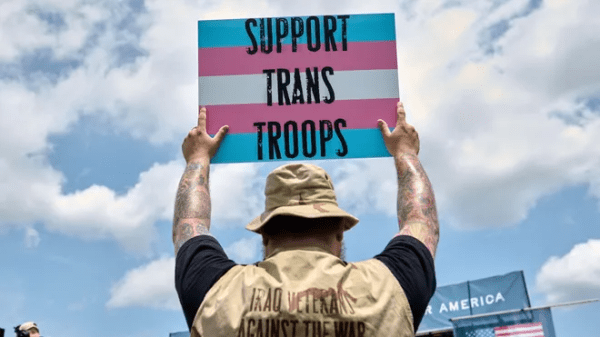
The Air Force says in a new memo that transgender airmen ousted under a recent Trump administration directive will no longer have the chance to argue before a board of their peers for the right to continue serving their country.
The memo dated Tuesday says military separation boards cannot independently decide whether to keep or discharge transgender airmen and instead “must recommend separation of the member” if the airman has a diagnosis of gender dysphoria — when a person’s biological sex does not match up with their gender identity.
Military legal experts who have been advising transgender troops told The Associated Press that the new policy is unlawful, and while they were not aware of the other services releasing similar memos, they fear it could serve as a blueprint across the military. Advocacy groups say the change threatens to weaken trust in the military’s leadership.
It is the second policy change the Air Force has taken in recent weeks to crack down on transgender service members. The Associated Press reported last week that the Air Force would deny transgender troops early retirement benefits and was moving to revoke requests already approved.
The Air Force declined to answer questions about the policy and its legal implications.
The service provided a statement saying the new guidance “is consistent with and responsive to Department of Defense policy regarding Service members with a diagnosis of, or history of, or exhibiting symptoms consistent with, gender dysphoria.”
How the boards usually work
The boards traditionally offer a quasi-legal hearing to determine if a service member set to depart is still of value to the military and should stay on. Fellow service members hear evidence of whatever wrongdoing occurred and about the person’s character, fitness and performance.
The hearings are not a formal court, but they have much the same structure. Service members are often represented by lawyers, they can present evidence in their defense and they can appeal the board’s findings to federal court.
The Pentagon’s policy on separating officers notes that they are entitled to “fair and impartial” hearings that should be “a forum for the officer concerned to present reasons the contemplated action should not be taken.”
This impartial nature means that the boards can sometimes reach surprising conclusions.
For example, the three active-duty Marines who were part of the mob that stormed the Capitol on Jan. 6, 2021, were retained.
The commanding officer of the USS McCain, a destroyer that collided with an oil tanker in the Pacific in 2017, killing 10, was not recommended for separation in 2019.
Military lawyers decry the Air Force change
Priya Rashid, a military lawyer who has represented service members before hundreds of separation boards, said she “has never seen an order like this.”
“I’ve seen people with three DUIs retained, I’ve seen people that beat their wives retained, I’ve seen all kinds of people retained because the board is empowered to retain anyone for any reason if they feel it’s in the best interest of the service,” she said.
Rashid said she and other lawyers working with transgender troops view the guidance as telling the boards to automatically order separation based solely on a diagnosis or symptoms of gender dysphoria.
She said that constitutes an unlawful command by the Air Force and upends impartiality.
“This instruction is essentially saying you will not make a determination of whether somebody has future potential in the service,” Rashid said.
The new Air Force guidance also prohibits recording the proceedings.
Rashid said the lack of an independent transcript would not only prevent Air Force leaders from reviewing the hearings to ensure they were conducted appropriately but would undercut any meaningful chance to appeal.
Stepped-up efforts to oust transgender troops
Pentagon officials say 4,240 troops have been diagnosed with gender dysphoria, which the military is using as an identifier of being transgender.
The Pentagon got the green light from Supreme Court in May to move forward with a ban on all transgender troops. It offered two options: volunteer to leave and take a one-time separation payout or be discharged at a later date without pay.
Some transgender troops decided to fight to stay by turning to the boards.
Senior Master Sgt. Jamie Hash, who has served in the Air Force since 2011, said she “wanted to face an objective board to be evaluated on my years of proven capability.”
“I wanted the board to see the assignments overseas and at the Pentagon, the deployments to different Combatant Commands, the service medals and the sustained operational and mission effectiveness,” she said in an interview.
But now, she said, that “the path ahead feels more uncertain than it ever has.”
Logan Ireland, a master sergeant in the Air Force with 15 years of service that includes a deployment to Afghanistan, was planning to retire early until his request was denied last week.
After that, he decided he would take a stand at the separation board.
“I chose the involuntary route because I believed in the promise of a fair hearing — judged on my service, my record and the facts,” he said.
“Now that promise is being ripped away, replaced with a process designed to decide my fate before I even walk in the room,” he said, adding that “all I’m asking for is the same fairness and justice every service member deserves.”
Both Ireland and Hash said they have yet to hear from their immediate superiors on what the new policy will mean for them.
Lawyers are worried it will set a precedent that will spread throughout the military.
Rashid said both the Army and Navy are “going to look at what the Air Force is doing as a standard of law … is this the minimum standard of law that we will afford our service members.”
Transgender troops warn the policy could have wider implications
Col. Bree Fram, a transgender officer in the Space Force who has long been seen as a leader among transgender troops, argued that the policy is a threat to other service members.
”Today it’s gender dysphoria; tomorrow it can be any condition or class the politics of the moment calls for,” she argued.
If the new policy is allowed to sideline “evidence of fitness, deployment history, awards, and commander input — the very material boards were built to evaluate,” Fram said, it sends a message that performance is no longer relevant to staying in the military.
Cathy Marcello, interim director for Modern Military Association of America, said the change adds to a “growing loss of trust” because outcomes are determined by politics, not performance. The organization advocates for LGBTQ+ service members, military spouses, veterans, their families and allies.
“It’s a signal that identity, not ability or achievement, determines who stays in uniform and who gets a fair shot,” she said.
Better Abroad? explores the lives of expatriates around the world who have uprooted their lives to move across physical and emotional boundaries in search of a better life. Through an artful lens, historical and cultural context, and engaging and authentic interviews, viewers will get to know each expat intimately—deeply feeling the experience of each character through their own narrative. Episodes will explore the critical moments or events that motivated their decisions as well as the peaks and valleys of their life-changing journeys. In this raw but beautiful look at the complexities of expat life, this series will provide viewers with a new thought provoking experience in each episode. Different expats on different paths. Different countries. One question. Is life Better Abroad?
We sit down and discuss this topic with Liz and Sarah.
A public school district in northern Virginia voted yesterday to keep its current pro-trans policies despite the administration’s orders to ban trans students from using the restrooms and locker rooms associated with their gender.
The Loudoun County School Board voted to maintain its current policies regarding the facilities just days after the U.S. Education Department (ED) ordered the district – along with four nearby school districts – to ban trans students from using the facilities associated with their gender. The administration claimed that letting trans students use the appropriate facilities violated Title IX, the law that bans discrimination on the basis of sex in education.
The current administration reversed President Joe Biden’s interpretation of Title IX, which found the statute’s prohibition on discrimination “on the basis of sex” includes anti-LGBTQ+ discrimination. The rules rely on the Supreme Court’s 2020 decision in Bostock v. Clayton County, which found that sex-based discrimination necessarily covers discrimination on the basis of sexual orientation and gender identity, because it’s impossible to discriminate against LGBTQ+ people without taking sex into account.
That is, denying trans students use of restroom facilities or making use of such facilities difficult solely because of their sex assigned at birth was, to the Biden administration, a form of illegal sex-based discrimination. And since many students can’t last an entire day of school without using the restroom, such discrimination could effectively deny trans students an education.
The ED investigated the Virginia school districts, saying it had gotten complaints alleging “that students in the Divisions avoid using school restrooms whenever possible because of the schools’ policies, and that female students have witnessed male students inappropriately touching other students and watching female students change in a female locker room.”
There is no evidence that trans people are a threat to cisgender girls and women in restrooms, but a 2021 study from UCLA’s Williams Institute found that trans people are four times more likely than cis people to be victims of violent crime.
The ED then ordered the schools to rescind their trans-inclusive policies within 10 days and to “adopt biology-based definition of the words ‘male’ and ‘female’ in all practices and policies relating to Title IX.”
But the school board in Loudoun County voted 6-3 to keep its current policy, explaining in a statement that they are following precedent set by the U.S. Court of Appeals for the Fourth Circuit. In 2020, that court affirmed a lower court decision in favor of trans student Gavin Grimm, who had sued his school district after he was told to use the bathroom in a bucket in a converted janitor’s closet and was called a “freak” at a school board meeting about his bathroom usage. The court found that Title IX and the Equal Protection Clause of the Constitution prohibited his school district from discriminating against him.
“Our priority remains the same: doing what is right for Loudoun County’s young people; focusing on educating our students and ensuring our schools are places where every child feels they belong,” the Loudoun County School Board said in a statement.
The other four school districts ordered to end trans equality have not yet said how they will proceed, but they have to respond by Friday, which will be the end of the 10-day period. Prince William County School Board members met with lawyers last week and issued a statement saying that it “continues to review and work through legal issues related” to the ED’s order and that the board “remains firmly committed to fostering a safe, inclusive, and respectful learning environment for all students and staff.”
Atrium Health recently stopped providing gender-affirming medication for people 18 and younger, a move that transgender rights and other LGBTQ organizations around the Charlotte region immediately decried. They claimed that the Charlotte area’s largest health care provider buckled under political pressure.
Four LGBTQ rights groups issued a blistering statement on Facebook late last week condemning the move. The statement was on the page for Time Out Youth, a Charlotte nonprofit providing resources for LGBTQ+ people ages 13 to 24. The group was joined by Charlotte Trans Health, the Gender Education Network, and PFLAG Charlotte. The groups said Atrium and its parent company, Advocate Health, are making a decision “based on fear of retaliation by hostile federal agencies or funding cuts.”
Atrium refused to make anyone available for an interview with The Charlotte Observer. Instead, it emailed a statement from parent company Advocate Health confirming it no longer provides or prescribes gender-affirming care medications for patients younger than 19. That’s a departure from a 2023 state law, which restricted gender-affirming care for minors, defined as people younger than 18. In January, President Donald Trump issued an executive order limiting youth access to gender-affirming care nationwide. It defines individuals under 19 as “children” and directs federal agencies to take action to restrict care. Advocate Health said it has been closely following the evolving health care regulatory environment, and acknowledged a “changing federal environment.”
“We recognize that this is a deeply complex issue, and this decision was made after a multi-disciplinary team spent numerous hours carefully considering the options and outcomes,” Advocate Health stated. “This new policy allows our hospitals, clinics and pharmacies to continue caring for all patients’ health needs in the changing federal environment.” Advocate leaders announced the policy change to Atrium-affiliated clinicians and pharmacists during what they called a “difficult” Microsoft Teams meeting on July 31. A doctor associated with Atrium Health who was in that meeting provided an audio recording of it to The Charlotte Observer, and asked not to be named because they were not authorized to share the recording. “We understand the complexity of this, we understand the emotion, the real concern around it. We share it, which is why there has been so much time and so many people weighing in on this,” Dr. Scott Rissmiller, chief clinical officer of Advocate, said on the recording. “And at the end of the day, ultimately, it is to protect our clinicians, our patients and our organization as we move forward.” The Justice Department also issued a new policy memo that could have significant implications for healthcare professionals, Advocate leaders said during the meeting.
It suggested that doctors and other clinicians who provide specific types of gender-affirming care, both medical and surgical, to individuals under 19 may face criminal charges. The memo also includes provisions that encourage and protect whistleblowers who report violations within their healthcare organizations. Atrium Health had not previously provided surgical gender transition procedures for minors under age 18, the company told the Observer. About gender-affirming care Advocate Health defines gender-affirming care as services including social, psychological, behavioral or medical interventions (including hormonal treatment or surgery) designed to support and affirm an individual’s gender identity. That’s according to the draft of a policy shared with physicians in July and provided to the Observer by the doctor associated with Atrium Health. Advocate reviewed protocols for gender-affirming care and considered the potential impacts of federal actions on patients, clinics and employees before deciding to end the medications for people younger than 19, according to the draft policy. “Gender-affirming care is medical care,” the advocacy groups stated. “It is endorsed by every major medical and behavioral health association. It saves lives.”
Gender-affirming care is a supportive form of health care, according to the U.S. Department of Health and Human Services. That may include medical, surgical and mental health services as well as non-medical services for transgender and nonbinary people. Atrium’s policy change wasn’t just about Trump’s executive order, but also took into consideration actions coming from the Federal Trade Commission, the Centers for Medicaid and Medicare, and other “elements,” according to Advocate officials on the audio recording. While health care companies may face regulatory threats, executive actions and other risks, the LGBTQ groups said “the real harm will fall on young people who already face disproportionate rates of depression, anxiety and suicidality when affirming care is withheld.” Advocate Health physicians have been reaching out to patients affected by the policy change so they are aware of what it means for their care and to provide support, according to the company. In its statement to the Observer, Advocate said it recognized “that this will be difficult news” for patients affected by the policy change, and created a 24/7 hotline to assist them, focusing on providing personalized counseling that might be needed.
‘Operating out of fear’ Dr. Holly Savoy, executive director for Charlotte Trans Health, an advocacy group for transgender people, expressed concern and disappointment over Atrium’s decision.
“One of the biggest challenges for trans people is stigma and discrimination,” Savoy said. “(Atrium) is operating out of fear, rather than standing up for evidence-based care,” Savoy said. “It’s not standing behind the science of gender-affirming care and their values of being an organization that says that they support health care for all.” Advocate Health will focus on alternative, non-invasive care, such as behavioral health and peer support for patients, health care officials said at the July meeting. The company is the third-largest nonprofit health system in the U.S. It serves about 6 million patients. More than 155,000 employees work in 68 hospitals and more than 1,000 locations. Novant Health is the second largest health care provider in the Charlotte region. The Winston-Salem-based company did not respond to an Observer request about the status of gender-affirming care for youths.
Concerns over resources LGBTQ advocates feared that Atrium’s decision could make it harder for patients to find new care in the area. “Our kids are now having to suffer because they are struggling now to find care that they’ve had at Atrium, some of them for a couple of years now,” said Joshua Jernigan, founder of the Gender Education Network, a nonprofit providing support and resources to transgender and gender-diverse children. “And it’s just very, very sad to us.”
The state law enacted in 2023, N.C. House Bill 808, prohibits puberty blockers and surgical gender transition procedures for minors who had not already started treatment as of Aug. 1, 2023. And it created penalties for doctors who perform those procedures or who prescribe, provide or dispense puberty-blocking drugs or cross-sex hormones to a minor. Atrium Health hasn’t provided surgical gender transition procedures for minors under 18 since the law passed and has followed the law, Advocate Health told The Charlotte Observer. Advocate’s medication changes went into effect Aug. 4, and also impacts patients previously grandfathered in to receive gender-affirming care services under the N.C. law, according to the draft policy. Gender-affirming care medications can still be prescribed for patients 19 and older, according to the policy. For patients under 19, these same medications can be prescribed for other medical reasons, such as post-chemotherapy needs, tumor removal surgery or to treat precocious puberty (when a child goes through puberty too early). Jernigan said transgender patients deserve access to care, regardless of age. “I would hope that major medical systems would treat their patients first and not act like the patient’s medical needs are not important,” Jernigan said.
Joshua Dumas, a board member of PFLAG Charlotte, said Advocate Health’s decision to cut gender-affirming care medication is a business decision based on the current political climate. The four advocacy groups want Atrium to rescind its decision. “To every trans and gender-diverse young person and their families: You are not alone,” they said. “We are fighting for you. And we will not stop.”
Gerika Mudra — an 18-year-old cis biracial lesbian high school student in Minnesota — filed a discrimination complaint against Buffalo Wild Wings, alleging that, while enjoying dinner with a friend around the Easter holiday in April, a female employee at the chicken restaurant’s Owatonna location followed her into the women’s restroom and demanded proof of her female gender.
Minnesota has no laws restricting restroom use by transgender people. However, Mudra’s lawsuit — filed with the Minnesota Department of Human Rights by the LGBTQ+-inclusive legal group Gender Justice — alleges that the employee violated the Minnesota Human Rights Act, a law that explicitly prohibits discrimination in public accommodations based on sexual orientation and gender identity.
The employee reportedly pounded on a bathroom stall door and said, “This is a women’s restroom. The man needs to get out of here.” When Mudra exited the stall, she told the employee, “I am a lady,” NBC News reported. The server reportedly responded, “You have to get out now.”
In response, Mudra unzipped her hoodie to show that she has breasts. (Mudra was wearing a shirt that covered her chest.) The employee reportedly said nothing in response, but left the restroom. Buffalo Wild Wings didn’t respond to NBC News’ request for comment.
“This wasn’t the first time something like this happened, but this is like the worst time,” Mudra said in a video created by Gender Justice. “This one… she was like, mad, screaming. She made me feel very uncomfortable.”
“After that, I just don’t like going in public bathrooms. I just hold it in,” she added. “I want to be able to use the bathroom in peace.”
Mudra’s stepmother, Shauna Otterness, said she was “enraged” upon hearing about the incident, which she called “cruel and humiliating.”
“We know Gerika was targeted because of how she looks,” Otterness said. “She didn’t do anything wrong. She just didn’t fit what that server thought a girl should look like. I was shocked and heartbroken by how many people shared similar stories after I posted about it online.”
“This shouldn’t be normal,” Otterness added. “We can do better, and we have to.”
The Minnesota Human Rights Act explicitly forbids discrimination based on gender identity, whether real or perceived. As such, if the employee’s behavior arose from the suspicion that Mudra was trans, the employee’s actions are still potentially illegal. Additionally, the law requires businesses to train staff, enforce anti-discrimination policies, and ensure their spaces are safe and welcoming to everyone, Gender Equity noted.
While Minnesota doesn’t have laws restricting trans people’s restroom use, 19 states do. Republicans nationwide have repeatedly accused trans women of “invading” women’s spaces to harm girls and women. No evidence shows that trans-inclusive restroom policies contribute to a rise in restroom-related assaults.
Gender Justice also noted that nearly one-third of LGBTQ+ people report experiencing harassment for using a bathroom, and nearly 60% of trans people have avoided using public restrooms out of fear of harassment or violence.
“The transphobia that’s happening, it really affects everyone and it’s really bad for everyone because… there’s expectations about what women should look like, what women’s bodies should look like. And if you don’t meet those stereotypes, you’re gonna be targeted,” said Jess Braverman, Gender Justice’s legal director.
Holding one’s bodily waste to avoid restrooms can result in increased urinary tract infections, constipation, the presence of blood in the urine, and even kidney disease, according to the American Medical Association. Exclusionary bathroom policies can also contribute to increased anxiety, depression, and suicidality amongst trans individuals, according to the National Institutes of Health.
“Black girls and women also face relentless policing of their appearance and identity. In schools, they are suspended at six times the rate of white girls, often for subjective reasons tied to how they dress, speak, or wear their hair,” Gender Justice added. “These same biases follow them into places like restaurants and bathrooms where they are often treated as suspicious or out of place for simply being themselves.”
Morgan Peterson, Gender Justice’s executive director, said, “A growing culture of suspicion and control is targeting trans, gender-nonconforming, and Black girls and women—anyone who doesn’t match narrow ideas of how women should look or behave. When people are harassed just for existing, none of us are truly safe.”
Cis women are regularly harassed because of transphobic restroom policies
In January, anti-trans Rep. Lauren Boebert (R-CO) reportedly told a cis woman in a Capitol women’s restroom, “You shouldn’t be here,” before storming back into the restroom with her transphobic colleague, Rep. Nancy Mace (R-SC), only to realize the woman wasn’t trans.
“I made an error regarding a mistaken identity,” Boebert said in a statement after the incident. “I apologized, learned a lesson, and it won’t happen again.”
In November 2022, a cisgender woman harassed another cis woman with short hair in the public restroom of the Rampart Casino in Las Vegas, Nevada, because she thought she was transgender.
Ten years after the Supreme Court extended marriage rights to same-sex couples nationwide, the justices this fall will consider for the first time whether to take up a case that explicitly asks them to overturn that decision.
Kim Davis, the former Kentucky county clerk who was jailed for six days in 2015 after refusing to issue marriage licenses to a gay couple on religious grounds, is appealing a $100,000 jury verdict for emotional damages plus $260,000 for attorneys fees.
In a petition for writ of certiorari filed last month, Davis argues First Amendment protection for free exercise of religion immunizes her from personal liability for the denial of marriage licenses.
More fundamentally, she claims the high court’s decision in Obergefell v Hodges — extending marriage rights for same-sex couples under the 14th Amendment’s due process protections — was “egregiously wrong.”
“The mistake must be corrected,” wrote Davis’ attorney Mathew Staver in the petition. He calls Justice Anthony Kennedy’s majority opinion in Obergefell “legal fiction.”
The petition appears to mark the first time since 2015 that the court has been formally asked to overturn the landmark marriage decision. Davis is seen as one of the only Americans currently with legal standing to bring a challenge to the precedent.
“If there ever was a case of exceptional importance,” Staver wrote, “the first individual in the Republic’s history who was jailed for following her religious convictions regarding the historic definition of marriage, this should be it.”
Lower courts have dismissed Davis’ claims and most legal experts consider her bid a long shot. A federal appeals court panel concluded earlier this year that the former clerk “cannot raise the First Amendment as a defense because she is being held liable for state action, which the First Amendment does not protect.”
Davis, as the Rowan County Clerk in 2015, was the sole authority tasked with issuing marriage licenses on behalf of the government under state law.
“Not a single judge on the U.S. Court of Appeals showed any interest in Davis’s rehearing petition, and we are confident the Supreme Court will likewise agree that Davis’s arguments do not merit further attention,” said William Powell, attorney for David Ermold and David Moore, the now-married Kentucky couple that sued Davis for damages, in a statement to ABC News.
A renewed campaign to reverse legal precedent
Davis’ appeal to the Supreme Court comes as conservative opponents of marriage rights for same-sex couples pursue a renewed campaign to reverse legal precedent and allow each state to set its own policy.
At the time Obergefell was decided in 2015, 35 states had statutory or constitutional bans on same-sex marriages, according to the National Conference of State Legislatures. Only eight states had enacted laws explicitly allowing the unions.
So far in 2025, at least nine states have either introduced legislation aimed at blocking new marriage licenses for LGBTQ people or passed resolutions urging the Supreme Court to reverse Obergefell at the earliest opportunity, according to the advocacy group Lambda Legal.
In June, the Southern Baptist Convention — the nation’s largest Protestant Christian denomination — overwhelmingly voted to make “overturning of laws and court rulings, including Obergefell v. Hodges, that defy God’s design for marriage and family” a top priority.
Support for equal marriage rights softening
While a strong majority of Americans favor equal marriage rights, support appears to have softened in recent years, according to Gallup — 60% of Americans supported same-sex marriages in 2015, rising to 70% support in 2025, but that level has plateaued since 2020.
Among Republicans, support has notably dipped over the past decade, down from 55% in 2021 to 41% this year, Gallup found.
Davis’ petition argues the issue of marriage should be treated the same way the court handled the issue of abortion in its 2022 decision to overturn Roe v Wade. She zeroes in on Justice Clarence Thomas’ concurrence in that case, in which he explicitly called for revisiting Obergefell.
The justices “should reconsider all of this Court’s substantive due process precedents, including Griswold, Lawrence, and Obergefell,” Thomas wrote at the time, referring to the landmark decisions dealing with a fundamental right to privacy, due process and equal protection rights.
“It is hard to say where things will go, but this will be a long slog considering how popular same-sex marriage is now,” said Josh Blackman, a prominent conservative constitutional scholar and professor at South Texas College of Law.
Blackman predicts many members of the Supreme Court’s conservative majority would want prospective challenges to Obergefell to percolate in lower courts before revisiting the debate.
The court is expected to formally consider Davis’ petition this fall during a private conference when the justices discuss which cases to add to their docket. If the case is accepted, it would likely be scheduled for oral argument next spring and decided by the end of June 2026. The court could also decline the case, allowing a lower court ruling to stand and avoid entirely the request to revisit Obergefell.
“Justices Brett Kavanaugh and Amy Coney Barrett seem wildly uninterested. Maybe Justice Neil Gorsuch, too,” said Sarah Isgur, an ABC News legal analyst and host of the legal podcast Advisory Opinions.
“There is no world in which the court takes the case as a straight gay marriage case,” Isgur added. “It would have to come up as a lower court holding that Obergefell binds judges to accept some other kind of non-traditional marital arrangement.”
Ruling wouldn’t invalidate existing marriages
If the ruling were to be overturned at some point in the future, it would not invalidate marriages already performed, legal experts have pointed out. The 2022 Respect for Marriage Act requires the federal government and all states to recognize legal marriages of same-sex and interracial couples performed in any state — even if there is a future change in the law.
Davis first appealed the Supreme Court in 2019 seeking to have the damages suit against her tossed out, but her petition was rejected. Conservative Justices Thomas and Samuel Alito concurred with the decision at the time.
“This petition implicates important questions about the scope of our decision in Obergefell, but it does not cleanly present them,” Thomas wrote in a statement.
Many LGBTQ advocates say they are apprehensive about the shifting legal and political landscape around marriage rights.
There are an estimated 823,000 married same-sex couples in the U.S., including 591,000 that wed after the Supreme Court decision in June 2015, according to the Williams Institute at UCLA Law School. Nearly one in five of those married couples is parenting a child under 18.
Since the Obergefell decision, the makeup of the Supreme Court has shifted rightward, now including three appointees of President Donald Trump and a 6-justice conservative supermajority.
Chief Justice John Roberts, among the current members of the court who dissented in Obergefell a decade ago, sharply criticized the ruling at the time as “an act of will, not legal judgment” with “no basis in the Constitution.” He also warned then that it “creates serious questions about religious liberty.”
Davis invoked Roberts’ words in her petition to the high court, hopeful that at least four justices will vote to accept her case and hear arguments next year.
Four North Carolina Democratic lawmakers broke with their party in voting to override Governor Josh Stein’s veto of eight bills, a move that helped push several harmful measures into law.
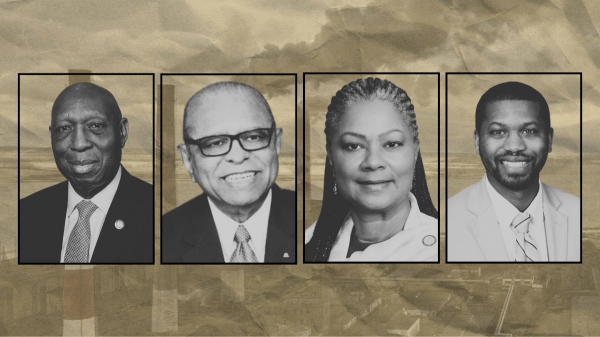
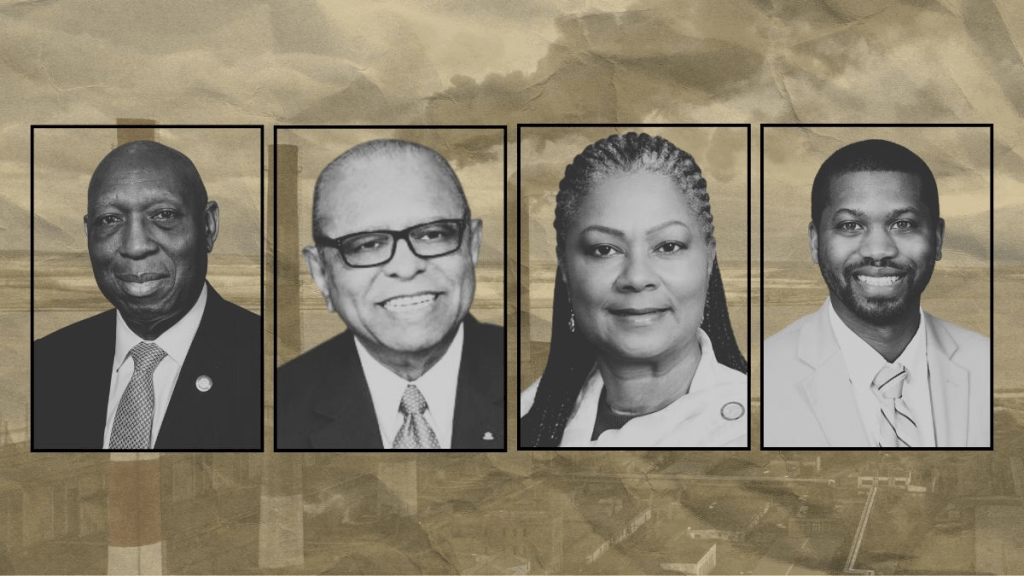
The four Democrats who voted with state Republican lawmakers on one or more of the override votes were:
In both of the state’s legislative chambers, a 60% threshold is required to override a governor’s veto of a bill. Due to the four democratic lawmakers going against their party, House Democrats were unable to sustain Governor Stein’s vetoes on eight bills, including House Bill 805, House Bill 318, Senate Bill 266, and House Bill 193.
Here is a breakdown of the bills and how the four lawmakers voted:
Senate Bill 266 is a harmful bill that will raise utility bills for North Carolinians, roll back clean energy progress, and shift costs onto working families so that large corporations pay less.
The veto override passed 74-46, with Cunningham, Majeed, and Willingham being the deciding votes.
House Bill 193 is a dangerous policy that allows nearly anyone with minimal training to carry a concealed firearm at a private school, creating a serious safety risk for students, teachers, and school support staff.
The Republican veto override passed 72-48, with Willingham being the deciding vote.
In an interview with Bryan Anderson, Willingham stated that Governor Stein personally called him on Monday night to ask him to sustain his vetoes of several harmful bills.
Willingham declined, saying, “Governor Stein, he’s just getting to know me. I think now he knows that whatever I say I’m going to do, that’s what I’m going to do. So he could take that to the bank.”
“They say, ‘Well, we want you to sustain the governor’s veto,’” Willingham said. “My thing is I sustain my vote.”
House Bill 805 was originally a bipartisan bill that would have helped people who appeared in sexually explicit photos and videos online to have them removed. However, state Republicans changed the bill to attack transgender North Carolinians along with other controversial provisions.
In his veto statement, Governor Stein said that while he agreed with the portions of House Bill 805 protecting women and minors from sexual exploitation on websites, the attacks towards transgender North Carolinians are “mean-spirited.”
Governor Stein wrote, “My faith teaches me that we are all children of God no matter our differences and that it is wrong to target vulnerable people, as this legislation does.”
Ultimately, state Republicans overrode Governor Stein’s veto, 72-48, with Majeed being the deciding vote.
House Bill 318 is an anti-immigration measure that will force sheriffs to cooperate with Immigration and Customs Enforcement (ICE).
In a statement following his veto of HB 318, Governor Stein stated, “My oath of office requires that I uphold the Constitution of the United States. Therefore, I cannot sign this bill because it would require sheriffs to unconstitutionally detain people for up to 48 hours after they would otherwise be released. The Fourth Circuit is clear that local law enforcement officers cannot keep people in custody solely based on a suspected immigration violation. But let me be clear: anyone who commits a serious crime in North Carolina must be prosecuted and held accountable regardless of their immigration status.”
Despite the bill setting up a dangerous precedent, state Republicans overrode Stein’s veto, 72-48.
Rep. Carla Cunningham, who was the deciding vote, gave a speech on the House floor defending her action to help Republicans override Gov. Josh Stein’s veto of the anti-immigration bill.
In what Rep. Cunningham referred to as sharing her “unapologetic truth”, the Mecklenburg lawmaker went on to state, “First, as a people, we need to recognize that it’s not just the numbers that matter, but also where the immigrants come from and the culture they bring with them to another country. As the social scientists report, all cultures are not equal.”
“Some immigrants come and believe they can function in isolation, refusing to adapt,” Cunningham stated. “They have come to our country for many reasons, but I suggest they must assimilate, adapt to the culture of the country they wish to live in.”
She added, “It’s time to turn the conveyor belt off.”
North Carolina Democratic Leaders Push Back
Several Democrats decried the override vetoes on the eight bills, including the Duke Energy bill, attacks towards transgender North Carolinians, and allowing concealed carry on private school grounds.
On the floor, Rep. Marcia Morey, D-Durham, a former judge, pushed back against Cunningham’s remarks, stating, “We all agree we want safe communities. That’s no longer the issue with this bill — it is scapegoating. It is scapegoating immigrants.”
“Research has shown us that the immigrant community is less likely to commit crimes than the US citizen. That is a fact. We need to work towards finding solutions, not creating divisiveness and ignoring community concerns. This is furthering an anti-immigrant agenda no matter the cost. And when police act as immigration agents, witnesses or victims of crime are going to be less likely to report crime.”
According to the News & Observer, Senate Democratic Leader Sydney Batch called Cunningham’s remarks “absolutely uncalled for.”
“The very fact that you would say that not all people, or not all immigrants, are equal, is just – one, it’s contrary to our Constitution. It’s contrary to how this country was formed. This country was formed because of Native Americans, Blacks that were enslaved, and immigrants, including every single person that was here other than Native Americans,” Batch told reporters.
“To say that we are not equal goes and flies in the face of anything that a Democrat, in my opinion, believes and holds, near and dear.”
In a statement last week, the Young Democrats of North Carolina joined Democratic members in condemning Cunningham’s remarks, saying that the lawmaker “disgraced her office with a hate-filled speech attacking the very immigrant communities she was elected to serve.”
“You will be held accountable by your community,” the group stated. “Good luck.”
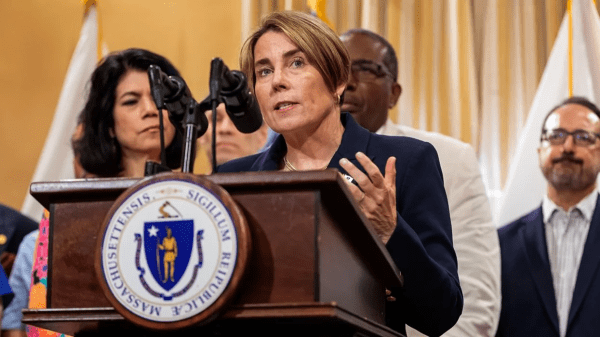
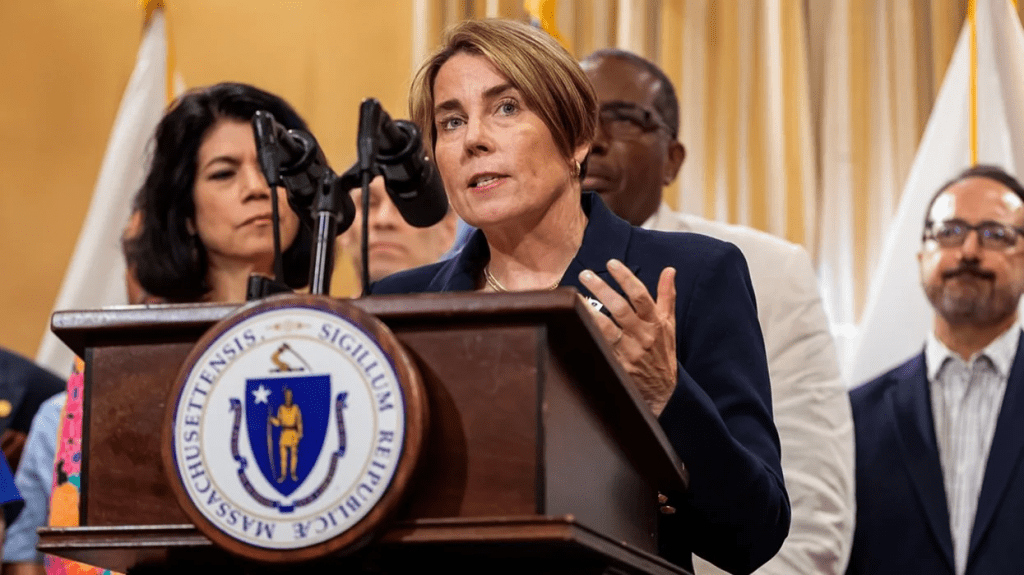
Democratic Gov. Maura Healey, the first out lesbian governor in the U.S., signed the Shield Act 2.0 into law Thursday. The bill further strengthens protections for patients and providers of reproductive healthcare, while explicitly mandating that abortions be performed when deemed medically necessary.
“Massachusetts will always be a state where patients can access high-quality health care and providers are able to do their jobs without government interference,” Healey said in a statement. “From the moment Roe was overturned, we stepped up to pass strong protections for patients and providers, and with President Trump and his allies continuing their assaults on health care, we’re taking those protections to the next level. No one is going to prevent the people of Massachusetts from getting the health care they need.”
The state’s original shield law, enacted by Democratic Gov. Charlie Baker in July, 2022, prohibits states that have banned the life-saving treatment from punishing those who travel to Massachusetts to receive it by preventing the release of information or the arrest and extradition of someone based on another state’s court orders.
The new law further prevents the disclosure of sensitive data, such as a physician’s name, and prohibits local law enforcement from cooperating with other jurisdictions in their investigations. It also directs the Department of Public Health to create an advisory group to help guide businesses as they implement privacy protections for storing or managing electronic medical records.
“Massachusetts is home to the best health care providers in the country, and we aren’t going to let them be intimidated or punished for providing lifesaving care,” said Lieutenant Governor Kim Driscoll. “Together with the Legislature, we are reminding the entire country yet again that Massachusetts is a place where everyone can safely access the health care they need and deserve.”











 fleeredstates.blog
You must be logged in to post a comment.