Ron DeSantis forced this city to remove Pride crosswalks. So it put up Pride bike racks instead.

Read more at LGBTQ Nation.

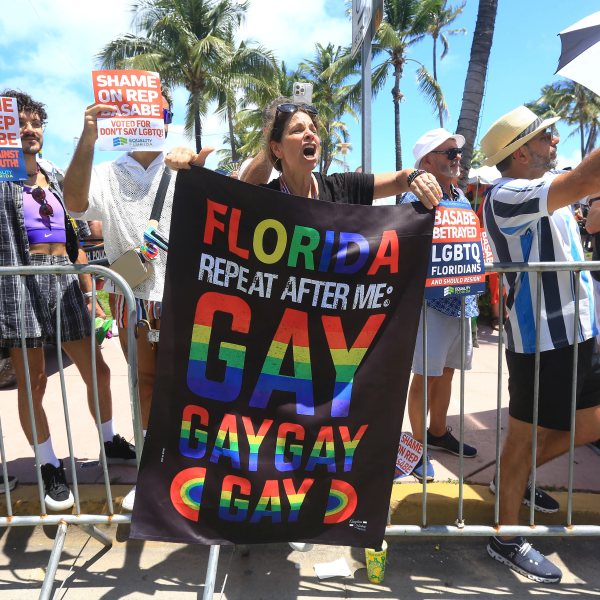
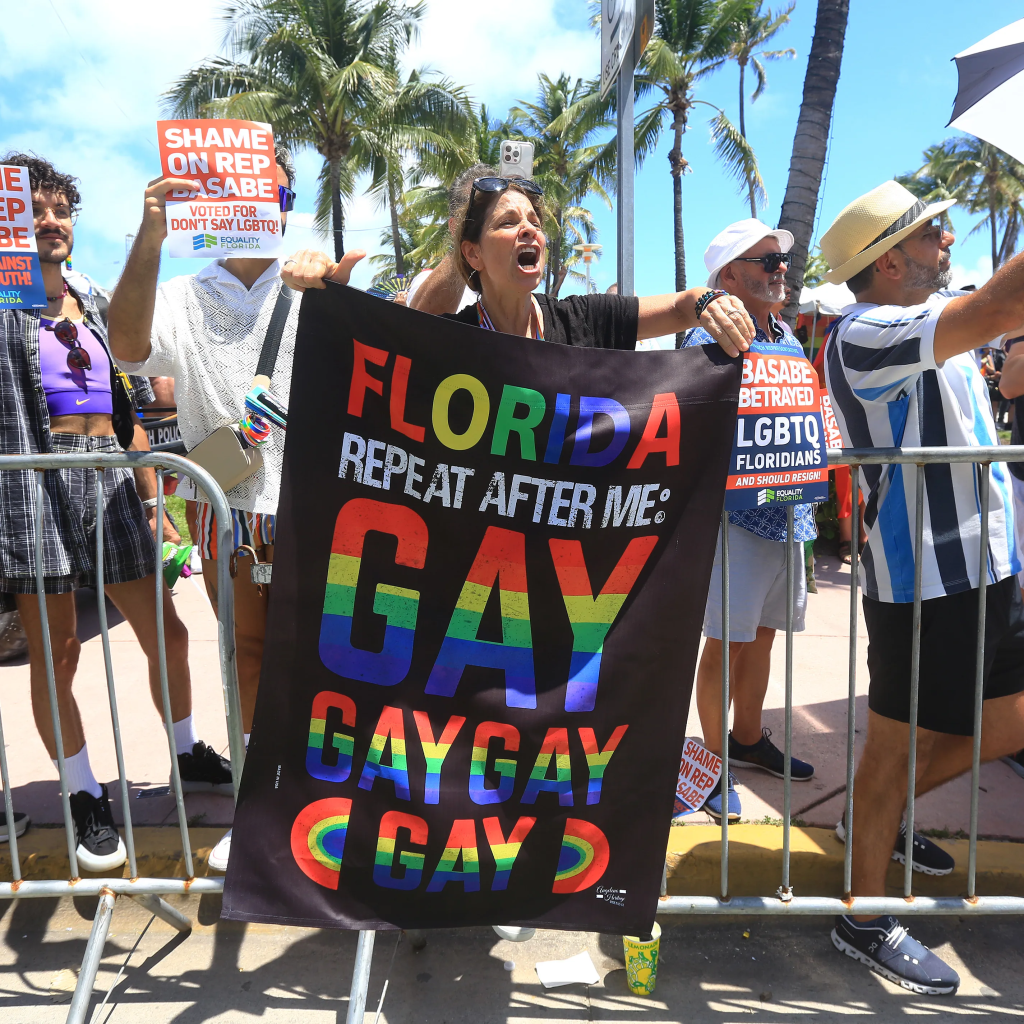
The City of St. Petersburg, Florida, has unveiled 11 Pride-themed bike racks to replace the rainbow crosswalks Gov. Ron DeSantis (R) forced officials to remove.

“Pride on the streets!” declared a social media post from the city and its mayor, Ken Welch (D), who called the bike racks “a vibrant way to honor the Pride street murals that were removed earlier this year due to state requirements.” 

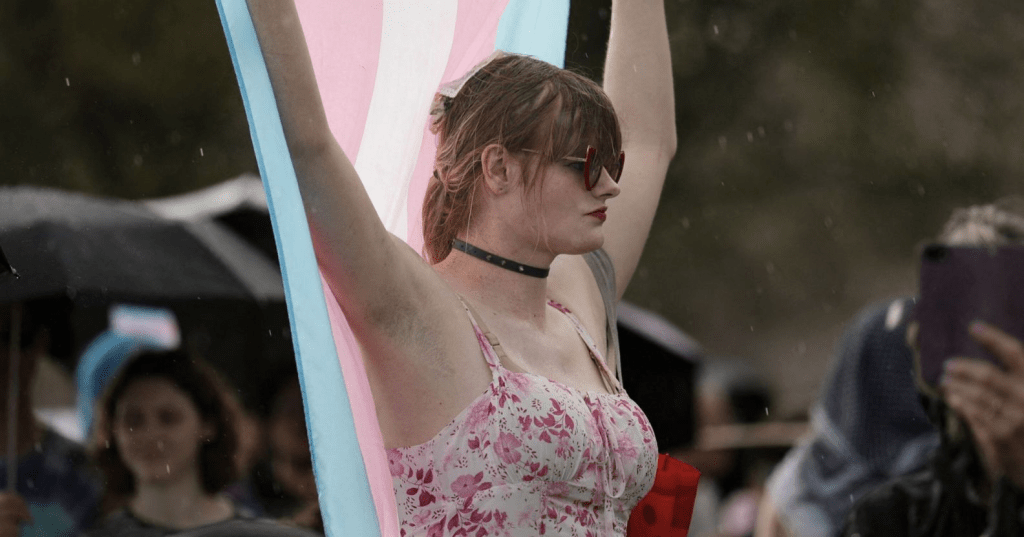
The post includes a video of construction workers installing the colorful racks, some of which are rainbow for the Pride flag and others that are the colors of the Trans Pride flag.

Folks celebrated the move in the comments, calling the new displays “amazing,” “clever,” “awesome,” “beautiful,” and “a smarter path forward.”

“Love our little inclusive, Sunshine City,” one person wrote.

“Now that’s what I’m talking about!” said another.

The state of Florida has become the epicenter of Republicans’ rainbow crosswalk crackdown. The DeSantis administration has heeded warnings from federal Transportation Secretary Sean Duffy, who has falsely claimed Pride art is distracting to drivers.

Duffy wrote in a July 1 letter to the nation’s governors that all non-freeway intersections and crosswalks must be kept “free from distractions.” In a subsequent X post, he said, “Taxpayers expect their dollars to fund safe streets, not rainbow crosswalks.”

In response, DeSantis signed a law directing the Florida Department of Transportation (FDOT) “to ensure compliance with FDOT’s uniform system for traffic control devices,” according to a July statement from a department spokesperson. The law effectively bans all pavement art and murals like rainbow crosswalks, regardless of their political message.

The DeSantis administration has been aggressive about ensuring the crosswalks are erased, despite protests and resistance from local leaders.

St. Petersburg officials ultimately complied with the order to remove its crosswalks upon the threat of losing state funding, but Mayor Welch made it clear in August that he would not stand down from defending progressive values.

In a press conference, Welch called the order to remove the crosswalks an attempt by the state “to usurp local values and priorities and instead mandate what our values should be.”

“We’ve seen the attempts to stifle our ability to express and celebrate our community values,” he added. “Yet time and time again, our community has risen to the occasion. And this latest challenge will be no exception.”

A post from the city’s official social media account said the murals that had to be removed – which included one declaring, Black History Matters – “reflect the soul of our community.”

“That message can’t be erased. This is our city, our voice, and our story… Together, we’ll continue building a community that is resilient, inclusive, and united.”

While state and federal officials have said that street art distracts drivers, data from the Bloomberg Philanthropies 2022 Asphalt Art Safety Study contradicts that claim.

The study found that crashes involving pedestrians or cyclists drop 50% at painted intersections. It also reported a 25% decrease in conflicts between drivers and pedestrians, a 27% increase in drivers immediately yielding to pedestrians, and a 38% decrease in pedestrians crossing when the walk signal was not lit at intersections involving public art. The data also revealed that injuries resulting from crashes drop 37% in painted intersections.

North Carolina county dissolves library board for refusing to toss book about a trans kid

Read more at The Advocate.

A county government in central North Carolina has dissolved its entire public library board after trustees voted to keep a children’s picture book about a transgender character on library shelves, turning a local book challenge into one of the most severe reprisals yet in the national campaign against LGBTQ-inclusive materials.

The Randolph County Board of Commissioners voted 3–2 last week to dismiss all members of the county library board, weeks after trustees declined to move or remove Call Me Max, a picture book about a transgender boy who asks his teacher to use his chosen name. The decision followed a public hearing that drew nearly 200 residents and revealed a community split almost evenly between those calling for the board’s removal and those urging commissioners to respect the library’s review process.

Library staff and trustees had reviewed the complaint earlier this fall and, in October, voted to keep the book in the children’s section, concluding it complied with the county’s collection policies, local CBS affiliate WFMY reported. Commissioners nonetheless moved to dissolve the nine-member board outright — a step allowed under North Carolina law but rarely taken.

Free-expression advocates said the action represents a dramatic escalation in the political response to book challenges. Kasey Meehan, director of the Freedom to Read program at PEN America, told The Washington Post that Randolph County’s decision is among the harshest penalties she has seen imposed over a single title.

“It’s a pretty dramatic response to wanting to have diverse and inclusive books on shelves,” Meehan said.

Opponents of the book claimed the dispute was a matter of child protection. Tami Fitzgerald, executive director of the conservative North Carolina Values Coalition, which urged supporters to attend the commission meeting, argued that Call Me Max teaches children that their parents may be “wrong” about their gender.

The book has been banned by several school districts and was prominently invoked by Republican Florida Gov. Ron DeSantis in 2022 while promoting his so-called “don’t say gay” legislation restricting classroom discussions of gender identity, a law later challenged in court.

To critics, the Randolph County episode demonstrates how procedural safeguards are increasingly overridden when LGBTQ+ inclusion is at stake. Kyle Lukoff, the book’s author, who is a trans man, said the case is especially troubling because the library followed its own policies and was still punished.

“Policies can be helpful, but this is ultimately a question of power,” Lukoff told The Post. “If there are people in power who believe trans people don’t belong in their communities or the world at large, they will twist those policies to make it a reality.”

Randolph County, home to about 150,000 people, voted nearly four to one for President Donald Trump. Commissioners have not announced when or how they plan to reconstitute the library board.

Arlington TX Pride 2026 Canceled Following City Council Vote To Scrap LGBTQ Protections

Read more at the Dallas Morning News.

Organizers of Arlington Pride announced Friday they will cancel next year’s event after the City Council rejected a plan to ban discrimination against gay and transgender residents.

The head of the HELP Center for LGBT Health and Wellness said in a statement the organization would not invite visitors to a city that does not offer “the most basic protections.”

“Pride is about safety, celebration, and community,” said DeeJay Johannessen, CEO of the HELP Center, which has offices in Arlington and Fort Worth. “Without local anti-discrimination safeguards, we cannot guarantee those values for our attendees, performers, or partners.”

Arlington Pride began in 2021 and quickly grew to one of the largest celebrations of its kind in North Texas, drawing more than 15,000 people to downtown in June this year. The all-day festival featured performances by RuPaul’s Drag Race queens, live music, an art show and local food vendors.The decision to suspend the event comes only three days after City Council members scrapped a plan to enshrine protections for LGBTQ residents into a city ordinance. The 5-4 vote followed months of debate, delayed votes and impassioned pleas from the LGBTQ community and allies to restore protections.

Initially passed unanimously in 2021, the ordinance prohibited discrimination based on sexual orientation and gender identity for housing, employment and public services. Discrimination against race, religion, national origin, sex and disability was also banned.

In September, the City Council temporarily suspended the ordinance over fears that Arlington risked losing more than $60 million in federal funding after President Donald Trump pledged to withhold money from cities with diversity, equity and inclusion, or DEI, programs. The president’s order has sown widespread confusion among cities that are unsure what qualifies as DEI.

For now, this means Arlington is no longer investigating complaints from people who say they faced discrimination by a landlord, business owner or employer. The vote makes Arlington one of the first cities in the country, if not the first, to repeal a nondiscrimination ordinance over fears of clashing with the Trump administration.

Some Arlington council members said they did not think the city could enforce its anti-discrimination ordinance. Council member Rebecca Boxall, who voted against restoring the ordinance, called it “bad policy.”

“From the very beginning, it was unenforceable at the city level,” said Boxall, who represents downtown Arlington. “The way I looked at it, and a lot of you mentioned protections, it does not offer protection. So in that respect, it’s just misleading. It’s just plain misleading.”

Federal law protects Americans from being discriminated against in public places based on disability, race, color, religion or national origin, but does not explicitly provide protections based on sexual orientation or gender identity.

More than 20 states and nearly 400 cities across the country have policies banning discrimination based on sexual orientation and gender identity, according to the Movement Advancement Project, a nonprofit research organization that tracks legislation related to LGBTQ issues. Texas has no such policy. Dallas, Fort Worth and Plano include LGBTQ residents in their anti-discrimination ordinances.

Mayor Jim Ross, who voted to restore protections, pledged to continue working on the issue and said the council will revisit the ordinance in coming weeks.

“Arlington is one of the most welcoming places,” Ross said. “We want everyone to know they can feel safe and comfortable here.”

On social media, responses to the cancellation of the 2026 Pride festival were mixed. Some said they did not want to spend time or money in a community that did not protect them, but others said this should drive an even larger event. Pride began in 1970 in a handful of U.S. cities to commemorate the one-year anniversary of the police raids on the Stonewall Inn in New York.

“Don’t you think now more than ever,” one person asked on Instagram, “we should host a louder, more exuberant pride?”

Colorado state sports association settles lawsuit by allowing schools to ban trans athletes

Read more at LGBTQ Nation.

The Colorado High School Activities Association (CHSAA) has settled a lawsuit brought by right-wing school districts for the right for schools to bar trans students from joining sports teams that align with their gender. The lawsuit targeted multiple defendants and will continue with the remaining ones without CHSAA’s involvement.

“Eligibility decisions have always been left to individual schools and districts, which is why being named in this lawsuit was both frustrating and unnecessary,” a CHSAA spokesperson said in a statement. She went on to call the organization’s inclusion in the lawsuit “much more performative than substantive.” 

The lawsuit was brought by several school districts but was led by District 49. That district’s board passed a controversial trans sports ban back in May by a narrow margin. The lawsuit against the state was filed the day after the policy was voted in, calling for Colorado to allow the ban to be enacted and to align policies with the demands laid out in the president’s “two sexes” executive order.

Colorado has state laws prohibiting discrimination against trans people, specifically people’s gender identity or gender expression. While the lawsuit cites the Equal Protection Clause of the Fourteenth Amendment in arguing that trans girls playing on the girls’ team affects the rights of cis girls, it does not mention the impact on the rights of trans girls.

To settle their part of the lawsuit, CHSAA agreed not to sanction the districts and schools named in the lawsuit for banning trans students from sports teams. It will also not respond to statements the schools make about “advantages of biological males over biological females in competitive sports” or potential propaganda about the hazards of “allowing biological males to play contact sports with or against biological females.” There will also be no penalties from CHSAA for forfeiting against a team because they allow trans children to play.

CSHAA has said that it will still sanction the schools and districts if any of those statements are demeaning in nature or call for violence against trans people. The organization is also recouping $60,000 in legal and operational fees.

While some Colorado school districts specifically allow trans students to play sports under their correct gender identity, others have no concrete rules about it. CSHAA has never stepped in over a trans person being allowed to play school sports, or not being able to.

The lawsuit will continue with the Colorado Attorney General Phil Weiser and other Colorado Civil Rights Division officials as the remaining defendants.

Colorado’s District 49 has around 27,000 students. In May, Board President Lori Thompson noted that, as far as she was aware, the district had only had one instance of a trans student trying to join a sports team that aligned with their gender identity. The student in question was a trans boy, and they did not pass tryouts.

Arlington TX City Council votes not to reinstate LGBTQ+ protections from non-discrimination ordinance

Read more at WFAA.

The Arlington City Council voted Tuesday night not to reinstate local anti-discrimination protections for LGBTQ residents and others.

As a result, the city’s entire anti-discrimination ordinance will remain suspended for the time being, including provisions that previously protected people based on sexual orientation, gender identity, race, religion and other characteristics.

The measure failed 5-4. Mayor Jim Ross joined Councilmembers Nikkie Hunter, Andrew Piel and Barbara Odom-Wesley in voting to bring back the ordinance. Councilmembers Mauricio Galante, Raul Gonzalez, Rebecca Boxall, Long Pham and Bowie Hogg voted against reinstatement.

“I’ve had heated discussions with community leaders on both sides of the fence and it hasn’t been easy,” Ross said. “Ultimately, tweaking this in some way, shape or form is necessary. I also believe reinstating this ordinance in its entirety is necessary. We have to let our community in Arlington know – you matter to us.”

Ross asked what kind of message they are sending to their children by removing these protections.

“I would not be able to live with myself if I didn’t vote yes on this ordinance,” he said.

There was no other vote on the ordinance Tuesday night, meaning the rest of its protections remain suspended for now.

Those who voted against reinstatement argued that state and federal laws already prohibit much discrimination, making the local ordinance unnecessary. 

Councilmember Rebecca Boxall described the 2021 ordinance as “bad policy,” saying it was a symbolic gesture at best and unenforceable at the city level. She argued existing laws give everyone the same protections. 

“We already have the protections under our federal and state laws,” she said. 

Councilmember Bowie Hogg added that allegations of discrimination should be addressed at the state or federal level rather than by city government.

Supporters of reinstatement rejected that position, saying federal and state laws are not enough.

“We have zero tolerance for discrimination,” Councilmember Barbara Odom-Wesley said. 

She argued local safeguards remain necessary because laws alone cannot regulate people’s hearts or guarantee people are treated with respect.

During the public hearing portion of the meeting, 34 speakers urged the council to restore the protections, while 11 spoke in opposition. Many supporters described the ordinance as a critical safeguard for their dignity and safety. 

“This is my life on the line, and I don’t want to have to leave,” one resident said.

Nathan Smith, director of public affairs & community engagement at the HELP Center for LGBT Health & Wellness, was one of many speakers against the proposal at the meeting.

“I have no idea why you started us down this path,” Smith told council members. “You’ve been handed legal opinions stating funding is not at threat.”

Arlington resident Katie Duran told council members that if they oppose the non-discrimination ordinance, they’re saying to other families that they can be born in Arlington, but based on who they are, they can’t stay here.

“We are the dream city, we are not the discrimination city,” Duran said. “Why is this even up for discussion? We’re talking about human rights. Show that you actually do care about the citizens of Arlington and reinstate the protections.”

Some speakers argued that there were already state and federal laws covering protections against discrimination, and that there was no need to duplicate those protections in a city ordinance.

The city began debating the change months ago after the Trump administration said it would revoke federal grants from cities that they say violate federal anti-discrimination laws by providing access to “opportunities, benefits, or advantages” based on protected characteristics such as race, gender, or sexual orientation. 

In October, the city delayed a vote on a proposal to remove the protections from the city’s anti-discrimination ordinance, saying it needed additional legal counsel. The vote was delayed again in November after a council member experienced a death in the family.

If the protections are removed, it would make Arlington one of the first, if not the first, U.S. cities to take that step, WFAA previously reported.

Ross previously told WFAA that he will vote to keep the city’s current anti-discrimination ordinance intact. He said the city is working to balance residents’ concerns with financial considerations. 

“It’s a difficult process. I think we’ve come up with a solution. We’re fine-tuning that as we speak,” Ross said. “I want everybody in Arlington to feel like we’re taking care of them, but when you’re talking hundreds of millions of dollars, it’s tough.”

LGBTQ+ advocates have previously packed city council meetings to oppose the proposal, WFAA previously reported. 

“We’re never gonna sit back while civil rights are being stripped away,” DeeJay Johannessen, CEO of the Help Center for LGBTQ+ Health, who is leading a citywide campaign urging residents to oppose the change, previously told WFAA. 

Conservative advocacy groups, such as Texas Values, support the change. 

“Texas Values recommended that the Arlington City Council remove the terms ‘sexual orientation’ and ‘gender identity’ from the ordinance in order to comply with federal directives, as well as newly enacted state law such as the Texas Women’s Privacy Act (S.B. 8), which went into effect last week,” the organization said in a statement. 

Kazakh Senate indefinitely postpones consideration of massively anti-LGBTQ+ bill

Read more on LGBTQ Nation.

A month after the lower chamber of Kazakhstan’s parliament voted for a ban on “LGBTQ+ propaganda,” the former Soviet nation’s Senate announced that the legislation would be delayed for an indefinite period of time.

The bill, modeled on Russia’s ban on LGBTQ+ speech, included fines and jail time for people found to have spread pro-LGBTQ+ messages in the media or on social media.

“Children and teenagers are exposed to information online every day that can negatively impact their ideas about family, morality, and the future,” Kazakh Education Minister Gani Beisembayev told lawmakers before the vote.

Deputy Irina Smirnova cited library books and cartoons featuring same-sex relationships as examples of the “propaganda” addressed by the bill.

“I saw books in the library that promote LGBT, where a prince falls in love with a prince, two boys,” she told lawmakers. “There are cartoons that allow this to be shown, there are magazines and comics where all this is promoted.” 

But the Kazakh Senate announced last week that the bill was tabled. “The consideration of the Law of the Republic of Kazakhstan ‘On Amendments and Additions to Certain Legislative Acts of the Republic of Kazakhstan on Issues of Archival Affairs and Limiting the Dissemination of Illegal Content’ has been postponed to later dates,” the Senate press service said in a statement, according to the Kazakh Telegraph Agency (KazTAG).

“It is important to note that the law introduces amendments and additions to the Labor Code of Kazakhstan, as well as to 12 other laws of the Republic of Kazakhstan. This is a significant amount of work and requires additional time. Moreover, given that the law also regulates issues related to the protection of children’s rights, this is always a matter requiring special consideration and increased attention.”

President Kassym-Jomart Tokayev lobbied hard for the bill, saying that it was necessary to uphold “traditional values.” Parties loyal to Tokayev dominate the lower chamber and voted unanimously in favor of the ban.

While the Muslim-majority nation is officially secular, it remains deeply conservative when it comes to social issues. Male homosexuality was decriminalized in the 1990s, but the country does not ban discrimination against LGBTQ+ people. In 2022, the Ministry of Defense said that no one is banned from military service due to sexual orientation.

University dismisses 2nd professor in kerfuffle over anti-trans student’s essay

Read more at LGBTQ Nation.

The University of Oklahoma (OU) recently dismissed a professor for telling students that they wouldn’t be counted absent from her class if they attended an on-campus protest in support of a transgender teaching assistant (TA) who was placed on administrative leave after she failed a student’s essay that referred to trans people as “demonic.” The newly dismissed professor reportedly didn’t give the same option to students who wanted to protest against the trans TA’s reinstatement, OU said.

OU composition professor Kelli Alvarez was accused of viewpoint discrimination for her alleged actions, OU said in an official statement cited by KFOR. OU’s director of first-year composition emailed Alvarez’s students, calling Alvarez’s actions “inappropriate and wrong,” adding, “The university classroom exists to teach students how to think, not what to think.”

The director informed students that they could miss the Friday class to attend either the protest or the counterprotest. The director also noted that Alvarez has been replaced for the remainder of the term, which ends on December 19. OU said it agrees with the director’s actions.

“Classroom instructors have a special obligation to ensure that the classroom is never used to grant preferential treatment based on personal political beliefs, nor to pressure students to adopt particular political or ideological views,” OU wrote in its statement.

At the Friday protest, hundreds of students rallied in support of Mel Curth, a trans TA who OU placed on administrative leave after she gave a student a grade of zero on an essay about a study on gender roles in which the student called trans people “demonic.” The student, Samantha Fulnecky, filed a religious discrimination complaint with OU in November, and the university put Curth on administrative leave.

Students at the protest chanted, “OU shame on you,” “Protect our professors,” and “Justice for Mel,” KOKH-TV reported. Even students who didn’t agree with Curth’s failing grade for the student agreed that Fulnecky’s essay was poorly written and that Curth didn’t need to be put on leave.

At one point in the protest, a Turning Point USA (TPUSA) supporter got in front of the crowd and began counterprotesting.

The OU Chapter of the right-wing young conservatives group published a transphobic tweet saying, “We should not be letting mentally ill professors around students. Clearly this professor lacks the intellectual maturity to set her own bias aside and take grading seriously. Professors like this are the very reason conservatives can’t voice their beliefs in the classroom.”

In her paper, Fulnecky wrote that people aren’t “pressured to be more masculine or feminine,” that she doesn’t see it as a problem when peers use teasing to enforce gender norms, and that “eliminating gender in our society… pulls us farther from God’s original plan.” She also said trans identities are “demonic and severely [harm] American youth.”

In her response, Curth — to whom the OU Department of Psychology recently gave its Outstanding Graduate Teaching Award — wrote that her grade wasn’t because Fulnecky had “certain beliefs,” but rather because the paper “does not answer the questions for this assigment, contradicts itself, heavily uses personal ideology over empirical evidence in a scientific class, and is at times offensive.”

In a statement, OU wrote that it takes First Amendment rights and religious freedoms seriously and began a “full review” of the situation to “swiftly” address the matter, including a “formal grade appeals process” and a review of the student’s claim of “illegal discrimination based on religious beliefs.”

The university also said that Curth had been placed on administrative leave during the finalization of the discrimination review, leaving “a full-time professor” to serve as the course’s instructor for the rest of the semester.

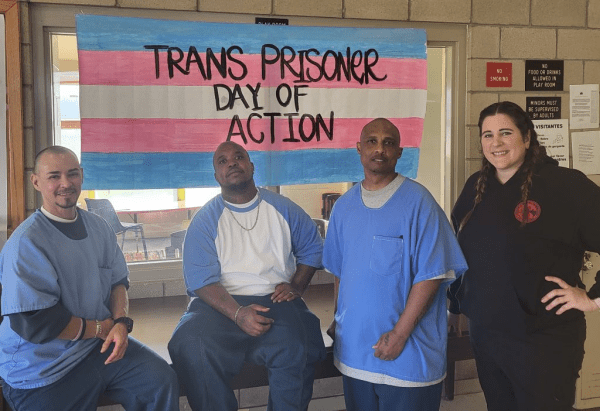
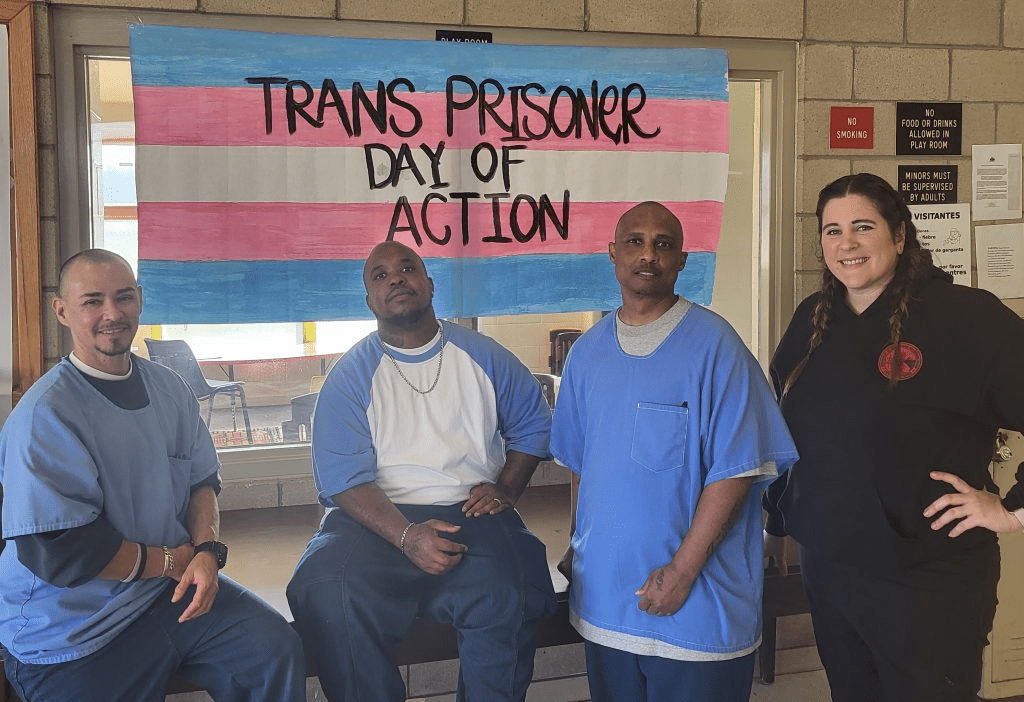
Trans inmates win right to gender-affirming care as judge calls it “a serious medical need”

Read more at LGBTQ Nation.

A federal judge has blocked a gender-affirming care ban for trans inmates in Georgia that has been in effect for several months. Judge Victoria Calvert agreed with the plaintiffs that the blanket ban violated the Eighth Amendment, which bars cruel and unusual punishment.

“The Court finds that there is no genuine dispute of fact that gender dysphoria is a serious medical need,” Judge Calvert wrote in her opinion. “Plaintiffs, through their experts, have presented evidence that a blanket ban on hormone therapy constitutes grossly inadequate care for gender dysphoria and risks imminent injury.”

Georgia Senate Bill 185 was signed into law in May by Governor Brian Kemp (R). The bill prohibited state funds and resources from being used to provide gender-affirming care to inmates in Georgia prisons. That included hormone replacement therapy (HRT), as well as “sex reassignment surgeries or any other surgical procedures that are performed for the purpose of altering primary or secondary sexual characteristics,” and even “cosmetic procedures or prosthetics intended to alter the appearance of primary or secondary sexual characteristics.”

The bill took effect in July, and five plaintiffs filed a lawsuit against it in August. In addition to arguing that SB 185 constituted cruel and unusual punishment, the lawsuit also claimed that it violated the Equal Protection Clause. HRT and other gender-affirming care treatments were not banned under the bill for all inmates, only for those who were trans. The bill also prohibited trans inmates from paying for the care themselves while incarcerated.

“We would never allow a state to decide that people in prison with diabetes should be cut off of insulin just because the state didn’t want to pay for it anymore,” said Celine Zhu, a Staff Attorney for the Center for Constitutional Rights, which is representing the plaintiffs. “So why would we allow Georgia to cut off medically required care for people with a similarly serious diagnosis of gender dysphoria?”

SB 185 was a blanket ban that overruled the opinions of judges, doctors, and the Georgia Department of Corrections, all of whom have previously acknowledged that gender-affirming care is medically necessary for incarcerated trans people.

While the judge’s ruling makes it clear that not every inmate is entitled to gender-affirming care, it puts those decisions back in the hands of medical professionals and the patients rather than having the legislature make medical decisions for trans people.

“The Court requires healthcare decisions for prisoners to be made dispassionately, by physicians, based on individual determinations of medical need, and for reasons beyond the fact that the prisoners are prisoners,” the judge said in her ruling.

Current estimates suggest that there are around 300 out trans people incarcerated in Georgia state prisons.

After the ruling, the Department of Corrections filed a notice of appeal with the 11th Circuit Court of Appeals.

This sort of case has been litigated for over twenty years now. In 2005, Wisconsin introduced a ban on doctors providing trans inmates with gender-affirming care, affecting inmates who had been on hormones since the early 90s. The law was overturned by the 7th Circuit Court of Appeals, and the Supreme Court declined to hear the state’s appeal in 2011.

The decision in the Georgia case comes as the Department of Justice has instructed inspectors to stop reviewing prison standards aimed at preventing sexual assault against transgender, intersex, and gender-nonconforming people.

Trump deadnames history-making transgender admiral on her official government portrait

Read more at LGBTQ Nation.

The Department of Health and Human Services (HHS) has altered the official portrait of Adm. Rachel Levine, the out transgender former assistant secretary for health under President Joe Biden, to display Levine’s deadname — a needless act of transphobia that Levine has called “petty.” Her portrait hangs in the HHS office alongside those of other federal officials who have led the U.S. Public Health Corps.

“During the federal shutdown, the current leadership of the Office of the Assistant Secretary for Health changed Admiral Levine’s photo to remove her current legal name and use a prior name,” Levine’s spokesperson Adrian Shanker, former deputy assistant secretary for health policy under Biden, told NPR. Shanker called the move an “unprecedented” act “of bigotry against her.” Though Levine said, “I’m not going to comment on this type of petty action.”

When asked about the alteration, HHS spokesperson Andrew Nixon told the aforementioned news outlet, “Our priority is ensuring that the information presented internally and externally by HHS reflects gold standard science. We remain committed to reversing harmful policies enacted by Levine and ensuring that biological reality guides our approach to public health.”

An anonymous HHS staffer told NPR that they considered the change “disrespectful,” adding that it exemplifies “the erasure of transgender individuals by this administration.” Upon taking office, the president issued numerous executive orders denying all federal recognition of trans people and kicking trans people out of the military for being selfish, dishonorable, deceitful, and undisciplined.

Levine was the first out trans person to receive Senate confirmation. On October 19, 2021, became the first out trans four-star officer in the U.S. Public Health Service Commissioned Corps, a noncombatant service of the nation’s eight uniformed services which promotes public health and safety. She resigned on the current president’s first day in office.

The current assistant secretary for health is Adm. Brian Christine, MD, who was appointed in November.

World Cup Pride Match in Seattle will feature… Egypt and Iran. Say what?

Read more at Outsports.

When the full schedule was confirmed the next day, Vancouver was selected for New Zealand’s clash with Belgium, leaving Seattle with the awkward situation of its “Pride Match” featuring Egypt and Iran — two nations with atrocious LGBTQ human rights records.

Both Egypt and Iran criminalize gay relationships. In Iran, capital punishment is still the maximum penalty under the law.

According to the Human Dignity Trust, there is evidence in recent years of the enforcement of their respective laws in each of the two nations.

A match between countries that vociferously oppose Pride presents a complex scenario for Seattle organizers, who have set up a Pride Match Advisory Committee (PMAC) to “shape the communications, community activations, and cultural programming” for the festivities.

With Lumen Field hosting six World Cup fixtures in total, there might have been scope to alter the Pride Month plans.

However, the USMNT’s match with Australia on June 19 has already been designated to mark Juneteenth, while the other group matches in Seattle on June 15 and June 24 feature either Egypt or Qatar, which is another country that imprisons gay people.

There will also be a round-of-32 game featuring the winner of Group G at Lumen Field on July 1, and a last-16 match on July 6.

World Cup Pride Match with Egypt and Iran could be ‘good thing’

Despite the obvious challenges, Seattle FWC26 have indicated they will proceed with their plans for the Pride Match on June 26.

In a statement provided to Outsports, a spokesperson for the PMAC said: “The Pride Match has been scheduled to celebrate and elevate Pride events in Seattle and across the country, and it was planned well in advance.

“It is a Host City–led expression of Seattle and Washington State’s commitment to creating a welcoming and inclusive environment where everyone belongs: players, fans, residents, and visitors alike.

“Soccer has a unique power to unite people across borders, cultures, and beliefs. We are honored to host a Pride Match and to celebrate Pride as part of a global football community. This match reflects our ongoing commitment to respect, dignity, and unity for all.”

Eric Wahl, the brother of the late soccer journalist Grant Wahl, is a member of the Seattle PMAC. He is an advocate for public health and human rights, an out gay man, and a public speaker.

Following the fixture announcement, Wahl said on social media that the match-up of two countries where it is illegal to be gay is actually a “good thing” for the Pride Match.

City organizers do not want to pass up the opportunity to send out a strong message of welcome to LGBTQ people everywhere, having stated that with “hundreds of thousands of visitors and billions of viewers worldwide, this is a once-in-a-lifetime moment.”

Hedda McLendon is Seattle FWC26’s Senior Vice President of Legacy. She told Outsports that organizers are “working with small businesses so the region’s LGBTQ+-owned enterprises are ready to benefit from the tournament’s unprecedented visitor surge.”

Katie Wilson, the Democratic mayor-elect of Seattle who will assume office on Jan. 1, expressed similar hopes on social media after Saturday’s fixture confirmation. She referred to the Juneteenth and Pride themed matches, saying: “We get to show the world that in Seattle, everyone is welcome. What an incredible honor for our city!”

Last month, three finalists were announced for a Pride Match artwork competition, with the designs carried on the official SeattleFWC26 website.

Created by local artists from Washington State, the designs capture “Seattle’s identity as a diverse, inclusive community and a leader in LGBTQ+ rights,” according to organizers.

It is understood that the PMAC’s preparations are not being made in conjunction with FIFA. On a webpage carrying information about the Pride Match Design Contest, a disclaimer stated that the creation “is not affiliated with or endorsed by FIFA.”

Plans to celebrate LGBTQ Pride Month at a FIFA World Cup match are set to continue, even though the two countries selected for the fixture both have draconian anti-gay laws.

Seattle’s local organizing committee for World Cup 2026 has been preparing to stage a historic “Pride Match” at Lumen Field on June 26, the Friday of Pride Weekend. The themed fixture would be the first of its kind at a FIFA World Cup. The anniversary of the Stonewall riots is on June 28.

Friday’s tournament draw allocated the slot in the city’s schedule to one of two Group G games — New Zealand v Belgium, or Egypt v Iran.

The Pride Match would certainly stand in stark contrast to the Qatar 2022 World Cup, where the “OneLove” armband in support of diversity was banned by FIFA, and where some LGBTQ fans and allies had rainbow-colored items confiscated by security forces.

A few were even temporarily detained and harassed while being questioned about the items, including Grant Wahl. The journalist was told by guards to remove his T-shirt at a stadium and later reported on his distressing experience.

In recent days, a coalition of groups and organizations including the Sport and Rights Alliance has raised serious concerns about FIFA’s approach to human rights at World Cup 2026, including on the issue of LGBTQ safety.

As part of this, Athlete Ally ambassador Matt Pacifici, a former pro goalkeeper with Columbus Crew who came out publicly as gay in 2019, has criticized FIFA’s lack of anti-discrimination messaging at last summer’s Club World Cup tournament in the U.S. and also called for “enforceable protections” for LGBTQ players and fans.

Outsports has approached FIFA for comment, but by the time of publication, no response had been received.

Blog at WordPress.com.

Up ↑