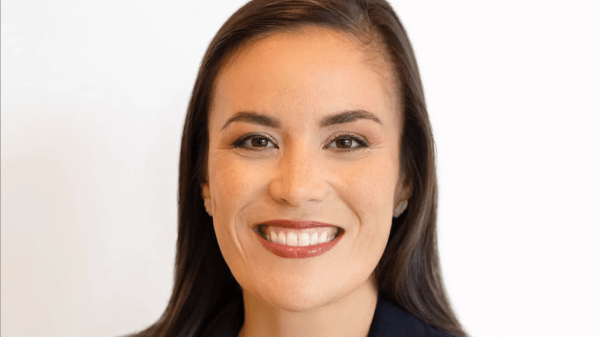
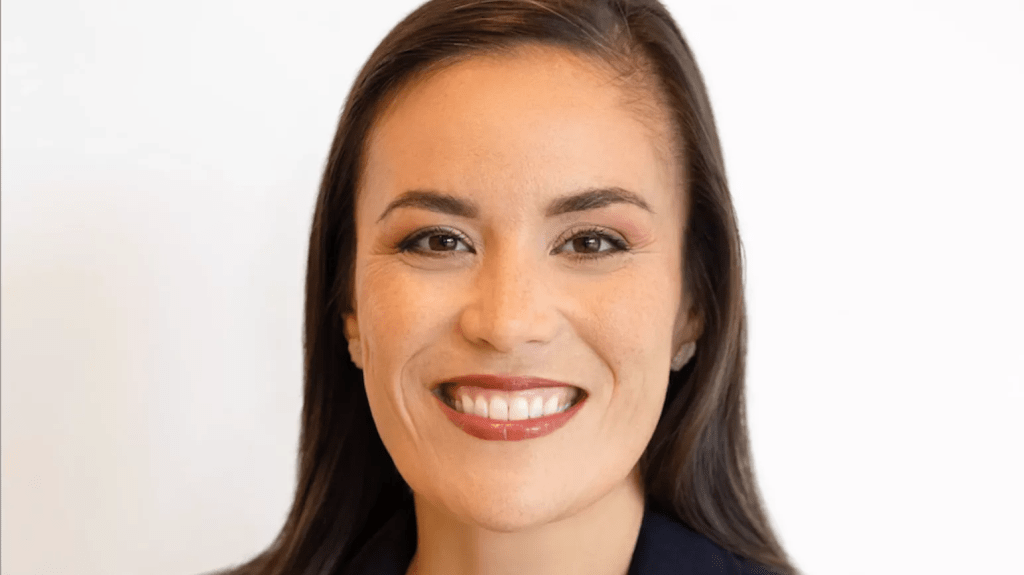
Air Force veteran Gina Ortiz Jones has become the first out LGBTQ+ person elected as mayor of San Antonio, Texas. After beating conservative Rolando Pablos in a runoff election on Saturday, she will also become the third woman to hold the office.
“It was my name on the ballot,” she told supporters at a victory rally that night, “but you and I know decency was on the ballot, kindness was on the ballot, compassion was on the ballot, and San Antonio showed up and showed out.”
She added, “So I look forward to being a mayor for all.”
The win followed a contentious battle between Jones and Pablos, who is known for his close ties with anti-LGBTQ+ Texas Gov. Greg Abbott (R). Jones called Pablos “Abbott’s puppet” and Pablos accused her of using the name Ortiz to appeal to the city’s Latino majority even though she is Filipino-American.
In response, Ortiz called him “racist” and said she’s “proud of my identity.”
“As we think about what’s going on in this moment in time… [we] reminded folks what San Antonio stands for. We reminded them that our city is about compassion and it’s about leading with everybody in mind.”
Jones also brought Brandon, a transgender drill instructor in the United States Air Force, to the stage. She told the crowd he is being kicked out due to the president’s anti-trans executive orders.
“Leadership matters. Leaders do three things: They create opportunities, they protect opportunities, or they erase opportunities… It’s unfortunate that the United States Air Force is not going to benefit from your talents because of bigotry,” she told him.
“Our country, I think we’re going through a blip right now, but San Antonio has had the opportunity to say. you know what, we’re going to move past this.”
Jones ran under the slogan, “There is no time to waste.” A two-time candidate for Congress, Iraq War veteran, Defense Intelligence Agency analyst, and an Under Secretary of the Air Force in the Biden administration, she has certainly done a lot with hers.
She came out to family and friends at 15 and served as an Air Force captain in Iraq under Don’t Ask, Don’t Tell. “I learned a long time ago, transparency leads to accountability, and accountability leads to trust,” she said.
Jones most recently served as Under Secretary of the Air Force, where she managed a $173 billion budget and led 600,000 people.
“That job came down to asking yourself two questions every single day,” she recently told LGBTQ Nation, “which is 1) Do my folks have what they need to be successful to do the nation’s work? And 2) Are we making smart investments? I think those are ultimately the questions that a mayor has to ask.”
Jones has voiced tackling poverty as a big priority, since almost 20 percent of San Antonio residents live below the poverty line – a number that has held steady since the 1980s.
A first-generation American, Jones grew up in San Antonio, and her mother is from the Philippines. She raised Jones and her sister as a single mother. They lived in subsidized housing and relied on reduced lunch programs.
In a 2020 interview with LGBTQ Nation, Jones emphasized that these programs were not handouts for her family, but rather critical investments in their future.
In the Air Force, she served as an intelligence officer. She has spent almost fifteen years working in national security, including serving as the Director for Investment at the Office of the U.S. Trade Representative under President Barack Obama.
“I’ve seen firsthand the importance of American leadership,” she also told LGBTQ Nation. “I know how important our example is in so many ways.” She emphasized “the importance of electing good, competent people that can lead in times of crisis and not cause them or exacerbate them.”
An unknown assailant in Washington D.C. attacked a gay man with a rock, causing him to bleed profusely. The victim suspects his attacker may be a young local teen who has yelled homophobic slurs in the past. Police are now investigating.
On Friday, around 12:30 p.m., Addam Schauer-Mayhew was seated on his couch watching tennis when his home camera recorded a masked individual walking up to he and his husband’s house — which was decorated in rainbows for Pride. The masked individual then threw a large rock through their living room window, hitting Schauer-Mayhew in the head.
“The rock that was thrown was about baseball size, and it was almost like a piece of concrete that had sharp, jagged edges,” the victim’s husband Bryan Schauer told WUSA, adding that he came downstairs when he heard his husband crying out in pain. Schauer said he saw broken glass and a lot of blood. “I can’t imagine how much it hurt.”
The couple had been preparing to attend the weekend WorldPride celebration. They suspect the attacker may have been a young local teen who shouted anti-gay slurs at them a year ago. They say the suspect wore an ankle monitor and was accompanied by a younger teen.
The men say the incident has left them afraid and are now asking for the public to help identify the attacker in the video. They’re also asking for the police to consider hate crime charges.
“I am proud of who I am. I’m proud to be a gay man, a queer man, living in the city that I love in. I’m just trying to be accepted.” Schauer-Mayhew said.
While largely avoiding the same level of heated pushback of years’ past, Texas lawmakers passed several bills that give LGBTQ+ people in Texas, specifically transgender residents, less opportunity to receive care and maintain their identities in state records.
Texas legislators filed over 100 anti-trans bills through the session, some containing provisions that have been shot down in years’ prior while others proposed new restrictions. Less than 10 were ultimately approved by lawmakers.
The new bills that are likely to be signed by Gov. Greg Abbott represent a yearslong movement from state conservatives to find new ways to restrict the presence of trans and LGBTQ+ Texans, advocates say. The bills that failed may also be resurrected by lawmakers in future sessions. Here’s what to know.
State definitions of man and woman
Several bills filed in the Legislature aimed to craft legal definitions of sex and gender in addition to their target goals — but House Bill 229 makes that goal its sole purpose, establishing state definitions for male and female and applying those definitions across statute.
HB 229 defines a woman as “an individual whose biological reproductive system is developed to produce ova,” and a man as “an individual whose biological reproductive system is developed to fertilize the ova of a female.”
Most immediately, the bill will bolster an already existing block from stateagencies on changes to gender markers on state documents, which was backed by a nonbinding opinion from Attorney General Ken Paxton in March. The bill may also force those who have already switched their documents to match their identified gender to have changes reverted when they are renewed.
The longer-term effects of HB 229 are still not immediately apparent, as references to man and woman are used hundreds of times in statute and may ripple into other laws affecting people’s lives. Texas joins 13 other states that have also crafted their own definitions, and several other bills that also passed in the state have individual definitions for related terms like “biological sex.”
President Donald Trump issued an executive order named “Defending Women From Gender Ideology Extremism” in January providing federal definitions of male and female. Similarly, HB 229 has been dubbed the “Women’s Bill of Rights” by supporters, claiming it protects women in the state from men invading their spaces.
Abbott released an executive order of his own shortly after Trump’s affirming the president’s directive, but did not provide his own definitions. In a May post on social media, the governor said he would immediately sign HB 229 into law.
New requirements for medical records and insurance coverage
Tightening the ability to change the gender on state records like drivers’ licenses has been a key issue for conservative lawmakers for years, and while HB 229 sets a precedent in disallowing new changes, another bill creates new requirements entirely. Senate Bill 1188 creates a new section on all state medical records listing patients’ assigned sex at birth and any physical sexual development disorders. It also bans changes to those gender markers for any reason other than clerical errors, and creates civil penalties for medical professionals who do change them.
House Democrats opposing the measure during floor discussion worried that SB 1188 may scare medical providers into inputting vague or inaccurate health information out of fear of fiscal or legal retribution. The bill does allow the new section to include information on a patients’ gender identity, however health care services must opt-in to provide it.
The bill also creates restrictions on where health care providers can store patient data and the physical servers they use to store them, and new regulations on how artificial intelligence can be used to create diagnoses.
SB 1188 is not the only bill opponents have said will create a chilling effect on the LGBTQ+ community. Some bills may be more immediate in blocking options people have to do things like change their state records, but others like SB 1188 and Senate Bill 1257 may reduce what resources are available. SB 1257 was signed by Abbott in May and mandates that insurance companies provide coverage for gender detransitioning care if they already cover gender transition care.
Proponents of the law claim it enforces responsibility onto insurance companies. The law is not a ban on gender-affirming care, however opponents worry it may act as one by incentivizing insurance companies to pull coverage altogether rather than take on potential new costs.
SB 1257 is the first legal mandate for detransition care in the United States, making Texas a testing ground for insurance companies’ appetite to keep or pull coverage. Similar bills in Arizona, Florida and Tennessee did not pass out of their respective state legislatures in 2024.
Less protections and resources for LGBTQ+ youth
Medical gender transition care for minors was banned in Texas by the Legislature in 2023, a restriction that was upheld by the state Supreme Court in 2024. House Bill 18, primarily an overhaul of rural health care including a rural pediatric mental health care program, bans minors from accessing its resources for gender-affirming mental health counseling “inconsistent with the child’s biological sex.”
The current gender transition care ban for minors does not include mental health services, only puberty blockers, hormone therapy and surgery, which is rare for those under 18. Another proposal headed to Abbott’s desk, House Bill 1106, asserts that parents who do not recognize or affirm their child’s gender identity cannot be held liable for abuse or neglect because of that lack of recognition.
More restrictions on LGBTQ+ presence in schools
Access to materials and resources related to LGBTQ+ subjects are also being restricted by legislators through two key bills primarily aimed at schools. Senate Bill 12 bans Texas schools from teaching about sexual orientation or gender identity and forbids student clubs “based on” those subjects.
The bill would prevent clubs like Gay-Straight Alliances and pride clubs, which are often tailored toward anti-bullying initiatives in schools. Opponents of the bill claim a ban on those clubs would cut off LGBTQ+ students from communities and resources that can save lives.
“One of the deadliest things that our youth go through is experiencing the perception at least of isolation, and GSAs are a powerful way that we can combat that and make sure that our youth are getting support,” said Ash Hall, ACLU Texas’ policy and advocacy strategist for LGBTQIA+ rights.
While SB 12 restricts instruction and student groups, Senate Bill 13 gives school boards and new advisory councils greater oversight to remove books from school libraries that go against “local community values.” Some lawmakers and advocates worry school boards and advisory councils would be able to restrict books containing LGBTQ+ material.
A third bill, Senate Bill 18, would have banned “drag-time story hours” at municipal libraries and cut funding to those who host them, however that bill was unintentionally killed by Lt. Gov. Dan Patrick after a procedural error at the end of the Senate’s deadline to pass bills.
Bills that failed to pass
The small set of bills passed by legislators shift the state’s treatment of LGBTQ+ Texans significantly, but still represent a fraction of what lawmakers proposed. House Bill 239, this session’s bathroom ban bill, was one of the over 100 bills that did not survive and was never heard by lawmakers despite half of the House signing on as coauthors. House Bill 2704 sought a similar ban through private lawsuits rather than criminal charges, but was never picked up by lawmakers.
Also left unheard was House Bill 3817, filed by Rep. Tom Oliverson, R-Cypress, which would have created a new felony charge for “gender identity fraud” if a person represented themselves as a gender besides the one they were assigned at birth to state agencies or employers.
Advocates like Johnathan Gooch, communications director for Equality Texas, say that the Legislature has kept its course on anti-trans legislation for the last few sessions, and that bills that didn’t get picked up by legislators may be at the forefront of future sessions.
“We’re hearing rhetoric that we’ve heard for a very long time and just more, more bills, a variety of new ways to narrow the rights of trans people,” Gooch said. “It just doesn’t come as a mistake that the number of bills is escalating.”
Citing President Trump’s threat to cut off federal education funding for school districts that provide protections for LGBTQ people, school board members in the Montezuma-Cortez district in southwestern Colorado are poised to remove sexual orientation and gender identity from the district’s nondiscrimination policy.
“Our district uses federal grant monies and Trump has indicated those grants are at risk if any district continues to support certain previously protected classes like sexual orientation, gender expression, or gender identity,” Mike Lynch, a school board member and the policy committee chair, said at a board meeting late last month.
The proposed policy changes in Montezuma-Cortez represent just one example of how some Colorado school districts are rushing to comply — or over-comply — with federal ultimatums based on questionable legal foundations. Many legal experts say the Trump administration cannot, on its own, exclude transgender people from federal anti-discrimination law and that Colorado law, which includes protections for LGBTQ people, supersedes school district policy anyway.
But efforts to remove protections at the local level send harmful messages about who is valued and who isn’t, they say.
“I think it does damage to queer students because it signals that this school district … doesn’t believe that these students are worthy of protection,” Scott Skinner-Thompson, associate professor of law at the University of Colorado Boulder.
Montezuma-Cortez, a conservative-leaning district with about 2,400 students, has taken other steps to curtail LGBTQ symbols and school activities in recent years. The school board is scheduled to take a final vote on the proposed nondiscrimination policy on June 24.
MB McAfee, a retired social worker and district resident, said she doesn’t know of any case where federal funds were withheld by the Trump administration, but worries about that possibility, particularly when it comes to money for students with disabilities.
But she’s also angry about the proposed policy changes, calling them “another step toward exclusion.”
“If we do that,” she asked, “then what’s going to be next?”
School districts react to funding threats
Trump has targeted transgender rights since his first day in office. In January and February, he issued several executive orders on the topic, including one that describes sex as determined at conception and unchangeable and another that threatens to withhold federal funds from schools that allow transgender girls to play girls sports.
The Trump administration has moved to strip federal funding from Maine because that state allows transgender girls to compete on girls’ teams. A judge blocked the federal government from withholding school lunch money while the case continues.
So far, no school district has lost money because of policies protecting transgender students. But Lynch emphasized that risk when he explained the proposed policy revision to the school board in May.
Asked by Chalkbeat what executive order or federal guidance required the removal of “sexual orientation” from the policy, Lynch later said by email that he’d mistakenly cited the term when he spoke to the board about federal dollars being in jeopardy.
For now though, “sexual orientation” isn’t being restored to the policy, he said.
Montezuma-Cortez isn’t alone in making changes spurred by the Trump administration. Officials from several Colorado districts, including Woodland Park and District 49 near Colorado Springs, have cited Trump’s executive orders in pushing policy changes or other efforts aimed at revoking protections for transgender students.
In May, District 49 sued the state and the Colorado High School Activities Association arguing that Colorado law and the association’s policy violate students’ constitutional rights by allowing transgender youth to play on school sports teams that match their gender identity.
Montezuma-Cortez school board members had little to say about the implications of the proposed nondiscrimination policy changes.
Asked about the legal or practical implications, Lynch said he’s not an attorney and doesn’t know. School board President Sheri Noyes did not respond to Chalkbeat’s request for comment. Vice President Ed Rice declined to respond to specific questions from Chalkbeat, saying by email that the policy’s opening sentence “answers everything.”
As proposed, that sentence says, “The Board is committed to providing a learning and work environment where all members of the school community are treated with dignity and respect.” The current version of the policy says “safe learning and work environment” but the revision takes out the word “safe.”
Out gay Rep. Robert Garcia (D-CA) talked to LGBTQ Nation about a new letter signed by a coalition of 50 other Democratic congress members demanding that the State Department conduct a wellness check on Andry José Hernández Romero, an openly gay 32-year-old Venezuelan makeup artist who was detained by Immigration and Customs Enforcement (ICE) on March 15 despite legally applying for asylum in the U.S. after fleeing anti-gay persecution in his home country.
Hernández Romero legally entered the U.S. last year via San Diego and passed a credible fear interview for his official asylum process but was arrested by ICE two days before his scheduled court hearing. For the last 86 days, he has been imprisoned at the Centro de Confinamiento del Terrorismo (CECOT), an El Salvador prison known for its human rights abuses. The letter’s signatories are demanding that the State Department facilitate his access to legal counsel and immediately facilitate his release, having presented no evidence of any crimes or wrongdoing.
Romero’s family and lawyers have had no contact with him in more than a month,” the letter states. “His mother does not even know whether he is alive. Given both the well-documented concerns about conditions at CECOT and the history of anti-LGBTQI+ persecution in El Salvador, there is serious cause for concern about Mr. Hernández Romero’s well-being.”
Romero was among 260 Venezuelans accused by the presidential administration of being members of Tren de Aragua, a terrorist group. A disgraced former police sergeant’s report accused Hernández Romero of having crown tattoos associated with the transnational Tren de Aragua gang. But both the Venezuelan government and Hernández Romero’s lawyer have said he has no connections whatsoever to the gang, and his family has said that his crown tattoos are in honor of his hometown’s annual Three Kings Day festival.
“The idea that our country said, ‘Come to your asylum appointment,’ and then we send him to a country he’s not even from — and we’re unwilling to check how he’s doing — is so wrong, and more people need to know Andrew’s story,” Garcia told LGBTQ Nation. “Our Constitution is clear that both citizens and non-U.S. citizens in the United States have a right to due process, and he has never even had a chance to see a judge or for anyone to rule. No one can prove that he was gang-affiliated, because he was not. He was described as a very sweet and gentle person by his family, and we just need to bring attention to his case.”
On April 21, Garcia and three other Congress members sent a letter to Secretary of State Marco Rubio and U.S. Ambassador William Duncan, urging them to confirm Hernández Romero’s safety through a wellness check inside CECOT. That month, Garcia visited El Salvador with a delegation of three other Democratic lawmakers. Though the delegation met with U.S. Embassy officials, the ambassador, and human rights advocates, they weren’t allowed to see Hernández Romero.
In a May 14 hearing, Homeland Security Secretary Kristi Noem refused Garcia’s request to let Romero’s mother know if he’s still alive — Noem callously claimed that prison is outside of her “jurisdiction” and told Garcia to ask the President or the Salvadoran government instead.
Political pundits have noted that the administration could proactively negotiate for Hernández Romero’s release but has so far refused to. In late May, a federal judge dismissed Hernández Romero’s asylum case, making it even harder to ensure his return to the United States. Hernández Romero’s deportation violated his constitutional rights to due process and his sexual orientation puts him at grave risk inside CECOT, Garcia says.
While Garcia admits that the State Department ignored his first letter, he told LGBTQ Nation, “With this [new] letter … a much broader coalition of folks are signed on, and so we’re hopeful that that continues to get more attention.”
The new letter’s signatories include Garcia and other out Democratic Congress members including Rep. Mark Takano (CA), Rep. Becca Balint (VT), Rep. Mark Pocan (WI), Rep. Sarah McBride (D-DE), and notable congressional allies like Rep. Alexandria Ocasio-Cortez (D-NY), Rep. Rashida Tlaib (MI), Rep. Jasmine Crockett (D-TX), and Sen. Adam Schiff (CA).
Garcia added that the American Civil Liberties Union (ACLU) has been actively involved with Hernández Romero’s legal team and hopes to pressure the administration to ensure that Hernández Romero is still alive.
Though LGBTQ+ people from all over the world have long come to the U.S. for the freedom to live authentically as themselves, Garcia acknowledges that queer would-be asylum seekers are currently scared and don’t see the U.S. as a place of refuge at the moment.
As an immigrant to the U.S. himself, Garcia told LGBTQ Nation, “What’s important is that the United States fight for folks that fight for a country that can still be welcoming of other people…. Our asylum system right now is broken and it we need to get back to a place where asylum is done as it has been in the U.S. We have a history in this country of welcoming people that are being persecuted in other countries, and that seems to be not the case right now, and I think it’s really horrible to see.”
Garcia has warned that — by kidnapping Hernández Romero and other undocumented immigrants off U.S. streets — the president has violated due process, the Constitution, and democratic norms in an attempt to intimidate immigrant communities. Federal courts and the U.S. Supreme Court have agreed, demanding that the administration return some detainees stateside and provide greater transparency about its immigration processes and possible defiance of court orders.
“If they’re going to break the Constitution, to illegally take someone that was in an asylum process to a foreign country, then that means that they’re going to continue to break due process, and that means that everyone is at risk in our country,” Garcia told LGBTQ Nation. “I think it’s a slippery slope — now we know that U.S. citizens have been deported, [including] children without any sort of due process. So this is only going to get more difficult if people aren’t engaged.”
“I think Pride Month, especially in Andrea’s case, provides an opportunity for more folks to hear his story,” he added.
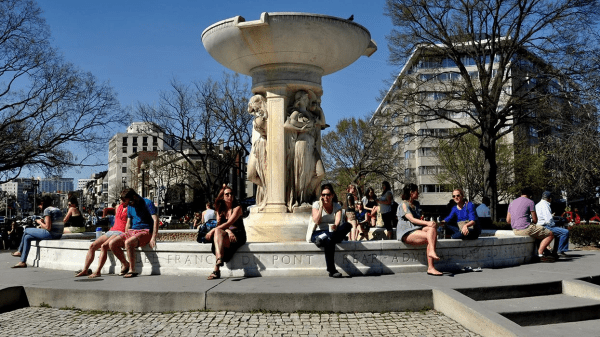
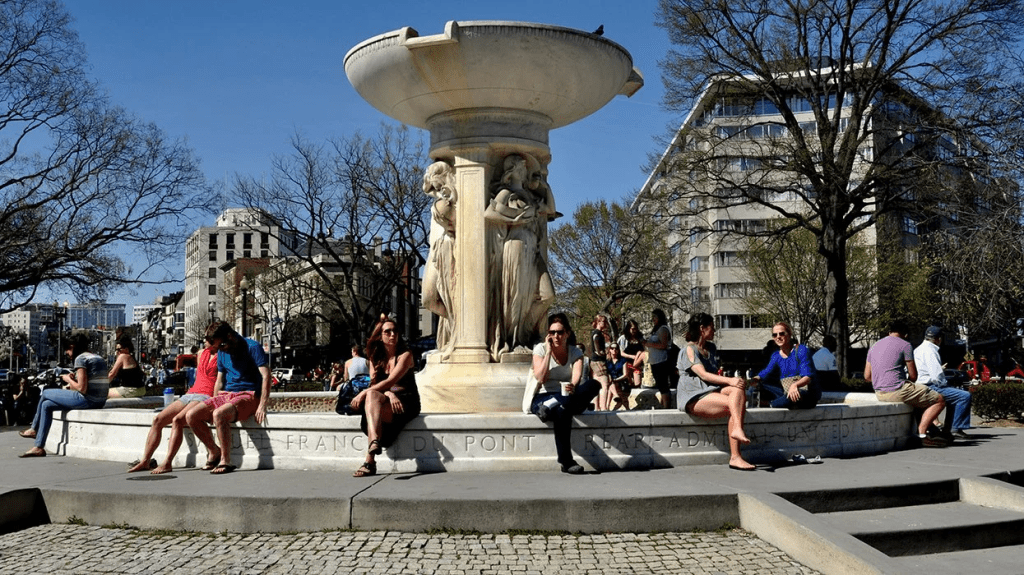
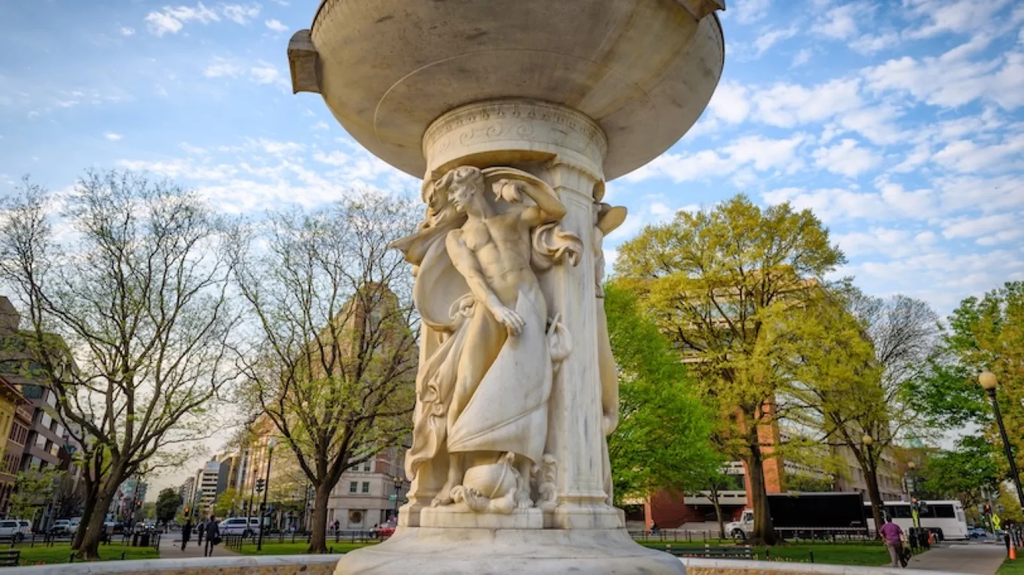
The Trump administration has closed Dupont Circle Park for the peak weekend of WorldPride in Washington, D.C., fencing off a landmark deeply tied to LGBTQ+ history despite objections from local officials and organizers.
The National Park Service and U.S. Park Police barricaded the park Thursday evening. The closure, which extends through Sunday night, includes the central fountain, grassy areas, and sidewalks within the circle but excludes the surrounding streets, according to Washington’s NBC affiliate, WRC.
Earlier this week, D.C. Councilmembers Brooke Pinto and Zachary Parker announced that the Metropolitan Police Department had withdrawn its request to close the park following backlash from community members. But federal officials proceeded with the shutdown anyway and have not responded to requests for comment.
“I am extremely disappointed and frustrated that Dupont Circle Park will be closed this weekend despite MPD’s commitment to keep folks safe there,” Pinto said in a statement to The Advocate. “This closure is disheartening to me and so many in our community who wanted to celebrate World Pride at this iconic symbol of our city’s historic LGBTQ+ community. I wish I had better news to share.”
According to a June 4 Record of Determination obtained byThe Washington Post, the National Park Service said that the closure was necessary “to secure the park, deter potential violence, reduce the risk of destructive acts and decrease the need for extensive law enforcement presence.”
Despite MPD’s reversal, the U.S. Park Police doubled down. In a memo to NPS Superintendent Kevin Greiss, USPP Commander Major Frank Hilsher wrote that “the threat of violence, criminal acts, and NPS resource destruction has only increased since MPD’s original April 22, 2025, park closure request.” He referenced a local DJ advertising an unpermitted party at Dupont Circle and said, “Less restrictive measures will not suffice.”
The Capital Pride Alliance, which is organizing WorldPride events, told The Advocate it was not consulted about the decision.
“This beloved landmark is central to the community that WorldPride intends to celebrate and honor,” the group said in a statement. “It’s much more than a park — for generations, it’s been a gathering place for D.C.’s LGBTQ+ community, hosting First Amendment assemblies and memorial services for those we lost to the AIDS epidemic and following tragic events like the Pulse nightclub shooting.”
“This sudden move was made overnight without consultation with the Capital Pride Alliance or other local officials,” the statement continued. “No official WorldPride activities have been planned in Dupont Circle this weekend; thus, no events will be impacted.”
While MPD had initially requested the closure, Chief Pamela Smith rescinded that request in a formal letter sent Tuesday. When asked for comment Friday, MPD spokesperson Tom Lynch told The Advocate, “We have nothing to share beyond the letter rescinding the request, which we shared on Tuesday.”
D.C. Mayor Muriel Bowser did not respond to The Advocate’s questions, but a spokesperson pointed to an appearance she made on local radio Friday in which she discussed the fencing.
She said the closure represented a breakdown in coordination between federal and local authorities. “I think I put this in the category of an unfortunate error,” Bowser told The Politics Hour With Kojo Nnamdi on WAMU. “We had a communication with the Park Service … and it looks like at this stage, they’re going to proceed with the closure, though we continue talks.”
Pressed on whether the decision originated at the White House or with Interior Secretary Doug Burgum, Bowser said, “I can’t say that with any clarity. I do know, unfortunately, the public safety issue rose to the top over the cultural celebration.” She added, “We don’t control the NPS, though we will continue to try to lean on them for a different decision.”
The Park Service has cited past incidents (none of which were linked to Capital Pride Alliance events), including $175,000 in damage to the fountain during Pride 2023, as well as a recent executive order from President Donald Trump instructing federal agencies to protect national monuments and public spaces. But LGBTQ+ advocates say the move appears politically motivated.
The Partnership for Civil Justice Fund filed Freedom of Information Act requests this week seeking communications and records from the Department of the Interior, the MPD, and the D.C. Mayor’s Office. In a statement Tuesday, Executive Director Mara Verheyden-Hilliard called the decision “a dangerous step and outside the legitimate authority of the Park Service.” Staff attorney Sarah Taitz said, “The LGBTQ+ community and general public deserve to know how and why the decision to shut Pride out of Dupont Circle was made, and how and why that decision was reversed.”
Though no official events were scheduled at the park, many saw its closure as symbolic — a federal message during a global celebration of queer life.
“World Pride will continue this weekend,” Pinto said, “and it will be a time of celebration and commitment to uplift our LGBTQ+ neighbors.”
In less than 24 hours, the National Park Service (NPS) has rescinded its decision to close off Dupont Circle Park in Washington D.C. for WorldPride, citing “significant” damage to the park’s fountain during a previous pride event, costing nearly $200 thousand. The rescinding of their decision followed pushback from LGBTQ+ community leaders and advocates, as the area is a vibrant gathering place for queer people with many nearby LGBTQ+-owned shops and gay bars.
On Monday, the NPS announced that, “at the request of the [local] Metropolitan Police Department,” they would be closing off Dupont Circle Park for the final weekend of WorldPride 2025 to prevent “disorderly and destructive behavior” from WorldPride participants. The closure was set to occur from Thursday, June 5 to Monday, June 9, as a public safety measure and to protect park resources, the NPS’ statement added.
“This decision was based on a history and pattern of destructive and disorderly behavior from unpermitted activities happening in the park during past DC Pride weekends, including vaŋdalism in 2023 that resulted in approximately $175,000 in damage to the historic Dupont Circle fountain,” the statement claimed.
Indeed, $175,000 is a substantial amount of money, but it is unclear how they arrived at this figure. Despite $175,000 in damages to public property being a newsworthy story in itself, there is little to no reporting to suggest the fountain sustained critical damage during a Pride event in 2023. The event they are likely referencing was The Capital Pride Parade and Block Party in 2023. Most news coverage on the event paints it as a mainly peaceful event with no significant rioting having occurred.
It is worth noting that the fountain had been undergoing numerous repairs at the time, including waterproofing at the base, upgrades to the water pump system, and pressure testing for the pipes.
During the initial decision to close the park, reporters from The Washington Bladeattempted to reach out to a spokesperson for the Metropolitan Police Department concerning the decision, but the spokesperson declined to comment and referred them to the NPS. Additionally, the office of D.C. Mayor Muriel Bowser also declined to comment.
“We have nothing else to add to the National Park Service statement at this time,” mayoral spokesperson Daniel Gleick told reporters.
In less than 24 hours after the announcement, the NPS rescinded their decision to close off the park this morning, according to D.C. Council member Zachary Parker.
In the moments leading up to NPS changing its mind, local LGBTQ+ rights activists condemned the agency for blocking off a major historic community within the LGBTQ+ movement.
Jeffrey Ruegauer, a member of the Dupont Circle Advisory Neighborhood Commission (ANC), in a public meeting, proclaimed, “The circle belongs to everyone, it is the city’s town square. It is intimately linked with the gay community and the gay rights movement and so many other rights movements over the years,” The Washington Post reported.
Fellow ANC commissioner and official with D.C.’s Rainbow History Project told the aforementioned publication, “The community should be as outraged as I am.”
Ryan Bos, executive director of Capital Pride Alliance, the organization behind D.C.’s annual Pride events and that also helped organize this year’s WorldPride events, said no official WorldPride events were set to occur at Dupont Circle Park during the upcoming weekend, though he was unsure if independent individuals or groups had planned any events there.
Bos also said he felt certain that participants of Capital Pride events did not cause any damage to the park in past years.
In February, NPS removed all mentions of transgender people from its website for Dupont Circle to comply with the president’s executive orders prohibiting any federal recognition of trans people in any aspect of civic life.
They stood in formation at Falcon Stadium, diplomas in hand, having met every standard of physical endurance, academic excellence, and military discipline. But, on Thursday, when the time came for the U.S. Air Force Academy’s class of 2025 in Colorado Springs, Colorado, to commission as second lieutenants, three cadets were quietly held back.
They are the first out transgender cadets to graduate from the Academy. And under a newly reinstated Trump administration ban, they will not be allowed to serve.
One of them, Hunter Marquez, had spent years preparing to become a combat systems officer. He earned dual degrees in aeronautical engineering and applied mathematics. He passed the Air Force’s fitness standards for men. And he did so as himself, having transitioned while enrolled at the Academy. “I really want to stay in for as long as possible, fight this out,” Marquez toldThe Colorado Springs Gazette.
But the rules changed. On May 6, the U.S. Supreme Court allowed the Trump administration to begin enforcing Executive Order 14183, which bans transgender people from military service. The unsigned order—issued without full argument and over the dissent of the Court’s three liberal justices—overturned a Washington state lower court’s preliminary injunction and gave the Pentagon the green light to begin separations.
Marquez, along with the two other graduates, was placed on administrative absence, barred from taking the oath, and warned he might need to repay the cost of his education if he refused to leave voluntarily, the paper reports. That education—funded by taxpayers—is valued in the hundreds of thousands of dollars. According to The Gazette, Marquez was later told by Air Force officials that if he is involuntarily separated, he won’t be billed. But the message was clear: his government does not want him in uniform.
And yet, there is no question he met the standard. “We want warfighters. We want people with grit, that are resilient. They have done all that,” a U.S. Air Force Academy staff member told The Gazette, speaking anonymously for fear of retaliation. All three cadets passed physical fitness tests for both men and women. All three graduated with distinction.
What disqualifies them is not their performance but their identity.
Marquez is a plaintiff in Talbott v. United States, one of the central legal challenges to the policy. In a sworn statement, he wrote that the executive order describes people like him as “undisciplined,selfish, and dishonest.” “None of those are correct descriptions of my character or my abilities,” he wrote. “I have achieved alongside my peers throughout my time at the Academy.”
The policy is not theoretical. It is personal. It has required cadets like Marquez to trek across dorms to find gender-compliant restrooms and showers. It has forced them to race through final semesters in case they’re expelled before graduating. And it has turned what should have been a joyful week of ceremonies into a lesson in resilience.
Marquez, now 23, is applying to the University of Colorado Boulder to earn an advanced degree in aerospace engineering. He is still receiving medical benefits and cadet pay, but he knows that may be temporary. “There’s still a lot of anger and frustration and sadness,” he said. “Just because I have worked so hard to be a second lieutenant in the Air Force, and at the very end that was taken from me.”
Academy alumni have responded with solidarity. Nearly 1,000 graduates have signed an open letter defending transgender cadets and midshipmen. “Being transgender is in no way incompatible with any of our Academies’ cherished virtues and values,” the letter reads, according to Military.com.
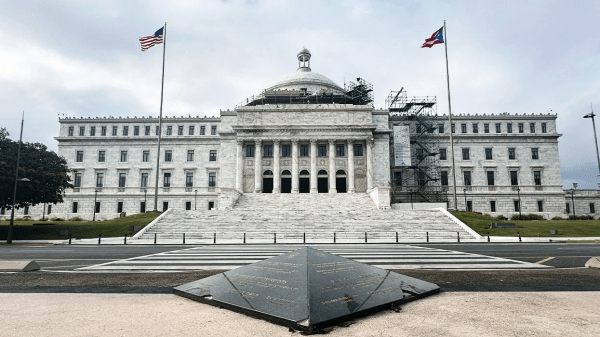
Puerto Rico’s Supreme Court has mandated that the government include an “X” gender marker on birth certificates in a ruling issued on Monday. A group of nonbinary Puerto Ricans filed the case, and the ruling allows for the representation of those who identify outside of the gender binary.
“Puerto Rico’s current Birth Certificate Policy is not supported by a rational basis, and therefore violates the Equal Protection Clause of the Fourteenth Amendment,” the justices wrote in their 19-page decision.
The court found that while the government might have a legitimate interest in maintaining an accurate record of each citizen’s sex assigned at birth, lawyers for the government “failed to articulate why this particular interest is furthered by treating nonbinary individuals differently than binary individuals.”
Puerto Rico’s Supreme Court has mandated that the government include an “X” gender marker on birth certificates in a ruling issued on Monday. A group of nonbinary Puerto Ricans filed the case, and the ruling allows for the representation of those who identify outside of the gender binary.
“Puerto Rico’s current Birth Certificate Policy is not supported by a rational basis, and therefore violates the Equal Protection Clause of the Fourteenth Amendment,” the justices wrote in their 19-page decision.
The court found that while the government might have a legitimate interest in maintaining an accurate record of each citizen’s sex assigned at birth, lawyers for the government “failed to articulate why this particular interest is furthered by treating nonbinary individuals differently than binary individuals.”
A federal court in 2018 ordered Puerto Rico to permit transgender individuals to change their gender markers, but nonbinary individuals were left unable to accurately reflect their gender identity on official records. Six nonbinary plaintiffs filed suit in court, and the court on Monday ruled in their favor.
Puerto Rico’s Supreme Court has mandated that the government include an “X” gender marker on birth certificates in a ruling issued on Monday. A group of nonbinary Puerto Ricans filed the case, and the ruling allows for the representation of those who identify outside of the gender binary.
“Puerto Rico’s current Birth Certificate Policy is not supported by a rational basis, and therefore violates the Equal Protection Clause of the Fourteenth Amendment,” the justices wrote in their 19-page decision.
The court found that while the government might have a legitimate interest in maintaining an accurate record of each citizen’s sex assigned at birth, lawyers for the government “failed to articulate why this particular interest is furthered by treating nonbinary individuals differently than binary individuals.”
A federal court in 2018 ordered Puerto Rico to permit transgender individuals to change their gender markers, but nonbinary individuals were left unable to accurately reflect their gender identity on official records. Six nonbinary plaintiffs filed suit in court, and the court on Monday ruled in their favor.
“Their request is simple: to be permitted to have a gender marker on their birth certificate that reflects their true gender identity, like everyone else,” the justices wrote of the plaintiffs in their decision. “Specifically, Plaintiffs request the Court to order the Demographic Registry of Puerto Rico to modify its application to amend a Puerto Rican birth certificate, to include an option to change one’s gender marker to an ‘X.’”
The justices found the government’s current birth certificate gender identification policy discriminatory and that there was no rational reason to deny the plaintiff’s request.
“The current Birth Certificate Policy of the Commonwealth of Puerto Rico arbitrarily distinguishes between binary and nonbinary individuals and subjects nonbinary individuals to disfavored treatment, without any justification for doing so,” the justices concluded in their ruling. “In such cases, it is the duty of the federal courts to intervene, to guarantee the equal protection of all persons under the law.”
Puerto Rico’s Republican Governor Jenniffer González Colón indicated that she would consult with government lawyers before determining her future course of action.
Puerto Rico Representative Jorge “Georgie” Navarro Suárez announced he was introducing a non-binding resolution condemning the ruling.
“The Federal Court’s ruling represents a challenge to the administrative and social stability of Puerto Rico,” Navarro Suárez said in a statement announcing the resolution. “While we fully respect human dignity and rights, we firmly believe that traditional gender identification based on male and female provides essential clarity and consistency in the administrative processes of the Demographic Registry.”
Navarro Suárez is a member of the New Progressive Party (PNP), which advocates for statehood with the U.S. Both of Navarro Suárez’s brothers were recently arrested on federal corruption charges. Edgardo Navarro Suárez and Ricardo Luis Suárez were arrested in April and charged with financial fraud and money laundering of federal funds meant for relief during the global economic shutdown. Prosecutors claim the two brothers and a third man attempted to bribe a bank official to help facilitate over $2 million in allegedly bogus COVID-19 relief funds.
Secretary of Defense Pete Hegseth has ordered the secretary of the Navy to rename the oiler ship USNS Harvey Milk, according to a defense official.
The ship, which was launched in 2021 and named after the gay rights activist and Navy veteran, who was made to resign from the force because of his sexual orientation, is set to be officially renamed later this month, the official said. It is not clear what the new name will be, but the timing is notable given that June is Pride Month.
The Office of the Secretary of Defense did not respond to a request for comment.
It is rare for a ship to be renamed, and it has not happened on the orders of a defense secretary in recent memory.
The last time a ship was renamed in 2023, the move was based upon the recommendation of a congressional commission established to review names across the military with ties to the Confederacy. As a result of the study, the Navy decided to rename the cruiser USS Chancellorsville and research ship USNS Maury.
The USNS Harvey Milk is part of the John Lewis class of oiler ships that are named after civil rights leaders. Other ships in this class include the USNS Earl Warren, USNS Robert F. Kennedy, USNS Lucy Stone and USNS Sojourner Truth.
Enter your email to sign up for CNN’s “What Matters” Newsletter.
The move is in line with Hegseth’s focus on reestablishing a “warrior culture” across the military, which he has mainly tried to do by eliminating diversity, equity and inclusion programs and content throughout the Defense Department and finding creative ways to revert military bases back to their original, Confederate-linked names.
Chief Pentagon Spokesperson Sean Parnell issued a statement saying decisions to rename any vessels would be announced when internal reviews are complete.
“Secretary Hegseth is committed to ensuring that the names attached to all DOD installations and assets are reflective of the Commander-in-Chief’s priorities, our nation’s history, and the warrior ethos. Any potential renaming(s) will be announced after internal reviews are complete,” Parnell said.
In a statement, former House speaker Nancy Pelosi of California said that “the reported decision by the Trump Administration to change the names of the USNS Harvey Milk and other ships in the John Lewis-class is a shameful, vindictive erasure of those who fought to break down barriers for all to chase the American Dream. Our military is the most powerful in the world – but this spiteful move does not strengthen our national security or the ‘warrior’ ethos. Instead, it is a surrender of a fundamental American value: to honor the legacy of those who worked to build a better country.”
Who was Harvey Milk?
At the time the ship was launched, the Biden administration had a very different stance on diversity.
“He made a difference. That’s the kind of naval leader that we need,” then-Secretary of the Navy Carlos Del Toro said of Milk during the christening ceremony in November 2021.
The ship was co-sponsored by then-Sen. Dianne Feinstein, a California Democrat who was the president of the San Francisco Board of Supervisors when Milk served on the board. She publicly announced Milk’s assassination in 1978 at the age of 48. Milk was one of the first out gay politicians elected to office in the United States, and the first out gay official elected in California.
Milk served in the Navy as a diving officer during the Korean War, at a time when gay service members were not allowed to openly acknowledge their sexuality.
During his time as a diving instructor in San Diego in the 1950s, his supervisors caught him at a park popular with gay men, according to his nephew Stuart Milk.
In 1955, after the Navy officially questioned Milk about his sexual orientation, he was made to resign with the rank of lieutenant junior grade.
After moving from New York to California, Milk helped start the Castro Village Association, one of the first predominantly LGBTQ-owned business groups in the country. In 1977, he was elected to San Francisco’s Board of Supervisors.
While serving as a city supervisor, Milk introduced legislation to protect the gay community, including a gay rights ordinance in 1978 to ban discrimination against LGBTQ people in housing or employment. He and other activists also succeeded in striking down Proposition 6, which would have mandated the firing of gay or lesbian teachers in California.
Less than a year after Milk was inaugurated as city supervisor, he and Mayor George Moscone were shot to death in the San Francisco City Hall by a former fellow city supervisor over a job dispute.
When his killer was sentenced to seven years, riots broke out over what many perceived to be a lenient sentence.










 fleeredstates.blog
You must be logged in to post a comment.