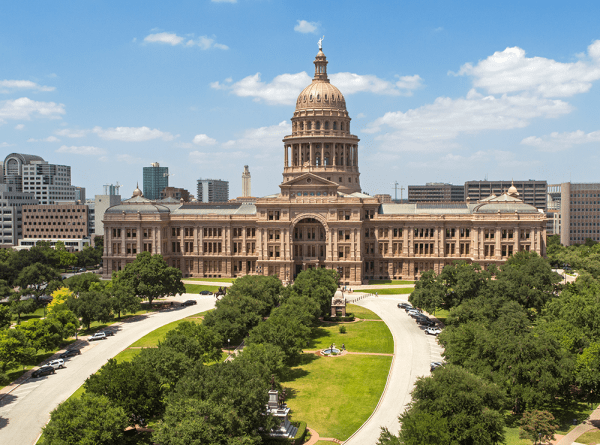
Texas House advances bill that would prohibit land sales to people and entities from certain countries

*This is reported by KERA News.

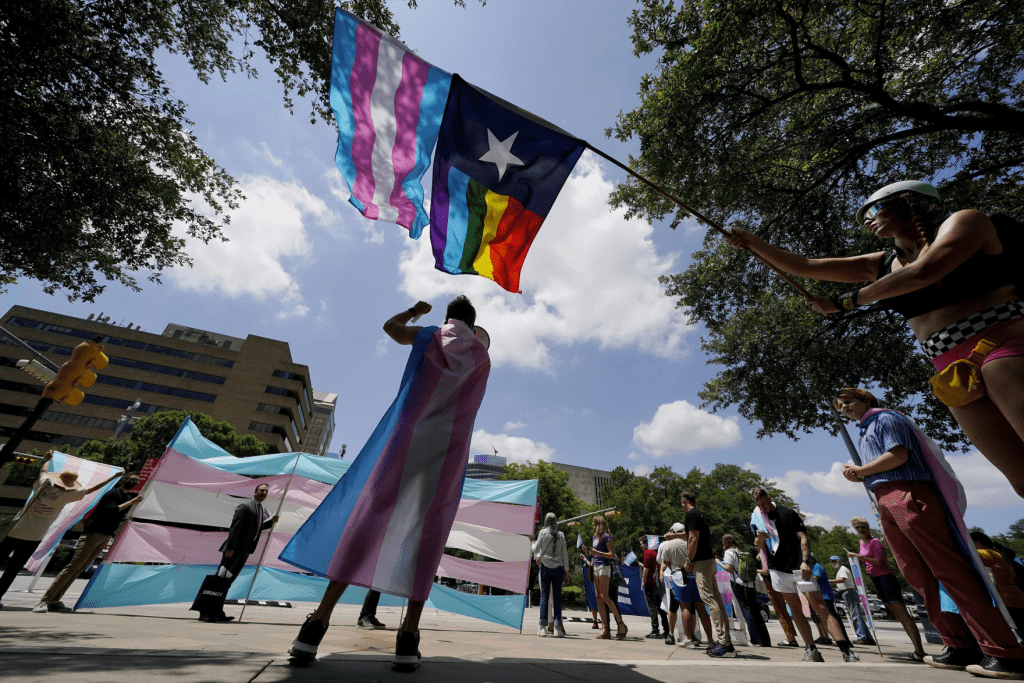
The Texas House agreed late Thursday to let the governor determine the countries whose residents, governments and other entities could be banned from buying property here.

Members granted the governor such power when they amended Senate Bill 17, whose real estate sales restrictions were limited to countries that the U.S. national director of intelligence has designated as national security threats. Currently, that list includes only China, Iran, North Korea and Russia.

After giving the governor the ability to expand the list of restricted countries, the House then gave SB 17 preliminary approval in a 85-60 vote. The bill now heads back to the Senate.

State Rep. Nate Schatzline, the Republican from Fort Worth who introduced the amendment, said the goal was to make sure that any threats to Texas could quickly be addressed.

“Our governor can act swiftly rather than waiting for a year for that to be added into the [director of national intelligence’s] designated country list,” he said.

That amendment drew rebuke from Democrats.

“This gives the governor unfettered power to add whatever county he wants to in this bill,” said state Rep. Gene Wu, chair of House Democratic Caucus. “It’s kind of dangerous to say one person can decide whatever country he or she wants to add to this without any oversight, without any controls — this is the definition of overreach.”

Schatzline’s amendment also allows the governor to bar people “transnational criminal organizations” to the list of entities barred from buying Texas property. Schatzline pointed to the Venezuelan gang Tren de Aragua as an example.

State Rep. Cole Hefner, the Mt. Pleasant Republican carrying SB 17 in the lower chamber, described the bill during Thursday’s hourslong debate as “securing Texas land and natural resources and making sure that this precious resource does not fall prey to adversarial nations and oppressive regimes that wish to do us harm.”

The bill’s advancement came over opposition from Democrats who are concerned that it could be used to potentially discriminate against Asian Americans.

The bill will need one more House vote before it goes back to the Senate. The upper chamber previously approved a version of the bill, but House members amended several key portions of it Thursday.

The Senate’s previous version would have exempted anyone or any entity that leased the property to someone else for under 100 years. The House limited that exemption to property leased to someone else for one year or less. Rep. Mitch Little called the 100-year lease exemption “a loophole that you could drive a Mack truck through.”

The House also previously amended the bill to exempt lawful permanent residents.

But Democrats failed to make changes to the bill several times Thursday. Their failed amendments included provisions that would have exempted visa holders such as medical students and researchers, performers and athletes. They also raised concerns that the law could hurt the Texas economy.

SB 17 is Brenham Republican Sen. Lois Kolkhorst’s second attempt at limiting who can buy property in Texas. Similar legislation she authored in 2023 died in the House. In committee hearings this year, she described the legislation as protecting Texas’ assets from “hostile nations.”

“This is a matter of national security,” she said in March. “Texas must act now to protect our land, food sources, water, and natural resources.”

A batch of new, more conservative lawmakers were elected to the House last year, giving new life to legislation that struggled in previous sessions. Chief among those measures are the creation of school vouchers.

If passed, the bill goes into effect Sept. 1 and would only apply to purchases or acquisitions after that date.

It would require the attorney general’s office to create a process to investigate possible violations and refer the matter to a district court. If the court finds a violation, it would be authorized to order the purchaser to divest from the property either by selling it or terminating the lease, according to the House Research Organization’s most recent analysis of the bill. The court also would be required to refer the matter for potential criminal offenses.

The amount of Texas property owned by entities from outside the U.S. is not tracked in detail, aside from agricultural land. But Joshua Blackman, a constitutional law professor at South Texas College of Law, said it is likely a very small fraction. In the U.S. overall, Chinese investors own less than 1% of total foreign-held acreage, according to 2021 data from the U.S. Department of Agriculture. Investors from Russia, Iran and North Korea collectively own less than 3,000 acres.

But to Abraham George, chair of the Texas Republican Party, 1% is too much — which is why the bill was a party priority.

Rep. Angie Chen Button, who was only the second Asian American woman to serve in the Legislature and whose parents fled from China, also spoke in support of the bill Thursday night, saying the bill aims to “protect our freedom, liberty and national security.” She introduced a similar bill last session.

Some Asian Texans are concerned the bill would create animosity and “state-sanctioned racial profiling,” said Lily Trieu, executive director of the civic engagement group Asian Texans for Justice.

The bill doesn’t prohibit purchases of land based on national origin, which would violate federal civil rights laws. Instead, it prohibits people based on their permanent residence.

Wu, who immigrated to the United States from China as a child, said the bill could impact not just Chinese people in Texas, but members of all Asian communities in the state.

“Nobody knows the difference between Chinese, Japanese, Vietnamese and Korean, right? Nobody knows what your immigration status is,” he said in an interview. “When they discriminate against you … when they look for people to assault, they don’t really care what you are. They care that you have Asian face.”

Trieu said the group’s No. 1 concern is that individuals shouldn’t be conflated with governments.

“Just like how no one here would want to travel to another country and be held individually accountable for what Governor Abbott does or what President Donald Trump does,” she said.

“These individuals should not be held accountable for what the government of their national origin does, or what their ideology is, or what, you know, the government does as an entity.”

Trieu said the group was formed to engage Asian Texans in civic participation such as voting, but this bill galvanized people into getting involved in legislation.

Wu expects the bill is just the start of that. And even with its passage, he sees it as a loss for the Republican Party because it could push Asian American voters to shift to the Democratic Party in the 2026 midterm elections.

“I think the Republicans are heading into gale force winds in 2026 if they want to alienate and make enemies of an entire community who for a large part has stayed out of politics,” he said in an interview.
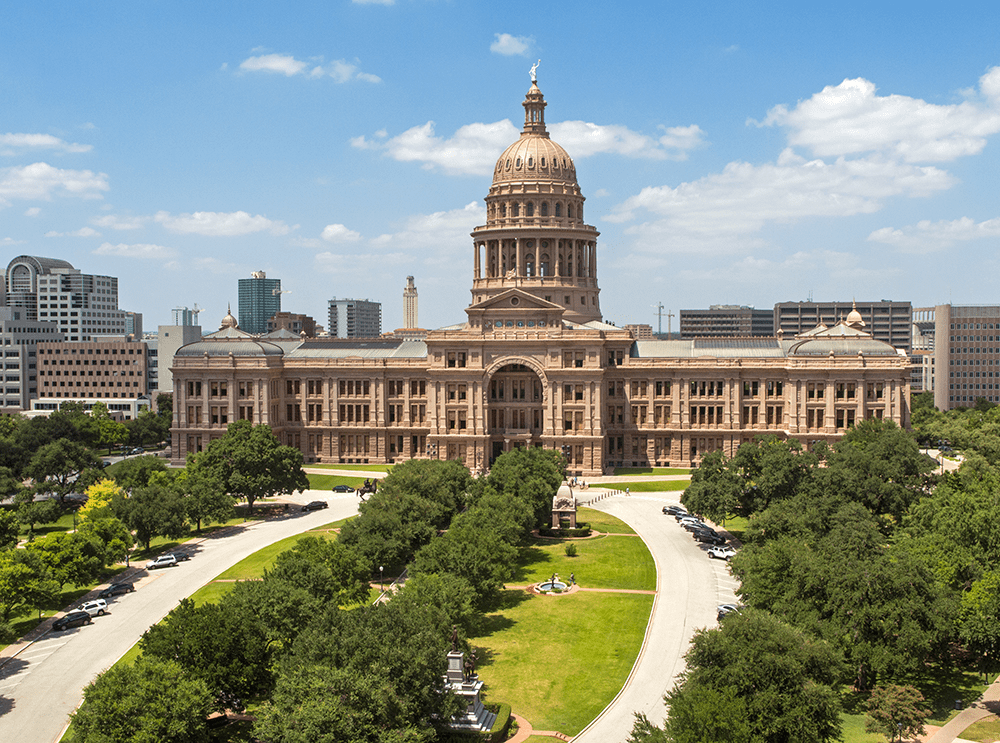
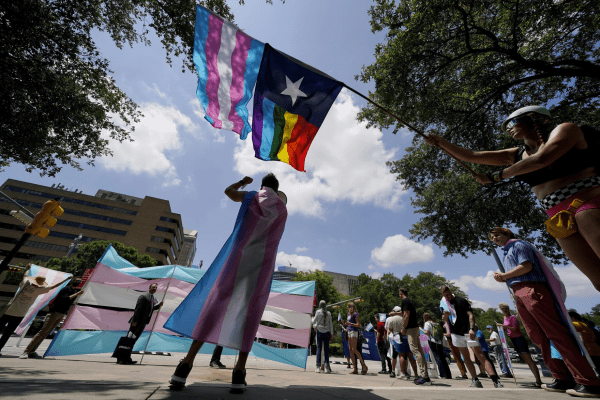
Texas Senate passes bill that would allow teachers, students to misgender others without punishment

*This is reported by KERA News.

A proposed bill aimed at protecting public employees, teachers and students who misgender their peers cleared the Texas Senate on Thursday, moving one step closer to becoming law.

Senate Bill 1999, authored by Republican Sen. Bryan Hughes of Mineola, would prevent state agencies and schools from punishing employees or students who refer to another person using terms “consistent with (their) biological sex,” even if that term doesn’t match the person’s gender identity. According to the bill, this law wouldn’t limit a school “from adopting policies and procedures to prohibit and prevent bullying.”

“A teacher may have a moral or religious objection that prevents them from using language with a student or other person’s biological sex,” Hughes said. “No teacher, no public employee, should be punished for using a pronoun consistent with a person’s biological sex.”

The bill was passed on a vote of 20 to 11. This came after Sen. José Menéndez, a Democrat from San Antonio, offered a floor amendment on Wednesday that would’ve offered similar protections to those who choose to express their gender identity.

“There are gonna be people out there that are going to feel as if this legislation is trying to take away their right to exist as who they are,” Menéndez said on Wednesday. “Just like we can’t force anyone to use pronouns, we can’t also force someone not to have them or express them.”

Hughes pushed back against the proposed amendment, saying his bill wouldn’t prevent “someone from asking to be identified as whatever they wish,” but would instead prevent teachers and other public employees from being “punished because they get it wrong.”

Menéndez’s amendment was ultimately struck down on Wednesday, paving the way for the bill’s final passage one day later. The bill now heads to the Texas House for consideration.

Salt Lake City adopts four flags to represent residents, visitors

*This press release is from the Mayor’s Office of Salt Lake City.

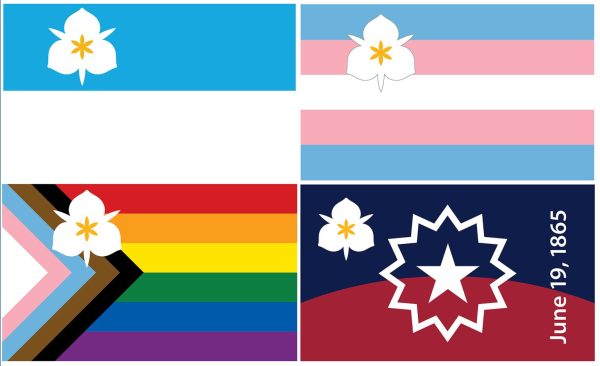
Salt Lake City Mayor Erin Mendenhall proposed adopting three new City flags, in addition to the traditional Sego Lily Flag, on Tuesday to most accurately reflect the values of the City and its residents. The Salt Lake City Council adopted the flags via ordinance in its formal meeting.

The three additional city flags celebrating human rights include: 

  • The Sego Celebration Flag, representing the history of Juneteenth and the City’s Black and African American residents;
  • The Sego Belonging Flag, representing the City’s LGBTQIA residents and broader acceptance of this community; and
  • The Sego Visibility Flag, representing the City’s transgender residents and a commitment to seeing and celebrating their lives. 

“Our City flags are powerful symbols representing Salt Lake City’s values,” said Mendenhall. “I want all Salt Lakers to look up at these flags and be reminded that we value diversity, equity and inclusion—leaving no doubt that we are united as a city and people, moving forward together.”

House Bill 77, passed during the 2025 legislative session, narrowed the types of flags a city can display publicly on government property unless a flag meets the criteria outlined in the bill as an “exempted flag.” It was important to the Mendenhall administration that the City work within the constraints of recent legislation while continuing to uphold Salt Lake City’s values.

“Like other civic symbols, these flags reflect our shared humanity and the values that help everyone feel they belong—no matter their background, orientation or beliefs,” said Salt Lake City Council Chair Chris Wharton. “While the state has restricted which flags public buildings can fly, I’m glad we can still uphold our community’s values within the law.”

The three new flags were chosen because versions of them have been consistently displayed at City Hall during Mayor Mendenhall’s time in office and are representative of our community’s diverse, loving, and accepting values.

In all three flags, the sego lily in the upper corner of these designs is the City’s most recognized emblem, clearly identifying that each flag is representative of Salt Lake City specifically. 

In 2020, Salt Lake City adopted its current flag following a community-driven redesign: a field of blue over white with a white sego lily with three petals in the upper hoist canton. Salt Lake City is the only state capital with a three-word name. Despite the harsh environmental climate it lives in, the sego lily is a symbol of resilience, exemplifying Salt Lake City and its residents. Over the past five years, the sego lily and the City’s flag have grown to be highly recognized symbols and sources of pride in the city.

The City flags will continue to fly alongside the State of Utah and American flags.

Oklahoma GOP legislators ask Supreme Court to overturn same-sex marriage

*This is reported by LGBTQ Nation.

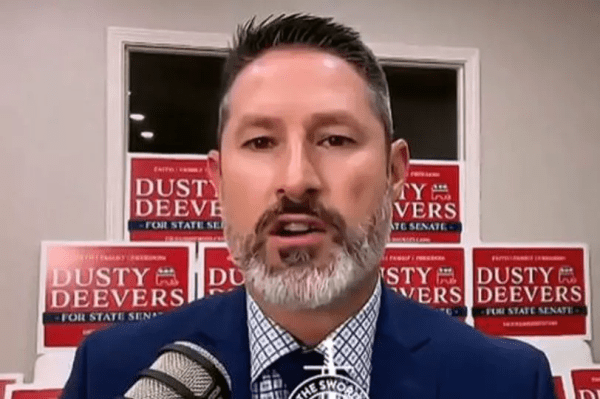
Christian nationalist Oklahoma state Sen. Dusty Deevers (R) and state Rep. Jim Olsen (R) have filed a resolution asking the U.S. Supreme Court to overturn Obergefell v. Hodges, the 2015 U.S. Supreme Court decision that legalized same-sex marriage nationwide. Republican lawmakers in at least five other states have introduced similar resolutions, all of which are largely symbolic and non-binding.

Senate Concurrent Resolution 8 claims that the 2015 high court ruling conflicts with the original meaning of the U.S. Constitution, the country’s founding principles, and “the deeply rooted history and tradition” regarding state regulation of marriage rights. It also notes that 75% of Oklahoma voters supported banning any recognition of same-sex unions in a 2004 ballot measure.

The resolution refers to the Supreme Court decision as an “unwarranted governmental intrusion,” accuses the high court of abusing “the Fourteenth Amendment’s Due Process Clause to fabricate substantive rights,” and says the 2015 decision is “undermining the civil liberties” of states “without any valid constitutional warrant for doing so.”

“For millennia marriage has been understood, both in biblical teaching and in the Anglo-American common-law tradition, as the lifelong covenant union of one man and one woman,” the resolution states. “Obergefell arbitrarily and unjustly rejected and prohibited states from recognizing this definition of marriage in favor of its own definition of marriage and a novel, flawed interpretation” of the U.S. Constitution.

It also notes that both Democratic Justices Ruth Bader Ginsburg and Elena Kagan had previously officiated same-sex weddings before the ruling and “should have recused themselves” from the Obergefell case. It further states that the decision has resulted in litigation directly targeting Christian business owners who refuse to accommodate same-sex couples and has resulted in Christians being vilified as “bigoted.”

Obergefell played a role in erasing biological distinctions in other arenas, threatening women’s privacy, safety, and athletic opportunities,” the resolution adds, drawing a dubious connection between same-sex marriage and transgender people’s civil rights.

If the resolution is approved by state lawmakers, copies of it will be distributed to the Supreme Court, the president of the U.S. Senate, the Speaker of the House of Representatives, members of the Oklahoma congressional delegation and the Oklahoma attorney general, the resolution states.

Similar resolutions have been introduced in at least five other states: Michigan, Idaho, Montana, North Dakota, and South Dakota.

Deevers & Olsen’s resolution relies on legal misinterpretations

The court’s 2015 decision relied partially on the 1967 high court ruling in Loving v. Virginia, which granted marriage rights to heterosexual couples consisting of individuals from different racial ethnicities.

“If rights were defined by who exercised them in the past, then received practices could serve as their own continued justification and new groups could not invoke rights once denied,” the Supreme Court wrote in its 2015 decision.

The court’s majority opinion also ruled that governmental refusal to recognize same-sex marriages denies them numerous benefits of marriage, including the ability to care for children and family members. State bans on same-sex marriages also restricted same-sex couples’ and their families’ ability to move freely around the country, since their rights could vary greatly if they moved to an anti-marriage state, the court ruling said.

As such, the court ruled that same-sex marriage bans violate both the Due Process Clause and the Equal Protection Clause by needlessly introducing instability into same-sex relationships for no justifiable or compelling government interest.

While some Christian businesses have been sued for refusing to serve LGBTQ+ people and same-sex couples based on “sincerely held religious beliefs,” these lawsuits have focused on how such refusals violate public accommodations protections in state anti-discrimination laws, which require businesses to treat citizens equally, regardless of sexual orientation.

Deevers has long opposed same-sex marriages

Speaking last month to Tony Perkins, president of the Family Research Council (FRC) — which has been certified as a hate group by the Southern Poverty Research Center — Deevers said, “The fact is, Obergefell is fundamentally antithetical to all of these, and there is just no right to gay marriage in the Constitution.”

Despite this claim, the Supreme Court believes that the Constitution’s equal protection and due process provisions require the government to treat all individuals equally under the law unless there’s a compelling government interest to do otherwise.

“Ultimately, marriage is not the state’s institution, it’s God’s institution,” Deevers said. “No Supreme Court ruling that redefines a God-ordained institution is ever truly settled: not morally or culturally, and even constitutionally. The rogue court will stand in judgment before God for their decision.”

Deevers’s campaign website also clearly states his anti-LGBTQ+ beliefs.

“It is outrageous that drag queens are permitted to dance and twerk for children at pride parades and story hours in our state,” his website states. “It is outrageous that … public schools have exposed elementary and middle school children to… LGBTQ+ propaganda…. It is outrageous that Critical Race Theory and Queer Theory dominate in many of our public institutions. I promise to support legislation to put a stop to all of this.”

A hotel kicked a lesbian out of a women’s restroom for being “a man.” Now it’s changing its story.

*This is published in LGBTQ Nation.

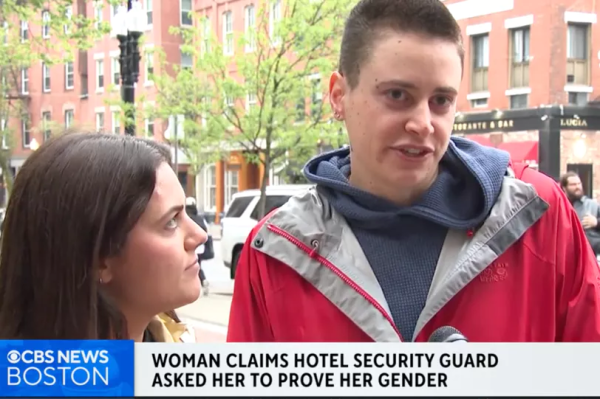
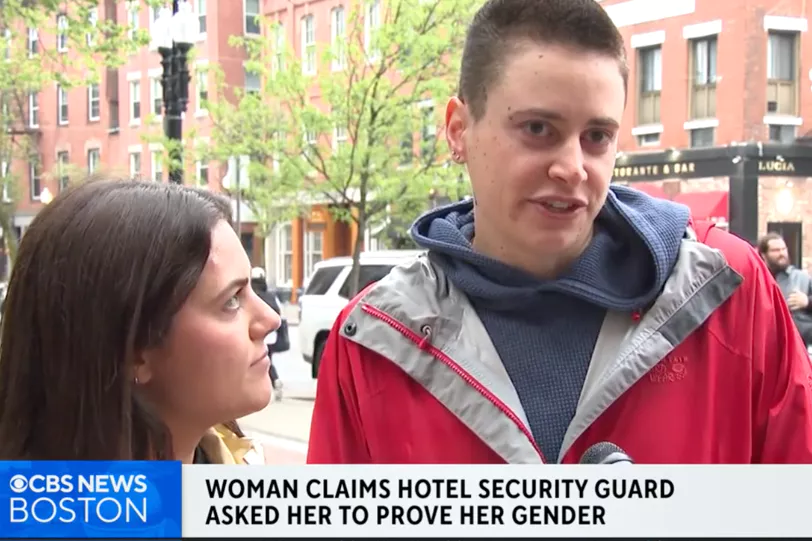
After defending the actions of a security guard who threw a lesbian couple out of a women’s restroom and accused one of them of being a man, a five-star hotel in Boston has suspended the guard and admitted he acted in error.

In addition to sidelining the staff member, the Liberty Hotel on Boston’s Beacon Hill said all staff are being retrained “on inclusive practices and guest interaction protocols.” The hotel is also donating to a local LGBTQ+ organization, WBZ News reports.

“The Liberty Hotel is and always will be an ally of the LGBTQ+ community and a place where everyone is welcome and celebrated,” the hotel said in a statement. “We will continue to educate and train our team to ensure that everyone feels safe and accepted within our four walls, and guests who do not show tolerance and acceptance towards others will be removed.”

The hotel’s statement issued Tuesday was in stark contrast to their initial reaction to the incident on Saturday during a Kentucky Derby viewing party, when the guard stormed into the women’s restroom in the hotel lobby and began banging on stall doors. He accused one of the lesbian partners of being a man.

“All of a sudden there was banging on the door,” said one of the women, Ansley Baker.

“I pulled my shorts up. I hadn’t even tied them. One of the security guards was there telling me to get out of the bathroom, that I was a man in the women’s bathroom. I said, ‘I’m a woman.’”

Baker’s partner, Liz Victor, was waiting by the sinks and heard the commotion.

“I looked down and I saw her shoes, and that’s when I was like, ‘What is going on?”

As Baker was escorted out, the women said, other women in line for the restroom hurled insults at her, calling Baker “a creep” and demanding she be removed. The security guard then demanded to see the women’s IDs to prove their gender.

After a heated exchange, the couple was told to leave the hotel.

In their initial statement issued Monday, the Liberty Hotel accused the two women of sharing one stall.

“An incident occurred at the Liberty Hotel on Saturday, May 3 where several women alerted security of two adults sharing a bathroom stall,” the hotel wrote. “The bathroom was cleared out as two adults in one stall are not permitted. After leaving the bathroom, a member of the couple from the stall put their hands on our security team and it was then that they were removed from the premises.”

“The Liberty Hotel has a zero-tolerance policy for any physical altercations on our property,” the hotel continued. “The safety of our guests and staff is our priority, and this event is under investigation.”

With the investigation complete, the hotel has changed its story.

The couple vehemently denied being in the same stall. 

“If that’s what he thought the issue was once he opened the stall door, obviously there was only one person in there, so it should’ve been case closed,” Victor said. “Let her tie up her shorts and go about her day.”

The couple said they went public hoping to make a difference for others experiencing the same kind of treatment.

“We know we’re not the only ones that face this kind of thing and just hope it doesn’t happen again and that other people who go through this receive the same support,” said Baker. 

Victor added, “It was a very scary situation, but trans women experience this every single day in the U.S. and across the world.” 

Since 2016, Massachusetts state law has allowed all people to use restrooms and locker rooms that are most aligned with their gender identity.

Boise City Council approves resolution adopting pride flag as official flag amid state law tensions

*This is reported by KTVB.

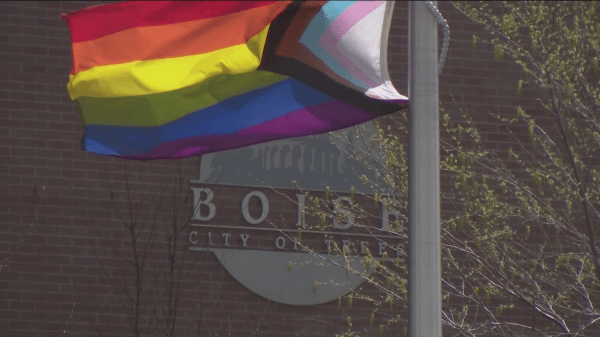
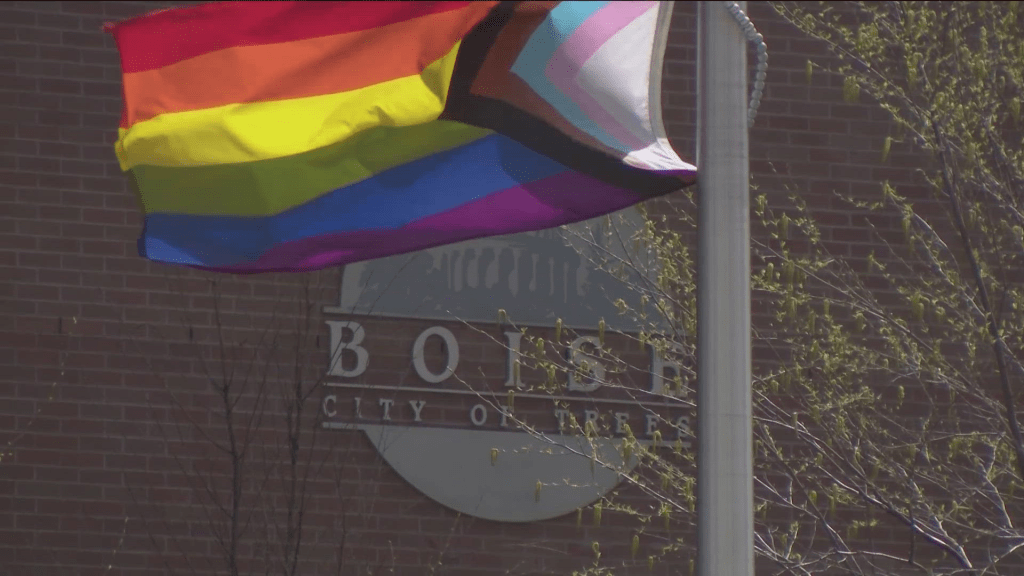
On Tuesday, Boise City Council members approved a resolution designating three flags, including the Pride flag, as official flags of the City of Trees.

The vote comes amid ongoing tensions between Boise Mayor Lauren McLean and the Idaho Attorney General over a new state law, House Bill 96, which regulates which flags local governments can display.

“A city should be able to put up flags at various times for whatever reason the community might want,” community member Patti Raino said, “and this is a community that supports, certainly pride. Has always supported pride.” 

Hundreds of people showed up to rally in support of the city before the meeting started. About a dozen of those were protestors against the resolution — including Robert Coggins. 

“I’m just a native Idahoan,” he said. “I feel like I do not have a voice, and this mayor does not let me have a voice. I think [the flag is] exclusionary. It doesn’t represent me.” 

Council President Colin Nash, who sponsored the resolution, said it would help “memorialize” flags the city flies and ensure compliance with state law.

“It’s important for us, not only to communicate to any law enforcement that might be interested, but also to the public that we’re doing this out of a sense of duty, rather than defiance of the state legislature,” Nash said before the vote.

Nash added the flags represent the city’s values and responsibilities. 

“This is our lawful expression of our dedication to ensuring all members of our community feel seen, respected, and welcome,” he said. “I think there is an expectation among the opponents of it, that the government should remain neutral in issues like this. I’m not neutral on defending marginalized neighbors.”

The resolution includes not only the Pride flag but also designates the blue City of Boise flag and the white organ donor flag honoring National Donate Life Month as official city flags.

City officials say the resolution acknowledges and formally ratifies that flags flown at Boise City Hall comply with Idaho state law.

The council meeting did not include public testimony on the resolution. During the council discussion, McLean reminded the public in attendance they could not speak after several members of the audience made comments towards the council. 

The city announced last week, attorneys from Holland & Hart have volunteered to represent Boise pro bono if any legal action is taken against the city regarding this matter. The volunteer legal team includes Erik Stidham, Jennifer Jensen, Alex Grande and Anne Haws.

Every Anti-LGBTQ Bill Defeated in Florida’s 2025 Legislative Session

*This is a press release from Equality Florida.

 The 60 days of Florida’s legislative session have concluded. While lawmakers will have to come back in the following weeks to finalize the budget, LGBTQ Floridians and allies across the state are celebrating a resounding and inspiring win: every anti-LGBTQ bill filed in the 2025 legislative session was defeated.

This is more than a policy victory; it’s a testament to the unstoppable force of people power, coalition-building, and a growing refusal to let hate go unchallenged.

“Once again, we’ve done what many thought was impossible: not one anti-LGBTQ bill passed this session,” said Nadine Smith, Executive Director of Equality Florida. “We improved on the tremendous defeat of 21 out of 22 anti-LGBTQ bills last session for a complete sweep this session, defeating every anti-LGBTQ bill. That’s not luck — that’s the strength of our grassroots movement. It’s students and seniors, faith leaders and frontline workers, parents and teachers, standing together and making sure lawmakers hear us loud and clear: we will not back down.”

In 2024, 21 of 22 anti-LGBTQ bills were defeated — many were expected to return this year with greater force, buoyed by the largest Republican supermajority in Florida history and a national climate increasingly hostile to LGBTQ issues — particularly transgender issues. But instead of escalation, lawmakers showed restraint, perhaps weary from years of pushing culture war bills that do nothing to address the real challenges Floridians face. Only four anti-LGBTQ bills were filed in 2025 — and every one of them failed:

  • Pride Flag Ban (HB 75/SB 100), a bill banning government agencies, including public schools and universities, from displaying any flag that represents a “political viewpoint,” including Pride Flags.
  • Don’t Say Gay or Trans at Work (HB 1495/SB 440), a bill aimed at censoring public workplace discussions of LGBTQ issues, and enabling harassment of transgender employees.
  • Anti-Diversity In Local Government (HB 1571/SB 420), a bill attempting to ban cities and counties from recognizing, supporting, and protecting the LGBTQ community and other minorities
  • Banning Diversity & Equity In State Agencies (HB 731/SB 1710), a bill that would defund a broad range of activities and positions under the guise of banning DEI in state agencies and would ban state contractors and grantees from using state funds for DEI.

This powerful blockade against anti-LGBTQ extremism was built by a broad coalition of everyday Floridians. They showed up to the Capitol every single day of session, testified in legislative hearings, sent messages to lawmakers, and organized from the Panhandle to the Keys. This session alone, over 400 grassroots lobbyists came to Tallahassee for our largest advocacy week ever. Over 16,000 Floridians sent emails to legislators, and our Pride At The Capitol participants met face-to-face with lawmakers more than 325 times over the course of session. These direct actions continue the momentum building that has grown Equality Florida’s base by more than 165,000 people in just two years, reaching nearly half a million strong in total.

“This win belongs to every person who stood up, spoke out, and locked arms with their neighbors to stop the attacks before they could advance,” Smith added. “And while we celebrate, we know the fight isn’t over. This session still delivered real harm to democracy and equity that impacts all Floridians — and we are just as committed to undoing that damage and building a Florida that truly belongs to all of us.”

Salem, MA City Council unanimously declares trans sanctuary city status

*This was reported by Boston Spirit Magazine in April

This past Friday, the Salem City Council unanimously passed a resolution to make the City of Salem a sanctuary city for transgender and nonbinary individuals. In its proclamation, the council notes this status in necessary because “the federal government’s continued actions have encouraged discrimination towards transgender persons by state and local governments, schools, hospitals, businesses, other public and private institutions.”

“The City Council of the City of Salem hereby reiterates its commitment to uphold transgender rights and equal protections for transgender community members under the Constitutions, Laws, Ordinances and Regulations of the United States, the Commonwealth of Massachusetts, and the City of Salem and declares itself a sanctuary city and a place of safety for transgender and gender non-conforming people,” states the proclamation in part.

The proclamation goes on to affirm:

“that the City of Salem recognizes the importance of gender-affirming healthcare as a matter of health, privacy, and equality, and to ensure that those rights are upheld for all residents and visitors within the City of Salem.

“that the City of Salem will ensure a safe and supportive environment for all students regardless of gender identity or expression in the Salem Public Schools, including the protection of teachers and other city employees who help to foster such an environment,” and

“that the City of Salem shall endeavor to work with the Salem Human Rights Coalition; to further identify equity shortcomings for the city’s transgender and gender non-conforming community within municipal government, operations, and practices, to ensure the full protection of said community’s residents and visitors.”

LGBTQ REALTORS discuss clients leaving Red States for Blue States and Better Countries

On this episode we are joined by the amazing Erin Morrison.

What happens when real estate meets resistance, advocacy, and identity?

In this candid conversation, LGBTQ+ real estate professionals Erin Morrison, Bob McCranie, Kimber Fox, and Leslie Wilson sit down to discuss the evolving challenges of being openly queer in an industry—and a country—facing political pushback.

🏳️‍🌈 Topics covered include: How anti-LGBTQ+ legislation affects clients and agents

The role of advocacy in real estate Why “just doing business” isn’t neutral anymore

Personal stories from the frontlines of inclusion in housing

📍 Whether you’re an agent, ally, or advocate, this video unpacks the real stakes of LGBTQ+ visibility in today’s market.

Back in the USSR? Europe’s Emerging LGBTQ Travel Spot

While Mother Russia continues to spend its time pounding Ukraine and its own minorities into submission, other former Soviet Socialist Republics out there are moving in the opposite direction. The high court of the predominantly Catholic Baltic state Lithuania ruled last month that the country’s ban on same sex civil unions is unconstitutional. Public sentiment is also in line with this ruling, with 50% of the country agreeing civil unions should exist.

Lithuania still faces its challenges, but also struck down their version of “Don’t Say Gay” laws in January. It also has decided requiring a sex change is no longer a viable option for transgender individuals who simply want to change their name.

If you’d like to see more of the positive side of traveling to Lithuania, check out this YouTube video from the Queer Kingdom channel.

Blog at WordPress.com.

Up ↑