At least dozens, but likely many more Americans from the LGBTQIA+ community have fled to the Netherlands in recent months out of fear of Donald Trump’s policies, AD reports after surveying organizations involved in helping them. The number of American asylum applications is already higher than in the whole of 2024, the Immigration and Naturalization Service (IND) told the newspaper.
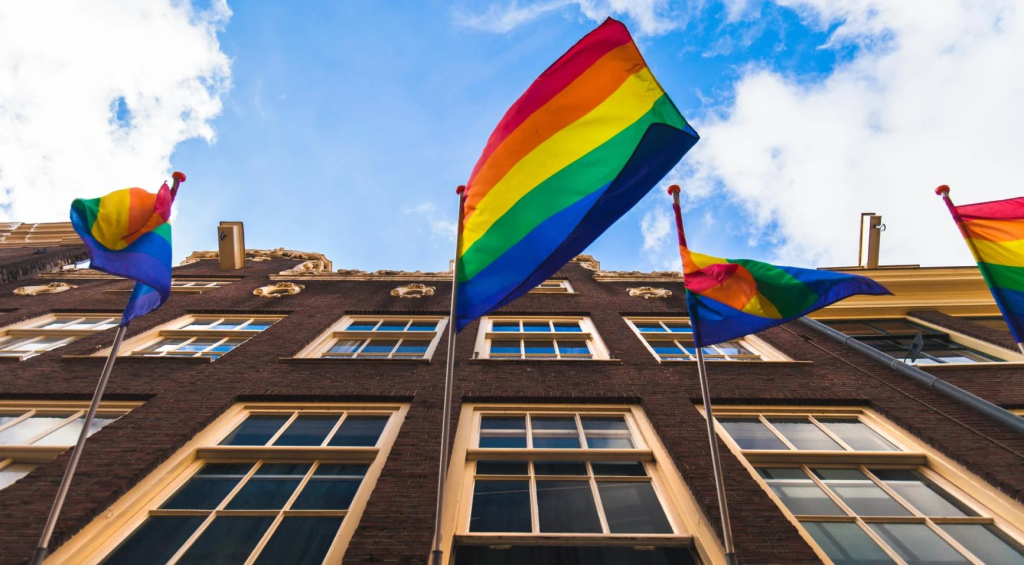
Since Trump took office for his second term as United States president, the American government implemented policy to only recognize two genders, ban rainbow flags from government buildings, scrap the funding of transgender care for young people, and officially ban terms like “gender identity,” “non-binary,” and “transsexual.” Some conservative states are going even further. Arkansas, for example, is trying to ban hairstyles that “do not match” the gender children were assigned at birth.
Organizations like Transgender Network, LGBT Asylum Support, and Trans Rescue told AD that Trump is causing great unrest in the American LGBTQIA+ community. They all report an enormous increase in requests from Americans to find housing in the Netherlands. LGBT Asylum Support alone has received over 50 requests for aid since Trump took office.
“Our people are really afraid of persecution,” Wesley de Robles of Immigration Netherlands Services, an organization that helps American entrepreneurs obtain residency in the Netherlands via the Dutch-American Friendship Treaty (DAFT), told the newspaper. The treaty, intended to promote business relations, states that Americans who register as an entrepreneur with the Chamber of Commerce and present a business plan may be eligible for a residency permit.
According to De Robles, many transgender people, in particular, are using this route to flee the United States. “Since Trump, we have received around 30 applications every month, more than half of which come from the LGBTI community.” Before Trump, there were only a handful of applications per month.
The IND is also seeing an increase in asylum requests from Americans. In the first three months of 2025, there were 20 applications, while in previous years, between 9 and 19 Americans sought asylum in the Netherlands over a whole year. About half of the applicants are transgender, Transgender Network told AD, based on data from asylum doctors.
Fewer people use the official asylum route because the IND applies strict conditions. Only those who are at serious risk of persecution or inhumane treatment have a chance. LGBT Asylum Support has, therefore, asked Asylum Minister Marjolein Faber to “recognize the deteriorating situation for transgender people as a reason for asylum.”
But Faber refused. The PVV Minister responded that Trump’s policy “gives no reason to assume that transgender people should fear persecution.” So the conditions for asylum will remain unchanged, she said.
Americans living in the Netherlands will hold a protest in front of the American consulate on Saturday, one of the organizers told NL Times. The protest is not specifically due to Trump’s treatment of the LGBTQIA+ community, but against the American government’s “violation of due process rights” in general. This follows several immigrants being taken from American streets and detained in “a brutal prison in El Salvador.”
The demonstration will happen at 1:00 p.m. on Saturday in front of the American consulate on the Museumplein in Amsterdam, which is currently closed for renovations. “On April 19, we gather to say loudly and clearly: Hands Off Our Due Process Rights!” the organizer said.
Texas state Rep. Andy Hopper (R) displayed his ignorance about LGBTQ+ issues recently by making incorrect statements about intersex people during a House floor debate. Hopper made his comments while supporting an amendment to eliminate state funding to the University of Texas at Austin for offering its LGBTQ+ and diversity, equity, and inclusivity (DEI) programs and degree plans, Advocate reported.
Under questioning by state Rep. Lauren Ashley Simmons (D), Hopper first claimed that biological sex and gender identity are “one and the same.” Simmons replied, “That’s not true, but moving on,” and then asked about his thoughts on intersex people.
“I don’t even know what that means, ma’am,” Hopper replied before asking for a definition. A recording of his reply captured audible gasps and laughter at his response.
Intersex individuals have innate variations in physical traits that differ from typical expectations for male or female bodies, including variations in reproductive organs, hormones, or chromosome patterns. An estimated 1.7% of infants are born intersex — roughly the same number of people born with red hair. Many intersex individuals are forced to undergo irreversible surgeries to make their anatomies resemble stereotypical male or female bodies and are also subject to stigma and discrimination.
“You are not sure what intersex people are, if they exist or not, but you want to defund a program about something that you don’t understand,” she said. “That’s why I’m seeking clarification.”
She then said, “I’ll take it really slow: Since the beginning of time, people have been born with either ambiguous genitalia or with or without ovaries… And so, those people, from a biological standpoint, exist — they’re not mythical.”
“Those intersex individuals are still XX or XY,” Hopper said, referring to chromosomes that can determine someone’s biological sex. “So, you can’t change that.”
However, as soon as Hopper commented, state Rep. Valoree Swanson (R) whispered into Hopper’s ear, “Andy, that’s not true” — her words amplified by a microphone.
Intersex people can have variations in their sex chromosomes, including people with Jacob’s Syndrome (XYY), Klinefelter syndrome (XXY), and triple X syndrome (XXX).
Video of the interaction gained numerous web comments, with some critics saying that Hopper demonstrated why Republicans shouldn’t eliminate the Department of Education.
Republicans have largely opposed DEI and LGBTQ+ initiatives, calling them a divisive form of indoctrination.
Sir Keir Starmer must embrace Donald Trump’s agenda by repealing hate speech laws in order to get a trade deal over the line, sources close to JD Vance have told The Independent.
The warning came after the US vice-president suggested a UK-US agreement may be close, with the White House “working very hard” on it.
He told UnHerd: “I think there’s a good chance that, yes, we’ll come to a great agreement that’s in the best interest of both countries.”
But allies of Mr Vance say he is “obsessed by the fall of Western civilisation” – including his view that free speech is being eroded in Britain – and that he will demand the Labour government rolls back laws against hateful comments, including abuse targeting LGBT+ groups or other minorities, as a condition of any deal.
The Independent was told: “The vice-president expressing optimism [on a trade deal] is a way of putting further pressure on the UK over free speech. If a deal does not go through, it makes Labour look bad.”
Mr Vance’s recent speech to the right-wing Heritage Foundation think tank was cited as an example of his views on Western culture and free speech being linked to securing an agreement.
“No free speech, no deal. It is as simple as that,” the source close to the vice-president said.
It is understood that Britain has already offered to drop its proposed digital services tax as a means of getting a trade deal through. But the US wants to see laws on hate speech repealed as well as plans for a new online safety law dropped.
Labour has made it clear it is not prepared to go that far. A Downing Street source said the subject “is not a feature of the talks”.
However, the issue seems to be one of the main sticking points from the White House’s perspective.
Talks began last month after Sir Keir visited Mr Trump in the White House and intensified earlier this month with the tariffs announcement. While tariffs have been suspended for 90 days, the hope is that a deal can be done before they are brought into force.
Downing Street is aiming not for a traditional trade deal, but one focused on growth industries of the future, such as biotech and artificial intelligence.
Ministers insist this will not mean Britain has to accept imports of chlorinated chicken or beef with hormones, which have long been cited as concerns. However, they hope it will see most, if not all, tariffs removed between the two countries.
While Mr Trump’s trade secretary Howard Lutnick has taken a leading role in the talks with UK business secretary Jonathan Reynolds, the president announced at the start that Mr Vance would take the overall lead in the negotiations. UK sources have said he has been at the forefront of the tech side of the talks.
This has put the issue of free speech front and centre for Mr Vance and his allies in getting a deal with the UK.
It continued when Sir Keir visited the White House for the first time since Mr Trump took power and clashed with Mr Vance in front of the TV cameras in the Oval Office. The vice-president claimed that free speech was being undermined and also claimed that laws being brought in for online safety were an attack on US tech giants.
Most recently, the trial of Isabel Vaughan-Spruce for silently praying outside an abortion clinic has become a major issue in the US, with Mr Vance criticising the UK legal system over the case.
In his interview with UnHerd, the vice-president expressed optimism about the talks.
He said: “We’re certainly working very hard with Keir Starmer’s government.
“The president really loves the United Kingdom. He loved the Queen. He admires and loves the King. It is a very important relationship. And he’s a businessman and has a number of important business relationships in [Britain]. But I think it’s much deeper than that.
“There’s a real cultural affinity. And, of course, fundamentally, America is an Anglo country.”
Meanwhile, Mr Reynolds on Tuesday said he had been clear with US counterparts that he did not support Mr Trump’s approach on tariffs.
But he said there is a need in some instances to look at how to rebalance world trade to ensure greater fairness.
He said: “I don’t support the kind of approach to unilateral tariffs that the US has pursued. We’ve made that very clear to our US friends and colleagues, but there are issues as to how parts of trading works around the word, and there is a need to look at how we can do that fairly: how we can consider where in some cases countries are not operating to the same rules that we might expect here in the UK?”
The Independent is the world’s most free-thinking news brand, providing global news, commentary and analysis for the independently-minded. We have grown a huge, global readership of independently minded individuals, who value our trusted voice and commitment to positive change. Our mission, making change happen, has never been as important as it is today.
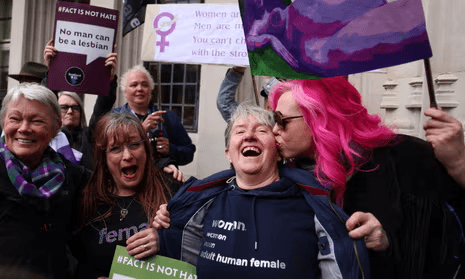
The UK supreme court has issued a historic and definitive ruling that the terms “woman” and “sex” in the Equality Act refer only to a biological woman and to biological sex.
In a decision that delighted gender-critical activists, five judges ruled unanimously that the legal definition of a woman in the Equality Act 2010 did not include transgender women who hold gender recognition certificates (GRCs).
The judgment could have far-reaching ramifications and lead to greater restrictions on the access for trans women to services and spaces reserved for women. It prompted calls for the UK’s laws on gender recognition to be rewritten.
The UK government said the ruling brought “clarity and confidence” for women and those who run hospitals, sports clubs and women’s refuges.
A spokesperson said: “We have always supported the protection of single-sex spaces based on biological sex. Single-sex spaces are protected in law and will always be protected by this government.”
The case was brought to the supreme court by the gender-critical campaign group For Women Scotland, which is backed financially by JK Rowling, after two Scottish courts rejected its arguments that the Equality Act’s definition of a woman was limited to people born biologically female.
Lord Hodge, the deputy president of the court, said the Equality Act was very clear that its provisions dealt with biological sex at birth, and not with a person’s acquired gender, regardless of whether they held a gender recognition certificate.
That affected policymaking on gender in sports and the armed services, hospitals, as well as women-only charities, and access to changing rooms and women-only spaces, he said. However, trans women still have equal pay rights as women, and could have the right to be treated as women in some situations.
In its 88-page judgment, the court said that while the word “biological” did not appear in the definition of man or woman in the Equality Act, “the ordinary meaning of those plain and unambiguous words corresponds with the biological characteristics that make an individual a man or a woman”.
If “sex” did not only mean biological sex in the 2010 legislation, providers of single-sex spaces including changing rooms, homeless hostels and medical services would face “practical difficulties”, it said.
The justices added: “Read fairly and in context, the provisions relating to single-sex services can only be interpreted by reference to biological sex.”
The ruling represents a significant defeat for the Scottish government. For Women Scotland had initially challenged legislation that allowed trans women with a GRC to sit on public boards in posts reserved for women.
Scotland’s first minister, John Swinney, said his government accepted the court’s judgment. He said it clarified the limits of the Gender Recognition Act 2004, which introduced gender recognition certificates for trans people.
“We will now engage on the implications of the ruling,” he said. “Protecting the rights of all will underpin our actions.”
The Scottish government defended its actions in the case, which it said were always guided by the Equality and Human Rights Commission’s advice. It said it would now engage with UK ministers and with the EHRC to look at the ruling’s implications, since the legislation involved was passed by Westminster.
Trans rights campaigners urged trans people and their supporters to remain calm about the decision.
The campaign group Scottish Trans said: “We are really shocked by today’s supreme court decision, which reverses 20 years of understanding of how the law recognises trans men and women with gender recognition certificates.
“We will continue working for a world in which trans people can get on with their lives with privacy, dignity and safety. That is something we all deserve.”
Sacha Deshmukh, the chief executive of the human rights group Amnesty International UK, which joined with the Scottish government in the supreme court case, said the decision was “clearly disappointing”.
“There are potentially concerning consequences for trans people, but it is important to stress that the court has been clear that trans people are protected under the Equality Act against discrimination and harassment,” he said.
“The ruling does not change the protection trans people are afforded under the protected characteristic of ‘gender reassignment’, as well as other provisions under the Equality Act.”
Susan Smith, a co-founder of For Women Scotland, said the legal action had been “a really, really long road”. “Today the judges have said what we always believed to be the case, that women are protected by their biological sex,” she said.
“Sex is real and women can now feel safe that services and spaces designated for women are for women and we are enormously grateful to the supreme court for this ruling.”
In a social media post, JK Rowling said: “It took three extraordinary, tenacious Scottish women with an army behind them to get this case heard by the supreme court,” adding: “I’m so proud to know you.”
Hodge, the deputy president of the court, said it believed the position taken by the Scottish government and the EHRC that people with gender recognition certificates did qualify as women, while those without did not, created “two sub-groups”.
This would confuse any organisations they were involved with. A public body could not know whether a trans woman did or did not have that certificate because the information was private and confidential.
And allowing trans women the same legal status as biological women could also affect spaces and services designed specifically for lesbians, who had also suffered historical discrimination and abuse.
Kishwer Falkner, the chair of the EHRC, said it was pleased the ruling had dealt with its concerns about the lack of clarity around single-sex and lesbian-only spaces, but would need time to fully understand its implications.
“We are pleased that this judgment addresses several of the difficulties we highlighted in our submission to the court, including the challenges faced by those seeking to maintain single-sex spaces, and the rights of same-sex attracted persons to form associations.”
Hungary’s parliament on Monday passed an amendment to the constitution that allows the government to ban public events by LGBTQ+ communities, a decision that legal scholars and critics call another step toward authoritarianism by the populist government.
The amendment, which required a two-thirds vote, passed along party lines with 140 votes for and 21 against. It was proposed by the ruling Fidesz-KDNP coalition led by populist Prime Minister Viktor Orbán.
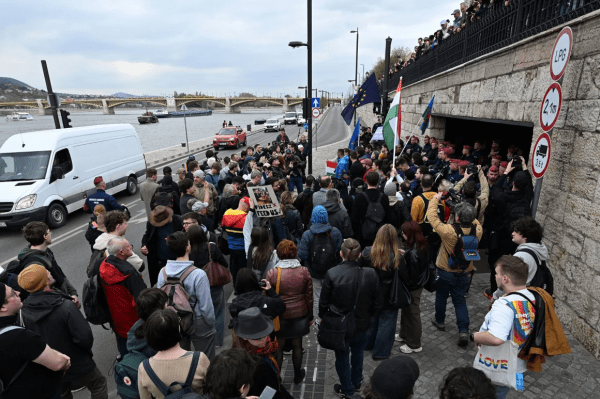
Ahead of the vote — the final step for the amendment — opposition politicians and other protesters attempted to blockade the entrance to a parliament parking garage. Police physically removed demonstrators, who had used zip ties to bind themselves together.
The amendment declares that children’s rights to moral, physical and spiritual development supersede any right other than the right to life, including that to peacefully assemble. Hungary’s contentious “child protection” legislation prohibits the “depiction or promotion” of homosexuality to minors aged under 18.
The amendment codifies a law fast-tracked through parliament in March that bans public events held by LGBTQ+ communities, including the popular Pride event in Budapest that draws thousands annually.
That law also allows authorities to use facial recognition tools to identify people who attend prohibited events — such as Budapest Pride — and can come with fines of up to 200,000 Hungarian forints ($546).
Dávid Bedő, a lawmaker with the opposition Momentum party who participated in the attempted blockade, said before the vote that Orbán and Fidesz for the past 15 years “have been dismantling democracy and the rule of law, and in the past two or three months, we see that this process has been sped up.”
He said as elections approach in 2026 and Orbán’s party lags in the polls behind a popular new challenger from the opposition, “they will do everything in their power to stay in power.”
Opposition lawmakers used air horns to disrupt the vote, which continued after a few moments.
Hungary’s government has campaigned against LGBTQ+ communities in recent years, and argues its “child protection” policies, which forbid the availability to minors of any material that mentions homosexuality, are needed to protect children from what it calls “woke ideology” and “gender madness.”
Critics say the measures do little to protect children and are being used to distract from more serious problems facing the country and mobilize Orbán’s right-wing base ahead of elections.
“This whole endeavor which we see launched by the government, it has nothing to do with children’s rights,” said Dánel Döbrentey, a lawyer with the Hungarian Civil Liberties Union, calling it “pure propaganda.”
Constitution recognizes two sexes
The new amendment also states that the constitution recognizes two sexes, male and female, an expansion of an earlier amendment that prohibits same-sex adoption by stating that a mother is a woman and a father is a man.
The declaration provides a constitutional basis for denying the gender identities of transgender people, as well as ignoring the existence of intersex individuals who are born with sexual characteristics that do not align with binary conceptions of male and female.
In a statement on Monday, government spokesperson Zoltán Kovács wrote that the change is “not an attack on individual self-expression, but a clarification that legal norms are based on biological reality.”
Döbrentey, the lawyer, said it was “a clear message” for transgender and intersex people: “It is definitely and purely and strictly about humiliating people and excluding them, not just from the national community, but even from the community of human beings.”
The amendment is the 15th to Hungary’s constitution since Orbán’s party unilaterally authored and approved it in 2011.
Facial recognition to identify demonstrators
Ádám Remport, a lawyer with the HCLU, said that while Hungary has used facial recognition tools since 2015 to assist police in criminal investigations and finding missing persons, the recent law banning Pride allows the technology to be used in a much broader and problematic manner. That includes for monitoring and deterring political protests.
“One of the most fundamental problems is its invasiveness, just the sheer scale of the intrusion that happens when you apply mass surveillance to a crowd,” Remport said.
“More salient in this case is the effect on the freedom of assembly, specifically the chilling effect that arises when people are scared to go out and show their political or ideological beliefs for fear of being persecuted,” he added.
Suspension of citizenship
The amendment passed Monday also allows for Hungarians who hold dual citizenship in a non-European Economic Area country to have their citizenship suspended for up to 10 years if they are deemed to pose a threat to public order, public security or national security.
Hungary has taken steps in recent months to protect its national sovereignty from what it claims are foreign efforts to influence its politics or even topple Orbán’s government.
The self-described “illiberal” leader has accelerated his longstanding efforts to crack down on critics such as media outlets and groups devoted to civil rights and anti-corruption, which he says have undermined Hungary’s sovereignty by receiving financial assistance from international donors.
In a speech laden with conspiracy theories in March, Orbán compared people who work for such groups to insects, and pledged to “eliminate the entire shadow army” of foreign-funded “politicians, judges, journalists, pseudo-NGOs and political activists.”
Mehmet Oz, the newly confirmed administrator of the Centers for Medicare & Medicaid Services (CMS), is telling state Medicaid officials to stop covering gender-affirming care for transgender youth. Medicaid is the joint state-federal program that covers health care for people with low incomes, including 40% of minors in the U.S.
A letter sent from the CMS to state Medicaid directors said that the program should stop reimbursing gender-affirming care for minors, including puberty blockers, hormone therapy, and surgical interventions. The letter says that there is an “underdeveloped body of evidence” supporting gender-affirming care despite the research showing that it’s a safe and effective treatment for gender dysphoria, which is supported by all major medical organizations in the U.S. The letter also cites the U.K.’s “Cass review,” a report on gender-affirming care that has been criticized for its bias against transgender people.
In a statement, Oz – who was confirmed by the Senate earlier this month – said that gender-affirming care can lead to sterilization, and that’s why the CMS is cracking down on it.
“Medicaid dollars are not to be used for gender reassignment surgeries or hormone treatments in minors – procedures that can cause permanent, irreversible harm, including sterilization. CMS will not support services that violate this standard or place vulnerable children at risk.”
Republicans in the Senate at first balked at Oz’s nomination, not due to his lack of qualifications for leading the agency but because he had, on television, expressed more liberal views when it came to acknowledging that trans kids exist and supporting reproductive freedom. The White House assured Senate Republicans that Oz is now transphobic.
Taking away health care from trans minors in low-income families just a week into his tenure at the CMS may reassure Republicans of Oz’s conservative credentials.
In January, the president signed an executive order targeting gender-affirming care for trans minors and some young adults. The order told the Department of Health and Human Services (HHS) – under which the CMS is organized – to “take all appropriate actions to end the chemical and surgical mutilation of children,” including by changing “Medicare or Medicaid conditions of participation or conditions for coverage.” Referring to gender-affirming care as “mutilation” is a tactic used by anti-transgender activists to sway public opinion against the care that has been shown to save lives.
Former HHS official Adrian Shanker, who worked at the department under former President Joe Biden, said that the CMS letter misuses regulations to limit gender-affirming care coverage.
“I don’t think this letter is using those regulations in good faith,” Shanker told Advocate. “This letter is using highly politicized language that is not grounded in the mountain of evidence that supports the underlying health and well-being of trans youth.”
“It frankly looks like a campaign document,” he continued. “It looks like a document written by anti-trans activists rather than by public health professionals and health care leaders.”
Shanker pointed out that the letter itself is not legally binding but that it will lead states to cut off coverage for gender-affirming care.
“The significant fear here is that this ‘Dear State Medicaid Director’ letter will be utilized to preclude access to care even further in some states,” he said. “And the risk of that is actually very significant because we have incredible amounts of data that confirms the health impacts of denying access to care for trans youth.”
In 2015, trans reality TV personality and author Jazz Jennings appeared on Oz’s talk show, and he complimented her mother for being supportive.
“I love the support you’ve given your daughter,” Oz said. “It’s wonderful. And you can see the beautiful young woman she’s becoming because of it.”
This was before Oz entered the political realm. The exchange, though, led to Sen. Josh Hawley (R-MO) sending a letter demanding the administration explain the ten-year-old episode.
“Have your views on this issue changed since you hosted your television show?” Hawley’s letter demanded, asking if Oz supports the administration’s position that “gender transition procedures for minors should be banned.”
In a statement, a spokesperson for the White House said that Oz would follow the president’s views on the matter, saying that everyone in the administration will follow his “playbook.”
A Florida teacher has lost her job for calling a student by their preferred name without obtaining parental consent. Melissa Calhoun has taught in Brevard County for 11 years and is thought to be the first to fall prey to a new state policy requiring parents to sign a consent form for a student to go by something other than their legal name at school.
Administrators at Brevard County’s Satellite High School decided not to renew Calhoun’s contract for the 2025-2026 school year after a parent complained she’d been calling their child something other than their legal name. The student’s gender identity has not been revealed, but Florida Today reported that “community members believe” the case is “related to the student’s gender identity.”
The parental consent rule—which was signed by Gov. Ron DeSantis (R) in 2023—does not specify the consequences for breaking it, but the school chose not to renew Calhoun’s contract since the state will now be reviewing her teaching contract due to the parent’s complaint, district spokeswoman Janet Murnaghan explained to the Washington Post. She has, however, been permitted to finish the school year.
“Teachers, like all employees, are expected to follow the law,” Murnaghan said.
But many in the Brevard County community are not on board with the school’s decision. Many people showed up to advocate for Calhoun at a recent school board meeting, even though her issue was not on the agenda.
“There was no harm, no threat to safety… Just a teacher trying to connect with a student. And for that her contract was not renewed, despite her strong dedication and years of service,” the school’s media specialist, Kristine Staniec, whose kids were taught by Calhoun, reportedly told the board.
Over 12,000 people have signed a Change.org petition to reinstate Calhoun, calling her “a cherished teacher” and “dedicated educator” who “is being punished merely for showing respect to a student’s choices.”
“Ms. Calhoun is an embodiment of what proper education should be: inclusive, understanding, and respectful of individuality,” the petition continued. “Losing her would be a significant loss to Brevard County’s education community.”
Brian Dittmeier, director of public policy for LGBTQ+ student advocacy organization GLSEN, told the Post that Calhoun’s firing “is an indicator of bureaucratic overreach of antitransgender policy,” in addition to the blatant anti-trans attacks it represents.
“A teacher could potentially be fired for calling a student Tim instead of Timothy,” he emphasized, pointing out how anti-trans laws hurt everyone in the end.
An irrefutable reality of being a member of the LGBTQ community, at any age, is that you must give more thought than non-LGBTQ people about where to live. What are the local laws that apply to LGBTQ people regarding workplace and housing discrimination, marriage equality and conversion therapy? What does available public polling reveal about acceptance of the LGBTQ community? Even if you’re not married and don’t plan to be, or even if you no longer work, such laws — or the absence of them — suggest to LGBTQ folks how safe and welcoming the locale will be for them.
The above is true whether you’re LGBTQ and 30 — or a gay retiree. You can’t just spin the globe. If you’re LGBTQ and are considering retiring abroad, it is incumbent on you to do more due diligence than your straight friends and family members would have to do in the same situation.
Best places for LGBTQ people to retire abroad
If you enlist the services of a lawyer who specializes in retirement abroad, you have to ask more questions; you have to spend more late nights googling; and you have to read more articles like this one, in which we examine the knotty issues related to gay retirement outside the U.S., include advice from both experts and expats, and make some (hopefully helpful) recommendations.
If everything falls into place, you can breathe a sigh of relief once you’re in the midst of your retirement abroad. Chris Young and Jon Kinnally, who both worked in the television industry — Young was a writer for Comedy Central, and Kinnally was a writer and producer for the sitcoms Will & Grace and Ugly Betty — lived most recently in Los Angeles before the couple moved to Spain. They chose Sitges, a vibrant, walkable beach town about 45 minutes from Barcelona. “It’s so open. You see gay and lesbian couples holding hands. And you can be old and gay here, which you can’t be in L.A.,” Young says, not entirely joking.
Below, we recommend some beautiful and culturally rich countries where LGBTQ folks can retire happily and safely. But just as the U.S. isn’t uniform in terms of acceptance, neither are most countries. The LGBTQ community scarcely needs to be told that the more populous and diverse the area — in the U.S., that means urban or coastal, or both — the more accepting the area tends to be.
But it’s worth repeating. As the founder and managing director of Mitos Relocation Solutions, Federica Grazi helps expats retire in Greece and other European countries, and she is quick to note that not all of Greece is like the gay magnets of Athens and Mykonos. “I would not recommend that gay couples move to the countryside, where there are traditional communities and not many expats — it would be harder to integrate there,” she counsels, but the same might be said of France, Spain, Italy — or the U.S.
With that in mind, here’s our hot list of retirement places.
Spain
Spain is well-known as one of the most LGBTQ-friendly countries in the world. Spain legalized same-sex marriage in 2005, a full decade before the U.S. Naturally, this factored into Young’s and Kinnally’s decision to move to Sitges, a global destination for gay tourism.
The two appreciate the fact that the resort town, while heavily gay — with a spate of gay bars, nightclubs, and hotels — is demographically diverse. “It’s not a gay ghetto,” Young says. “Sitges is a great mix,” Kinnally adds. “It’s different than a place like Provincetown. There are kids running through the streets, old Spanish ladies, and gay couples — all mixing together. It’s kind of a utopia if you want to retire.”
With health care costing the couple only 250 euros a month and three-course lunches priced from 15 to 17 euros, they can breathe easy about expenses and work on their respective book projects. (Kinnally’s I’m Prancing as Fast as I Can comes out in August.) Of the major cities, Barcelona is a gay mecca, and Madrid boasts Chueca, a festive gay neighborhood.
Greece
While same-sex marriage was only recently legalized in 2024, same-sex sexual activity was decriminalized in Greece in 1951, which compares favorably to the U.S., which granted this right far later — in 2003. Likewise, employment discrimination against gays and lesbians has been illegal in Greece since 2005 (with gender-identity protections following later), while the U.S. did not grant this protection at the federal level until 2020.
Athens boasts a large and thriving LGBTQ community, especially in the Gazi neighborhood, and the Cycladic island of Mykonos is arguably the world’s most popular summer destination for the LGBTQ community, with famous gay beaches like Elia and Super Paradise.
Former New Yorker Daniel Rentillo says that even the small, low-key island of Symi, where he retired, is a comfortable place to be LGBTQ, and he’s noticed more gay couples visiting and even making moves to relocate to the island. The fact that Greece enjoys excellent health care and a relatively low cost of living makes this country of cultural antiquities, plentiful beaches, mild weather, and fresh seafood a fine choice for retirees — LGBTQ or not.
Malta
Not only was employment discrimination against the LGBTQ community banned here, and same-sex sexual activity decriminalized years before the U.S. made these civil rights moves, but the island nation of Malta was also the first European country to ban conversion therapy. Supermajorities of Maltese support civil rights and marriage equality.
With a tiny population of half a million people living on three sunny, inhabited islands (Malta, Gozo, and Camino), the country is located south of Sicily, enjoying a similar Mediterranean climate and stunningly clear waters to swim in, especially at the natural coves at St. Peter’s Pool.
Valetta is the pedestrian-friendly capital and is the best place for gays to hole up, along with nearby Sliema. “Everyone accepts the LGBTQ community today,” says Matthew Cassar, a citizenship advocate and lawyer based in Sliema. “No one would conceive of discrimination,” noting that “there is no opposition party” set on scaling back the community’s rights. One of Cassar’s clients, worried for his transgender daughter’s rights and safety in the U.S. under the Trump administration, is in the middle of the citizenship process.
The country has two official languages: Maltese and English.
Australia
For more than a decade, public polling has shown support for gay rights and marriage quality surpassing the 70% mark. And some advances have been swift and recent: Since 2021, the country has outlawed the so-called gay panic defense, legalized marriage equality, and banned conversion therapy (in regions representing 85% of the population). In 2013, Australia implemented federal protections based on sexual orientation, gender identity, and intersex status.
Though marriage equality did not arrive in Australia until 2018, the capital of Sydney has embraced gay culture for decades: The annual Gay and Lesbian Mardi Gras, one of the world’s biggest LGBTQ celebrations, has been going strong since the 1970s. While Sydney, Adelaide and Brisbane have gay neighborhoods, the LGBTQ presence in Melbourne is more spread out.
Most retirees will find a pathway to relocate through the expensive ($500,000 to $750,000) Investor Retirement Visa. Still, it is cheaper to live in Sydney than in New York or San Francisco.
For those seeking a mild climate, beautiful cities, a friendly populace, excellent health care, and zero language barrier, “Oz” (the affectionate slang for Australia) may be the ticket.
Costa Rica
Costa Rica’s former president, Carlos Alvarado Quesada, was a notable reformer and advocate in the area of LGBTQ rights, garnering global attention when he publicly apologized for the country’s past persecution and discrimination of gays, calling it “shameful.” Same-sex marriage became legal in 2020, which was also the year that hate crimes and blackmail based on sexual orientation were criminalized. (Transgender rights already had been significantly expanded in 2018.)
A center of eco-tourism and sustainable well-being with no standing army, tropical Costa Rica has long been regarded as a kind of peaceable utopia for expats. With the Caribbean Sea on one side and the Pacific on the other, Costa Rica is known for its lush landscape and hot springs.
Gay life is centered in the capital city of San Jose and the carefree beach resort town of Manuel Antonio. Retirees will find the country very affordable, even with household help.
The Netherlands
The first country in the world to legalize same-sex marriage (in 2001) also banned discrimination based on gender identity, gender expression, and sex characteristics in 2019. Not only do most Dutch people support LGBTQ rights; many Dutch, especially those under 40, can’t even comprehend the discrimination faced by the community in other countries.
It would be an understatement to say that you can be comfortably gay in Amsterdam, with Reguliersdwarsstraat the most prominent LGBTQ area. This world-class city is postcard-perfect, teeming with cyclists, and is pedestrian-friendly (just mind the bike lanes). The visa system is straightforward and leads to residency. English is widely spoken, and the cultural opportunities seem endless.
On the downside, the country’s cost of living can feel a little pricey for those living outside major U.S. cities, and the weather in the Netherlands is rainier and chillier than in southern Europe.
Thailand
In 2024, Thailand made headlines when it became the first UN member state to approve a marriage equality law, and the country, with its myriad cultural and recreation opportunities, has long been popular with LGBTQ tourists. Therefore, LGBTQ couples and individuals may want to consider Thailand, but only if they’re of a certain stripe: adventurous and very well-traveled; tolerant of tropical heat; and veterans of previous vacations or work stints in the country.
In an exotic culture so far from friends and loved ones, it’s best to have an expat community already in place if you’re thinking of moving there. In addition, though Thailand offers the LGBTQ community a range of protections and anti-discrimination laws, local attitudes are still evolving, and social interactions should be carefully navigated (cue the established expat scene).
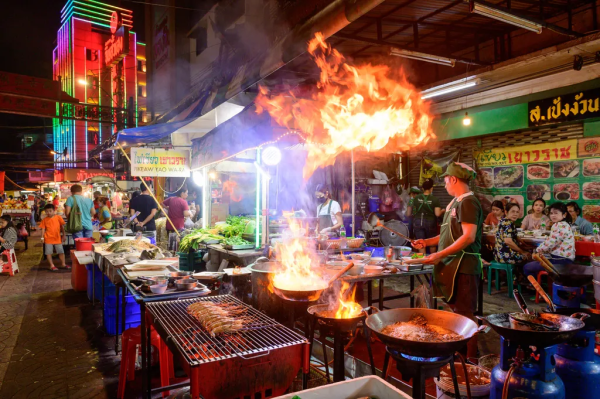
That said, this is a very inexpensive country with kind people. And if you love Thai food, having pad see ew where it was invented will be a revelation. The capital, Bangkok, is a uniquely stimulating place, where a ride on long-tailed boat along the Chao Phraya River may get you to your destination faster than an open tuk-tuk (taxi), given the city’s notoriously heavy traffic.
If you prefer a slower pace and a coastal setting, you can always base yourself in the resort areas of Phuket or Ko Samui, the latter the island where season 3 of The White Lotus was filmed.
The U.S. Air Force is reversing its ban on including preferred pronouns in email signatures and in other professional communications.
In a news release published April 3, the Air Force said it has “rescinded” an earlier “directive to cease the use of ‘preferred pronouns’ (he/him, she/her, or they/them) to identify one’s gender identity in professional communications.”
Airmen and civilian employees may now include their preferred pronouns in email signature blocks, memoranda, letters, papers, social media, official websites and any Department of the Air Force official correspondence, the news release said.
The original ban was announced on Feb. 4, in guidance on President Trump’s executive order, “Defending Women from Gender Ideology Extremism and Restoring Biological Truth to the Federal Government.”
Military.com reported that the ban reversal came after the Air Force learned that a provision of the National Defense Authorization Act, signed into law in 2023, said the defense secretary “may not require or prohibit a member of the armed forces or a civilian employee of the Department of Defense to identify the gender or personal pronouns of such member or employee in any official correspondence of the Department.”
A Norwegian transgender politician, representing the Green Party (MDG), has advocated for transgender Americans to be granted asylum in Norway due to the anti-trans discrimination they are facing in the US.
Karina Ødegård, who is on track to becoming Norway’s first transgender member of parliament, has told Norwegian newspaper Afterposten that the challenges faced by trans people in the US are similar to the persecution experienced by marginalised groups in 1930s Germany.
Referring to the rise of fascism in Europe and the persecution of Jewish people and other minorities, she said: “What would we have done in the 1930s if we knew what was about to happen? That’s where we are now. Then we have to act,” she said.
Ødegård has said that in contrast to the US, the state and healthcare system in Norway helped her to be herself.
“One thing is that you see [in the US] the development of an illiberal democracy. I find that extremely problematic. Then it gets even worse because the Trump administration has singled out transgender people as scapegoats to be hanged and removed,” she explained.
This comes after President Trump signed a raft of executive orders targeting trans people, preventing them from serving in the military, banning trans women from participating in women’s sports, and requiring official documents to only list their gender registered at birth.
LGBTQ+ rights in Norway
Norway is generally considered to be a very LGBTQ+ friendly country, as it was one of the first countries to pass an anti-discrimination law that explicitly included sexual orientation in 1981.
Listen to this article
1:33 / 2:30
Also, same-sex marriage and adoption has been legal there since 2009.
Unfortunately, Norway doesn’t yet legally recognise non-binary identities, nor does it offer gender-affirming care for under-18s, stating a “lack of comprehensible research” despite the majority of Norwegian people believing that it should be accessible.
Norway has laws (The Tenancy Act, the Housing Association Act and the Residential Building Association Act) that all prohibit housing discrimination on the basis of sexual orientation. Married and committed same-sex couples are permitted to adopt under Norwegian law, and self-ID is also allowed: to change their gender, trans citizens only have to send a notification to the National Population Register.










 fleeredstates.blog
You must be logged in to post a comment.