Funding for HIV services is the likely victim of a longtime Republican goal of devolving power to the states.
The Trump administration notified the Centers for Disease Control (CDC) last month that it would cease a years-long community grant program funding local organizations that provide HIV testing, referrals for care, PrEP and Doxy PEP, and outbreak response measures. About 96 organizations are currently recipients of the direct federal grants worth $46 million, Roll Call reported.
The Office of Management and Budget (OMB), under the direction of longtime Heritage Foundation official Russel Vought, has stripped that money from the CDC and is redirecting it as supplemental funding to state health agencies, which will then decide whether or not the money goes to the same HIV-focused local organizations.
“For decades, direct federal investment in community-based HIV prevention has helped trusted local organizations reach people and communities that traditional health systems too often fail to serve,” AIDS United, a DC nonprofit focused on ending the HIV/AIDS epidemic, said in a statement condemning the decision.
“We cannot end the HIV epidemic by dismantling the trusted community systems that make prevention possible,” Carl Baloney, the group’s CEO, said. “This decision threatens access to testing, PrEP, PEP and care — and will ultimately lead to preventable HIV transmissions, program closures and higher health care costs.”
AIDS United and other HIV/AIDS-focused providers watched with dismay as the Trump administration dismantled similar HIV-prevention efforts overseas, through the dismemberment of USAID and scaling back PEPFAR, the President’s Emergency Plan for AIDS Relief. President Donald Trump’s own stated desire to end the HIV/AIDS epidemic in his first term is another casualty of that slashed funding, and the OMB’s latest action is contrary to that goal, AIDS United said.
“Federal, state and local government partners all have vital roles to play in HIV prevention,” the group continued. “But the United States cannot end the HIV epidemic without significant financial support for community-based organizations that are connected to, trusted by and staffed by people from the communities most affected by HIV.”
Ending the direct grants puts “trusted community services at risk—particularly those serving Black and Latino communities, LGBTQ+ people, people in the South, and others disproportionately affected by HIV.”
Carl Schmid, executive director of the DC-based HIV+ Hepatitis Policy Institute, agreed that handing funding decisions to the states could break a successful chain of prevention efforts. While DC and other blue state governments may already have open lines to local groups, “other states and jurisdictions don’t have that relationship with the community-based organizations,” he told the Washington Blade.
“It depends on the state,” Schmid said, adding, “Not all states send their money to the communities that really need it most. And not all states are fast in getting money to the community-based organizations.”
Another factor that could slow down community groups’ efforts: the loss of steep drug discounts available to recipients of the federal grants.
“They could still qualify as a sub-grantee from a state,” Schmid said. “But what if they don’t get that grant again? They would not be able to qualify to obtain the drugs” at the discounted price, he said.
Even while condemning the administration for the change, AIDS United seemed resigned to the new arrangement, asking “State and local health departments receiving supplemental funds to prioritize continued support for the community-based organizations currently delivering these services and prevent disruptions in care and prevention.”
The president of Poland, Karol Nawrocki, vetoed two bills last week that would have extended recognition to same-sex couples.
The bills would have created “cohabitation contracts,” according to Reuters, which would have given some legal recognition to same-sex couples when it comes to medical information, property rights, and funeral arrangements.
The bills were part of reforms promised when Prime Minister Donald Tusk took office in 2023, which included measures regarding LGBTQ+ people’s rights and abortion. The current ruling coalition in parliament is considered liberal and pro-European.
Nawrocki, though, ran as an independent in 2025 after having been chosen as the candidate for the right-wing Law and Justice (PiS) party, moving the country to the right. He said that the cohabitation contracts were too similar to marriage.
“These proposals create a new, formalized institution of family law, equipped with a broad catalog of rights similar to those of marriage,” he said in a statement. He said that the bills would lead to “the loss of the special status of marriage,” defined as “a union of a man and a woman under the protection and care of the Republic of Poland.”
LGBTQ+ rights advocates denounced the vetoes. The organization Campaign Against Homophobia said that the bills were “merely a fragment” of what they wanted to get when it comes to domestic partnership rights in the country.
“Today’s veto of the bill, however, shows that even the absolute minimum of rights the bill was intended to provide is too much for the president,” the group said.
Former Equality Minister and New Left Member of Parliament Katarzyna Kotula said Nawroicki “turned his back on 2 million people living today in informal relationships.”
Earlier this year, a gay couple who traveled to Berlin to get married won the right in court to have their marriage recognized in Poland.
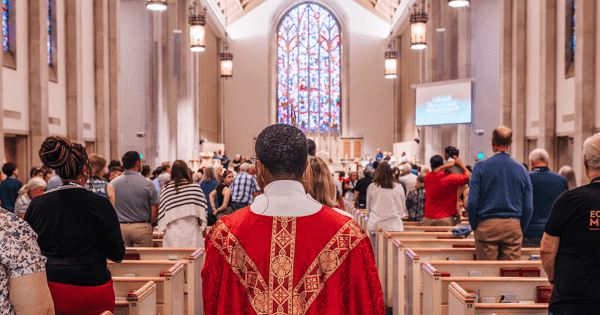
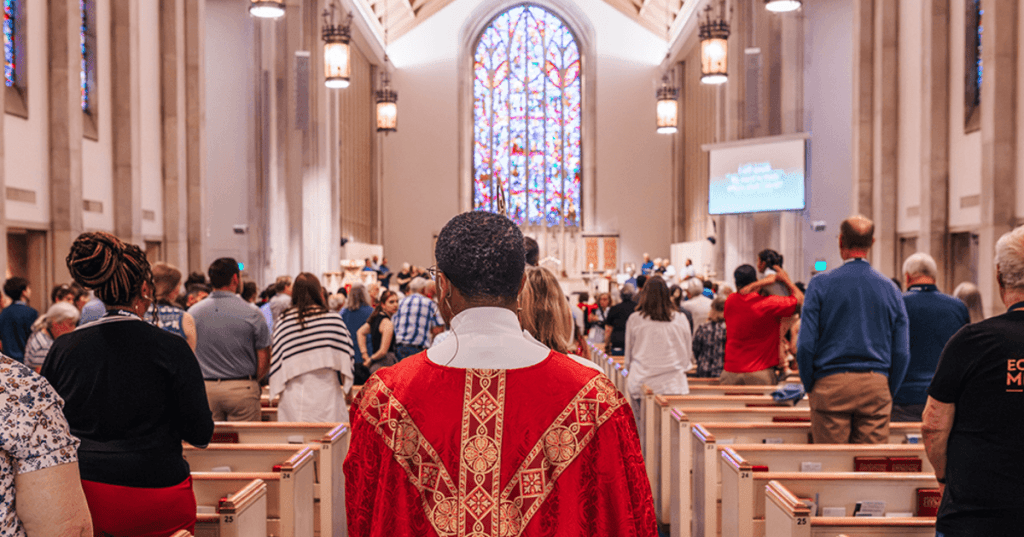
A Methodist conference that was scheduled to take place in Boise, Idaho, next year will have to find a new venue as its members voted to leave the state out of concerns for the safety of transgender and nonbinary participants
The United Methodist Church held its annual Oregon-Idaho Conference at the Cathedral of the Rockies in Boise from June 18 to 20, and it was supposed to return to the same church in 2027. But the state’s transphobic climate has gotten so bad that a majority of the council (52-48) voted to change venues for next year.
The vote happened after a nonbinary reverend had to take their wife to an emergency room.
“I experienced some microaggressions that made me feel very anxious and unsafe,” they told the conference on its third day, according to Boise State Public Radio. “I’m asking you to consider relocating our next annual conference to a location where more of our community will feel safe and be present and participate.”
The outlet said that it did not name the nonbinary reverend who spoke because they have already been the target of “hateful rhetoric.”
Rev. Heather Riggs of the Montavilla United Methodist Church in Portland, Oregon, introduced a motion to hold the 2027 conference outside of Idaho in “a location that is safe for all.”
“Harm has already been done at this year’s conference,” she said.
The debate that followed was “an opportunity for the body to talk about… LGBTQ sentiment in Idaho,” Bishop Cedric Bridgeforth, the leader of the Greater Northwest United Methodist region, told Boise State Public Radio. “So, there’s a struggle of values on whether to stay or to retreat.”
Bridgeforth wrote in a blog post in June that the close vote on the motion “reflects the complexity, pain, conviction, and concern present among us.”
“During the conversation, members named serious concerns about safety, racism, anti-trans rhetoric and action, and the lived realities of people of color, immigrants, queer and trans siblings, and others who are targeted by hate, laws, policies, and public speech,” he wrote. “A specific anti-trans incident that occurred in Boise during this annual conference was also reported. These concerns must be heard, received, and not minimized. All harm is harm.”
“At the same time, members spoke with deep conviction about the need to remain present in Idaho and to support the people who live, serve, lead, and love here every day. We cannot allow a decision about where to hold an annual conference session to become a retreat from our witness in Idaho or a rejection of the people who are faithfully serving here.”
Trans independent journalist Erin Reed just labeled Idaho a “Do Not Travel” state in her Anti-Trans National Legal Risk Assessment Map, which already ranked Florida, Texas, and Kansas as such. Idaho Gov. Brad Little (R) signed a bill this year that criminalizes trans people’s use of restrooms consistent with one’s gender, making using the restroom in even private businesses something that could result in a prison sentence. That was just one of 15 anti-LGBTQ+ bills Little signed into law in the past several years.
Rev. Jenny Hirst of Collister United Methodist Church in Boise was one of the clergy members who voted against the resolution, and she told the Idaho Statesman that “there are many people who are working tirelessly to change and challenge those policies, and to build a different future for all people here.”
Hirst said she worried that the resolution will be seen as abandoning trans and nonbinary people in Idaho.
“Idaho needs the witness and solidarity of the wider church and denomination now more than ever,” she said. “Loving Idaho means telling the truth about what is happening, while continuing to show up and work for something better.”
She also said that the resolution was introduced late in the conference, when people were exhausted, and many had already left.
The Oregon-Idaho conference represents 145 Methodist churches in those two states, and the annual meeting usually involves discussions about budgets, compensation, and practical projects.
Cabo Verdean make-up artist Leonardo put the finishing touches to a singer’s look at a shoot for a music video, open and comfortable about being a gay man in Africa.
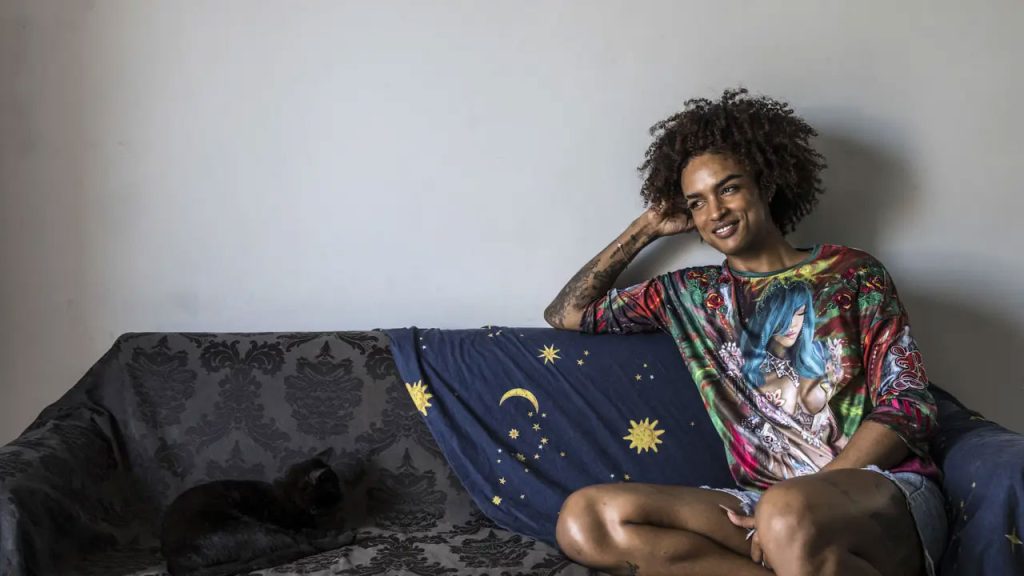
Perfectly made up himself and wearing shorts and a top baring his shoulders, Leo, as he is known, works among the technicians and musicians without fear of being insulted, attacked or reported and sent to prison.
“Make-up has a power… and I love it when I transform people by creating artistic make-up or when I transform myself,” he told AFP, in the country’s second city of Mindelo on the island of Sao Vicente.
Freedom of sexual orientation for all Cabo Verdeans is ‘non-negotiable’, official says
Even as its neighbors in West Africa crack down on LGBTQ communities, Cabo Verde has stood out as a land of relative tolerance for queer people.
Leonardo Oliveira poses for a portrait at his home in Mindelo, on May 25, 2026. Homosexuality has been legal in Cabo Verde since 2004 and employment discrimination based on sexual orientation has been banned since 2008. (Photo courtesy of AFP)
Mindelo, Cabo Verde – Cabo Verdean make-up artist Leonardo put the finishing touches to a singer’s look at a shoot for a music video, open and comfortable about being a gay man in Africa.
Perfectly made up himself and wearing shorts and a top baring his shoulders, Leo, as he is known, works among the technicians and musicians without fear of being insulted, attacked or reported and sent to prison.
“Make-up has a power… and I love it when I transform people by creating artistic make-up or when I transform myself,” he told AFP, in the country’s second city of Mindelo on the island of Sao Vicente.
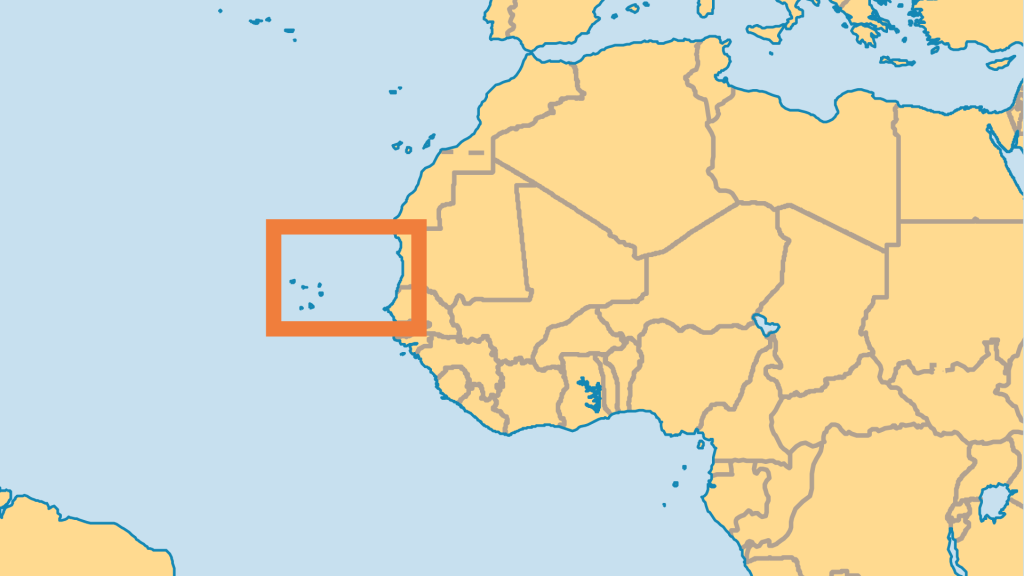
Location of Cabo Verde (Cape Verde) off the African coast. (Map courtesy of Operation World)
The Cabo Verde (Cape Verde) archipelago off the coast of West Africa is a bastion of tolerance in a continent where anti-LGBTQ laws have become increasingly repressive.
With long jail terms imposed for same-sex relations in other parts of Africa, Leo, 29, said he felt lucky to be a Cabo Verdean.
“Even now there are people with really closed minds,” he said. “But there is no comparison with other places.”
“It is hard to know that our brothers are passing through extremely difficult situations mostly in Africa.
“To be punished just because of who you are, I think, is extremely harsh,” he added.
Same-sex relations have been legal in Cabo Verde since 2004. Four years later, the country of around 500,000 inhabitants also banned workplace discrimination based on sexual orientation.
The archipelago is currently the most welcoming country in Africa for the LGBTQ community, ahead of South Africa, according to Equaldex, which assesses same-sex rights, laws and public opinion worldwide.
Around 30 African countries criminalise same-sex relations, with jail terms including life in prison and the death penalty, even if it is mainly not applied.
Sao Vicente, one of Cabo Verde’s 10 islands, has the largest LGBTQ community.
The country’s oldest port, it has always been open to the world, interacting with other nations and the diaspora in Europe and the United States.
“I think we are a mixed population,” Leo said. “We have a lot of different influences, we are really influenced by the Europeans and I think that helped a lot.”
‘Holding hands’
Tall, with a disarming smile framed by false eyelashes, Leo has a calm demeanor. Completing his look are tattoos, rings and false nails.
He lives with two black cats — one affectionate, the other more wild — which he said reflects the two sides of his personality.
As a small child, he knew he was gay and said that despite some difficulties growing up, he now felt comfortable in his own skin.
“When I was in the fourth or fifth grade (aged 9 or 10), I would leave the house to go to school, but I would never get there because of bullying,” he said.
After he turned 21, he began living by himself, pursued a career as a make-up artist and could wear clothes that reflect his feminine side.
“In my last relationship, we used to walk around holding hands” without encountering problems, he said.
Leo’s self-confidence partly comes from his relationship with his mother, Manuela, a 51-year-old hairdresser and nail technician.
The two share a salon in Mindelo where Leo’s customers come for make-up and manicure appointments, but his skills are in demand among singers and other artists, too.
“I am really proud of him because he fought for his goals,” Manuela said.
“I have dealt with (his sexual orientation) all by myself,” she added, becoming emotional.
“A mother… should respect their children. We have to support them in what they want to be, be it their love life or career.”
‘Paradise’
In another sign of Cabo Verde’s openness, a small group of gay actors last month performed at a theatre in Mindelo depicting the daily struggles of three cross-dressers from the Fonte Filipe area of the city, which has a sizeable LGBTQ community.
“You don’t choose to become homosexual. It’s not a choice! Why do people treat us like this?” one of the actors cried tearfully on stage.
The play, Font Flip is Burning, references the American documentary Paris Is Burning, which shone a light on the Harlem drag balls in the 1980s.
For two evenings, a long way from New York City, the three actors — Walter, Alessandro and Stephan — brought one of the balls to life, strutting to techno music in high heels, mini-dresses and glamorous make-up.
In real life, Walter Pires, 37, is a physical education teacher in Santo Antao, an island near Sao Vicente.
The charismatic actor and dancer is openly gay and a leading figure in the community.
“I never had any problem with my family,” he said. “I was always free since I was a child. Of course, sometimes I feel a little pressure from people, but I never felt the need to hide myself.”
Pires said he does not feel discriminated against and is “respected” by his students.
“I always try to bring the topic to the class and discuss these topics with them… what the LGBT+ acronym means, sexual orientation,” he said.
In years gone by, he said some gay people in Mindelo had faced prejudice, losing their jobs or their homes.
But Cabo Verde now is “almost a paradise,” he said. “The new generation is more open and respectful but that is the result of the work we have done in the past.”
Cape Verde’s outgoing minister of family and social inclusion, Fernando Elisio Freire, said that the constitution and government “protect those who have a different sexual orientation.”
“Cape Verde is a tolerant, open country and everyone deserves to be treated equally before the law,” he told AFP.
The decision to legalise same-sex relations stems from a “deep respect for individual dignity and difference” to allow peaceful co-existence, he added.
Freedom of sexual orientation for every citizen is “non-negotiable,” Freire said.
But Sindji Cawinny, a 29-year-old transwoman, has had a different experience.
She was forced to leave the island of Sal three years ago after the owner of the restaurant where she worked demanded she stop wearing make-up and women’s clothes to work.
“I quit that job. I wasn’t going to stop doing what I loved because of their ignorance,” she added.
Since then, she has been self-employed, working in events in Mindelo and giving catwalk lessons for beauty contests.
“I realised that if I am a gay man who dresses like a man, it’s easier to get a job,” she added. “I’d like to continue my life as a transgender woman but I’ve resigned myself.”
Worry over hard-won rights
English teacher and artist Janette da Graca, a 31-year-old lesbian, works to raise awareness and defend LGBTQ rights.
She worries that people may begin to question the situation in Cabo Verde if they see what is going on in Senegal and finds it “worrying” that hard-won rights are being rowed back.
“It doesn’t make sense that people would care about who I love or who I live with,” she said. “I just go with who I am. Accept me, who can. Who can’t, they’re not part of my life.”
She often looks solemn, especially when talking about her mother who, unlike her father and sisters, has not accepted her sexual orientation and still makes comments about her short hair and style, which includes combat boots, a Nirvana t-shirt and silver chains.
At the school where she teaches, Da Graca suspects that some colleagues disapprove of her look but said her “students just love it.”
She still gets stared at, disapproving comments or worse, mostly from men.
“I do believe that we have a lot of tolerance and awareness but we need more,” Da Graca said.
“There is a lot of ignorance, so knowledge is always the key. Of course, there will be people who won’t accept it anyway, but at least we try,” she added.
While the national conversation around LGBTQ+ rights often focuses on the West Coast or New England, the Mid-Atlantic region has quietly become one of the most dynamic legal battlegrounds in the country. From pioneering healthcare access to a historic marriage equality vote on the horizon, the laws of New Jersey, Maryland, Delaware, and Virginia tell a fascinating story of progress, defense, and active legal engineering.
Whether you are looking to relocate, working in advocacy, or just keeping tabs on civil rights, here is how these four neighbor states compare when it comes to protecting their LGBTQ+ residents.
1. New Jersey: The Brand-New Legislative Firewall
New Jersey has long held a “Safe Haven” designation from major equality groups, but until recently, its protection for transgender healthcare relied entirely on an executive order from the governor’s office. Because executive orders can be easily undone by a future administration, advocates pushed for years to codify these rules into permanent law.
The Big 2026 Update: On June 30, 2026, the New Jersey Legislature passed A2218/S2260, a comprehensive statutory shield law.
What the Law Does: This statute creates an absolute legal firewall. It legally prohibits New Jersey state courts, law enforcement, and medical boards from cooperating with out-of-state subpoenas, extraditions, or investigations targeting those who receive or provide gender-affirming care in New Jersey.
Everyday Protections: Under the Law Against Discrimination (LAD), New Jersey boasts some of the country’s strongest bans on discrimination in housing, employment, and public accommodations.
2. Maryland: Setting the Medicaid Gold Standard
Maryland is a powerhouse of structural equality, focused heavily on ensuring that legal protections translate to actual, affordable healthcare access.
The Trans Health Equity Act: Effective in 2024, this landmark law requires Maryland’s Medicaid program to cover comprehensive, medically necessary gender-affirming care. Rather than treating transition-related care as “cosmetic” or optional, Maryland codified it as a fundamental medical right.
Civil Rights & Safe Haven: The state’s “Fairness for All Marylanders Act” has protected gender identity and sexual orientation in housing, work, and public spaces since 2014. Additionally, Governor Wes Moore signed an executive order establishing Maryland as a safe state for out-of-state individuals seeking gender-affirming medical services.
3. Delaware: Protecting Rights Under Executive Defense
Delaware has strong, comprehensive civil rights statutes on the books protecting LGBTQ+ individuals from discrimination in housing, employment, and public spaces.
The Healthcare Shield: While Delaware has legislated shield protections for reproductive care (like abortion), its protections for gender-affirming care have largely been bolstered by the executive branch.
Executive Order 11: In June 2025, the Governor signed Executive Order 11. This directive prevents state agencies from cooperating with out-of-state investigations or extraditions related to lawful gender-affirming medical care provided within Delaware’s borders.
Identification: Updating birth certificates and driver’s licenses to match an individual’s gender identity is streamlined, requiring only a simple supporting statement from a licensed medical or social work professional.
4. Virginia: The Southern Battleground & The 2026 Ballot
Virginia occupies a unique space on this list. In 2020, it made history by passing the Virginia Values Act, becoming the first Southern state to enact comprehensive civil rights protections for LGBTQ+ residents in employment, housing, and public spaces. However, enforcement has faced political friction and rollbacks, particularly regarding school policies.
The 2026 Marriage Amendment: On November 3, 2026, Virginia voters will head to the polls to decide on a major, proactive constitutional referendum: the Repeal Same-Sex Marriage Ban Amendment.
What is at Stake: While same-sex marriage is federally protected under Obergefell v. Hodges, Virginia’s state constitution still contains outdated, unenforceable language banning same-sex unions. This referendum will officially strike that language and enshrine an affirmative, constitutionally protected right to marriage regardless of sex, gender, or race. It is one of the nation’s only proactive pro-LGBTQ+ ballot measures in 2026.
Side-by-Side: The Mid-Atlantic Landscape
State
Non-Discrimination Laws
Transgender Healthcare Shield
State Medicaid Coverage
Notable Highlight
New Jersey
Explicit & Robust (LAD)
Statutory Law (Passed June 2026)
Covered
Completely codified protections to survive shifting administrations.
Maryland
Explicit & Robust
Executive Order
Covered (Trans Health Equity Act)
Exceptional, legally mandated Medicaid coverage for gender-affirming care.
Delaware
Explicit & Robust
Executive Order 11
Covered
Seamless identity document updates via simple self-attestation.
Virginia
Explicit (Virginia Values Act)
None
Partially Covered (highly variable)
Currently voting to enshrine marriage equality in its state constitution.
The Takeaway
The Mid-Atlantic is a vital region for LGBTQ+ rights. While New Jersey has just finalized its legal fortress with a new legislative shield, Maryland leads the way in equitable healthcare funding, Delaware stands tall with deep executive protections, and Virginia remains the ultimate battleground—where the community is actively voting to secure the future of marriage equality at the ballot box.
In an increasingly fragmented legal landscape, civil rights, non-discrimination protections, and healthcare access for LGBTQ+ and transgender individuals vary significantly across the country. For individuals, families, and professionals seeking to understand where state law provides the most robust safeguards, several states stand out as national leaders.
By evaluating data from the Human Rights Campaign’s (HRC) State Equality Index and the Movement Advancement Project (MAP), we have highlighted key states—including Connecticut, a national pioneer—that have built comprehensive legal frameworks to protect LGBTQ+ and transgender residents.
Key States Leading LGBTQ+ Legal Protections
Connecticut: A Pioneer in Healthcare & Legal Safety
Connecticut stands out as a historic and statutory leader, consistently earning high policy scores for its proactive stance on civil rights and transgender safety.
The Original Shield Law: In 2022, Connecticut became the first state in the nation to enact a comprehensive “shield law” specifically designed to protect patients, medical providers, and out-of-state visitors receiving or delivering gender-affirming care. The law blocks out-of-state legal subpoenas, prevents extradition, and bars licensing boards from disciplining providers for administering legal medical care.
Data Privacy Protection: Connecticut enacted specialized laws restricting health apps and online entities from collecting, selling, or disclosing consumer data related to gender-affirming care.
Explicit Non-Discrimination: Gender identity, gender expression, and sexual orientation are fully protected under state civil rights laws spanning employment, housing, credit, and public accommodations.
California
California sets a national benchmark for comprehensive LGBTQ+ protections across every major area of civil law.
Healthcare & Shield Laws: Following Connecticut’s model, California passed strong safe-haven legislation protecting transgender individuals, families, and doctors from out-of-state legal liability related to gender-affirming care.
Non-Discrimination: The Unruh Civil Rights Act and the Fair Employment and Housing Act (FEHA) explicitly safeguard gender identity, gender expression, and sexual orientation in housing, workplace settings, and business transactions.
Identity Documents: The state allows streamlined updates to gender markers on driver’s licenses, birth certificates, and state IDs without requiring surgical confirmation or court orders.
Massachusetts
As the first U.S. state to legalize same-sex marriage in 2004, Massachusetts maintains a deeply entrenched system of legal protections.
Broad Public Protections: Anti-discrimination laws explicitly cover public accommodations—such as restaurants, retail stores, and healthcare facilities—alongside housing and employment.
Youth & Family Safeguards: The state enforces a complete ban on conversion therapy for minors and maintains robust anti-bullying and inclusion guidelines across public school districts.
Medicaid & Insurance Requirements: Private insurance and MassHealth (Medicaid) are legally required to cover medically necessary gender-affirming care.
Colorado
Over the last decade, Colorado has transformed into a major sanctuary state for transgender protections in the Mountain West.
The Reproductive and Gender-Affirming Care Shield Act: Enacted to shield out-of-state patients and local practitioners from external civil and criminal investigations or licensing penalties.
Administrative ID Updates: Jude’s Law permits non-binary “X” gender markers and allows transgender individuals to update state documents smoothly without requiring physician affidavits or court decrees.
Anti-Discrimination Enforcement: The Colorado Anti-Discrimination Act (CADA) covers employment, housing, and public spaces, enforced aggressively by the state civil rights division.
New York
With a deep history rooted in the modern LGBTQ+ civil rights movement, New York’s laws reflect comprehensive protections.
GENDA (Gender Expression Non-Discrimination Act): Passed in 2019, GENDA formally added gender identity and expression as explicit protected classes across housing, employment, public spaces, and non-sectarian education.
Medical Safeguards: Comprehensive shield laws ensure that healthcare institutions and practitioners face no administrative penalties or extradition requests for delivering legally protected medical services.
Informed Family Laws: New York maintains progressive legislation supporting gestational surrogacy, legal adoption, and parental recognition for LGBTQ+ families.
Illinois
Illinois serves as a critical legal sanctuary in the Midwest, backed by mature statutory protections.
The Illinois Human Rights Act: Enforces complete non-discrimination across real estate transactions, employment, public services, and banking.
Education & Youth Protections: State legislation requires public school curricula to include LGBTQ+ history and imposes strict safety and anti-bullying standards across districts.
Out-of-State Refuge: Illinois statutes shield healthcare providers treating patients traveling from surrounding jurisdictions, making it an essential hub for safe medical access.
The Bottom Line
Whether evaluating states for personal safety, corporate expansion, or legal analysis, these jurisdictions demonstrate what comprehensive protection looks like in practice. By pairing clear non-discrimination statutes with proactive health-privacy and shield laws, states like Connecticut, California, and Colorado offer the most legally secure environments for transgender and LGBTQ+ residents.
LGBTQ Americans aren’t just fleeing red states like Texas for blue enclaves. They are also building lives in cheaper, fast-growing metros where jobs, housing and politics collide.
Why it matters: The “red-state exodus” narrative misses a quieter reality.
Affordability and work are keeping some LGBTQ+ people in — and drawing others to — places that may be politically complicated but economically viable.
The big picture: LGBTQ Americans have lower homeownership rates than non-LGBTQ Americans, according to the Williams Institute.
And, LGBTQ-friendly cities with stronger LGBTQ protections — such as San Francisco and Boston — often come with significantly higher housing costs, creating a tension between safety and affordability.
By the numbers: Homebuyers needed to earn $150,364 annually to afford the median-priced home in states with LGBTQ housing protections as of 2024, per an Axios analysis of real estate company Redfin data.
That’s 46.8% more income needed than in states, like Texas, without such protections.
Zoom in: Around 4% of adults in North Texas identify as LGBTQ, according to Williams Institute data.
Same-sex married households in North Texas almost doubled from 2019-24, increasing from around 11,000 couples to roughly 21,600, per a Dallas Morning News analysis of Census Bureau data.
Between the lines: 9% of the region’s homes for sale were affordable for someone earning the local median household income, according to Redfin.
By contrast, less than 2% of homes for sale were considered affordable in San Diego and Los Angeles, which have larger percentages of adults who identify as LGBTQ.
Caveat: Researchers caution that LGBTQ migration data remains limited because federal surveys have historically failed to consistently collect sexual orientation and gender identity data.
What they’re doing: Oak Lawn United Methodist Church painted its steps in rainbow colors after Gov. Greg Abbott ordered the removal of rainbow crosswalks statewide last year.
“This is our way of speaking to our community of sharing a message of boldness and courage that who you are is beloved and worthy of dignity and belonging,” Rev. Rachel Griffin-Allison, the church’s senior pastor, told NBC5 in January.
The bottom line: The tension between affordability, opportunity and rights is quietly reshaping the map of LGBTQ America.
The Senegalese Constitution previously had been rather vague on the subject, although same-sex intimacy has been criminalized in Senegal since 1965. The country is in the midst of an anti-gay crackdown that has produced 100s of arrests. In March, the penalty for same-sex intercourse was doubled, to a maximum prison sentence to 10 years, and gay rights advocacy was banned.
Passage of the constitutional amendment is related to the anti-LGBT crackdown, according to a Senegalese political observer.
Dakar-based Sadio (a pseudonym), told Erasing 76 Crimes “there is little doubt that [the ruling PASTEF party] is placing great emphasis on this aspect of constitutional change in order to reassure the Senegalese people that it will pursue an anti-LGBT agenda, following the tightening of the Criminal Code in the spring so ‘unnatural acts’ are now punishable by 5 to 10 years’ imprisonment and a fine of 10 million CFA francs (about 15,000 euros or US $17,460)”.
In addition, Sadio says, the amendment “helps to rally the ranks within the ruling party following the rifts that led to the dismissal of former Prime Minister Ousmane Sonko”.
The constitutional amendment was inspired by an opinion piece published on March 8 in the state-owned daily newspaper Le Soleil entitled “A scientific approach to the eradication of homosexuality in Senegal”.
Before the amendment, Article 17 of the Senegalese Constitution defined marriage as follows: “Marriage and the family constitute the natural and moral foundation of human society, and are placed under the protection of the State”.
This addendum has now been included: “Marriage is the union between a man and a woman”.
The amendment provides no definition of what constitutes a man or a woman in biological, chromosomal or anatomical terms. Nevertheless, it establishes a binary system that effectively marginalises intersex people in Senegal.
Following the recent criminalisation of homosexuality in Niger, this marks a further setback for LGBT+ rights in French-speaking Africa.
The New Jersey General Assembly passed new legislation on Tuesday, the last day of Pride Month, that strengthens the protections around gender-affirming health care, reproductive care, including abortion and IVF, and more. The bill now sits on Gov. Mikie Sherrill’s (D) desk awaiting her signature, which it is expected to receive.
The passage is a win for the trans community. The bill passed the same day the Supreme Court dealt a blow to trans rights with its West Virginia v. B.P.J. ruling.
Speaking with the New Jersey Monitorafter the vote, Jennifer Williams, a Trenton city council member who is trans, said, “New Jersey is a great, liberty-loving state that will remain a safe haven for those who want to live happy, productive lives while accessing medically necessary and proven medical care.”
The bill’s passage comes after a long battle from LGBTQ+ advocacy groups, including Garden State Equality. In a statement, Lauren Albrecht, the organization’s senior director of advocacy & organizing, said, “By passing this bill, the Legislature has sent the message that bodily autonomy and access to medically necessary, best-practice healthcare are New Jersey values. As other states and the federal government attack reproductive and trans healthcare, we have made it clear that the Garden State will protect both the lifesaving care itself and the people who provide it. Our priorities now will be to ensure Governor Sherrill swiftly signs this legislation and, afterwards, to educate healthcare providers on these new and bolstered protections.”
The new legislation makes no changes to what medical care is or isn’t available in the state, but protects access for all to the services that are already provided.
A major aspect of the bill protects providers and patients from being prosecuted by other states, affirming that those who receive or provide care in New Jersey are solely subject to the state laws of New Jersey and to federal law.
That applies not just to citizens of New Jersey, but to “those who travel to [New Jersey] for health care services,” with the bill noting that all “deserve the ability to safely access health care facilities in this State and the critical reproductive health and gender-affirming care services that they provide.”
This prevents states from prosecuting their residents who have crossed state lines to receive healthcare that is banned in their state but legally protected in New Jersey. The authors of the bill point to the fact that since Roe v. Wade was overturned in 2022, 21 states have either banned or restricted abortion access. Since then, New Jersey has seen a 30% increase in out-of-state patients.
They also highlighted Alabama’s ruling that embryos are “extrauterine children” and the threat that sort of ruling could pose to IVF fertility treatments, which are often used by same-sex couples to build their families. New Jersey has legally protected the right to access IVF treatment.
While New Jersey is the latest blue state to pass such a bill, theirs includes an aspect that hasn’t been seen in other legislation. The bill includes prohibitions on “interference with reproductive or gender-affirming health care services.” That includes inflicting injury, physically obstructing them, defacing property, recording people accessing care within 100 feet of the entrance to a clinic, or distributing such recordings.
The legislators cite the fact that since Roe was overturned, there has been a 538% increase in obstructions to reproductive health facilities, and in 2023, there were 23 reported violent incidents and threats made to gender-affirming care providers. The legislation states, “This act is intended to ensure that anti-abortion and anti-LGBTQ+ persons cannot harm patients or providers.”
Mirroring a proposed shield law in California, the bill also requires the written consent of a patient or their guardian for any of their medical records to be provided to an out-of-state authority. A similar shield law in New York was the reason that patients were informed when NYU Langone Health received a criminal subpoena, insisting that they hand over the medical records for minors who received gender-affirming care at the institution.
Senate Substitute 2 for Senate Bill 100 (SB-100) passed with 28 ‘yes’ votes, meeting the two-thirds threshold required for the bill to pass. Tuesday was the last day of the 153rd General Assembly.
The amendment would enshrine the right to same-sex and interracial marriage in the Delaware Constitution.
SB-100 was rescinded last week after it did not receive enough votes to pass. Democrats were short by three votes, with two Democratic members missing from the vote.
Additionally, Republican Assemblyman Michael Smith (R-22) joined the Democrats with a ‘yes’ vote after voting ‘no’ on SB-100 last week.
In order for SB 100 to be enshrined into the state Constitution, it must be passed by two consecutive General Assemblies. Thus, the amendment will not be officially added to the Constitution unless it passes in the 154th General Assembly next year.
Rep. Snyder-Hall introduced the measure earlier this week.
“Just one week ago, we failed to pass this legislation. We failed the people of Delaware. But today, on the final day of the legislative session, the 153rd General Assembly affirmed that every Delawarean has the fundamental right to marry the person they love, regardless of race or gender,” said Snyder-Hall.
“Thank you to my colleagues for recognizing that the right to marry is a right worthy of protection and for voting yes on this important constitutional amendment.”













You must be logged in to post a comment.