A leading lawmaker in Uzbekistan referenced Trump’s electoral victory as a reason to push for a ban on LGBTQ+ “propaganda.
The leader of a party in Uzbekistan’s government coalition has announced that they are drafting a law to ban LGBTQ+ “propaganda” in the country, crediting Donald Trump for inspiring the move.
Alisher Qodirov, head of the Milliy Tiklanish (National Revival) party, which shares control of the lower chamber of Uzbekistan’s parliament with the Liberal Democrats, shared the news on Telegram. He revealed that his party is working on a draft law aimed at prohibiting discussions about LGBTQ+ issues.
In his post, Qodirov referenced a statement from Ivanka Trump, where she endorsed her father’s opposition to “inappropriate sexual content” and “transgender ideology” in schools. This rhetoric, which falsely claims that schools are teaching children to be transgender or exposing them to gay sexual content, has been used in some U.S. states and school districts to justify bans on any mention of LGBTQ+ issues.
Qodirov wrote, “The change in the center of the disease is very good,” adding that his party is working on a law to ban any form of LGBTQ+ “propaganda.”
Homosexuality remains illegal in Uzbekistan, a Muslim-majority nation, and can lead to up to three years in prison. The country, along with Turkmenistan, is one of the only two post-Soviet states to criminalize homosexuality. There are no legal protections against anti-LGBTQ+ discrimination or hate crimes in Uzbekistan.
A 2021 Human Rights Watch report highlighted the severe abuse faced by gay and bisexual men in the country, who are targeted by both vigilante groups and law enforcement. Many LGBTQ+ activists have been forced to abandon public efforts and operate “completely underground” due to the threat of violence and harassment.
One activist shared their experience with HRW, explaining that they had to suspend most of their projects due to the intense risks involved. Five men told the organization they were forced to pay bribes of up to $1,000 to prevent the police from exposing their sexual orientation to their families or the public.
This is the first instance of a city allowing individuals to sue transgender people for using public restrooms.
The city of Odessa, Texas, has implemented a $10,000 bounty on any transgender individual who uses a restroom that corresponds with their gender identity, according to independent journalist Erin Reed.
The ordinance allows individuals—excluding local and state government officials—to sue transgender people for using bathrooms that align with their gender. The rewards for successful lawsuits include “injunctive relief sufficient to prevent the defendant from violating the provisions of this ordinance,” along with potential “nominal and compensatory damages” if the plaintiff claims to have suffered harm. The law also stipulates statutory damages of at least $10,000 for each violation, as well as court costs and reasonable attorney’s fees.
While the bounty is set at a minimum of $10,000, there is no maximum limit on how much the reward could ultimately be.
In addition to the $10,000 bounty, the ordinance imposes criminal penalties on individuals who use restrooms that align with their gender identity. According to the provision, anyone violating the ordinance will be guilty of a Class C misdemeanor, subject to a fine of up to $500. If a person refuses to leave a restroom after being asked by a building owner, they could also face charges of misdemeanor trespassing.
The law defines “biological sex” based on the gender listed on birth certificates—either at birth or corrected in the case of clerical errors. This means that even if a transgender individual updates their birth certificate to reflect their gender identity, they would still be in violation of the law if they use a restroom that matches their gender.
The ordinance makes no exceptions for disabled individuals who may be accompanied by a person of a different gender, and it could open the door to lawsuits targeting anyone who appears gender non-conforming.
While bathroom bans with criminal penalties have been enacted in states like Utah and Florida, other states, such as North Dakota, have passed similar bans without clear penalties or enforcement mechanisms. Erin Reed has drawn comparisons between the Odessa bounty and Texas’ anti-abortion bounties, which allow private citizens to sue anyone who aids someone seeking an abortion. Both strategies rely on private individuals to enforce the law, bypassing government enforcement mechanisms.
Johnathan Gooch, communications director for Equality Texas, criticized the measure in an interview with the Texas Tribune: “It’s a very aggressive way to alienate trans people from public life, and I think it is counter to the spirit of friendship that most Texans embody.”
He continued, “It enables vigilantes to target anyone they don’t think matches the type of gender expression they expect to see in the bathroom, and that is truly insane.”
As conservative-led anti-LGBTQ+ boycotts gain momentum, some once-called allies are starting to cave under pressure.
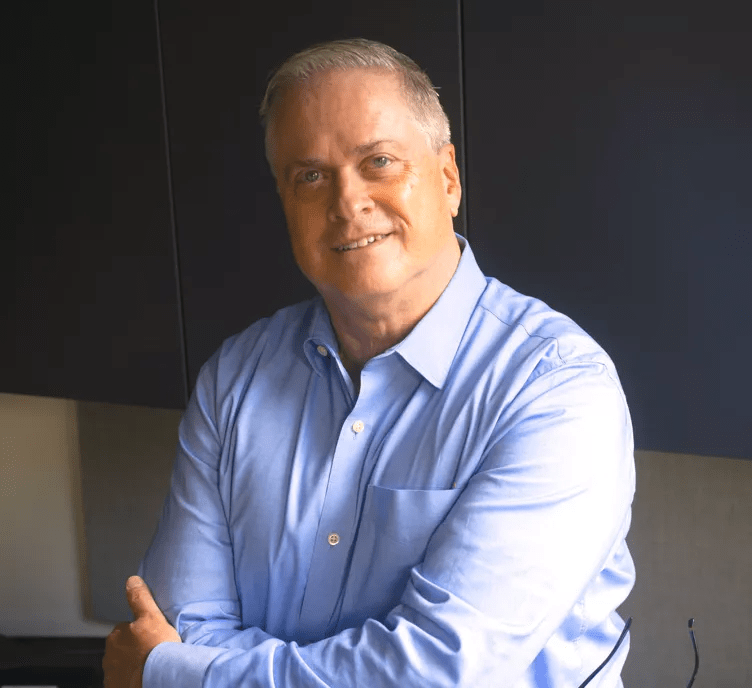
“The evolution of a company’s policies, branding, and reputation is a continuous work-in-progress,” said Bob Witek, a trailblazing LGBTQ+ business leader and communications strategist.
Today, concepts like DEI are mainstream, and marketing to LGBTQ+ customers is routine—but that wasn’t the case thirty years ago. Witek was among the pioneers who helped major companies in the early ’90s become some of the first to openly embrace and affirm LGBTQ+ individuals, both as valued customers and essential members of the workforce.
“We want companies to take action because it aligns with their values — with who they are and what they aim to achieve in the world,” Witek said. “Not just to make people feel good, but to empower them as well.”
The PR disaster that altered the course of history
Witek noted that “vice-driven” businesses like tobacco, alcohol, and some apparel brands had long marketed in LGBTQ+ bars and publications before other industries were willing to take the same risk. These companies were hesitant, fearing the usual anxieties of backlash—concerns that supporting LGBTQ+ causes or advertising to LGBTQ+ customers could alienate their cis-het customer bases.
However, in 1993, a public relations disaster forced American Airlines to confront its values. Witek’s involvement in handling this crisis helped shape modern history beyond the business world.
The crisis began when an employee requested all linens be changed after a group of gay men flew onboard. The memo detailing this request leaked, sparking public outrage. In response, American Airlines issued a swift apology. Company leaders realized they likely had LGBTQ+ employees and customers to protect. They updated the airline’s nondiscrimination policy to include sexual orientation, and they became the first Fortune 100 company to develop a dedicated LGBTQ+ marketing team.
A few months later, another incident unfolded when a passenger with late-stage HIV was forcibly removed from a flight for attempting to self-administer IV medication. Protests and boycotts loomed. Witek and his team worked with American Airlines to transform its culture, encouraging the company to respond with authenticity and embrace diversity, equity, and inclusion (DEI) as a core value rather than just a marketing strategy.
The airline implemented new policies, educated employees, and supported LGBTQ+ advocacy efforts, including HIV/AIDS activism. According to Witek, this was a significant shift from merely “checking boxes” to doing the hard work of cultivating new cultural norms that met the real needs of the LGBTQ+ community.
That same year, Witek collaborated with the Human Rights Campaign (HRC) to create a prototype for what would become the Corporate Equality Index (CEI). This benchmarking tool rates businesses based on their social responsibility, internal policies, and benefits—focusing on LGBTQ+ inclusion.
“Our goal isn’t just to sell more products to gay people,” Witek said, “but to ensure they are fully engaged and leading in every aspect.”
The CEI pushes companies to go beyond token gestures and make meaningful changes to their corporate structure. It’s also a way for LGBTQ+ people to evaluate which businesses truly support queer rights. Witek emphasized that it’s not just about sponsorships during Pride Month but about fostering long-term relationships with nonprofits, advancing trans healthcare, and tackling discrimination in areas like marriage and employment.
American Airlines became one of the first major corporations to sponsor the Human Rights Campaign, setting a new standard for corporate involvement in advancing LGBTQ+ rights.
Beyond benefits, Witek encouraged companies to create employee resource groups (ERGs), which allowed LGBTQ+ employees to shape corporate policies, advocate for resources, and foster camaraderie. These ERGs not only connected like-minded employees but also helped those from different backgrounds communicate better—normalizing LGBTQ+ identity at a time when the community was far less visible.
Witek’s firm also worked with National Coming Out Day, which in 1993—during the era of “Don’t Ask, Don’t Tell”—was not just a feel-good campaign but a mobilization effort to encourage visibility and acceptance of LGBTQ+ people.
Harnessing the power of the queer dollar
Witek and other pioneering LGBTQ+ communications strategists have sought various ways to increase community visibility by sharing data about LGBTQ+ buying power and economic trends with major corporations. He emphasized that, while LGBTQ+ individuals may be cynical and cautious, they tend to be loyal to brands that genuinely support them.
What was once an intuitive belief is now backed by research: LGBTQ+ individuals and their allies are more loyal to brands that advocate for LGBTQ+ causes, enforce workplace protections, and feature LGBTQ+ stories and characters in their advertising.
Early adopters of LGBTQ+ inclusive strategies sometimes faced backlash, but as data highlighted the advantages of openly supporting the queer community, companies became more confident in navigating these transitional periods.
“They would see firsthand the visible contributions and economic opportunities that LGBTQ+ individuals bring, and then they’d want to harness that,” Witek explained. “They’d want to hire, retain, and engage with them.”
As more brands sought to attract LGBTQ+ customers, inclusive advertisements—like IKEA’s groundbreaking TV spot featuring an openly gay couple—helped shift public perception and acceptance. This, in turn, supported the community’s efforts to transform social and political landscapes over the decades.
“Companies can play a significant storytelling role in normalizing LGBTQ+ experiences,” Witek noted. “They’ve changed the way Americans think in no small part.”
A 2020 study by GLAAD and Procter & Gamble revealed that cis-het Americans who encountered LGBTQ+ representation in advertising and media were much more likely to engage with LGBTQ+ individuals, feel comfortable around them, and support LGBTQ+ rights.
As public acceptance grew, some companies took their commitments to LGBTQ+ people more seriously, placing a greater emphasis on DEI efforts. Analyzing metrics like those provided by the Corporate Equality Index (CEI) has become crucial for companies aiming to maintain a positive reputation among LGBTQ+ consumers and potential employees. When policies or practices fall short, business leaders face pressure to keep up with competitors who may excel in this area.
The authenticity gap
Not every company has earned trust in the LGBTQ+ community. Some have approached engagement in a transactional manner, seeking to gain interest without truly becoming allies.
“Companies may implement more LGBTQ+-affirming policies to stay competitive, but I want them to do so authentically,” Witek emphasized.
Brands that treat LGBTQ+ individuals as mere transactions are increasingly missing out on the benefits of genuine engagement. Rising transphobia has led some companies to retract their visible support, signaling to consumers that they lack clarity about their identity, their target audience, and their core values.
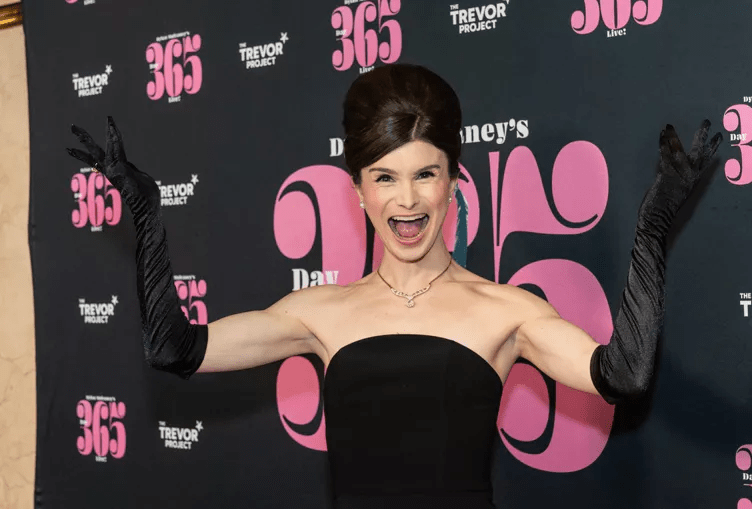
For instance, Bud Light faced backlash and a boycott from conservatives after partnering with trans influencer Dylan Mulvaney in 2023. Before sales began to decline, two marketing executives took a leave of absence, and the company announced a shift in its advertising focus toward sports and music.
“As far as I’m concerned, for a company to hire a trans person and then not publicly stand by them is worse than not hiring a trans person at all,” Mulvaney later told the New York Times.
This kind of pandering resulted in Bud Light losing support from both conservatives and progressives, leading to significant financial losses.
Integrity matters
More people are coming out than ever before, yet the American political and social landscape is regressing in some areas as conservatives gain traction with their messaging about LGBTQ+ individuals, particularly trans youth. This shift is making it less safe for individuals to be visible once again.
According to the HRC, 84% of LGBTQ+ individuals are out to at least one person at work, but many still choose to remain closeted or cautious in their workplaces. This includes a quarter of LGBTQ+ young adults who are out in other aspects of their lives but not at work. Data from LinkedIn shows that only 35% of LGBTQ+ professionals feel they can be authentic at work, and 75% have engaged in code-switching to fit in.
Trans individuals face higher rates of unemployment and underemployment, and LGBTQ+ people often earn less than their peers. Moreover, openly LGBTQ+ business leaders, especially trans individuals, are still notably absent from the boards of most major companies.
Kelley Robinson from the HRC criticized companies that are scaling back their DEI efforts in response to conservative backlash in a recent LinkedIn post, while also celebrating a record-breaking 1,400+ companies participating in the 2025 Corporate Equality Index.
This highlights a significant divide at a time when LGBTQ+ individuals are establishing stronger expectations for brands to act as allies. Moving forward, engaging with LGBTQ+ individuals as customers and employees will increasingly reflect what Witek has advocated from the beginning: that leaders who seek LGBTQ+ business and talent must build those relationships with integrity.
“Gay people should not be the victims of economics. We should be the drivers,” Witek emphasized. “That’s our whole purpose as a firm—to influence positive outcomes, not to settle for second-class status.”
She was placed on leave for her safety after local conservatives escalated their violent rhetoric against her.
A South Carolina middle school teacher has filed a defamation and libel lawsuit against five individuals — including a state representative — after being publicly accused of “grooming” children. The accusations followed her decision to distribute a questionnaire asking students for their personal pronouns. The defendants claimed her so-called “secret sex survey” violated state laws and school policies, asserting that her teaching license should be revoked.
Mardy A. Burleson, a computer science teacher at Hilton Head Island Middle School (HHIMS), is at the center of this controversy. HHIMS is located in a predominantly white, Christian coastal community of 38,069 people, most of whom are over 45. Burleson, who has a transgender son, was personally affected by the death of her son’s friend, who died by suicide after struggling to come out to their family. Motivated by this experience, Burleson introduced a beginning-of-term survey for her students titled, “Who is behind those eyes?” aiming to create a supportive environment for her students.
She had conducted the survey for several years without receiving any complaints. The survey included questions about students’ families, preferred learning styles, favorite media, hobbies, and accomplishments. It also asked for their “preferred pronouns” and included the question, “Do you want me to use your pronouns in class and in messages home, or is it private between you and me?”
“I promise to keep these just between you and me,” Burleson wrote at the top of the survey. Parents could access blank copies of the survey through their children’s Google Classroom accounts.
Around January 9, 2023, an HHIMS student showed the survey to her father, David Cook, a local “Dad-vocate” who had supported recent efforts to ban “pornographic” books from school libraries.
The following day, Cook lodged a complaint with the HHIMS principal. In response, Burleson removed the pronoun-related questions to avoid further conflict, according to court documents. Cook also requested a meeting with Burleson and school officials, but he claimed the school had “hidden” them from him.
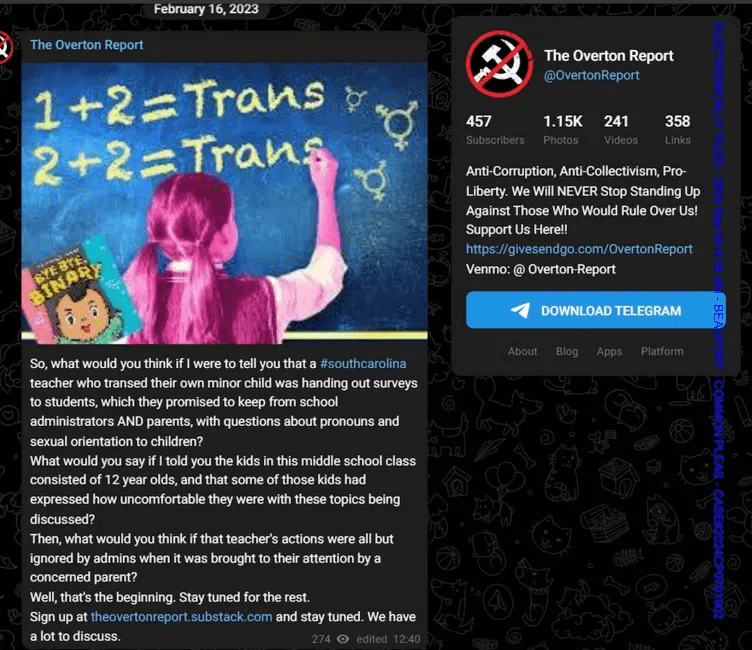
Cook allegedly shared the survey with Corey Allen Whittington, the author of the right-wing blog The Overton Report. In a post, Whittington accused Burleson of “grooming pre-teen students into an overtly sexualized lifestyle” and criticized her for having “transed her own kid,” referring to her transgender son.
“[Burleson] spent years transitioning her own daughter into a ‘son’ and has made no secret of expressing her full support for the controversial ideas behind gender ideology,” Whittington wrote.
For Burleson, Whittington’s post crossed a personal line by mentioning her transgender son, who she said had been bullied more at school as a result.
On his podcast and social media, Whittington continued to accuse Burleson of being a “predatory” teacher, claiming she was “indoctrinating 8th graders” with “secret surveys about sex” and telling students to “keep [it a] secret from administrators and parents.”
“Is there any other way to define somebody who encourages that type of thing in children?” Whittington asked on his podcast. “Is there any other way to define them than a groomer? What are you doing if not grooming them to accept kink and fetish at a young age?”
Whittington posted a link to his blog post on Facebook around January 25, 2023. Cook responded by sharing a screenshot of an article from the Rape, Abuse & Incest National Network (RAINN) titled, “Grooming: Know the Warning Signs,” with the caption, “I’ll just leave this right here for you, Corey Allen.” The article defined grooming as “manipulative behaviors that the abuser uses to gain access to a potential victim, coerce them to agree to the abuse, and reduce the risk of being caught.”
In later public comments, Cook accused Burleson of violating school district policies and her employment contract by administering a secret survey to students without parental consent.
Another local conservative activist, Elizabeth Szalai—who had previously submitted a list of books to the district superintendent for removal due to “adult” content—called Burleson a “groomer.” On her Facebook page, she vowed to make school personnel “pay” if they ever kept a secret from her about her child, promising to “exhaust every effort to have their license revoked and ensure that they never have access to children again.”
Michael Covert, a former Beaufort County Council member who supported Szalai’s book-banning efforts, reportedly called Burleson a “grooming” “pervert” who was “unfit” to teach during an appearance on his broadcast, Beaufort House of Cards. State Representative Thomas Beach (R), a current member of the South Carolina House of Representatives, also joined in the attacks, labeling Burleson a “groomer” on Facebook.
Of Burleson’s five primary harassers, only Cook has a student in the local schools, while two of the others don’t even live in Beaufort County.
Burleson explained the intent behind her survey and its pronoun question in an interview with The Packet. She said that teachers are trained to be trusted adults that students can confide in, noting, “A trusted adult is not always the family.” She also added that if a parent asked her about a student’s pronouns and it appeared to be an unsafe situation, she would consult district administrators and professionals first.
Due to the escalating harassment, Burleson was placed on leave in February for her own safety. She and another teacher, Kathleen Harper—HHIMS’s literary coach and a teacher with 25 years of experience—said the mounting negative online attention made them and their families feel unsafe both at home and in public.
Cook escalated his harassment campaign in April 2023. In a Facebook post on April 9, he wrote that schools “teach kids that the only safe people are teachers and admin. Everyone else in their lives are a danger to them, [including] parents and extended family.”
He accused Kathleen Harper, a fellow teacher, of being “sexually abusive” because one of her district-sourced texts on modern-day slavery mentioned teenage female genital mutilation.
Cook began showing up on campus, according to The Island Packet. Near the end of the school term, he handed Harper a handwritten note accusing her of indoctrinating students.
During the final week of school, Cook posted on Facebook, “If you’re in support of giving sexually explicit material to children, it’s important to remember… Dead Pedophiles Don’t Re-Offend.”
Other teachers warned Harper about Cook’s presence on campus, and escorts were assigned to accompany her to her car. School officials compiled Cook’s harassing social media posts and filed a harassment report with the Beaufort County Sheriff’s Office.
“[School officials] told me to watch my back in public,” Harper told The Packet. “They told me he is dangerous and they’re concerned for me. They encouraged me to file a police report, which I did that day.”
At a school board meeting, Cook claimed his daughter and other students were “victims” who had been subjected to “lewd and vulgar materials” by Burleson. He also accused the school and Burleson of “hiding” from a meeting with him.
At a June 2023 school board meeting, Cook made a spectacle of himself by throwing four bags of chicken feed at board members, protesting the re-shelving of books that had previously been removed for their alleged “pornographic” content.
“There’s your chicken feed,” Cook said. “I give you this gift as a way to demonstrate mine and many others’ opinion of your lack of action. Chicken. Too afraid. Matter of fact, your behavior gives chicken a bad name.”
After the meeting, the sheriff’s office issued a no-trespass order against Cook for all district campuses, though he was still permitted to attend board meetings and pick up his daughter from school.
Burleson is now suing the five individuals mentioned earlier for maliciously making false, defamatory, and harmful statements accusing her of a crime. These false accusations damaged her professional reputation and caused significant emotional distress.
Burleson is represented by Meg Phelan of the Equality Legal Action Fund, a pro-bono group that focuses on protecting members of the LGBTQ+ community, educators, and allied officials from defamation and harassment. Burleson is seeking actual and special damages, as well as punitive damages, according to The Island Packet. However, Phelan said Burleson and the organization are not focused on financial compensation.
“We’re dedicated to fighting this and trying to not only educate the public, but showing the public that no American deserves to be the target of disinformation, defamation, harassment, and intimidation,” Phelan told LGBTQ Nation.
Phelan added that the goal is to demonstrate to conservatives and extremists that their words have consequences and that not all speech is protected under the First Amendment. She noted that the defendants used the term “groomer” in a way that specifically accused Burleson of coercing children into sexual abuse, rather than simply using it as an anti-LGBTQ+ slur.
While not all states have legal definitions for grooming, South Carolina law allows lawsuits for defamation and libel if a false and malicious accusation of a crime is made.
The Equality Legal Action Fund is a nationwide network of pro-bono lawyers aiming to protect LGBTQ+ individuals, allies, teachers, and community leaders from anti-LGBTQ+ harassment. If this lawsuit succeeds, it could be one of the first court cases where anti-LGBTQ+ activists face legal consequences for using the “groomer” slur. It could also provide some peace of mind to Burleson and other teachers facing similar harassment across the country.
“We want these inspiring teachers to continue to create these safe, inclusive spaces for all of their students, particularly in these very conservative and sometimes closed-minded communities,” Phelan added. “So we don’t want them to spend all of their time and money defending both their personal and professional reputations.”
What exactly are we defending? What remains of the United States worth protecting?
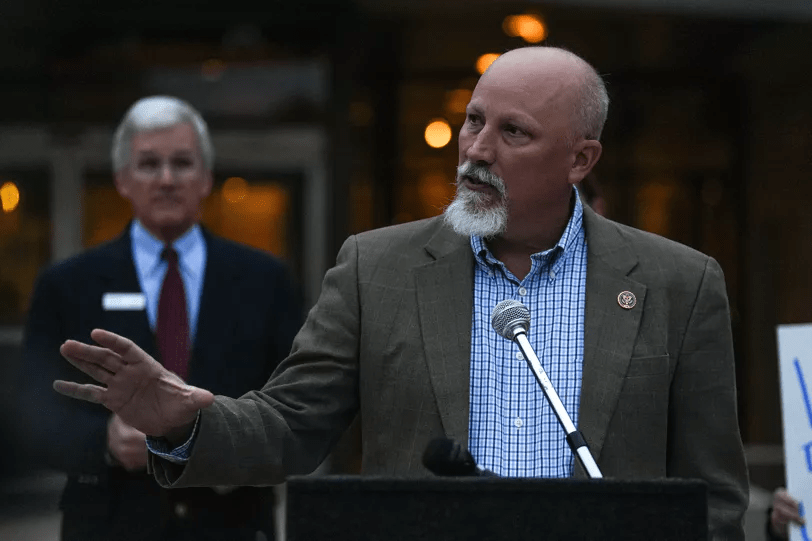
Rep. Chip Roy (R-TX) gave an extended speech on the anniversary of the September 11 attacks, during which he stated that the U.S. is no longer worth defending, citing a friend’s child’s transgender music teacher as a reason. He began his remarks by recognizing the significance of September 11 before transitioning to criticisms of immigrants.
“It serves as a reminder of the consequences of leaving your country vulnerable to attacks,” he stated before providing examples of immigrants involved in criminal activities. Roy expressed his support for mass deportations in response to these crimes, despite data indicating that immigrants are less likely to commit offenses than those born in the U.S.
In the midst of his speech, Roy launched into a tirade about what he considered wasteful government spending, labeling defense expenditures as unnecessary because, in his view, the U.S. isn’t worth defending anymore.
“In this town, we can’t effectively advocate for you, the American people, to ensure a secure border, safe communities, and an economy that isn’t devastated by reckless government spending,” Roy exclaimed. “And you want to know why? In the name of defense, they tell me every year that if I don’t support these inflated spending bills, we won’t get a new submarine or carrier.”
“What exactly are we trying to defend? What is left of the United States to protect? A school where I can’t send my child to pray without paying $20,000 a year on top of my taxes?” he questioned, referring to the private school he chooses for his child, despite the fact that students are permitted to pray in public schools, according to the Department of Education.
“A school where my friend’s sixth grader has a transgender music teacher asking students to participate in a dance class? Yes, that’s a true story,” he emphasized, as if it were shocking that sixth graders would be dancing in music class. “Is that what we’re defending with carriers, missiles, and endless wars?”
This isn’t the first instance in which Roy has claimed that the U.S. shouldn’t be defended due to LGBTQ+ individuals. Last year, he pointed to a Pride event at a U.S. Air Force Base in Georgia as a rationale for opposing military funding.
“What’s next, rainbow uniforms during Pride Month?” Roy questioned at the time. “The Air Force and Defense Department endorse this absurd use of taxpayer dollars and then expect members of Congress—who represent Americans outraged by this—to approve an $800 billion-plus budget for the Department of Defense (DOD). If the DOD doesn’t put an end to these divisive and frankly embarrassing events, Republicans should withdraw their support for this year’s National Defense Authorization Act.”
Gay and transgender “panic” defenses are now prohibited in Michigan courtrooms, following legislation signed on Tuesday by Democratic Gov. Gretchen Whitmer.
Michigan becomes the 20th state to ban these defenses, which permit individuals accused of violent crimes to seek reduced sentences by claiming that the victim’s sexual orientation or gender identity caused them to panic. Although these defenses, collectively known as the LGBTQ “panic” defense, are not standalone defenses, they are often employed alongside other legal strategies to mitigate charges or sentencing.
Michigan’s new law significantly enhances legal protections for LGBTQ individuals against discrimination, prejudice, and hate crimes by ensuring that a defendant cannot use a person’s actual or perceived identity to claim “reasonable provocation” or to argue they acted in the heat of passion.
Democratic state Rep. Laurie Pohutsky, the bill’s primary sponsor, praised Whitmer’s signature as “a huge step toward securing a safe and inclusive state for all Michiganders.”
Tracking “panic” defenses in American courtrooms is notoriously difficult, with no exact figures available. As recently as 2018, the LGBTQ “panic” defense was used to mitigate a murder charge, according to the LGBTQ+ Bar Association.
In a 2013 resolution, the American Bar Association urged federal, tribal, state, and local governments to “take legislative action to curtail the availability and effectiveness” of gay and transgender “panic” defenses in court. “Successful gay and trans panic defenses constitute a miscarriage of justice,” the group stated.
The Associated Press NASHVILLE, Tenn. — On Thursday, a federal appeals court dismissed a lawsuit challenging a pioneering Tennessee law that imposes strict restrictions on drag shows. This decision overturned a previous lower court ruling that had found the statute unconstitutional and had partially blocked its enforcement.
The 6th U.S. Circuit Court of Appeals determined that Friends of George’s, a Memphis-based LGBTQ+ theater company that filed the lawsuit, did not have the legal standing to challenge the law.
Friends of George’s had argued that the law would adversely impact their productions, which include “drag-centric performances, comedy sketches, and plays” without age restrictions. However, the appeals court concluded that Friends of George’s was not at risk of breaching the 2023 law because their performances were not deemed “harmful to minors.”
The law, passed last year with backing from the Republican-controlled Tennessee Legislature and Governor Bill Lee, does not explicitly mention “drag.” Instead, it redefines adult cabaret to include “adult-oriented performances that are harmful to minors,” categorizing “male or female impersonators” alongside strippers and topless dancers.
The justices noted that the Tennessee Supreme Court had narrowly defined what constitutes “harmful to a minor” as material lacking “serious literary, artistic, political, or scientific value for a reasonable 17-year-old.”
“FOG has not alleged that its performances lack serious value for a 17-year-old. In fact, it asserts the opposite. A member of FOG’s board admitted that its shows ‘are definitely appropriate’ for a 15-year-old and would ‘absolutely’ have artistic value for a 17-year-old,” the ruling stated.
Friends of George’s has not yet responded to requests for comment on the decision.
“LGBTQ+ students across California can breathe a sigh of relief,” stated one LGBTQ+ organization, following the passage of this groundbreaking law.
California Governor Gavin Newsom (D) has signed a pioneering law banning forced outings in state public schools.
The SAFETY Act prohibits school district policies that mandate educators to inform parents if their child requests to use pronouns or facilities different from the gender assigned at birth.
The law, which takes effect immediately, also protects teachers and administrators from retaliation if they choose not to follow district directives to out queer students to their parents. Additionally, it provides funding for resources to assist parents and families of queer students in having supportive conversations about their identities, ensuring that these discussions occur in a way that makes the children feel safe and respected.
The SAFETY Act — Support Academic Futures & Educators for Today’s Youth — passed the state Assembly in June by a vote of 60-15.
Forced outing policies have proliferated in California since 2023, with more than a dozen school districts implementing rules to notify parents and guardians of students who identify as trans or a gender different from the one listed on their birth certificate.
“The very personal decision for a student to come out should be on their own terms to whoever they choose to share that information with when they are ready,” said the bill’s author, San Diego Assemblyman Chris Ward (D), in a statement. “Teachers should not be the gender police.”
“In California, LGBTQ+ students — like all students — have the right to a safe and welcoming school environment,” Becca Cramer-Mowder with ACLU California Action said in a statement.
“With the Governor’s signature, our state becomes the first in the country to ensure protections against forced outing in school are clearly enshrined in statute,” she added. “LGBTQ+ students and their families deserve to decide on their own terms when and how to have conversations about coming out.”
Eight red states have enacted legislation mandating schools out trans students, while another five have passed laws promoting parental notification, according to the Movement Advancement Project.
In California, the policies have become a lightning rod, particularly in conservative inland areas of the state.
In April, a defiant conservative majority on the board of the Murrieta Valley Unified School District in Riverside County voted to ignore an order from the state to rescind a parental notification policy. A packed audience in the ruby red district cheered the result when it occurred.
Similar battles are being waged in other Riverside County school districts, including Temecula and Chino, both hotbeds of “parental rights” activism.
“We will continue to stand strong, linked arms all over California, to ensure the government does not infringe on parental rights — period,” Chino Valley School Board President Sonja Shaw said earlier this year.
A state investigation in Murrieta was prompted after two teachers filed a complaint. One was filed by 6th and 7th grade teacher Karen Poznanski, who is also a district parent with a nonbinary child.
“This policy, whether enforced or not, hindered our LGBTQ+ students from living authentically,” Poznanski told The Los Angeles Times. “Moreover, it not only compromised their privacy and dignity, but also perpetuated harm and discrimination against LGBTQ+ individuals and their families.”
In a statement, the state LGBTQ+ advocacy organization Equality California said, “We are grateful to Governor Newsom for demonstrating his unwavering commitment to the LGBTQ+ community by signing the SAFETY Act into law. Over the past year, more than a dozen extremist school boards across California have considered or passed these harmful policies that openly discriminate against transgender students and prevent them from safely being themselves at school.”
“The SAFETY Act could not be more timely or necessary, and LGBTQ+ students across California can breathe a sigh of relief following today’s action by the Governor,” the statement continued. “LGBTQ+ youth across California can now have these important family conversations when they are ready and in ways that strengthen the relationship between parent and child, not as a result of extremist politicians intruding into the parent-child relationship.”
In Austin, the Texas Supreme Court has upheld the state’s ban on gender-affirming care for minors, dismissing arguments from parents that it infringes on their rights to seek medical care for their transgender children.
In a decisive 8-1 ruling issued Friday, the all-Republican court upheld a law effective since September 1, 2023, making Texas the largest of over 25 states to enact laws restricting or banning gender-affirming medical care for transgender minors. Many of these states are facing legal challenges, with the U.S. Supreme Court recently agreeing to hear an appeal concerning similar bans in Tennessee.
The Texas law prohibits transgender minors from accessing hormone therapies, puberty blockers, and transition surgeries, despite medical experts’ consensus that such surgeries are rarely performed on children. Children already undergoing banned treatments must cease them in a medically appropriate manner.
“The Legislature made a permissible, rational policy choice to limit available medical procedures for children, given the nascent understanding of gender dysphoria and its treatments,” the ruling stated, defending the legislative authority to regulate medical practice.
Lambda Legal, a civil rights organization for LGBTQ+ individuals, criticized the decision, asserting that it undermines parental and medical decision-making in favor of political interference.
The lawsuit against the Texas law argued it severely harms transgender teens by denying them crucial medical care recommended by physicians and parents. While a lower court had deemed the law unconstitutional, it remained in effect pending the state Supreme Court’s decision.
This legislative trend reflects broader challenges to transgender rights, extending from healthcare to participation in sports and access to public facilities. As restrictions increase, families often face the burden of seeking necessary care out of state due to local shortages.
The Texas law, signed by Republican Governor Greg Abbott, has sparked significant controversy and activism, including protests during legislative sessions by transgender rights advocates.
Medical organizations such as the American Medical Association and the American Academy of Pediatrics support gender-affirming care for youths, emphasizing its role in alleviating gender dysphoria and promoting mental well-being. Despite opposition citing concerns about irreversible decisions, medical experts emphasize the benefits supported by research and clinical experience.
Republicans contend that the rule is a tactic by the Biden administration to permit transgender females to participate in girls’ and women’s sports teams.
Kansas high school students, family members and advocates rally for transgender rights in Topeka on Jan. 31.
By The Associated Press
TOPEKA, Kan. — A federal judge in Kansas has blocked the enforcement of a federal rule that expands anti-discrimination protections for LGBTQ students in four states and various other locations.
U.S. District Judge John Broomes ruled on Tuesday, suggesting the Biden administration reconsider whether enforcing the rule is “worth the effort.”
This ruling is the third of its kind in less than three weeks but is more extensive, affecting Alaska, Kansas, Utah, and Wyoming, which challenged the rule. It also impacts a Stillwater, Oklahoma, middle school involved in a lawsuit and members of three groups supporting Republican efforts to roll back LGBTQ rights nationwide: Moms for Liberty, Young America’s Foundation, and Female Athletes United.
Judge Broomes, appointed by former President Donald Trump, ordered these groups to list the schools their members’ children attend so those schools also don’t have to comply with the rule. Kansas Attorney General Kris Kobach, who argued the case for the states, said this could affect thousands of schools.
The Biden administration rule, set to take effect in August under the Title IX civil rights law of 1972, aims to prohibit sex discrimination in education. Judge Broomes’ order will remain in effect through the trial of the lawsuit in Kansas, with the judge indicating that the states and three groups are likely to prevail.
Republicans have argued that the rule is a tactic by the Biden administration to permit transgender females to participate in girls’ and women’s sports, a practice that is banned or restricted in Kansas and at least 24 other states. The administration has clarified that the rule does not apply to athletics. Opponents of the rule have also framed the issue as protecting the privacy and safety of women and girls in bathrooms and locker rooms.
Besides Broomes, two other federal judges issued rulings in mid-June blocking the new rule in 10 additional states. The rule aimed to protect LGBTQ students by expanding the definition of sexual harassment at schools and colleges and adding safeguards for victims.
Like the other judges, Broomes deemed the rule arbitrary and concluded that the Department of Education and its secretary, Miguel Cardona, exceeded the authority granted by Title IX. He also determined that the rule violated the free speech and religious freedom rights of parents and students who reject transgender students’ gender identities and wish to express those views at school or in public.
Broomes stated in his 47-page order that it is up to the Biden administration “to determine in the first instance whether continued enforcement in compliance with this decision is worth the effort.”
Broomes also expressed concerns that non-transgender students’ privacy and safety could be compromised by the rule. He referenced an Oklahoma middle school student’s statement that “on some occasions” cisgender boys used a girls’ bathroom “because they knew they could get away with it.”
“It is not hard to imagine that, under the Final Rule, an industrious older teenage boy may simply claim to identify as female to gain access to the girls’ showers, dressing rooms, or locker rooms, so that he can observe female peers disrobe and shower,” Broomes wrote, reflecting a common but largely debunked narrative from anti-trans activists about gender identity and school accommodations for transgender students.











You must be logged in to post a comment.