North Dakota Legislature close to asking Supreme Court to undo landmark gay marriage ruling

*This is reported by NBC.

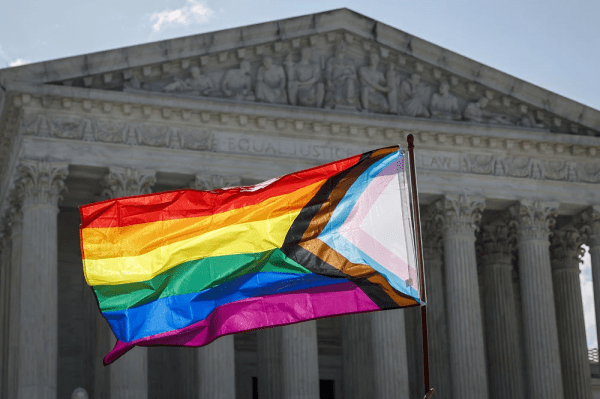
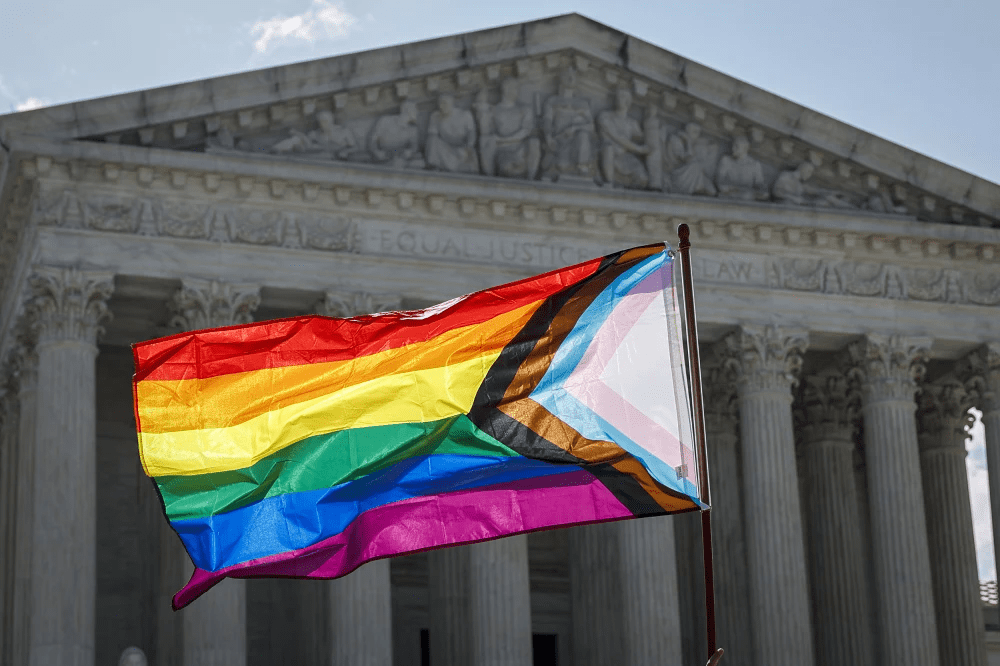
North Dakota lawmakers are on the verge of making their state the first to tell the U.S. Supreme Court to overturn its decade-old ruling that legalized same-sex marriage nationwide.

Similar efforts — which would not have any direct sway with the nation’s top courts — have been introduced in a handful of states this year. North Dakota’s resolution passed the Republican-led House in February but still requires Senate approval, which is not assured.

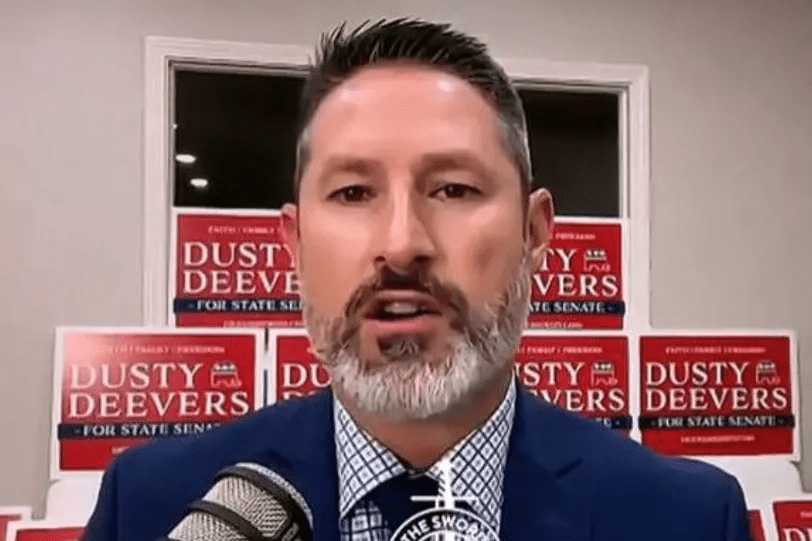
“The original Supreme Court ruling in 2015 went totally against the Tenth Amendment, went totally against the North Dakota Constitution and North Dakota Century Code (state laws),” sponsor Republican Rep. Bill Tveit said. “Why did I introduce it? Every one of us in this building took an oath to uphold the Constitution of the United States and the state.”

When the Legislature considers such resolutions, attorney and North Dakota National Guard member Laura Balliet said she wonders why she stays in her home state. The measure makes her feel unwanted, unwelcome and judged because of who she is, she said. She married her wife in 2020.

“I don’t know what this resolution does other than to tell people like myself, my friends and my family that we’re not welcome here, and I’m angry about that because I want to be welcome here. This is my home,” Balliet told the Senate panel that heard the measure on Wednesday — one in a stream of opponents who testified against it.

A push across states

Massachusetts-based MassResistance, which describes itself as an “international pro-family group” but has been labeled “anti-LGBTQ hate group” by the LGBTQ advocacy organization GLAAD, is pushing the resolution across the country.

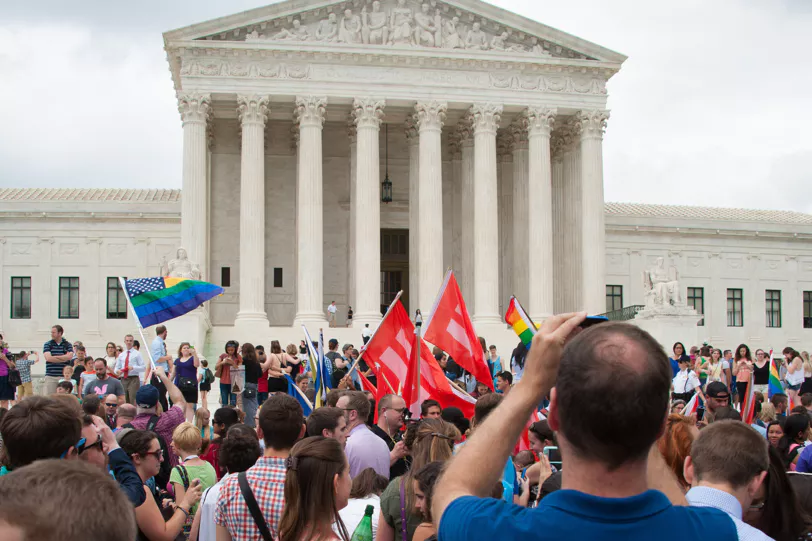
Massachusetts became the first state to recognize same-sex marriage, in 2004. Over the next 11 years, most states began to recognize it through laws, ballot measures or court decisions before the Supreme Court made it legal nationwide.

Outside of Idaho and North Dakota, the measures have not progressed far, according to an analysis of legislation collected by the bill-tracking service Plural.

By contrast, there have been additional protections for same-sex marriage over the years, including a federal law in 2022. Since 2020, California, Colorado, Hawaii and Nevada have repealed old constitutional amendments that defined marriage as being allowed only between a man and a woman, and Virginia lawmakers advanced a similar measure this year. It could be on the ballot there in 2026.

Differing views

The North Dakota measure states that the Legislature “rejects” the 2015 Obergefell v. Hodges decision and urges the U.S. Supreme Court “to overturn the decision and leave unaddressed the natural definition of marriage as a union between one man, a biological male, and one woman, a biological female.”

In the court’s 2022 ruling that overturned the constitutional right to an abortion, Justice Clarence Thomas said the court should reconsider its precedents in the marriage decision and other past cases.

Soon after the measure passed the North Dakota House last month, several Republican state reps who voted for it stated they meant to vote no or regretted voting yes.

Republican Rep. Matt Ruby said he wished he had voted against the measure, saying his yes vote was for a different intent he realized wasn’t going to happen. The vote sent a bad message “that your marriage isn’t valid and you’re not welcome,” Ruby said. He said he supports the right for same-sex couples to be married.

Republican Rep. Dwight Kiefert said he voted for the resolution because of his Christian faith and that the institution of marriage was established in the Bible in the Garden of Eden between Adam and Eve.

‘Slap in the face’

The measure is a slap in the face to North Dakotans who are happily married and invested in their state, said Democratic Sen. Ryan Braunberger, who is gay and sits on the Senate panel that heard the resolution. The measure sends a dangerous message as North Dakota wants to grow its population and expand economically, he said.

“We want to make sure that we bring everybody in the best of the crop, and that runs the gamut of all sorts of different races, ethnicities, sexual orientations through that,” Braunberger said.

The measure is a declaration, if passed, that lawmakers would want to define marriage through what is arguably a religious lens, which dangerously gets close to infringing upon the Establishment Clause of the U.S. Constitution, said Cody Schuler, advocacy manager for the American Civil Liberties Union’s North Dakota chapter.

“Marriage defined as ‘one man, one woman’ is a particular religious view. It is not held by all religions, all societies or by nonreligious people, and so therefore it is dangerous to be making that kind of statement because it puts legislators on record as to how they might vote on law, on a binding law versus this nonbinding resolution,” Schuler said.

Republicans in 9 states are pushing measures to end same-sex marriage rights

*This was published by LGBTNation.com

Nine states are now seeing Republican efforts to overturn Obergefell v. Hodges, the 2015 Supreme Court decision that legalized marriage equality in all 50 states. This is a new trend; state Republican lawmakers have been focused on rolling back trans rights since 2020.

In five of the states — Idaho, Michigan, Montana, North Dakota, and South Dakota — Republican lawmakers have introduced resolutions calling for the Supreme Court to overturn Obergefell. Those measures have been passed by at least one chamber of the state legislature in Idaho and North Dakota.

In the four other states – Missouri, Oklahoma, Tennessee, and Texas – Republican legislators have introduced bills to privilege heterosexual marriages, with some of the states referring to a new institution called “covenant marriage,” which would be limited to heterosexual couples. The point there, according to the sponsor of one such bill in Oklahoma, is to create inequality in marriage rights between opposite- and same-sex couples and invite a legal challenge that could be taken to the Supreme Court to overturn Obergefell.

Two justices on the Supreme Court have openly stated that they want to overturn Obergefell, and the Court has moved to the right since 2015. Justices Ruth Bader Ginsburg, Anthony Kennedy, and Stephen Breyer were all in the Obergefell majority but have either retired or passed away in the last ten years. Only one was replaced by a Democratic president. It is not clear if there are the five votes needed to protect marriage equality on the Court if it were to take up a test case.

Thirty-five states have amendments or statutes banning same-sex marriage, and most would likely go into effect if the Supreme Court were to overturn Obergefell. Because of the 2022 federal Respect for Marriage Act, though, state and federal governments would have to recognize same-sex marriages performed in other states.

“It’s good to anticipate things that could happen in order that we do our best job preparing ourselves,” Jenny Pizer, chief legal officer of Lambda Legal, told LGBTQ Nation last month. “The bottom line for people is that, if there are things that you can do to secure your relationships, your family status and to take other protective measures, please do those things. Don’t be lulled into complacency by our informed and reasonably expert speculation about what may happen.”

Michigan lawmaker urges US Supreme Court to overturn gay marriage ruling

*This is being reported by FOX 2 Detroit.

The Brief

    • Michigan Rep. Josh Schriver is proposing a resolution that would urge the U.S. Supreme Court to overturn the ruling that legalized same-sex marriage nationwide.
    • Schriver says allowing gay marriage has led to “religious persecution” and goes against “the sanctity of marriage.”
    • Gay marriage is banned in Michigan’s constitution, but is allowed due to the 2015 Supreme Court ruling that Schriver and the resolution’s co-sponsors wish to overturn.

LANSING, Mich. (FOX 2) – A Michigan lawmaker plans to introduce a resolution to the state House of Representatives, urging the United States Supreme Court to overturn Obergefell v. Hodges, the case that legalized same-sex marriage nationwide.

Rep. Josh Schriver (R-Oxford), along with 12 co-sponsors, will introduce the House resolution following Tuesday’s session.

The backstory:

The resolution comes after Schriver posted on social media late in 2024 that gay marriage should be banned.

“America only ‘accepted’ gay marriage after it was thrusted into her by a perverted Supreme Court ruling,” he wrote in part on X. “Make gay marriage illegal again. This is not remotely controversial or extreme.”

Schriver doubled down on what he said in a statement, where he wrote that gay marriage offends God. 

In a release announcing the new resolution, Schriver wrote that Obergefell v. Hodges “is at odds with the sanctity of marriage, the Michigan Constitution, and the principles upon which the country was established.”

Without the Obergefill ruling, gay marriage would be illegal in Michigan due to an amendment voters passed in 2004. However, the Supreme Court decision supersedes that. 

Schriver went on to reference what he called “religious persecution” since the 2015 ruling, including a wedding venue that was fined for turning away an LGBTQ couple, and Michigan Attorney General Dana Nessel attempting to ban adoption agencies from turning away same-sex couples for religious reasons. However, a judge later ruled that faith-based adoption agencies can turn away prospective parents because they are LGBTQ.

What they’re saying:

Fears that the Supreme Court may take another look at the ruling and overturn it arose after Roe v. Wade was overturned, and has increased as lawmakers begin introducing legislation aimed at the landmark case.

Lawmakers in other states, including IdahoMontanaNorth Dakota, and South Dakota, have also been pushing the Supreme Court to revisit the ruling and overturn it. 

The new resolution received pushback from Democrats, with state Democratic Party Chair Curtis Hertel releasing a statement condemning the resolution:

“Unfortunately, this isn’t a surprise coming from Josh Schriver and the right-wing extremists that populate Matt Hall’s Republican caucus – and it’s deeply dangerous. Schriver is attacking hundreds of thousands of Michiganders who are nurses, teachers, soldiers, and beloved members of the community.

“From spreading racist conspiracy theories to homophobic rhetoric, Schriver does not deserve to serve the people of Michigan, let alone sit on a politically motivated oversight committee in the state House. Thankfully, I know that Democrats will continue to fight for Michiganders’ civil rights and personal freedoms in the face of these ugly attacks.”

Gay marriage in Michigan

Because Michigan voters banned gay marriage in 2004, legalizing the practice would first require voters to remove the ban from the state constitution via ballot proposal.

Lawmakers have been pushing to codify same-sex marriage to protect it if Obergefell were to be overturned.

Under the existing amendment, if Obergefell were to be overturned, existing marriages in Michigan would be recognized, but future LGBTQ+ marriages would be banned, said Rep. Jason Morgan (D-Ann Arbor).

A similar scenario played out in 2022 when nationwide abortion was removed following a Supreme Court ruling. The overturning of that ruling allowed states to decide if they would allow abortions. Michigan had an existing abortion ban that was lifted after voters passed a proposal to allow the procedure.

After the Roe ruling, Justice Clarence Thomas said that the Supreme Court should reconsider rulings that legalized same-sex marriage and protected same-sex relationships, creating fear in states that don’t have protections in place.

Same-sex marriages will soon become legal in Thailand after historic law

*This first appeared on AP News

BANGKOK (AP) — They have been in a committed relationship for more than 13 years, and even had a wedding in 2019. Since then, Danaya Phonphayung and Sunma Piamboon, both women, have considered themselves a married couple, even if same-sex marriages were not legally recognized.

The walls of their home in suburban Bangkok are decorated with faded photos from their happy union, filled with joy and love from their families and friends. Come this Thursday, their wedded status will be recognized by the nation as well, when a law that allows members of the LGBTQ+ community in Thailand to get married and have the same legal rights as heterosexual couples takes effect.

The couple said they can’t wait to formalize their union. They plan to register their marriage at a district office near their home on the very first day that the law allows.

“I think I’ll cry,” Danaya, an office worker, said with a big smile, thinking about the moment that they will sign the paper. “I’m so happy. It’s something that was more than I could’ve dreamed of, that suddenly this day is happening.”

“We live together. We bought a house. We bought a car. But we cannot share these things together like a married couple. When this is happening, we feel that it’s our rights that we need to secure as quickly as possible,” she said.

The marriage equality bill, which sailed through both the House of Representatives and the Senate, amended the Civil and Commercial Code to change the words “men and women” and “husband and wife” to “individuals” and “marriage partners.” It would open up access to full legal, financial and medical rights for LGBTQ+ couples.

Sunma, who owns a travel agency, said that she had realized how crucial being legally married was when Danaya was hospitalized with dengue fever, as they don’t live close to her parents.

“The doctors asked me who I was, and I said I was the girlfriend, and they were like, ‘so what’?’ I couldn’t make any decision until her condition became quite serious,” she said. “I was so upset, like, if I had lost her … there would be nothing that could’ve made up for it. So, I think this is very important for both of us.”

How marriage equality became law

Thailand has a reputation for acceptance and inclusivity, but struggled for decades to pass a marriage equality law. Thai society largely holds conservative values. Members of the LGBTQ+ community say they face discrimination in everyday life, although they note that things have improved greatly in recent years.

The government led by the Pheu Thai party made marriage equality one of its main goals. It made a major effort to identify itself with the annual Bangkok Pride parade in June, in which thousands of people celebrated in one of Bangkok’s busiest commercial districts.

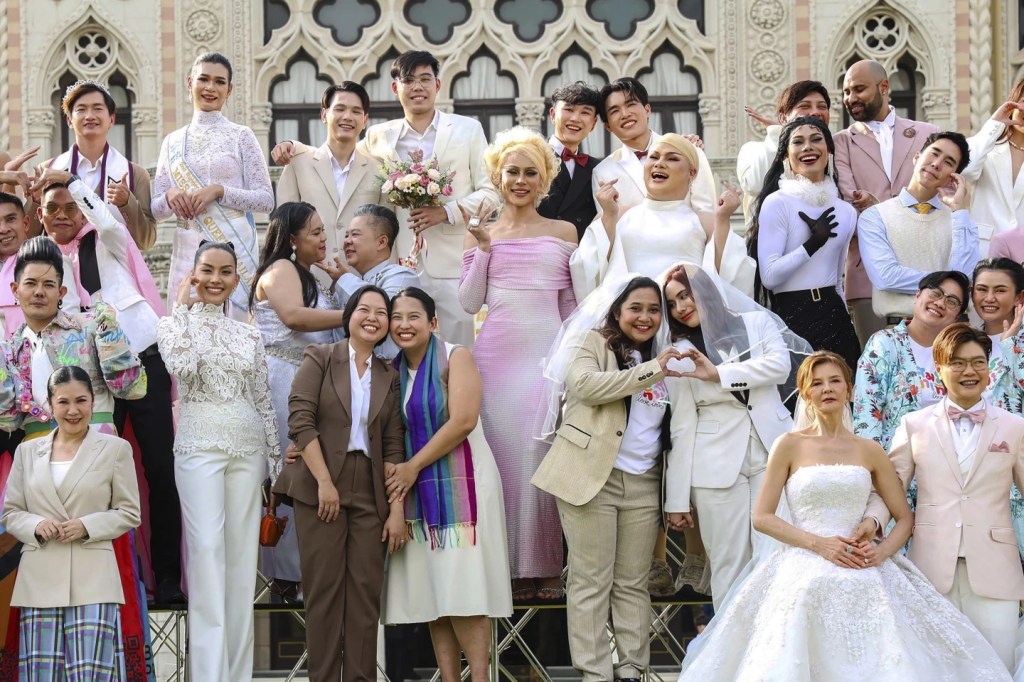
Last week, Government House invited dozens of LGBTQ+ couples and activists for a photo op and a meeting with Prime Minister Paetongtarn Shinawatra and several high ranking officials to celebrate the law coming into effect, making Thailand the first in Southeast Asia and the third place in Asia, after Taiwan and Nepal, to legalize same-sex marriage.

“It is almost like a dream, but it’s not. So, congratulations to all,” Paetongtarn said. “I think it’s very important that the world notice us, and know that in this small country we have this kind of thought. We have this kind of support for our people. So, we all should be proud.”

The organizers of Bangkok Pride have collaborated with relevant government agencies to hold a grand celebration in central Bangkok and facilitate couples who wish to register their marriage on the very first day. They said that more than 300 couples have registered to officially tie the knot on Thursday at the event.

“(The law) is about returning our dignity, and confirming that we also have dignity as a human being,” said Ann “Waaddao” Chumaporn, a gender equality activist and the lead organizer of Bangkok Pride. “That day is going to be meaningful to all the couples that have gone through this journey together. I’d like to thank everyone, every love, that has faithfully struggled so that today would finally happen.”

How the law will be implemented

The government and state agencies in Thailand are historically traditional in outlook. To prepare them for change, the Bangkok Metropolitan Administration said that it has organized workshops for staff of all Bangkok district offices who are in charge of handling marriage registration. They included lectures raising awareness about gender diversity and guidance on how to properly communicate with those who come for the service.

“It’s like a missing piece of the jigsaw,” Bangkok Deputy Gov. Sanon Wangsrangboon said at one of the workshops earlier this month. “Society is ready. The law is getting ready. But the last piece of the jigsaw is the understanding from officials.”

He acknowledged there that would be problems in the beginning, but said that he hoped they would gradually improve over time.

After they register their marriage, Sunma said that she’s looking forward to having a “real marriage celebration” with her and Danaya’s families.

“It’s not just the two of us that are happy, but both of our families feel it is a big deal, and it is what everyone has been waiting for. Everyone said they are waiting for Jan. 23,” she said.

(AP Photo/Jirasak jivawavatanawanit)

Michigan Democrats are taking steps to safeguard same-sex marriage rights just ahead of Donald Trump’s potential presidency.

This blog is originally appeared at LGBTQ Nation

Michigan Democrats are working to pass a bill that would enshrine same-sex marriage in the state’s constitution. This effort comes in response to concerns that the U.S. Supreme Court could overturn its 2015 ruling in Obergefell v. Hodges, which legalized marriage equality nationwide. Additionally, some Republican lawmakers, including one state congressman, have called to “make gay marriage illegal again.”

Although the Supreme Court’s decision in Obergefell declared state laws banning same-sex marriage unconstitutional, Michigan is among several states where outdated laws or constitutional amendments still prohibit same-sex marriage. As Fox 2 Detroit reports, voters in Michigan approved a constitutional amendment in 2004 that defined marriage as “the union of one man and one woman” for all legal purposes.

If the Supreme Court were to overturn Obergefell v. Hodges, as Justices Clarence Thomas and Samuel Alito have hinted they may, Michigan’s marriage equality ban would automatically be reinstated.

In response, Democratic state Rep. Jason Morgan introduced House Joint Resolution F last year, which aims to remove the 2004 constitutional amendment defining marriage as between a man and a woman. However, for this resolution to move forward, it must receive support from at least two-thirds of the state Legislature, a goal Morgan says will be difficult to achieve. “I believe the people will vote to support families,” Morgan told Fox 2, though he acknowledged that the legislative support isn’t there yet.

Meanwhile, Republican state Rep. Josh Schriver is actively calling for the reversal of marriage equality. In a recent post on X, Schriver stated that America only “accepted” gay marriage due to a “perverted Supreme Court ruling” and urged that marriage equality be overturned, calling it “not remotely controversial or extreme.” Schriver clarified that his post was meant to pressure the Supreme Court into reversing the ruling that equates “traditional marriage” with gay marriage.

Governor Gretchen Whitmer has strongly opposed any efforts to strip away marriage equality, stating, “Any attempt to strip away gay marriage is wrong.” She reaffirmed Michigan’s commitment to protecting the rights of all citizens, emphasizing that no one should face discrimination based on who they love.

With a 6-3 conservative majority in the Supreme Court that has shown a willingness to overturn longstanding precedents, as seen with the 2022 reversal of Roe v. Wade, and an incoming second Trump administration, many same-sex couples are rushing to marry before Inauguration Day to secure legal protections in states where marriage equality is still guaranteed.

Despite Trump spokesperson Karoline Leavitt stating that overturning marriage equality was never a campaign promise, Morgan remains concerned that the Trump administration poses a threat to marriage equality. “I do believe that marriage equality is at risk under the Trump administration,” he said.

If the resolution doesn’t pass through the legislature, Morgan is committed to continuing the fight to protect marriage equality in Michigan. As Fox 2 noted, a citizen-driven petition could also push the amendment to the ballot. “It’s just so important,” Morgan said. “This is something I’m very passionate about.”

Blog at WordPress.com.

Up ↑