Supreme Court Could Legalize LGBTQ Conversion Therapy—The Consequences Could Cost Billions

*This is being reported by Forbes

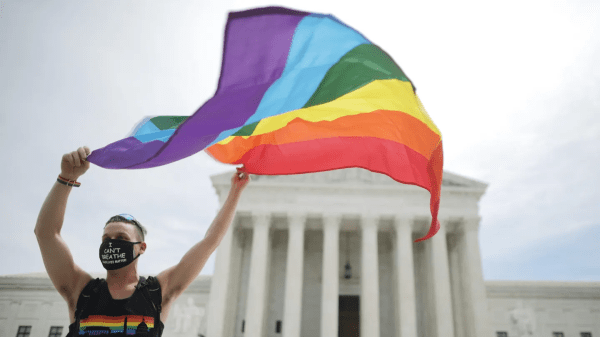
The Supreme Court announced Monday it will hear a case regarding whether state bans on “conversion therapy” trying to change minors’ sexual orientation or gender identity are legal—a case that could carry billions of dollars in repercussions, as a 2022 study found conversion therapy carries an economic burden of approximately $9 billion annually for patients and their families.

Key Facts

The Supreme Court took up Chiles v. Salazar, a case challenging Colorado’s ban on LGBTQ “conversion therapy” for minors, which asks the justices to more broadly decide whether laws that “[censor] certain conversations between counselors and their clients based on the viewpoints expressed” are constitutional.

LGBTQ “conversion therapy,” as it’s commonly known, refers to any practices—including both emotional efforts, like talk therapy, or physical efforts, like electroconvulsive therapy—that aim to influence a patient’s sexual orientation or gender identity, which are typically framed as efforts to “cure” homosexuality or being transgender.

Repeated studies have shown such efforts are ineffective at changing people’s sexual orientation or gender identity and carry a variety of harmful effects—such as elevated risks for suicide, drug abuse and mental health issues—which has led to bans on conversion therapy for minors being enacted in more than 20 states.

Conversion therapy and its negative effects also have an economic impact, as a 2022 study published in JAMA Pediatrics found conversion therapy and its “associated harms” result in an economic burden of approximately $9.23 billion per year.

Conversion therapy alone costs approximately $650 million for participants annually in the U.S., with individuals who undergo it paying an extra $97,985 for treatment as compared with people who don’t undergo any counseling, according to the study, which was based on data from LGBTQ youth ages 13-24.

There are also significant costs associated with knock-on effects from conversion therapy and the study estimates each conversion therapy patient pays an extra $83,366 on average to treat the “downstream consequences” associated with the procedure, which combined raise the total economic burden of conversion therapy to $9.2 billion.

What To Watch For

The Supreme Court will hear the case on conversion therapy at some point during its next term, which begins in October, so any ruling in the case is likely more than a year away.

What Did The Study Conclude?

The study, which was conducted by pro-LGBTQ rights organization The Trevor Project and research group Cytel, concluded there is a “high economic burden and high societal costs” that come along with conversion therapy, which the study refers to as sexual orientation and gender identity change efforts (SOGICE). Researchers analyzed the difference in costs between patients who underwent conversion therapy, LGBTQ youth who received no therapy and those who received therapy that affirmed their sexual orientation or gender identity. The study found conversion therapy carried the highest economic burden: In addition to the $650 million per year in total attributed to the therapy itself, there are also total annual costs of $190 million related to anxiety or “severe psychological distress” among those that underwent conversion therapy, $1.36 billion related to depression, $2.42 billion from suicide attempts, $1.17 billion from fatal suicides, $1.26 billion from alcohol use disorder and $2.18 billion from substance abuse. The likelihood of those negative outcomes was largely markedly higher among those who underwent conversion therapy as compared with other LGBTQ populations—except alcohol use disorder, where those without any therapy registered the highest number by one percentage point (42.26% among those with no intervention versus 41.26% among conversion therapy patients). As a result, the total costs incurred by conversion therapy patients were higher than the $4.85 billion in total annual costs among those who hadn’t received any treatment, and $3.04 billion among those who received affirmative therapy.

Contra

Researchers noted there were some limitations with the study’s methodology that may affect its results, such as being based on studies in which patients self-reported their experiences. That means it might not be fully representative of all LGBTQ patients, as many people may be unwilling to discuss their experiences. It also assumes the risks are the same across the LGBTQ population and for various types of conversion therapy, which may not be the case. Researchers argued they took a “conservative approach” with their findings, however, and noted the $9 billion figure is likely an underestimate of the total economic impact. The study only looked at adverse impacts from conversion therapy for three years after the treatment, for instance—though such effects could likely extend for much longer—and did not examine some other potential impacts, like post-traumatic stress disorder or medical consequences from various medications or electroconvulsive therapy.

Big Number

13%. That’s the share of LGBTQ youth who have either been subjected to or threatened with conversion therapy, according to a 2024 survey conducted by The Trevor Project among more than 50,000 Americans ages 13-24. That includes 5% who have been subjected to the therapy and 8% who were threatened with it. The 5% share is down from 10% who said in 2020 they were subjected to the therapy, though that number could rise again should the Supreme Court outlaw state bans.

Key Background

The Supreme Court case was brought by Kaley Chiles, a licensed counselor in Colorado who said in a court filing “she believes that people flourish when they live consistently with God’s design, including their biological sex.” Chiles objects to Colorado restricting her from counseling clients to change their sexual orientation or gender identity, claiming it violates her First Amendment rights and classifying state bans on conversion therapy as “silenc[ing] counselors’ ability to express views their clients seek on a topic of ‘fierce public debate.’” Chiles asked the Supreme Court to take up the case after a federal appeals court upheld Colorado’s policy restricting conversion therapy, ruling that it was regulating counselors’ professional conduct, rather than chilling First Amendment-protected speech. The case is the latest in a string of major cases related to LGBTQ rights the 6-3 conservative-leaning court has decided in recent years—such as cases over businesses being allowed to discriminate against same-sex couples or discriminate on the basis of sexual orientation and gender identity—and the court is deliberating on a case this term over gender-affirming care for minors.

Further Reading

Humanistic and Economic Burden of Conversion Therapy Among LGBTQ Youths in the United States (JAMA Pediatrics)
US health agencies scrub HIV, other data to remove ‘gender ideology’

*This first appeared on Reuters

Jan 31 (Reuters) – The U.S. Centers for Disease Control and Prevention and other federal health agencies on Friday took down webpages with information on HIV statistics and other data to comply with Trump administration orders on gender identity and diversity, raising concerns among physicians and patient advocates.

CDC webpages that appear to have been removed include statistics on HIV,among transgender people and data on health disparities, among gay, lesbian, bisexual and transgender youth. A database tracking behaviors,that increase health risks for youth was offline.

Earlier this month, President Donald Trump ordered the federal government to solely recognize male and female sex and eliminate diversity, equity and inclusion programs.

The Office of Personnel Management gave agencies more specific guidance on how to comply with the orders in a Jan. 29 memo,saying they were to be completed by 5 p.m. ET (2200 GMT) on Jan. 31.

It specified that agencies must end all programs that promote or reflect “gender ideology extremism” by recognizing a self-determined gender identity rather than biological sex. The measures include removing references to gender identity online.

A spokesperson for the Health and Human Services Department, which oversees the CDC, said any changes to websites follow this guidance.

“There’s a lot of work going on at the agency to comply,” said a source who was not authorized to speak publicly, adding that the CDC is “taking down anything on the website that doesn’t support this executive order.”

Deletions from the CDC’s site include pages with data on HIV in the United States in general, as well as pages with statistics on HIV in Hispanic/Latino people, women, by age, and by race and ethnicity.

The elimination of such data “creates a dangerous gap in scientific information and data to monitor and respond to disease outbreaks,” the Infectious Diseases Society of America and the HIV Medicine Association said in a joint statement.

For example, a page with information about how people can get HIV tests was offline on Friday, according to the Internet Archive, as was a page for doctors with information about testing for HIV and treating patients.

“This is very alarming,” said John Peller, head of the AIDS Foundation Chicago. “In many cases, basic health information is going dark.”

Timothy Jackson, senior director of policy and advocacy at the group, said they are going through the CDC website and printing out information used to educate people about HIV that may not be accessible after Friday.

Also missing from the CDC’s website was the Youth Risk Behavior Surveillance System, which tracks trends in tobacco use, teen pregnancy, unsafe sexual behavior and other aspects of teen health.

At the National Institutes of Health, a senior employee this week urged agency leaders to refuse to implement the Trump administration’s guidance in an email to acting NIH Director Matthew Memoli and other top officials that was seen by Reuters.

The employee, Nate Brought, director of the NIH executive office, said Trump’s orders ran contrary to years of NIH research and findings about sexuality and gender.

“By complying with these orders, we will be denigrating the contributions made to the NIH mission by trans and intersex members of our staff, and the contributions of trans and intersex citizens to our society,” he wrote.

“These policies will lead to mental health crises or worse for tens of thousands of Americans who contribute productively to our communities.”

Reporting by Julie Steenhuysen in Chicago and Ted Hesson in Washington; Additional reporting by Jaimi Dowdell in Los Angeles and Brad Heath in Washington; Editing by Leslie Adler and Bill Berkrot.

Study: LGBTQ youth, family relocate amid increasing anxiety over laws directed at them

*This was published on USA Today

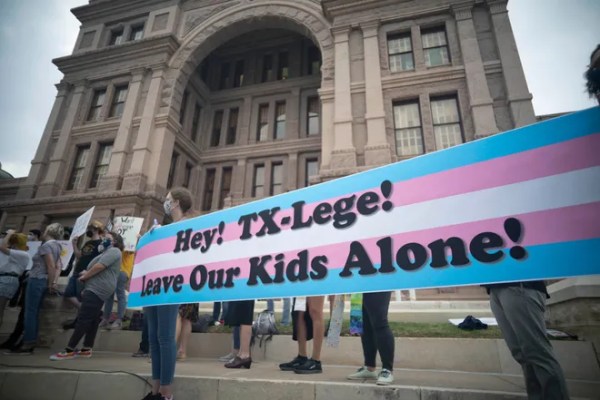
More than a quarter million LGBTQ+ young people and family members in the U.S. have relocated to other states because of LGBTQ+-related politics or laws, according to estimates outlined in a new report exploring the population’s response to hostile policy environments.

According to the brief compiled by The Trevor Project and Movement Advancement Project, 9 in 10 LGBTQ+ young people say politics have impacted their well-being, while 4 in 10 say they’ve thought about moving to another state because of unfriendly LGBTQ+ politics or laws at home.

The portion was even higher for transgender and nonbinary youth, 94% of whom said politics had affected their well-being and nearly half (45%) who said they’d considered relocating.

“For many LGBTQ+ young people in the U.S., the steady stream of anti-LGBTQ+ news may feel overwhelming right now,” said Steven Hobaica, a research scientist for the Trevor Project, a national LGBTQ+ youth advocacy group focused on suicide prevention. “It’s heartbreaking to see that nearly half of transgender and nonbinary youth have considered moving due to anti-LGBTQ+ policies.”

While just 4% of LGBTQ+ young people ages 13 to 24 reported uprooting because of anti-LGBTQ+ policies, that translates to roughly 266,000 young people and family members based on LGBTQ+ youth population estimates, the groups said.

Trump administration presents new threats

The report comes as President Donald Trump returns to the White House after making gender identity issues a focal point of his campaign. On Monday, after being sworn in, Trump issued a spate of executive orders that included seeking to remove legal protections for transgender people in federal spaces, laying the groundwork to potentially bar transgender individuals from military service and declaring that the U.S. government will only recognize two sexes, male and female.

“No matter a person’s political beliefs, we know, from our research and from what LGBTQ+ young people tell us, that policies like these take a damaging toll on LGBTQ+ young people’s mental health,” said Janson Wu, The Trevor Project’s senior director of state advocacy and government affairs. 

The organization said its crisis services saw a 33% increase on Inauguration Day compared to typical volume. But that still paled, it noted, to the sevenfold increase in crisis services experienced the day after the 2024 election.

“No matter your political beliefs or how you feel about the current administration, one thing must be made clear to all of us living in the United States: Real young people’s lives are at risk,” said Trevor Project CEO Jaymes Black.

Recent years have already seen increasing numbers of state laws and proposed legislation targeting the LGBTQ+ community, especially measures aimed at curbing the rights of transgender youth.

“It’s critical that we not only call attention to the negative impact of these divisive political attacks but also highlight that this research supports the idea that more inclusive policy environments lead to better outcomes for LGBTQ young people across a range of measures,” said Logan Casey, director of policy research for Movement Advancement Project.

Hostile climates raise mental, emotional health risk

The organizations said they compiled the report given a lack of research into how LGBTQ+ young people respond to hostile policy environments, despite studies showing that those youths experience greater mental health challenges and higher suicide risk in such environments.

“By gaining more knowledge of how LGBTQ+ young people respond to their policy environment, advocates and policymakers can create or modify policy to better support LGBTQ+ young people and their families,” the report said.

Their joint report is based on data gleaned from The Trevor Project’s 2024 U.S. National Survey on the Mental Health of LGBTQ+ Young People, which collected responses from more than 18,600 LGBTQ+ individuals between the ages of 13 and 24. It also incorporates data from Movement Advancement Project, a Boulder, Colorado-based group that tracks LGBTQ+-related laws and policies throughout the U.S. and its territories and assigns each a negative or positive policy index.

More than a quarter (27%) of respondents lived in states with negative policy indexes, the report said. Those individuals were more likely than their counterparts to consider moving to other states and also likelier to travel to other states to receive health care.

The report noted that not all LGBTQ+ young people and their families desiring to relocate have the resources to do so.

“Notably, the same factors that might preclude the ability of LGBTQ+ young people and their families from moving, such as poverty, housing discrimination, and employment access, are the same ones that disproportionately affect LGBTQ+ people of color and increase their risk of mental health and suicide,” the report said.

Bob Daemmrich, USA TODAY NETWORK

Blog at WordPress.com.

Up ↑