Bozeman MT sidesteps new state law, adopts Pride flag

Read more on Montana Free Press.

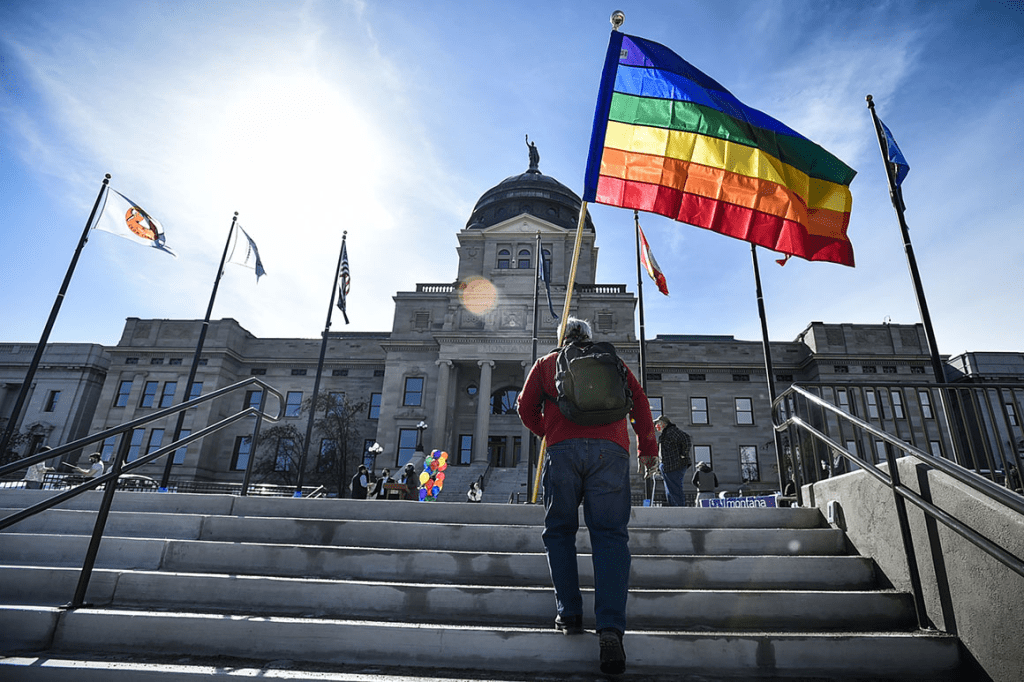
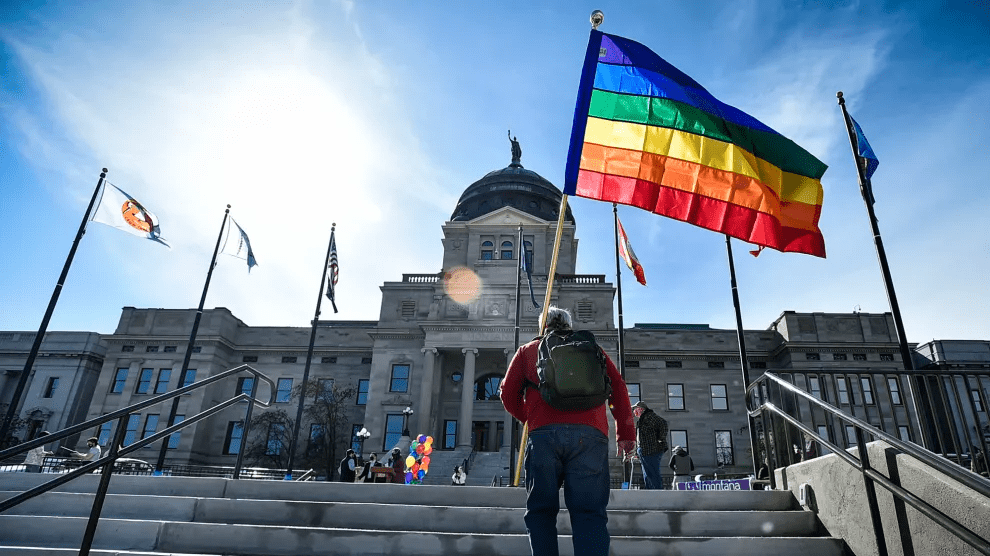
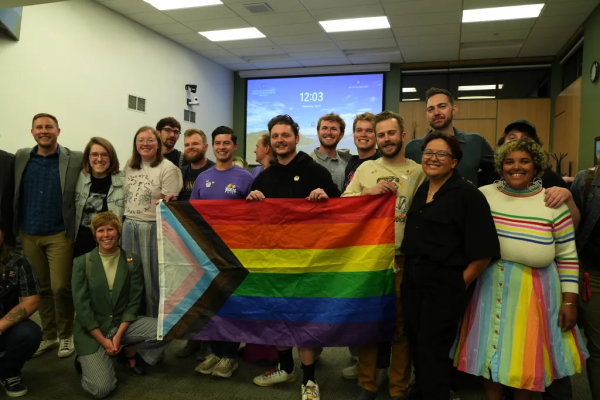
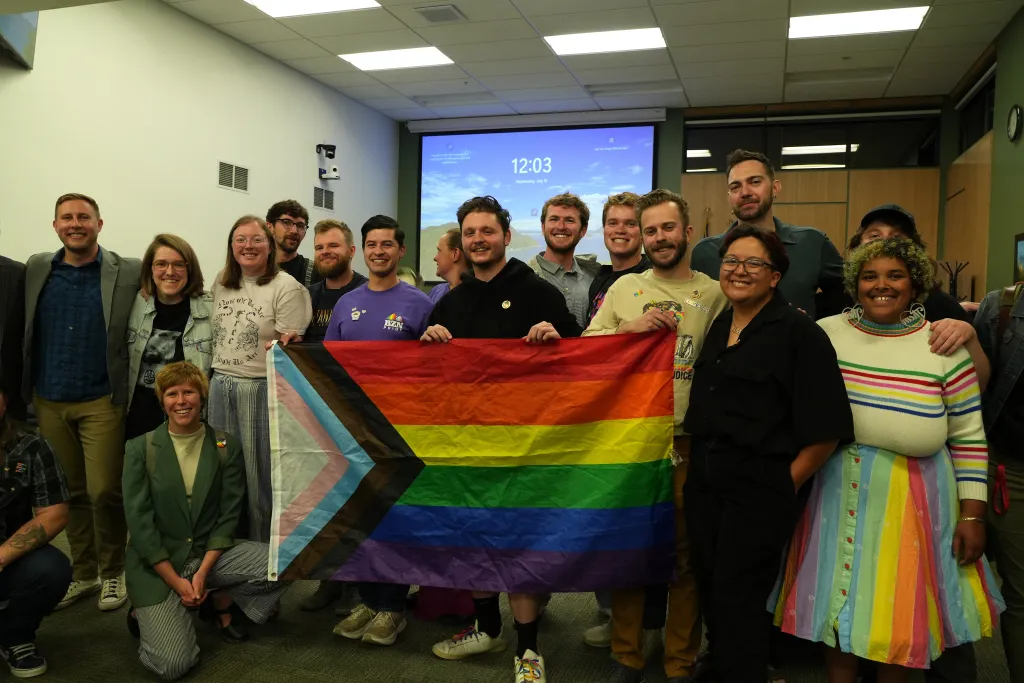
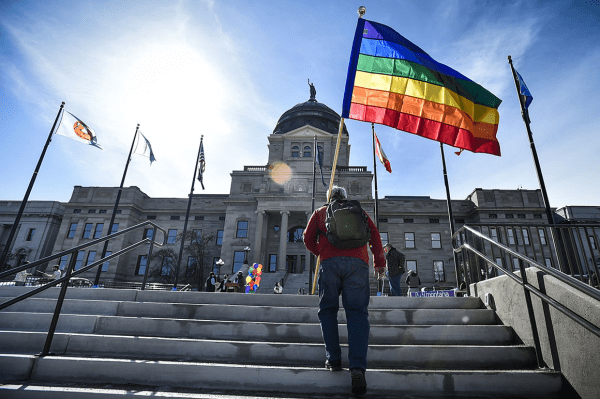
The rainbow Pride flag can once again fly over Bozeman City Hall after commissioners voted Tuesday night to make it an official city flag, sidestepping a Montana state law targeting the controversial symbol. 

Four out of five of Bozeman’s commissioners supported the Pride flag, with the lone vote of dissent made by Commissioner Douglas Fischer, who argued that the flag was divisive and threatened to “drive a wedge” into the community. 

Bozeman Mayor Terry Cunningham spoke to the commission after hearing more than five hours of intense public comment on the issue, both for and against the resolution. Cunningham said it was clear to him that Bozeman had a responsibility to stand for a “safe, welcoming and diverse community,” and adopting the Pride flag sends that signal.

“Everyone is welcome in Bozeman, and they are welcome under that flag,” Cunningham said. 

The resolution declares “the Pride flag and its variants to be official flags of the city of Bozeman” and allows the mayor and city manager to choose when and where to fly the flags on city property. The resolution does not alter or replace the current city flag.

Public comment stretched late into the night as commissioners heard more than 70 people voice their opinions on the issue, with a relatively even split in opposition or support of the flag. City officials reported receiving more than 585 emails on the topic.

Rowan Larson addressed the commission as a new Bozeman resident, the rector of St. James Episcopal Church, and a member of the queer community. Larson said they moved to Bozeman in 2023 and “attitudes have gotten progressively worse,” to the point that the church can no longer fly Pride flags out of fear of retribution.

“We can no longer safely fly the Pride flag at our church because it is a danger to me, personally,” Larson said.

In contrast, openly gay, military veteran Andrew Jefferis said he’d called Bozeman home for 10 years and has never felt targeted for his sexual orientation while in the city. 

“I feel like the implementation of this flag would only exist as evidence that the city of Bozeman needs to prove how good it is to its people, when it doesn’t have to,” Jefferis said. “The city is inherently welcoming.”

Ultimately, commissioners chose to support the Pride flag, with Commissioner Emma Bode saying state lawmakers had brought the fight to the city when they targeted the well-known symbol of gay rights, not the other way around. 

“We did not start this,” Bode said. “The Legislature has pushed us.”

House Bill 819, passed by Montana’s Legislature in May and signed by Gov. Greg Gianforte, restricts “politically charged symbols on state property,” citing problems with enforcement, legal challenges, divisiveness and problems with neutrality and inclusivity in government.

However, opponents of the bill say it was specifically written to target municipalities that chose to fly the Pride flag in support of Montana’s queer community.

During Tuesday’s meeting, Bozeman City Attorney Greg Sullivan clarified that when the Pride flag was originally flown over city hall in 2021, it was protected as “government speech” under state law, but he added that the law had changed when the Legislature passed HB 819.  

In a memorandum to the city commission, Bozeman’s city manager, Chuck Winn, outlined several fiscal concerns related to adopting the flag, writing: “Adopting the Pride flag may draw increased attention to the City’s diversity, equity, and inclusion initiatives and related executive orders. This could invite legal challenges or public scrutiny, leading to unplanned legal costs and additional staff time to respond. The increased attention could also lead to closer examination of other City initiatives, potentially complicating federal grant processes if concerns are raised about compliance with executive orders.”

Commissioner Jennifer Madgic asked the city manager to elaborate on the potential political fallout.

“We do not know what effects adopting the Pride flag or flying the Pride flag will have on those opportunities,” Winn answered, adding that Bozeman has applied for federal grants for housing, law enforcement and the fire department, and those grants could be affected by the adoption of the flag.

However, Winn went on to say that he wasn’t aware of any retaliatory measures taken by the state or federal governments against cities, including Missoula, Butte, Boise, and Salt Lake City, that have adopted the Pride flag. 

Deputy Mayor Joey Morrison said he suspects lawmakers who have targeted the Pride flag are seeing their suppression efforts thwarted because local governments can easily bypass the legislation.

“This is no workaround; this is complying with the law,” Morrison said. “The law says cities can adopt official flags. Here is the procedure where we can adopt an official flag.”

For Jason Baide, who chairs the civic group Queer Bozeman, Tuesday’s decision to adopt the Pride flag was a big win, but also a defensive act for the community he represents.

“I am surprised by the level of opposition to our existence and some of the hateful comments that came through in this,” Baide told Montana Free Press after the meeting. “There was some harm done to folks,” during the hours of debate heard by the commission, but “we’re going to rally together and celebrate this.”
Montana Court Strikes Down Ban on Healthcare for Transgender Youth

*This is reported by Lambda Legal.

Today, a Montana Court struck down SB 99, a 2023 Montana law that categorically bans often life-saving health care for transgender youth.  The Court granted Plaintiffs’ motion for summary judgment in Cross v. Montana, holding that SB 99 violates the constitutional rights of transgender youth who are seeking gender-affirming care and the healthcare professionals who are providing that care. 

The lawsuit challenging SB 99 was brought by Lambda Legal, the American Civil Liberties Union (ACLU), and the ACLU of Montana. This ruling removes completely the threat hanging over Montana transgender youth and their families that their access to critical medical care would be terminated. 

“I will never understand why my representatives worked so hard to strip me of my rights and the rights of other transgender kids,” said Phoebe Cross, a 17-year-old transgender boy. “It’s great that the courts, including the Montana Supreme Court, have seen this law for what it was, discriminatory, and today have thrown it out for good. Just living as a trans teenager is difficult enough, the last thing me and my peers need is to have our rights taken away.” 

“Today, the court saw through the state’s vitriol and hollow justifications and put the final nail in the coffin of this cruel, and discriminatory, law,” said Lambda Legal Staff Attorney Nora Huppert. “No parent should ever be forced to deny their child access to the safe and effective care that could relieve their suffering and provide them a future. Because Montana’s Constitution protects their right to privacy, transgender youth in Montana can sleep easier tonight knowing that they can continue to thrive.” 

“We are very pleased that the Court saw through the State’s unfounded arguments about why gender-affirming medical care should be treated differently from other forms of care,” said ACLU staff attorney Malita Picasso. “The Court recognizes SB 99 for what it truly is, an effort by the State to legislate transgender Montanans out of existence.” 

“The Montana Constitution protects the privacy and dignity of all Montanans,” said Akilah Deernose, ACLU-MT Executive Director. “In the face of those protections, cruel and inhumane laws like SB 99 will always fail.  Today’s decision should be a powerful message to those that seek to marginalize and harass transgender Montanans.” 

In its ruling, the court stated: 

“[t]he Court is forced to conclude that the State’s interest is actually a political and ideological one: ensuring minors in Montana are never provided treatment to address their “perception that [their] gender or sex” is something other than their sex assigned at birth. In other words, the State’s interest is actually blocking transgender expression.” 

Plaintiffs in the case include Molly and Paul Cross and their 17-year-old transgender son Phoebe; Jane and John Doe joining on behalf of their 16-year-old transgender daughter; and two providers of gender affirming care who bring claims on their own behalf and on behalf of their Montana patients. 

On December 11, 2024, the Montana Supreme Court upheld a preliminary injunction that SB 99 was likely unconstitutional under the Montana state constitution’s privacy clause, which prohibits government intrusion on private medical decisions. The ruling rested entirely on State constitutional grounds, insulating transgender adolescents, their families and health care providers from any potential negative outcome at the United States Supreme Court. 

The U.S. Supreme Court will soon rule in U.S. v. Skrmetti, the landmark case brought by Lambda Legal, the ACLU, and the ACLU of Tennessee, Lambda Legal on behalf of three families and a medical provider challenging a Tennessee ban on gender-affirming hormonal therapies for transgender youth on the grounds the ban violates the Equal Protection Clause of the U.S. Constitution.  

More information about the case is available here

Montana Republicans Say No to Prosecuting Parents for Trans Care

*This is reported by Mother Jones.

Five days after President Donald Trump declared “gender ideology” to be “one of the most prevalent forms of child abuse,” Montana’s Republican-controlled House of Representatives killed a bill that would have enshrined much the same idea into state law by criminalizing parents and medical providers.

Montana Senate Bill 164 would have made it a felony for any adult to help transgender children under 16 to gain access to gender-affirming medical care—including hormones, puberty blockers, and surgeries—classifying such help as child endangerment. On Tuesday, House lawmakers voted 58-40 to reject the proposed law, with 17 Republicans joining Democrats to block it from advancing to its final reading. 

“I think it’s overly broad,” the lone Republican to speak against the bill, Rep. Brad Barker, said Tuesday. Barker said that while he generally opposes gender-affirming care for trans youth, SB164 was “the wrong approach.” 

“I don’t like the thought of criminalizing parents,” Barker added, entreating fellow Republicans to “vote with your conscience.” 

The bill carried penalties of up to five years in prison and $10,000 in fines for any adults, including parents and doctors, who provided children with surgery, puberty blockers, or hormone replacement therapy for the purpose of “altering the appearance” of the child or affirming the child’s gender. If “serious bodily injury” occurred, the maximum punishment was 10 years imprisonment and $25,000 in fines.

“Turning parents and doctors into felons is absolutely not the approach that best serves this state,” Democratic Rep. SJ Howell, the first non-binary person to be elected to the Montana legislature, said on the House floor.

The bill cleared the Senate in February, 30-20, with two Republicans voting against it. In that floor debate, the legislation’s sponsor, Republican Sen. John Fuller, called it a “simple bill” to protect Montana’s children. “The state does have a compelling interest, a very compelling interest, to avoid the sterilization and sexual mutilation of children,” he said. In 2023, Fuller sponsored a law that threatened medical providers’ licensing if they offered gender-affirming care to minors, a law that courts have blocked while litigation proceeds.

“This bill is not about politics, it’s about safeguarding the health and innocence of Montana youth,” one of SB164’s House supporters, Republican Rep. Braxton Mitchell, said Tuesday. But more than a quarter of members of his own party disagreed, suggesting a potential turning point for the Montana legislature, at least on trans issues.

Tuesday’s vote was the second time this year a large swath of Republicans crossed party lines to block an anti-trans bill. Last year, Montana’s first openly transgender lawmaker, Rep. Zooey Zephyr, said her Republican colleagues often privately bemoan the transphobic culture wars and apologize to her for their votes on anti-LGBTQ legislation. 

Even so, Republican Gov. Greg Gianforte signed two anti-trans bills into law last month—a bathroom ban and a law prohibiting trans girls and women from playing on women’s sports teams from kindergarten through college. The bathroom ban has been temporarily blocked. A state law that prohibited trans women from participating in female collegiate sports was ruled unconstitutional in 2022.

The right to privacy is enshrined in the Montana constitution, and state courts have strongly affirmed its application to healthcare laws. Last December, the Montana Supreme Court upheld a lower court’s preliminary injunction on a law that would have made gender-affirming medical care providers vulnerable to licensing board disciplinary proceedings. And last summer, it ruled that a parental consent law for minors seeking abortion was unconstitutional. (In January, Montana Attorney General Austin Knudsen asked the U.S. Supreme Court to declare that ruling an unconstitutional infringement on parental rights. The Supreme Court has not decided whether to hear the case.)

If it had passed, SB164 would have become the first law in the country defining gender-affirming care as a form of felony child endangerment. (Child endangerment and abuse fall under different statutes, but both evoke the same myth that gender-affirming care is dangerous for youth.)

Montana, however, wouldn’t have been the first state to direct child welfare workers to investigate families of trans children. In 2022, Texas Republican Gov. Greg Abbott ordered the state’s Department of Family and Protective Services to open child abuse investigations into parents who seek gender-affirming care for their children. That directive remains partially blocked after families of trans children and the LGBTQ advocacy group PFLAG sued. 

Montana’s anti-transgender bathroom restrictions are on hold under a judge’s order

*This is being reported by the AP News.

A judge on Wednesday temporarily blocked a Montana law that restricts transgender people’s use of bathrooms in public buildings.

The measure, which Republican Gov. Greg Gianforte signed into effect last week, threatened to deprive transgender people of their constitutional right to equal protection under the law, Montana District Court Judge Shane Vannatta ruled. The law prevents people from using restrooms in public buildings that do not align with the sex they were assigned at birth.

The five people who sued over the law were likely to prevail, Vannatta added in his ruling.

The new law “is motivated by animus and supported by no evidence that its restrictions advance its purported purpose to protect women’s safety and privacy,” Vannatta wrote.

The judge’s order will be in effect at least until an April 21 hearing on whether it should continue to be blocked while the lawsuit moves ahead.

Gianforte spokesperson Kaitlin Price said the governor will defend the law “and the privacy and safety of women and girls.”

“We’re not surprised to see far-left activists run to the courts to stop this common sense law,” Price said in an emailed statement. “A man shouldn’t be in a women’s restroom, shouldn’t be in a women’s shower room and shouldn’t be housed in a women’s prison.”

The American Civil Liberties Union praised the ruling.

“Today’s ruling provides enormous relief to trans Montanans across the state. The state’s relentless attacks on trans and Two Spirit people cannot withstand constitutional scrutiny by the courts,” said a statement by Alex Rate, ACLU of Montana’s legal director.

The law passed this year despite opposition from Democrats who worried it would complicate daily life for two fellow lawmakers who are transgender and nonbinary. They included Rep. Zooey Zephyr, a Missoula Democrat who in 2023 was silenced and sanctioned by her Republican colleagues for comments she made on the House floor.

The law would require public buildings including the state Capitol, schools, jails, prisons, libraries and state-funded domestic violence shelters to provide separate spaces for men and women. It defines the sexes based on a person’s chromosomes and reproductive biology, despite a recent state court ruling that declared the definitions unconstitutional.

The order wasn’t unexpected, bill sponsor Republican Rep. Kerri Seekins-Crowe said in an emailed statement.

“I am thankful that there is a team of Montanans devoted to protecting women’s spaces from men who desire to invade them,” said Seekins-Crowe.

At least a dozen other states already have variations of bathroom bans on the books, many directed at schools. Even more states, including Montana, have passed laws to ban gender-affirming medical care for transgender children and keep trans girls out of girls sports.

Montana’s law allows people to sue a facility if it does not prevent people from using restrooms or changing rooms that do not align with their sex assigned at birth. They can recover nominal damages, generally $1, and the entity could be required to pay the plaintiff’s legal fees.

Transgender Bathroom Restrictions Take Effect As Montana Governor Signs Law

*This is being reported by HuffPost/AP.

Transgender people in Montana can no longer use bathrooms in public buildings that do not align with their sex assigned at birth after Republican Gov. Greg Gianforte signed new restrictions into law Thursday.

The law, which takes effect with its approval, requires public buildings including the state Capitol, schools, jails, prisons, libraries and state-funded domestic violence shelters to provide separate spaces for men and women.

It defines the sexes in state law based on a person’s chromosomes and reproductive biology, even as a district court ruling earlier this year declared the definitions unconstitutional.

The new law also declares that there are only two sexes, male and female, going against a judge’s 2024 ruling that struck down that same definition.

Under the law, transgender people cannot use public restrooms, changing rooms and sleeping areas that align with their gender identity. The law does not explain how people in charge of public facilities should verify someone’s sex.

Rep. Kerri Seekins-Crowe, the Republican sponsor, said it was not meant to be exclusionary but to preserve safe spaces for women.

A transgender man who has undergone a medical transition to develop more masculine features such as facial hair, muscle definition and a deeper voice is now required by law to use the women’s restroom.

Republican lawmakers swiftly approved the measure despite vocal opposition from Democrats who worried it would complicate daily life for two fellow lawmakers who are transgender and nonbinary. Among them was Rep. Zooey Zephyr, the Missoula Democrat who was silenced and sanctioned by her Republican colleagues in 2023 for comments she made on the House floor.

Zephyr warned it would embolden some to police another person’s gender in public, which she said could create hostile situations for everyone.

The law allows people to sue a facility for not preventing transgender people from using a certain restroom or changing room. They can recover nominal damages, generally $1, and the entity could be required to pay the plaintiff’s legal fees.

These lawmakers’ speeches were so powerful that 29 Republicans abandoned their anti-trans bill

*This is being reported by LGBTQNation.

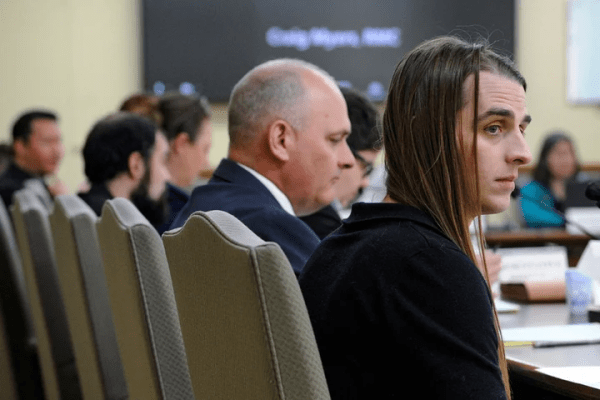
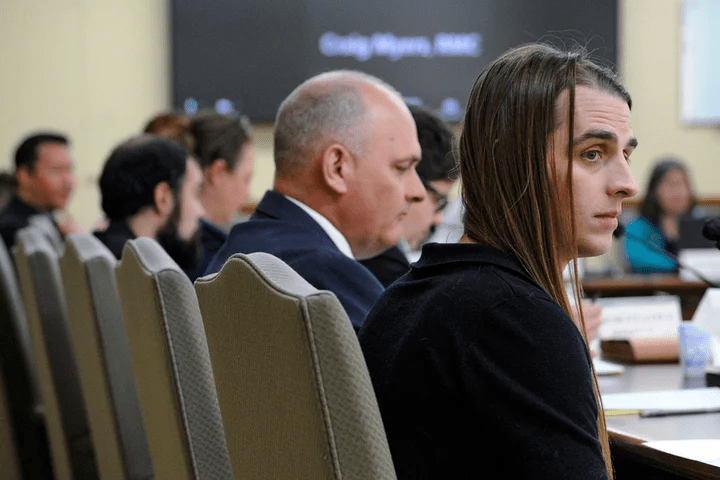
In a shocking turn of events, Republican House representatives in Montana decided to cross the aisle and vote against two anti-transgender bills, following powerful speeches delivered by transgender Reps. Zooey Zephyr and SJ Howell.

President Donald Trump has made his opposition to LGBTQ+ rights very clear, and as a result, Republicans and even some Democrats have felt emboldened to push anti-LGBTQ+ sentiment. Republican legislators in numerous states have proposed bills targeting trans people, and GOP-dominated states like Montana are no exception.

On March 6, day 47 in Montana’s 69th Legislature, lawmakers debated nearly 250 bills, including ones targeting the trans population, which Republican representatives largely supported, with some notable exceptions.

House Bill 675, sponsored by Rep. Caleb Hinkle (R), would ban drag performances and Pride parades in Montana. Hinkle proposed it in response to a previous drag ban he sponsored being struck down by the courts after it was used against a trans woman who was not a drag artist to prevent her from speaking at a library event.

To circumvent this ruling, Rep. Hinkle proposed granting individuals the private right to sue drag performers rather than relying on state enforcement. Hinkle called being transgender “a fetish” during committee hearings.

Rep. Zooey Zephyr (D) took to the floor and gave an impassioned speech in response.

“At its very core, drag is art. It is very beautiful art. It has a deep history in this country, and it is important to my community. You know, if you are a woman in this body wearing a suit today, you are in some way challenging gender norms that existed long ago,” she said.

“There were three-article-of-clothing laws 50 years ago that said if you wore three articles of clothing that were indicative of the opposite gender, they could stop you, arrest you,” she continued. “It was those laws that led to the police raiding an LGBTQ+ bar that led to the Stonewall riots, one of the most important civil rights moments in my community’s history.”

She added, “The sponsor … said this bill is needed… and I quote his words… ‘because transgenderism is a fetish based on crossdressing.’ And I am here to stand before the body and say that my life is not a fetish. My existence is not a fetish. I was proud a month ago to have my son up in the gallery here. Many of you on the other side met him. When I go to walk him to school, that’s not a lascivious display. That is not a fetish. That is my family. This is what these bills are trying to come after… not obscene shows in front of children; we have the Miller test for that, we have laws for that. This is a way to target the trans community, and that is in my opinion, and in the speaker’s own words.”

In a surprising turn of events, Rep. Sherry Essmann (R) rose to Rep. Zephyr’s defense, chastising the bill’s sponsor for using parental rights as his argument for bringing this bill into law, pointing out that such a bill would impede on the rights of parents such as Rep. Zephyr, and that representatives who support parents’ rights should vote against this bill.

In Rep. Essmann’s own words, “I’m speaking as a parent and a grandmother. And I’m very emotional because I know the representative in seat 20 is also a parent. No matter what you think of that, she is doing her best to raise a child. I did my best to raise my children as I saw fit, and I’m taking it for granted that my children are going to raise my grandchildren as they see fit,”

Following these two speeches, 13 Republican representatives voted against the bill.

This turn of events would’ve been remarkable in its own right, but this wasn’t the only occurrence of aisle-crossing on trans issues this session.

House Bill 754, if passed, would’ve had even more devastating consequences. The measure would’ve allowed the state to remove transgender children from their parents.

Rep. SJ Howell (D) took the floor to argue against the passing of the bill. Rep. Howell, who is non-binary, pointed out the vagueness of what the bill defines as a transgender child as it could mean a child who does anything that defies conventional gender norms, such as having a certain haircut or trying out a new nickname.

“Transitioning gender is not defined in this bill… so what does that mean? Maybe it means, as the sponsor said, surgery or medical treatment. Maybe it means therapy, mental healthcare. Maybe it means a kid who gets a haircut and a new set of clothes. Maybe a name change… a legal name change, or someone who wants to try out a different name… a strict reading of this bill could include all of that,” Howell said.

Rep. Howell further drove their point that the decision for the state to intervene in the removal of a child is a serious matter that holds a great deal of weight. They urged lawmakers to keep that in mind and consider the real consequences.

“Put yourself in the shoes of a [Child Protective Services] worker who is confronted with a young person, 15 years old maybe, who is happy… healthy… living in a stable home with loving parents, who is supported and has their needs met? And they are supposed to remove that child from their home and put them in the care of the state? We should absolutely not be doing that,” they said.

The bill went to a vote; this time, the Montana Republican party was fully fractured on the matter with 29 Republican representatives voting nay, killing the bill with a majority vote from all representatives. 

When discussing the results of these two decisions, Rep. Zephyr took to Bluesky, where in a post she typed, “These kind of votes are born out of trans representation in government.”

Blog at WordPress.com.

Up ↑