Over a million people petitioned Europe to ban conversion therapy. It just rejected the call.

Read more at LGBTQ Nation.

The European Union rejected a call to ban conversion therapy on Wednesday, even after over a million people petitioned for the ban in its 27 member states.

Last month, the European Parliament voted in favor of a ban on conversion therapy. The vote came after the European Citizens’ Initiative petitioned the European Parliament to take up the matter after 1.2 million people signed a petition.

The matter was then sent to the European Commission, the only body that can introduce binding legislation in the EU. But the European Commission has rejected the call, saying that the EU does not have the authority to force member states to ban the harmful practice.

European Commission President Ursula von der Leyen said that conversion therapy has “no place in our union” and that the EU will push each individual member state to ban the practice in a recommendation to be published next year. That recommendation will be non-binding.

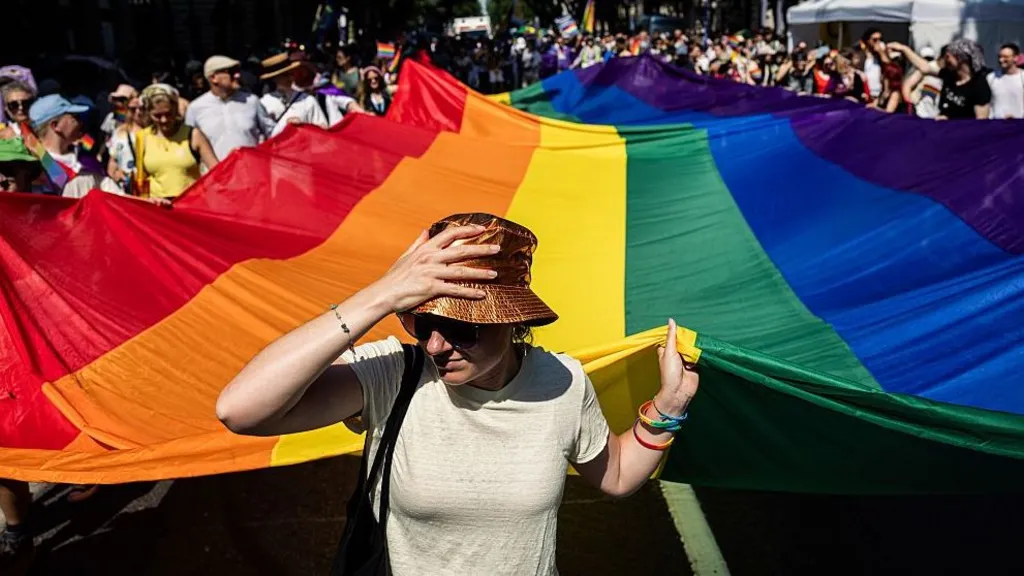
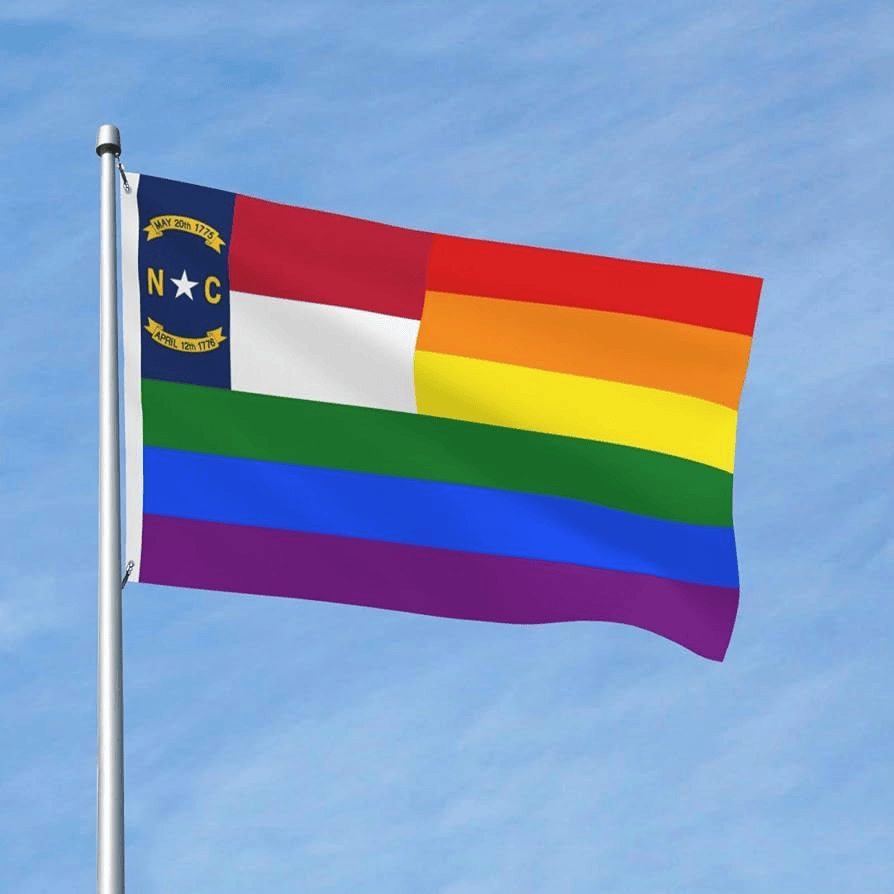
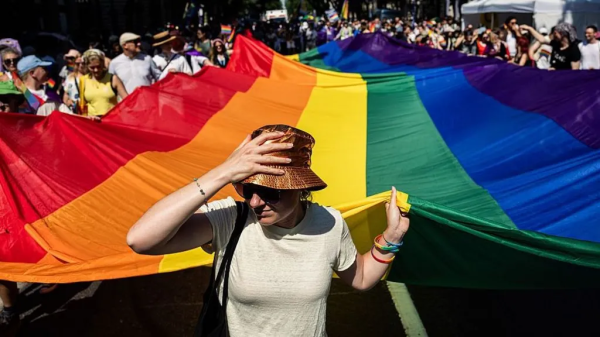
The European Commission flew the rainbow flag outside its headquarters in Brussels, Belgium, yesterday, Le Monde reports.

The EU’s Agency for Fundamental Rights said in 2024 that one in four LGBTQ+ European citizens is the victim of conversion therapy practices, which have been linked to depression, low self-esteem, substance abuse issues, anxiety, suicidality, and other mental health issues. Ten of the 27 EU member states already ban the practice.

The group Against Conversion Therapy, which launched the original petition, called the decision a “missed opportunity” in a statement.

“In an international political context where the rise of reactionary ideas is affecting the entire world, it is urgent the European Union acts,” the group said.

European Commissioner for Equality Hadja Lahbib hailed the decision to encourage member states to ban the practice as “historic,” the LA Times reports.

“Conversion practices are built on a lie, the lie that LGBTQ+ people need to be fixed, that there is something wrong with who they are,” Lahbib said after listening to victim testimony. “And there is, of course, nothing to fix, there is nothing to cure, and there is no one to change.”

“You cannot torture away a person’s identity, and you cannot legislate it away. And yet these practices continue, unfortunately.”

Last month, the European Economic and Social Committee (EESC) held a debate on conversion therapy before it voted to recommend that Europe ban the practice.

“These so-called conversion practices or therapies are not only harmful, they are a profound violation of human dignity and fundamental rights,” said EESC President Séamus Boland during the debate, according to an EESC release. “Let us be absolutely clear: there is nothing to fix or cure. What needs to change is not people, but the systems, attitudes, and structures that deny them their dignity.”

Graeme Reid, the United Nations independent expert on sexual orientation and gender identity, also spoke during the debate, saying that banning conversion therapy is key to the EU meeting its human rights obligations and that “every person has the right to live free from coercion, fear and shame.”

The United Nations has called for conversion therapy to be banned worldwide. Last month, the U.S. Supreme Court ruled that conversion therapy practices are protected by the First Amendment and can only be banned if states can meet the high legal requirements involved in curtailing religious free exercise.

Brussels is set to celebrate Pride this weekend.

Texas Children’s Hospital must create country’s first “detransition clinic” under legal settlement with state

Read more at KSAT.

The Texas attorney general has secured an unusual settlement over child transgender care that compels Texas Children’s Hospital to create the nation’s first ever “detransition clinic” in addition to paying the state $10 million. 

According to Attorney General Ken Paxton, the multidisciplinary clinic would offer medical care to patients “who were subjected to ‘gender-transition’ procedures.” The care would be free to patients for the first five years of the clinic’s operation. The move follows an investigation that began in 2023 by the attorney general’s office into Texas Children’s Hospital in Houston. That same year, Gov. Greg Abbott signed Senate Bill 14 that bars transgender children from receiving puberty blockers and hormone therapies.

Gender-affirming care is an umbrella term for the treatment of gender dysphoria, or the discomfort that comes when someone’s gender identity does not align with the sex they were assigned at birth. Gender-affirming care ranges from “socially transitioning” — using different pronouns or dressing differently — to puberty blockers, hormone therapy and surgical interventions.

“Today is a monumental day in the fight to stop the radical transgender movement,” Paxton said in a statement issued Friday. “I applaud Texas Children’s Hospital for changing course and committing to being a part of the solution by agreeing to form a first-of-its kind Detransition Clinic that will help provide free care to those who have been victimized by twisted, morally bankrupt transgender ideology.”

Texas Children’s will fund all services provided through the “detransition clinic” for the first five years. 

The settlement also requires the hospital to pay $10 million for billing Texas Medicaid after the state accused the hospital of illegal ‘gender-transition’ interventions, including by using false diagnosis codes. It also required Texas Children’s to terminate and revoke the medical privileges of five physicians. Paxton and the hospital have not released the name of the physicians or a copy of the settlement. 

Texas Children’s, the nation’s largest pediatric hospital, said in a statement that it made the “difficult decision” to settle with the attorney general’s office to close a legal chapter that has been, “wrought with falsehoods and distractions.” 

The hospital said it spent three three years producing more than 5 million documents to both the state and the U.S. Department of Justice. 

“All reviews and investigations continue to support the facts – we have been compliant with all laws,” the hospital statement said. “To be clear – we are settling to protect our resources from endless and costly litigation … We stand proud knowing we will always put our purpose over politics and that we have and will continue to follow the law.”

The Texas Medical Association and Texas Hospital Association declined to answer questions for the story.

Unclear what services clinic will provide

Texas Children’s, one of the world’s leading pediatric hospitals based in the heart of Houston’s medical center, did not say how it will roll out its clinic or what services it will provide, though the hospital said in the statement that the clinic will include “supportive, multidisciplinary services we already deliver to all patients who need our care.” 

Detransitioning is the stopping or reversal of transitioning care by social, medical or legal means, and it is rare for people to regret transitioning after taking hormone therapy and surgical interventions. 

On the clinical side, detransitioning could mean stopping hormone treatment or procedures to reverse previous surgeries. Similar to transitioning, detransitioning requires intensive mental health assessments to root out other factors that might be creating the desire to stop transitioning, according to research. Common reasons for destransitioning include lack of family support, financial barriers and social pressure. 

When someone chooses to detransition, “it is not normally because of healthcare complications,” said Andrea Segovia, senior field and policy director for the Transgender Education Network of Texas. 

Segovia is concerned that access to mental healthcare will not be woven into the clinic’s services. In March, Paxton released an opinion saying that mental health providers licensed by the state cannot provide gender-transitioning care to minors under state law. It’s not clear if Paxton believes state law bars detransitioning mental healthcare as well.

For those who do want to detransition, the resources already exist, said Kellan Baker, senior advisor for the Movement Advancement Project, a national think tank that focuses on LGBTQ policies. 

Detransitioning services, although they are rarely needed, can and have been offered properly when accompanied with mental health resources. But Baker said he’s not confident that this clinic, born out of a heated conflict between a hospital and the attorney general, has the best intentions for the transgender community. 

“Texas Children’s is not creating this clinic — the Texas attorney general is creating it,” Baker said. “A clinic created by a politician via legal intimidation is not in the best interests of any patient. Doctors should be the ones making decisions about how to provide medical care, not politicians.”

‘Resource that no one is asking for’

Brad Pritchett, CEO of Equality Texas, a nonprofit that advocates for the LGBTQ community, said in a statement that the attorney general is “blackmailing a hospital system into creating a resource that no one is asking for.” 

Pritchett said Texas’ politically-motivated detransition clinic “ignores the actual science and years of data about the overwhelming benefits of gender-affirming care.” 

Several medical associations including the American Medical Association, American Academy of Pediatrics, American Academy of Child and Adolescent Psychiatry and American Psychiatric Association, have supported evidence-based gender-transitioning care as appropriate and medically necessary for children.

Pritchett added that it is “embarrassing that a hospital once revered for its care has lost its integrity and put politics over patients.”

Dallas state Rep. Jessica González who chairs the Texas House LGBTQ Caucus said in a statement that the settlement is “shameful, and is the furthering of an agenda to eradicate transgender people from the eyes of society.” 

Transgender people make up about 1% of the population, which is why, Segovia said, it is “infuriating” that the state is creating the detransition clinic as access to other healthcare services are struggling — such as rural hospitals and reproductive care. 

Texas Children’s has to fully fund the clinic for five years, which will take away attention and limited resources from the hospital’s other departments such as care for children with cancer and infants with heart conditions, González said. 

“Using a settlement to compel a hospital to build an ideologically framed clinic opens the door to more state interference in medical practice, more dangerous stigmatization that truly harms

young Texans, and, sadly, more lives lost in our nation’s suicide epidemic,” said González, one of the few only queer representatives in Texas. 

Houston state Sen. Molly Cook, who is also openly queer, said Paxton is manufacturing a political spectacle because providers know how to help someone detransition and the state doesn’t need a clinic to train them on it. 

“This is an asinine waste of money that is typical of Texas’s out-of-touch statewide leadership,” Cook said in a statement. “Texas Children’s already provides care for patients who choose to change a course of treatment.”

The need for such a clinic in Texas is made even smaller by the fact that the state’s ban on gender-transitioning care for minors has resulted in very few Texas children receiving such care statewide. 

The five doctors that Paxton said Texas Children’s will need to fire adds to the four doctors he’s already sued to stop providing gender-affirming care. He’s also sued Children’s Health System of Texas, headquartered in Dallas, accusing them of violating SB 14. Some parts of Texas already suffer from a pediatric endocrinologist shortage in the wake of SB 14. 

Segovia with the Transgender Education Network of Texas said she’s worried that other states will follow Texas’ lead in forcing more of these clinics to open. 

“It’s terrifying what other states will take from this.”

So many LGBTQ Texans are moving to this city, it may declare an ’emergency’

Read more at the Houston Chronicle.

Amid a glut of anti-LGBTQ+ laws passed by the state legislature over the past half-decade, many queer Texans have decided to pack up and move to greener, more supportive pastures. So many have chosen Seattle that the  Pacific Northwest city is now considering declaring an emergency.

As first reported by the Seattle Gay News, the City of Seattle is close to declaring a state of civil emergency in response to LGBTQ+ refugees from red states moving there. That comes after Seattle’s LGBTQ Commission, an advisory committee that counsels local leaders on matters related to Seattle’s queer community, reportedly sent a letter last month asking the city council to make an emergency declaration. The commission said that the city needed “an effective and empathetic response” to protect a “rapid influx of 2SLGBTQIA+ persons seeking refuge in Seattle.”

For some ex-Texans, Seattle has become a haven. Victoria Scott, a trans woman and freelance writer, lived in Houston working as a programmer at NASA after college in 2018. After coming out as transgender, she said that she found both Houston and Texas hostile. Scott moved around and lived briefly in Reno, Nevada, before settling in Seattle with her wife at the end of 2023. In Seattle, Scott found the foundation she had long needed.

“It’s done more for my day-to-day lived experience and mental health as a trans woman than basically any other thing I’ve ever done,” Scott told Chron.

For her, Seattle was everything Houston wasn’t. (For one, it isn’t nearly as hot.) Scott appreciates the city’s relatively decent cost of living and protective state and local laws for LGBTQ+ residents. But Scott also said that there were more queer and trans people out and about in Seattle, noting that she could form physical communities in a way she couldn’t in Texas. She attributed that to Seattle’s long, vibrant queer history.

“Trans people here are normalized to a degree they’re not elsewhere,” Scott said. “I get culture shock visiting other places now because I return pretty suddenly to people staring or murmuring about me … Here, I genuinely feel like just another woman.”

Seattle isn’t perfect, but Scott noted that many of the problems she encounters in the city have nothing to do with her being transgender, something she couldn’t say while living in the South. In addition to writing, she now works with a Washington state non-profit called TRACTION that serves transgender people throughout the state. The group’s Open Arms program helps transgender people across the nation resettle in supportive states and cities, mostly in Seattle. Scott says she’s seen plenty of queer and trans Seattle transplants both through her work and out in the community.

“It is very much an ongoing migration,” Scott said

In its letter, the Seattle LGBTQ Commission cited data from a 2025 survey by the non-profit Movement Advancement Project. That survey found that after the 2024 election, queer and trans people were moving from Republican-led states that have passed anti-LGBTQ legislation to Democratic-led states like Washington. Texas was noted as one such hostile state in the Seattle LGBTQ Commission’s letter.

“Many [internally displaced persons] have relocated from states such as Texas, Florida, Tennessee, Kansas, and Idaho due to anti-trans legislation, threats to personal safety, and barriers to healthcare and legal recognition,” the commission wrote. 

In response to a wave of anti-trans legislation in both Texas and in statehouses around the country, some transgender Americans have migrated out of red states like Texas and Florida and into large cities with established LGBTQ+ communities like ChicagoNew York City and San Francisco. Minnesota, which has notably strong non-discrimination laws and protects gender-affirming care at the statewide level, has also become a hub for trans Americans looking for safetySome have even sought shelter in Canada

Aspen Coyle, who manages the Open Arms program at TRACTION, told Chron via email that the group matches trans people in need with volunteers who help them through the process of moving. Coyle said that of the 533 people TRACTION has been in contact with, 117 have been from Texas, the highest of any state, followed by Florida and Ohio. That tracks, Coyle said, with a 2025 study by Plume, an online gender-affirming care provider, which found that Texas had the highest number of trans residents who fled their home state: nearly 20 percent. The top location trans respondents moved to in that Plume survey? Washington state. 

Coyle said Texas transplants she’s worked with have described trans people leaving the state as an “exodus,” and that many tell her “they’re the last trans people in their area.”

“It is absolutely dire. People are leaving because they can’t get healthcare, they can’t get a job, they might get arrested for going to the bathroom, they get harassed in public,” Coyle said. “The baseline hostility to their existence is unbearable.”

Poland’s leader promises to start recognizing foreign same-sex marriages, after EU court ruling

Read more at LGBTQ Nation.

Poland’s Prime Minister Donald Tusk said on Tuesday that his government would quickly work to follow recent court rulings requiring Poland to legally recognize same-sex marriages conducted in other European Union (EU) member nations.

Recent rulings by the Court of Justice of the European Union (CJEU) and Poland’s Supreme Administrative Court (NSA) both require Poland to recognize foreign same-sex marriages, after a married same-sex couple (including a Polish citizen) weren’t allowed to have their 2018 German marriage certificate entered into the Polish civil registry.

The men challenged the denial at the NSA, which then referred the case to the CJEU. The CJEU ruled in November 2025 that the couple’s marriage was valid throughout the EU’s 27-member bloc, and that Poland could recognize their union without also altering its laws to start offering same-sex marriages.

Then, last March, the NSA ordered the government to transcribe the men’s same-sex marriage certificate into the Polish system, resulting in de facto government recognition of a same-sex couple’s marriage in the country; a historic first for Poland.

In comments to the media before a closed cabinet meeting on Tuesday, Tusk apologized for the “years of rejection and humiliation” that same-sex couples have experienced due to Poland not legally recognizing their marriages, Notes from Poland reported.

“[This is] a matter of human dignity: the right to happiness, the right to equal treatment by the state,” Tusk said. “I would like to apologize to all those who, for many, many years, felt rejected and humiliated. For many years, the [Polish] state has failed the test.”

Tusk also said that Poland currently “lacks statutory regulations” that would ensure that same-sex couples receive the same legal and social protections as different-sex couples.

However, he said, “We have committed to – and I will personally ensure this – abiding by the rulings as a priority,” adding that any changes must be conducted in compliance with existing Polish law. He also urged government members “to respect the dignity of every human being” while figuring out and implementing new policies, some of which may require parliamentary or executive approval.

Tusk also said any legal recognition is “no way a path to the possibility of adoption.”

Karolina Gierdal, a lawyer with the Polish LGBTQ+ advocacy organization Lambda Warszawa, told TVP World, “It is sad that the LGBT community is once again presented as a threat, as if society needs reassurance that adoption rights ‘won’t happen.’ The reality is that children are already being raised in same-sex families in Poland, and maintaining the current legal situation means reducing the level of legal protection available to those children.”

Separately, Warsaw Mayor Rafał Trzaskowski, who is a senior figure in Tusk’s Civic Platform party (Platforma Obywatelska, PO), announced that his city would begin legally recognizing foreign same-sex marriages immediately on a municipal level, long before the national government updates its own policies.

Last month, a group of over 100 non-governmental organizations urged Poland to take action to abide by the CJEU and NSA’s rulings. The groups noted that Tusk and his party were elected to power in 2023 on promises to restore Poland’s rule of law, after 10 years of corrupt, anti-democratic rule by the country’s far-right, anti-LGBTQ+ Law and Justice Party.

“Right-wing governments have distorted what we understand by the rule of law, treating it as an empty slogan rather than a real principle of state operation,” the groups wrote. “In a democratic state governed by the rule of law, the government has no authority to decide which judgments merit enforcement.”

So far, 18 countries in the EU offer legalized same-sex marriages, though all member countries are required to legally recognize them, even if they don’t offer them to their own citizens.

While Tusk’s political party promised to work to offer national same-sex civil partnerships, the initiative died due to opposition from Poland’s center-right Polish People’s Party (PSL). A parliamentary coalition considered offering some rights to same-sex couples and unmarried partners instead, but without actually offering civil unions nationwide.

However, neither proposal has come up for a parliamentary vote.

Canadian doctors denied patients gender-affirming care, citing Trump’s executive order

Read more at LGBTQ Nation.

McGill University in Quebec has denied gender-affirming care to at least two trans American students since March, when the school adopted a preemptive policy denying hormone replacement therapy over fears the Trump administration would retaliate, two sources say.

The new policy is an embarrassment, said an American staffer for The Montreal Trans Patient Union (TPU), who spoke to CBC on the condition of anonymity.

“These are American laws. American laws don’t apply in Canada,” they said.

The staffer and another member of TPU, Emma Gimbert, were at a meeting at McGill’s Student Wellness Hub in March when doctors brought up the change in policy.

“They said they wouldn’t be prescribing HRT to American citizens who were under 19 because of the executive order that Donald Trump issued,” Gimbert said.

The student was referring to Trump’s executive order, Protecting Children from Chemical and Surgical Mutilation, issued a year ago in January, which directs federal agencies to carry out the American president’s crusade against transgender identity across the U.S. government.

“If you told me a month ago that a U.S. executive order would be influencing how doctors do their job across the border, I would have been like, no, that can’t be the case,” Gimbert said.

Canadians have been overwhelmingly critical of Trump and his trolling threats to their sovereignty since the start of his second term. McGill’s decision, from fiercely independent Quebec, no less, would seem antithetical to the rest of Canada’s posture facing Trump.

About 1000 Americans are currently enrolled at McGill, a public research university in Montreal known as “the Harvard of Canada.” Among nearly 40,000 students, a high proportion are from abroad.

Adding to the absurdity of a Canadian university bowing down to an American president, the decision may have been based in part on a clerical error.

The TPU staffer explained.

“The doctors said the reason for this was specifically the fact that the form the U.S. released had provisions for targeting Canadian doctors and taking down their information.”

The document in question was a snitch form issued by the U.S. Department of Health and Human Services to report health professionals administering gender-affirming care to minors in the U.S.

The drop-down menu, like many forms online, included the word “province” along with “state.”

Panicked administrators at McGill apparently thought that word put a target on Canadian medical professionals’ backs. HHS had even removed it by the time McGill denied the HRT to their American students.

McGill would neither confirm nor deny the existence of a policy barring Americans from gender-affirming care for fear of retaliation by Trump.

“Access to gender-affirming care is available to McGill students, including international students,” the university said in a statement.

“The medical aspects of this care are provided by licensed physicians. These decisions are not made by the university,” the school added, in a probably doomed effort to evade accountability from Canadians incensed at McGill’s failure to defend their independence.

“I think it’s definitely important for them to acknowledge what’s been going on because the way they’re currently treating this, it’s kind of covert,” Gimbert said. 

“We know this is something that they’re aware of. It’s just not something that they’re publicly talking about.”

Added the American TPU staffer: “I mean, we don’t say that 18-year-old Americans can’t buy alcohol here because the drinking age in the U.S. is 21.”

Tennessee Democrats stripped of House committee seats over redistricting protests

Read more at CNN.

The Republican speaker of Tennessee’s House of Representatives on Tuesday stripped Democratic lawmakers of all committee assignments as punishment for their role in boisterous protests during last week’s special session on redistricting.

The move came five days after the Republican-controlled Tennessee House approved a new congressional map dismantling a Black-majority district in the US House of Representatives built around the predominantly African American city of Memphis.

Last Thursday’s vote, likely to result in flipping the Democratic-held seat to the Republicans in November’s midterm elections, came as several Southern states moved to leverage the recent Supreme Court vote that severely weakened the landmark Voting Rights Act.

The House floor vote in Nashville was met with raucous protests by activists yelling from the balcony of the visitors’ gallery and from Black lawmakers who stood at the front of the chamber linking arms in prayer as protesters sounded air horns and chanted slogans against the new map.

Opponents of the redrawn congressional district compared the undoing of the majority-Black district as a throwback to the Jim Crow era of racial discrimination in the Deep South.

In a letter to Tennessee’s House Democratic leader Karen Camper, the speaker, Cameron Sexton, said House Democrats were being removed from all standing committees and subcommittees as discipline for “instigating and encouraging” disruptions and “disorder on the House floor” during last Thursday’s vote.

As examples, he cited lawmakers for “interlocking arms in the well of the House,” for “blocking aisles on the House floor” and for using “prohibited props and noisemakers.”

Of the 99 seats in the Tennessee House, Republicans hold 75 and Democrats 24.

At least one House Democrat, Representative Justin Jones, posted online a copy of the individual letter he received serving notice of his committee and subcommittee removals, referring any questions to Camper.

“This is the same pattern of racial discrimination and authoritarian abuse we have come to expect,” Jones, who is Black and represents Nashville, said on social media.

Democratic leader Camper, who is Black and represents Memphis, later posted an open letter to her Facebook page decrying the redrawing of the Memphis-area congressional district as “one of the most troubling abuses of power this legislature has seen in recent memory.”

“When Democrats stand up, speak out, and expose what is happening in this chamber, the response from this supermajority is retaliation,” she wrote. “We are hurt. We are disappointed. But we are not intimidated.”

Colorado passes new conversion therapy bill just after Supreme Court ruled against its ban

Read more at LGBTQ Nation.

Colorado’s legislature has just passed a bill to curtail conversion therapy in the state. It now goes to Gov. Jared Polis‘ (D) desk. Polis is gay, has been supportive of LGBTQ+ rights in the past, and is expected to sign it.

The bill, H.B. 26-1322, or the Civil Actions for Conversion Therapy Survivors Act, would allow conversion therapy survivors to sue therapists for damages if they tried to change their sexual orientation or gender identity.

The bill defines conversion therapy as treatment provided by a licensed mental health professional with the “predetermined outcome” of changing someone’s gender identity or sexual orientation. This effectively keeps the bill from applying to members of the clergy or lay ministries – most conversion therapy in the U.S. is performed by religious organizations, not licensed therapists – and creates an exemption for discussions of LGBTQ+ identities that come up in therapy, a matter of contention in a recent Supreme Court case.

The legislation passed the state senate last week in a party-line vote after already passing the Colorado House of Representatives. The state senate amended the bill so it had to pass the state house again, which happened late last week, the Colorado Daily Camera reports.

The bill was introduced as the Supreme Court considered a challenge to Colorado’s previous ban on conversion therapy, passed in 2019. That ban on conversion therapy has never been enforced in the state, but a Christian therapist sued, saying that it violated her freedom of speech. She argued that it would ban her from even discussing LGBTQ+ identities with her clients, even though the state said repeatedly that it would not.

The Court ultimately ruled against the ban in Chiles v. Salazar, saying that it violated therapists’ First Amendment rights, and sent the case back to a lower court to reevaluate the law under a higher legal standard. Experts believe this means that Colorado’s 2019 conversion therapy ban – and bans like it passed in 26 other states and hundreds of municipalities – will likely eventually be overturned by courts.

The new bill is an attempt to circumvent the Court’s decision by treating it as a civil matter. The bill was introduced by state Reps. Alex Valdez (D) and Karen McCormick (D), and in the Colorado Senate by state Sens. Lisa Cutter (D) and Kyle Mullica (D).

LGBTQ+ rights advocates supported the bill, including trans National Center for LGBTQ Rights Legal Director Shannon Minter, who referred to the Supreme Court’s decision in Chiles as “specific guidance about how to amend conversion therapy laws to be viewpoint-neutral.”

“Given the urgency of this issue and the danger that conversion therapy poses to youth, Colorado moved swiftly,” he said. “Today this legislation is moving to the desk of Governor Polis and will protect Colorado’s youth and families from this discredited practice.”

“Colorado’s story is still being written, and today we took another step toward becoming a state where LGBTQIA+ people can live openly, safely, and fully as themselves,” said One Colorado executive director Nadine Bridges in a statement. “This victory belongs to the survivors, advocates, and community members who refused to let this issue be forgotten.”

Conversion therapy is a harmful practice based on the idea that LGBTQ+ identities are the result of trauma and that LGBTQ+ people need to fundamentally change who they are in order to be a good person. The practice has been linked to several harmful results, including anxiety, depression, eating disorders, and suicidality.

Parents in Korea share heartwarming deposition in support of legalizing daughter’s same-sex marriage

Read more at LGBTQ Nation.

A same-sex couple fighting for a legal marriage in South Korea has the staunch support of two very loving parents behind them.

Park Yeo-jin and Hwang Hee-yeon committed to each other for life in a 2020 wedding ceremony, but have been unable to register their marriage legally, since South Korea doesn’t recognize marriage between two people of the same sex.

They have filed a lawsuit in response, and Yeo-Jin’s parents have submitted heartwarming depositions in support, as reported by South Korean publication Hankyoreh.

“I can’t help wondering what is so wrong about the courage and devotion that these two people have shown,” wrote her father.

He admitted he was “worried that they could end up hurt” when he first learned they were dating, due to “how hostile the world can be.” He also thought it could be a phase.

“But the two of them have been truly brave,” he said, “supporting each other with love and devotion through all of life’s hardships. As a father and a human being, I respect Park Yeo-jin and Hwang Hee-yeon and their wishes.”

“As someone who knows them well, I don’t see any difference between them and other married couples, even if they are a same-sex couple,” he continued. “I think we make society better when we focus on and embrace what is fundamentally right rather than discriminating based on difference.”

Yeo-jin’s mother also wrote to the court, saying that the couple has shown “love and dedication to one another, living and planning their future together.” She said seeing that “helped turn my concerns into affirmation and support for them.”

“If marriage is a relationship based on love and trust where you spend your life together, overcoming life’s difficulties through understanding and dedication,” she added, “then Yeo-jin and Hee-yeon are unquestionably a married couple.”

The court held a hearing on the matter on April 27, reportedly the first time in 11 years that a case of this nature was not dismissed outright.

“I was surprised and thankful that we were unexpectedly given this hearing,” Hee-yeon told Hankyoreh. “The fact that we were able to share our experience was encouraging and meaningful.”

“What we want isn’t special rights or treatment,” she added. “All we want is for the bare minimum rights so that we can protect and take responsibility for one another, just like any other couple.”

South Korea has made some advances recently. In October 2025, it was announced that the country’s census would allow same-sex couples to identify themselves as spouses for the first time.  LGBTQ+ activists praised the move as a significant step toward equality.

While homosexuality is not criminalized in the country, same-sex marriage remains illegal, and according to Equaldex, only 23% of the public fully supports LGBTQ+ people being open about who they are.

Despite South Korea’s portrayal in its global entertainment industry as modern and gay-friendly, the country has long tolerated LGBTQ+ discrimination and, in a 2020 report, was ranked among the least gay-inclusive countries in the Organization for Economic Cooperation and Development.

The absence of progress can be traced to lobbying efforts by the United Christian Churches of Korea and other church associations, and to very public hate campaigns by loosely affiliated groups like Anti-Homosexuality Christian Solidarity, who have deep-rooted connections to the country’s political class.

Efforts to pass a broad anti-discrimination law through the legislature have failed many times, but hope was renewed last year when the country’s liberal party took a majority of seats in the legislature.

While LGBTQ+ rights have a long way to go in South Korea, advocates scored another major victory in the summer of 2024, when the nation’s top court ruled to uphold the rights of people in same-sex relationships, giving them the same rights as people in heterosexual relationships.

The landmark ruling states that benefits from South Korea’s National Health Insurance Service (NHIS) can be claimed by people in same-sex partnerships and that treating same-sex couples differently from heterosexual ones is “an act of discrimination that… violates human dignity and the right to pursue happiness.”

Hobby Lobby is funding the latest push to end marriage equality

Read more at LGBTQ Nation.

Earlier this year, a group of 47 anti-LGBTQ+ organizations launched a new campaign to end marriage equality in the U.S., demanding that the Supreme Court overturn Obergefell v. Hodges. The campaign, called “Greater Than” – a response to the push for equality by claiming that straight people are “greater than” queer people – immediately got the media’s attention.

Now the Seattle Times has revealed that a key organization behind the Greater Than campaign is being funded by the conservative Christian business Hobby Lobby, the same business that got the Supreme Court to rule in 2014 that for-profit corporations don’t have to pay for employees’ health care that covers contraception if that contraception goes against the corporation’s religious beliefs.

Katy Faust is the founder and president of Them Before Us, an organization devoted to ending marriage rights for same-sex couples in the U.S. Faust’s mother is a lesbian who came out after marrying Faust’s father, and her parents divorced when she was 10. She converted to Christianity a few years later, when she was in high school.

Faust insists that she didn’t devote her life to attacking LGBTQ+ rights out of some kind of resentment towards her mother, although she now says she no longer considers her mother a parent.

The Seattle Times notes that Faust has been campaigning against marriage rights since at least 2012, when she started a blog called “Ask The Bigot,” a website she claimed would “debunk” the notion that marriage rights opponents are bigots.

She advocated for ending marriage rights over the years, but saw an opportunity for a renewed push after the Supreme Court overturned federal reproductive rights protections guaranteed in Roe v. Wade in 2022. The Court effectively let states decide whether abortion would be legal, and many of them immediately banned it, something people like Faust hope to see happen for same-sex marriage.

And the recent push is getting more funding. Them Before Us was founded in 2018, and its IRS reports show that it received less than $50,000 in revenue for its first few years of operation before Roe was overturned. In 2022, though, it received $200,000. In 2024, that became nearly $1 million, and Faust collected a salary of $135,000.

Them Before Us’s 2024 filings show a $300,000 donation from The Servant Foundation, a Christian organization funded by Hobby Lobby’s founder, David Green, and his family. It’s the same organization behind those “He Gets Us” ads about Jesus that ran during the 2024 and 2025 Super Bowls.

Them Before Us – referring to how children’s interests should come before adults’ – is attempting to refocus the debate on marriage rights around children in order to capitalize on the recent moral panic around “groomers,” a push from the right that started in the early 2020s to associate LGBTQ+ people with child sex abuse once again.

Faust claims that marriage equality has made children’s lives worse, contrary to what social science says on the matterShe said in a March Uncloseted Media interview that there is no “right to adopt” but that children “have a natural right to be known and loved by their mother and father.”

Faust herself has adopted a child who is from China.

Federal judge blocks FTC probes into trans medicine groups, citing ‘extensive evidence of animus’

Read more at the Advocate.

President Donald Trump suffered a pair of legal setbacks Thursday after a federal judge in Washington, D.C., blocked the Federal Trade Commission from enforcing investigative demands against two of the nation’s most influential medical organizations involved in transgender health care guidance.

Chief Judge James Boasberg of the U.S. District Court for the District of Columbia granted preliminary injunctions to both the World Professional Association for Transgender Health and the Endocrine Society, temporarily halting FTC investigations that the groups argued were politically motivated and unconstitutional.

The FTC investigations began earlier this year amid the administration’s broader effort to target institutions connected to gender-affirming treatment for trans youth. The agency issued civil investigative demands, or CIDs, seeking years of internal records, communications, financial information, conference materials, and documents related to medical guidance on transgender care.

In separate lawsuits filed in D.C., WPATH and the Endocrine Society accused the administration of weaponizing federal investigative powers to intimidate organizations that support evidence-based medical care for transgender patients.

The complaints argued the FTC was not conducting ordinary consumer protection oversight, but instead attempting to chill scientific debate, suppress protected medical speech, and deter physicians and researchers from participating in discussions about health care for transgender people.

Boasberg appeared deeply skeptical of the administration’s motives in both rulings, repeatedly pointing to what he described as evidence of hostility toward the organizations and their views on clinical standards for gender dysphoria treatment.

In the WPATH ruling, Boasberg wrote that the record “strongly suggests that the CID was issued at least in part because of hostility toward WPATH’s viewpoint and advocacy regarding transgender care.”

The judge explicitly tied that conclusion to the administration’s broader conduct surrounding transgender health care. “This Court’s Opinion in the parallel suit brought by the Endocrine Society details the range and depth of animus displayed by the President and agency leadership toward gender-affirming care,” Boasberg wrote.

He went further, writing that “[t]he circumstantial evidence of animus towards WPATH overlaps significantly with the record in the Endocrine Society’s case,” particularly through what he described as a “pattern of litigation and information demands” alongside “articulated hostility towards proponents of gender-affirming care.”

In one of the ruling’s sharpest passages, Boasberg concluded that “[o]n this preliminary record, with extensive evidence of animus and wafer-thin justifications lacking evidentiary support, it finds that WPATH is likely to demonstrate a causal link between its protected speech and the FTC’s issuance of the CID.”

Boasberg also noted that administration officials had publicly attacked WPATH before the FTC investigation began, including statements accusing the organization of lacking “scientific integrity” and contributing to “blatant harm done to children.”

At another point, the judge wrote that the evidence supported an inference of “viewpoint-based animus” toward WPATH and its advocacy surrounding gender-affirming care.

The court additionally found evidence that the investigation had already chilled protected speech and association. According to the opinion, WPATH leaders testified that they had curtailed educational programming and altered internal communications due to fears of retaliation and disclosure of sensitive member information.

“WPATH welcomes the Court’s decision to grant our request for a preliminary injunction against this unlawful and retaliatory investigative demand by the FTC,” the organization said in a statement to The Advocate late Thursday. “We are hopeful that this preliminary injunction will prevent further harm to the First Amendment rights of WPATH and its members.”

“For more than 50 years, WPATH has been committed to developing guidelines informed by established scientific standards, expert consensus, and patient-centered values,” the organization added. “WPATH’s dedication to this mission and the patient population it serves remains unwavering.”

In the parallel Endocrine Society case, Boasberg similarly warned that the FTC’s actions threatened constitutionally protected scientific discourse and associational rights. He wrote that the record raised “serious concerns that the agency’s investigatory power is being used not to police commercial fraud, but to target disfavored speech and advocacy.”

The judge also emphasized the breadth of the FTC’s demands, which sought years’ worth of records related to publications, internal deliberations, and communications involving transgender care recommendations. Boasberg concluded that the organizations had shown evidence of “ongoing self-censorship and withdrawal from protected expressive activity” as a result of the investigations.

“The D.C. District Court ruling is an important victory that recognizes medical guidelines are a valued resource that allow doctors to support patients in making decisions about their care,” the Endocrine Society said in a statement to The Advocate on Friday. “This ruling sends a powerful message that government efforts to pressure the medical and scientific community to abandon evidence-based practices are not permissible.”

The statement continued, “In addition to affirming the Endocrine Society’s First Amendment right to speak freely on matters of public health, the court recognized the chilling effect the government’s actions have on the Society’s work and the harm to public interest. This decision is a helpful step in ensuring the Endocrine Society can continue to advance endocrine health and patient well-being by providing clinicians with medically sound, evidence-based information.”

The rulings arrive as federal courts increasingly scrutinize whether the administration’s policies targeting transgender people and transgender health care are rooted in evidence or animus.

In Talbott v. United States, the ongoing challenge to the administration’s transgender military ban in D.C. courts, Judge Ana Reyes previously wrote that the policy was “soaked in animus and dripping with pretext.” Reyes also criticized government arguments portraying transgender service members as inherently dishonest or unstable, describing aspects of the administration’s rhetoric as evidence of unadulterated animus.

Boasberg’s rulings are not final decisions on the merits of either case, but they temporarily block the FTC from enforcing the investigative demands while the lawsuits proceed.

Blog at WordPress.com.

Up ↑