A federal appeals court on Thursday declined to allow U.S. President Donald Trump’s administration to refuse to issue passports to transgender and nonbinary Americans that reflect their gender identities.
A three-judge panel of the Boston-based 1st U.S. Circuit Court of Appeals declined, opens new tab to put on hold an injunction issued by a trial judge barring the U.S. Department of State from enforcing a policy it adopted at Trump’s direction.
“We’re thankful the court rejected this effort by the Trump administration to enforce their discriminatory and baseless policy,” said Li Nowlin-Sohl, a lawyer with the American Civil Liberties Union, which pursued the case.
The White House had no immediate comment.
The lawsuit is one of several concerning an executive order Trump signed after returning to office on January 20 directing the government to recognize only two biologically distinct sexes, male and female.
The Republican president’s order also directed the State Department to change its policies to only issue passports that “accurately reflect the holder’s sex.”
The State Department subsequently changed its passport policy to “request the applicant’s biological sex at birth,” rather than permit applicants to self-identify their sex, and to only allow them to be listed as male or female.
Before Trump, the State Department for more than three decades allowed people to update the sex designation on their passports.
In 2022, Democratic President Joe Biden’s administration allowed passport applicants to choose “X” as a neutral sex marker on their passport applications, as well as being able to self-select “M” or “F” for male or female.
Transgender, nonbinary and intersex people represented by the ACLU sued, arguing the policy unlawfully prevented them from obtaining passports consistent with their gender identities or with an “X” sex designation.
U.S. District Judge Julia Kobick agreed, saying the State Department’s policy was arbitrary and was rooted in an irrational prejudice toward transgender Americans that violated their equal protection rights under the U.S. Constitution’s Fifth Amendment.
Kobick, a Biden appointee, initially issued a narrow injunction covering six individual plaintiffs but in June expanded it nationwide after granting the case class action status.
The 1st Circuit panel, comprised of three Biden appointed judges, said the administration failed to make a strong showing that an agency action implementing a presidential directive was unreviewable or meaningfully engage with Kobick’s conclusion the policy reflected “unconstitutional animus toward transgender Americans.”
Senior Justice Department officials have held internal deliberations in recent days over potentially issuing a rule that could restrict transgender individuals from being able to own firearms, two officials familiar with the discussions confirmed Thursday to ABC News.
The policy discussions, which are believed to be in their early stages and driven in part by chatter in right-wing media, follow last week’s Minneapolis Catholic church shooting that the FBI has said was carried out by a transgender woman.
Such a proposal could face significant pushback not only from civil rights groups but from gun rights organizations, which have historically been resistant to the issuance of any regulations restricting people’s access to firearms.
There is no evidence to suggest transgender people are more likely to be violent than the general population. However, transgender people are far more likely than average to be the victim of a violent crime.
Still, the discussions have percolated in recent days among top officials in the Justice Department, including in the Office of Legal Counsel, which provides legal advice to all executive branch agencies.
The American Psychiatric Association (APA) and other major medical associations do not consider being transgender a mental illness and recognize transgender and gender diverse identities as normal variations in human expression. The APA distinguishes gender dysphoria — which is defined as “clinically significant distress or impairment” that transgender individuals may experience when they feel a difference between their assigned sex at birth and their gender identity — as a separate diagnosis, and supports gender-affirming care while opposing practices that try to change a person’s gender identity.
DOJ officials have debated whether having a diagnoses of gender dysphoria could disqualify someone under a federal law that restricts people who are “adjudicated as mental defective” from owning guns, sources said.
The possible move would be the latest escalation in an ongoing push by the Trump Administration to restrict the rights of transgender individuals — and would appear to conflict with other moves by the Justice Department to lift what it has argued are unfair burdens restricting Americans’ Second Amendment rights to bear arms.
Among its efforts, the DOJ has proposed a new rule that could restore gun ownership rights to certain people with felony convictions, and has said it would pursue civil rights investigations into cities that it says engage in a pattern or practice of depriving local citizens of their Second Amendment rights.
Laurel Powell, director of communications at the Human Rights Campaign, told ABC News in a statement, “The Constitution isn’t a privilege reserved for the few; it guarantees basic rights to all. Transgender people are your neighbors, classmates, family members, and friends — and we deserve the full protection of our nation’s laws, not anti-American nonsense from the White House.”
“If rights can be stripped from one group simply because of who they are, they can be stripped from anyone,” Powell said.
A Justice Department spokesperson told ABC News, “The DOJ is actively evaluating options to prevent the pattern of violence we have seen from individuals with specific mental health challenges and substance abuse disorders. No specific criminal justice proposals have been advanced at this time.”
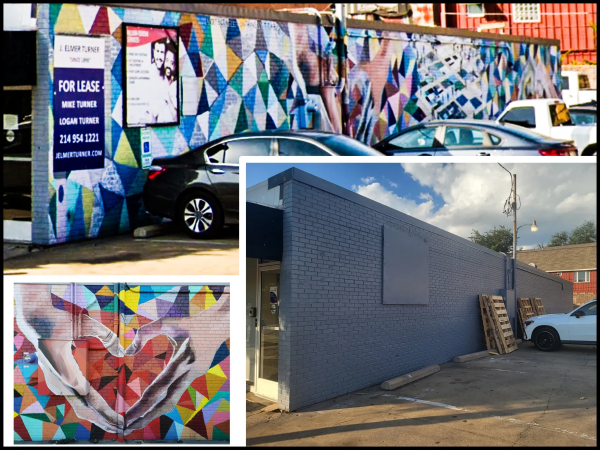
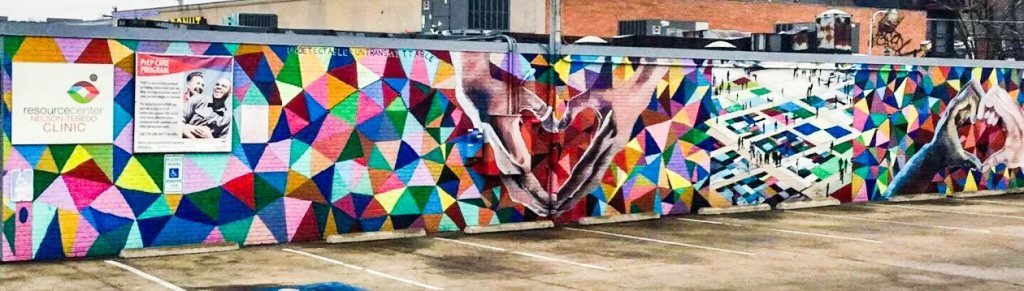
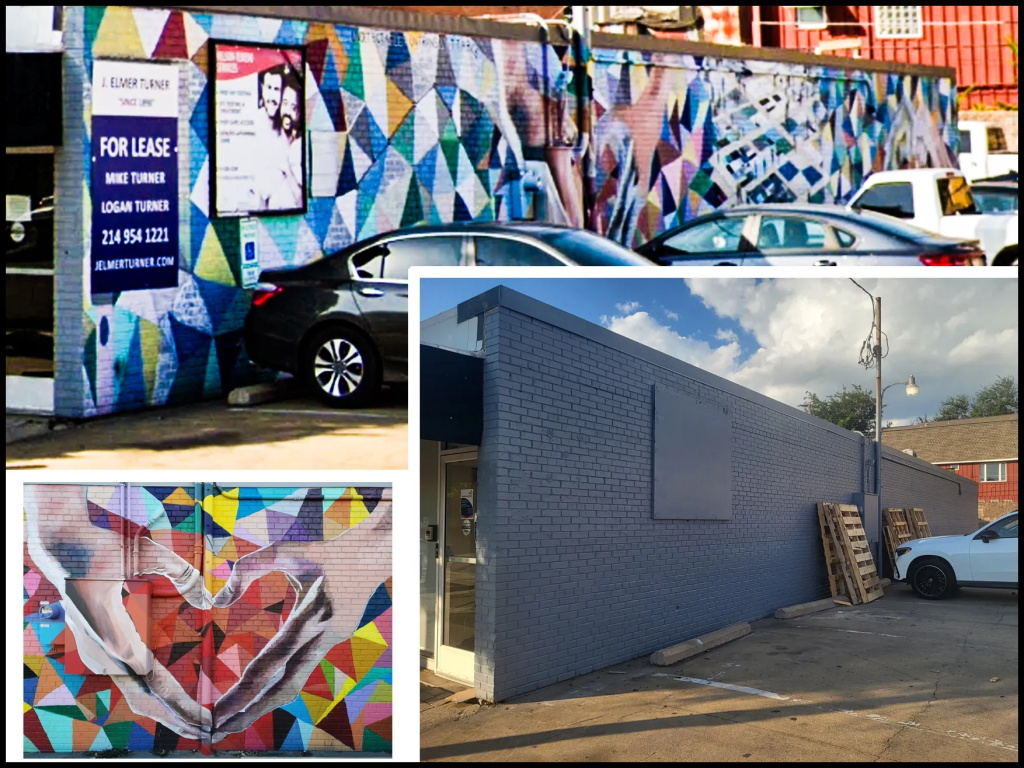
Social media posts made Tuesday evening show the south side of the building at 4014 Cedar Springs Road, the former home of Resource Center’s Nelson-Tebedo Health Center, painted a dark, dull gray. The blank slate wall came as a shock to many of the area’s residents, visitors and business who were used to seeing a vibrant, multi-color mural honoring the LGBTQ+ community and the fight against HIV/AIDS.
As Lee Daugherty noted in a post to the Friends of Oak Lawn page on Facebook, “Today a new tenant on Cedar Springs at the old Nelson-Tebedo [clinic] took it on themselves to paint over a 2018 mural of the AIDS quilt, a solemn remembrance and a dedication that we take care of each other. I’m unaware which clinic is moving in at this time, but it’s brave to move into a community and immediately erase it.”
The mural, known as Dallas Red Foundation’s HIV/AIDS Commemorative Mural, was conceived as a joint project between Dallas Red Foundation’s REDucate Committee and the community art group Arttitude, designed by Arttitude muralist Lee Madrid “after talking with community leaders and employees of Resource Center’s Nelson-Tebedo Clinic upon which the mural is painted. The mural offers a message of hope and community while acknowledging the HIV/AIDS crisis and the continued need for HIV/AIDS to be at the forefront of public attention,” John Anderson, secretary of Dallas Red Foundation and a member the REDucation Committee, explained in a January 2019 Voices column in Dallas Voice.
Anderson told Dallas Voice Tuesday night that the new tenant in the building is the AIDS Healthcare Foundation clinic. He wrote in a post on his own Facebook page, “A LOT of work was put into this by a few different local organizations. Community art is not something you can just erase. Someone has some explaining to do.”
In his 2019 column for Dallas Voice, Anderson explained that the mural was designed, with input from community leaders and employees of Resource Center’s Nelson-Tebedo Clinic, to “offer a message of hope and community while acknowledging the HIV/AIDS crisis and the continued need for HIV/AIDS to be at the forefront of public attention.”
He said that the mural featured “four diverse hands coming together to create red heart shapes” intended as the perfect backdrop for selfies. In addition, “References to the decline in deaths over time and the ever-increasing number of individuals living with HIV [were] incorporated between multicolored, geometric shapes” painted in colors “reminiscent of the quintessential rainbow motif common in LGBTQ art and culture. A large portion of the mural depict[ed] silhouettes looking over sections of the NAMES Project AIDS Memorial Quilt, created as a memorial celebrating the lives of people who have died of AIDS-related causes.”
Dallas Voice Senior Staff Writer David Taffet has written several articles chronicling the conception of the mural and its progress along the way. Read some of them here, here and here.
Dallas Voice will be contacting AHF to ask why the mural was painted over and who made the decision to do so. When we hear from them, we will update this post.
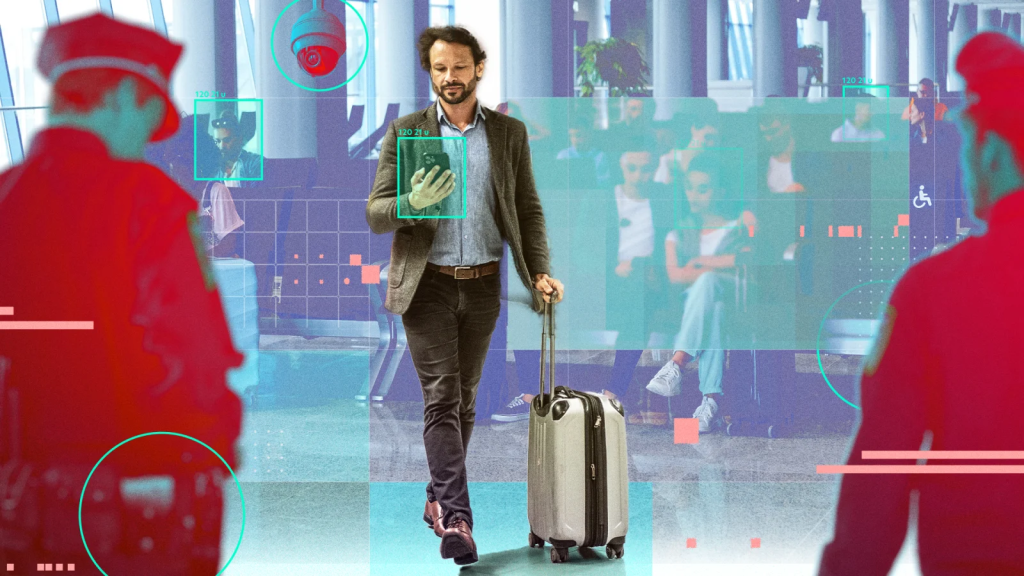
Your smartphone probably holds more personal information about you than any other device you own. So the last thing you’d want to do is hand over all that data to a stranger, especially when you’re traveling internationally.
The 4th Amendment of the US Constitution prevents “unreasonable searches and seizures” of personal property but the US Customs and Border Protection (CBP) has special authority to search devices crossing US borders via air, land, or sea. According to the CBP, in 2024, electronic device searches affected .01% of travelers at US ports of entry. Of those subjected to searches, more than 36,000 were not US citizens.
Today, phone searches at the US border are happening more often than they did last year. With that in mind, I’ll answer a few frequently asked questions about device searches and offer you a pre-travel device protection checklist.
Will US Customs Agents Search Your Phone?
Before I give advice to travelers, let’s talk about why border security searches happen. Here’s what CBP has to say: “Border searches of electronic devices are often integral to determining an individual’s intentions upon entry to the United States and thus provide additional information relevant to admissibility of foreign nationals under US immigration laws.”
The statement above is pretty non-specific and quite broad, right? That’s why it’s important to take these searches seriously. There aren’t hard rules for what constitutes benign or malicious intentions. It’s entirely up to the border protection officer.
Do You Have to Let US Customs Agents Search Your Phone?
To answer the question above: It depends. Are you a US citizen? US citizens must be let back into the country, so if you refuse a search, agents can let you go home while keeping your phone. Foreign travelers can be turned away at the border if they refuse to comply.
CBP says that if you are chosen for a device inspection and your phone is protected by a passcode or another form of security, “that device may be subject to exclusion, detention, or other appropriate action or disposition. Additionally, the traveler may face longer processing times to allow for CBP to access the contents of the device.”
What Are CBP Agents Looking for?
According to CBP, a “basic” electronic device search involves manually searching your phone. An agent can look through your device for just about any reason, but if they feel you or your data may be a “national security concern,” they’ll ramp up the search.
The next level calls for an “advanced” search, during which agents may connect other devices to your phone to view the data or make copies of it. You can read more about such investigations on the agency’s website.
Border security officers cannot access your live cloud data, so it’s smart to back up your devices to the cloud before crossing the border. More on that later.
If a CBP agent seizes your device, the EFF advises people to request Form 6051D, which is a custody receipt, to claim their device later. Again, US citizens do not have to comply with electronic device searches to enter the country, but foreign travelers do.
Assess Your Privacy Risks While Traveling
With a little preparation before you leave, you may be able to avoid hassle at the border. First, determine what you need to take with you. Do you really require multiple internet-connected devices on your trip? Depending on the nature of your travels, you may be able to get away with taking a burner phone with you instead of a smartphone packed with private data. A freshly wiped Chromebook or a tablet may also be a reasonable swap for a laptop in some circumstances.
Next, perform a personal risk assessment. Do you have a clean criminal record? Are you a US citizen? If you can answer yes to both questions, remember that the likelihood of a device search is pretty low. If you answered no to either of those queries, you may be picked for a search at the border, so be prepared.
Now that we’ve discussed who you are, let’s talk about what you do. Are you an activist, journalist, lawyer, politician, or anyone else who is at high risk for surveillance due to your job or online posts? If so, I highly recommend taking the steps listed below to secure your devices before you leave.
Before Crossing the Border, Do This
In the spirit of staying prepared, here are some suggestions for things to do to your devices before you travel into or out of the US:
Log Out of Your Accounts: If you plan to keep apps on your devices, log out of them first. Border officers may be able to search your devices, but they must be in airplane mode, as per the CBP’s rules. That means the agents can’t access your data stored in the cloud.
Back Up Your Computer and Phone: If you have a cloud storage account, back up your data to the cloud. That way, you have copies of everything you’re about to delete. It’s wise to make sure your device has the latest security updates, too, since those protections may make it harder for an officer to search the device thoroughly.
Deep Clean Your Devices: Remove any apps that you don’t want a border agent to ask you about. It’s a good idea to clear your browsing history, delete chat logs, and remove any sensitive contact information that you wouldn’t want someone else to find. Make sure to clear your Recently Deleted or Trash folders after you’ve removed the apps or files from your device.
Clear Your Messages: If you use a secure messaging app like Signal, remove yourself from group chats and turn on the disappearing texts feature.
Disguise Your Apps: Signal, WhatsApp, and other messaging services have very distinctive logos that may draw an officer’s attention. To combat this, you could change the look of the app’s logo on your devices’ home screens. For example, on my personal phone, Signal is represented by a picture of the Hamburglar. On iOS, the best way to change your icons is via the Shortcuts app. Android users will need to download an icon-changing app from the Google Play Store.
Disable Biometric Unlocks: Visit your phone’s Settings menu and disable face and fingerprint scanning, since officers can use those to force access to your device without much effort. This can be achieved by holding the phone up to a detainee’s face to open the device, or physically placing a person’s finger on the device reader to obtain a fingerprint scan. Keep in mind that though an officer cannot compel you to enter your passcode or PIN, if they seize your device, they have tools that may be able to eventually crack the lock.
Familiarize Yourself With Device Data Protection Modes: Android and iOS have built-in remote-wiping features, so it’s easy to disable or delete all data from a confiscated phone remotely. Get to know these features in your device’s Settings menu. Also, create a shortcut on your home screen to quickly wipe the device if necessary. This allows you to simply tap the shortcut and disable or completely wipe your device, depending on your preferences.You can find powerful data protection offerings on Android and iOS within your phone’s settings menu. Look for Advanced Protection mode on Android devices, and Advanced Data Protection mode within your iCloud settings on iOS devices. It’s a good idea to turn these modes on and keep them active throughout your trip (and maybe forever). These settings enable end-to-end encryption for your cloud accounts, so even Apple or Google cannot access most of the data stored there.
Tell Someone Where You’re Going: It’s a good idea to let family, friends, or even coworkers know that you’re traveling internationally. Make sure that someone will check to find out where you are if things go wrong during a border crossing. If you aren’t a US citizen, I recommend writing down contact information for an attorney who specializes in immigration or border security cases and keeping that information with you at all times.
Stay Safe While Traveling Overseas
A device search at the US border is not guaranteed, but we know it’s happening more often than it has in the past, so it’s always wise to take a few precautions to protect your privacy. Check out our other relevant guides, including how to prepare for a protest, turn off location services on your devices, and set up secret phone numbers. For more information about keeping your data to yourself, read our guide to completely disappearing online.
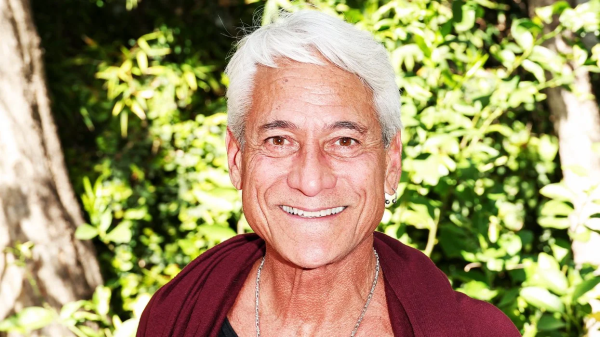
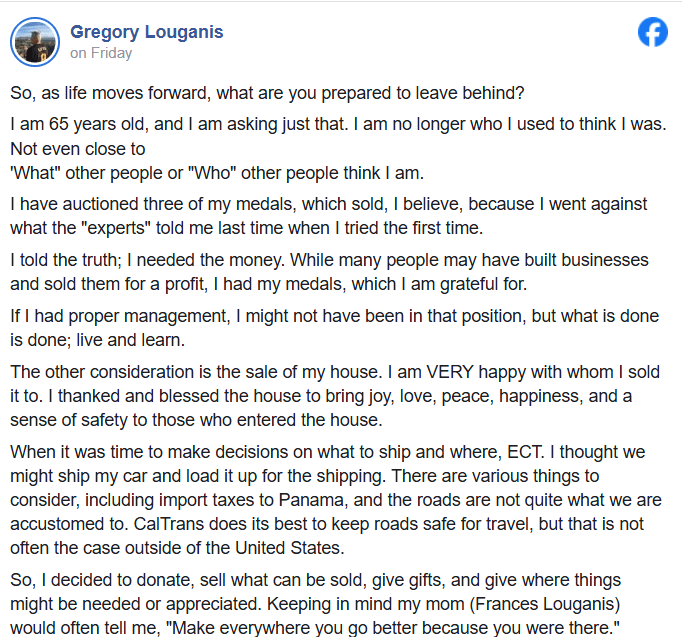
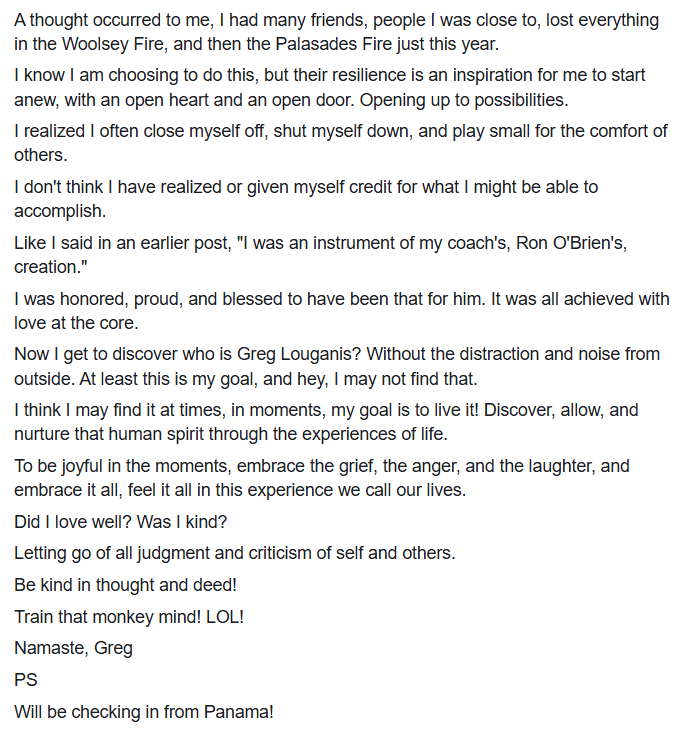
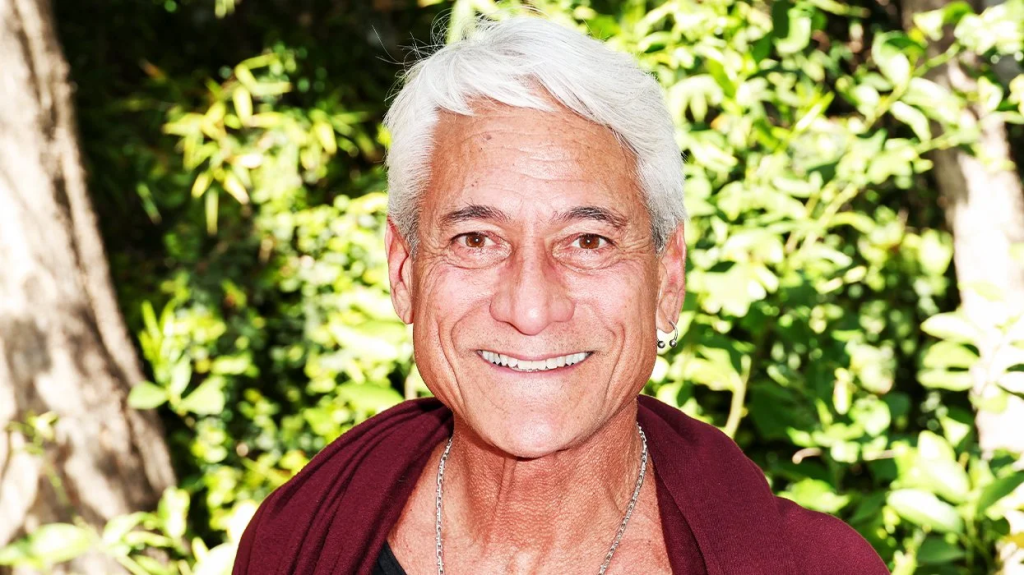
Out Olympic gold medalist, Greg Louganis, shared the details of his move to Panama in a statement uploaded to his Facebook page on Friday. In the post, Louganis, who came out as gay in 1994 and shared that he was HIV-positive in 1995, auctioned and sold three of his five Olympic medals. According to Cllct.com, he sold two gold and one silver medal for $430,865—his first silver medal from the 1976 Olympics, a gold from the 1984 games in Los Angeles, and another gold from the 1988 Seoul Olympic games.
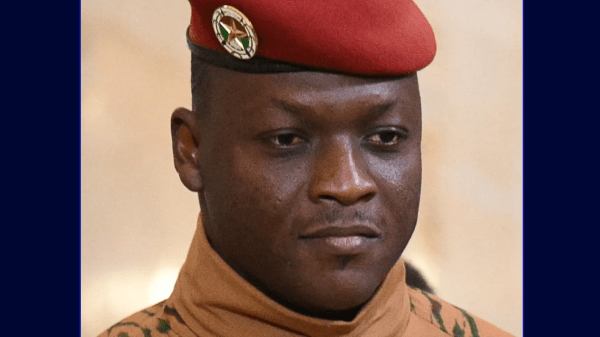
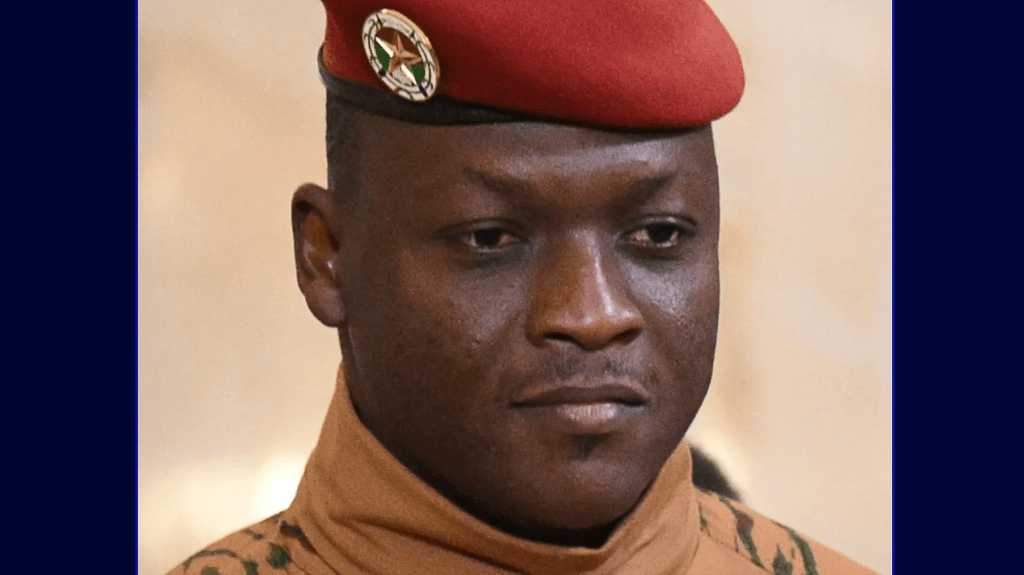
The West African nation of Burkina Faso’s ruling junta unanimously passed a law banning homosexuality yesterday.
“The law provides for a prison sentence of between two and five years as well as fines,” said Justice Minister Edasso Rodrigue Bayala. “If a person is a perpetrator of homosexual or similar practices, all the bizarre behavior, they will go before the judge.”
He said that foreigners will be deported under the law.
Burkina Faso has been under the rule of a military junta since September 2022, when former Interim President Paul-Henri Sandaogo Damiba – who himself came to power in a coup d’état several months earlier – was removed from his office. The civil unrest is a result of the government’s inability to contain an Islamist insurgency.
The Muslim-majority nation had been among the 22 out of 54 African states where same-sex relations were not criminalized. The one-time French colony didn’t inherit anti-homosexuality laws found in many former British colonies.
But the bill to ban homosexuality was supported by 71 unelected members of the transitional parliament yesterday as part of a wider set of family and citizenship law reforms “popularized through an awareness campaign,” officials said. The bill was initially approved by the military government’s leader, Captain Ibrahim Traoré, last year. Traoré has been shifting the country’s focus away from its close relationship with France and toward Russia.
The law goes into effect immediately.
Human rights groups have accused the government of cracking down on human rights with mass arrests and conscripting critics into the military.
In late 2024, neighboring Mali also banned homosexuality. Two other African nations – Ghana and Uganda – increased the punishments for homosexuality in recent years.
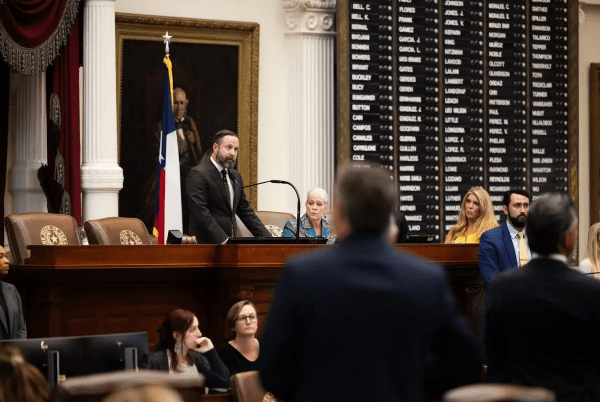
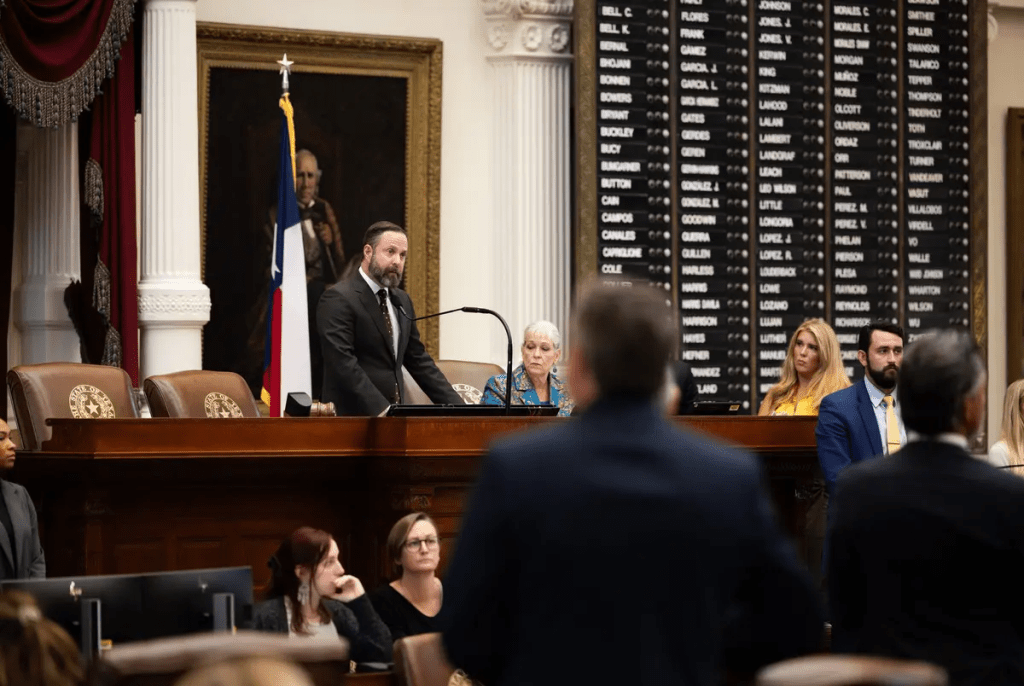
Texas House members clashed over a bill that would restrict which restrooms transgender people can use in government buildings and schools, but ultimately approved it late Thursday.
Representatives approved Senate Bill 8 on a 86-45 vote after several hours of tense debate that was at times interrupted by people in the gallery shouting insults at lawmakers who supported the bill. The House gallery, where visitors can watch proceedings, was emptied out by staff and Department of Public Safety officers after the disruptions continued.
SB 8 would restrict bathroom use in government-owned buildings, public schools and universities based of sex assigned at birth and would not allow exceptions for transgender inmates’ housing in prisons and jails. It would also bar those assigned male at birth from accessing women’s domestic violence shelters, unless they are under 17 and the child of a woman also receiving services.
Bathroom bills proposing civil or criminal penalties for entering restrooms not matching biological sex have been proposed in Texas for more than a decade, and 19 other states have successfully passed their own proposals. The Texas House, however, has largely failed to garner traction for bathroom bills after a tense battle over one proposal in 2017. The Texas Senate has passed six different bathroom bills since 2017.
A last-minute amendment from Rep. Steve Toth, R-Conroe, raised the proposed fines to $25,000 against institutions where violations occur, and $125,000 for any subsequent violations. The raised penalties would make SB 8 the most financially punitive bathroom bill in the country. The amendment was adopted without debate.
Supporters of SB 8, which has also been called the “Texas Women’s Privacy Act,” have said the bill is necessary to ensure safety and comfort for women in intimate spaces like changing rooms and bathrooms. The bill’s House sponsor, Rep. Angelia Orr, R-Itasca, said the goal of the bill is to prompt political subdivisions to create their own policies to ensure bathrooms are secure.
“The preference of someone’s sexual appearance does not override the safety and privacy of a biological female,” Orr said.
Orr said the bill does not affect privately owned or funded businesses, and will not create penalties against individuals.
Opponents of the bill have called the restrictions unnecessary, and that the bill would incite harassment against trans people and cisgender people falsely accused of entering the wrong facility. Rep. Jessica Gonzalez, D-Dallas, said she personally had been accused of entering the wrong restroom in the Texas Capitol, which already has a policy similar to SB 8’s proposal.
Questioning from Democrats who opposed the bill attempted to zero in on how the bill would be enforced, as it outlines that agencies will take “every reasonable step” to ensure the policy is followed. Orr said during questioning that it would be up to agencies how to enforce their policy. Previously when the bill was heard in committee, Orr said the policies would be determined based on how someone looked.
“Who do you think is more uncomfortable in the bathroom today? A cis woman, or a trans woman wondering if she’s about to be harassed?” Rep. Erin Zwiener, D-Driftwood, asked.
During testimony in both chambers through the session and on the House floor on Thursday, tensions between lawmakers for and against the bill flared. Several members argued in small groups multiple times and were separated by staffers as debate continued on the floor. At one point, Toth heckled Rep. Rafael Anchia, D-Dallas, for using Bible quotes as he spoke on a failed amendment designed to kill the bill. Toth was warned by a House staffer for the remarks.
Anchia later argued with Rep. Hillary Hickland, R-Belton, away from the floor debate after she chastised his use of the Bible and countered with her own quotes as she expressed support for the bill. Other members cited religion several times after to channel their support and opposition to the bill.
“Everyone is born a child of God, and everyone who is born into this life deserves to be treated that way,” Rep. John Bryant, D-Dallas said. “That is what the Bible says. That is what our hearts tell us. And the only time we act differently is when we get into politics.”
Representatives with family violence shelters expressed concern about the bill’s exclusivity during testimony earlier in the month, and said it could affect not just trans victims of domestic violence, but cisgender women with teenage dependents or adult dependents who are disabled. While four other states have similar sex-based restrictions on shelters, they still allow trans victims to be accepted if they have separate sleeping quarters.
“When you call the hotline, it is often the moment before you believe you will die. I don’t say that with hyperbole,” said Molly Voyles, director of public policy at the Texas Council on Family Violence, during the House State Affairs committee hearing last week when SB 8 was discussed. “Many women fleeing have a son who is 18 still in high school, or a child with a disability over that age for whom they are the primary caretaker. A choice to leave that includes leaving without your child is not a choice at all.”
SB 8 will be sent back to the Senate to approve the changes. Lawmakers have until Sept. 13 to approve any legislation during the second special session.
House Republicans introduced legislation Tuesday to ban transgender girls from participating in girls’ school sports, moving to advance one of the Trump administration’s top priorities.
The measure, titled the Safety and Opportunity for Girls Act, would define “male,” “female” and “sex” by reproductive function in Title IX, the federal civil rights law against sex discrimination in education. Schools receiving federal funds would be barred from allowing transgender students to use restrooms or locker rooms or play on sports teams that match their gender identity, according to the bill, sponsored by Rep. Mary Miller (R-Ill.).
Miller introduced a similar measure to block locker room access for transgender students in March and spearheaded an earlier effort to reverse former President Biden’s expanded nondiscrimination protections for transgender students under the Congressional Review Act last summer.
A news release from Miller’s office says the latest bill, which has 11 Republican co-sponsors, would preserve Title IX’s “original intent” and shield the decades-old law from reinterpretation “by radical leftists or activist judges.”
President Trump’s administration has argued repeatedly that Title IX already prohibits transgender girls from competing on girls’ sports teams or using girls’ bathrooms and changing rooms at school. More than two dozen investigations into states, schools and athletic associations that accommodate transgender students have been opened since Trump’s return to office in January.
School officials in states including California, Maine, Minnesota and Virginia assert their policies are compliant with state and federal law.
A February executive order signed by Trump states that the U.S. opposes “male competitive participation in women’s sports” as a matter of “safety, fairness, dignity, and truth.” Trump warned schools at a signing ceremony that his administration was putting them “on notice.”
“If you let men take over women’s sports teams or invade your locker rooms, you will be investigated for violations of Title IX and risk your federal funding,” he said.
The Supreme Court agreed in July to decide whether states can ban transgender athletes from competing in girls’ and women’s school sports. Since 2020, more than half the nation has adopted laws barring trans students from participating on teams that match their gender identity.
Laws in four states — Arizona, Idaho, Utah and West Virginia — are blocked by court orders, and New Hampshire’s ban on trans athletes is partially blocked. In February, the two New Hampshire high schoolers suing the state expanded their challenge to include the Trump administration.
House Republicans, joined by two Democrats, passed legislation in January to ban transgender student-athletes from girls’ sports teams — an effort ultimately thwarted by Senate Democrats.
Senate Bill 8, an anti-trans “bathroom bill,” would require government buildings —including public universities — to designate restrooms, locker rooms, and other facilities strictly by “biological sex,” instead of gender identity. SB 8 penalizes institutions, not individuals: a first violation carries a $5,000 fine, with repeat violations rising to $25,000 each. It also empowers the state attorney general to investigate complaints.
“I will say it again: SB 8 does NOT protect women. It is an unconstitutional and a direct attack on the rights of the Trans community,” state Rep. Jessica González (D), who represents District 104 and chairs the Texas House LGBTQ Caucus, wrote on X. “This bill is nothing less than discriminatory and harmful, and it has no place in Texas.”
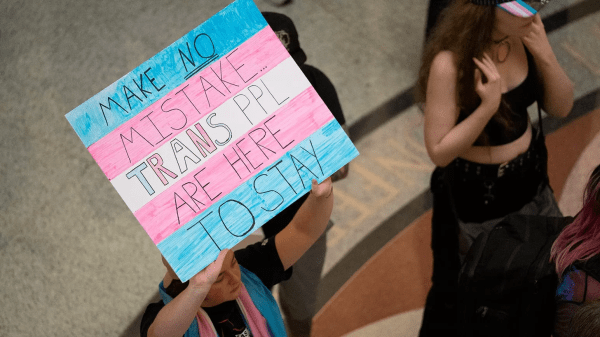
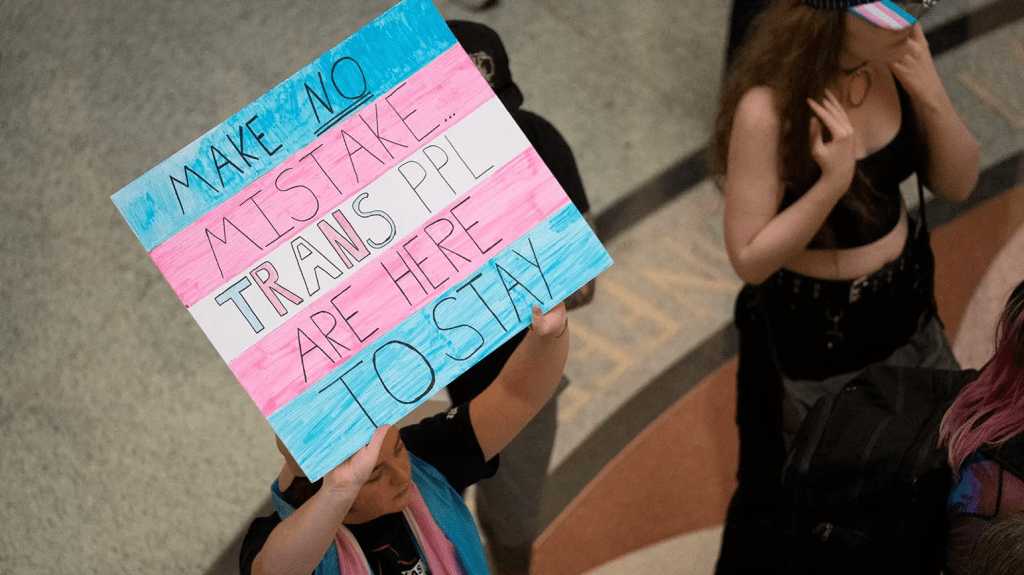
The state Senate approved SB 8 earlier this month, and it was subsequently greenlighted by the House State Affairs Committee on August 22, despite about 100 activists gathering at the Texas Capitol to protest it, with nearly half of the protesters participating in a sit-in.
Cameron Samuels, an incoming student at the Lyndon B. Johnson School of Public Affairs, told The Daily Texan that bills like SB 8 are designed to erase trans lives. “We are the experts of our lived experiences and this hate and bigotry relies on our inability to tell our stories,” Samuels said.
“They are seeking to silence and erase our narratives. But when we are telling our stories and demonstrating a more accurate reflection of what it means to be a transgender Texan, then we bust those myths and we challenge those narratives.”
According to Equality Texas, testimony on the bill was halted after just two hours, leaving nearly 100 people who had signed up to speak without the chance to testify. After Republicans ended the testimony early, Democratic Representatives Jessica González and Donna Howard held a “people’s hearing” in the Texas Capitol auditorium. SB 8 is now awaiting a final vote and debate on the House floor.
Protesters also rallied against House Bill 7, a sweeping measure that seeks to sharply restrict access to abortion medication. HB 7 would allow private citizens to sue anyone who manufactures, mails, prescribes, or provides abortion pills in Texas, with damages starting at $100,000 per violation.
The measure mirrors earlier “bounty” laws but expands them by targeting the most common method of abortion in the United States. On August 25, the House State Affairs Committee passed a revised version of the bill.
“Despite already having a total abortion ban on the books—one that is wreaking havoc on the state’s health care infrastructure and tragically taking the lives of pregnant people—the Texas legislature is voting on SB 7, another horrifying bounty hunter bill,” the Center for Reproductive Rights said on X. “If enacted, one of the very last avenues for Texans to access critical reproductive care will be closed off.”
Lawmakers have until September 13 to pass the bills during the special session. If approved, SB 8 and HB 7 would add to Texas’s growing slate of anti-trans and anti-abortion laws.
Referral claims for refugee protection in Canada from people in the U.S. have already surpassed last year’s total, based on data from Immigration and Refugee Board of Canada (IRB). These referrals also spiked the last time President Donald Trump was in office.
While there were 204 U.S. claim referrals to the board’s Refugee Protection Division total last year, 245 claims were referred to the RPD from January through June of this year. Trump was inaugurated in January.
For some perspective, there were 216 referrals listed from Afghanistan during that same time period this year, 62 listed from El Salvador, 2,784 listed from Mexico, 265 listed from Palestine, 260 listed from Syria, 403 listed from Venezuela and 131 listed from Yemen.
At the start of former President Joe Biden’s term in 2021, there were 118 claim referrals from the U.S., with the same number the following year – both a drop from 154 in 2020. In 2023, the number of referrals increased to 157.
However, back in 2013 – the first year that the IRB has data for – there were just 69 referrals. That was during the second term of former President Barack Obama, and while he was in office during 2014 and 2015 referrals were at 88 and 69 respectively. They increased to 129 in 2016, when Trump was campaigning against Democratic candidate and former Secretary of State Hillary Clinton.
During Trump’s first year in office in 2017, the referrals skyrocketed to 869. In 2018, they were still higher at 642, followed by 423 in 2019.
When asked by Newsweek about the referral increase this year, White House Deputy Press Secretary Anna Kelly said: “Why does Newsweek care about this .00007 percent of the population who want higher taxes, worse health care, and anti-American trade policies?”
Bloomberg reported this week that officials from the U.S. and Canada are expected to discuss tariffs soon. That outlet has also reported on an influx of people from the U.S. attempting to cross the border into Canada. It said that “during the first six days of July, Canadian officials at the Saint-Bernard-de-Lacolle border crossing – the busiest land port between New York and Quebec – received 761 asylum claims, a more than 400% increase from the same period a year ago.”
In Canada, refugee advocates, federal government departments and immigration lawyers were already bracing for asylum claimants from the U.S. in January, according to the CBC.
“With Trump, crystal balls are hard to keep clear,” said Gabriela Ramo, past chair of the Canadian Bar Association’s immigration section, per the outlet.
In addition to the crackdown on illegal immigration, reasons why people might be seeking to leave the U.S. cited by Newsweek include U.S. policy shifts and court rulings have restricted access to gender-affirming care, limited who can serve in the military, and imposed rules on participation in sports and the use of certain facilities. This month, Audacy reported that the president’s approval rating even among his own party was slipping. This Tuesday, Gallup reported that Trump’s polling was “tepid” this month at 40%. Economist approval tracking updated Tuesday showed that his rating was up slightly compared to the previous week at 41%.







 fleeredstates.blog
You must be logged in to post a comment.