The U.S. has always been a difficult country to “age in place”—seniors who can’t find lodging with a loved one are often relegated to nursing homes, if they can afford the fees. The situation gets even more precarious for LGBTQIA+ seniors, who commonly see bias in the rental application process, and get turned down for apartments at high rates.
Things are especially dire in Texas, where state law doesn’t protect individuals from housing discrimination based on their sexual orientation, although LGBTQIA+ individuals are still protected under the federal Fair Housing Act. This exacerbates the problem and puts even more people at risk of poverty and social isolation.
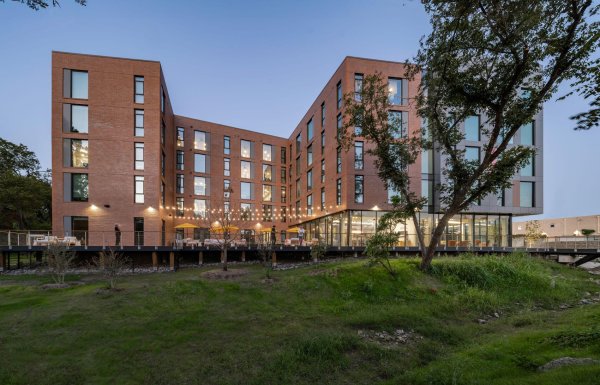
Perkins&Will’s Dallas studio recently completed a new affordable housing project to help combat this public health crisis. Today, Oak Lawn Place in Dallas represents north Texas’s first affordable housing development of its kind, the architects shared. It offers 100 percent affordable housing for LGBTQIA+ seniors, 55 years of age and older.
Karen Chen of Sunshine Studios created a bespoke mural on every floor of the building. (James Steinkamp)
The Dallas neighborhood of Oak Lawn has been the beating heart of north Texas’s LGBTQIA+ community for decades. Oak Lawn Place was built with the developer Matthews Southwest, Volunteers of America, and Resource Center, one of the largest LGBTQIA+ community centers in the country and a key north Texas HIV/AIDS service organization.
“I’m seeing Oak Lawn Place transform people’s lives,” Resource Center CEO Cece Cox said in a press statement. “A project like this elevates everyone and makes Dallas a better place.”
In plan, Oak Lawn Place is shaped like a C. This was meant to increase natural light exposure within every unit; this feature also provides a protective wing that surrounds an outdoor deck, hidden from public view. The deck has great views of the site’s sloping topography and a nearby creek.
Mural by Karen Chen of Sunshine Studios (James Steinkamp)
Karen Chen of Sunshine Studios created a bespoke mural on every floor of the building, which helps with wayfinding. Oak Lawn Place was designed with maximum accessibility in mind—everything from the hallway seatings, elevator lobbies, to wheelchair-friendly doorways are meant to provide a positive user experience.
The design of Oak Lawn Place is economical and efficient, yet still manages to have splashes of color here and there; the facade has a rainbow flag to signify all are welcome. The 80,000-square-foot building has a total 84 units. It’s within walking distance of public transit options and Resource Center’s Community Center.
The building has a shared kitchen and other community-building amenities. (James Steinkamp)
“Oak Lawn Place helps make Dallas a more inclusive, inviting city—for those considering moving here and for those wondering, as a queer person, ‘Will I truly feel welcome? Are there spaces in Dallas for me?’ We are honored and proud to bring this project to life,’” Cox continued.
A new healthcare facility, Resource Center Health, will open across the street from Oak Lawn Place later this year.
More than a quarter million LGBTQ+ young people and family members in the U.S. have relocated to other states because of LGBTQ+-related politics or laws, according to estimates outlined in a new report exploring the population’s response to hostile policy environments.
According to the brief compiled by The Trevor Project and Movement Advancement Project, 9 in 10 LGBTQ+ young people say politics have impacted their well-being, while 4 in 10 say they’ve thought about moving to another state because of unfriendly LGBTQ+ politics or laws at home.
The portion was even higher for transgender and nonbinary youth, 94% of whom said politics had affected their well-being and nearly half (45%) who said they’d considered relocating.
“For many LGBTQ+ young people in the U.S., the steady stream of anti-LGBTQ+ news may feel overwhelming right now,” said Steven Hobaica, a research scientist for the Trevor Project, a national LGBTQ+ youth advocacy group focused on suicide prevention. “It’s heartbreaking to see that nearly half of transgender and nonbinary youth have considered moving due to anti-LGBTQ+ policies.”
While just 4% of LGBTQ+ young people ages 13 to 24 reported uprooting because of anti-LGBTQ+ policies, that translates to roughly 266,000 young people and family members based on LGBTQ+ youth population estimates, the groups said.
Trump administration presents new threats
The report comes as President Donald Trump returns to the White House after making gender identity issues a focal point of his campaign. On Monday, after being sworn in, Trump issued a spate of executive orders that included seeking to remove legal protections for transgender people in federal spaces, laying the groundwork to potentially bar transgender individuals from military service and declaring that the U.S. government will only recognize two sexes, male and female.
“No matter a person’s political beliefs, we know, from our research and from what LGBTQ+ young people tell us, that policies like these take a damaging toll on LGBTQ+ young people’s mental health,” said Janson Wu, The Trevor Project’s senior director of state advocacy and government affairs.
The organization said its crisis services saw a 33% increase on Inauguration Day compared to typical volume. But that still paled, it noted, to the sevenfold increase in crisis services experienced the day after the 2024 election.
“No matter your political beliefs or how you feel about the current administration, one thing must be made clear to all of us living in the United States: Real young people’s lives are at risk,” said Trevor Project CEO Jaymes Black.
Recent years have already seen increasing numbers of state laws and proposed legislation targeting the LGBTQ+ community, especially measures aimed at curbing the rights of transgender youth.
“It’s critical that we not only call attention to the negative impact of these divisive political attacks but also highlight that this research supports the idea that more inclusive policy environments lead to better outcomes for LGBTQ young people across a range of measures,” said Logan Casey, director of policy research for Movement Advancement Project.
Hostile climates raise mental, emotional health risk
The organizations said they compiled the report given a lack of research into how LGBTQ+ young people respond to hostile policy environments, despite studies showing that those youths experience greater mental health challenges and higher suicide risk in such environments.
“By gaining more knowledge of how LGBTQ+ young people respond to their policy environment, advocates and policymakers can create or modify policy to better support LGBTQ+ young people and their families,” the report said.
Their joint report is based on data gleaned from The Trevor Project’s 2024 U.S. National Survey on the Mental Health of LGBTQ+ Young People, which collected responses from more than 18,600 LGBTQ+ individuals between the ages of 13 and 24. It also incorporates data from Movement Advancement Project, a Boulder, Colorado-based group that tracks LGBTQ+-related laws and policies throughout the U.S. and its territories and assigns each a negative or positive policy index.
More than a quarter (27%) of respondents lived in states with negative policy indexes, the report said. Those individuals were more likely than their counterparts to consider moving to other states and also likelier to travel to other states to receive health care.
The report noted that not all LGBTQ+ young people and their families desiring to relocate have the resources to do so.
“Notably, the same factors that might preclude the ability of LGBTQ+ young people and their families from moving, such as poverty, housing discrimination, and employment access, are the same ones that disproportionately affect LGBTQ+ people of color and increase their risk of mental health and suicide,” the report said.
BANGKOK (AP) — They have been in a committed relationship for more than 13 years, and even had a wedding in 2019. Since then, Danaya Phonphayung and Sunma Piamboon, both women, have considered themselves a married couple, even if same-sex marriages were not legally recognized.
The walls of their home in suburban Bangkok are decorated with faded photos from their happy union, filled with joy and love from their families and friends. Come this Thursday, their wedded status will be recognized by the nation as well, when a law that allows members of the LGBTQ+ community in Thailand to get married and have the same legal rights as heterosexual couples takes effect.
The couple said they can’t wait to formalize their union. They plan to register their marriage at a district office near their home on the very first day that the law allows.
“I think I’ll cry,” Danaya, an office worker, said with a big smile, thinking about the moment that they will sign the paper. “I’m so happy. It’s something that was more than I could’ve dreamed of, that suddenly this day is happening.”
“We live together. We bought a house. We bought a car. But we cannot share these things together like a married couple. When this is happening, we feel that it’s our rights that we need to secure as quickly as possible,” she said.
The marriage equality bill, which sailed through both the House of Representatives and the Senate, amended the Civil and Commercial Code to change the words “men and women” and “husband and wife” to “individuals” and “marriage partners.” It would open up access to full legal, financial and medical rights for LGBTQ+ couples.
Sunma, who owns a travel agency, said that she had realized how crucial being legally married was when Danaya was hospitalized with dengue fever, as they don’t live close to her parents.
“The doctors asked me who I was, and I said I was the girlfriend, and they were like, ‘so what’?’ I couldn’t make any decision until her condition became quite serious,” she said. “I was so upset, like, if I had lost her … there would be nothing that could’ve made up for it. So, I think this is very important for both of us.”
How marriage equality became law
Thailand has a reputation for acceptance and inclusivity, but struggled for decades to pass a marriage equality law. Thai society largely holds conservative values. Members of the LGBTQ+ community say they face discrimination in everyday life, although they note that things have improved greatly in recent years.
The government led by the Pheu Thai party made marriage equality one of its main goals. It made a major effort to identify itself with the annual Bangkok Pride parade in June, in which thousands of people celebrated in one of Bangkok’s busiest commercial districts.
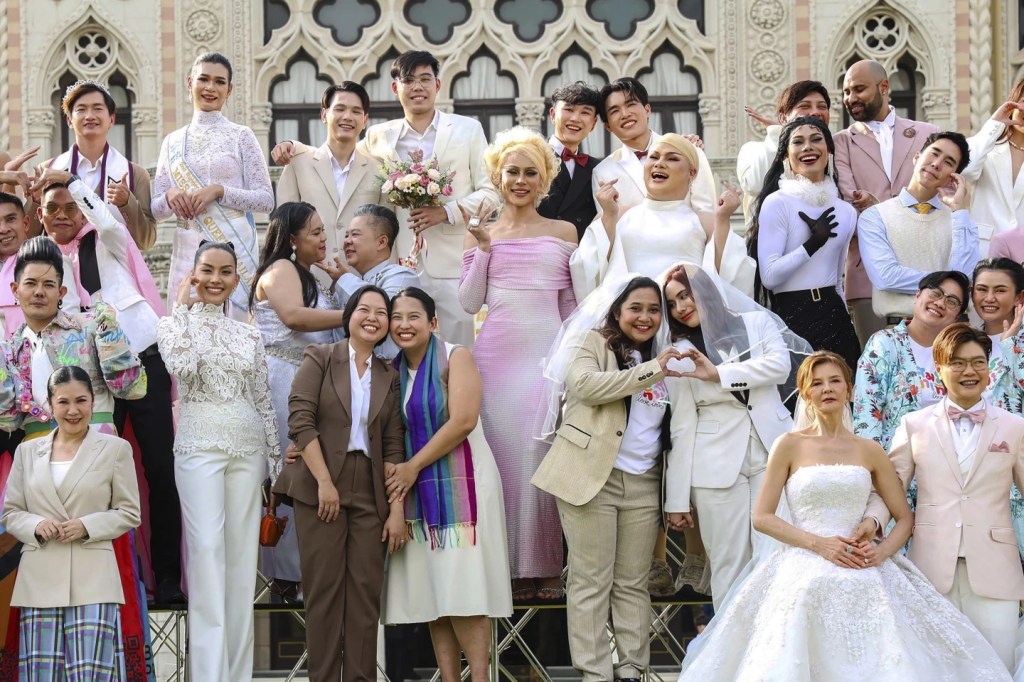
Last week, Government House invited dozens of LGBTQ+ couples and activists for a photo op and a meeting with Prime Minister Paetongtarn Shinawatra and several high ranking officials to celebrate the law coming into effect, making Thailand the first in Southeast Asia and the third place in Asia, after Taiwan and Nepal, to legalize same-sex marriage.
“It is almost like a dream, but it’s not. So, congratulations to all,” Paetongtarn said. “I think it’s very important that the world notice us, and know that in this small country we have this kind of thought. We have this kind of support for our people. So, we all should be proud.”
The organizers of Bangkok Pride have collaborated with relevant government agencies to hold a grand celebration in central Bangkok and facilitate couples who wish to register their marriage on the very first day. They said that more than 300 couples have registered to officially tie the knot on Thursday at the event.
“(The law) is about returning our dignity, and confirming that we also have dignity as a human being,” said Ann “Waaddao” Chumaporn, a gender equality activist and the lead organizer of Bangkok Pride. “That day is going to be meaningful to all the couples that have gone through this journey together. I’d like to thank everyone, every love, that has faithfully struggled so that today would finally happen.”
How the law will be implemented
The government and state agencies in Thailand are historically traditional in outlook. To prepare them for change, the Bangkok Metropolitan Administration said that it has organized workshops for staff of all Bangkok district offices who are in charge of handling marriage registration. They included lectures raising awareness about gender diversity and guidance on how to properly communicate with those who come for the service.
“It’s like a missing piece of the jigsaw,” Bangkok Deputy Gov. Sanon Wangsrangboon said at one of the workshops earlier this month. “Society is ready. The law is getting ready. But the last piece of the jigsaw is the understanding from officials.”
He acknowledged there that would be problems in the beginning, but said that he hoped they would gradually improve over time.
After they register their marriage, Sunma said that she’s looking forward to having a “real marriage celebration” with her and Danaya’s families.
“It’s not just the two of us that are happy, but both of our families feel it is a big deal, and it is what everyone has been waiting for. Everyone said they are waiting for Jan. 23,” she said.
The federal government is set to only recognize two sexes, male and female, under an executive order that President Donald Trump is soon expected to sign.
The order would reverse efforts by the Biden administration to broaden gender identity designations, including on passports.
“As of today, it will henceforth be the official policy of the United States government that there are only two genders, male and female,” Trump said during his inaugural address Monday, taking an early step to fulfill one of his culture war campaign promises.
The order, a Trump administration official told reporters Monday, is aimed at “defending women from gender ideology extremism and restoring biological truths to the federal government.” Male and female “are sexes that are not changeable, and they are grounded in fundamental and incontrovertible reality,” the official said.
The federal government would also shift from using the term “gender” to “sex,” and that sex would be “an individual’s immutable biological classification,” the official said.
All government agencies would ensure that official documents, including passports and visas, “reflect sex accurately,” the official said. Also, departments running federal prisons, migrant shelters, rape shelters and other “intimate spaces” would be directed to protect single-sex spaces for privacy. And employee records would also adhere to the executive order, as would federal departments’ messaging.
“Agencies are no longer going to promote gender ideology through communication forms and other messages,” the official said, adding that grants and contracts would be reviewed to ensure that “federal funds shall not be used to promote gender ideology.”
Reversing Biden expansion
Trump’s executive order would dismantle efforts by the Biden administration to be more inclusive of Americans’ gender identification.
As of 2022, US citizens have been able to select “X” as their gender marker on passports. One’s marker does not need to match the gender on citizenship documents or photo ID, nor is medical documentation needed to change one’s gender, according to the State Department.
“We promote the freedom, dignity, and equality of all people – including LGBTQI+ individuals,” the department’s website says. “We are demonstrating this commitment to better serve all U.S. citizens, regardless of gender identity.”
Later that year, Americans were able to start changing their sex identification with the Social Security Administration without needing to provide medical certification. However, Social Security’s record systems still require a designation of male or female, though the administration said it was exploring policy and systems updates to support an “X” designation.
“The Social Security Administration’s Equity Action Plan includes a commitment to decrease administrative burdens and ensure people who identify as gender diverse or transgender have options in the Social Security number card application process,” said Kilolo Kijakazi, the administration’s acting commissioner at the time.
Police are taking proactive measures against teenage gangs targeting gay men in “pedo hunts” in the Sydney area.
New South Wales (NSW) Police have been conducting multiple strike forces and investigations for almost a year, focusing on assaults across the city’s northern beaches, as well as its western and south-western suburbs, according to the Sydney Morning Herald.
Nearly a dozen coordinated attacks have been linked to mostly teenage gangs, though police believe the actual number is likely higher.
In each case, the victims were gay men who had arranged to meet someone from a dating app like Grindr in public parks. Instead of a consensual encounter, the men were ambushed by multiple teenagers who taunted, beat, and robbed them, sometimes using weapons. Several victims were coerced into falsely confessing to being pedophiles while being filmed, which led investigators to discover videos of the assaults online, including an Instagram account called “pedohunting_syd.”
The attacks and videos, which have spread on platforms like TikTok, are part of a growing trend known as “pedo hunting,” according to police.
Seven attacks occurred within five days in April, prompting police to form Strike Force Section to address the violence. On April 2, a 16-year-old was assaulted in a public park, and a 21-year-old was followed by four men in a car, who asked if he was gay or Muslim before attacking and robbing him and a friend.
At least five boys, aged 14 to 17, have been charged with assault, robbery, “corporal violence,” and possessing unauthorized firearms. Authorities are labeling the gang as a terror group.
A second unit, Strike Force Dividing, has made arrests in connection with similar incidents on Sydney’s northern beaches, charging 14 youths with assault and extortion.
In one case, a gang led by a 21-year-old was intercepted before they could carry out an attack. Another gang, including two juveniles and an 18-year-old leader, was apprehended while heading south out of Sydney.
Investigators have also linked a member of the “pedo hunt” gangs to the attempted murder of a far-right Christian preacher, who was repeatedly stabbed in front of his congregation. “Extremist material” was found on the 16-year-old’s phone, and he and six other individuals, who communicated through a group chat, were charged with terror-related offenses.
Historically, gay men in the Sydney area suffered violent attacks from the 1970s to the 2000s while police largely ignored the issue. The NSW government and police have since apologized for their failure to address these hate crimes and secure justice for the victims.
The recent attacks are being treated with the utmost seriousness, according to a police spokeswoman.
These incidents bear similarities to violent acts carried out by ultra-nationalists in Russia a decade ago, who used social media to lure gay victims to meetings, where they were harassed, beaten, humiliated, and forced to perform degrading acts with objects.
Musk, who is said to have spent over $130 million supporting Trump’s election campaign, misgendered his daughter on X and attributed her transition to the “woke mind virus.”
Vivian Jenna Wilson, the estranged trans daughter of billionaire Elon Musk, has opened up about her consideration of leaving the U.S. following Donald Trump’s election victory. She also set the record straight once more after Musk falsely claimed she had been “killed by the woke mind virus” due to her transition.
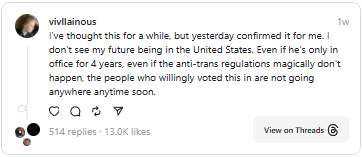
On November 6, the day after the U.S. presidential election, Wilson took to the Meta-owned platform Threads, writing, “I’ve thought this for a while, but yesterday confirmed it for me. I don’t see my future being in the United States.”
She continued, “Even if [Trump] is only in office for 4 years, even if the anti-trans regulations magically don’t happen, the people who willingly voted for this are not going anywhere anytime soon.”
A second Trump presidency could have a devastating impact on LGBTQ+ Americans. On his 2024 campaign website, Trump pledged to enact a federal ban on gender-affirming care for minors and to redefine gender at the federal level, recognizing only male and female as assigned at birth. These promises come amid the Republican party’s ongoing use of anti-trans rhetoric. According to data from Ad Impact, cited by Washington Post reporter Casey Parks on November 5, Republicans spent nearly $215 million on anti-trans TV ads during the 2024 election cycle.
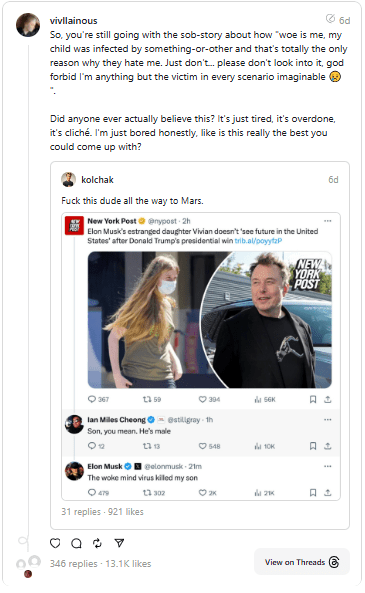
Meanwhile, Musk’s post-election comments included a response to a New York Post tweet about Wilson’s desire to leave the U.S., where he misgendered her and wrote, “The woke mind virus killed my son.”
The billionaire has spent much of this year aligning himself with Trump. According to CNBC, Musk has invested at least $130 million in pro-Trump campaign efforts, in addition to his frequent endorsements of the convicted felon on X. In his personal time, Musk has become notorious for lashing out against the existence of trans people, often dragging his daughter, Wilson, into his recent anti-trans rants.
Musk previously revived the claim that Wilson was “killed by the woke mind virus” during a July 22 appearance on Jordan B. Peterson’s podcast (and in subsequent X posts), attributing her transition to the so-called virus.
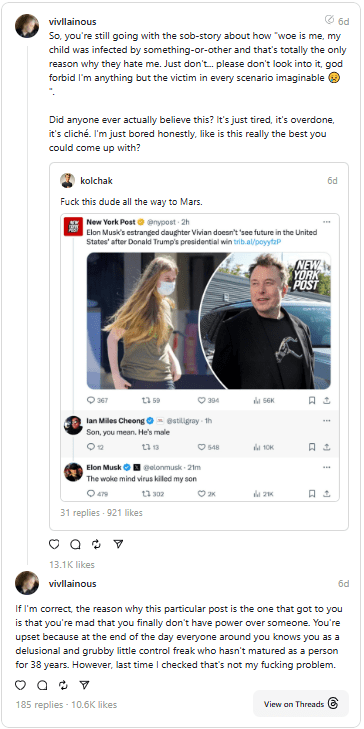
Wilson responded to Musk’s latest claim on November 8 via Threads, writing, “So you’re still going with the sob-story about how ‘woe is me, my child was infected by something-or-other and that’s totally the only reason why they hate me. Just don’t… please don’t look into it, god forbid I’m anything but the victim in every scenario imaginable 😥.”
She continued, “Did anyone actually believe this? It’s just tired, it’s overdone, it’s cliché. I’m just bored, honestly, like is this really the best you could come up with?”
Wilson went on to theorize that the reason Musk’s post struck a nerve was that “you’re mad that you finally don’t have power over someone.”
“You’re just upset because at the end of the day everyone around you knows you as a delusional and grubby little control freak who hasn’t matured as a person for 38 years,” she added. “However, last time I checked that’s not my fucking problem.”
Wilson previously filed a name and gender change petition in 2022, citing both her gender identity and the fact that she “no longer live[d] or wish[ed] to be related to [her] biological father in any way, shape, or form.” In a July interview with NBC News, she described Musk as an absent father who harassed her as a child for being feminine.
Omar Guido Chávez, the 51-year-old owner of Sodoma NightClub, a popular LGBTQ+ gogo bar in Tijuana, Mexico, was discovered dismembered in the trunk of his own car on October 18.
Authorities have indicated that evidence linking the Sinaloa drug cartel to the crime was found in Chávez’s vehicle. While police have arrested two suspects, they are not treating the murder as a hate crime.
In the back seat of the car, investigators found a “narco-banner,” a message commonly used by drug cartels to convey threats and warnings.
On Friday, two suspects, identified in reports as “Gabriel N.” and “Juan Diego N.,” were taken into custody. Surveillance footage reportedly connected Gabriel N. to Chávez’s abandoned vehicle. The suspects allegedly attempted to flee when stopped by police for driving without headlights and seatbelts, running from the scene on foot.
Baja California homicide prosecutor Miguel Ángel Gaxiola stated there is no evidence suggesting that anti-LGBTQ+ bias played a role in the murder, noting that there were no prior threats against Chávez or the nightclub. Investigators believe the murder may be linked to ongoing conflicts between rival drug cartels.
In a heartfelt Instagram post, Sodoma NightClub expressed their sorrow over Chávez’s passing, remembering him as a beloved friend and outstanding leader. “We will always remember his smile, love for life, and noble heart,” the club wrote, extending condolences to his family and friends.
On the night of October 27, the nightclub hosted a showcase of guest artists as a tribute to Chávez.
Local LGBTQ+ organization Comunidad ABC shared an open letter on Facebook, calling on authorities to ensure the safety of all individuals in Baja California. The letter emphasized the need for thorough investigations, sensitivity towards diverse communities, and a commitment to preventing future tragedies. “We will not cease our pursuit of justice for Omar Guido and all victims of violence in our community,” it stated.
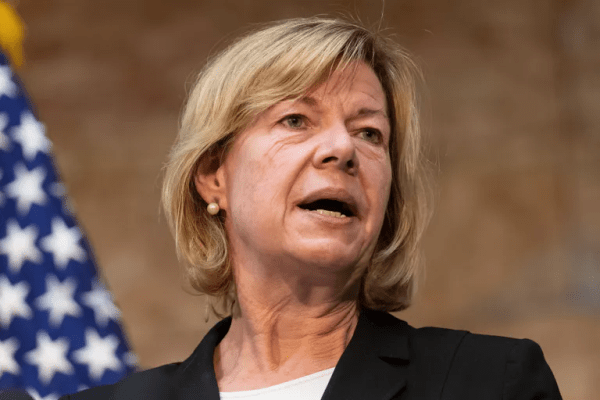
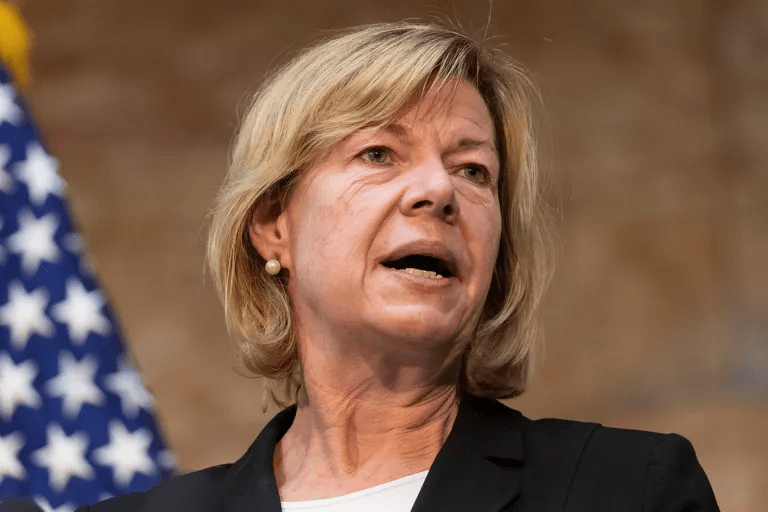
In a closely contested Senate race in Wisconsin, Republican candidate Eric Hovde is heavily investing in ads targeting incumbent Sen. Tammy Baldwin (D-WI) and her longtime partner.
When asked by CNN if she believes Hovde aims to remind voters of her sexual orientation, Baldwin responded, “I think he is.”
The ads feature Baldwin’s partner, Maria Brisbane, who heads a private wealth management division at Morgan Stanley, questioning Baldwin’s ethics while subtly highlighting her sexual orientation.
One ad shows a woman in her kitchen stating, “Baldwin’s in bed with Wall Street,” referencing the senator’s relationship with Brisbane. In other instances, Brisbane is labeled Baldwin’s “girlfriend.”
All these ads convey a similar dual message, funded by a significant influx of cash from Republican sources and Hovde’s own wealth.
While Democrats are expected to outspend Republicans overall in the Senate race, Hovde and his supporters have reserved $51 million for advertising from October 1 through Election Day, compared to $39 million for the Democrats.
Hovde’s latest advertisement twists Baldwin’s previous statements against her, featuring a 2009 Senate hearing where she discussed domestic partner benefits.
“Married members must disclose important information about their spouse’s income, investments, gifts, and debts. Surely the public interest would require that these obligations apply to partners of gay and lesbian officeholders,” Baldwin states in a C-SPAN clip.
The ad’s narrator then contrasts this with a recent debate where Baldwin, addressing Hovde, said, “Stay out of my personal life,” highlighting that she and Brisbane are not married.
Baldwin further asserted, “And I think I speak for most Wisconsin women that he should stay out of all of our personal lives.”
Despite Baldwin’s arguments, she faces challenges regarding financial disclosures related to her partner. She clarified to CNN that, unlike a previous domestic partnership, she is not required to disclose Brisbane’s clients due to a lack of a legally recognized relationship. The couple does own a $1.3 million condominium in Washington together.
Baldwin condemned Hovde’s tactics as a dog whistle, designed to distract from his own financial conflicts tied to owning a $3 billion bank.
“I disclose everything I’m required to,” she stated. “I think he’s trying to divert attention from his own questionable judgments.”
“Imagine him on the Banking Committee, regulating banks,” she added. “This is a serious conflict of interest he wants to deflect from.”
Hovde’s ad campaign also targets the transgender community, linking Baldwin to claims about allowing men to compete in women’s sports and supporting a clinic that allegedly provides transgender therapy to minors without parental consent, which has been proven false.
For the latest headlines affecting LGBTQ+ communities worldwide, subscribe to the LGBTQ Nation newsletter.
On a scorching hot day in Las Vegas, George Escarero was on a water break from knocking on doors in one of the city’s sprawling gated communities.
The gay, longtime banquet server at the Mirage, whose first language is Spanish, estimated the temperature at 105 but said, “That’s how we go, just walk and walk and walk and sweat and drink water, and if they cuss us out, kind of ignore it. We’re just there to open up, you know, so people can open up their eyes and just see it.”
“In Michigan, it really does feel like democracy is on the line,” says Progress Michigan’s Denzel McCampbell.
Escarero is one of an “army” of canvassers deployed by the Culinary Workers Union in Nevada and was adamant that “it’s time for a big change.”
Your LGBTQ+ guide to Election 2024
Stay ahead of the 2024 Election with our newsletter that covers candidates, issues, and perspectives that matter.DailyWeeklyGood News
“Instead of taking stuff away and making the rich richer,” Escarero shared from his pitch, “Kamala is there to help out, and she knows what we’re going through because she was one of us.”
“Kamala Harris was middle class, like all of us,” he said. “She was a hard worker, started from the bottom, worked her way up. They cannot, like, say, ‘Well, you know what, Kamala, you got juiced in.’ No, she worked from the bottom.”
Escarero said his experience meeting with voters was “probably like 50% are really nice, and 50%” the ones who cuss him out.
Culinary UnionGeorge Escarero, banquet server at The Mirage, canvasses on a hot summer day in Las Vegas. | Culinary Union
Those numbers track with election polls in Nevada, which show an electorate evenly divided between Vice President Kamala Harris and former President Donald Trump supporters in a swing state that could determine the outcome of a dead-heat presidential election.
Nevadans have an unpredictable history at the polls. Out of the last 12 national elections, the state split six to six voting for a Democratic or Republican presidential candidate, while the margin for Democrats has narrowed in every election since Obama won in 2008. President Joe Biden carried the state by just 2 points in 2020.
Share Your Opinion
What are you feeling as we approach Election Day?
Anxiety
Excitement
Sadness
Relief
JoyResultsVote
While Democrats hold majorities in the State House and Senate, Nevadans chose conservative Republican Joe Lombardo for governor over Democratic incumbent Sisolak in 2022. However, U.S. Sen. Jackie Rosen, a Democrat running for her second term this year, holds a narrow lead over Trump-endorsed Republican Sam Brown.
Adding to the voter volatility: an electorate where unaffiliated voters outnumber both Democrats and Republicans in the state.
In 2018, Nevada voters approved a new Automatic Voter Registration system, mandating the Department of Motor Vehicles register new voters or those with lapsed party registration as “unaffiliated” unless they opt out or choose a party.
AVR created 142,484 new Nevada voters in 2020; less than a third chose to call themselves Democrats or Republicans.
It’s a new, mostly young pool of voters open to persuasion and put off by the status quo, said Nevada state Rep. Cecelia González (D), who identifies as queer and bisexual and is running for a second term in the Nevada Assembly.
“Younger voters and people of color really feel alienated by this two-party system, and they really connect with candidates that meet voters on a more personal level, right?” she said. “The shift reflects a growing frustration with traditional party politics and a desire for candidates who speak to the real issues, and not just these partisan talking points.”
The 32-year-old, of Mexican and Thai descent, says she feels the same frustrations. ” Because I’m younger, that’s where I focus on to try to get out the vote.”
Cecelia GonzálezNevada State Rep. Cecelia González (D) speaks with a student in her district in Las Vegas | Cecelia González
18 to 34 year olds make up a whopping 30% of registered voters in Nevada and are the largest block after those over 55, who are historically less persuadable but more inclined to vote than their younger peers. Less than half of the youngest cohort claim Democratic or Republican party allegiance.
While she’s running as a Democrat, González says she knows where those voters are coming from when they meet on the campaign trail.
“They identify with me not just because I’m a woman, not just because I’m Mexican or Latino or Asian. It’s the fact that I resonate with these lived experiences because I come from the same backgrounds.”
“Young people, Latinos, and Asian communities are really what’s going to get the vice president and Walz across the finish line,” she said.
As for canvassing the day we spoke, González said door-knocking was off the table.
“It’s so hot. It’s literally 114 today,” she gasped.
Even before the large influx of unaffiliated voters, party loyalty was on the decline in Nevada. The state’s libertarian “live and let live” ethos has further blurred the distinction between Democrats and Republicans.
That’s reflected in some of the most progressive LGBTQ+ policies and legislation in the country, and it’s one reason the Human Rights Campaign, the country’s largest LGBTQ+ advocacy group, is targeting “equality voters” in Nevada, hoping to appeal to Democrats, Republicans and unaffiliated voters alike in their swing state efforts to get voters to the polls.
But no constituency is a monolith, including the fast-growing Latino population, whose rapid growth has helped transform Nevada into a majority-minority swing state.
The minority share of the population in Nevada rose to just over 54% with the last U.S. Census. Meanwhile, the percentage of the non-Hispanic white population in the state continues its historical decline, dropping from over 83% in 1980 to just 46.4% in 2022.
Those facts haven’t translated, however, to guaranteed loyalty to Democrats, who in years past — as defenders of civil rights and the working class — could count on Latino voters. Their once-uniform support has narrowed and fractured.
The shift is even greater among young Latino men in Nevada: 53% of male Latino voters ages 18 to 34 support Trump while just 40% support Harris. Similar numbers among Latino men ages 35 to 49 add up to a major deficit in a key constituency that could tip the election.
It’s why getting face-to-face with those voters before Election Day is the “number one priority” for both González and George Pappageorge, Secretary-Treasurer of the Culinary Union and lead organizer of what he proudly calls “the largest walk program in the state of Nevada.”
“They come and work for the union,” Pappageorge said of the hundreds of canvassers on leave of absence from their day and night jobs, including guest room attendants, cocktail and food servers, porters, bellmen, cooks, bartenders, and laundry and kitchen workers from the union’s membership.
“They work six days a week. They have Friday off and they’re out in the heat, getting chased by dogs and knocking on doors to turn out the vote,” he said.
The Culinary Union and its affiliates represent more than 60,000 workers in the state, with members from 178 countries. Estimates put the number of LGBTQ+ hospitality workers at one in five, and the union is one of the largest healthcare consumers in the state, with coverage provided for more than 145,000 Nevadans.
Who is elected in any election — locally, statewide, or nationally — has a direct bearing on the union’s ability to thrive, or survive.
A second Trump administration, Pappageorge said, would be “a threat to our existence.”
“This is a guy that jokes with his billionaire buddies about firing striking workers, who brags about crossing picket lines and really has a lot of promises, a lot of promises. But the problem with Trump is that he lies, and he lies a lot.”
Ted Pappageorge, Secretary-Treasurer of the Culinary Union, speaks with a fellow member at a get-out-the-vote meeting in Las Vegas.
“Look, if the election was today, we think Trump would win,” Pappageorge said, “but the election is not today, and our job is to make sure that here in Las Vegas we are contesting every single vote. We’re knocking on every single door. We’re talking to every single person in that household, to union members and their family members, and we’re driving the votes.”
“When you have those kinds of conversations” with voters, Pappageorge said, “you have an opportunity to drive votes and persuade folks. And we think these votes are winnable.”
“But we’ve got to do the work,” he added. “It’s going to be extremely close.”
Escarero, the banquet worker, agreed, sharing, “I even get goosebumps. But I feel, even though it’s going to be a tight, I know she’s going to win.”
Asked what Harris’ pledge to fight for “the freedom to love who you love” meant to him, the longtime union member paused and asked, “To me?”
Then he started to cry.
“I was living the life that it wasn’t,” Escarero said through tears. “I had to fake — I had to fake who I was, and now we have a freedom. Now we can get married. No discrimination. Do the military.”
“That’s why I get very emotional, because I had a tough life, because I had to act like somebody that I wasn’t. You know what I mean?”
With people cursing and dogs chasing him, Escarero shared what kept him going through the hot days canvassing.
He remembered “a knock not too long ago” when he asked a middle-aged white woman, “‘If you don’t mind,’ I said, ‘What side are you on?’ I said, ‘Do you have a plan? Are you on the Trump side or…?”
“‘Oh no, no, no, no, honey,’” she interrupted, pointing to a small Harris-Walz sign in her car. “‘You see my sign out there in the window?’ She goes, ‘Give me a big one and I’ll put it in the front yard.’”
“Let’s fight for our rights,” Escarero said, before heading back out into the heat.
Subscribe to the LGBTQ Nation newsletter and be the first to know about the latest headlines shaping LGBTQ+ communities worldwide.
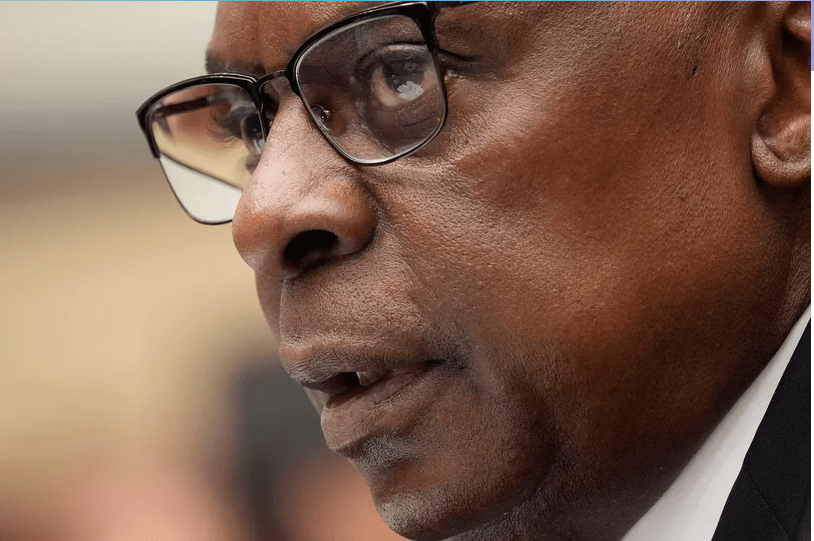
The Department of Defense has announced that 800 military members who were discharged under Don’t Ask, Don’t Tell (DADT) have received upgrades to honorable discharges.
Defense Secretary Lloyd Austin shared the news today, highlighting that just over a year ago, the Department began proactively reviewing the records of former service members discharged due to their sexual orientation under DADT. These individuals may have been eligible for an upgrade to their discharge status or a change to their reason for separation but had not yet applied for the change.
“After a year of exceptional work, the Military Department Review Boards directed relief in 96.8% of the 851 cases that they proactively reviewed,” Austin said.
This marks a significant step in addressing the injustices faced by LGBTQ+ service members during the DADT era.
Don’t Ask, Don’t Tell (DADT) was a 1990s policy that prohibited gay and bisexual individuals from serving openly in the military. Under this policy, service members couldn’t openly declare their sexual orientation, but the military was also barred from actively investigating, harassing, or discriminating against non-straight personnel. While it aimed to provide some level of protection, the policy still enforced secrecy and led to the discharge of countless LGBTQ+ service members.
An estimated 14,000 service members were separated under Don’t Ask, Don’t Tell (DADT) with less-than-honorable discharges before the policy was repealed in 2011. These discharges meant that veterans received fewer benefits from the Department of Veterans Affairs, including assistance with home loans, tuition, and healthcare.
Last year, a group of veterans filed a civil rights lawsuit against the Department of Defense, seeking to overturn their less-than-honorable discharges. The lawsuit argued that many veterans, discharged because of their actual or perceived sexual orientation, were given a discharge status or separation codes publicly linked to “homosexuality,” depriving them of the benefits they earned through their service.
Veterans with less-than-honorable discharges often face significant hurdles when applying for jobs, apartments, and loans, as they are required to present their DD-214 discharge papers — documents that can involuntarily out them as LGBTQ+ every time they are shown.
“This case is not about damages,” said Jocelyn Larkin, one of the lawyers involved in the lawsuit. “It’s about changing that piece of paper because the impact of changing it is so incredibly consequential for our clients.”
This past January, Reps. Robert Garcia (D-CA), Mark Pocan (D-WI), and Chris Pappas (D-NH) sent a letter to Secretary Austin urging him to expedite the process of upgrading less-than-honorable discharges for LGBTQ+ service members. They noted that many veterans who sought upgrades have experienced a prolonged, burdensome process that often required legal help, and that many were unaware they even had the option to seek an upgrade.
Today, Secretary Austin reported that 96% of the service members separated under DADT have now received honorable discharges. “We will continue to strive to do right by every American patriot who has honorably served their country,” Austin said.
To stay up-to-date on the latest news shaping LGBTQ+ communities worldwide, subscribe to the LGBTQ Nation newsletter.

















You must be logged in to post a comment.