Ohio Governor Approves Ban on Transgender Students Using Preferred Bathrooms
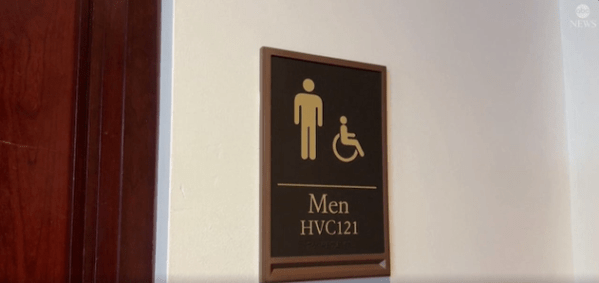
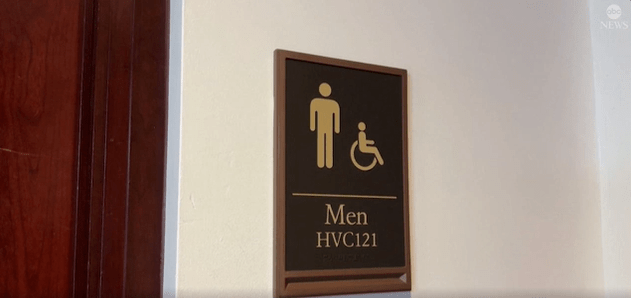
Texas Transgender Community Fights Back After Capitol Bathroom Ban
Residents of Odessa, Texas, are speaking out after the city council amended a local ordinance to ban transgender individuals from using public restrooms that align with their gender identity. Meanwhile, in Ohio, Republican Governor Mike DeWine has signed a law banning transgender students from using bathrooms that correspond to their gender identity. The new legislation mandates that students in K-12 schools, as well as colleges and universities, must use the restroom or facility designated for their sex assigned at birth.
The law clarifies that it does not prohibit schools from constructing single-occupancy restrooms and allows individuals of the opposite gender to enter a bathroom to assist someone else, if necessary.
MORE: Congressional Bathroom Ban Adds to Growing Transgender Policy Debate
Ohio now joins at least 14 other states in restricting transgender individuals from using bathrooms that match their gender identity, according to the Human Rights Campaign.
Supporters argue that the ban addresses concerns about student privacy and safety, while critics contend that it fuels baseless fears about transgender students and could put them at greater risk of discrimination or harm.
Governor DeWine’s office did not respond to ABC News’ request for comment prior to the bill’s signing. However, in the summer, he told reporters that he was reviewing the “specific language” of the legislation.
“I’m supportive of kids being able to use bathrooms that align with their gender assigned at birth for their protection, but I’ll need to review the specific language of the bill,” DeWine told reporters.
Transgender healthcare, bathroom access, sports participation, and other related issues have become central to the Republican legislative agenda across the country in recent years. This trend has led to a surge in anti-LGBTQ bills, with hundreds introduced during the 2024 legislative session alone, according to the American Civil Liberties Union.
DeWine has occasionally bucked the state’s Republican leadership on transgender matters. In December 2023, he vetoed a bill that would have banned gender-affirming care for transgender youth, including restrictions on puberty blockers, hormone therapy, and surgeries.
As a Florida elementary school grapples with a growing measles outbreak, the state’s top health official is providing advice that contradicts scientific consensus, potentially putting unvaccinated children at risk of contracting one of the most contagious pathogens on Earth, according to clinicians and public health experts.
In a letter to parents at a Fort Lauderdale-area school following six confirmed measles cases, Florida Surgeon General Joseph A. Ladapo failed to urge parents to vaccinate their children or to keep unvaccinated students home as a precaution.
Instead of following the “normal” recommendation that parents keep unvaccinated children home for up to 21 days — the incubation period for measles — Ladapo stated that the state health department “is deferring to parents or guardians to make decisions about school attendance.”
Ladapo’s controversial decision continues a pattern of defying public health norms, especially regarding vaccines. Last month, he called for halting the use of mRNA coronavirus vaccines, a move widely condemned by the public health community.
Ben Hoffman, president of the American Academy of Pediatrics, criticized Florida’s guidance, stating that it contradicts longstanding and widely accepted public health recommendations for measles, a disease that can lead to severe complications, including death.
“It contradicts everything I’ve ever heard and read,” Hoffman stated. “It goes against our policy and what the Centers for Disease Control and Prevention would recommend.”
In 2024, measles outbreaks have surged, with the CDC recording at least 26 cases across 12 states, doubling the count from the previous year. Apart from the six cases identified in the Florida school, instances have been documented in Arizona, California, Georgia, Maryland, Minnesota, Missouri, New Jersey, New York City, Ohio, Pennsylvania, and Virginia.
The surge in measles outbreaks is attributed to the increasing number of parents seeking exemptions from childhood vaccinations. This trend has emerged in the wake of political opposition to COVID-19 mandates and widespread dissemination of misinformation regarding vaccine safety.
In January, the CDC issued a caution to healthcare providers to remain vigilant for additional measles cases. Contagion can occur from four days before the onset of a rash until four days after.
Because measles virus particles can persist in the air and on surfaces for up to two hours after an infected individual departs, up to 90 percent of non-immune individuals may contract measles if exposed. Those who have been infected or have received both doses of the MMR vaccine are 98 percent protected and highly unlikely to contract the disease. This is why public health officials usually recommend vaccination during outbreaks.
“The measles outbreak in Florida schools is a result of too many parents failing to ensure their children are protected by the safe and effective measles vaccine,” explained John P. Moore, a professor of microbiology and immunology at Weill Cornell Medical College. “And why is that? It’s because anti-vaccine sentiment in Florida is propagated from the top of the public health hierarchy: Joseph Ladapo.”
When requested for comment, the Florida health department provided a link to Ladapo’s letter.
Ladapo’s reluctance to utilize public health measures mirrors the efforts of conservative and libertarian factions to weaken public health’s capacity to control diseases such as the highly contagious measles. In an outbreak in Ohio that commenced in late 2022, most of the 85 afflicted children were eligible for vaccination, but their parents opted against it, according to officials. In 2021, the state legislature curtailed health officials’ authority to mandate quarantine for individuals suspected of having an infectious disease.
Ladapo’s communication with parents arrives amidst increased concern regarding the public health impacts of anti-vaccine sentiment, an ongoing issue that has resulted in declines in childhood immunization rates in various areas across the United States. Federal data released last year revealed that the percentage of kindergartners exempted from at least one state-required childhood vaccination reached its highest level yet during the 2022-2023 school year, standing at 3 percent.
According to Paul Offit, a pediatric infectious diseases expert at Children’s Hospital of Philadelphia, Ladapo’s neglect to promote vaccination puts children at risk.
“In light of the data showing measles as the most contagious vaccine-preventable disease, surpassing even influenza or COVID, is Ladapo attempting to suggest otherwise?” Offit questioned in an email.
Measles is highly contagious, spreading swiftly, particularly affecting young children who receive their first dose of the vaccine between 12 to 15 months of age. The CDC advises two doses of the MMR vaccine, with the second typically administered between 4 to 6 years old.
When measles vaccination coverage falls below 95 percent, it undermines herd immunity, facilitating the virus’s rapid spread. While Florida’s overall vaccination coverage stands at 90.6 percent, it doesn’t pinpoint areas with potentially lower coverage rates.
If unvaccinated individuals fail to adhere to public health guidelines and stay home from school during the contagious period, the outbreak could escalate dramatically, posing a significant community risk. Patsy Stinchfield, President of the National Foundation for Infectious Diseases and a nurse practitioner in Minneapolis, has firsthand experience managing measles outbreaks, including the 2017 outbreak in Minnesota, which impacted 75 individuals, predominantly unvaccinated children.
Approximately 1 in 5 unvaccinated individuals in the United States who contract measles require hospitalization, as reported by the CDC. Among children, up to 1 out of 20 develop pneumonia, which is the leading cause of death from measles in this age group. Additionally, around 1 child out of every 1,000 with measles experiences brain swelling, which can result in seizures and long-term consequences such as deafness or intellectual disability. Unvaccinated infants who contract measles face an even graver risk, with 1 in 600 developing a fatal neurological complication that may remain latent for years.
This week, officials at Manatee Bay Elementary School, located approximately 20 miles west of Fort Lauderdale, confirmed six cases of measles. According to Broward County Schools Superintendent Peter B. Licata, out of the school’s 1,067 students, 33 have not been vaccinated with the MMR vaccine. During a school board meeting on Wednesday, Licata provided this information. Additionally, a district official mentioned that the district has organized “four vaccination opportunities,” comprising two sessions held at the school and two at other venues within the community.
Florida health officials reported the first case on Friday, involving a third-grade child with no travel history abroad.
School officials redirected inquiries to the Broward County school district, which stated it is adhering to guidance from the state health department.
The regulation safeguards rights to gender-affirming care and asserts that LGBTQ+ identity is not a disorder or illness.
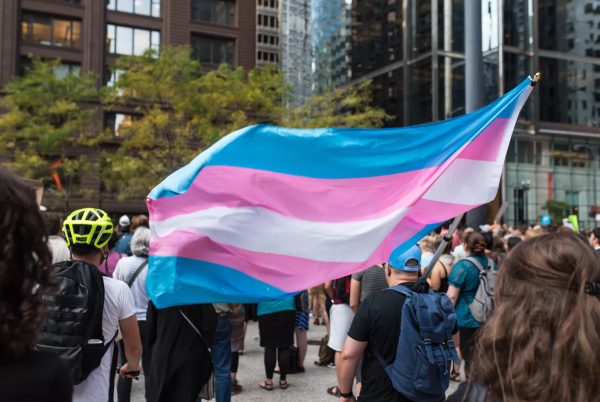
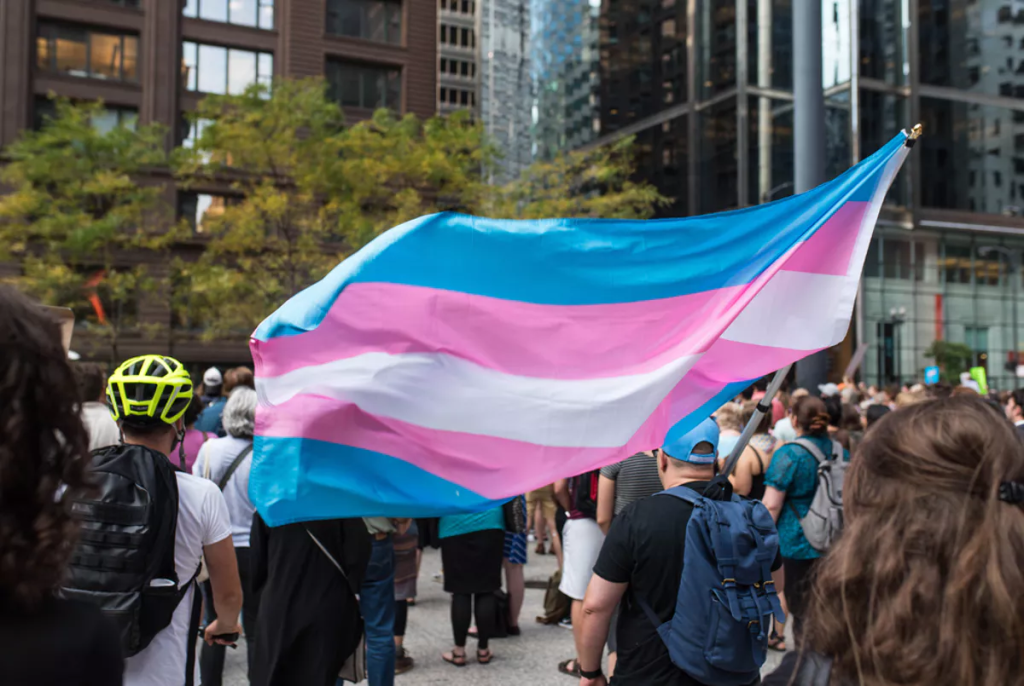
In a 6-1 vote this past Monday, the Columbia, Missouri City Council officially designated the city as a sanctuary for LGBTQ+ individuals. The council meeting was well-attended, with numerous supporters backing the initiative.
Councilmember Roy Lovelady remarked, “We received input from every district in Columbia.”
The ordinance asserts Columbia as a supportive environment for individuals advocating for LGBTQ+ rights. It deems the enforcement of a 2023 state law prohibiting gender-affirming care as the least prioritized for law enforcement within the city. Furthermore, it outlines protocols for collaborating with other jurisdictions attempting to prosecute individuals seeking or facilitating gender-affirming care.
“The City Council asserts that LGBTQ identity is not a disorder, ailment, sickness, deficiency, or inadequacy, and pledges to seek methods to enhance societal outcomes for LGBTQ residents of Columbia,” states the ordinance.
City councilmember Nick Knoth expressed, “It’s regrettable that we must even contemplate this.”
“The LGBTQ+ community is already a minority group in the United States, so having our voices acknowledged, that sense of recognition and safety, is profoundly significant,” emphasized NClusion+ co-founder Anthony Plogger. “It’s absolutely essential.”
According to ABC 17, numerous transgender students from the University of Missouri shared accounts of being bullied and expressed that the ordinance would provide them with a greater sense of security.
“At a meeting, a transgender man recounted the incident of Noah Ruiz, a young transgender man from Camden, Ohio, who was assaulted by three cisgender men in July 2022 after using a women’s restroom,” the transgender individual stated. “Despite explaining to them that he was instructed by the facility owner to use the women’s restroom due to his assigned female gender at birth, his attackers did not relent. Instead, they hurled homophobic slurs at him while assaulting him.”
Councilmember Don Waterman cast the sole dissenting vote against the ordinance. While he expressed agreement with its objectives, he voiced skepticism regarding its effectiveness in mitigating bullying or hate crimes within the city.
“I don’t perceive a necessity for this ordinance,” he stated.
Opponents of the ordinance argued that it would infringe upon their freedom to express their religious beliefs.
Pride Month means it’s time to celebrate all things that encourage the dignity, equality, and increased recognition of the LGBTQ community. So go ahead and wave that big, beautiful rainbow flag—and, just maybe, zero in on a place to buy a great new home.
It’s also the perfect time to pause and recognize that while the United States has come a long way from the 1969 Stonewall riots, which sparked the modern gay rights movement, 2022 is on track to break the record for the number of anti-LGBTQ bills introduced in states across the country, with at least 320 highly restrictive bills pending in state legislatures, according to the rights group Freedom for All Americans.
So, as we do each year, Realtor.com® searched for the most LGBTQ-friendly and affordable cities for homebuyers. We looked well past the big coastal cities famous for their thriving gay scenes—and wildly exorbitant home prices—like New York and San Francisco. Instead, we set our sights on smaller cities that are gay-friendly and budget-friendly, where housing is still modestly priced and the overall community and laws are more welcoming and favorable to lesbian, gay, bisexual, transgender, and queer individuals. All of these places have tons of fun things to do—and prices that are still (relatively) within reach.
Florida first. Alabama follows. Legislators in Louisiana and Ohio are currently debating legislation that is similar to the Florida statute. A similar bill will be his top priority during the following session, according to Texas Governor Greg Abbott.
At least a dozen states across the country are proposing new legislation that, in some ways, will resemble Florida’s recent contentious bill, which some opponents have dubbed “Don’t Say Gay.”








You must be logged in to post a comment.