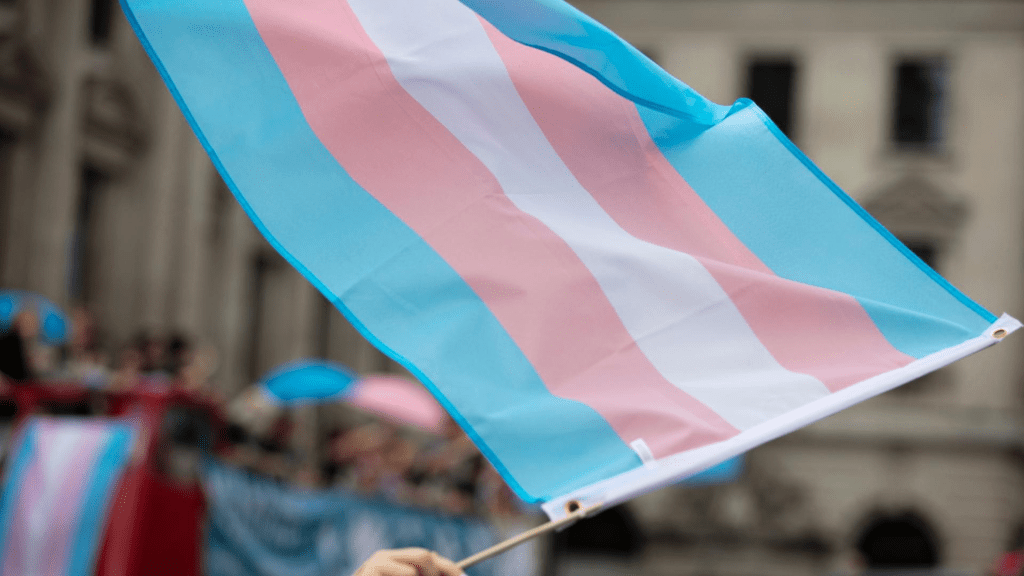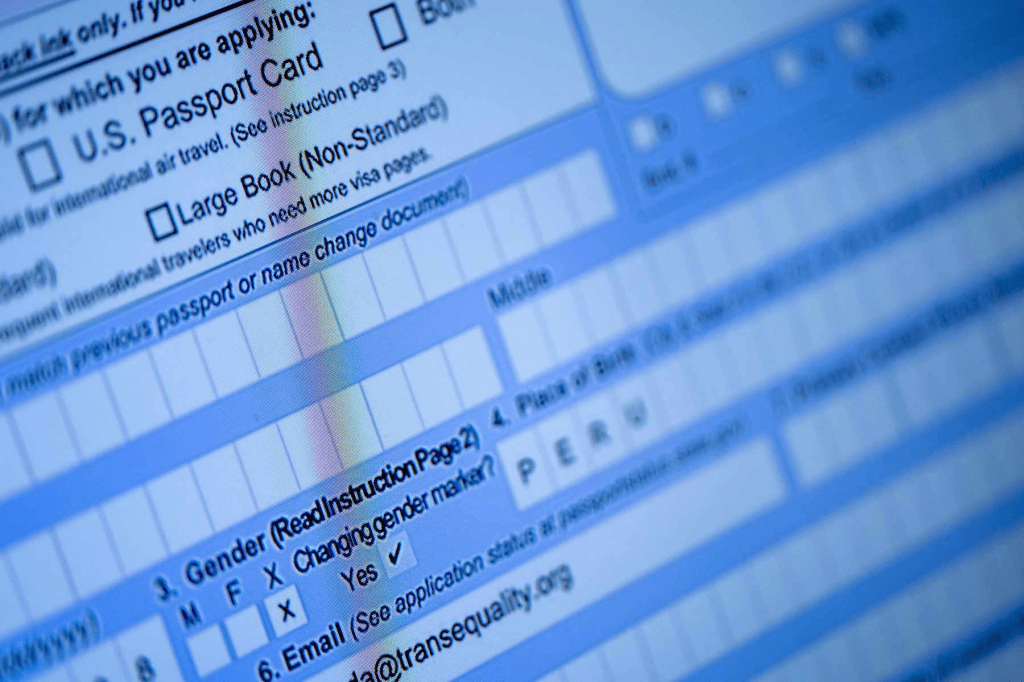
Trump Admin Quietly Changes State Department Page To Indicate It May Invalidate Trans Passports

Read more at Erin in the Morning.

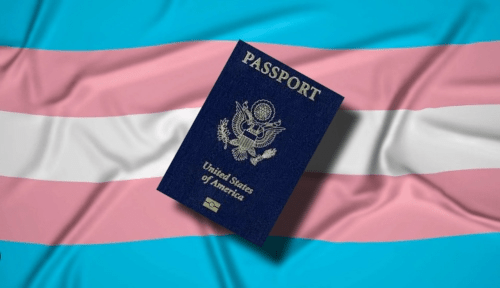
The State Department quietly updated its website this week to signal that the Trump administration may move to invalidate passports held by transgender Americans, following a Supreme Court emergency ruling that overturned earlier protections on gender-marker updates. The change was first spotted by journalist Aleksandra, who writes as Transitics on Substack. Until recently, the website assured transgender passport holders that their documents would “remain valid until [their] expiration date.” As of Thursday morning, that language had been replaced with: “A passport is valid for travel until its date of expiration, until you replace it, or until we invalidate it under federal regulations.” The new phrasing has sparked alarm across the transgender community, with one government source telling Erin in the Morning that there is growing interest within the administration in exploring some level of revocations.

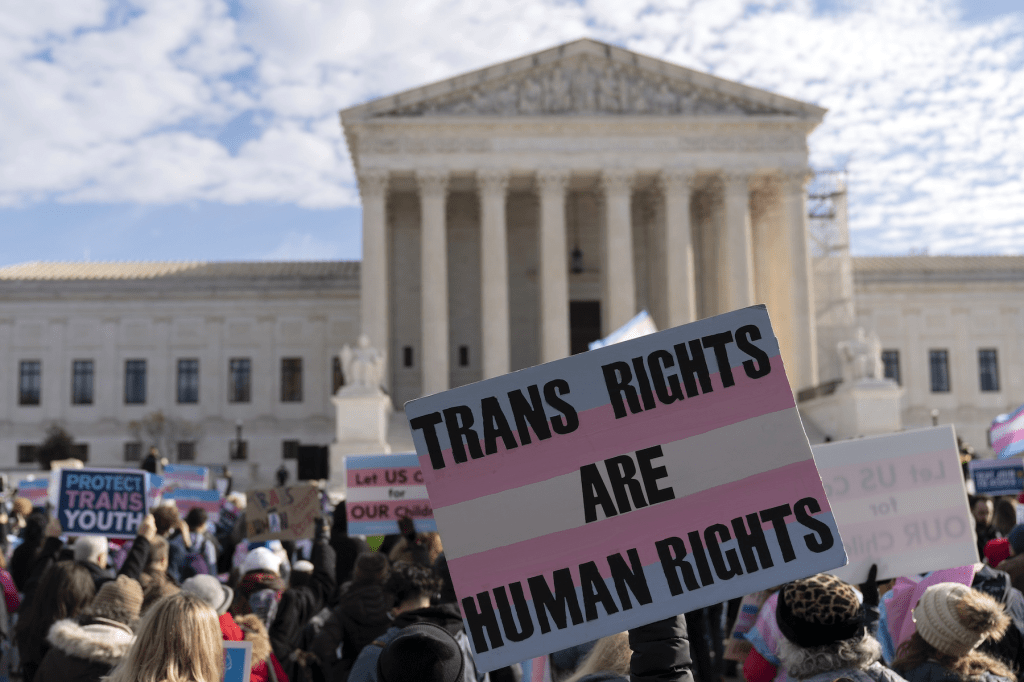
The change comes one week after the Supreme Court issued an emergency ruling allowing the Trump administration’s passport restrictions on transgender people to take effect. In that decision, the Court concluded that the administration is likely to prevail in ongoing litigation, and rejected the argument that the policy was driven by “a bare desire to harm a politically unpopular group.” This conclusion stands in stark contrast to the administration’s own executive orders enabling the passport crackdown, which describe transgender people as inherently “wrong,” “dishonorable,” and “socially coercive.”

“The Court ignores these critical limits on its equitable discretion today. The Government seeks to enforce a questionably legal new policy immediately, but it offers no evidence that it will suffer any harm if it is temporarily enjoined from doing so, while the plaintiffs will be subject to imminent, concrete injury if the policy goes into effect,” responded Justice Jackson in her dissent.

Previously, there were signs that a Trump administration victory in court could trigger efforts to invalidate transgender people’s passports. As first reported by Erin in the Morninga single paragraph in a government filing stated that “if the government prevails in this case and the Department proceeds to revoke and replace passports issued pursuant to the preliminary injunction, the Department will incur additional administrative costs.” At the time, some observers dismissed this as routine legal positioning. But the State Department’s latest website change suggests the administration may, in fact, be preparing to take exactly that step.

One government source familiar with internal discussions said such conversations are indeed underway, though any revocation effort would be difficult to carry out and would almost certainly ensnare some cisgender people by mistake. According to the source, the most likely targets would be passport holders with X markers and those who updated their documents through the affidavit process—a temporary pathway created under lower-court rulings that allowed transgender people to obtain corrected passports if they signed a sworn statement attesting to their gender identity. At the time, EITM reported that the State Department was collecting data on every person who signed the affidavit in case a ruling like this arrived, enabling the government to potentially invalidate those passports. Now, that appears to be one of the avenues the administration is actively considering.

For those who updated their passports before this administration, any attempt to revoke those documents would be far more complicated. The process would be costly, the relevant information is not easily accessible, and such actions would almost certainly run into additional legal hurdles and face separate court challenges. And for anyone whose passport the government does seek to change, the law guarantees an appeal with a hearing on request—an extraordinarily expensive and resource-intensive process for an agency that is not equipped to handle a surge of such cases.

When asked what the process would look like for transgender people traveling overseas if their passports were revoked, the source told EITM that those individuals would likely be contacted and instructed to report to the nearest U.S. embassy or consulate to replace their passport or receive special guidance. Such a requirement could severely disrupt international travel for transgender people. For now, however, any move in this direction appears to be weeks or even months away—if the administration chooses to pursue it at all.

Meanwhile, the case will continue in the lower courts, a process that could drag on for years. And while those courts could, in theory, rule in favor of transgender plaintiffs, recent Supreme Court actions suggest the justices are prepared to side with the administration on virtually any policy targeting trans people. The Court is already set to hear a case in January that will determine whether transgender Americans receive equal protection under the law at all, and the memory of the Skrmetti decision—upholding bans on trans youth care—still hangs heavily over the legal landscape. In the meantime, transgender people in the United States are left to navigate shifting rules in nearly every aspect of daily life under an administration and a Republican Party intent on making that life as difficult as possible.
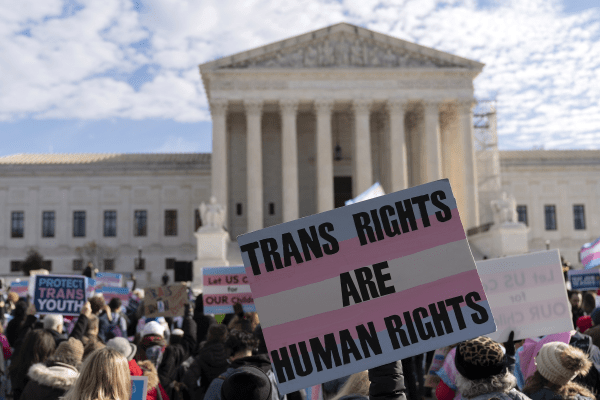
Supreme Court reinstates Trump administration’s transgender passport policy

Read more at The Hill.

The Supreme Court on Thursday ruled President Trump’s State Department can prohibit transgender Americans from listing their gender identity on their passports, for now. 

It hands another legal victory for Trump in his efforts to eviscerate what his administration calls “gender ideology.” The Justice Department brought the emergency appeal after lower courts blocked the passport policy for being rooted in “irrational prejudice.” 

“Displaying passport holders’ sex at birth no more offends equal protection principles than displaying their country of birth—in both cases, the Government is merely attesting to a historical fact without subjecting anyone to differential treatment,” the majority wrote in its unsigned ruling

The ruling appeared to be along the court’s 6-3 ideological lines, though the justices do not have to publicly disclose their votes. 

In dissent, the court’s liberals called the ruling “pointless but painful perversion.” 

“Such senseless sidestepping of the obvious equitable outcome has become an unfortunate pattern,” wrote Justice Ketanji Brown Jackson, joined by Justices Elena Kagan and Sonia Sotomayor. 

“So, too, has my own refusal to look the other way when basic principles are selectively discarded,” the dissent continued. 

Solicitor General D. John Sauer called lower rulings blocking the administration’s policy “untenable,” casting them as infringing on Trump’s constitutional authority over foreign affairs. 

“The President’s choice to revert to prior policy and rely on biological sex—a choice that bound the State Department—should be the last place for novel equal-protection claims or Administrative Procedure Act objections,” Sauer wrote in court filings. 

The State Department policy requires passport holders to use their sex assigned at birth as their sex designation, prohibiting transgender people from matching it with their gender identity. The policy also removed the option for people to select “X,” leaving male and female as the only two options. 

“This new policy puts transgender, nonbinary, and intersex people in potential danger whenever they use a passport,” American Civil Liberties Union (ACLU) attorney Chase Strangio warned in court filings. 

Strangio and the ACLU represent transgender and nonbinary Americans who are suing over the State Department’s changes. 

They argue it violates federal law and constitutional equal protection rights, convincing a federal district judge appointed by former President Biden and later the 1st U.S. Circuit Court of Appeals to halt the policy.  

It marked the latest case implicating Trump’s Day 1 executive order that cracks down on what he calls “gender ideology” to reach the Supreme Court. Previously, the justices issued emergency orders allowing the administration to enforce its transgender troops ban and cancel diversity-linked health grants. 

Trans People Can Now Get Passports Indicating Their Authentic Gender

*This is reported by Planet Trans.

After two weeks of noncompliance with a court order from a class action lawsuit, the State Department’s help page, updated two days ago, indicates that transgender people can get a passport with their authentic gender at least temporarily, as Orr. Vs. Trump moves through the legal process.

On June 17, 2025, U.S. District Judge Julia Kobick in Boston expanded a preliminary injunction she issued in April that allowed six transgender and nonbinary individuals who challenged the policy to obtain passports consistent with their gender identities or with an “X” sex designation while the lawsuit moves forward, Reuters Reports.

Kobick did so after concluding the policy the U.S. Department of State adopted pursuant to an executive order Trump signed likely discriminated on the basis of sex and was rooted in an irrational prejudice toward transgender Americans that violated the U.S. Constitution’s Fifth Amendment.

Will Trump appeal this to the Supreme Court? According to the Trump Anti-LGBTQ+ Executive Order Litigation Tracker he hasn’t done that yet.

Judge grants “critical victory” to trans people suing Trump for his anti-trans passport policy

*this is being reported by LGBTQNation

U.S. District Judge Julia E. Kobick has issued a partial preliminary injunction against the Trump administration’s executive order barring trans people from changing the gender markers on their passports.

Kobick’s decision mandates that six of seven trans and nonbinary plaintiffs in a lawsuit filed by the American Civil Liberties Union (ACLU) receive passports that accurately reflect their gender identities. This includes allowing an X marker for those who do not identify as male or female.

“The Executive Order and the Passport Policy on their face classify passport applicants on the basis of sex and thus must be reviewed under intermediate judicial scrutiny,” Kobick stated, as reported by the Associated Press. “That standard requires the government to demonstrate that its actions are substantially related to an important governmental interest. The government has failed to meet this standard.”

She agreed that the plaintiffs could successfully prove the administration’s order is “based on irrational prejudice toward transgender Americans,” is “arbitrary and capricious,” and “was not adopted in compliance with the procedures required by the Paperwork Reduction Act and Administrative Procedure Act.”

“This ruling affirms the inherent dignity of our clients, acknowledging the immediate and profound negative impact that the Trump administration’s passport policy would have on their ability to travel for work, school, and family,” said Jessie Rossman, legal director at ACLU of Massachusetts, in a statement. “By forcing people to carry documents that directly contradict their identities, the Trump administration is attacking the very foundations of our right to privacy and the freedom to be ourselves. We will continue to fight to rescind this unlawful policy for everyone so that no one is placed in this untenable and unsafe position.”

The ACLU also plans to file a motion requesting Kobick’s decision apply to all trans and nonbinary people across the country.

“This decision is a critical victory against discrimination and for equal justice under the law,” said Li Nowlin-Sohl, senior staff attorney for the ACLU’s LGBTQ & HIV Project. “But it’s also a historic win in the fight against this administration’s efforts to drive transgender people out of public life. The State Department’s policy is a baseless barrier for transgender and intersex Americans and denies them the dignity we all deserve. We will do everything we can to ensure this order is extended to everyone affected by the administration’s misguided and unconstitutional policy so that we all have the freedom to be ourselves.”

The ACLU filed Orr v. Trump in February after the president signed an executive order declaring that there were only two immutable genders: male and female. Afterward, Secretary of State Marco Rubio ordered that all passport applications requesting an “X” gender marker be suspended, as well as any applications listing a person’s gender identity rather than the sex they were assigned.

“I thought that 18 years after transitioning, I would be able to live my life in safety and ease,” trans man and plaintiff Reid Solomon-Lane said in a statement when the lawsuit was filed. “Now, as a married father of three, Trump’s executive order and the ensuing passport policy have threatened that life of safety and ease. If my passport were to reflect a sex designation that is inconsistent with who I am, I would be forcibly outed every time I used my passport for travel or identification, causing potential harm to my safety and my family’s safety.”

The lawsuit argues the passport policy is a violation of the Constitution’s Equal Protection and Due Process clauses and is also a violation of the First Amendment by compelling speech from trans, nonbinary, and intersex passport holders.

The Trump administration has argued the policy will not harm anyone.

“Some Plaintiffs additionally allege that having inconsistent identification documents will heighten the risk that an official will discover that they are transgender,” the Justice Department said. “But the Department is not responsible for Plaintiffs’ choice to change their sex designation for state documents but not their passport.”

Judge blocks Trump administration from passport changes affecting some transgender Americans

*This is being reported by WFAA.

A federal judge on Friday blocked the Trump administration from enacting a policy that bans the use of “X” marker used by many nonbinary people on passports as well as the changing of gender markers.

In an executive order signed in January, the president used a narrow definition of the sexes instead of a broader conception of gender. The order says a person is male or female and it rejects the idea that someone can transition from the sex assigned at birth to another gender. The framing is in line with many conservatives’ views but at odds with major medical groups and policies under former President Joe Biden.

U.S. District Judge Julia Kobick, who was appointed by President Joe Biden, sided with the American Civil Liberties Union’s motion for a preliminary injunction, which stays the action while the lawsuit plays out.

“The Executive Order and the Passport Policy on their face classify passport applicants on the basis of sex and thus must be reviewed under intermediate judicial scrutiny,” Kobick wrote. “That standard requires the government to demonstrate that its actions are substantially related to an important governmental interest. The government has failed to meet this standard.”

The ACLU, which sued the Trump administration on behalf of five transgender Americans and two nonbinary plaintiffs, said the new policy would effectively mean transgender, nonbinary and intersex Americans could not get an accurate passport.

“We all have a right to accurate identity documents, and this policy invites harassment, discrimination, and violence against transgender Americans who can no longer obtain or renew a passport that matches who they are,” ACLU lawyer Sruti Swaminathan said.

In response to the lawsuit, the Trump administration argued the passport policy change “does not violate the equal protection guarantees of the Constitution.” They also contended that the president has broad discretion in setting passport policy and that plaintiffs would not be harmed by the policy, since they are still free to travel abroad.

The State Department is blocking new passports for trans Americans

*This was originally published on 19thNews.org

The State Department is no longer issuing U.S. passports with “X” gender markers and has suspended processing all applications from Americans seeking to update their passports with a new gender marker. This suspension, made in response to President Donald Trump’s executive order signaling his administration’s opposition to gender diversity, affects all transgender and nonbinary Americans, including those currently traveling or overseas. 

The agency says that it will issue guidance on previously issued passports with an “X” marker and that more information will be available on its travel website. However, no formal policy has been released, which is fueling confusion among trans and nonbinary people trying to update their documents. 

That includes Ash Lazarus Orr, a trans activist living in West Virginia. Orr applied to update their name and gender marker on their passport on January 16 — days before Trump was sworn into office. He paid $300 for expedited service, but his paperwork wasn’t processed until January 22. When Orr called the agency’s hotline for Americans waiting on passports who have upcoming international travel, they were told that the agency had no guidance to offer and that their documents had been “set aside.” 

Now Orr is without his passport, without his birth certificate and without his marriage license. Over the phone, he was told that his documents are being held in San Francisco, where they were originally being processed. 

“They have my documentation that is very personal to me, and they cannot tell me if I’m going to be getting that back,” they said. 

The American Civil Liberties Union has warned trans and nonbinary Americans that if they submit a new application to change the gender marker on their passport, they risk losing access to their passport and supporting documents while their application is being processed. An ACLU spokesperson attributed this information to reports of discrimination received through the organization’s online intake form, as well as direct conversations with people who have described this happening to them. 

Trump’s executive order directed federal agencies to require that government-issued identification documents, including passports and visas, reflect sex assigned at birth. Since this order states that it is the policy of the United States to recognize two sexes, male and female, and that these sexes are not changeable, “the department’s issuance of U.S. passports will reflect the individual’s biological sex,” an agency spokesperson said in an emailed statement on Friday evening. Under Trump’s executive order, “sex” explicitly excludes gender identity.

Secretary of State Marco Rubio reportedly instructed agency staff on Thursday to implement that executive order as it pertains to passports immediately, as first reported by The Guardian and The Intercept. Now, Orr is without his personal identity documents six weeks before pre-planned international travel and in the middle of planning a move out of West Virginia. 

The Biden administration made it easier for trans and nonbinary people to update their federal identity documents. Accurate and consistent gender markers on identity documents dramatically reduces the risk that trans people will face violence, harassment and discrimination, according to the Movement Advancement Project, which tracks LGBTQ+ policy.

The dismantling of this policy has radical consequences, said a former State Department official who spoke on condition of anonymity due to fear of lingering retaliation from the agency under the Trump administration. Not only does it force transgender people to carry identity documents that don’t accurately reflect their identity, this move also signals globally that U.S. policy on trans rights is moving backward, they said. 

“The confusion that this decision creates is intentional. It is designed to make things harder for trans and nonbinary people,” they said.

When The 19th called the National Passport Information Center on January 23 to ask for more information, an employee on the technical support desk said that the State Department is aware of Trump’s executive order and that guidance will be posted online once information is available. 

Erin Ryan Heyneman, a nonbinary person living in Massachusetts, called that same hotline. They don’t need to renew their passport; they said they just wanted to find out what was going on. Although they feel safe in their state, which has nondiscrimination protections in place for LGBTQ+ people, they still felt the need to act because of the way confusion can endanger their wider community.

“People just really don’t know who to believe or what to believe,” they said. More LGBTQ+ people need to seek information from trusted sources, they said. But when trying to seek that information from an official source, Heyneman was met with more uncertainty. The employee on the phone was sympathetic, but they had no information about passports being confiscated. 

As Orr waits to learn whether they will get their passport back due to federal anti-trans policies, they are facing down the prospect of leaving their home because of transphobia within the state. 

West Virginia has become increasingly hostile to trans and nonbinary people like himself amid a surge in anti-trans rhetoric across the country, and Orr expects a surge in state anti-trans bills introduced in West Virginia’s next legislative session. After receiving death threats and recently being attacked inside a men’s bathroom, he doesn’t leave the house without his spouse. 

“I can’t stay in the state. And it’s heartbreaking, because I love it here. I love the people, but it is truly, at this point in time, it’s either I leave or I die,” they said.

Blog at WordPress.com.

Up ↑