Wanna pee in Idaho? First, get a forced DNA test to prove your gender, state GOP lawyer suggests

Read more at LGBTQ Nation.

A recent court hearing on a lawsuit brought by six transgender Idahoans against the state’s latest bathroom bill has revealed just how unworkable the draconian new law would be. In fact, to enforce it, an attorney for the red state said restroom users might need to undergo forced DNA testing.

House Bill 752, which passed the Legislature this year with only Republican votes, prohibits trans people from using public restrooms that match their gender identity, both in government-owned buildings and private businesses that serve the public.

The law is set to take effect July 1.

The suit says the Idaho law — one of three recently passed by Republican legislatures that impose criminal penalties on offenders — violates the plaintiffs’ constitutional rights to due process, equal protection, and privacy. The challenge was brought by the American Civil Liberties Union (ACLU), the ACLU of Idaho, and Lambda Legal.

At the hearing, the judge in the case — Chief U.S. District Judge for the District of Idaho, Amanda K. Brailsford — questioned the state over how exactly they would determine the sex at birth of an individual accused of violating the law, The Idaho Capital Sun reports.

Kell Olson, a trans attorney for Lambda Legal, told the judge that if police confronted him and asked for his ID, officers would find that his ID lists him as male. Brailsford noted, for the record, that most of the plaintiffs suing the state also have state-issued IDs with gender markers that are aligned with their gender identity. 

Idaho Solicitor General Michael Zarian suggested the solution was simple: “There is DNA testing.”

Pressed on whether DNA testing required consent, Zarian hedged, saying that wasn’t necessarily the case and that he doubted the accused would be asked to undergo DNA testing on the spot.

Lambda’s Olson told the court that DNA testing usually requires a warrant. 

Both the Idaho Sheriffs’ Association and the Idaho Fraternal Order of Police called the proposed law impractical and unworkable.

There is no “clear or reasonable way” to determine a person’s sex at birth during a field contact without engaging in “invasive and inappropriate” questioning or searches, said one police group president.

Following the hearing, ACLU of Idaho attorney Emily Croston said the state didn’t help itself on the issue of enforcement.

“I don’t think the state has an answer for how you identify someone’s biological sex,” Croston told reporters. “Are we just going to look at folks as they enter a restroom and determine whether we think they look enough like a man or a woman? That’s ridiculous.”

The hearing only reinforced the plaintiffs’ argument that the law is unconstitutionally vague, and police organizations’ earlier doubts that it’s practically unenforceable.

Proving the former claim, Solicitor General Zarian tried using an exemption in the law to demonstrate how reasonable the ban is. The law allows individuals to use restrooms that don’t align with their sex if they are in “dire need” of going to the bathroom, he pointed out.

Pressed by Judge Brailsford, Zarian acknowledged that it “might be difficult to prove someone had a dire need,” but that vagueness, he claimed, doesn’t mean that the law itself is unconstitutionally vague.

Idaho law enforcement didn’t have to similarly tie themselves in knots when they formally opposed the ban during debate in the Legislature earlier this year. Both the Idaho Sheriffs’ Association and the Idaho Fraternal Order of Police called the proposed law impractical and unworkable.

There is no “clear or reasonable way” to determine a person’s sex at birth during a field contact without engaging in “invasive and inappropriate” questioning or searches, said one police group president.

The ACLU notes that analyses of public safety data have found policies inclusive of transgender people’s access to public accommodations have no impact on rates of harassment or violence, while policies that restrict access actually increase the risk of harassment and violence. Trans people are four times as likely as their cisgender peers to be the victims of violence.

Nine bathroom bans have passed by red state legislatures in recent years, but Idaho’s is the only one to cover private businesses as well as government buildings. A first offense is a misdemeanor, with up to one year in prison; a second offense jumps to a felony, with up to five years in prison.

A fourth violation would constitute a third felony conviction, punishable under Idaho’s persistent violator statute by a mandatory minimum of five years and up to life in prison. 

Homosexuality is now illegal in 66 nations

Read more at Erasing 76 Crimes.

In adopting an anti-gay law on June 11, 2026, the West African nation of Niger strengthened a wave of anti-homosexuality legislation and proposed legislation in Africa that has reversed, at least temporarily, the slow decrease in the number of nations with anti-gay laws.

Previously, its neighbors Burkina Faso and Mali criminalized homosexuality in 2025. Together with a March 2025 decision by the Trinidad and Tobago Court of Appeal to reinstate that country’s laws against homosexuality, these countries have turned back a wave a progress on decriminalization.

Niger’s new anti-LGBTQ law comes in the wake of Senegal’s enactment of a law in March that provides for up to 10 years in prison for gay sex and the Ghana parliament’s approval of a bill last month that, if approved by Ghana’s president, would imprison people for up to three years if they “identify” as LGBTQ.

Before those reversals, the number of nations with laws against gay sex had fallen to 63 from more than 90 at the beginning of the 2000s. The latest countries to end the criminalization of same-sex intimacy are St. Lucia in 2025; Namibia, Niue, and Dominica in 2024; Mauritius and the Cook Islands in 2023; and Singapore, Antigua & Barbuda, Saint Kitts & Nevis, and Barbados in 2022.

For more information, see the Erasing 76 Crimes page “List of 66 countries where homosexuality is illegal.” There you will find:

  • A full list of nations with anti-homosexuality laws.
  • Recent history of many nations repealing or overturning those laws and a few nations newly adopting them.
  • A comparison of this site’s list with the similar list compiled by ILGA, the International Lesbian, Gay, Bisexual, Trans and Intersex Association.

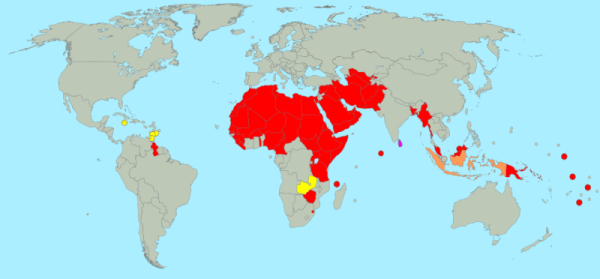
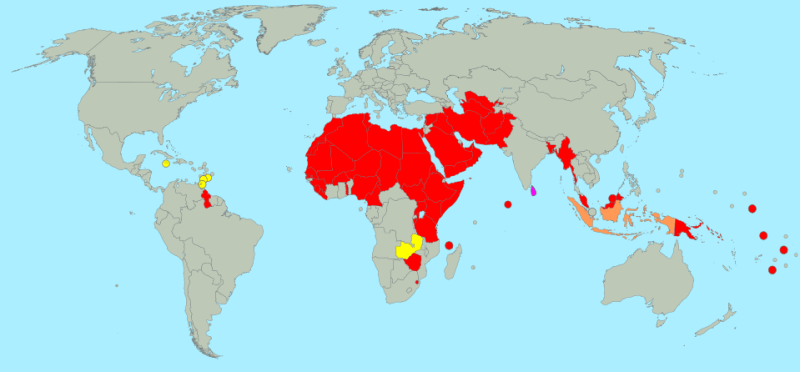
Map of the 66 countries where sexual relations between people of the same sex are illegal. YELLOW countries have sodomy laws that are currently being challenged before local courts. Sri Lanka, in PINK, currently has a bill before its parliament to repeal its sodomy law. Indonesia, in ORANGE, has laws that criminalize homosexuality only in some subnational jurisdictions. All states in RED have nationwide sodomy laws and no known legislative efforts or court challenges to remove them. 

Red states push conservative rebrands of Pride month in backlash to LGBTQ+ celebrations

Read more at The Guardian.

June is widely marked as gay Pride month – when LGBTQ+ communities march to protest discrimination and celebrate their identities in the month that the modern US gay liberation movement was born out of the 1969 uprising at New York’s Stonewall Inn – although not so much in certain Republican-led states this year.

Some Republican governors have suddenly come up with alternative labels for the month, which both supporters and opponents view as counterprogramming.

The governors of Indiana and Tennessee have rebranded June as “nuclear family month”, explicitly to celebrate units made up of “one husband, one wife and any biological, adopted or fostered children”.

In Alabama, it is now titled “strong families month”, apparently to promote Father’s Day, which falls in June in the US. However, despite the fact that millions of LGBTQ+ people are from and go on to create strong families, including households with two fathers, the Republican governor, Kay Ivey, was nothing if not explicit, declaring: “Homes led by a father and mother provide children with the structure and discipline necessary to succeed throughout life.” She also proclaimed that the father was the head of such households.

The governors have not specified that these labels are meant to replace Pride month for LGBTQ+ communities, but the sociopolitical message is loud and clear to most.

Josh Coleman, president of Central Alabama Pride, which has 42 events planned over two weeks, said the month’s celebrations, which culminate with a parade on 13 June and festival 14 June, won’t be affected by the proclamation.

“It’s not lost upon LGBTQ people when elected leaders don’t recognize or value the visibility of the community,” he said. “That’s why Pride started in the first place – to make sure the community had a community.”

The governors of Utah and Arkansas have deemed it “fidelity month”, which emphasizes fidelity to faith, country and family, however, without comment on how those families might be composed.

But last week, the X account of Arkansas’s governor, Sarah Huckabee Sanders, posted a link to an article about her proclamation that declared: “Another Red State is Counter-Programming Pride Month.”

She and the other governors have not answered questions from the Associated Press about why their proclamations are all set in June.

The second Trump administration has seen an escalation in conservative state and federal attacks on transgender rights, in particular, especially access to gender-affirming medical care, efforts to undermine the legality of same-sex marriage and bans on LGBTQ+ Pride flags.

Republican lawmakers in at least four other GOP-controlled states have introduced legislation this year calling for June to be “fidelity month”.

An organization pushing that concept was founded by Robert P George, a Princeton University professor of jurisprudence who has long been a leader on conservative thought. His group did not respond to interview requests.

He told the National Catholic Register about the idea in 2023, saying “nobody gets a monopoly on a particular day or a particular month”.

June Pride celebrations, which often include parades, festivals and performances, began in 1970 to mark the first anniversary of the violent police raid on the Stonewall Inn, a New York City LGBTQ+ bar, and have since expanded to cities worldwide.

“You can call it whatever you want, but one thing you’re not going to do is take away our pride or take away our joy,” said Jordan Braxton, co-president of USA Prides, an association of Pride celebration organizations.

Every Democratic president since Bill Clinton in 1999 has signed a Pride proclamation each year, while no Republican president has.

Last year, Donald Trump’s education department began declaring June to be “Title IX month” – and using it to open investigations into schools that allow transgender students to use the bathrooms or locker rooms that align with their gender identities.

One of the few GOP governors who has proclaimed LGBTQ+ Pride in June is Utah’s Spencer Cox, who did so in 2021, 2022 and 2023. In 2024, he deemed June a “month of bridge building” before switching to ”fidelity month” this year.

A poll released this week found that a two decade-long increase in acceptance of same-sex marriages and relationships has flattened, largely because more Republicans oppose them.

Last year, the Illinois Republican congresswoman Mary Miller introduced a resolution to make June “family month” – and to derecognize Pride month, saying: “Americans are inundated with perverse Pride Month displays and events throughout the month of June that denigrate the nuclear family.” It never got a vote.

Kevin Roberts, president of the conservative Heritage Foundation, said in an interview that it was good to have the conservative recognitions because Pride celebrations “were going so far as to make it difficult to celebrate traditional marriage”.

The resolution approved by Tennessee’s legislature and governor does not mention Pride month specifically, while saying the “nuclear family is under attack in our beloved State and nation”.

But Lakie Derrick, a conservative activist who wrote the measure with a friend, said she did indeed target it to June to counter Pride month, which she said “goes against” American values.

“We’re just reclaiming the culture, and there’s no better month to do that than in a month where the culture says we’re gonna celebrate something so opposite to what we know to be right,” Derrick said.

Marina Lowe, who leads legal and legislative affairs for the LGBTQ+ advocacy group Equality Utah, rejected the zero-sum game, saying that Pride month is not the antithesis of other values-based recognitions. Many LGBTQ+ people also value faith and family, she said, so “I don’t think that these positions need to be in conflict with one another.”

Meanwhile, thousands of events celebrating LGBTQ+ pride and campaigning for equality are already going on as usual across the US in a drench of rainbow colors.

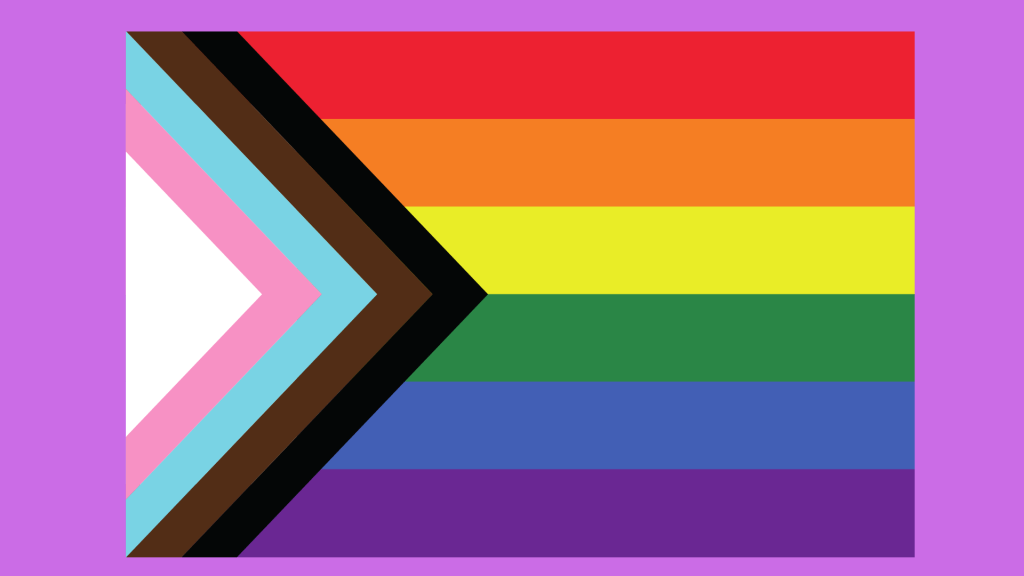
In New York City last Saturday, an “eve of Pride” event saw the cathedral of St John the Divine illuminated in the colors of the rainbow and the transgender Pride flag as the pews were packed.

Same-sex marriage support dips by 3 points from 2025: Gallup

Read more at The Hill.

Americans’ support for same-sex marriage has dipped in the last year, according to a new poll.

In the Gallup poll, 65 percent of respondents said same-sex marriages “should be valid” under the law, while 32 percent said same-sex marriages “should not be valid” under the law. Three percent had no opinion.

Last May, 68 percent said same-sex marriages “should be valid” under the law and 29 percent said the marriages “should not be valid.” In May 2024, 69 percent backed the legality of same-sex marriages and 23 percent did not.

In recent years, Republican lawmakers in some states have called for the Supreme Court to reconsider its landmark Obergefell v. Hodges decision made in 2015, which guaranteed same-sex marriage nationwide. A number of GOP senators in 2022 voted against the Respect for Marriage Act, which protects same-sex and interracial marriages.

More recently, conservatives have increasingly targeted transgender people through efforts to limit access to gender-affirming care and restrict transgender children competing in sports categories aligned with their gender.

Tension boiled over between House Republicans concerning gay rights earlier this week, with GOP Rep. Mike Lawler (N.Y.) and former Rep. George Santos (R-N.Y.) pushing back on Rep. Andy Ogles (R-Tenn.) who made a now-deleted social media post saying that “homosexuality has no place in America.”

“Happy Nuclear Family Month,” Ogles added in the message, seemingly referencing Pride Month, which is celebrated in June.

In response to his Republican colleague, Lawler said, “Homosexuality exists. In America.”

“In fact, Andy, you have family, friends, neighbors, colleagues and constituents who are gay and lesbian. It doesn’t make them less than or somehow unworthy of being an American. What an absolutely idiotic statement to make.”

Ogles later told The Hill that he had not approved the post.

The Gallup poll took place from May 1 to 17, featuring 1,001 adults and a margin of error of 4 percentage points.

America’s best and worst places to be gay and trans? Check your ZIP code

Read more at Yahoo.

Where is the best place to be gay in America? Increasingly, it’s a question of ZIP code.

While Massachusetts and California are known for championing supportive policies and rolling out the welcome mat to lesbian, gay, bisexual, transgender and queer residents, other areas like Arkansas and Tennessee that have unfurled a wave of LGBTQ+ rollbacks have a less hospitable reputation.

Today, that divide is wider than ever, according to the latest State LGBTQ+ Business Climate Index from Out Leadership shared exclusively with USA TODAY.

The index suggests America’s acceptance of gay people has continued a steep decline, reversing many of the civil rights advances that increased the well-being and safety of the LGBTQ+ population, Out Leadership’s founder and CEO, Todd Sears, told USA TODAY.

The national average score in the index has fallen for four straight years. The 10 highest-ranked states have held steady or improved, but the lowest-ranked have dipped more, and the middle ground is quickly disappearing, according to Sears.

On the index’s 100-point scale, the typical state scores just 53.1 and 26 states fall below 60, he said.

“When we started this index eight years ago, the goal was to show Americans the issues that were still live but invisible − HIV criminalization, conversion therapy, where state legislators actually stood − because once marriage equality passed, a lot of people assumed the work was done. It wasn’t,” Sears said. “What we’ve documented since is a genuine regression.”

4-year slide in gay and trans equality

Each year for the last eight, Out Leadership has released the index to map out where the 9% of U.S. adults who identify as lesbian, gay, bisexual, transgender, or something other than heterosexual are least and most welcome. Created as an inclusion reference guide for business leaders, LGBTQ+ people soon began consulting it to figure out where they should – and should not – live and work.

For years, the index has measured such factors as the impact of state government policies and prevalent attitudes, from support for young people and families to health access and safety to nondiscrimination protections.

This year, Out Leadership added 12 new indicators to gauge the impact of anti-LGBTQ+ policies such as bathroom access restrictions, pronoun and name-use prohibitions and restrictions on adult gender-affirming care, Sears said.

Out Leadership decided to make the additions after the Supreme Court struck down state conversion therapy bans.

“For the last several years, we simply weren’t capturing forces that were already hitting LGBTQ+ citizens and their families,” Sears said.

As a result, the national average score fell five points to 60.87 out of 100. And the index shows even greater geographic polarization.

The gap between the most welcoming state – Massachusetts at 93.23 – and the least – Arkansas, 28.06 – widened from 55 points in 2019 to 65 points.

“Something Americans had come to take for granted, that LGBTQ+ people exist and deserve civil rights, has been thrown back into question,” Sears said.

From California to Arkansas, how states rank

Out Leadership’s new criteria boosted some states. California rose in the rankings for its leadership in pro-LGBTQ+ policy while Illinois gained ground for providing protections for access to gender-affirming care, among other measures.

Consideration of these additional factors tanked the rankings of some states. Bathroom bans, health care restrictions and other state measures pummeled Florida while Texas slipped because of anti-trans legislation.

Even LGBTQ+ friendly states fell in the rankings.

Maine, for example, declined, not because it passed unfriendly laws, but because the new indicators rewarded states that enacted protections that it had not. South Dakota, on the other hand, gained five positions because it has not adopted much of the anti-LGBTQ+ legislation that other states have.

Bottom line, half of America is increasingly unfriendly to the LGBTQ+ population, Sears said. “The math shows it,” he said.

Surge in anti-LGBTQ+ sentiment

From Pride parades to the federal legalization of same-sex marriage, for decades, America’s acceptance of gay people was on a steady march.

Bias against gay people declined from 2007 to 2020 and was on track to disappear altogether, according to a 2022 study by Tessa Charlesworth, an assistant professor of management and organizations at Northwestern University’s Kellogg School of Management and Harvard psychologist Mahzarin Banaji.

Then in the early 2020s, the trend reversed. Anti-gay bias jumped 10 points from 2021 to 2024.

By Gallup’s measure, acceptance of LGBTQ people – at an all-time high four years ago – has fallen every year since as public approval of LGBTQ+ legal protections recedes and transgender rights become a culture-war flashpoint.

The political shift has spilled over into the broadly supportive corporate world, which – despite a track record of backing the nation’s LGBTQ+  population – shrank Pride Month budgets, flashed fewer rainbow flags and downplayed solidarity amid the “go woke go broke” backlash against Target and Bud Light and pressure from activists to roll back LGBTQ+ commitments.

They’re out, their employers were proud. Then came the DEI backlash.

According to Charlesworth’s research, bias has been rising in most states since 2020.

Nearly two-thirds of states have seen an increase in implicit bias towards gay people – automatic judgments made about others based on sexual orientation – and three-quarters have seen an increase in explicit bias – the attitudes, prejudices, or stereotypes toward a person or group on a conscious level, she said.

“Geography certainly plays a role in the overall amount of bias toward gay, lesbian and trans people,” Charlesworth told USA TODAY. “There are systematic patterns across places that shape where is more tolerant and accepting versus more hostile.”

Even socially progressive cities in conservative states are no longer as safe or welcoming, Sears said. Surveys show many LGBTQ+ residents in red states have considered uprooting their lives or have already fled.

“Over the next 12 to 18 months, companies are going to feel this, and many already are,” he said. “There’s a talent flight underway. LGBTQ people are leaving anti-LGBTQ states, families of trans, nonbinary, and gay young people are relocating, and employees are going back into the closet. Whatever someone is hiding at work, they’re not bringing their full self, and they’re not bringing everything they could to the company. That’s why the economic impact will be felt for a long time.”

5 highest-ranking states for LGBTQ+

1. Massachusetts

2. New York

3. Connecticut

4. New Jersey

5. Illinois

5 lowest-ranking states for LGBTQ+

50. Arkansas

49. Tennessee

48. Idaho

47. South Carolina

46. Florida

Corrections & Clarifications: Out Leadership updated its methodology which resulted in some score and ranking changes for states in the index.

This article originally appeared on USA TODAY: The best and worst places for gay people? See where your state ranks

Maine kills anti-trans ballot measure over forged & invalid petition signatures

Read more at LGBTQ Nation.

Maine’s Secretary of State Shenna Bellows (D) ruled on Tuesday that Protect Girls’ Sports in Maine, an anti-transgender campaign, submitted invalid and forged signatures in its bid for a November ballot measure that sought to ban trans students from school sports and restrooms. As a result, the measure will not appear on the voting ballot this November, Erin in the Morning reported.

The campaign, bankrolled by out-of-state billionaire Richard Uihlein, submitted 79,692 signatures — well over the 67,682 required to qualify. However, a court review of the campaign’s petitions in May invalidated 12,542 of the signatures, leaving the campaign 532 signatures short of the required number.

Some of the signatures were thrown out because the collectors didn’t witness the signing (as required by state law). Others were invalidated because the signatures did not match the voters’ signatures on voter registries, because the signatories signed more than once, because the signers weren’t registered voters, or because the signatures were forgeries. Collectors were paid $3 to $4 per signature.

Though Bellows approved the signed petitions as valid in March, following a court evidentiary review, she ruled on Tuesday that the petitions fell short of the required number of signatures to get the measure on the November ballot.

The ballot measure would’ve defined a student’s sex as “a biological status as male or female recorded at birth on the person’s original birth certificate,” effectively ending any legal recognition of trans students, not just in the cases of restrooms and sports. It also would’ve carved trans students out of legal protections enshrined in the Maine Human Rights Act (a statewide anti-discrimination law), and would’ve allowed cisgender students to sue any school that allowed trans students to use sex-segregated school spaces alongside them.

In a statement celebrating Bellows’ ruling, David Farmer, campaign manager for the Campaign for Free and Fair Schools coalition, said, “The paid, out-of-state signature gatherers and the billionaire who paid to try to put this question on the ballot failed to follow the rules. We believe that the appeals process and the reviews by the Secretary of State are working as the law intends. They are protecting the integrity of our elections.”

Even if voters had approved the measure in November, it would likely have faced legal challenges, since it would’ve resulted in trans students and their families facing harassment and discrimination.

Transgender journalist Erin Reed noted that Uihlein is a major funder of the American Principles Project, a right-wing conservative organization that has spent tens of millions on anti-trans election ads. Reed also noted that an independent analysis published by Atmos and HEATED found that 80% of the nation’s 45 major anti-trans organizations have gotten funding from billionaires or fossil fuel companies. 

Reed also noted that anti-trans ballot measures will go in front of voters in both Washington and Colorado.

“Both efforts are also funded by conservative megadonors,” she wrote, “and both are part of the same strategy that produced the Maine initiative: Use ballot initiatives to roll back trans rights in states whose elected legislatures have refused to do so.”

Uihlein and Protect Girls Sports in Maine’s efforts came after Maine Gov. Janet Mills (D) repeatedly refused to comply with the president’s extortive attempts to withhold federal education funding in retaliation for the state’s trans-inclusive school policies.

The U.S. Department of Justice has sued Maine, challenging the state’s trans-inclusive interpretation of Title IX. That legal battle is currently ongoing.

Ghana lawmakers approve bill criminalizing LGBTQ ‘promotion’

Read more at Reuters.

Ghana’s parliament on Friday ‌approved a new bill that criminalizes the so-called promotion of LGBTQ activity, part of a broader crackdown on sexual minorities in West Africa.

The Human Sexual Rights and Family Values Bill, ​2025, passed by a voice vote after the Constitutional and Legal Affairs ​Committee unanimously recommended its adoption, first deputy speaker Bernard Ahiafor said.

The ⁠bill was introduced last year shortly after President John Dramani Mahama took office. Lawmakers ​from Mahama’s political party, the National Democratic Congress, had been urged by religious ​leaders and other supporters of the bill to vote on it, and Mahama will now face pressure to sign it.

Lawmakers passed an earlier version of the bill in 2024, under Mahama’s ​predecessor, President Nana Akufo-Addo, but it faced legal challenges and Akufo-Addo never ​signed it into law.

The bill approved on Friday maintains the existing penalty of up to three ‌years ⁠in prison for same-sex sexual acts. It also bans “funding, sponsorship or promotion” of LGBTQ acts, with prison terms ranging from three to five years. And it introduces a “duty to report” prohibited LGBTQ acts to a police officer or other authorities, ​with violators facing ​up to three ⁠years behind bars.

The bill further amends Ghana’s Extradition Act of 1960 to make offences under the new law extraditable offences.

West ​Africa has seen a raft of anti-LGBTQ legislation in recent ​months.

Senegalese President ⁠Bassirou Diomaye Faye in March signed a bill doubling the maximum prison term for same-sex sexual acts to 10 years and criminalizing any efforts to promote homosexuality.

In September last ⁠year, lawmakers ​in Burkina Faso voted to criminalize same-sex sexual ​acts for the first time and to criminalize “behaviour likely to promote homosexual practices and similar practices.”

Venezuelan makeup artist who was deported to El Salvador seeks asylum in Spain: ‘I feel safe here’

Read more at The Guardian.

One of the Venezuelan men sent from the US to El Salvador’s most notorious prison by Donald Trump has moved to Spain to request asylum after concluding that he did not feel safe back home and did not trust US authorities sufficiently to return to fight his legal case.

Andry José Hernández Romero left Venezuela for Spain in early February and is due for his first asylum hearing in court there in a few days, hoping that the country’s liberal approach to immigration will afford him kinder treatment than the US or his own country had provided him, he revealed to the Guardian in his first interview since leaving for Europe.

The 33-year-old hairstylist and makeup artist originally came to the US from his home in western Venezuela to escape persecution as a gay man and the risks of opposing the government of its then president Nicolás Maduro.

Speaking in a video call from southern Spain, Hernández is still recovering from the trauma of his experiences in Venezuela, the US and El Salvador, but expressed optimism about his new surroundings.

“I can say I feel safe here, this is a place where I can be reborn, heal my mental health, let people know about my abilities as a makeup artist and find the happiness they took away from me more than a year ago,” he said in the interview conducted in Spanish.

Hernández gained global attention last year when he and 252 other Venezuelan migrants were abruptly deported from the US without due process or any word to their families, and in defiance of a judge, and flown by the Trump administration to the brutal mega-prison for alleged terrorists in El Salvador known as Cecot.

Images of the bewildered and terrified group being roughed up and having their heads shaved, and then lined up on the ground with bowed heads, flashed around the world, a new symbol of the returning US president’s harsh anti-immigration agenda. They were held incommunicado for months in cages and initially given no prospect of release under allegations of having ties to a Venezuelan gang, which Hernández and the others vehemently denied.

International human rights groups found Hernández and the other detainees faced psychological and physical abuse, including cases of sexual violence, before they were suddenly released in a prisoner swap last summer and returned home.

Hernández received a jubilant reception. He began trying to rebuild his life, and he told the Guardian he initially promised his family he would never leave Venezuela again.

However, after a few weeks he began fearing for his life once more after a knock on his family’s door in Táchira.

“I had received a call from the vice-president’s office and I was offered a job, which I declined, and then they came to my house and my family had to tell them I wasn’t there,” Hernández said. He had actually hidden during the visit.

He explained that before the vice-president’s office could even specify the kind of job it wanted him to do, he refused it. It was August 2025 and Delcy Rodríguez ran the office. He didn’t want to have ties to a government that had persecuted him as a gay man, he said, and having officials coming to the house just made him convinced he was going to be surveilled by the authorities.

He was back home, surrounded by his family, feeling protected during a time that he had expected to be a rough transition into society, back at work and even making new friends.

Months later, Rodríguez was sworn in as the acting president of Venezuela following the capture of Maduro by the US military. Around the same time, Hernández made up his mind.

“That’s when I made the decision to come to Spain,” he said.

He has some relatives there and Venezuelans do not require a visa to enter Spain, while those fleeing persecution are allowed to request asylum.

“I have heard that Spain is a country with open policies towards immigrants and the LGBTQ+ communities and that they don’t experience discrimination,” said Hernández. He feels secure and optimistic about making another fresh start.

In March 2025, the Trump administration controversially invoked the Alien Enemies Act of 1798 to order the expulsion of Hernández and 136 other men who ended up in Cecot. Hernández was accused of being a member of the Venezuelan gang Tren de Aragua, which Trump designated a terrorist group and bizarrely accused of staging an invasion of the US.

It didn’t matter that Hernández had explained to immigration officials that he had fled Venezuela due to persecution stemming from his sexual orientation. His crown tattoos above the names of his parents were deemed proof of gang affiliation. He has denied the charge throughout his ordeal and his attorneys noted he has no criminal record.

Lindsay Toczylowski, co-founder of the Immigrant Defenders Law Center (ImmDef), who is acting as Hernández’s lawyer, said that in nearly two decades of helping asylum seekers from around the world fleeing violence, she had “never been in a situation where it was not safe for a client to seek protection in the US”.

The US federal judge James Boasberg ordered the Trump administration to facilitate the return of the men deported under the Alien Enemies Act to El Salvador and allow them to receive the due process that he ruled they had been denied. But most recently, a court of appeals blocked Boasberg from investigating whether the Trump administration knowingly defied his order from March 2025 to return the planes carrying Hernández and the other Venezuelan deportees.

“From a legal perspective, we believe that it’s important for him to clear his name if he wants to travel to the US in the future. But from a moral perspective, he was accused with absolutely no evidence of being part of something that he has never had anything to do with. No one should be accused of something like that without any option to refute the allegations,” said Toczylowski.

“There are no immediate options available for him [and the others] to finally have their day in court and be able to clear” their names, she added.

In Spain, where Hernández now waits for his first asylum interview, scheduled for the end of this month, officials have defied the increasingly harsh immigration policies being embraced in Europe and the US. Earlier this year, the Spanish prime minister, Pedro Sánchez, announced that Spain would grant legal status to roughly 500,000 migrant workers, most from Latin America.

Spain has a strong record of taking in immigrants, especially Venezuelans seeking international protection, like Hernández.

According to numbers shared by the Spanish government with the Guardian, Venezuelans made up the highest number of requests for international protection there in 2025. And up to 30 April this year, more than 25,000 Venezuelans have sought asylum in Spain.

Hernández said he is still marked by the trauma he endured during his time at Cecot. For example, when someone approaches him and simply taps him on the shoulder, his mind jumps back to the prison. He still wants to clear his name, though, but doesn’t know how to do so at the moment.

Remarkably, he said: “I don’t hold a grudge against the US. I can’t judge an entire country based on the actions of a group of people like Donald Trump [or] Kristi Noem, but entering the US at this time doesn’t guarantee I will keep my freedom and that is why I will continue to fight my case from Spain.

“Recovering my happiness will only be possible at the right place with the right people.”

Husbands Bryan & Victor moved 4000 miles away from America, but they can’t escape the politics

Read more at LGBTQ Nation.

For an American couple living abroad, you might think 4,000 miles between their adopted home country and the U.S. would help keep the political chaos across the Atlantic on mute.

You’d be wrong, says Bryan McColgan, who’s made a life with his husband in Sweden for the last seven years.

“While it can be easier to ‘turn off’ the political tumult in America, the truth is that America affects the entire world. Even in Sweden, we can’t escape the political and economic repercussions of America.”

McColgan’s husband, Victor, knew Sweden from a study-abroad program in college and loved it. Both men have Swedish ancestry. So the pair decided to pack up and move their lives and dog to Stockholm in 2019.

“Living in a different country means every day is a learning experience,” McColgan says. “After seven years, I am still learning every day, whether it’s the language, how things work, or some aspect of Swedish culture or history. It can be challenging not to feel 100% comfortable all the time, but this is also the best part of living abroad.”

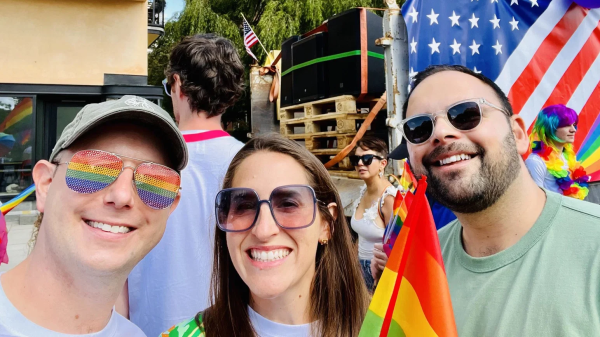
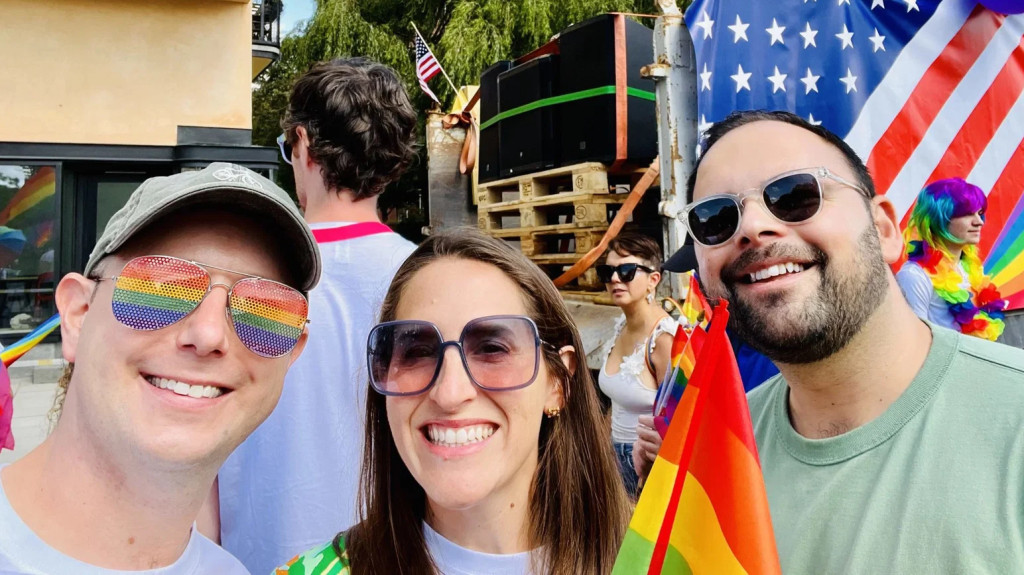
The couple stays connected with their compatriots through a group called Americans in Sweden. That’s how they ended up joining the U.S. Embassy for the Stockholm Pride parade in 2023, along with McColgan’s best friend on a visit to Sweden’s “endless summer.”

“While Stockholm is very dark and cold most of the year, the endless summer sun is a thing of beauty,” McColgan says.

Stockholm enjoys about 20 hours of daylight in peak summer. The parade stepped off that year on one of those “joyful days.”

“People lined up all along the parade route for miles. The American float was extremely popular at this time,” McColgan says. A DJ was spinning American hits while Bryan, Victor, Oriana, and a scrum of Americans in Sweden danced down the parade route.

“Swedes love music, and American music is some of the most popular in Sweden,” he says.

Two years later: record scratch.

The current administration ended the U.S. Embassy’s participation in Stockholm Pride and every other Pride celebration around the world in 2025.

“We have not engaged in any Embassy activities since then,” McColgan says.

Swedes don’t hold Americans responsible for the bad behavior of their government, he explains.

“I haven’t experienced any anti-American attitudes towards Americans in Sweden during my time here. Once I explain my political position and voting record, Swedes understand where I’m coming from and don’t ask me to defend myself.”

While Americans endure their own endless summers with a sundowning president, Bryan and Victor are enjoying Sweden’s “very open and accepting” embrace of them and the LGBTQ+ community.

“There is a respect for privacy and a lack of making LGBTQ+ issues political talking points,” he says. “People live their lives and focus on fixing the big problems that we all face.”

The same “values of equality, family-centricity, and open-mindedness” that Swedish immigrants brought to the U.S. are alive and well where they came from, McColgan says.

“I think the U.S. can learn from that.” 

Who really cares for trans lives in an ‘LGBTQ-friendly’ country?

Read more on The Loop.

Belgium often prides itself on being an LGBTQ-friendly country, yet anti-trans activists hide their transphobia behind superficial pro-trans statements. Rylan Verlooy explores how this paradox affects trans people’s activism. Here, they show how resistance takes the form of everyday acts of educating others, strengthening community spaces, and caring for trans lives

The myth of LGBTQ-friendliness

Belgium is often hailed as an ‘LGBTQ+ paradise‘ because of its comprehensive and inclusive legislation. In 2003, it was the second country worldwide to introduce marriage for registered same-sex couples and, since 2006, adoption rights. Since 2018, trans people have been able to legally change their binary sex marker based on self-determination. Still, Belgium’s LGBTQ-friendly image has been damaged by recent reports on transphobic violence, the persistent exclusion of non-binary people from state recognition, and the rising presence of anti-gender politics targeting trans people.

This poses a contradictory reality for trans people. On the one hand, the state provides some legal protection for some trans people. Trans people are part of Belgian narratives about the country’s LGBTQ-friendliness. On the other hand, transphobia is still widespread and invigorated by anti-gender politics. How can a country celebrate LGBTQ+ inclusion while simultaneously allowing for anti-trans politics?

Anti-trans politics in an ‘LGBTQ-friendly’ country

While the UK and the US are reversing trans rights and introducing anti-trans bills, Belgian anti-trans actors mostly employ a different strategy. Adapting to Belgium’s LGBTIQ-friendly image, they often claim to support trans rights and to empathise with trans people. But at the same time, they push pathologising anti-trans narratives and promote conversion therapy. They commonly describe trans women as ‘biological men’, and trans men as ‘girls with gender dysphoria’, or ‘victims of the woke craze’.

Some Belgian anti-trans actors often claim to support trans rights, but at the same time push anti-trans narratives and promote conversion therapy

Furthermore, they normalise misgendering in the media and in everyday interactions. Being misgendered is often a daily reality for trans people. However, in anti-trans politics, it is a consistent and intentional strategy to deny trans identities. This normalisation of misgendering also affects how friends and family speak about trans people in an increasingly negative way. Non-binary people in particular are the target of ridicule, making it harder for them to open up to families and friends.

The illusion of trans-inclusivity

Anti-trans actors sometimes preface statements with pretend support for some trans rights. Claims such as ‘we respect everyone, also people who transitioned’ allow anti-trans actors to gain legitimacy with a broader public. Indeed, it gives them an aura of trans-inclusivity. Furthermore, their affiliations with self-claimed ‘trans experts’ at universities, research institutes, and hospitals lead the media to present these actors as competent even when they have no professional experience working with trans people. Like other anti-gender actors, Belgian anti-trans actors create scientific-sounding discourse that serves their ideological agenda. Such discourse undermines trans rights – and disregards scientific rigour.

Together with parent organisations, self-declared ‘anti-woke’ academics, and Catholic groups, they form a well-connected network. This network promotes conversion therapy, the restriction or abolition of gender-affirming healthcare, and the exclusion of trans people in sports. However, the ostensible support for trans rights by these actors makes it harder to resist.

Care as radical resistance

Against the backdrop of anti-trans politics, everyday practices of resistance are increasingly important to trans communities. This includes educating others, but also practices of care to support each other and themselves.

Misinformation is a key strategy in anti-trans politics. Educating others on trans issues is therefore increasingly important for trans activists. There is a growing need for a ‘trans 101’; a simple introduction into trans issues and needs. However, many would rather educate people on intersecting injustices instead of constantly focusing on basic information about their trans lives.

Belgium may portray itself as LGBTQ-friendly, but this doesn’t necessarily mean that the country’s trans people are safe in public. Building and maintaining community spaces for trans people is therefore crucial

To care for one another, building and maintaining community spaces is crucial in a society that marginalises trans experiences. During interviews, more and more people reported the need for a welcoming space where trans people can simply exist. Activists want to unite trans people on the dancefloor, in talking groups, or in community kitchens. They emphasised that even though Belgium is seen as LGBTQ-friendly, that doesn’t necessarily mean trans people are safe in public, hence the importance of these trans-inclusive spaces.

Creating a liveable life

Other everyday activist practices include providing haircuts for trans people, cooking together, having movie nights, or acting as ‘queer mother’ offering emotional support to help trans youth navigate society. These everyday examples of care, along with the creation of community spaces, are crucial in sustaining trans people’s survival, and keeping alive the hope of a liveable life amid the lived consequences of anti-trans politics.

Everyday acts of care, such as providing haircuts for trans people or offering emotional support to trans youth, are crucial to keep alive the hope of a liveable life

These everyday practices of care are what Hil Malatino alludes to when he developed the concept of an ‘infrapolitics of care’ that ‘enables both political resistance and intracommunal survival and resistance’. These daily acts of care are a radical political act aimed at trans survival. Indeed, these instances of resistance are often unexpected and messy, but constitute a palpable way to practice solidarity when facing intricate strategies of marginalisation in a country that claims to be LGBTQ-friendly.

Caring for trans voices in research

While my research concentrates on the specific context of Belgium, its results echo the transnational dynamics of anti-trans politics, even in countries not considered LGBTQ-friendly. Trans voices disrupt this image of LGBTQ-friendliness and reveal how anti-trans rhetoric unfolds against the backdrop of a structural exclusion.

To further make sense of anti-trans politics across contexts, it is essential to attend to the voices of trans activists. Listening to their insights can lead to a more robust understanding of the issues at stake in anti-trans politics and the continuous structural transphobia. Their voices reveal the importance of everyday instances of resistance to anti-trans politics and transphobia, because these exclusionary currents affect trans people’s everyday lives.

Blog at WordPress.com.

Up ↑