Red states push conservative rebrands of Pride month in backlash to LGBTQ+ celebrations

Read more at The Guardian.

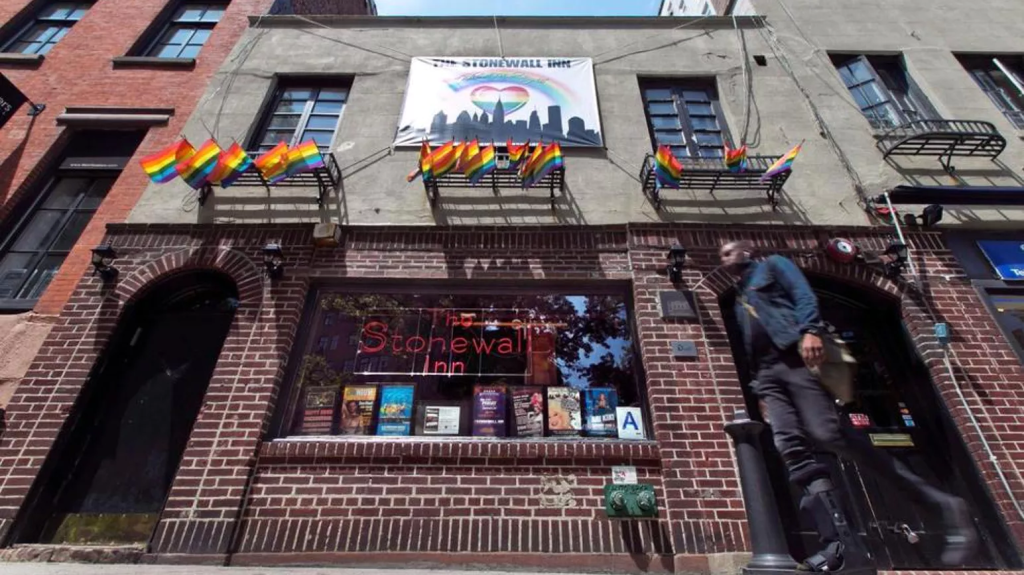
June is widely marked as gay Pride month – when LGBTQ+ communities march to protest discrimination and celebrate their identities in the month that the modern US gay liberation movement was born out of the 1969 uprising at New York’s Stonewall Inn – although not so much in certain Republican-led states this year.

Some Republican governors have suddenly come up with alternative labels for the month, which both supporters and opponents view as counterprogramming.

The governors of Indiana and Tennessee have rebranded June as “nuclear family month”, explicitly to celebrate units made up of “one husband, one wife and any biological, adopted or fostered children”.

In Alabama, it is now titled “strong families month”, apparently to promote Father’s Day, which falls in June in the US. However, despite the fact that millions of LGBTQ+ people are from and go on to create strong families, including households with two fathers, the Republican governor, Kay Ivey, was nothing if not explicit, declaring: “Homes led by a father and mother provide children with the structure and discipline necessary to succeed throughout life.” She also proclaimed that the father was the head of such households.

The governors have not specified that these labels are meant to replace Pride month for LGBTQ+ communities, but the sociopolitical message is loud and clear to most.

Josh Coleman, president of Central Alabama Pride, which has 42 events planned over two weeks, said the month’s celebrations, which culminate with a parade on 13 June and festival 14 June, won’t be affected by the proclamation.

“It’s not lost upon LGBTQ people when elected leaders don’t recognize or value the visibility of the community,” he said. “That’s why Pride started in the first place – to make sure the community had a community.”

The governors of Utah and Arkansas have deemed it “fidelity month”, which emphasizes fidelity to faith, country and family, however, without comment on how those families might be composed.

But last week, the X account of Arkansas’s governor, Sarah Huckabee Sanders, posted a link to an article about her proclamation that declared: “Another Red State is Counter-Programming Pride Month.”

She and the other governors have not answered questions from the Associated Press about why their proclamations are all set in June.

The second Trump administration has seen an escalation in conservative state and federal attacks on transgender rights, in particular, especially access to gender-affirming medical care, efforts to undermine the legality of same-sex marriage and bans on LGBTQ+ Pride flags.

Republican lawmakers in at least four other GOP-controlled states have introduced legislation this year calling for June to be “fidelity month”.

An organization pushing that concept was founded by Robert P George, a Princeton University professor of jurisprudence who has long been a leader on conservative thought. His group did not respond to interview requests.

He told the National Catholic Register about the idea in 2023, saying “nobody gets a monopoly on a particular day or a particular month”.

June Pride celebrations, which often include parades, festivals and performances, began in 1970 to mark the first anniversary of the violent police raid on the Stonewall Inn, a New York City LGBTQ+ bar, and have since expanded to cities worldwide.

“You can call it whatever you want, but one thing you’re not going to do is take away our pride or take away our joy,” said Jordan Braxton, co-president of USA Prides, an association of Pride celebration organizations.

Every Democratic president since Bill Clinton in 1999 has signed a Pride proclamation each year, while no Republican president has.

Last year, Donald Trump’s education department began declaring June to be “Title IX month” – and using it to open investigations into schools that allow transgender students to use the bathrooms or locker rooms that align with their gender identities.

One of the few GOP governors who has proclaimed LGBTQ+ Pride in June is Utah’s Spencer Cox, who did so in 2021, 2022 and 2023. In 2024, he deemed June a “month of bridge building” before switching to ”fidelity month” this year.

A poll released this week found that a two decade-long increase in acceptance of same-sex marriages and relationships has flattened, largely because more Republicans oppose them.

Last year, the Illinois Republican congresswoman Mary Miller introduced a resolution to make June “family month” – and to derecognize Pride month, saying: “Americans are inundated with perverse Pride Month displays and events throughout the month of June that denigrate the nuclear family.” It never got a vote.

Kevin Roberts, president of the conservative Heritage Foundation, said in an interview that it was good to have the conservative recognitions because Pride celebrations “were going so far as to make it difficult to celebrate traditional marriage”.

The resolution approved by Tennessee’s legislature and governor does not mention Pride month specifically, while saying the “nuclear family is under attack in our beloved State and nation”.

But Lakie Derrick, a conservative activist who wrote the measure with a friend, said she did indeed target it to June to counter Pride month, which she said “goes against” American values.

“We’re just reclaiming the culture, and there’s no better month to do that than in a month where the culture says we’re gonna celebrate something so opposite to what we know to be right,” Derrick said.

Marina Lowe, who leads legal and legislative affairs for the LGBTQ+ advocacy group Equality Utah, rejected the zero-sum game, saying that Pride month is not the antithesis of other values-based recognitions. Many LGBTQ+ people also value faith and family, she said, so “I don’t think that these positions need to be in conflict with one another.”

Meanwhile, thousands of events celebrating LGBTQ+ pride and campaigning for equality are already going on as usual across the US in a drench of rainbow colors.

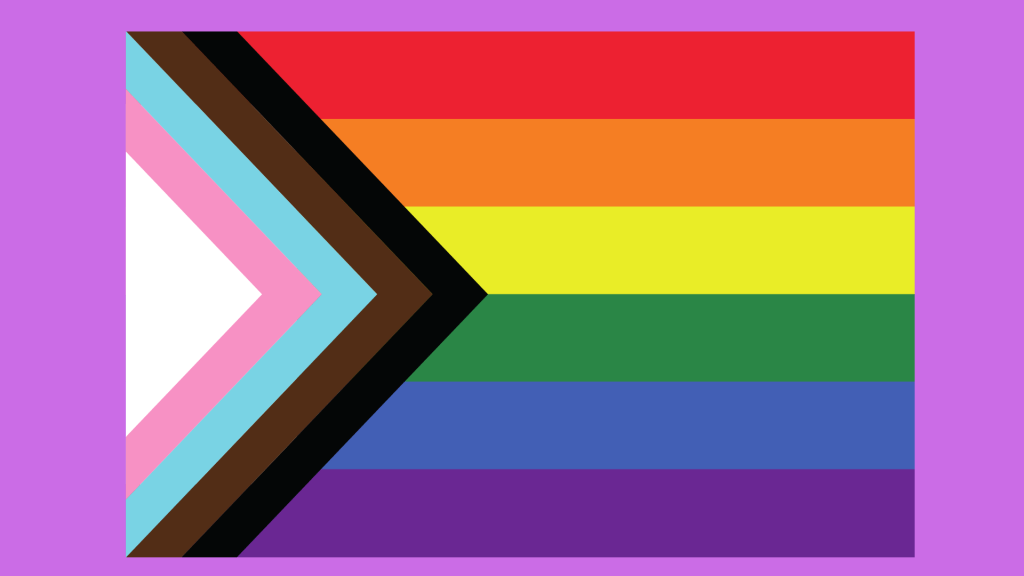
In New York City last Saturday, an “eve of Pride” event saw the cathedral of St John the Divine illuminated in the colors of the rainbow and the transgender Pride flag as the pews were packed.
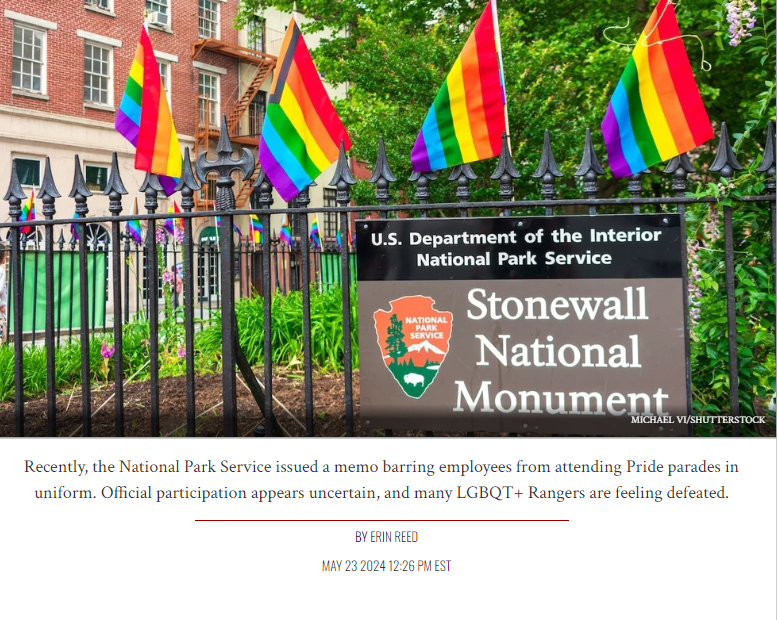
NYC’s Stonewall monument excludes trans flags this year, but activists are defying the ban

*This is reported on LGBTQ Nation.

For the past nine years, the transgender flag was included among those that flew around the Stonewall National Monument in Christopher Park during Pride Month. However, the National Park Service(NPS) will no longer be displaying the Transgender Pride flag or the Progress Pride flag, stating a change of protocol as the reason.

The New York City monument commemorating the Stonewall Uprising of 1969 is the first U.S. National Monument dedicated to LGBTQ+ rights, having been designated as such in 2016 by then-President Barack Obama. It has since become tradition for the monument, located in a park across the street from the Stonewall Inn, to be adorned with various Pride flags, including the trans flag. NPS funds the installation of these flags. This year, however, NPS told photographer, advocate, and installation creator Steven Love Mendez that the park will not allow Trans or Progress Pride flags this year.

The censorious move comes after the Trump administration wiped all references to trans and nonbinary people from the monument’s website in February, as part of his wider initiative to purge trans and nonbinary people from all references and resources provided by the federal government. The removal of trans people from a monument in which a transgender person was considered a key figure has led to outrage, with many coming to the monument to protest.

Speaking to CBS, Mendez comments, “It’s a terrible action for them to take.” he continues, “I used to be listed as an LGBTQ activist, and now it says ‘Steven Menendez, LGB activist,’” Menendez said. “They took out the Q and the T.”

The trans-exclusionary initialism of “LGB” is sometimes used by transphobes to encourage a social and ideological split between gay, lesbian, and bisexual people and transgender people, based on their differing gender experiences.

Upon learning of the monument’s trans erasure, many New Yorkers and tourists came to the monument to set up unauthorized pride flags in protest, including smaller trans flags planted in the soil.

Jay Edinin of Queens, New York, was one of the people who brought his own flag and told CBS, “I’m not going to stand by and watch us be erased from our own history, from our own communities, and from the visibility that we desperately need right now.”  

Willa Kingsford of Portland, Oregon, stated, “I think it’s absurd. I think it’s petty,”

Patty Carter of Los Angeles, California, stated, “It’s horrible. They’re changing all of our history.”

The Stonewall Riots, to which the monument is dedicated, to began on June 28, 1969. During that time law enforcement commonly raided queer bars since New York had outlawed homosexuality and “cross-dressing.” During the raid at the Stonewall Inn, the LGBTQ+ community decided they had reached their tipping point and fought back against law enforcement. The resulting six days riots were said to have marked the beginning of the LGBTQ+ rights movement and became the reason why Pride Month is celebrated in June.

Two of the most notable figures in this uprising were Marsha P. Johnson and Sylvia Rivera, both trans women. It is believed that Johnson instigated the riot by throwing a brick at a police officer. Rivera is also considered to be a key instigator; she is said to be one of the first people to fight back against the police, to which many quote her as saying, “I’m not missing a minute of this—it’s the revolution!”

National Park Service cracks down on Pride leaving LGBTQ+ rangers feeling betrayed

This blog is originally appeared at Advocate.

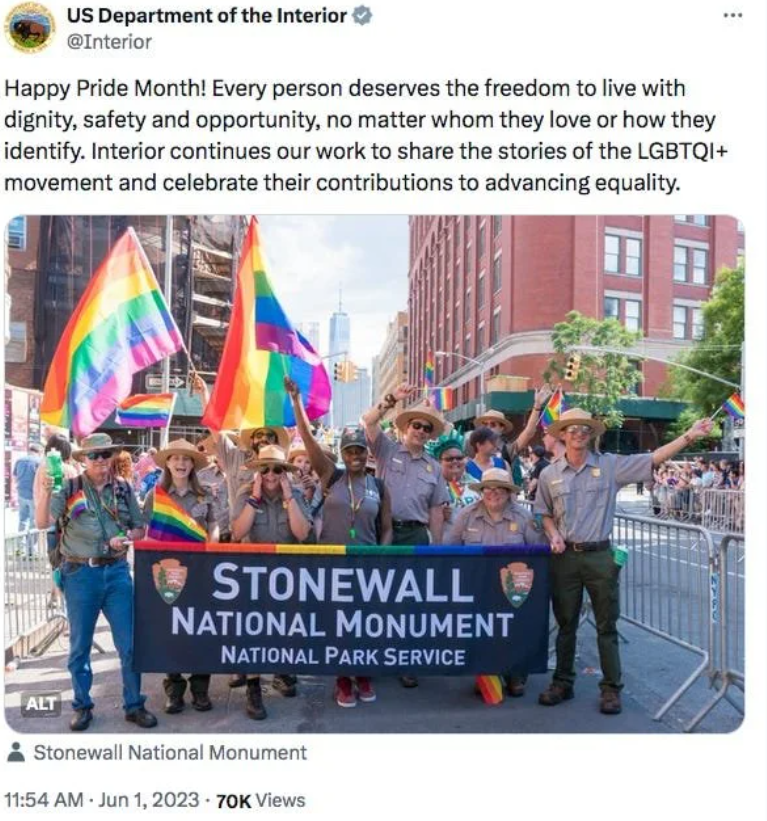
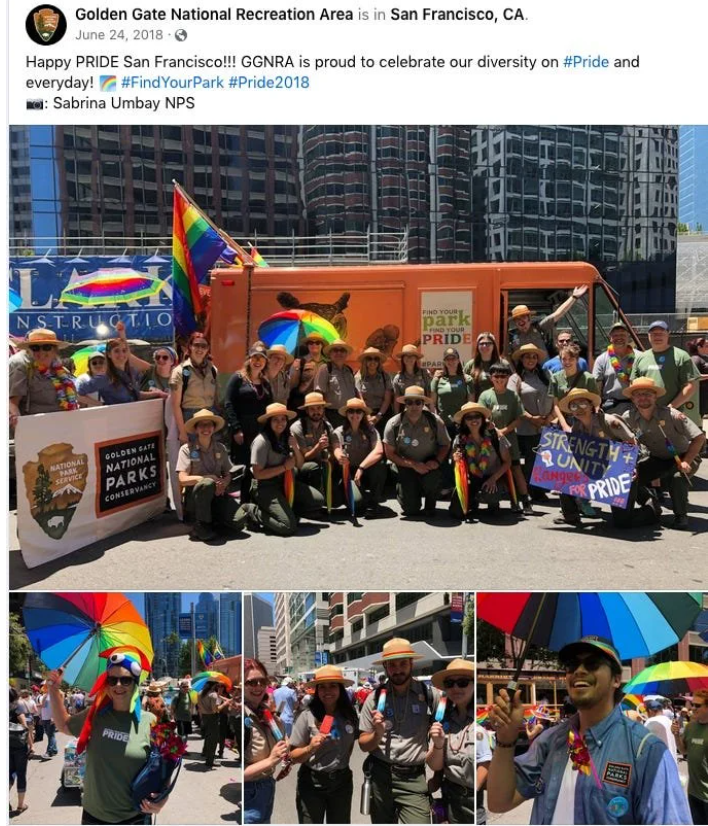
On May 17, the National Park Service (NPS) made an official ruling that park rangers and other employees are no longer allowed to attend Pride events and parades in uniform. This marks a reversal of a long-standing tradition of NPS participation in Pride parades across the U.S., including the presence of official delegations. Anonymous LGBTQ+ NPS employees have expressed feelings of betrayal, noting that participation in major city Pride events is now in question, as several parade applications remain unprocessed and approvals are unclear. The decision comes at a time of heightened scrutiny on LGBTQ+ issues nationwide, with increasing crackdowns on Pride flags and LGBTQ+ rights—largely driven by Republican lawmakers and appointees. This time, however, the policy change is being driven by the NPS itself, under the leadership of a director appointed by President Biden.

The new directive was first shared in an internal memo to NPS staff, which did not specifically mention Pride but highlighted that “requests from employees asking to participate in uniform in a variety of events and activities, including events not organized by the NPS,” are in conflict with agency policy. The memo cited a policy stating that NPS employees cannot wear their uniforms to events that might be interpreted as supporting “a particular issue, position, or political party.” LGBTQ+ employees, however, have criticized this application of the policy, arguing that Pride is about identity and diversity, not a political stance or issue. They pointed out that under the previous guidelines, NPS employees were able to participate in Pride events with approval, and that internal Employee Resource Group (ERG) documents, such as the “OUTsiders Guide to Pride,” had endorsed such participation for years.

In a follow-up statement, the NPS argued that the ERG guide conflicts with official policy and that discussions are underway to review it and other related documents. The agency also emphasized that its participation in Pride celebrations could be perceived as an endorsement of a particular “issue of public concern,” which they described as a justification for limiting official participation. In their view, what has long been seen as a celebration of diversity and inclusion is now categorized as a political statement, with the NPS deeming official participation in such events “extremely limited.”

The decision sparked immediate concern among National Park Service employees and LGBTQ+ advocates. Many pointed out that the NPS has a long history of participating in Pride parades across the country, even under the Trump administration, which was known for its efforts to restrict LGBTQ+ representation in federal agencies, including at embassies. Employees also highlighted the significant role the NPS plays in managing Stonewall National Monument, a site dedicated to LGBTQ+ history and civil rights. Notably, the founding documents of Stonewall National Monument explicitly state that its purpose is “to preserve and protect Christopher Park and the historic resources associated with it” and “to interpret the Stonewall National Historic Landmark’s resources and values related to the lesbian, gay, bisexual, and transgender civil rights movement.” This has raised questions about how the NPS can reconcile this mission with its new stance on Pride participation.

One NPS employee, speaking anonymously, revealed that several requests for Pride parade participation are currently “collecting dust” on desks, waiting for approval for representation in major city Pride events. When asked about the decision to categorize Pride festivals as an “issue of public concern,” the employee responded, “Pride is not political, it’s not a cause, you just are LGBTQ+. It’s a celebration of who we are.” They added, “Morale is just so low right now. There’s not a lot of fight left in us.”

I reached out to an NPS spokesperson for clarification on whether the agency would continue participating in major city Pride events this year, as it has in previous years. The spokesperson responded that the policy “had not changed,” noting that “previous interpretations of the uniform policy were inconsistent” and that approving participation in some events while denying others could be perceived as “discrimination based on viewpoint.” While the spokesperson confirmed that in-park Pride events have not been canceled, they did not clarify whether NPS employees would continue to participate in major U.S. city Pride parades or celebrations. Attempts to follow up on this question went unanswered.

The characterization of Pride as a potentially “political” event raises concerns, particularly given the founding documents of Stonewall National Monument, which directly reference the “resources and values” of the LGBTQ+ community. NPS resources currently available on the site encourage people to “Celebrate Pride” and emphasize that “The LGBTQ experience is a vital facet of America’s rich and diverse past.” The resource underscores the importance of not making LGBTQ+ people invisible, stating, “By recovering the voices that have been erased and marginalized, the NPS embarks on an important project to capture and celebrate our multi-vocal past.” By barring employees from wearing Pride symbols or participating in Pride events, the NPS may unintentionally appear to be erasing and marginalizing its LGBTQ+ employees—contradicting its own stated mission.

National Park Service employees have marched in uniform in Pride parades for years. In 2014, for example, Christine Lenhertz, a member of the NPS, requested permission for a group of LGBTQ+ park employees to wear their uniforms while participating in a Pride parade. Initially denied, the group filed a complaint, prompting a ruling from the Office of the Solicitor for the Department of the Interior, which determined there was no reason to prevent them from marching in uniform. Since then, NPS contingents have regularly participated in Pride events across the country.

The future of Pride parade participation for NPS employees in uniform remains uncertain. While it seems that some Pride events within National Parks, like those at Stonewall, may still take place, external participation in major city Pride events appears to be on hold in at least some locations across the U.S. The possibility of individual or smaller LGBTQ+-affiliated Park Ranger contingents joining city Pride celebrations looks even less likely, with little hope of approval for participation.

You can read the full response from an NPS spokesperson to the request for comment here:

Pizzeria Employee Hospitalized After Homophobic Mob Attacks Restaurant Over Pride Flag Display

This blog originally appeared at LGBTQ NATION

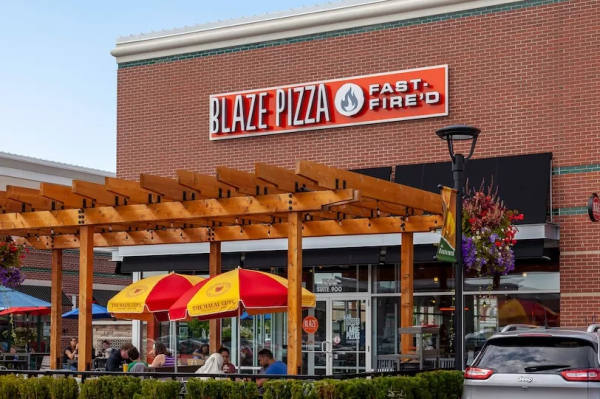
Police in Roseville, California, are searching for three suspects in connection with a hate crime at a Blaze Pizza restaurant, where workers were assaulted after one suspect tore down a Pride flag on display. The assault was captured on a smartphone video.

The incident took place at 10:50 p.m. on a Thursday when a food delivery driver entered the restaurant, noticed the Pride flag near the register, and threw it to the ground. When the store manager and employees confronted him, the man allegedly used a homophobic slur before leaving. He later returned with two other men, who then attacked the restaurant staff.

Related:

Republicans terrorized a gay couple’s home. What happened next surprised the couple.

Haters yelled obscenties, sent a threatening letter, and vandalized their Pride flag and political signs. But the reaction has emboldened the targeted men.

A witness named Chance Chacon told KCRA that the manager and employee had defended the flag’s display, but then, when the three assailants returned, “It was like a mob. They were just kind of swinging at him.”

A video captured inside the restaurant shows one worker repeatedly shouting at the assailants, “Get the f**k out of here!” while another employee urges a co-worker to “Call the cops.”

The three men fled the scene before police arrived, but an ambulance later transported one employee on a stretcher. This worker was taken to the hospital, where he was briefly treated for a concussion and head trauma but has since been released.

A still image from the footage shows a shoeless, light-skinned suspect wearing a torn dark-colored t-shirt and hand wraps commonly used in mixed martial arts.

Police have asked for the public’s help in identifying the assailants involved in the September 20 incident. Anyone with information can submit an anonymous tip online or contact their non-emergency line at 916-774-5000.

Ruby Shields, a lesbian who owns a restaurant in the nearby town of Granite Bay, told The Sacramento Bee that she doesn’t consider the area LGBTQ+ friendly. She has been too scared to display a rainbow flag at her own restaurant, and is often mistaken as the wife of her male business partner, even though she has a wife.

“We’ve been looked at with respect, but it’s always on the back of your mind, you know, ‘Should I be saying this?’” Shields said of not knowing whether to come out to restaurant patrons. “It’s not even something that I really even want to put out there because you never know. I mean, it’s horrible that it’s so close to home. Roseville is right down the street from where we’re at.”

This wouldn’t be the first time that an anti-LGBTQ+ person has committed violence in California after tearing down a Pride flag. Last August, Travis Ikeguchi — a 27-year-old man who posted anti-LGBTQ+, antisemitic, anti-vaccination Christian Nationalist content online — murdered Laura Ann Carleton, a 66-year-old LGBTQ+ ally and mother of nine, complained about the Pride flag hanging in front of her Cedar Glen, California business.

Police killed Ikeguchi shortly afterward.

Paul Feig — the director of BridesmaidsGhostbusters (2016), and other films — wrote, “We are all devastated for her husband Bort and her family and the LGBTQ+ community, for whom Lauri was such a true ally…. This intolerance has to end. Anyone using hateful language against the LGBTQ+ community has to realize their words matter, that their words can inspire violence against innocent loving people. Let’s all keep moving forward with tolerance and love. Let’s not let Lauri’s tragic death be in vain.”

Carleton’s friend, director Paul Feig, wrote of the incident, “Lauri Carleton was my friend. She was a wonderful person who did so much for the LGBTQ+ community as well as the community at large. What happened to her is an absolute tragedy. If people don’t think anti-gay & trans rhetoric isn’t dangerous, think again.”

Subscribe to the LGBTQ Nation newsletter and be the first to know about the latest headlines shaping LGBTQ+ communities worldwide.

Blog at WordPress.com.

Up ↑