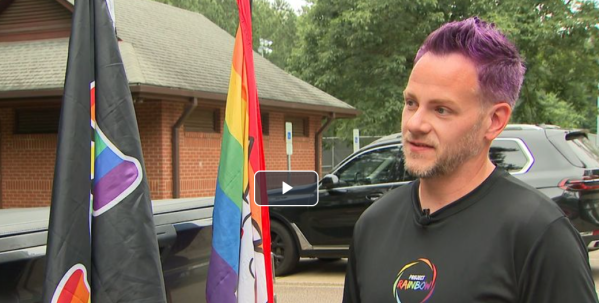
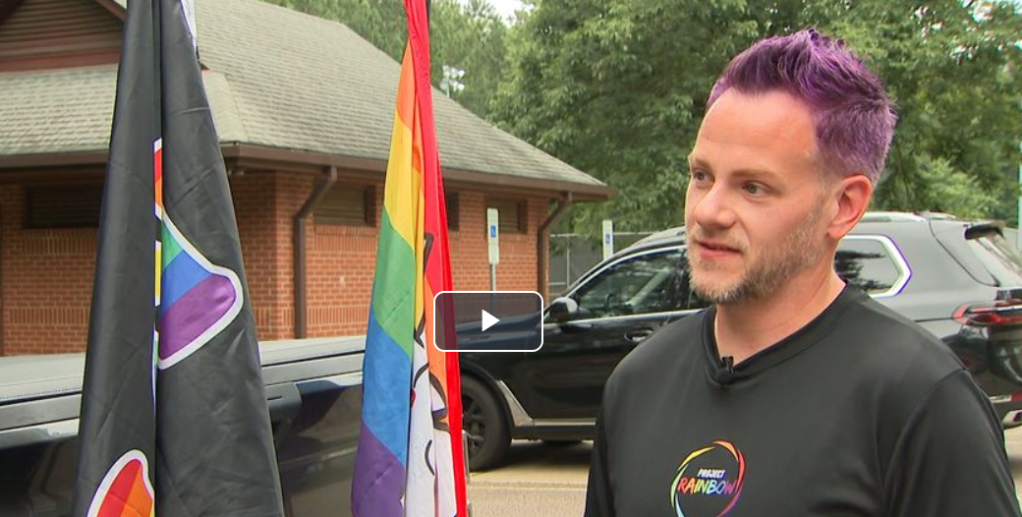
An LGBTQIA+ fitness group in Apex claimed their pride flag was vandalized several times in the last few weeks, most recently on Wednesday, June 4.
The Apex Police Department is now involved.
Project Rainbow is a fitness and wellness group based in Apex that holds weekly community walks around the area, specifically in Apex Community Park.
On May 28, the group recorded and confronted a man who deliberately removed and destroyed a pride flag that serves as a marker for the group to identify the gathering location at the park. The flag was then discarded into the surrounding woods.
Initially believed to be an isolated incident, the group returned to Apex Park for their walk Wednesday. This time, the group had a larger turnout and additional flags were added to show “unity and resilience.”
Project Rainbow said the same man came back and repeated the same act of vandalism.
The group said the actions from this person have caused “concern among participants” and highlights “the need for increased community awareness and support for safe, inclusive spaces.”
Tom Voss, the lead of Project Rainbow, said when the vandalism was happening, it was “unreal.”
“I was like, ‘wow this is actually happening in our backyard here in Apex.’ It was disheartening too,” said Voss. “This is an inclusive community and, we feel great coming here and will continue to be here but when it happened again, it was kind of mind blowing.”
Voss said they have added more safety protocols to the group and will continue to host walks in the park.
WRAL News reached out to Apex Police to ask if they’re planning to investigate the person and figure out their motivation. No charges have been announced.
This incident occurred during an important month for the LGBTQIA+ community, as June is Pride Month, which WRAL News recognizes by highlighting LGBTQIA+ history, local leaders and events happening around the Triangle for Pride Month.
Community members in Catawba County are planning a protest after backlash erupted over a scheduled Pride event, including anti-LGBTQ comments from a Newton city council member. The LGBTQ+ Democrats of Catawba County plan to protest at the Newton City Council meeting on May 6. The group rebranded and reorganized its event, formerly called the “2025 Newton Pride Takeover,” after what its leaders described as “nasty” Facebook comments led businesses to withdraw. The comments included discriminatory remarks from Council Member Jon McClure, said group president MacGregor VanBeurden. “That’s when it got really nasty and a lot of people I think felt emboldened by that,” VanBeurden said about McClure’s comments. “So we got a lot of hate, a lot of bad comments, and then our businesses started pulling out from the event. There were some really serious things said and it’s really blown up in the last week.” Newton is a city of more than 13,000 people about an hours drive northwest of Charlotte. McClure responded to a Facebook post announcing the Pride event with a video where a woman made false claims about transgender people. The councilman said in subsequent comments he does not support queer and transgender people. McClure did not respond to emails and phone calls from The Charlotte Observer requesting comment. Newton Mayor Jerry Hodge said in an interview with the Observer the city will allow people to speak about the issue during public comment like they would in any other meeting. “One council member does not speak for the entire council, and that may have been perceived as the case, but it is not,” he said about McClure’s comments. “We’ll be prepared to conduct a civil meeting for our citizens… and we will conduct the meeting within the realm of respect and dignity for all who speak.” Event rebrand The original Pride celebration, planned for the week of June 23rd, included a networking event, a queer karaoke night and a drag fundraiser, VanBeurden said. Facebook comments — from the councilman and others — prompted numerous businesses to pull out, VanBeurden said. But the show will go on. Since rebranding the event as the Newton Rainbow Celebration, numerous new businesses have signed on to participate. The event will include the networking event as well as a festival and drag event. One business that pulled out was local bar Pour Choices, which was supposed to host the queer karaoke night, VanBeurden said. Local boutique Emporium 23 also pulled out following the backlash but recommitted once the event was rebranded. About 20 local vendors signed up to participate in the celebration in just a few days, VanBeurden said. VanBeurden said it is important to him to remain resilient in the face of anti-LGBTQ rhetoric. “We’ve had a lot of progress made for lesbians, gays and bisexuals. We are nowhere near where we need to be, and there are still issues within our community from the outside world, but we’ve made a lot of progress,” he said. “I think that’s part of the reason that it’s so important is because as a gay man I have to stand up for other members of my community that are struggling even harder than I am.” That resilience includes the protest, which VanBeurden expects to draw turnout from the Carolinas LGBTQ+ Chamber of Commerce and the North Carolina Democratic Party. Catawba County isn’t the only area where LGBTQ+ events have faced pushback this year. In March, Union County commissioners voted to ban “obscene” and “sexualized” events in public parks, a move many interpreted as targeting Pride and drag events. In Monroe, two city council members also pushed for local rules to restrict drag performances, classifying them as “adult entertainment.” VanBeurden said rural and conservative areas remain critical battlegrounds in the fight for LGBTQ+ rights. “I think that the most effective way to make a change in any movement is to bring visibility and to show people that we exist and we exist outside of the big cities,” he said. “We exist in the middle of nowhere. We exist everywhere.”
Hungary’s parliament on Monday passed an amendment to the constitution that allows the government to ban public events by LGBTQ+ communities, a decision that legal scholars and critics call another step toward authoritarianism by the populist government.
The amendment, which required a two-thirds vote, passed along party lines with 140 votes for and 21 against. It was proposed by the ruling Fidesz-KDNP coalition led by populist Prime Minister Viktor Orbán.
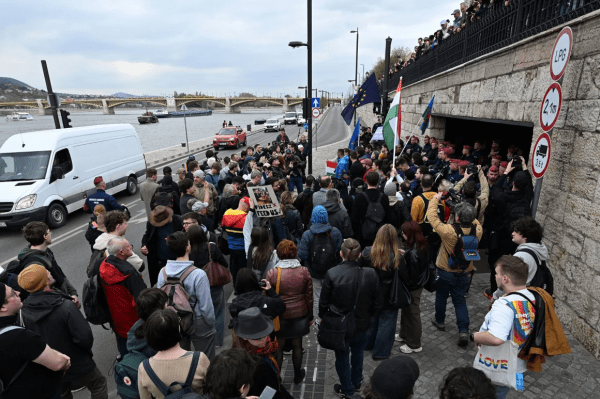
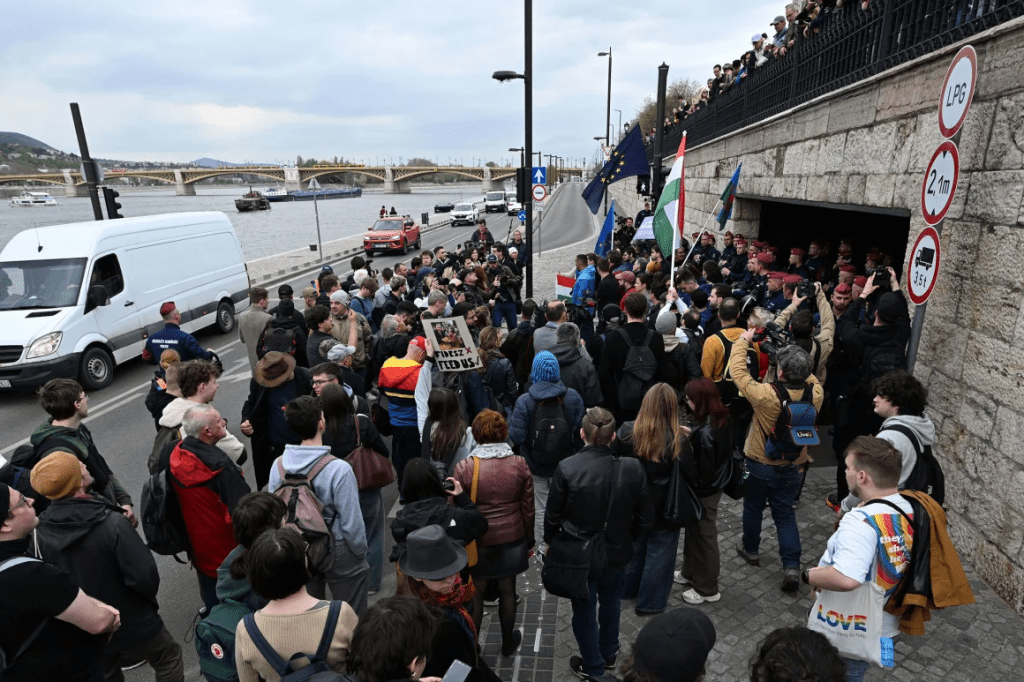
Ahead of the vote — the final step for the amendment — opposition politicians and other protesters attempted to blockade the entrance to a parliament parking garage. Police physically removed demonstrators, who had used zip ties to bind themselves together.
The amendment declares that children’s rights to moral, physical and spiritual development supersede any right other than the right to life, including that to peacefully assemble. Hungary’s contentious “child protection” legislation prohibits the “depiction or promotion” of homosexuality to minors aged under 18.
The amendment codifies a law fast-tracked through parliament in March that bans public events held by LGBTQ+ communities, including the popular Pride event in Budapest that draws thousands annually.
That law also allows authorities to use facial recognition tools to identify people who attend prohibited events — such as Budapest Pride — and can come with fines of up to 200,000 Hungarian forints ($546).
Dávid Bedő, a lawmaker with the opposition Momentum party who participated in the attempted blockade, said before the vote that Orbán and Fidesz for the past 15 years “have been dismantling democracy and the rule of law, and in the past two or three months, we see that this process has been sped up.”
He said as elections approach in 2026 and Orbán’s party lags in the polls behind a popular new challenger from the opposition, “they will do everything in their power to stay in power.”
Opposition lawmakers used air horns to disrupt the vote, which continued after a few moments.
Hungary’s government has campaigned against LGBTQ+ communities in recent years, and argues its “child protection” policies, which forbid the availability to minors of any material that mentions homosexuality, are needed to protect children from what it calls “woke ideology” and “gender madness.”
Critics say the measures do little to protect children and are being used to distract from more serious problems facing the country and mobilize Orbán’s right-wing base ahead of elections.
“This whole endeavor which we see launched by the government, it has nothing to do with children’s rights,” said Dánel Döbrentey, a lawyer with the Hungarian Civil Liberties Union, calling it “pure propaganda.”
Constitution recognizes two sexes
The new amendment also states that the constitution recognizes two sexes, male and female, an expansion of an earlier amendment that prohibits same-sex adoption by stating that a mother is a woman and a father is a man.
The declaration provides a constitutional basis for denying the gender identities of transgender people, as well as ignoring the existence of intersex individuals who are born with sexual characteristics that do not align with binary conceptions of male and female.
In a statement on Monday, government spokesperson Zoltán Kovács wrote that the change is “not an attack on individual self-expression, but a clarification that legal norms are based on biological reality.”
Döbrentey, the lawyer, said it was “a clear message” for transgender and intersex people: “It is definitely and purely and strictly about humiliating people and excluding them, not just from the national community, but even from the community of human beings.”
The amendment is the 15th to Hungary’s constitution since Orbán’s party unilaterally authored and approved it in 2011.
Facial recognition to identify demonstrators
Ádám Remport, a lawyer with the HCLU, said that while Hungary has used facial recognition tools since 2015 to assist police in criminal investigations and finding missing persons, the recent law banning Pride allows the technology to be used in a much broader and problematic manner. That includes for monitoring and deterring political protests.
“One of the most fundamental problems is its invasiveness, just the sheer scale of the intrusion that happens when you apply mass surveillance to a crowd,” Remport said.
“More salient in this case is the effect on the freedom of assembly, specifically the chilling effect that arises when people are scared to go out and show their political or ideological beliefs for fear of being persecuted,” he added.
Suspension of citizenship
The amendment passed Monday also allows for Hungarians who hold dual citizenship in a non-European Economic Area country to have their citizenship suspended for up to 10 years if they are deemed to pose a threat to public order, public security or national security.
Hungary has taken steps in recent months to protect its national sovereignty from what it claims are foreign efforts to influence its politics or even topple Orbán’s government.
The self-described “illiberal” leader has accelerated his longstanding efforts to crack down on critics such as media outlets and groups devoted to civil rights and anti-corruption, which he says have undermined Hungary’s sovereignty by receiving financial assistance from international donors.
In a speech laden with conspiracy theories in March, Orbán compared people who work for such groups to insects, and pledged to “eliminate the entire shadow army” of foreign-funded “politicians, judges, journalists, pseudo-NGOs and political activists.”
Utah became the first state to prohibit flying LGBTQ+ pride flags at schools and all government buildings after the Republican governor announced he was allowing a ban on unsanctioned flag displays to become law without his signature.
Gov. Spencer Cox, who made the announcement late Thursday night, said he continues to have serious concerns with the policy but chose not to reject it because his veto would likely be overridden by the Republican-controlled Legislature.
Starting May 7, state or local government buildings will be fined $500 a day for flying any flag other than the United States flag, the Utah state flag, military flags or a short list of others approved by lawmakers. Political flags supporting a certain candidate or party, such as President Donald Trump’s signature “Make America Great Again” flags, are not allowed.
The ban also prohibits teachers from hanging any restricted flag in their classroom.
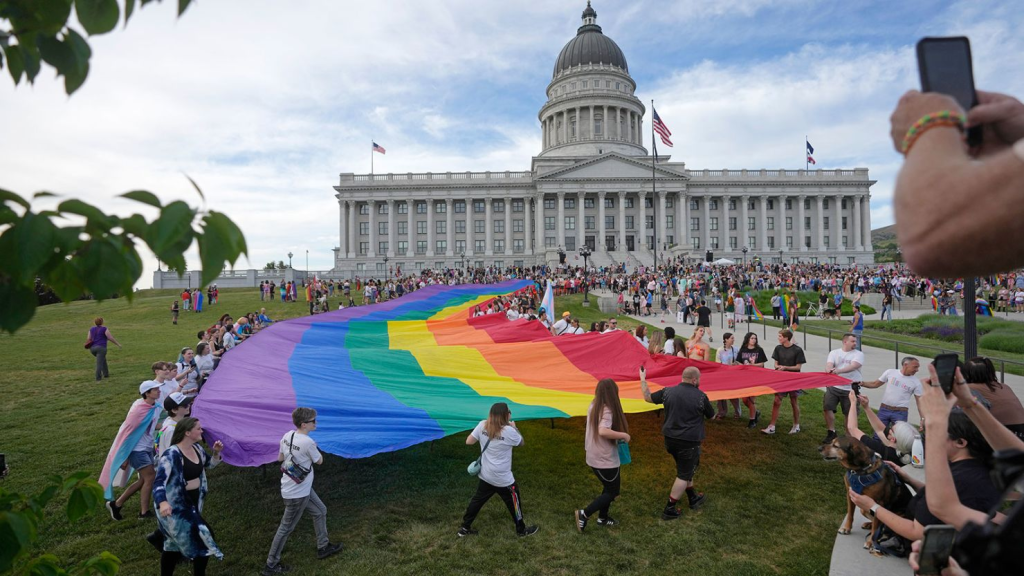
The new law could stoke conflict between the state and its largest city. City buildings in liberal Salt Lake City typically honor Pride Month each June by displaying flags that celebrate its large LGBTQ+ population. Local leaders have illuminated the Salt Lake City and County Building in rainbow lights to protest the flag ban each night since the Legislature sent it to Cox’s desk.
Andrew Wittenberg, a spokesperson for Salt Lake City Mayor Erin Mendenhall’s office, said their attorneys are evaluating the law and the capital city does not yet have information on what it will do once the law takes effect.
The bill’s Republican sponsors, Rep. Trevor Lee and Sen. Dan McCay, said it’s meant to encourage “political neutrality” from teachers and other government employees. Opponents argued it aims to erase LGBTQ+ expression and take authority away from cities and towns that don’t align politically with the Republican Legislature.
In a letter to legislative leaders explaining his decision, Cox said he agreed with the “underlying intent” of the bill to make classrooms politically neutral but thought it went too far in regulating local governments. He also noted that by focusing narrowly on flags, the law does not prevent other political displays such as posters or lighting.
“To our LGBTQ community, I know that recent legislation has been difficult,” Cox said. “Politics can be a bit of a blood sport at times and I know we’ve had our disagreements. I want you to know that I love and appreciate you and I am grateful that you are part of our state. I know these words may ring hollow to many of you, but please know that I mean them sincerely.”
Cox’s decision came hours after the Sundance Film Festival announced it was leaving its home of four decades in Park City, Utah, for Boulder, Colorado. The flag bill created eleventh-hour tensions as some residents worried it would push the nation’s premier independent film festival out of state. Festival leaders said state politics ultimately did not influence their move from conservative Utah to liberal Colorado. They did, however. make “ethos and equity values” one of their criteria in a nationwide search for a new home and referred to Boulder in their announcement as a “welcoming environment.”
Utah’s flag law goes further than one signed last week in Idaho that only applies to schools. But Idaho Republicans are also advancing a separate bill to ban government buildings from displaying certain flags.
Florida lawmakers have advanced a proposal to ban pride flags and others that represent political viewpoints in schools and public buildings after similar measures failed in the past two legislative sessions. Some federal agencies, including the Department of Veterans Affairs, also have limited which flags can fly at their facilities.
Other flags permitted under the Utah law include Olympic and Paralympic flags, official college or university flags, tribal flags and historic versions of other approved flags that might be used for educational purposes.
A new anti-LGBTQ law banning Pride events and allowing authorities to use facial recognition software to identify those attending the festivities was passed in Hungary on Tuesday, leading to a large demonstration on the streets of Budapest.
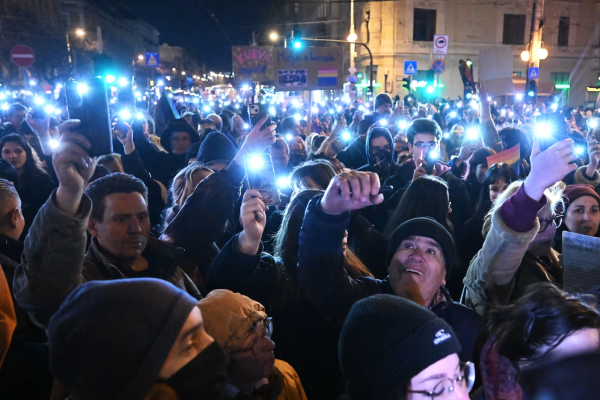
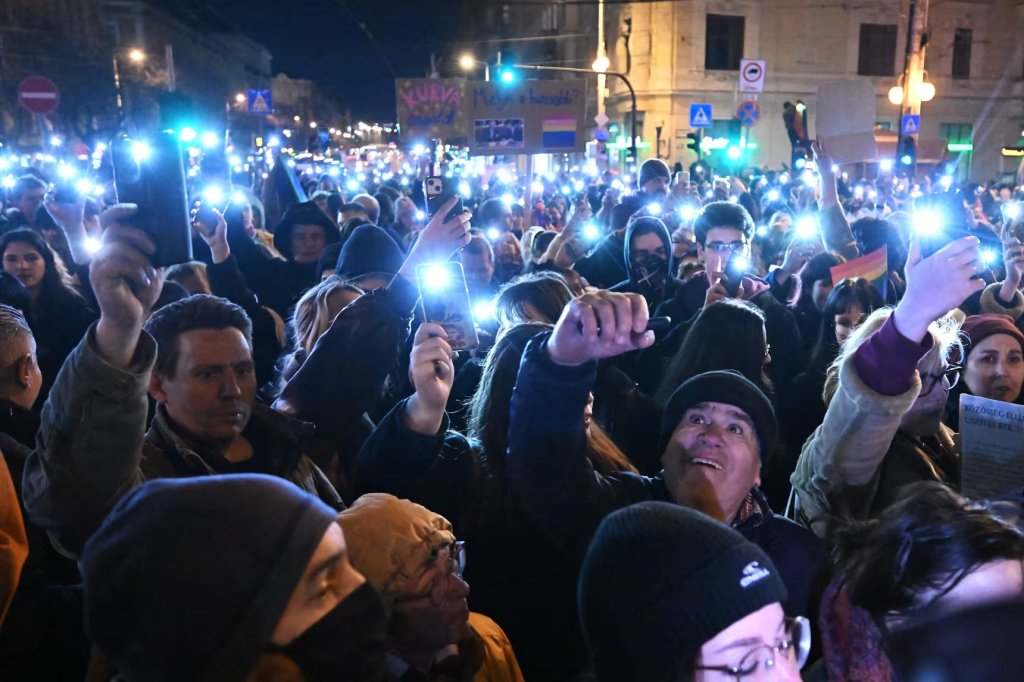
Several thousand protesters chanting anti-government slogans gathered after the vote outside Hungary’s parliament. They later staged a blockade of the Margaret Bridge over the Danube, blocking traffic and disregarding police instructions to leave the area.
The measure, which is reminiscent of similar restrictions against sexual minorities in Russia, was passed in a 136-27 vote. The law, supported by Orbán’s Fidesz party and their minority coalition partner the Christian Democrats, was pushed through parliament in an accelerated procedure after being submitted on Monday.
Opposing legislators led a vivid protest in the legislature involving rainbow-colored smoke bombs.
At the protest outside parliament, Evgeny Belyakov, a Russian citizen who immigrated to Hungary after facing repression in Russia, said the legislation went at the heart of people’s rights to peacefully assemble.
“It’s quite terrifying to be honest, because we had the same in Russia. It was building up step by step, and I feel like this is what is going on here,” he said. “I just only hope that there will be more resistance like this in Hungary, because in Russia we didn’t resist on time and now it’s too late.”
The bill amends Hungary’s law on assembly to make it an offense to hold or attend events that violate Hungary’s contentious “child protection” legislation, which prohibits the “depiction or promotion” of homosexuality to minors under 18.
Attending a prohibited event will carry fines up to 200,000 Hungarian forints ($546), which the state must forward to “child protection,” according to the text of the law. Authorities may use facial recognition tools to identify individuals attending a prohibited event.
In a statement on Monday after lawmakers first submitted the bill, Budapest Pride organizers said the aim of the law was to “scapegoat” the LGBTQ+ community in order to silence voices critical of Orbán’s government.
“This is not child protection, this is fascism,” wrote the organizers of the event, which attracts thousands each year and celebrates the history of the LGBTQ+ movement while asserting the equal rights of the gay, lesbian, bisexual and transgender community.
Following the law’s passage Tuesday, Budapest Pride spokesperson Jojó Majercsik told The Associated Press that despite Orbán’s yearslong effort to stigmatize LGBTQ+ people, the organization had received an outpouring of support since the Hungarian leader hinted in February that his government would take steps to ban the event.
“Many, many people have been mobilized,” Majercsik said. “It’s a new thing, compared to the attacks of the last years, that we’ve received many messages and comments from people saying, ‘Until now I haven’t gone to Pride, I didn’t care about it, but this year I’ll be there and I’ll bring my family.’”
Government crackdown
The new legislation is the latest step against LGBTQ+ people taken by Orbán, whose government has passed other laws that rights groups and other European politicians have decried as repressive against sexual minorities.
In 2022, the European Union’s executive commission filed a case with the E.U.’s highest court against Hungary’s 2021 child protection law. The European Commission argued that the law “discriminates against people on the basis of their sexual orientation and gender identity.”
Hungary’s “child protection” law — aside from banning the “depiction or promotion” of homosexuality in content available to minors, including in television, films, advertisements and literature — also prohibits the mention of LGBTQ+ issues in school education programs, and forbids the public depiction of “gender deviating from sex at birth.”
Booksellers in Hungary have faced hefty fines for failing to wrap books that contain LGBTQ+ themes in closed packaging. Critics have argued Orbán’s campaign amounts to an attempt to cut LGBTQ+ visibility, and that by tying it to child protection, it falsely conflates homosexuality with pedophilia.
Hungary’s government argues that its policies are designed to protect children from “sexual propaganda.”
Is Orbán trying to distract the electorate?
Hungary’s methods resemble tactics by Putin, who in December 2022 expanded Russia’s ban on “propaganda of nontraditional sexual relations” from minors to adults, effectively outlawing any public endorsement of LGBTQ+ activities.
Orbán, in power since 2010, faces an unprecedented challenge from a rising opposition party as Hungary’s economy struggles to emerge from an inflation and cost of living crisis and an election approaches in 2026.
Tamás Dombos, a project coordinator at Hungarian LGBTQ+ rights group Háttér Society, said that Orbán’s assault on minorities was a tactic to distract voters from more important issues facing the country. He said allowing the use of facial recognition software at prohibited demonstrations could be used against other protests the government chooses to deem unlawful.
“It’s a very common strategy of authoritarian governments not to talk about the real issues that people are affected by: the inflation, the economy, the terrible condition of education and health care,” Dombos said.
Orbán, he continued, “has been here with us for 15 years lying into people’s faces, letting the country rot basically, and then coming up with these hate campaigns.”
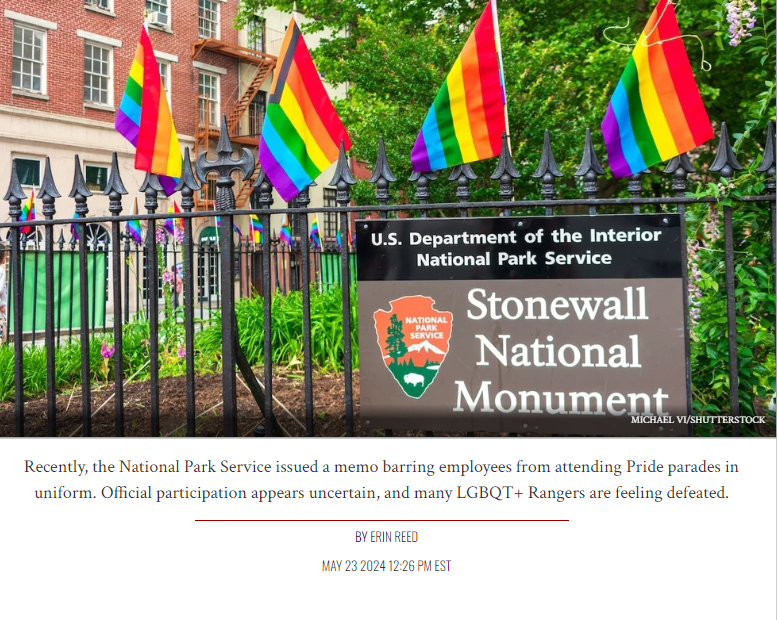
On May 17, the National Park Service (NPS) made an official ruling that park rangers and other employees are no longer allowed to attend Pride events and parades in uniform. This marks a reversal of a long-standing tradition of NPS participation in Pride parades across the U.S., including the presence of official delegations. Anonymous LGBTQ+ NPS employees have expressed feelings of betrayal, noting that participation in major city Pride events is now in question, as several parade applications remain unprocessed and approvals are unclear. The decision comes at a time of heightened scrutiny on LGBTQ+ issues nationwide, with increasing crackdowns on Pride flags and LGBTQ+ rights—largely driven by Republican lawmakers and appointees. This time, however, the policy change is being driven by the NPS itself, under the leadership of a director appointed by President Biden.
The new directive was first shared in an internal memo to NPS staff, which did not specifically mention Pride but highlighted that “requests from employees asking to participate in uniform in a variety of events and activities, including events not organized by the NPS,” are in conflict with agency policy. The memo cited a policy stating that NPS employees cannot wear their uniforms to events that might be interpreted as supporting “a particular issue, position, or political party.” LGBTQ+ employees, however, have criticized this application of the policy, arguing that Pride is about identity and diversity, not a political stance or issue. They pointed out that under the previous guidelines, NPS employees were able to participate in Pride events with approval, and that internal Employee Resource Group (ERG) documents, such as the “OUTsiders Guide to Pride,” had endorsed such participation for years.
In a follow-up statement, the NPS argued that the ERG guide conflicts with official policy and that discussions are underway to review it and other related documents. The agency also emphasized that its participation in Pride celebrations could be perceived as an endorsement of a particular “issue of public concern,” which they described as a justification for limiting official participation. In their view, what has long been seen as a celebration of diversity and inclusion is now categorized as a political statement, with the NPS deeming official participation in such events “extremely limited.”
The decision sparked immediate concern among National Park Service employees and LGBTQ+ advocates. Many pointed out that the NPS has a long history of participating in Pride parades across the country, even under the Trump administration, which was known for its efforts to restrict LGBTQ+ representation in federal agencies, including at embassies. Employees also highlighted the significant role the NPS plays in managing Stonewall National Monument, a site dedicated to LGBTQ+ history and civil rights. Notably, the founding documents of Stonewall National Monument explicitly state that its purpose is “to preserve and protect Christopher Park and the historic resources associated with it” and “to interpret the Stonewall National Historic Landmark’s resources and values related to the lesbian, gay, bisexual, and transgender civil rights movement.” This has raised questions about how the NPS can reconcile this mission with its new stance on Pride participation.
One NPS employee, speaking anonymously, revealed that several requests for Pride parade participation are currently “collecting dust” on desks, waiting for approval for representation in major city Pride events. When asked about the decision to categorize Pride festivals as an “issue of public concern,” the employee responded, “Pride is not political, it’s not a cause, you just are LGBTQ+. It’s a celebration of who we are.” They added, “Morale is just so low right now. There’s not a lot of fight left in us.”
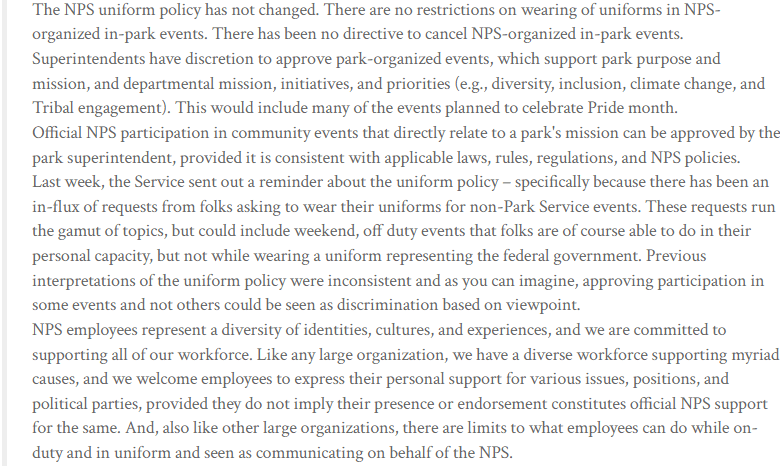
I reached out to an NPS spokesperson for clarification on whether the agency would continue participating in major city Pride events this year, as it has in previous years. The spokesperson responded that the policy “had not changed,” noting that “previous interpretations of the uniform policy were inconsistent” and that approving participation in some events while denying others could be perceived as “discrimination based on viewpoint.” While the spokesperson confirmed that in-park Pride events have not been canceled, they did not clarify whether NPS employees would continue to participate in major U.S. city Pride parades or celebrations. Attempts to follow up on this question went unanswered.
The characterization of Pride as a potentially “political” event raises concerns, particularly given the founding documents of Stonewall National Monument, which directly reference the “resources and values” of the LGBTQ+ community. NPS resources currently available on the site encourage people to “Celebrate Pride” and emphasize that “The LGBTQ experience is a vital facet of America’s rich and diverse past.” The resource underscores the importance of not making LGBTQ+ people invisible, stating, “By recovering the voices that have been erased and marginalized, the NPS embarks on an important project to capture and celebrate our multi-vocal past.” By barring employees from wearing Pride symbols or participating in Pride events, the NPS may unintentionally appear to be erasing and marginalizing its LGBTQ+ employees—contradicting its own stated mission.
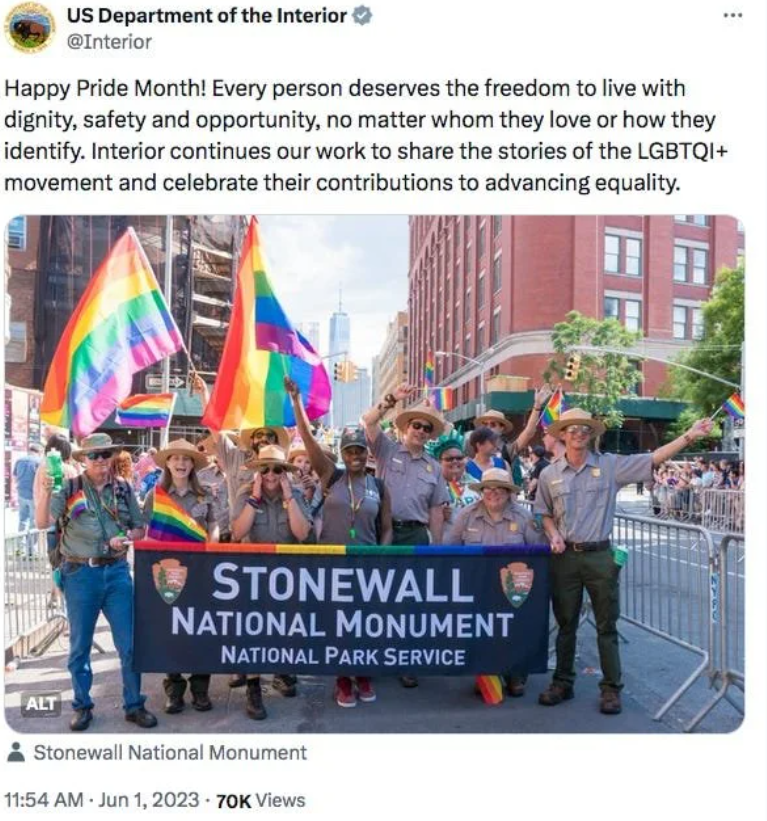
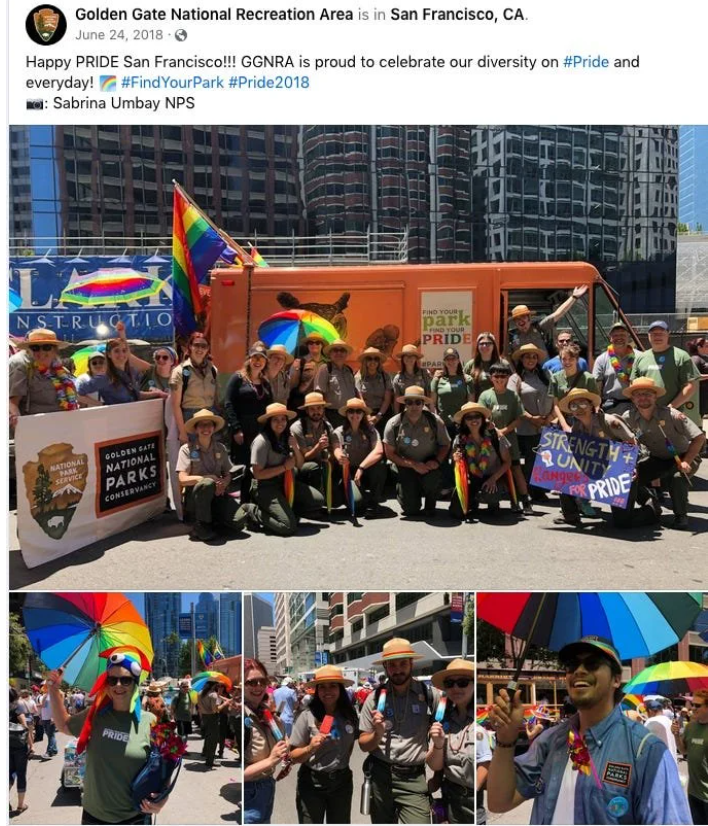
National Park Service employees have marched in uniform in Pride parades for years. In 2014, for example, Christine Lenhertz, a member of the NPS, requested permission for a group of LGBTQ+ park employees to wear their uniforms while participating in a Pride parade. Initially denied, the group filed a complaint, prompting a ruling from the Office of the Solicitor for the Department of the Interior, which determined there was no reason to prevent them from marching in uniform. Since then, NPS contingents have regularly participated in Pride events across the country.
The future of Pride parade participation for NPS employees in uniform remains uncertain. While it seems that some Pride events within National Parks, like those at Stonewall, may still take place, external participation in major city Pride events appears to be on hold in at least some locations across the U.S. The possibility of individual or smaller LGBTQ+-affiliated Park Ranger contingents joining city Pride celebrations looks even less likely, with little hope of approval for participation.
You can read the full response from an NPS spokesperson to the request for comment here:
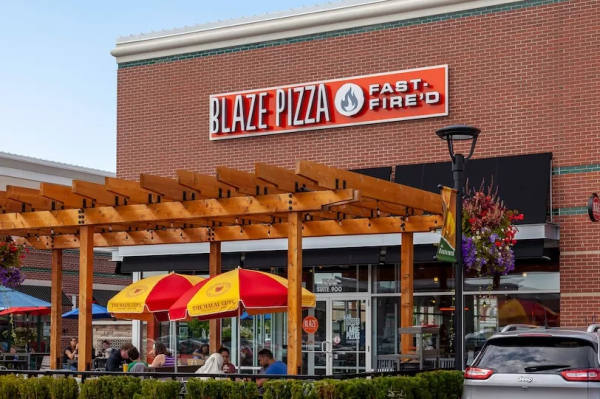
Police in Roseville, California, are searching for three suspects in connection with a hate crime at a Blaze Pizza restaurant, where workers were assaulted after one suspect tore down a Pride flag on display. The assault was captured on a smartphone video.
The incident took place at 10:50 p.m. on a Thursday when a food delivery driver entered the restaurant, noticed the Pride flag near the register, and threw it to the ground. When the store manager and employees confronted him, the man allegedly used a homophobic slur before leaving. He later returned with two other men, who then attacked the restaurant staff.
Haters yelled obscenties, sent a threatening letter, and vandalized their Pride flag and political signs. But the reaction has emboldened the targeted men.
A witness named Chance Chacon told KCRA that the manager and employee had defended the flag’s display, but then, when the three assailants returned, “It was like a mob. They were just kind of swinging at him.”
A video captured inside the restaurant shows one worker repeatedly shouting at the assailants, “Get the f**k out of here!” while another employee urges a co-worker to “Call the cops.”
The three men fled the scene before police arrived, but an ambulance later transported one employee on a stretcher. This worker was taken to the hospital, where he was briefly treated for a concussion and head trauma but has since been released.
A still image from the footage shows a shoeless, light-skinned suspect wearing a torn dark-colored t-shirt and hand wraps commonly used in mixed martial arts.
Police have asked for the public’s help in identifying the assailants involved in the September 20 incident. Anyone with information can submit an anonymous tip online or contact their non-emergency line at 916-774-5000.
Ruby Shields, a lesbian who owns a restaurant in the nearby town of Granite Bay, told The SacramentoBee that she doesn’t consider the area LGBTQ+ friendly. She has been too scared to display a rainbow flag at her own restaurant, and is often mistaken as the wife of her male business partner, even though she has a wife.
“We’ve been looked at with respect, but it’s always on the back of your mind, you know, ‘Should I be saying this?’” Shields said of not knowing whether to come out to restaurant patrons. “It’s not even something that I really even want to put out there because you never know. I mean, it’s horrible that it’s so close to home. Roseville is right down the street from where we’re at.”
This wouldn’t be the first time that an anti-LGBTQ+ person has committed violence in California after tearing down a Pride flag. Last August, Travis Ikeguchi — a 27-year-old man who posted anti-LGBTQ+, antisemitic, anti-vaccination Christian Nationalist content online — murdered Laura Ann Carleton, a 66-year-old LGBTQ+ ally and mother of nine, complained about the Pride flag hanging in front of her Cedar Glen, California business.
Police killed Ikeguchi shortly afterward.
Paul Feig — the director of Bridesmaids, Ghostbusters (2016), and other films — wrote, “We are all devastated for her husband Bort and her family and the LGBTQ+ community, for whom Lauri was such a true ally…. This intolerance has to end. Anyone using hateful language against the LGBTQ+ community has to realize their words matter, that their words can inspire violence against innocent loving people. Let’s all keep moving forward with tolerance and love. Let’s not let Lauri’s tragic death be in vain.”
Carleton’s friend, director Paul Feig, wrote of the incident, “Lauri Carleton was my friend. She was a wonderful person who did so much for the LGBTQ+ community as well as the community at large. What happened to her is an absolute tragedy. If people don’t think anti-gay & trans rhetoric isn’t dangerous, think again.”
Subscribe to the LGBTQ Nationnewsletter and be the first to know about the latest headlines shaping LGBTQ+ communities worldwide.


 fleeredstates.blog
You must be logged in to post a comment.