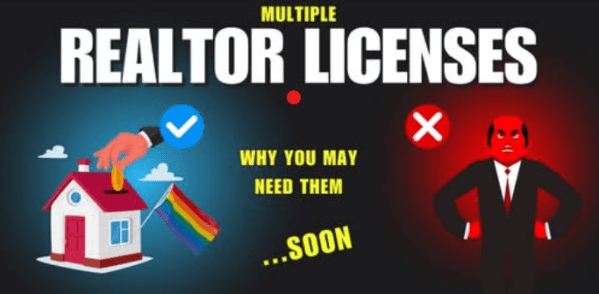
Why Every Realtor Needs MULTIPLE State Licenses—Protect Yourself from Political Fallout

Are you a real estate agent in a politically unstable or conservative state? Discover why smart REALTORS® are getting licensed in multiple states to protect their careers from sudden political shifts, discrimination, or licensing denial. In this video, we explain:

✅ Why holding real estate licenses in multiple states is crucial in 2025

✅ How anti-LGBTQ+ laws and political agendas are threatening professionals

✅ Steps to apply for additional real estate licenses quickly and affordably

✅ Best states to consider for backup licensure

✅ Real stories from agents facing political backlash

Real estate license reciprocity allows licensed agents to obtain a license in another state without completing all standard pre-licensing education requirements. Reciprocity agreements vary by state, with some offering full reciprocity to all states and others providing partial or no reciprocity. Below is a summary of reciprocity agreements and the associated education requirements for select states:

Alabama Reciprocity: Full reciprocity with all states. Requirements: Complete a 6-hour course in Alabama real estate law and pass the Alabama portion of the licensing exam.

Colorado Reciprocity: Full reciprocity with all states. Requirements: Pass the Colorado state portion of the real estate exam.

Florida Reciprocity: Mutual recognition agreements with Alabama, Arkansas, Connecticut, Georgia, Illinois, Kentucky, Mississippi, Nebraska, Rhode Island, and West Virginia. Requirements: Pass a 40-question Florida-specific real estate law exam with a score of at least 30.

Georgia Reciprocity: Full reciprocity with all states. Requirements: Hold a current, active license in another state and pass the Georgia state portion of the licensing exam. Illinois Reciprocity: Reciprocity agreements with Colorado, Connecticut, Florida, Georgia, Indiana, Iowa, Nebraska, and Wisconsin. Requirements: Pass the Illinois state portion of the licensing exam.

Mississippi Reciprocity: Full reciprocity with all states. Requirements: Pass the Mississippi state portion of the licensing exam.

Virginia Reciprocity: Full reciprocity with all states. Requirements: Complete a 60-hour “Principles of Real Estate” course and pass the Virginia state portion of the licensing exam.

Wisconsin Reciprocity: Reciprocity agreements with Illinois and Indiana. Requirements: Agents from these states are exempt from Wisconsin’s education requirement; agents from other states must complete a 13-hour education requirement.

It’s important to note that many states without formal reciprocity agreements may still allow experienced agents to waive certain requirements, such as the national portion of the licensing exam or pre-licensing education. However, they often require completion of state-specific education or examinations. For example:

Iowa: Offers reciprocity with Arkansas, Georgia, Louisiana, Massachusetts, Minnesota, Mississippi, and North Dakota. Applicants must prove they took the real estate exam in another state, submit their certificate and license history, and undergo a criminal background check.

Kentucky: Offers reciprocity with Ohio, Tennessee, and West Virginia. Requirements vary based on the state and license type but generally include completing a 40-hour reciprocal license course and submitting to a background check.

South Carolina: Extends reciprocity to licenses from other states held within six months before applying. Brokers must have been active for at least three years. Additional requirements include passing the state portion of the exam and submitting certification(s) of licensure from any jurisdictions in which you’ve held a license in the last five years. For the most accurate and up-to-date information, it’s advisable to consult the real estate commission or regulatory authority of the state where you seek licensure.


Tips For Those Considering Buying a Home in the Caribbean

*This was first published by The Washington Blade Valerie Blake

I recently returned from cruising through the Caribbean, just in time to experience the last vestiges of a snowstorm and 15-degree weather, coupled with a plethora of angry people wearing red hats, absent-mindedly riding around in circles on the Metro. No matter – I still have that post-vacation glow.

The Caribbean, a diverse region of 13 independent countries, 12 dependencies, and seven overseas territories, has long been a dream destination for travelers, retirees, and investors alike. With its crystal-clear waters, pristine beaches, and relaxed lifestyle, it’s no wonder that many people are drawn to the idea of owning property in this tropical paradise.

Buying real estate in the Caribbean requires careful planning, research, and an understanding of the unique challenges and opportunities that come with investing in a foreign market. Selecting the right island and community is a critical step in the buying process.

Consider such factors as:

  • Accessibility: Proximity to major airports and ease of travel
  • Infrastructure: Availability of roads, utilities, and amenities such as internet and streaming services
  • Safety and security: Crime rates and political stability
  • Climate and weather risks: Susceptibility to hurricanes and natural disasters
  • Healthcare: Quality and availability of medical services

Property prices and inventory vary widely across the region. Each Caribbean nation has its own rules regarding foreign ownership of property. Some countries have relatively open markets where foreigners can buy land freely. Others, such as the Bahamas, require special permits for non-residents purchasing property above a certain value.

It is essential to work with a reputable local attorney to navigate the legal requirements, including landownership laws and restrictions, residency and citizenship options, property taxes and fees, and title searches and due diligence.

Some islands, like Barbados and the Cayman Islands, offer residency permits for property owners who meet specific financial criteria. These programs can provide tax benefits, visa-free travel, long-term residency rights, and in some cases, top-tier medical facilities, including private hospitals and specialized care centers. 

Moreover, Antigua & BarbudaDominicaGrenadaSt. Kitts, and St. Lucia offer a Citizenship by Investment (CBI) program for property buyers: In some cases, citizenship will grant you visa-free access to more than 150 countries. While the costs fluctuate depending on the country, the process can be completed in as little as 7-12 months. 

As you can imagine, there has been a surge of inquiries from the U.S. since last fall, so it would be wise to confirm the most recent amount and type of minimum investment required. You can find helpful information from the company La Vida at  goldenvisas.com.

Many buyers in the Caribbean look to generate income through vacation rentals or long-term leasing. Islands with strong tourism demand, such as Aruba, the Bahamas, and St. Lucia, offer excellent rental potential. 

Working with a reputable property management company can help maximize rental income and ensure smooth operations; however, investors should consider seasonal fluctuations in tourism, property management costs, and local regulations on short-term rentals in determining their return on investment before committing to a purchase. 

As in the U.S., buying property in the Caribbean comes with additional costs beyond the purchase price. These may include legal fees (typically 1-3% of the purchase price), stamp duties and transfer taxes that vary by country, real estate agent compensation, property insurance, and maintenance costs.

Financing can be a challenge for foreign buyers, as many Caribbean banks require substantial down payments or have stringent lending criteria. Some investors choose to secure financing from their home country or pay in cash.

Nonetheless, expatriates living in the Caribbean often benefit from a lower cost of living, warm climate, and relaxed lifestyle. Many islands have well-established expat communities, making it easier to adjust to life abroad. As you begin your journey, it is recommended that you secure health insurance that covers medical treatment in both the Caribbean and your home country.

To successfully purchase property in the Caribbean, research and choose your preferred island based on your budget, lifestyle, and investment goals. Work with a local real estate agent who understands the market and legal requirements and, if applicable, speaks the appropriate language. Hire an attorney to conduct a title search, review contracts, and ensure compliance with local laws. Negotiate the purchase price and sign a sales agreement. Secure financing (if needed) and transfer funds. 

Once you have completed additional legal requirements such as obtaining permits, paying taxes, and registering the property, you might consider rental or management options if you are not living there full-time.

But if the Caribbean is to be your home away from home for at least a few years, turn off the news, stick an umbrella in your favorite frothy adult beverage, and lean into island living. 

Cleveland Real Estate: A Deep Dive into the Market – September 2024

This originally appeared at Youtube.com

Join Connor Kobilarcsik, an experienced real estate agent with deep roots in the Ohio market, as he takes you through a detailed look at the Cleveland real estate landscape. In this video, you’ll learn:

  • Current Market Trends: Stay up-to-date on home prices, interest rates, and available inventory.
  • Hot Neighborhoods: Discover the most sought-after areas in Cleveland and what makes them unique.
  • Investment Opportunities: Get insights into potential investment strategies and whether now is the right time to buy.
  • Expert Tips for Buyers and Sellers: Navigate the real estate process with advice from a seasoned professional.

Whether you’re a first-time homebuyer, a seasoned investor, or just curious about Cleveland’s market, this video is packed with valuable insights from a local expert. Don’t miss out!


Contact Connor:

Phone: (440) 539-6347
Email: connorkoby216@gmail.com
Facebook: Connor Kobilarcsik | @connorkobyrealtor
YouTube: @connorkobilarcsik9310
Website: www.connorsellsohio.com
LinkedIn: Connor Kobilarcsik

Featured Coaches and Partners:

Blog at WordPress.com.

Up ↑