
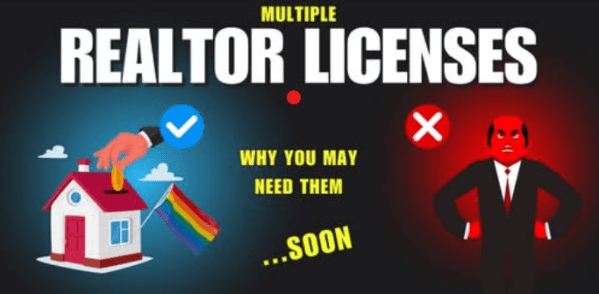
Are you a real estate agent in a politically unstable or conservative state? Discover why smart REALTORS® are getting licensed in multiple states to protect their careers from sudden political shifts, discrimination, or licensing denial. In this video, we explain:
✅ Why holding real estate licenses in multiple states is crucial in 2025
✅ How anti-LGBTQ+ laws and political agendas are threatening professionals
✅ Steps to apply for additional real estate licenses quickly and affordably
✅ Best states to consider for backup licensure
✅ Real stories from agents facing political backlash
Real estate license reciprocity allows licensed agents to obtain a license in another state without completing all standard pre-licensing education requirements. Reciprocity agreements vary by state, with some offering full reciprocity to all states and others providing partial or no reciprocity. Below is a summary of reciprocity agreements and the associated education requirements for select states:
Alabama Reciprocity: Full reciprocity with all states. Requirements: Complete a 6-hour course in Alabama real estate law and pass the Alabama portion of the licensing exam.
Colorado Reciprocity: Full reciprocity with all states. Requirements: Pass the Colorado state portion of the real estate exam.
Florida Reciprocity: Mutual recognition agreements with Alabama, Arkansas, Connecticut, Georgia, Illinois, Kentucky, Mississippi, Nebraska, Rhode Island, and West Virginia. Requirements: Pass a 40-question Florida-specific real estate law exam with a score of at least 30.
Georgia Reciprocity: Full reciprocity with all states. Requirements: Hold a current, active license in another state and pass the Georgia state portion of the licensing exam. Illinois Reciprocity: Reciprocity agreements with Colorado, Connecticut, Florida, Georgia, Indiana, Iowa, Nebraska, and Wisconsin. Requirements: Pass the Illinois state portion of the licensing exam.
Mississippi Reciprocity: Full reciprocity with all states. Requirements: Pass the Mississippi state portion of the licensing exam.
Virginia Reciprocity: Full reciprocity with all states. Requirements: Complete a 60-hour “Principles of Real Estate” course and pass the Virginia state portion of the licensing exam.
Wisconsin Reciprocity: Reciprocity agreements with Illinois and Indiana. Requirements: Agents from these states are exempt from Wisconsin’s education requirement; agents from other states must complete a 13-hour education requirement.
It’s important to note that many states without formal reciprocity agreements may still allow experienced agents to waive certain requirements, such as the national portion of the licensing exam or pre-licensing education. However, they often require completion of state-specific education or examinations. For example:
Iowa: Offers reciprocity with Arkansas, Georgia, Louisiana, Massachusetts, Minnesota, Mississippi, and North Dakota. Applicants must prove they took the real estate exam in another state, submit their certificate and license history, and undergo a criminal background check.
Kentucky: Offers reciprocity with Ohio, Tennessee, and West Virginia. Requirements vary based on the state and license type but generally include completing a 40-hour reciprocal license course and submitting to a background check.
South Carolina: Extends reciprocity to licenses from other states held within six months before applying. Brokers must have been active for at least three years. Additional requirements include passing the state portion of the exam and submitting certification(s) of licensure from any jurisdictions in which you’ve held a license in the last five years. For the most accurate and up-to-date information, it’s advisable to consult the real estate commission or regulatory authority of the state where you seek licensure.

 fleeredstates.blog
You must be logged in to post a comment.