
Read more at The Texas Observer.
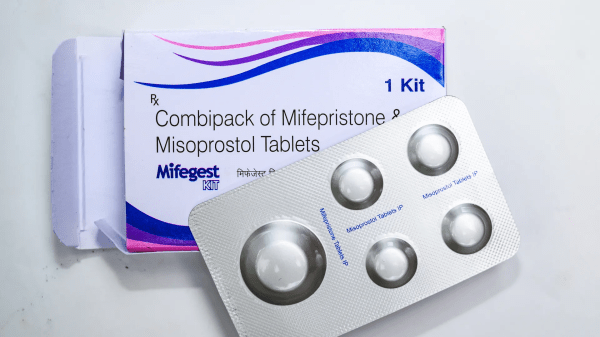
On Wednesday evening (Sept 3), the Texas Senate approved an extreme bill that, pending the governor’s signature, will empower citizens to sue anyone who “manufactures, distributes, mails, transports, delivers, prescribes, or provides” abortion pills to Texans for at least $100,000 in damages. While Texas already broadly bans abortion, with House Bill 7 Republicans aim to halt the flow of abortion medication from out of state, one of the only remaining avenues for Texans to still access this care. The measure has been sent to Governor Greg Abbott’s desk and is slated to become law in about three months, barring successful legal challenges.
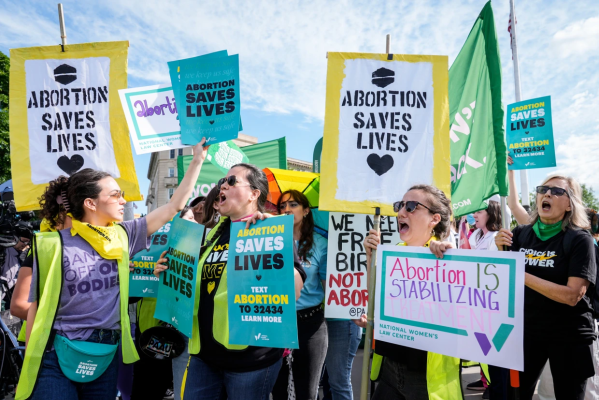
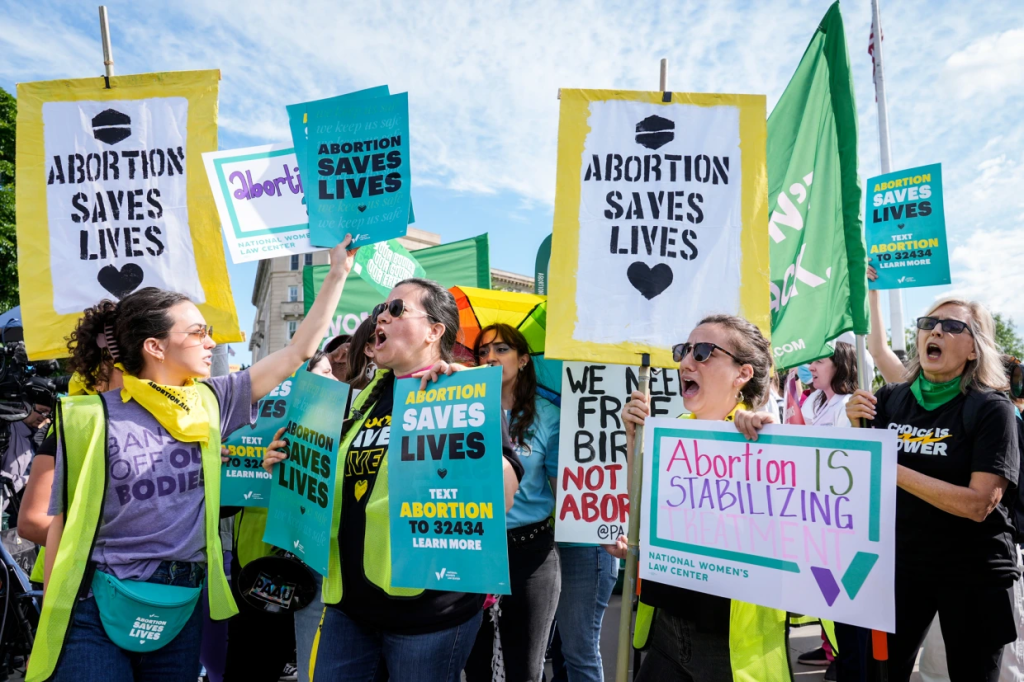
Democrats and reproductive rights advocates caution the law will instill even more fear in abortion patients—living under bans since 2021—and may lead to additional pregnancy-related deaths in Texas.
“This bill will harm women and could even lead to more pregnant women dying because they couldn’t access life-saving medications,” said Rep. Donna Howard, an Austin Democrat and chair of the Texas Women’s Health Caucus, on the House floor before the lower chamber cast its vote late last month. “The only reason we haven’t returned to the days of [pre-Roe v. Wade] ‘coat-hanger abortions’ is because of the medication abortion pill. I ask you: ‘When will this be enough? How many women have to die or suffer severe bodily injury because they couldn’t access the care they needed?’”
The GOP-backed attempt to “crack down” on abortion pills and those who provide them could potentially impact access in much of the country and serve as a blueprint for other states to adopt, a professed goal of Texas Republicans who support the bill.
“HB 7 exports Texas’ extreme abortion ban far beyond state borders,” said Blair Wallace, policy and advocacy strategist on reproductive freedom at the ACLU of Texas, in a statement. “It will fuel fear among manufacturers and providers nationwide, while encouraging neighbors to police one another’s reproductive lives, further isolating pregnant Texans, and punishing the people who care for them.”
Largely a revival of a bill that stalled in a House committee during the Legislature’s regular session (and also stalled during a first special session prior to the second special session that came to a close early Thursday morning), the so-called “Woman and Child Protection Act” claims to not target abortion patients. Domestic abusers or men who commit sexual assault resulting in pregnancy are not allowed to bring suit under the bill. Texas hospitals, doctors, and those who manufacture or distribute the pills for medical emergencies, ectopic pregnancies, and miscarriage management would be exempt; however, such medical gray areas have already confused and frustrated physicians, who say abortion law exceptions often don’t work in practice.
The bill is modeled after Senate Bill 8, the 2021 “bounty hunter”-style six-week abortion ban that encouraged reproductive health vigilantism with $10,000 lawsuits and chilled abortion care in Texas nearly a year before the fall of Roe. HB 7 allows those connected to someone who seeks out abortion medication—for instance, a pregnant person’s parent or partner—to sue in Texas court a doctor, distributor, or manufacturer of the medication based anywhere in the country and reap the legislation’s hefty cash payout.
Similar to its predecessor, HB 7 also seeks to evade judicial review by placing the power to sue in the hands of private citizens rather than state officials, preventing state court constitutional challenges to the law. It also relegates all appeals to the 15th Court of Appeals—a conservative court recently created to handle challenges to state statutes.
Among the many troubling concerns raised by Democrats including Representative Erin Zwiener: An abortion doesn’t need to take place for someone to sue a drug manufacturer or provider under the bill; pills only need to be mailed, potentially incentivizing “sting operations” by anti-abortion activists. HB 7 also allows Texans unrelated to the person ordering the pills to bring suit—but they can only be awarded $10,000 with the rest directed toward a charitable organization of their choice (as long as they or their family members don’t financially benefit from the organization). Advocates with the anti-abortion group Texas Right to Life have already openly suggested they could be a recipient of those funds.
While both a near-total abortion ban and a law prohibiting the mailing of abortion pills went into effect in 2021, the latter has been difficult to enforce due to the fact that proving a violation of the law requires accessing people’s mail, a federal crime.
With travel time, distance, and costs for abortion care rising dramatically, many abortion-seekers in Texas have relied on mail delivery of pills through online providers like Aid Access and out-of-state physicians, as a lifeline for care. About 2,800 Texas residents obtain abortion medication from telehealth providers across state lines per month, according to the Society of Family Planning. Texas accounts for the largest share of these types of patients nationally. (Across the United States, the total number of abortions has slightly increased since Roe was overturned in 2022, in part due to mail order access, raising the ire of abortion opponents.) Anti-abortion advocates in Texas and elsewhere consider these remaining channels a nagging loophole in abortion law and have worked to find ways to stop pill providers.
“We are cracking down, being vigilant, and giving Texans the tools necessary to enforce our existing abortion laws,” bill author and representative Jeff Leach, a Plano Republican, told a House committee last month. “I believe this bill provides the nation’s strongest tool to protect Texans’ unborn and their moms. Texas is proudly leading the charge and we hope other states will follow.”
Republicans and anti-abortion advocates have pushed the bill on the premise that women are being “victimized” by “dangerous” abortion pills, despite more than two decades of documented scientific evidence that proves mifepristone and misoprostol, the most common pill combination, are safe and effective drugs.
In reality, the process entails minimal health risk, and legal abortion care overall is shown to be 14 times safer than childbirth. There were five deaths associated with mifepristone use for every one million people in the country since 2000, amounting to a 0.0005% death rate, according to a CNN analysis of federal Food and Drug Administration data. The risk of death by Penicillin is four times greater while Viagra is nearly ten times deadlier, as Howard noted during debate on the floor. Last month, more than 260 researchers, including those with the University of California-based group Advancing New Standards in Reproductive Health, sent a letter to the FDA affirming the 25-year rigorous safety record of mifepristone.
HB 7 is part of a broader, aggressive effort by Texas officials and anti-abortion advocates to attack individuals and groups that supply abortion pills to Texans. In an ongoing legal battle that could potentially reach the U.S. Supreme Court, Attorney General Ken Paxton sued a New York-based doctor in 2024 for allegedly mailing abortion pills to a patient in Texas and, last month, sent cease and desist letters to abortion pill support groups in an attempt to put “an immediate end” to the shipment of abortion-inducing drugs across state lines. Paxton has also asked to join a lawsuit that seeks to restrict the FDA’s use of mifepristone, including the agency’s allowing it to be sent by mail.
Jonathan F. Mitchell, architect of the Texas abortion private enforcement scheme, is also working to bring down out-of-state providers, recently targeting a California doctor in federal court on behalf of a Galveston man who claims the doctor sent his girlfriend medication.
Some of these efforts are being thwarted by the “shield laws” of other states, measures put in place to protect doctors in abortion-legal states like California and New York from being sued by states where abortion is banned. HB 7 is crafted to directly bypass these shield laws, setting up “interstate legal warfare,” according to Democrats including state Senator Molly Cook, who stressed that the bill is rife with constitutional violations
“This bill doesn’t stop at our borders,” said Senator Carol Alvarado, a Houston Democrat, on the floor shortly before HB 7’s passage. “Providers outside Texas can be sued in Texas courts for lawful conduct in their own states. This sets a dangerous precedent; it flies in the face of state’s rights and contradicts the rationale behind the Supreme Court’s ruling in Dobbs that each state should set its own laws on abortion.”
Angel Foster heads the Massachusetts Medication Abortion Access Project, a telemedicine abortion pill service founded in 2023. One-third, or roughly 800, of the project’s patients per month are from Texas. Despite the threat of litigation, Foster’s organization will not succumb to fear and halt her practice of serving Texans; she still feels confident in protection from her state’s shield law.
“This Texas law would be a tremendous overreach and is meant to scare us away from helping our patients. We know that blocking access to pills is a huge part of the anti-abortion movement’s agenda today,” Foster told the Observer. “But our mantra is ‘no anticipatory obedience.’ We are not deterred in our mission. We will not stop our work.”
 fleeredstates.blog
You must be logged in to post a comment.