
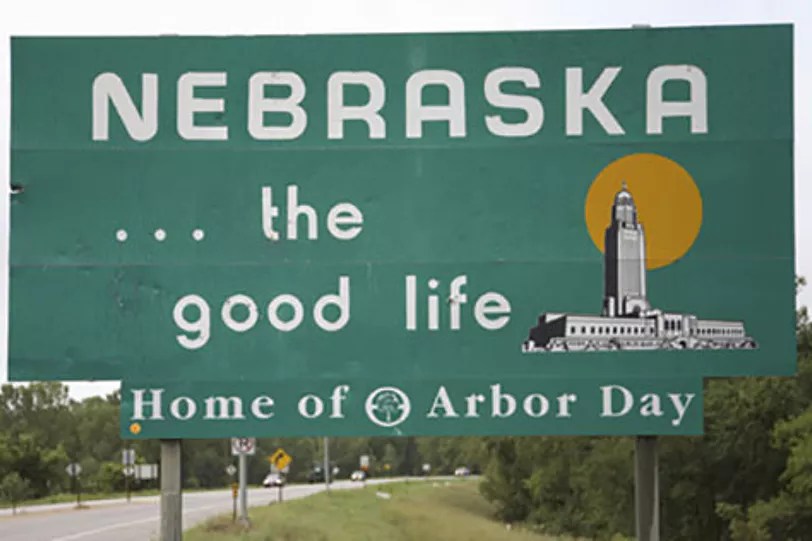
Nebraska Supreme Court Affirms Ban on Gender-Affirming Care and Abortion Restrictions

In a significant ruling, the Nebraska Supreme Court voted 6-1 to uphold a ban on gender-affirming care and abortion restrictions beyond 12 weeks of pregnancy.

The case, Planned Parenthood of the Heartland v. Hilgers, challenged Legislative Bill 574, which restricts abortions after 12 weeks and limits gender-affirming care for minors. The Nebraska legislature passed the bill in 2023, and it was signed into law by the governor in May. In response, the ACLU of Nebraska, representing Planned Parenthood of the Heartland, filed a lawsuit against Attorney General Michael Hilgers.

The ACLU contended that the bill violated the Nebraska Constitution’s single-subject rule, which mandates that a bill should focus on only one subject. However, the court found that both abortion and gender-affirming care are medical procedures, making it acceptable for the bill to address both issues.

The court stated, “We disagree with Planned Parenthood’s contention that it is not possible to identify a single purpose of L.B. 574 that withstands single subject scrutiny. L.B. 574 does regulate both abortion and gender-altering care, but both abortion and gender-altering care are medical procedures, and L.B. 574 prescribes rules that define if and when such procedures can be performed.”

Justice Lindsey Miller-Lerman was the sole dissenter, offering a partial dissent. She argued that the bill’s unrelated provisions did not adequately meet the single-subject requirement, stating, “Unrelated provisions that happen to do similar things at some level of generality do not dispel the criticism that the bill contains more than one subject.”

Mindy Rush Chipman, executive director of ACLU of Nebraska, expressed disappointment with the ruling. “We respectfully disagree with the court majority’s determination, and we had hoped for a different outcome. However, it is crucial that Nebraskans remain aware of the impact these restrictions will have. Nebraskans have been affected every week since the governor signed LB 574 into law. Despite this setback, we will continue to fight for the rights of Nebraskans to make their own private decisions about their lives, families, and futures.”

A similar case, United States v. Skrmetti, involving a Tennessee ban on gender-affirming care for minors, will be heard by the U.S. Supreme Court later this year.

LGBTQ Nation reached out to the ACLU of Nebraska and Planned Parenthood for comment but did not receive a response before publication. This article will be updated if they provide a statement.
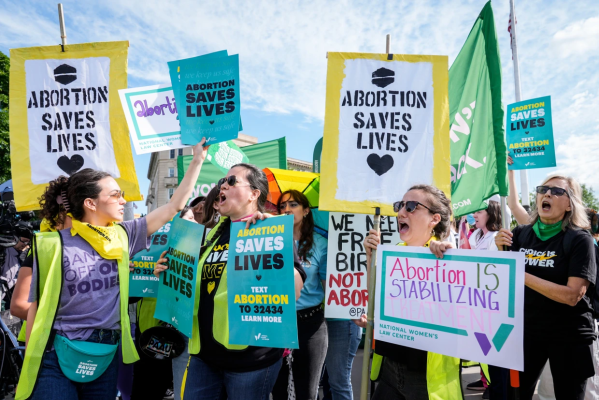
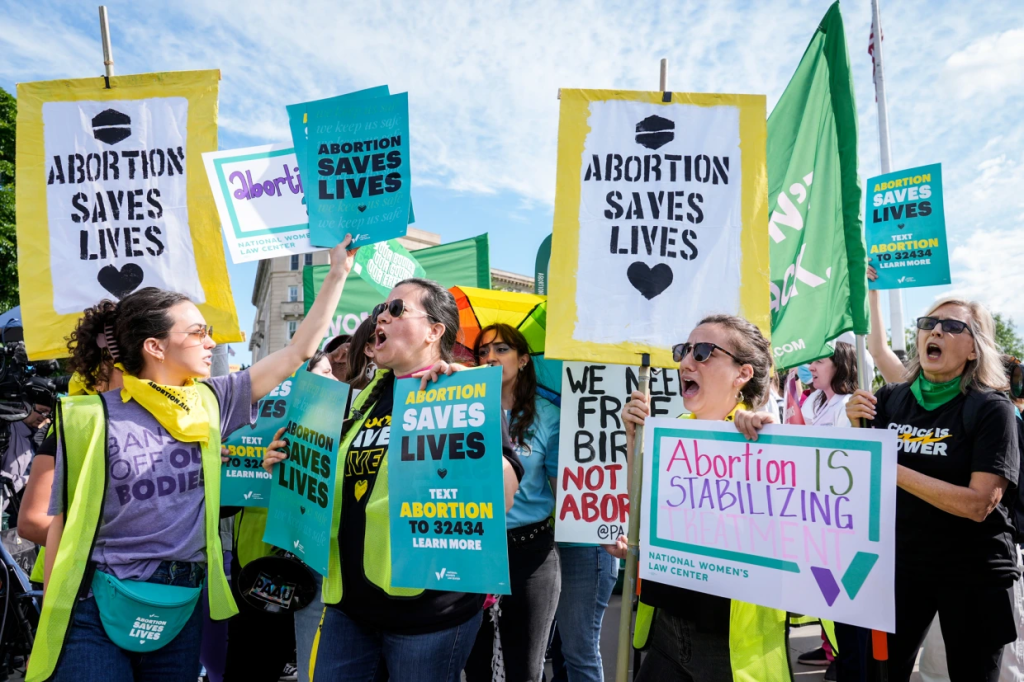
Supreme Court to rule on pivotal abortion cases two years after overturning Roe v. Wade

This blog originally appeared at NBC NEWS.

The justices will decide whether to impose new restrictions on the abortion pill mifepristone, and whether a federal law requiring emergency room treatment conflicts with a state abortion ban.

WASHINGTON — The Supreme Court is poised to rule this month on two significant abortion cases that could have nationwide repercussions. This marks the first time the justices are revisiting the issue since overturning Roe v. Wade.

The 2022 decision to revoke the right to obtain an abortion caused widespread upheaval, prompting a wave of new state-level abortion restrictions and encouraging anti-abortion activists to seek further limitations.

The most closely watched case involves the court deliberating whether to implement new restrictions on the widely used abortion pill mifepristone, including tighter regulations on mail-order access.

In a less publicized yet potentially impactful case, the justices are examining whether Idaho’s near-total abortion ban conflicts with a federal law mandating emergency medical care for patients, including pregnant women.

Rabia Muqaddam, a lawyer at the Center for Reproductive Rights, which supports abortion rights, referenced the 2022 ruling in Dobbs v. Jackson Women’s Health Organization “set off a chain reaction that we are seeing in all sorts of ways, including the two cases now before the court.

Theories that were previously considered “the fringe of the fringe” are now “sufficiently mainstream to make it to the Supreme Court,” she added.

The new cases show that the court’s stated aim of getting out of the business of deciding what conservative Justice Brett Kavanaugh called “difficult moral and policy questions” was easier said than done. As such, the upcoming rulings will provide further evidence of how far the court, which has a 6-3 conservative majority, is willing to go in curbing abortion access.

In the mifepristone case, the court is weighing whether to impose new restrictions on the pills’ availability, including access by mail. Such a move would dramatically decrease the ability of women to obtain the pills, especially in states with new abortion restrictions.

The legal question in the Idaho case is whether a federal law that requires stabilizing treatment for patients in emergency rooms trumps the state restrictions in certain circumstances when doctors believe an abortion is required to protect the health of a pregnant woman.

Jim Campbell, chief legal counsel of Alliance Defending Freedom, the conservative Christian legal group that is representing anti-abortion interests in both cases, said the legal issues in each of them reflect overreach by the Biden administration in response to Roe being overturned.

“They’re both instances where the federal government is doing things, whether directly or indirectly, to interfere with state pro-life laws,” he added.

Based on oral arguments earlier this year, it seems likely that anti-abortion groups will lose in the mifepristone case, leaving the status quo unchanged. That means the Idaho case could have a bigger practical impact if the court backs the state, which seems possible based on questions asked by the justices.

Rulings are expected by the end of the month when the court traditionally concludes its nine-month term that begins in October. The court will also be issuing a slew of other rulings on hot-button issues, including former President Donald Trump’s claim of immunity from prosecution in his election interference case.


Read more: https://www.nbcnews.com/politics/supreme-court/supreme-court-rule-abortion-cases-two-years-overturning-roe-v-wade-rcna155511

Blog at WordPress.com.

Up ↑