
*this is reported by Science Business.
The French government has launched a platform to pair universities and research organisations with international researchers looking to relocate. Called Choose France for Science, the platform is particularly interested in attracting researchers working in areas related to health, climate change, digital technologies and space.
While created as a response to the mounting pressure on US scientists, the initiative will be open to all. “We suspect that there will be a lot of Americans, [and] it’s essentially for them that we’re doing this, but it’s not reserved for American researchers,” an official at the French higher education and research ministry told Science|Business.
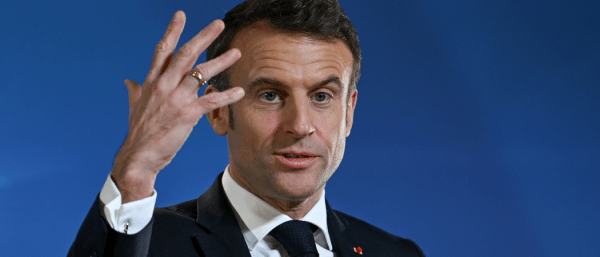
The platform will feature at a high-profile meeting for the global research community hosted by French president Emmanuel Macron on May 5. But it has been opened early so that the National Research Agency can start pre-selecting projects and applications, in order to “avoid wasting time and prepare to welcome [researchers] in the best way possible,” the ministry official said.
The international scientists will be selected according to the relevance of their research work, he added.
The government intends to mobilise new resources, outside of the national research budget, to support their recruitment. This will cover up to 50% of the costs, with host institutions making up the rest from their own funds, with the help of local authorities and the private sector.
The French scheme is also intended to spur Brussels and other EU nations to follow suit. “If Europe wants to act, it can very well build on what has been done on the French level,” the ministry official said.
Other EU member states have started to mobilise. Earlier this week, the Research Council of Norway launched a €8.4-million fund to facilitate the recruitment of top international researchers, while Germany could spend some of its €500-billion infrastructure and climate package to attract US scientists.
France’s earlier willingness to court US researchers has received a mixed reaction from the academic community. In an opinon column published by Le Monde, Université Paris Cité lecturer Théo Besson claimed that the intention was “laudable” but its realisation “unrealistic” given the substantial lack of investment in research in France and uncompetitive salaries.
In another article, economist Philippe Askenazy said that it was “futile” to think that a wave of US academics would leave an environment that remains “exceptional” despite the Trump administration’s crackdown on science. Yet there are signs of movement, with data from Nature indicating that US scientists submitted 32% more applications for jobs abroad between January and March 2025 than during the same period last year.
Meanwhile, Aix-Marseille University has received nearly 300 applications to its Safe Place for Science programme in less than a month. Many come from experienced researchers at organisations like NASA and universities such as Yale and Stanford. According to university president Éric Berton, who provided details in an op-ed published last week by Libération, most applications were sent via encrypted messaging services, along with “worrying, sometimes chilling, testimonies.”
Some cited the lack of clarity regarding future funding sources as a reason to move, others mentioned limits on their research freedom or the political climate sparking general anxiety within the research community.
Up to 40 candidates will be interviewed in May. The first batch of researchers selected should arrive in early June.
Scientific refugees
In the Libération article, Berton joins forces with former French president François Hollande to propose the creation of a “scientific refugee” status for researchers experiencing political pressure. “Just like journalists or the political opposition, when they are hindered, scientists must necessarily be able to be recognised as refugees in their own right,” they write.
The idea has already been turned into a bill in the National Assembly, with the aim of supporting relocation procedures. This could include the creation of an “emergency scientific visa” at a time when “current asylum mechanisms fail to consider the specificities of the academic environment and the threats weighing on scientists within authoritarian regimes,” the document says.
According to Berton, the refugee status would be offered “to all researchers whose academic freedom is restricted, whether from countries at war or in the grip of obscurantism,” such as the beneficiaries from the French government’s Pause programme.
No date is set for the bill to be discussed by the National Assembly, but Berton told Science|Business that he hoped that Macron would back the idea at the May 5 meeting. This will “provide lasting protection for scientists threatened worldwide by dictators and conservatives,” he said.
Ekaterina Zaharieva, the European commissioner responsible for research, has previously alluded to a potential “special passport for science,” but no concrete proposals have been brought forward.



 fleeredstates.blog
You must be logged in to post a comment.