US supreme court upholds Tennessee ban on youth gender-affirming care

*This is reported by The Guardian

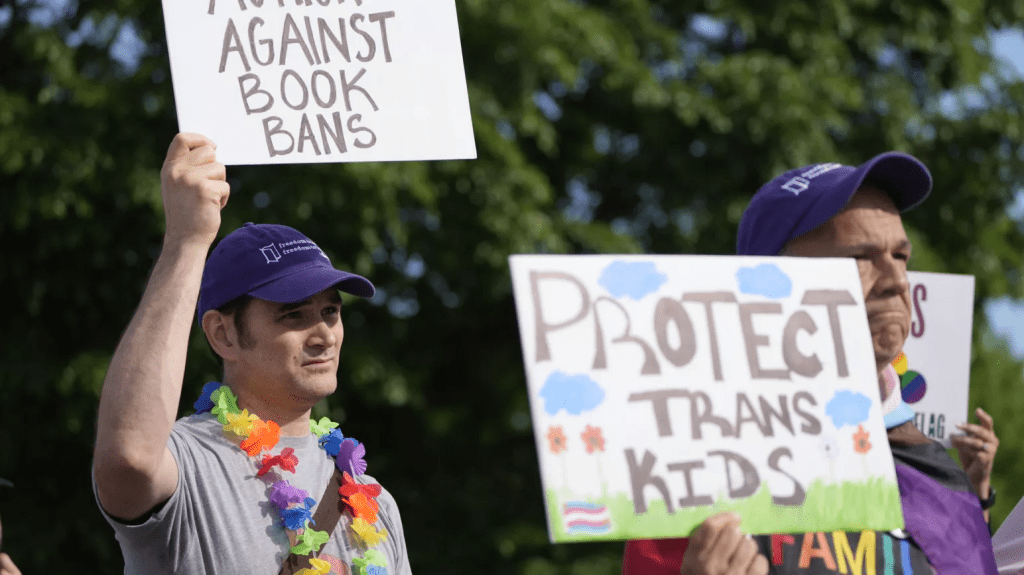
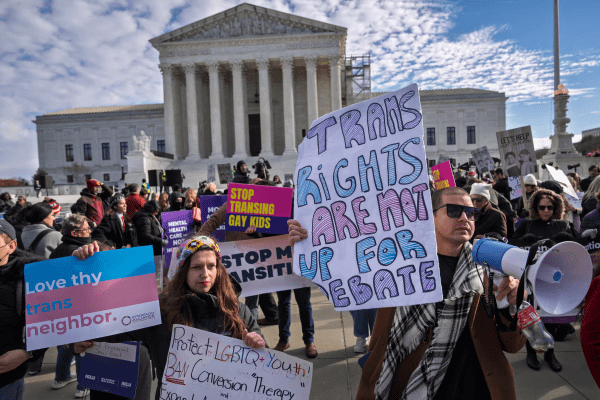
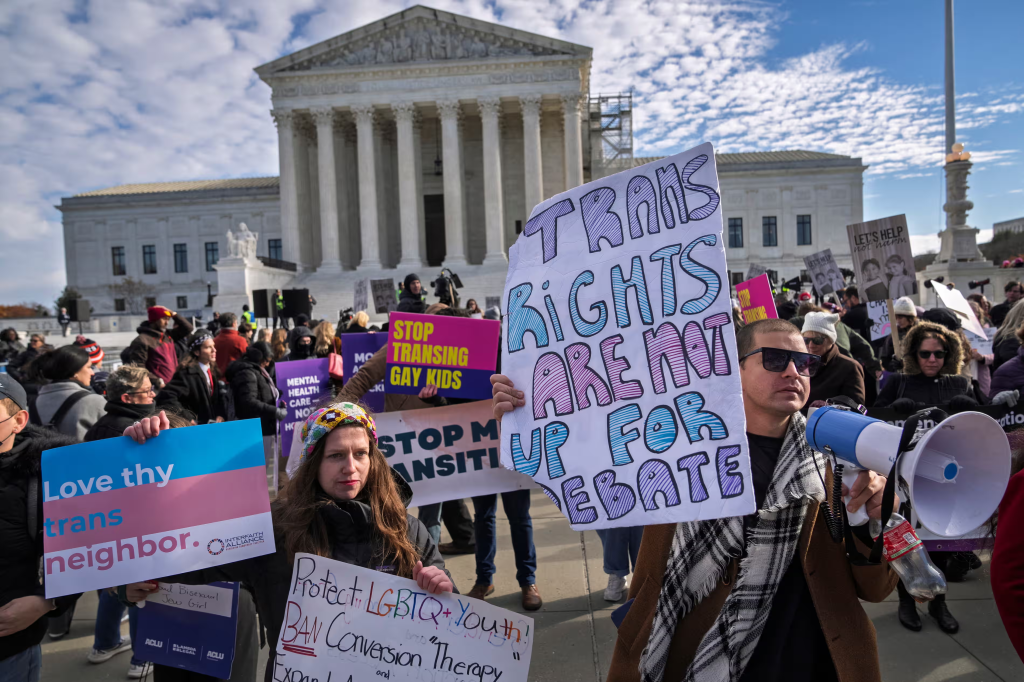
A Tennessee state law banning gender-affirming care for minors can stand, the US supreme court has ruled, a devastating loss for trans rights supporters in a case that could set a precedent for dozens of other lawsuits involving the rights of transgender children.

The case, United States v Skrmetti, was filed last year by three families of trans children and a provider of gender-affirming care. In oral arguments, the plaintiffs – as well as the US government, then helmed by Joe Biden – argued that Tennessee’s law constituted sex-based discrimination and thus violated the equal protection clause of the 14th amendment. Under Tennessee’s law, someone assigned female at birth could not be prescribed testosterone, but someone assigned male at birth could receive those drugs.

Tennessee, meanwhile, has argued that the ban is necessary to protect children from what it termed “experimental” medical treatment. During arguments, the conservative justices seemed sympathetic to that concern, although every major medical and mental health organization in the US has found that gender-affirming care can be evidence-based and medically necessary. These groups also oppose political bans on such care.

All six of the supreme court’s conservative justices joined in at least part of the decision to uphold the law, although several also wrote their own concurring opinions. In his majority decision, Chief Justice John Roberts emphasized that the ruling primarily rested on the justices’ finding that the law did not violate the equal protection clause, rather than on an ideological opposition to trans rights.

“This case carries with it the weight of fierce scientific and policy debates about the safety, efficacy and propriety of medical treatments in an evolving field. The voices in these debates raise sincere concerns; the implications for all are profound,” Roberts wrote. He added: “We leave questions regarding its policy to the people, their elected representatives, and the democratic process.”

In recent years, the question of transgender children and their rights has consumed an outsized amount of rightwing political discourse. Since 2021, 26 states have passed bans on gender-affirming care for minors, affecting nearly 40% of trans youth in the US. Twenty-six states have also outlawed trans kids from playing on sports teams that correspond with their gender identity.

Many of these restrictions have been paused by court challenges, but the supreme court’s decision could have vast implications for those lawsuits’ futures. A study by the Trevor Project, a mental health non-profit that aims to help LGBTQ+ kids, found that anti-trans laws are linked to a 72% increase of suicide attempts among trans and nonbinary youth.

Justice Sonia Sotomayor dissented from the majority opinion, alongside Justices Ketanji Brown Jackson and Elena Kagan. Because the law discriminates on the basis of sex, Sotomayor argued in her dissent, it should face higher legal scrutiny than the majority decided to give it.

“Male (but not female) adolescents can receive medicines that help them look like boys, and female (but not male) adolescents can receive medicines that help them look like girls,” Sotomayor wrote. “By retreating from meaningful judicial review exactly where it matters most, the Court abandons transgender children and their families to political whims. In sadness, I dissent.”

North Dakota Legislature close to asking Supreme Court to undo landmark gay marriage ruling

*This is reported by NBC.

North Dakota lawmakers are on the verge of making their state the first to tell the U.S. Supreme Court to overturn its decade-old ruling that legalized same-sex marriage nationwide.

Similar efforts — which would not have any direct sway with the nation’s top courts — have been introduced in a handful of states this year. North Dakota’s resolution passed the Republican-led House in February but still requires Senate approval, which is not assured.

“The original Supreme Court ruling in 2015 went totally against the Tenth Amendment, went totally against the North Dakota Constitution and North Dakota Century Code (state laws),” sponsor Republican Rep. Bill Tveit said. “Why did I introduce it? Every one of us in this building took an oath to uphold the Constitution of the United States and the state.”

When the Legislature considers such resolutions, attorney and North Dakota National Guard member Laura Balliet said she wonders why she stays in her home state. The measure makes her feel unwanted, unwelcome and judged because of who she is, she said. She married her wife in 2020.

“I don’t know what this resolution does other than to tell people like myself, my friends and my family that we’re not welcome here, and I’m angry about that because I want to be welcome here. This is my home,” Balliet told the Senate panel that heard the measure on Wednesday — one in a stream of opponents who testified against it.

A push across states

Massachusetts-based MassResistance, which describes itself as an “international pro-family group” but has been labeled “anti-LGBTQ hate group” by the LGBTQ advocacy organization GLAAD, is pushing the resolution across the country.

Massachusetts became the first state to recognize same-sex marriage, in 2004. Over the next 11 years, most states began to recognize it through laws, ballot measures or court decisions before the Supreme Court made it legal nationwide.

Outside of Idaho and North Dakota, the measures have not progressed far, according to an analysis of legislation collected by the bill-tracking service Plural.

By contrast, there have been additional protections for same-sex marriage over the years, including a federal law in 2022. Since 2020, California, Colorado, Hawaii and Nevada have repealed old constitutional amendments that defined marriage as being allowed only between a man and a woman, and Virginia lawmakers advanced a similar measure this year. It could be on the ballot there in 2026.

Differing views

The North Dakota measure states that the Legislature “rejects” the 2015 Obergefell v. Hodges decision and urges the U.S. Supreme Court “to overturn the decision and leave unaddressed the natural definition of marriage as a union between one man, a biological male, and one woman, a biological female.”

In the court’s 2022 ruling that overturned the constitutional right to an abortion, Justice Clarence Thomas said the court should reconsider its precedents in the marriage decision and other past cases.

Soon after the measure passed the North Dakota House last month, several Republican state reps who voted for it stated they meant to vote no or regretted voting yes.

Republican Rep. Matt Ruby said he wished he had voted against the measure, saying his yes vote was for a different intent he realized wasn’t going to happen. The vote sent a bad message “that your marriage isn’t valid and you’re not welcome,” Ruby said. He said he supports the right for same-sex couples to be married.

Republican Rep. Dwight Kiefert said he voted for the resolution because of his Christian faith and that the institution of marriage was established in the Bible in the Garden of Eden between Adam and Eve.

‘Slap in the face’

The measure is a slap in the face to North Dakotans who are happily married and invested in their state, said Democratic Sen. Ryan Braunberger, who is gay and sits on the Senate panel that heard the resolution. The measure sends a dangerous message as North Dakota wants to grow its population and expand economically, he said.

“We want to make sure that we bring everybody in the best of the crop, and that runs the gamut of all sorts of different races, ethnicities, sexual orientations through that,” Braunberger said.

The measure is a declaration, if passed, that lawmakers would want to define marriage through what is arguably a religious lens, which dangerously gets close to infringing upon the Establishment Clause of the U.S. Constitution, said Cody Schuler, advocacy manager for the American Civil Liberties Union’s North Dakota chapter.

“Marriage defined as ‘one man, one woman’ is a particular religious view. It is not held by all religions, all societies or by nonreligious people, and so therefore it is dangerous to be making that kind of statement because it puts legislators on record as to how they might vote on law, on a binding law versus this nonbinding resolution,” Schuler said.

Supreme Court Could Legalize LGBTQ Conversion Therapy—The Consequences Could Cost Billions

*This is being reported by Forbes

The Supreme Court announced Monday it will hear a case regarding whether state bans on “conversion therapy” trying to change minors’ sexual orientation or gender identity are legal—a case that could carry billions of dollars in repercussions, as a 2022 study found conversion therapy carries an economic burden of approximately $9 billion annually for patients and their families.

Key Facts

The Supreme Court took up Chiles v. Salazar, a case challenging Colorado’s ban on LGBTQ “conversion therapy” for minors, which asks the justices to more broadly decide whether laws that “[censor] certain conversations between counselors and their clients based on the viewpoints expressed” are constitutional.

LGBTQ “conversion therapy,” as it’s commonly known, refers to any practices—including both emotional efforts, like talk therapy, or physical efforts, like electroconvulsive therapy—that aim to influence a patient’s sexual orientation or gender identity, which are typically framed as efforts to “cure” homosexuality or being transgender.

Repeated studies have shown such efforts are ineffective at changing people’s sexual orientation or gender identity and carry a variety of harmful effects—such as elevated risks for suicide, drug abuse and mental health issues—which has led to bans on conversion therapy for minors being enacted in more than 20 states.

Conversion therapy and its negative effects also have an economic impact, as a 2022 study published in JAMA Pediatrics found conversion therapy and its “associated harms” result in an economic burden of approximately $9.23 billion per year.

Conversion therapy alone costs approximately $650 million for participants annually in the U.S., with individuals who undergo it paying an extra $97,985 for treatment as compared with people who don’t undergo any counseling, according to the study, which was based on data from LGBTQ youth ages 13-24.

There are also significant costs associated with knock-on effects from conversion therapy and the study estimates each conversion therapy patient pays an extra $83,366 on average to treat the “downstream consequences” associated with the procedure, which combined raise the total economic burden of conversion therapy to $9.2 billion.

What To Watch For

The Supreme Court will hear the case on conversion therapy at some point during its next term, which begins in October, so any ruling in the case is likely more than a year away.

What Did The Study Conclude?

The study, which was conducted by pro-LGBTQ rights organization The Trevor Project and research group Cytel, concluded there is a “high economic burden and high societal costs” that come along with conversion therapy, which the study refers to as sexual orientation and gender identity change efforts (SOGICE). Researchers analyzed the difference in costs between patients who underwent conversion therapy, LGBTQ youth who received no therapy and those who received therapy that affirmed their sexual orientation or gender identity. The study found conversion therapy carried the highest economic burden: In addition to the $650 million per year in total attributed to the therapy itself, there are also total annual costs of $190 million related to anxiety or “severe psychological distress” among those that underwent conversion therapy, $1.36 billion related to depression, $2.42 billion from suicide attempts, $1.17 billion from fatal suicides, $1.26 billion from alcohol use disorder and $2.18 billion from substance abuse. The likelihood of those negative outcomes was largely markedly higher among those who underwent conversion therapy as compared with other LGBTQ populations—except alcohol use disorder, where those without any therapy registered the highest number by one percentage point (42.26% among those with no intervention versus 41.26% among conversion therapy patients). As a result, the total costs incurred by conversion therapy patients were higher than the $4.85 billion in total annual costs among those who hadn’t received any treatment, and $3.04 billion among those who received affirmative therapy.

Contra

Researchers noted there were some limitations with the study’s methodology that may affect its results, such as being based on studies in which patients self-reported their experiences. That means it might not be fully representative of all LGBTQ patients, as many people may be unwilling to discuss their experiences. It also assumes the risks are the same across the LGBTQ population and for various types of conversion therapy, which may not be the case. Researchers argued they took a “conservative approach” with their findings, however, and noted the $9 billion figure is likely an underestimate of the total economic impact. The study only looked at adverse impacts from conversion therapy for three years after the treatment, for instance—though such effects could likely extend for much longer—and did not examine some other potential impacts, like post-traumatic stress disorder or medical consequences from various medications or electroconvulsive therapy.

Big Number

13%. That’s the share of LGBTQ youth who have either been subjected to or threatened with conversion therapy, according to a 2024 survey conducted by The Trevor Project among more than 50,000 Americans ages 13-24. That includes 5% who have been subjected to the therapy and 8% who were threatened with it. The 5% share is down from 10% who said in 2020 they were subjected to the therapy, though that number could rise again should the Supreme Court outlaw state bans.

Key Background

The Supreme Court case was brought by Kaley Chiles, a licensed counselor in Colorado who said in a court filing “she believes that people flourish when they live consistently with God’s design, including their biological sex.” Chiles objects to Colorado restricting her from counseling clients to change their sexual orientation or gender identity, claiming it violates her First Amendment rights and classifying state bans on conversion therapy as “silenc[ing] counselors’ ability to express views their clients seek on a topic of ‘fierce public debate.’” Chiles asked the Supreme Court to take up the case after a federal appeals court upheld Colorado’s policy restricting conversion therapy, ruling that it was regulating counselors’ professional conduct, rather than chilling First Amendment-protected speech. The case is the latest in a string of major cases related to LGBTQ rights the 6-3 conservative-leaning court has decided in recent years—such as cases over businesses being allowed to discriminate against same-sex couples or discriminate on the basis of sexual orientation and gender identity—and the court is deliberating on a case this term over gender-affirming care for minors.

Further Reading

Humanistic and Economic Burden of Conversion Therapy Among LGBTQ Youths in the United States (JAMA Pediatrics)

Tennessee drag ban will stay as SCOTUS refuses to hear case, but artists ‘refuse to be silenced’

*This was reported by The Advocate.

The U.S. Supreme Court has refused to hear a lawsuit challenging Tennessee‘s drag ban, leaving in place an appeals court ruling upholding the law.

The state’s controversial Adult Entertainment Act, passed in 2023, prohibits “adult cabaret entertainment” on public property or in any location where minors could view it. Thelaw defines such entertainment as performances that are “adult-oriented” and “harmful to minors,” including acts by topless dancers, go-go dancers, exotic dancers, strippers, and “male or female impersonators.”

Friends of George’s Inc., a Memphis-based theater group known for its drag performances, filed a lawsuit against the AEA, arguing that the ban is overly broad and vague, and effectively criminalizes their performances.The Sixth Circuit Court of Appeals dismissed the legal challenge in Julyy, claiming that the plaintiffs did not have standing to sue. The decision reversed a lower court’s ruling that had declared the law unconstitutional.

separate lawsuit against the ban is still ongoing, brought by the American Civil Liberties Union on behalf of Blount County Pride. Organizers filed the suit after District Attorney General Ryan Desmond threatened to prosecute anyone violating the law during a 2023 Pride festival.

Friends of George’s denounced the Supreme Court’s ruling in a statement, maintaining that “this ruling does not define us — we do. And we refuse to be silenced.”

“Friends of George’s Theatre Company will continue exercising our First Amendment right — bringing inclusive, joyful art to our community while raising thousands for charities that uphold dignity and respect for all,” the group said. “Oppression is nothing new to the LGBTQ+ community. Every attempt to silence us has only made us louder, stronger, and more relentless. This moment is no different.”

“To our trans siblings who have led this fight from the start — you are not alone. Your courage fuels us. Your struggle is our struggle. We stand with you,” they continued. “To every performer, artist, and activist — keep using your voice, your craft, your presence. Every soapbox is sacred, and we will not step off it. To our supporters, friends, and allies — this fight is bigger than us. It’s about life, liberty, and the pursuit of happiness — for everyone. We will resist with joy, art, and the unshakable belief that laughter is defiance.”

Twenty-four states submit an amicus brief urging the Supreme Court to prohibit transgender girls from participating in women’s sports

This blog is originally appeared at LGBTQ Nation

There is no conclusive evidence to support the claim that transgender girls possess a substantial biological advantage in sports.

Alabama Attorney General Steve Marshall, along with attorneys general from 23 other states, filed an amicus brief advocating for the prohibition of transgender girls participating in sports.

The brief specifically requests the Supreme Court to review and overturn an injunction issued by the 9th U.S. Circuit Court of Appeals, which had blocked Arizona’s ban on transgender athletes.

Alabama Attorney General Steve Marshall collaborated with Arkansas Attorney General Tim Griffin to draft the amicus brief, with support from attorneys general in 22 other states, including Alaska, Florida, Georgia, Indiana, Iowa, Kansas, Kentucky, Louisiana, Mississippi, Missouri, Montana, Nebraska, New Hampshire, North Dakota, Oklahoma, South Carolina, South Dakota, Tennessee, Texas, Utah, Virginia, and Wyoming.

The injunction being challenged was issued in September by the 9th U.S. Circuit Court of Appeals in a unanimous 3-0 decision. This injunction blocked Arizona’s Save Women’s Sports Act, a law imposing a blanket ban on transgender girls participating in girls’ sports, regardless of their transition timeline or use of puberty blockers. The lawsuit challenging the law was filed by two transgender girls and their parents seeking to overturn the ban.

In the court’s decision, Judge Morgan Christen wrote, “[The law] permits all students other than transgender women and girls to play on teams consistent with their gender identities. Transgender women and girls alone are barred from doing so. This is the essence of discrimination.”

The amicus brief presented several arguments in favor of the ban. One claim was that implementing policies allowing transgender girls to join girls’ sports teams would be costly and logistically difficult for schools—despite evidence showing that many schools nationwide have successfully adopted trans-inclusive policies without significant challenges.

The brief also asserted that sex and gender identity are not equivalent under the Equal Protection Clause of the Constitution, a stance that contradicts legal precedent established in Bostock v. Clayton County. In that case, the Supreme Court ruled that protections against sex-based discrimination include transgender individuals due to their gender identity.

Additionally, the attorneys general argued that the Circuit Court’s ruling was legally flawed. They suggested that the decision could be interpreted in ways more favorable to their case and called for a rational-basis review. This review would evaluate whether the plaintiffs’ claims were consistent with constitutional equal protection principles or whether they failed to meet that standard.

It remains uncertain whether these arguments will prevail. The Supreme Court has not announced whether it will hear this case. However, the Court has already agreed to consider United States v. Skrmetti, which will address the legality of state bans on gender-affirming care for minors.

Evidence does not support claims that transgender girls have a significant biological advantage in sports. In fact, studies indicate that transitioning, including the use of puberty blockers, can mitigate differences and create a fairer playing field.

Despite this, anti-trans rhetoric continues to shape these legal battles. “Our coalition is determined to preserve the 50 years of work that expanded opportunities and leveled the playing field for girls and women in sports,” Attorney General Marshall stated in a press release.

He added, “But the left continues to pander to a small minority of their base… Parents of daughters are rightfully outraged at the loss of positions on teams and college scholarships. As our multiple briefs to the Supreme Court show, it’s time to return to fairness in opportunity for sports.”

Blog at WordPress.com.

Up ↑