“There are many people who clearly do not want us to be here.”
Police in Santa Cruz, California, have charged 45-year-old James Eason with vandalizing The Neighbor’s, a queer bar, just days after it opened. Eason faces charges of vandalism, arson, and committing a hate crime.
The incident occurred early last Tuesday morning when a suspect set fire to a button panel outside the bar’s front door, which is used to assist disabled patrons. The vandal also attempted to push burning napkins through the door’s cracks and carved a homophobic slur into the glass, according to bar owner Frankie Farr, who spoke with Lookout.
“I was like, ‘You’ve got to be kidding, we’re not even open a week,’” Farr said. “[We are] still a bit in shock that it happened so quickly… There are clearly many people who do not want us to exist.”
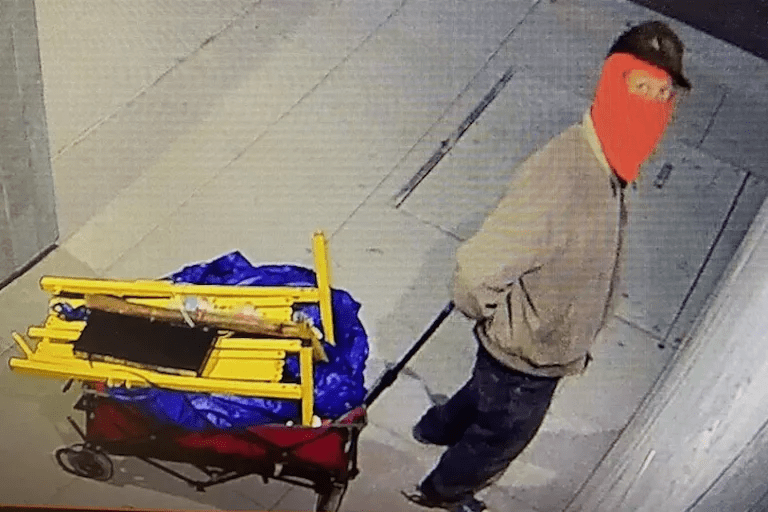
They contacted the police, and detectives were able to identify the suspect after reviewing surveillance footage from nearby businesses. At the time Eason was named a suspect in the vandalism, he was already in custody at the county jail for an unrelated offense.
The bar opened in early December with a ribbon-cutting ceremony attended by Santa Cruz Mayor Fred Keeley, City Councilmember Sonja Brunner, and more than 100 patrons eager to explore the new space.
Although the city is home to LGBTQ+-inclusive businesses, Farr felt there was a lack of dedicated spaces for queer individuals to meet, socialize, and build a sense of community. In addition to offering food and serving as a performance venue for regional DJs, queer performers, and drag artists, Farr hopes the bar can also support environmental and social movements and attract LGBTQ+ tourists to Santa Cruz.
“It’s pretty depressing to think of all these people driving over the hill or all the way to San Francisco just to find [queer] community when we have it right here,” Farr said.
Months before the opening, Farr shared, “I really want [the bar] to be a place for people who aren’t out or in unsafe situations where they can’t disclose their sexuality to family or others they live with—where they can give a sly little wave and say, ‘I’m just going to hang out at The Neighbor’s.’”
Despite the attack, the bar resumed normal business hours right away. Farr expressed gratitude that the incident wasn’t worse.
“We’re very fortunate that nobody was inside,” Farr said. “However, there are apartments above, and those residents don’t deserve this either. They could have been seriously injured.”
Why Allies Must Act: Defending Trans Rights Protects Everyone’s Freedoms
As the election dust settles, the focus shifts to practical realities. For transgender people like me, a pressing question looms: What actions will this new Trump administration take?
It’s tempting to jump to extreme conclusions—like the idea of being rounded up and placed in camps. But it likely won’t look like that. There won’t be “camps,” nor will there be overt “rounding up.” Instead, the approach will be more subtle, and that subtlety is precisely what makes it so dangerous.
The quiet nature of these changes will make them easier for cisgender people to overlook. However, their awareness is vital—not only for our survival but for their own protection, as the erosion of trans rights often signals broader attacks on freedoms that could ultimately affect everyone.
The groundwork for trans oppression is already being laid. In recent years, Republicans have pursued anti-trans legislation with alarming intensity, proposing over 1,000 laws targeting everything from medical care and bathroom usage to IDs, sports, and even how we dress. Trump has vowed to push similar policies at the federal level, and Project 2025 outlines an even more expansive agenda.
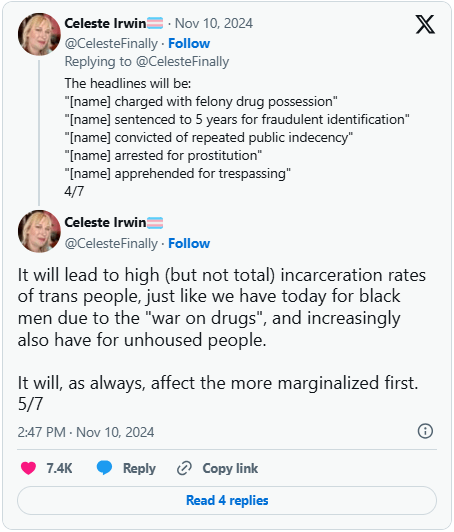
To understand what trans oppression under Trump might look like, we can look to other marginalized groups. For instance, the mass incarceration of Black men wasn’t achieved through blatant decrees like “round them up” but through systemic oppression: harsh laws with disproportionate penalties, over-policing, and economic barriers that strip away basic human needs. Trans people have already faced similar tactics, such as laws criminalizing “cross-dressing” to police our existence.
Under another Trump administration, this oppression might escalate. It could involve banning hormone replacement therapy and criminalizing those who seek it out. Policies might mandate that gender markers on IDs match sex assigned at birth, penalizing those of us who continue to live authentically with fraud or perjury charges. Involuntary commitment to mental institutions could even be a reality.
These measures, even if sporadically enforced, create an ever-present climate of fear—a psychological toll that leaves us constantly bracing for the next law, the next crackdown, the next violation of our humanity. And in this hostile environment, the silence or complacency of cisgender allies would make it all the easier for these oppressive systems to thrive.
The coming years will likely see escalating attacks on trans people, particularly the most marginalized among us—trans women of color, disabled trans people, and others who already face significant barriers. These policies will make it harder for them to access stable employment and lead precarious lives, amplifying systemic inequities.
We cannot wait for something as blatant as a “lock up all the trans people” decree. The oppression will come in quieter, more insidious forms: laws and policies that restrict our rights to healthcare, employment, and basic expression. Even if trans people comply with these laws, the result will still be a kind of prison—a life stripped of autonomy and dignity.
If you are cisgender, we need your help. Not just because it’s the right thing to do, but because these attacks on trans rights will eventually pave the way for attacks on your rights. Consider abortion access: for decades, conservatives framed their arguments around “protecting life” to avoid addressing bodily autonomy directly. But the fight against gender-affirming care removes that pretense altogether. By banning medically supported, evidence-based care simply because they don’t like it, lawmakers set a dangerous precedent that could extend to other healthcare decisions.
Your body could be next.
Employment and education are also at risk. Imagine a national “Don’t Say Gay/Trans” policy that bars teachers like me—who are openly transgender—from the profession. Policies like these won’t stop at targeting trans people. Deadnaming and misgendering trans students could morph into strict gendered dress codes for everyone, eroding freedom of expression for all students. What starts as an attack on trans rights often metastasizes into broader assaults on personal liberties.
As we approach January 20th, now is the time to act:
Get involved: Connect with your local LGBTQ+ center and see how you can support their efforts.
Stay informed: Follow trans journalists and activists to keep up with the latest developments.
Advocate: Write to your representatives in both parties, showing them that you stand with trans people.
Speak out: Use your voice, wear supportive messages, and engage your cisgender friends to build awareness.
Support trans people directly: Check in with your trans friends, especially now, as they navigate a political climate fueled by over $200 million of anti-trans rhetoric during the election. Let them know you’re there for them.
This isn’t just about protecting trans people—it’s about preserving freedom and dignity for everyone. Together, we can resist these threats and build a future where everyone has the right to live authentically.



 fleeredstates.blog
You must be logged in to post a comment.