Doctors can refuse to treat LGBTQ+ patients in several states – these religious exemption laws lead to drops in HIV testing

Read more at The Conversation.

An increasing number of U.S. states have passed laws that allow health care providers – including doctors, nurses and pharmacists – to refuse to treat patients based on their personal or religious beliefs. While these conscientious objection laws have long existed for issues such as abortion, their effects on LGBTQ+ people have not been well studied.

As of April 2026, 11 U.S. states have enacted conscientious objection laws specifically targeting LGBTQ+ people. As public health researchers who study the effects of public policies on the health of LGBTQ+ people, we wanted to examine how these laws have affected the roughly 1 in 5 LGBTQ+ Americans living in a state where a provider can legally refuse them care.

Specifically looking at sexual minorities, our research found that lesbian, gay, bisexual and queer adults living in states that passed conscientious objection laws were 28% less likely to report receiving a first-time HIV test, compared to peers in states without conscientious objection laws. These laws did not affect HIV testing rates for heterosexual adults.

Similarly, LGBQ+ adults in affected states were 71% more likely to report being in fair or poor health after the laws passed, compared to those in states without the laws.

Measuring the harm

We analyzed data from the Centers for Disease Control and Prevention on the health outcomes of more than 109,000 lesbian, gay, bisexual, queer and heterosexual adults from 2016 to 2018. We focused on eight states, comparing two that enacted conscientious objection laws during that period (Illinois and Mississippi) and six that did not (Louisiana, Minnesota, Ohio, Texas, Wisconsin and Virginia).

To isolate the effect of the laws themselves, we compared changes in health outcomes among LGBQ+ and heterosexual adults living in states with or without religious exemptions to health care, both before and after the laws passed. Making all these comparisons at once allowed us to identify differences in health outcomes due to the laws rather than preexisting differences between states.

We found that conscientious objection laws were associated with significant harms to LGBQ+ adults, including a decline in HIV testing and a worsening of self-rated health.

Our findings highlight how laws permitting clinicians to refuse to provide health care to LGBQ+ patients deepen existing health disparities. Notably, conscientious objection laws are just one type of policy restricting LGBTQ+ people’s access to health care.

The Trump administration has slashed budgets for the federal Ryan White HIV/AIDS program and state-level AIDS drugs assistance programs, reducing the availability of HIV prevention and treatment services. States have also moved to restrict access to gender-affirming care for both minors and adults, despite its additional benefit of helping to reduce new HIV infections. Employers have successfully declined to provide insurance coverage of highly effective HIV prevention medications under religious freedom laws.

Worsening disparities

LGBTQ+ people already face greater health challenges than their heterosexual peers, including higher rates of unmet health care needs and discrimination in medical settings.

HIV preexposure prophylaxis, or PrEP, can lower the risk of contracting HIV from sex by 99%. However, patients are required to receive an HIV test before PrEP can be prescribed. If providers are unwilling or unable to engage with LGBQ+ patients on their sexual health, people who could benefit most from HIV prevention tools, such as PrEP, may never receive them.

Moreover, since the risk of contracting HIV is closely linked to the social determinants of health, such as having safe and stable housing and employment, barriers to HIV testing could further widen health gaps.

Similarly, the worsening in self-rated health among LGBQ+ adults suggests that the cumulative effect of these laws on well-being is real and immediate. A person’s perception of their own health status is one of the strongest predictors of earlier death.

What can be done

Acknowledging the health consequences of conscientious objection laws could help policymakers and the public better understand their impact.

A 2026 national study found that Americans were more motivated to support policies that address LGBTQ+ inequality when these laws were framed as improving health inequality rather than economic inequality or sense of belonging. This finding suggests that people perceive health inequality as unjust and are less likely to blame LGBTQ+ individuals for those circumstances.

Health care systems can build more affirming environments that actively reassure LGBTQ+ patients will receive fair and equitable care. This can encourage more timely access to preventive services, such as vaccinations and cancer screenings.

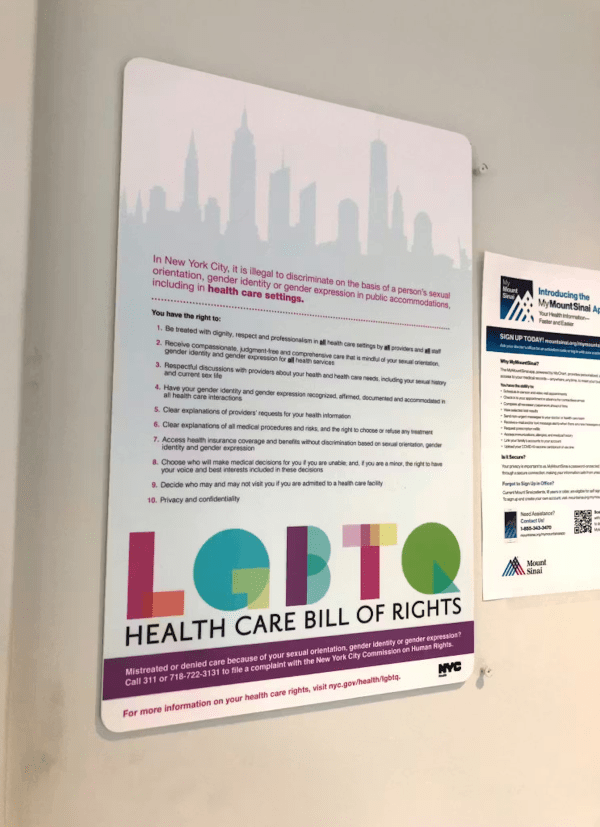
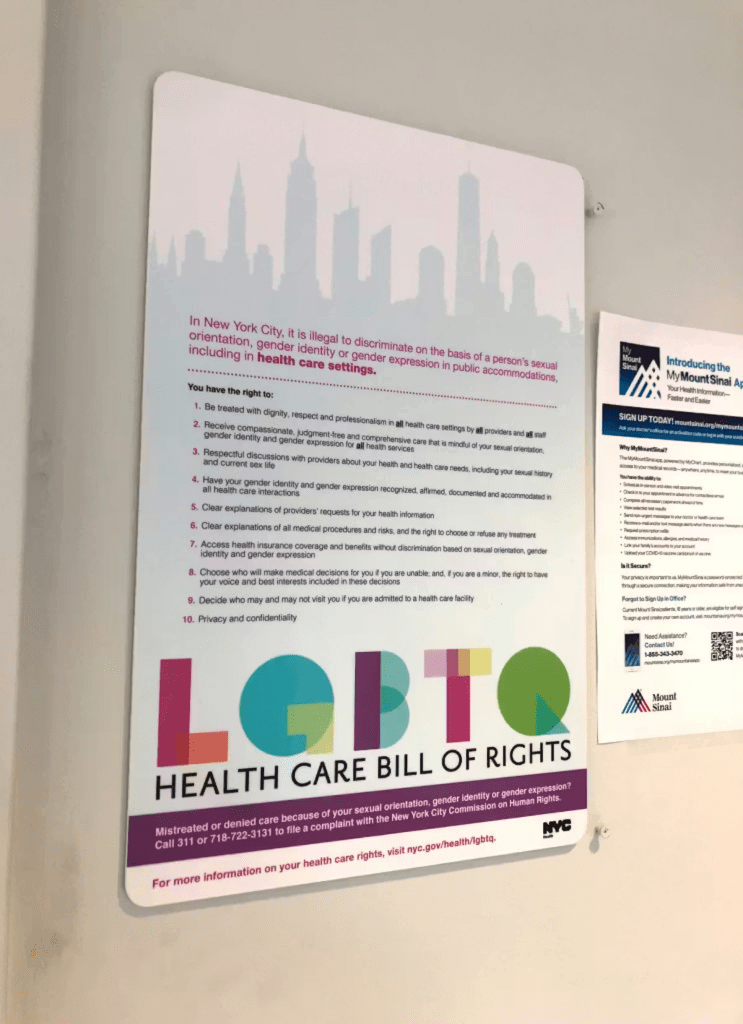
For LGBTQ+ people, knowing your rights as a patient and seeking out LGBTQ+-affirming providers and community health centers can help mitigate some of the harms of restrictive laws.

South Carolina Republicans demand Supreme Court overturn marriage equality

Read more at LGBTQ Nation.

Republican lawmakers in South Carolina are trying to pass a resolution to demand the Supreme Court overturn its 2015 Obergefell v. Hodges ruling that legalized marriage equality in all the states that hadn’t yet done so, including South Carolina.

A group of 12 Republicans in the South Carolina House of Representatives introduced H-5501, a concurrent resolution that calls on the state to “reject the Supreme Court of the United States’ Obergefell decision and to call on the Supreme Court to reverse Obergefell and restore the natural law definition of marriage, a union of one man and one woman and to insist on restoring the issue of marriage and enforcement of all laws pertaining to marriage back to the several states and the people.”

The local TV news station WACH notes that concurrent resolutions have no legal force in South Carolina. Still, progressive advocates called out the resolution.

“Lawmakers in South Carolina cannot undo marriage for all committed couples in this country,” ACLU of South Carolina executive director Jce Woodrum said. “These lawmakers are fringe extremists.”

South Carolina passed a state constitutional amendment banning same-sex couples from getting married in 2006. In 2025, a PRRI poll found that 54% of people in South Carolina now support marriage rights for same-sex couples.

The resolution is part of a trend started last year, as far-right Republicans in state legislatures across the country started introducing resolutions demanding the Supreme Court overturn marriage equality. Other states that have seen such resolutions include Idaho, Michigan, Montana, North Dakota, and South Dakota.

Several red states have also considered bills that would give extra rights to opposite-sex couples who get married.

Two Supreme Court justices said in 2020 that they would like to overturn Obergefell. Conservative Justice Amy Coney Barrett said in 2025 that it is unlikely to happen.

Supreme Court allows trans kids in South Carolina to use the right bathrooms in school

Read more at LGBTQ Nation.

The U.S. Supreme Court said Wednesday that South Carolina cannot enforce its anti-trans bathroom ban against one transgender student while his challenge to the law moves through the courts.

The law, which went into effect in 2024, requires students in South Carolina public schools to use bathrooms that align with their “biological sex … as objectively determined by anatomy and genetics existing at the time of birth.”

Last year, a 13-year-old transgender boy identified in court documents as John Doe was suspended for using the boys’ restroom at his Berkeley County school. Despite none of his peers objecting to his use of the boys’ restroom, when Doe returned from suspension, school staff were instructed to police his bathroom use, and teachers began dividing students into “boys” and “girls” lines before restroom breaks to enforce the policy.

Faced with constant harassment by teachers and the threat of another suspension, Doe’s parents withdrew him from the school and enrolled him in an online program.

The following November, Doe’s family, along with LGBTQ+ advocacy group Alliance for Full Acceptance, filed a class action suit challenging the South Carolina law. As MSNBC notes, a district court judge in the state halted the case in July after the Supreme Court announced it would hear two cases related to transgender women’s participation in sports. Doe appealed to the U.S. Court of Appeals for the Fourth Circuit, which issued an injunction in the boy’s favor in August, preventing the state, the school district, and other defendants from enforcing the law against him while the appeal proceeds through the courts.

According to MSNBC, the three-judge panel cited the court’s 2020 ruling in Grimm v. Gloucester County School Board that trans students are entitled to use restrooms aligned with their gender identity. However, George W. Bush-appointee Steven Agee stipulated that the Grimm decision was the only reason he sided with Doe and expressed hope that the Supreme Court would overturn that case, which he described as having been decided wrongly.

That same month, South Carolina asked the Supreme Court to lift the Fourth Circuit’s injunction, arguing in its emergency relief application that Grimm was wrongly decided and that the Fourth Circuit should have considered the Supreme Court’s recent decision in United States v. Skrmetti, which upheld Tennessee’s restrictions on gender-affirming care for trans youth. The state argued that it, the school district, and students were “suffering actual, ongoing, material harms” due to Doe being allowed to use the boys’ restroom at school.

On Wednesday, a six-justice majority denied South Carolina’s request, with Republican appointees Clarence Thomas, Samuel Alito, and Neil Gorsuch saying they would have sided with the state, according to HuffPost.

In its order, the Court wrote that its denial of South Carolina’s application was “not a ruling on the merits of the legal issues presented in the litigation.” Rather, the justices wrote, “it is based on the standards applicable for obtaining emergency relief from this Court.”

Trans man says he was detained after using women’s restroom in South Carolina

TRENDING

LGBTQ+ VoicesPoliticsTransgenderVideoBecome a MemberScroll To Top

By continuing to use our site, you agree to our Private Policy and Terms of Use.

Accept

News

Trans man says he was detained after using women’s restroom in South Carolina

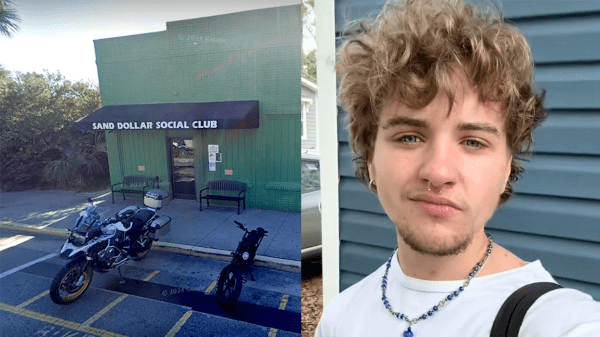
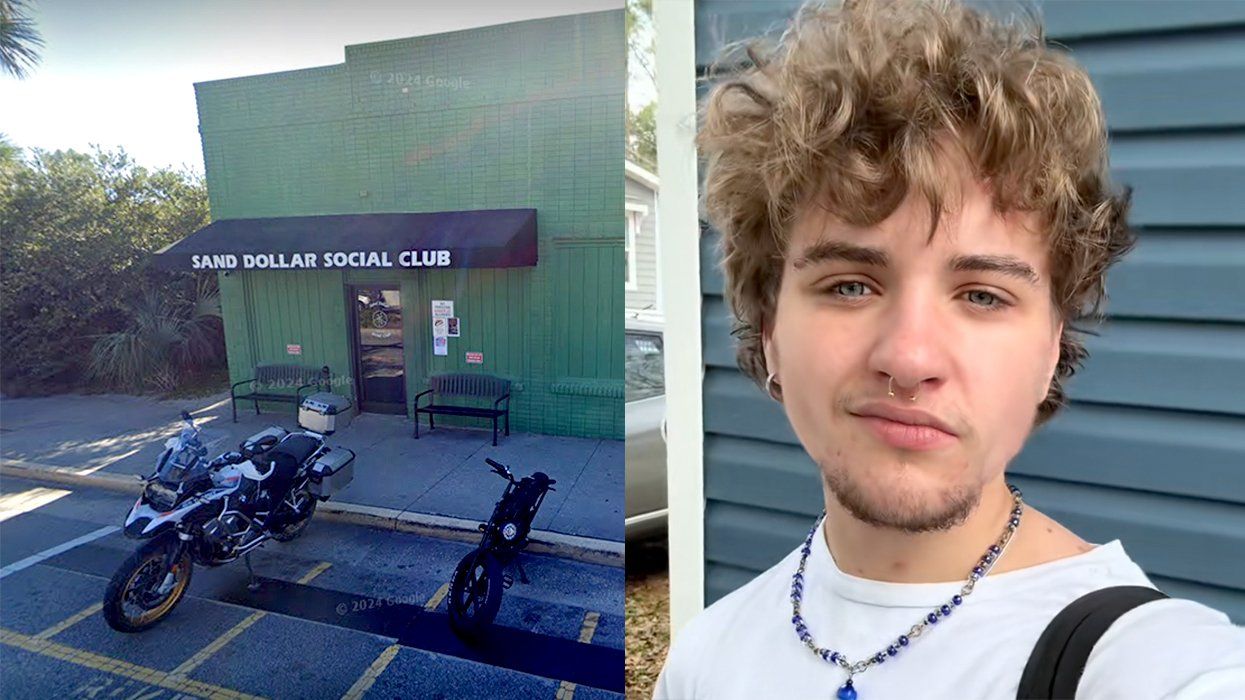
Sand Dollar Social Club Folly Beach South Carolina alongside footage still of trans man Luca Strobel

©2025 Google Maps Data; footage still via tiktok @fulltimecowboy

Sand Dollar Social Club (left) and Luca Strobel

Anti-trans lawmakers want to force trans men to use the women’s restroom. Here’s what happened when one did.

*This is reported by The Advocate.

A 25-year-old South Carolina trans man has gone viral on TikTok, saying he was accosted in a bar by staff, called slurs, and detained by police after using the women’s restroom.

Luca Strobel, who posts under the Tiktok handle @FulltimeCowboy, said he had gone to pick up his friend, Caroline Frady, also 25, at Sand Dollar Social Club in Folly Beach on the night of Friday, May 16, to be her “sober ride” home.

After a lengthy drive to the bar, Strobel said he stepped inside to use the men’s room. However, there were no stalls—only urinals, rendering it inaccessible to him as a trans man.

At first, an employee warned both Strobel and his friend against entering the bathroom of the “opposite” sex, but after a brief back-and-forth, Strobel said he believed he had permission to do so. He also said he and Frady were the only two people in the restroom, which Frady confirmed to Erin in the Morning.

That’s when a man who said he was the bar owner burst into the women’s room, peering over the stall to look at Strobel as he used the restroom.

“They’re looking over the top of the stall at me without my clothes on,” Strobel said in the video. “They can fully see me naked other than me having my shirt on, and they just start screaming that there’s ‘a man’ in here.”

He said the owner and employee ejected him and his friend from the bar — grabbing and pushing them out as they reportedly called Strobel anti-trans slurs. The police were waiting at the door, Strobel said.

The officer cuffed him “so tight that I can’t even feel my fingers,” Strobel said. “I still have a bruise on my knuckle.” Meanwhile, his arresting officer allegedly kept calling him a “little girl.”

“We didn’t get booked, but we did get cuffed, and when we got to the station, we were asking a bunch of questions that they refused to answer,” Strobel said. “They just kept saying, ‘Take it up in court, take it up in court, take it up in court.’”

Sand Dollar Social Club could not be reached for comment. The Folly Beach Public Safety Department did not respond to a request for comment.

In a follow-up video, Strobel said he was released on $500 bond, hit with a trespass notice barring him from entering Sand Dollar Social Club, and issued a ticket for public intoxication and disorderly conduct. Frady said she received the same.

In an interview with Erin in the Morning, Strobel emphasized that he had not consumed a single drink — he was there for the sole purpose of being the designated driver. He says officers did not breathalyze him.

There is no state law in South Carolina preventing a trans man (or any man) from using the women’s room in public accommodations, such as a bar. However, there has been an avalanche of anti-trans bills nationwide seeking such mandates, including in South Carolina, where lawmakers enacted a version of this policy targeting schools in 2024, and re-introduced it in 2025.

In other words, Strobel was using the bathroom that many conservative lawmakers and anti-trans pundits want to force him to use — and he got arrested anyway, seemingly because of the panic surrounding gendered bathrooms.

This kind of harassment is no stranger to trans and gender nonconforming people—in April, a trans girl in Florida was arrested for using the women’s bathroom in an act of protest against that state’s anti-trans bathroom bill. She washed her hands in the sink before being escorted out by police. In February, cisgender lesbian in Arizona made headlines after documenting her own experience having police interrogate her gender while she was using a women’s restroom.

Erin in the Morning’s 2025 anti-trans legislation risk map designates South Carolina as a “high risk” state to travel to. Last year, Republican Gov. Henry McMaster signed a trans-affirming health care ban for minors into law.

Strobel says he believes the bar staff knew he was trans because his shirt revealed his top surgery scars. Nonetheless, he said he refuses to “go stealth,” or hide his trans identity, because he believes that trans visibility in the South is important.

“Of course my safety is important to me, but at the end of the day, I want people to know that we exist,” Strobel told Erin in the Morning. “I want people to know that it’s OK, that just because you live here doesn’t mean that you can’t be who you are.”

On the other hand, Strobel said this recent incident has made him feel that he may no longer have a choice; that the risk of further transphobic violence is too great to remain. Strobel said he is raising funds to relocate somewhere that he can finally, after all these years, not just feel authentic, but be safe.

Not just Florida. More than a dozen states propose so-called ‘Don’t Say Gay’ bills – NPR

This blog originally appeared at NPR News.

Florida first. Alabama follows. Legislators in Louisiana and Ohio are currently debating legislation that is similar to the Florida statute. A similar bill will be his top priority during the following session, according to Texas Governor Greg Abbott.

At least a dozen states across the country are proposing new legislation that, in some ways, will resemble Florida’s recent contentious bill, which some opponents have dubbed “Don’t Say Gay.”

Read Full Article – https://www.npr.org/2022/04/10/1091543359/15-states-dont-say-gay-anti-transgender-bills


If you’re ready to look for a better state or county for you and your family (or family of choice), reach out to us at www.FleeRedStates.com

Blog at WordPress.com.

Up ↑