

Read more at Forbes.
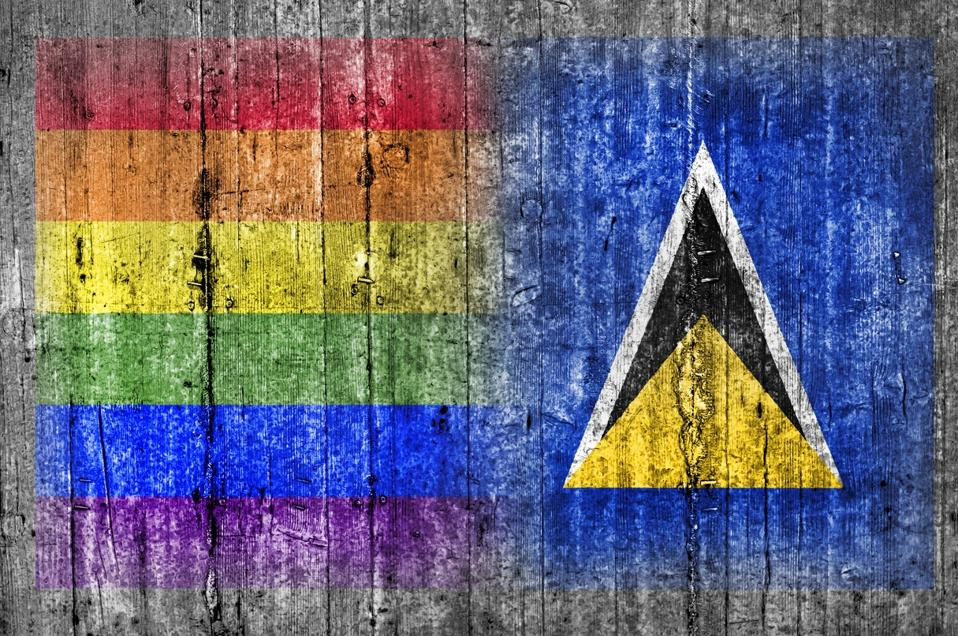
“These provisions… exacerbate, if not condone, the stigmatisation of homosexual persons in civil society and engender feelings of hostility fueled by persons who are inclined to take the moral high ground,” stated Eastern Caribbean Supreme Court Judge Shawn Innocent in his late July ruling striking down St. Lucia’s ban on same-sex intimacy.
The ruling coming down from the Heraldine Rock Building sparked swift, though not unanimous, reaction. The Caribbean’s LGBTQIA community celebrated the long-overdue victory, while religious conservatives issued dire warnings.
As Judge Innocent explained on the bench, many islanders and Caribbean citizens continue to navigate the fault lines between a dated colonial inheritance and a modern identity.
“It is the law itself which violates their constitutional rights,” Innocent’s ruling said. “They do not have to await prosecution under those sections to experience a violation. Without any equivocation, his liberty has been emasculated and abridged.”
The ruling made St. Lucia the latest in a growing list of Caribbean nations—including Barbados, Dominica, Antigua and Barbuda, and St. Kitts and Nevis—to decriminalize consensual same-sex relations through the courts. In doing so, it affirms what many legal scholars and LGBTQIA activists have long argued: that the region’s colonial-era sodomy laws are not just outdated, they are unconstitutional.
The win in St. Lucia comes at a time when the Caribbean LGBTQIA movement appears to not only be making progress in changing laws, but changing attitudes. This stands in contrast to the United States, where movement workers are fighting back against regressive measures, state-based legislation, and attempts by the Trump administration to gut federal civil rights protections.
For Glenroy Murray, St. Lucia’s policy change, part of a nearly decade-long strategy led by the Eastern Caribbean Alliance for Diversity and Equality (ECADE) and other local organizing groups, is the product of years of sustained advocacy.
“In the Caribbean, queer activists are saying: we deserve space, and we’re going to claim it—despite prevailing attitudes that have existed in this region for a long time,” said Murray, the Caribbean lead for Human Dignity, a legal advocacy organization that provides technical, legal, and communications support to queer organizations and governments worldwide.
What began as a debate among legal scholars, researchers, and grassroots LGBTQIA activists about the countries most ripe for a legal challenge to colonial-era sodomy laws has since evolved into a broad-based movement to decriminalize sexuality and fight for human rights across the region.
For the Caribbean movement, the struggle has been twofold: first, dismantling outdated “saving law clauses” that shield colonial-era statutes from constitutional challenge. Found in several post-independence constitutions, these clauses preserve pre-existing laws—even if they conflict with modern human-rights protections. In practice, they’ve made it far more difficult to overturn criminal statutes against same-sex intimacy. Activists argue that true equality cannot be achieved without dismantling these legal shields.
Compounding this are well-funded, transnational conservative movements determined to make LGBTQIA rights in the Caribbean harder to secure. Angelique Nixon, senior lecturer and researcher at University of the West Indies, St. Augustine Campus’ Institute for Gender and Development Studies, said that these actors, backed by U.S.-based evangelical and faith-based groups, frame equality as a Western imposition and deploy religious and moral rhetoric to stir cultural resistance.
“Globally, we’re seeing the rise of well-funded, transnational anti-rights movements that actively export homophobic and transphobic ideologies across borders, often under the guise of protecting traditional values or religious freedoms,” Nixon said.
“This transnational dimension makes our struggle particularly challenging,” she emphasized.
The American religious right has directly targeted the Caribbean: groups affiliated with the American Center for Law and Justice (ACLJ) have conducted legal training in Belize, while Alliance Defending Freedom (ADF) and other U.S. advocacy networks have bolstered local opposition to reform.
Meanwhile, Family Watch International—designated a hate group by the Southern Poverty Law Center—has expanded its regional influence, launching campaigns in Africa and elsewhere.
Earlier in 2025, Trinidad and Tobago’s Court of Appeal overturned a 2018 ruling decriminalizing consensual same-sex intimacy, citing its “saving law clause.” While the court reduced penalties from 25 years to five years’ imprisonment, it emphasized that only the legislature could fully repeal the provisions, a move Nixon warns will further endanger queer people.
“Without strong political leadership, these laws will stay in place and continue to justify stigma, discrimination, and violence—even if they’re not enforced,” Nixon said. “The mere existence of these laws creates a chilling effect. Legal ambiguity and inaction can silence LGBTQI+ people and make them more vulnerable.”
Murray underscored that these laws are rooted in colonial imposition. “Many of the laws against sodomy, buggery, and so-called ‘unnatural offenses’—in other words, laws criminalizing sexuality—were imposed across the Caribbean by the British,” he said. “In Jamaica, the law criminalizing intimacy between men dates back to 1864, and it remains in effect today.”
Quick not to lay all the blame on colonial powers, Murray added: “I won’t let Caribbean governments off the hook. They could have changed these laws a long time ago—there have been repeated calls to repeal them. In some cases, governments have not only retained these provisions but made them worse. And at times, there’s been a clear intentionality to keeps them in place.”
While legal reform remains paramount, organizers have also worked diligently to change hearts and minds—advancing broader issues like health equity, education, and housing.
In its fight against liberal American misconceptions about Caribbean homophobia, the movement’s organizing strategy has centered on balancing the region’s often-professed anti-LGBTQIA identity with lived experiences that are far more varied. Murray explained that this nuance does not discount the violence, displacement, and harm faced by LGBTQIA people, but it has remained front of mind for organizers.
“For a time, much of our culture was not pro-gay, but it still allowed for a type of existence,” Murray said. “Over time, as queer people became more visible, violence escalated—and that’s when the region became known for being homophobic.”
Despite stigma, advocates have advanced regional efforts like the Pan-Caribbean Partnership Against HIV/AIDS, housing access expansion, and educational equity.
“In general, our leadership across the region is clear: they don’t support discrimination,” Murray said “When we talk about housing, we make it inclusive. When we talk about healthcare, we make it inclusive. And that matters.”
Murray’s analysis came with a caveat.
“But on hot-button issues like discrimination protections or relationship recognition, leaders tend to be far more cautious—often because of misperceptions about voters,” he said.
Beyond policy and legal reform, organizers recognize that shifting public opinion is essential. A 2023 survey by the Equality for All Foundation/J-FLAG, Jamaica’s leading LGBTQIA rights group, found that 50 percent of Jamaicans support changing laws to ensure equal rights, a dramatic shift from 2018, when 69 percent predicted strong resistance.
This change, advocates say, stems from grassroots organizing, increased visibility of LGBTQIA people, and the political engagement of younger voters. Nixon believes the movement could benefit from even greater international support.
“We need solidarity rooted in care, justice, and long-term commitment,” Nixon said. “Effective support must go beyond symbolic gestures to include sustained material and strategic assistance. That means funding community-led initiatives, creating safe spaces for healing and organizing, and backing the grassroots work that makes all this possible.”
 fleeredstates.blog
You must be logged in to post a comment.