After Trans People, Trump Now Erasing Bisexual People From Stonewall National Monument

Read more at Erin in the Morning.

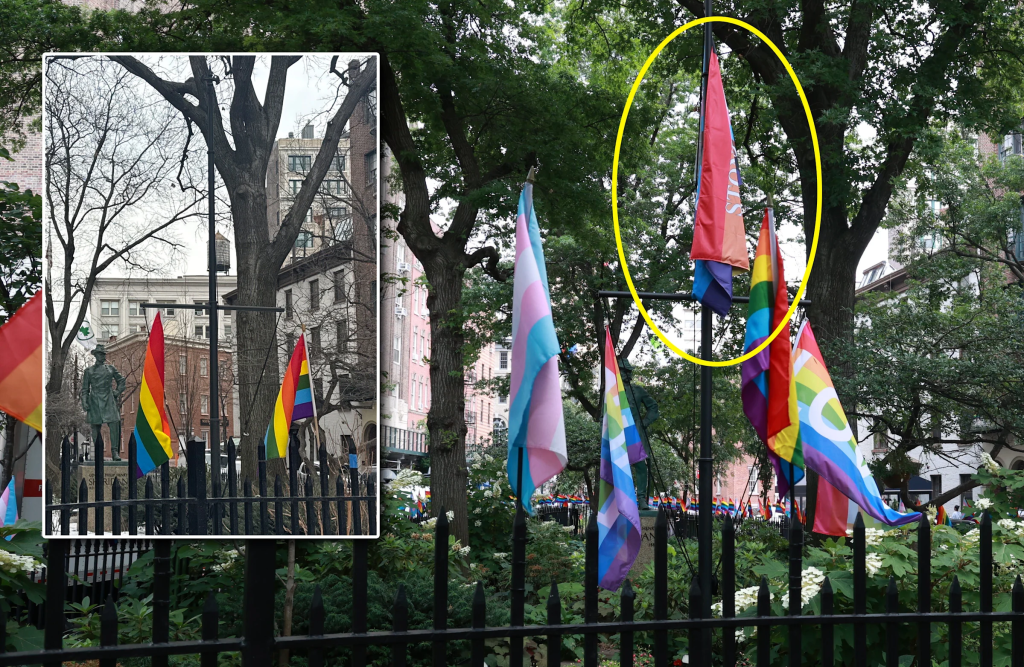
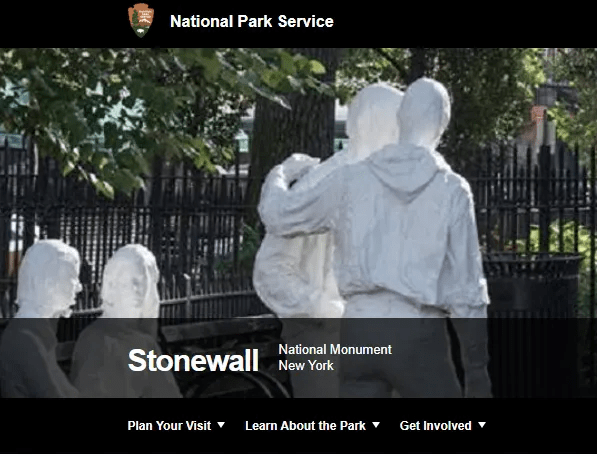
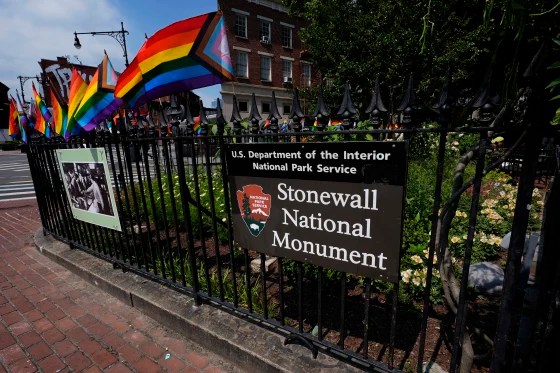
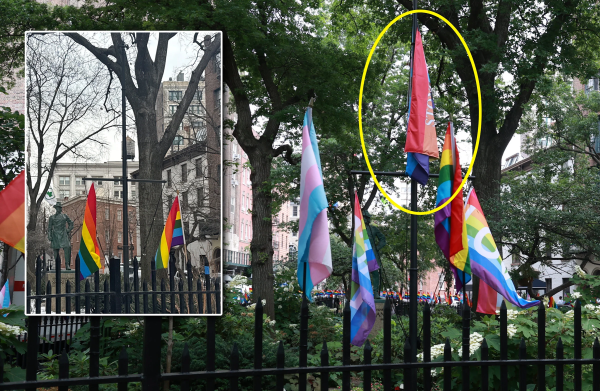
Earlier this year, the Trump administration digitally erased transgender people from the Stonewall National Monument, scrubbing them from the history they helped shape. The decision sparked widespread protests at the civil rights landmark and raised alarm about broader efforts to censor transgender people from the public record. Now, new signs suggest the administration has set its sights on another target: bisexual people. Key historical and cultural pages associated with the Stonewall site have been updated to describe the uprising as a milestone for “gay and lesbian rights,” quietly removing any mention of bisexual or transgender individuals.

Signs that the pages dedicated to Stonewall were being tampered with emerged early in Trump’s second presidency. Before the first update, the Stonewall National Monument page acknowledged that “before the 1960s, almost everything about living openly as a lesbian, gay, bisexual, transgender, or queer (LGBTQ+) person was illegal.” The revised version then stated, “almost everything about living openly as a lesbian, gay, bisexual (LGB) person was illegal.” Now, a new version of the page indicates that “Before the 1960s, almost everything about living authentically as a gay or lesbian person was illegal.”

You can see the changes here:

The changes were not limited to the front page. In the “History and Culture” section, the page once indicated “Stonewall was a milestone for LGBTQ civil rights that provided momentum for a movement.” Then it was changed to “Stonewall was a milestone for LGB civil rights that provided momentum for a movement” by the Trump administration. Now, the page says that it was a milestone for “gay and lesbian” civil rights. Likewise, the page now reads that living “openly as a member of the Stonewall comunity |SIC| was a violation of law,” rather than living as an openly LGBTQ+ person, as it had previously read.

The erasure is historically inaccurate. Stonewall was heavily led by transgender and gender-nonconforming leaders like Sylvia Rivera, Marsha P Johnson, and Zazu Nova. At Stonewall, Sylvia Rivera famously stated that while she did not “throw the first Molotov cocktail,” she did throw the second. Transgender woman Zazu Nova is among those credited with “throwing the first brick,” sparking the uprising. Marsha P. Johnson, another key figure in the protests that followed, played a critical role in shaping the movement.

Likewise, bisexual people played a pivotal role in the Pride movement that emerged from Stonewall. Brenda Howard, a bisexual rights activist often referred to as “the mother of Pride,” helped organize the rally that became the Christopher Street Liberation Day March on the first anniversary of the uprising. Both transgender and bisexual people have long viewed Stonewall as a civil rights milestone—and for good reason. Living openly as either in the 1960s carried enormous risk, and both communities were targeted in the police raid that sparked the movement.

These edits were not the only ones made to Stonewall since Trump took office. Individual pages dedicated to transgender figures instrumental in the Stonewall uprising were also altered to erase transgender references. The changes were often sloppy and rushed, revealing the haphazard nature of the effort. In one glaring example, Sylvia Rivera’s section originally stated, “At a young age, Sylvia began fighting for gay and transgender rights.” The revised version read, “gay and rights,” with the word “transgender” removed entirely, rendering the sentence nonsensical:

Bisexual, transgender, and queer people were at the forefront of the Stonewall movement. Though the language was still evolving, many of the patrons defied conventional categories of gender and sexuality, refusing to be neatly classified. Erasing them from Stonewall is not only historically false—it is a deliberate act of political revisionism. The recent removal of “bisexual” from official Pride histories is a warning: attacks on transgender people will never stop with us. They are part of a broader effort to narrow the scope of who is allowed to belong, to be seen, and even to be remembered.

Homophobic judge denies historical marker for gay bar violently raided by police

*This is reported by LGBTQ Nation

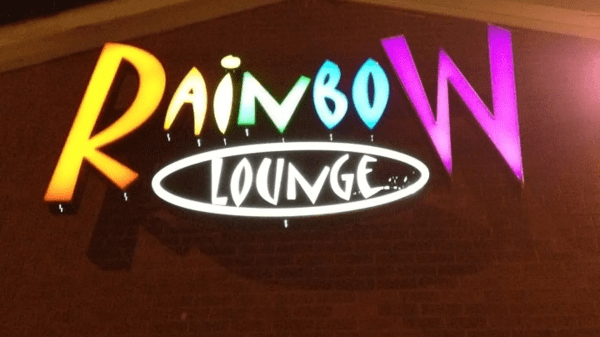
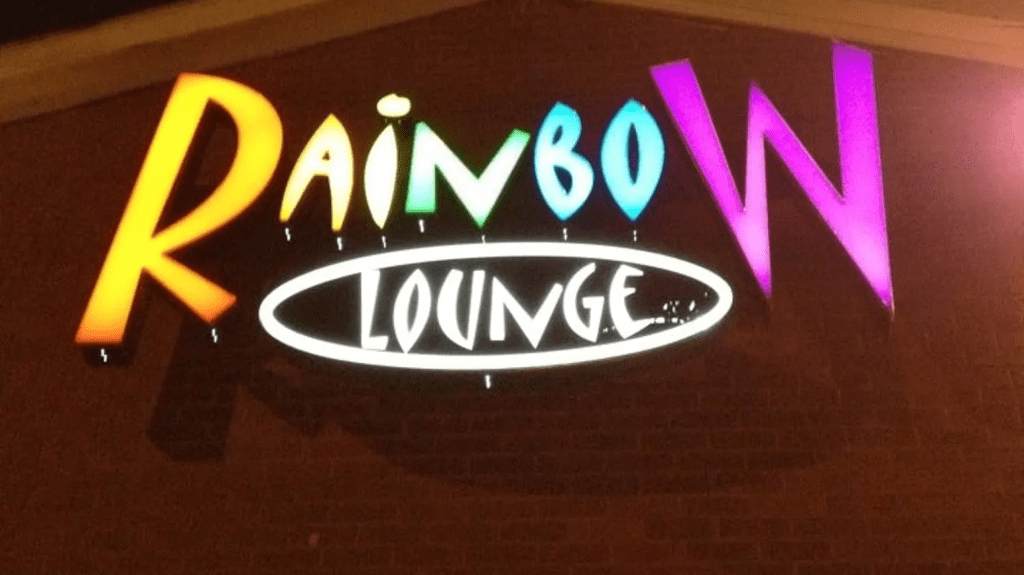
After a year-long effort to install an official historical marker recognizing the LGBTQ+ community at the Rainbow Lounge — a gay bar in Fort Worth, Texas that was targeted in an infamous 2009 police raid — the effort was ultimately thwarted by Republican Tarrant County Judge Tim O’Hare.

The site for the historical marker, 651 S. Jennings Avenue, was the location of the Rainbow Lounge. Shortly after opening, on June 28, 2009, Fort Worth police and Texas Alcoholic Beverage Commission agents raided the bar without prior notice, using excessive force and arresting patrons for “public intoxication.” The raid resulted in one man being hospitalized for brain bleeding, and another suffering broken ribs. 

The raid, which occurred on the 40th anniversary of the Stonewall Riots, mobilized the Dallas-Fort Worth area LGBTQ+ community and garnered national publicity, ultimately leading to sweeping reforms of the city’s anti-discrimination laws and the implementation of diversity training for local legal officials.

Unfortunately, the Rainbow Lounge burned down in June 2017. To this day, the site lies abandoned as leasing issues prevent the bar from being rebuilt. Investigators never stated the cause of the fire; arson was never officially ruled out.

Todd Camp, who runs Fort Worth LGBTQ+ history group, Yesterqueer, told The Fort Worth Report that the city approved of a historical marker after Camp gave a presentation on local queer history to city staff.

Everything seemed to be moving accordingly, however, Tarrant County Judge Tim O’Hare issued a letter to the historic commission claiming the application for the historical marker was improperly submitted and did not go through the Tarrant County Historical Commission’s “thorough approval process.” Before a state marker can be submitted to the state for approval, it must undergo a review process from the local county’s historical society.

While O’Hare argued that the process “bypassed established precedent” for approval, former Tarrant County Historical Commission chair Coletta Strickland told The Fort Worth Report that this wasn’t the case. 

“There was nothing untoward or out of the ordinary that was done for this application,” Strickland said.

Nevertheless, O’Hare wrote in a letter opposing the gay bar’s historical marker, “Allowing the marker to proceed under these circumstances risks generating unnecessary controversy and undermining the credibility of both the local and state historical commissions.”

While his letter didn’t directly attack LGBTQ+ people, a statement from the judge’s chief of staff Ruth Ray said that O’Hare does not support a historical marker glorifying radical gender ideology and drag performances.

“People visit public spaces for recreation and relaxation, often with their children. As the vast majority of our nation agrees, transgenderism should not be pushed on our children,” Ray said.

O’Hare has a history of opposing LGBTQ+ rights and having far-right political beliefs. As a Tarrant County judge, he has led efforts to cut funding for non-profits that work with at-risk children, citing their views on racial inequality and LGBTQ+ rights.

There are over 16,000 historical markers that can be found in all 254 of Texas’s counties to commemorate elementary schools, historic mansions, plantations, Black historic locations, and even ones dedicated to historical female figures from Texas.

Despite this large number and the size of the state, there is currently only one officially designated LGBTQ+ historical marker in Texas: “The Crossroads” in the Oak Lawn neighborhood of Dallas, recognizing its significance as the heart of the city’s LGBTQ+ community.

References to transgender and queer removed from Stonewall National Monument’s web page

*This was first reported by NBC News.

References to transgender and queer people were erased from the Stonewall National Monument’s web page, marking one of the latest moves of the current administration after President Donald Trump said the government would recognize male and female as the only biological sexes.

The page used to say “LGBTQ+,” according to an archived version of the National Park Service’s website. It now only says “LGB.”

Stacy Lentz, co-owner of the Stonewall Inn and the chief executive of the nonprofit Stonewall Inn Gives Back Initiative, said the Trump administration was trying to “erase trans people from history and from existing.” A protest is scheduled for noon on Friday.

“There is no Pride without Trans folks leading that fight! Trying to erase them from the Birthplace of the modern LGBTQ+ rights movement will not happen! We need to show up and speak out for our trans and nonbinary siblings who are under attack,” Lentz wrote in an Instagram post announcing the protest.

In a joint statement, the Stonewall Inn and the Stonewall Inn Gives Back Initiative said it was “outraged.”

“This blatant act of erasure not only distorts the truth of our history, but it also dishonors the immense contributions of transgender individuals – especially transgender women of color – who were at the forefront of the Stonewall Riots and the broader fight for LGBTQ+ rights,” the statement read.

“Let us be clear: Stonewall is transgender history. Marsha P. Johnson, Sylvia Rivera, and countless other trans and gender-nonconforming individuals fought bravely, and often at great personal risk to push against oppressive systems,” it continued. “Their courage, sacrifice, and leadership were central to the resistance we now celebrate as the foundation of the modern LGBTQ+ rights movement.”

The statement said removing the word transgender is an attempt to marginalize the people who fought for change in the community. They called it a “direct attack on transgender people” and demanded the word be added back to the website.

Blog at WordPress.com.

Up ↑