The Trump Administration ended $25 million in annual federal support to the nonprofit Trevor Project, which provides a suicide hotline for LGBTQ youth. But now, thanks to a $45 million donation from MacKenzie Scott, the nonprofit says they are on a mission to help those who need it most. And they’re seeing more demand than in years past.
For Julia Hewitt, the removal of LGBTQ+ services from the 988 Suicide and Crisis Lifeline and potential funding freezes and cuts are a personal and professional issue.
As a suicide prevention leader with the American Foundation for Suicide Prevention, a lived experience adviser with Vibrant Emotional Health, which oversees the crisis line in Texas, and a parent of an LGBTQ child raised in Texas, Hewitt, who as a child witnessed her mother struggle with suicidal ideation, has spent decades putting her energy into providing reliable crisis services for everyone who needs them.
But now, she’s watching the foundation she and others created crumble.
“It was a punch to the gut because if you work or volunteer in this space, you know the families who are impacted by this; it can be hard to reconcile when you know how much good this does,” Hewitt said. “When access narrows for those at highest risk, the system becomes less protective overall.”
The 988 Lifeline was created through bipartisan legislation signed into law by President Donald Trump during his first term. This nationwide network of locally based crisis centers offers one-on-one support for mental health, suicide, and substance use-related problems for anyone 24/7.
When someone called 988 in the past, they would hear a greeting message, followed by a menu of choices offering access to specially trained counselors for veterans, Spanish speakers, and LGBTQ+ youth, or sometimes a local crisis counselor.
But last summer, the Trump administration announced in a press release that it will no longer silo LGBTQ+ youth services, which had been the “Press 3 option” for 988 callers, to focus on serving “all help seekers,” saying that these specific LGBTQ+ services had become too expensive.
The Trump administration and theSubstance Abuse and Mental Health Services Administration, the federal agency that provides the majority of the funding for the 988 Lifeline, said the specialized LGBTQ subnetwork’s initial pilot budget of $33 million had been exceeded and unifying services for all callers was a better option.
After the change, only veterans and Spanish speakers still received a tailored option through the 988 call line.
The call line had received nearly 1.3 million contacts nationally from LGBTQ+ people since its launch in 2022 — leaving a void that Texas crisis care centers, already operating at a $7 million funding deficit, are expected to fill.
In Texas, calls made to the line have increased over the years. In December 2025, the Texas 988 system received 25,511. A year prior, that figure was 18,916 and in December 2023, it was 14,961. It’s not clear from publicly available data how many calls are rerouted to LGBTQ+ subnetworks.
Texas Health and Human Services officials said the agency doesn’t have data on how many calls are rerouted to a subnetwork.
Veterans and LGBTQ+ youth have a higher risk of suicide compared to the general population, and canceling specialized services for only one group has mental health experts questioning the administration’s true intent.
“The program was created with overwhelming bipartisan support because, despite our political differences, we should all agree that every young person’s life is worth saving,” Jaymes Black, CEO of the Trevor Project, an organization that helped create option 3, said in a statement. “I am heartbroken that this administration has decided to say, loudly and clearly, that they believe some young people’s lives are not worth saving.”
This comes at a time when some federal funding for the hotline is set to expire, and budget freezes and cuts are wreaking havoc on the network of local crisis centers that the entire 988 infrastructure depends on.
“Currently, Texas’s 988 system faces a convergence of challenges,” said Christine Busse, a peer policy fellow for the Texas branch of the National Alliance on Mental Illness, a nonprofit mental health organization that provides education and peer-to-peer support. “Without additional investment, meeting current demand — let alone absorbing the additional contacts previously handled by specialized services — will remain difficult.”
The removal of option 3
For many LGBTQ+ youth, the hotline was a safe space to be themselves, where they could be transferred to specialists within the LGBTQ+ Youth Subnetwork who usually had the lived experience to relate to them and help them talk through problems like drug and alcohol abuse, bullying, relationship troubles and suicidal thoughts.
Busse said the hotline handled up to 70,000 contacts per month nationwide, and her organization is troubled by its sudden removal because those young people are more than four times as likely to attempt suicide as their peers.
Specialized services are still offered by the Trevor Project and other organizations, but advocates say including them in 988 made it easy for people in crisis to get help by remembering just three numbers.
Now that options have been removed, LGBTQ+ youth are left with 988 dispatchers who are trained to handle a crisis, but might not have the lived experience or training needed to make someone feel safe during an emergency.
“While all callers can still reach trained counselors through 988, the loss of Option 3 eliminates a service designed to address the specific needs of a higher-risk population,” Busse said.
Some states like California have decided to address this issue by having experts from the Trevor Project train their operators. However, Texas lawmakers have not committed any additional resources to this effort.
“LGBTQ+ young people need more resources to end suicide, not fewer,” said Mark Henson, vice president of advocacy and government affairs at The Trevor Project.
Hewitt said she is confident that local operators will receive the specialized LGBTQ+ training to provide the needed care, but the issue is why they need to do it at all.
“There was an entire network that was created just for this, and that is the difference,” she said. “But this means additional training, and that equates to time, experience, people, and hours.”
Busse said another advantage of option 3 was that it routed calls from LGBTQ youth out of the 988 system to other organizations, and its cancellation means a heavier workload for everyone in the system.
The month-to-month data on the crisis hotline shows a steady increase in calls to Texas crisis centers that were already overburdened before the removal of the LGBTQ+ subnetworks.
“Texas’s 988 system was already strained before the removal of Option 3,” Busse said. “Without additional investment, meeting current demand — let alone absorbing the additional contacts previously handled by specialized services — will remain difficult.”
The cost of saving a life
The Texas 988 system currently receives $19 million in funding from two federal grants: the Mental Health Block Grant and the 988 State and Territory Improvement Award. The latter is set to expire in September, and it’s unclear whether Congress will extend it or whether the Trump administration will establish new funding streams.
This comes at a time when local crisis care centers, where many of the 988 call centers operate out of or partner with for their resources, are seeing investment in their services disappear and reappear at the whims of the federal government.
In a span of 24 hours earlier this month, the Trump administration announced wide-ranging budget cuts that many in health care warned would cripple mental health and crisis services across the nation. Amid a national outcry, the administration reversed its decision before the end of the day.
“People got letters, and everyone was panicking, and then it got reversed,” Hewitt said. “A great outcome, but this terminal uncertainty is creating a really poor experience for not only the client but also the person answering the calls.”
The 988 system wasn’t meant to be supported by the federal government forever, and Texas lawmakers like state Sen. José Menéndez have attempted to create a safety net for it.
Last year, lawmakers established the 988 Trust Fund through House Bill 5342 and required a study on sustainable funding mechanisms, including a potential state telecommunications fee, due by December. However, no state dollars have been appropriated to the trust.
Menéndez, who authored the bill that created the trust fund, said the idea of using a telecommunications fee, similar to the fee that supports 911, was quickly shot down at the Capitol.
“I’m concerned that if we don’t have any state funds, 988 is going to have to get reliant on philanthropy, fundraising, and other methods, and we have already started reaching out about how people can make contributions because this year some funds run out,” he said.
As federal funds continue to dwindle and the state shows little interest in propping up the service, the future of 988 in Texas might depend on donations from Texans.
“That uncertainty is precisely why legislative action is imperative,” Busse said. “The infrastructure exists; what is needed now is the commitment to fund it. Without dedicated funding mechanisms, such as a telecommunications fee, Texans risk facing a mental health crisis without the community support network that took years to build.”
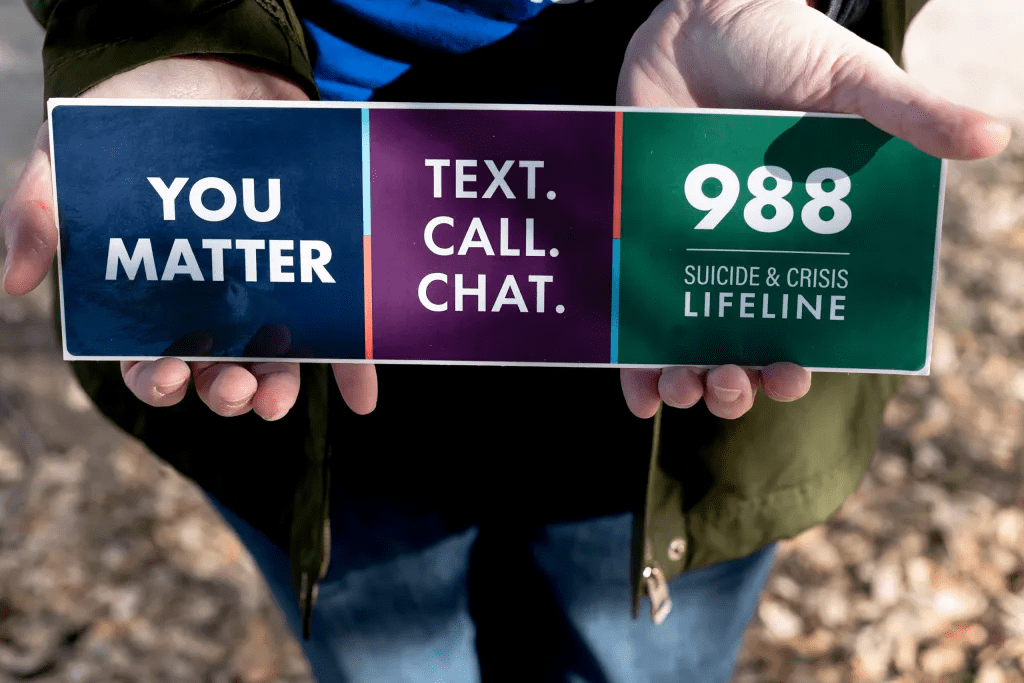
For mental health support for LGBTQ youth, call the Trevor Project’s 24/7 toll-free support line at 866-488-7386. For trans peer support, call the Trans Lifeline at 877-565-8860. You can also reach a trained crisis counselor through the Suicide and Crisis Lifeline by calling or texting 988.
Sens. Tammy Baldwin, a Democrat, and Lisa Murkowski, a Republican, introduced a bipartisan bill on Wednesday to re-establish national emergency suicide prevention services for LGBTQ+ youth — which have been stripped by the Trump administration at a time when the vulnerable group needs it most.
In July, the Trump administration terminated the 988 hotline’s LGBTQ+ services, which connected young people in crisis with counselors trained in supporting LGBTQ+ youth. This new bill, backed by the LGBTQ+ youth suicide prevention organization Trevor Project as well as the American Foundation for Suicide Prevention, would modify the Public Health Service Act to reinstate those services and require the Secretary of Health and Human Services to maintain them. The bill now moves to committee.
The Trevor Project estimates that more than 1.8 million LGBTQ+ young people seriously consider suicide each year in the United States, as they face high rates of bullying, assault and discrimination. And when the 2024 presidential race was called for Donald Trump, calls and texts to the Trevor Project’s own crisis hotlines spiked by 700 percent, as LGBTQ+ youth felt afraid about the outcome of the election.
“Given that LGBTQ+ youth are more than four times as likely to attempt suicide than their peers, the need for these services remains pressing,” said Jaymes Black, CEO of The Trevor Project, in a statement. “This is not about politics, or identity; this is about doing what is best to support our country’s highest risk populations — and save young people’s lives nationwide.”
During his first term in 2020, President Trump signed a bipartisan law to create 988 as a more accessible resource for mental health emergencies. The free hotline launched in July 2022. Since then, millions of people in crisis have turned to 988. And nearly 1.5 million of those calls, texts and chats were sent by young Americans seeking specialized LGBTQ+ services.
“We are in the middle of a mental health crisis, and the 988 lifeline saves lives, plain and simple,” said Baldwin, who wrote the original legislation to create the 988 hotline. Cutting funds for specialized services within 988 puts the lifeline in jeopardy, she said in a statement.
“There is absolutely no good reason that Donald Trump took away this specialized help for our LGBTQ youth. Mental health does not see partisan lines or geography,” the Wisconsin Democrat added.
Why it matters: President Trump’s slew of executive orders and policies attacking LGBTQ+ people, including halting funding for HIV research and denying passports that adhere to a person’s gender, have forced LGBTQ+ people to seek legal help.
Driving the news: Launching Monday, IL Pride Connect is a hotline for LGBTQ+ people seeking help with questions about health care, including gender-affirming care, discrimination, identity documents, housing and other legal issues.
It was developed by Illinois Legal Council for Health Justice, with support from the Illinois Department of Human Services and private funding.
Context: Gov. Pritzker announced the hotline Thursday after declaring Illinois “one of the most comprehensive systems of legal protection and health equity in the entire nation.”
He continues to frame Illinois as a refuge for people under attack by Trump, a regular Pritzker foe.
How it works: Attorneys and legal advocates at the Council will field calls to the 855-805-9200 hotline from 9am–4pm Monday–Thursday. Services are available in English and Spanish.
Callers from out of state will be directed to pro-bono legal aid in their own states.
Case in point:Orr v. Trump involves the ACLU suing the Trump administration on behalf of a class of plaintiffs who were denied passports that did not adhere to the person’s sex designation assigned at birth.
A judge in April temporarily barred enforcement of the passport policy and this summer expanded who can be included in that lawsuit.
IL Pride Connect can tell callers whether they can be included in that class and direct them to the ACLU.
What they’re saying: “We’ve seen all these anti-trans laws percolating in the state houses, and as more of the problems have come to fruition under the new administration, I think the time is just essential,” Council executive director Julie Justicz tells Axios.
“We’ve been getting calls from folks saying, ‘What do I do? I’m scared,’ and the time was right, and the political will was there,” referring to Pritzker’s support.
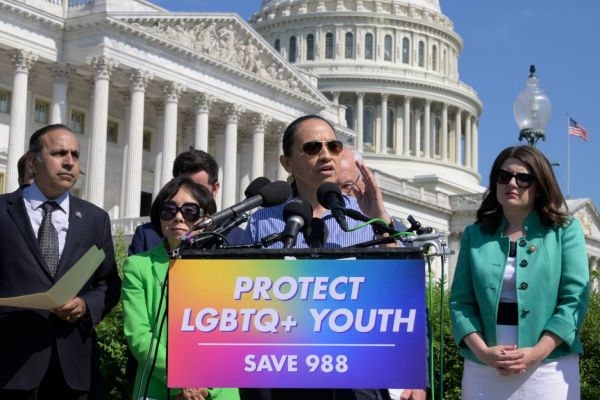
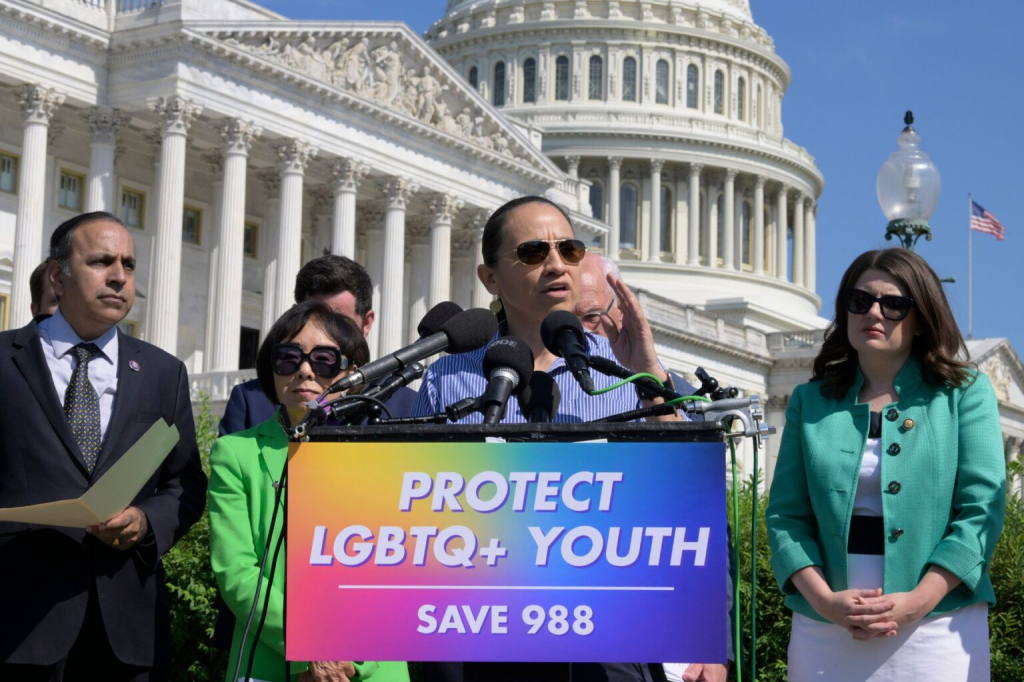
A bipartisan group of U.S. House lawmakers is urging Health and Human Services Secretary Robert F. Kennedy Jr. to block the Trump administration’s plan to eliminate the LGBTQ+ youth services within the 988 Suicide & Crisis Lifeline—an emergency support network that has served more than 1.3 million contacts since its full implementation in 2023.
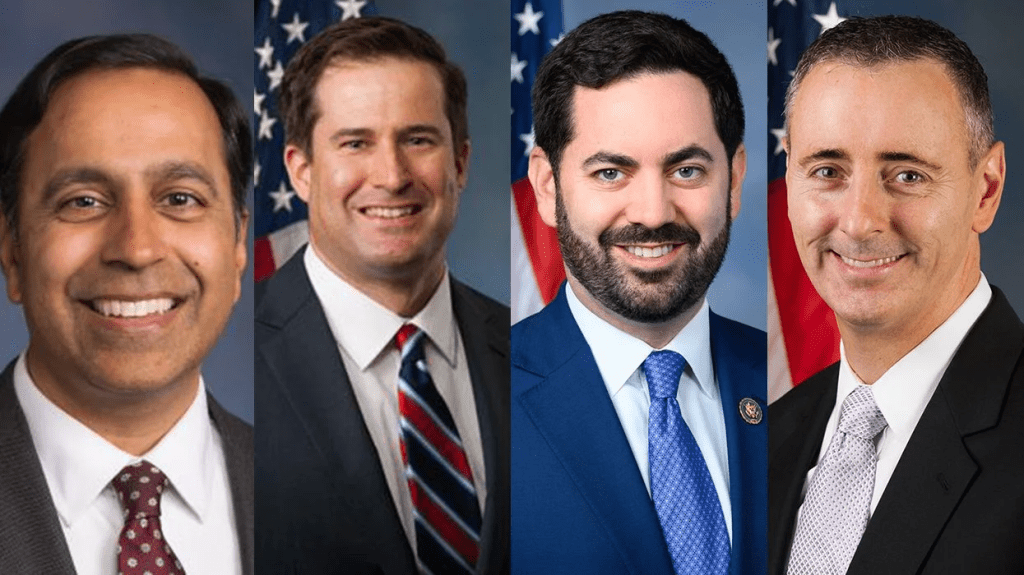
The Wednesday letter, signed by Reps. Raja Krishnamoorthi, a Democrat from Illinois, New YorkRepublican Michael Lawler, Massachusetts Democrat Seth Moulton, and Brian Fitzpatrick, a Republican from Pennsylvania, calls on Kennedy to stop a 30-day phaseout announced by the Substance Abuse and Mental Health Services Administration on June 17. According to internal agency guidance, the LGBTQ+-specific branch of the hotline, which allows callers to “press 3” to connect with affirming counselors, is set to be dismantled by July 17, according to SAMHSA.
“This is not some kind of hotline set by a liberal Democratic administration,” Krishnamoorthi said in an interview with The Advocate Thursday morning. “It was actually signed into law by President Trump. Various Republicans in the Senate and the House supported it.”
Since the line became fully operational in 2023, he noted, “it has received an astonishing 1.3 million calls, texts, and other forms of communication” and was “averaging 2,900 contacts every day” as recently as February.
Krishnamoorthi, who serves as a ranking member of the House Oversight Subcommittee on Health Care and Financial Services, raised the issue sharply during a Wednesday hearing on diversity, equity, and inclusion policy rollbacks. “In the name of expunging DEI, the Trump administration has lurched from the farcical to the cruel,” he said, highlighting the crisis line’s termination as an especially harmful example. “These actions are wrong, but do not compete in cruelty with the ending of a suicide hotline for LGBTQ youth.”
The LGBTQ+ subnetwork of 988 was developed under a bipartisan mandate to offer tailored support to high-risk groups, much like the veteran-specific track within the program. In addition to young people, it has provided critical services to adults experiencing distress related to anti-LGBTQ+ violence, legislation, and rejection.
At the hearing, Krishnamoorthi pressed conservative legal activist Daniel Lennington on whether he disputed Centers for Disease Control and Prevention data from the Trump administration showing LGBTQ+ youth face significantly higher suicide risk. Lennington replied he was “not aware of anything to do with the suicide hotline,” prompting Krishnamoorthi to respond, “That’s the problem—a lack of awareness.”
Krishnamoorthi told The Advocate that the decision to eliminate the program was driven by the Trump administration’s broader campaign against diversity and inclusion initiatives. “Eliminating this lifeline is cruelty because you are essentially discontinuing a service that saves lives,” he said. “In the name of fighting DEI, they’re going to cause a lot of young people to DIE.”
Krishnamoorthi warned that “especially now, during a time when the LGBTQ+ community at large feels tremendous pressure,” the need for the hotline may be “much higher than it was before.”
Krishnamoorthi emphasized the rare bipartisan nature of the letter to Kennedy. “It’s hard to get bipartisan letters, let alone legislation, on topics involving the LGBTQ+ community,” he said. “But this one touches a nerve. I think that young people, whoever they are, still occupy a soft corner in people’s hearts regardless of ideology.”
The Trump administration’s move, first reported in The Advocate in April, was confirmed in the FY2026 budget released during WorldPride in Washington, D.C. Mental health advocates and LGBTQ+ organizations have condemned the proposal as reckless and dangerous.
Mark Henson of The Trevor Project previously told The Advocate the 988 LGBTQ+ subnetwork is “a vital tool” that serves more than 60,000 young people each month. Without it, advocates warn, those calls may go unanswered—or be routed to general crisis lines lacking LGBTQ+ expertise.
In response to a question about his message to young LGBTQ+ people, Krishnamoorthi said he’s met with young people and their parents and understands their pain. “We’ve got to band together at the state level, at the local level to protect whatever rights we can. We must continue to fight for change in the future,” he said.
Krishmamoorthi added, “If we can rally around a group of people, it would be our young people.”
If you or someone you know needs mental health resources and support, please call, text, or chat with the 988 Suicide & Crisis Lifeline or visit 988lifeline.org for 24/7 access to free and confidential services. Trans Lifeline, designed for transgender or gender-nonconforming people, can be reached at (877) 565-8860. The lifeline also provides resources to help with other crises, such as domestic violence situations. The Trevor Project Lifeline,services at TheTrevorProject.org/Help or text START to 678678.
The Trevor Project received official notice yesterday that the Substance Abuse and Mental Health Services Administration (SAMHSA) is initiating the closure of the 988 Suicide & Crisis Lifeline’s LGBTQ+ Youth Specialized Services program within 30 days, effective July 17, 2025.
Jaymes Black, CEO of The Trevor Project, released the following statement in response:
“We received official notice that the Trump administration has ordered the closure of The 988 Suicide & Crisis Lifeline’s LGBTQ+ Youth Specialized Services program, effective July 17, 2025. This means that, in 30 short days, this program that has provided life-saving services to more than 1.3 million LGBTQ+ young people will no longer be available for those who need it.
“This is devastating, to say the least. Suicide prevention is about people, not politics. The administration’s decision to remove a bipartisan, evidence-based service that has effectively supported a high-risk group of young people through their darkest moments is incomprehensible. The fact that this news comes to us halfway through Pride Month is callous – as is the administration’s choice to remove the ‘T’ from the acronym ‘LGBTQ+’ in their announcement. Transgender people can never, and will never, be erased.
“Congress can still act to reverse this fatal decision. We are asking everyone to join the overwhelming public support for evidence-based crisis services, and urge Congress to act. Learn more by visiting TheTrevorProject.org/ActNow.
“I want every LGBTQ+ young person to know that you are worthy, you are loved, and you belong – despite this heartbreaking news. The Trevor Project’s crisis counselors are here for you 24/7, just as we always have been, to help you navigate anything you might be feeling right now.”
In September 2022, The Trevor Project began providing its best-practice crisis services to LGBTQ+ youth through the 988 Lifeline. When individuals contact the 988 via phone, text, or chat, they are given the option to “press 3” or “reply PRIDE” to be connected with counselors trained specifically to assist LGBTQ+ contacts up to age 25. Initially, The Trevor Project served as the sole provider for the pilot phase of 988 LGBTQ+ youth specialized services, before transitioning to serve as one of seven centers that currently make up the LGBTQ+ Youth Subnetwork.
The Trevor Project serves nearly 50% of the LGBTQ+ youth specialized services’ contact volume. In 2024 alone, The Trevor Project directly servedmore than 231,000 crisis contacts, and trained and supported nearly 250 crisis counselors and operational support staff to support the 988 Lifeline. Previously, the LGBTQ+ Youth Subnetwork received up to $50 million in restricted federal funds to provide these life-saving services.
The Trevor Project’s supporters in the House and Senate advocated for the continued funding for these life-saving programs. The organization launched a petition to demand lawmakers protect LGBTQ+ youth and an Emergency Lifeline fundraising campaign. On June 2, 2025, more than 100 entertainment icons – across film, music, TV, sports, theater, comedy, fashion, culinary arts, and book publishing – joined The Trevor Project’s sign-on letter to protect federal funding for LGBTQ+ youth suicide prevention.
If you or someone you know needs help or support, The Trevor Project’s trained crisis counselors are available 24/7 at 1-866-488-7386, via chat at TheTrevorProject.org/Get-Help, or by texting START to 678678.
The federal government plans to eliminate services for LGBTQ youth who call 988, the national suicide and crisis hotline, according to a Health and Human Services budget draft leaked last week. The budget, first reported by the Washington Post, would go into effect in October if approved by Congress.
Since the hotline’s launch in 2022, callers have been able to speak with counselors trained to work with specific at-risk populations, including LGBTQ youth, who are four times more likely to attempt suicide than their peers.
The service for LGBTQ youth has received 1.3 million calls, texts, or chats since 2022. In February, the program received an average of 2,100 contacts per day.
“Here we are cutting off the nation’s lifeline to those in crisis,” says Paolo del Vecchio, former director of the Substance Abuse and Mental Health Administration’s Office of Recovery. “Due to the discriminatory practices of the Trump administration, they’re pulling that life preserver away from thousands and thousands of people.”
Mental health experts say that trained counselors provide key cultural competency to LGBTQ youth, understanding the stress caused by recent political attacks, the importance of using appropriate pronouns, and the ways in which the youth often face lack of family support and harassment.
“I worry deeply that we will see more LGBTQ young people reach a crisis state and not have anyone there to help them through that,” says Janson Wu, director of advocacy and government affairs at the Trevor Project, a LGBTQ suicide prevention organization. “I worry that LGBTQ young people will reach out to 988 and not receive a compassionate and welcoming voice on the other end—and that will only deepen their crisis.”
The Trevor Project, one of the handful of organizations that make up the LGBTQ+ Youth Subnetwork, responds to about half of 988’s calls and texts from LGBTQ youth. This year, the subnetwork received an estimated $50 million in federal funding.
Trump’s first months in office have been particularly harrowing for transgender youth. The president has signed executive orders restricting access to gender-affirming care for young people, barring transgender people from serving in the military, and threatening to prosecute teachers who support nonbinary students.
Under the leadership of health secretary Robert F. Kennedy Jr., HHS has already cut about a quarter of its workforce. SAMHSA has been eliminated, and mental health initiatives have been consolidated with disparate programs in a newly-created Administration for a Healthy America. The leaked budget proposes further sweeping cuts to HHS, including a 40 percent budget cut to the National Institutes of Health; elimination of funding for Head Start, the early childhood education program for low-income families; and a 44 percent funding cut to the Centers for Disease Control, including all the agency’s chronic disease programs.





 fleeredstates.blog
You must be logged in to post a comment.