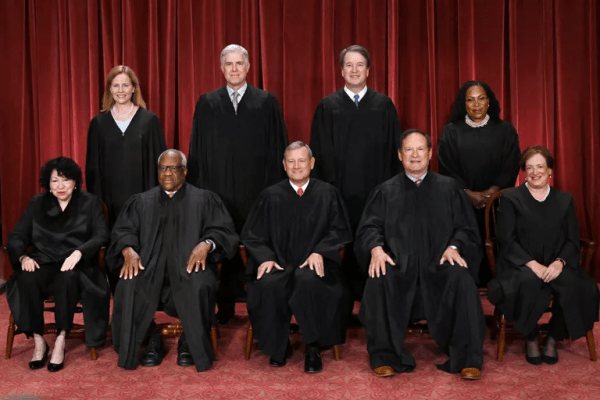
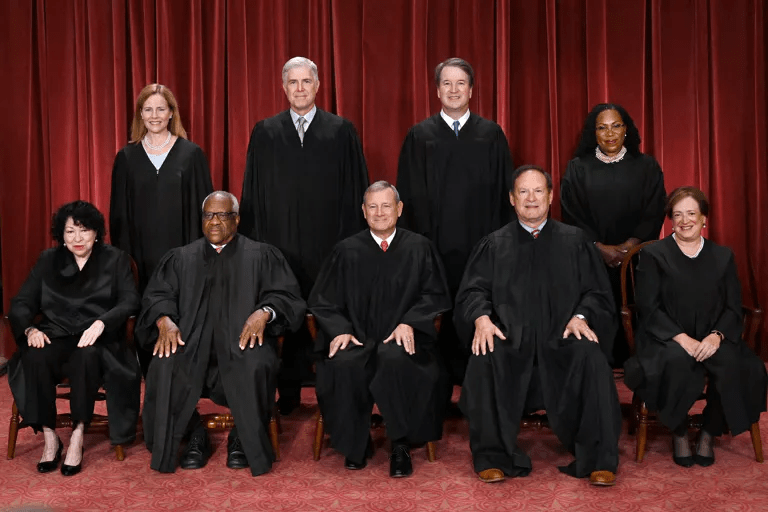
The US Supreme Court agreed to consider whether scores of state and local governments are violating the Constitution by barring licensed counselors from trying to change a child’s sexual orientation or gender identity.
The justices said they will hear a challenge to Colorado’s ban on what critics call “conversion therapy.” A counselor says the 2019 law violates her free speech rights.
The case adds to a growing list of culture-war clashes the Supreme Court has agreed to hear. The justices are already assessing a Tennessee law that outlaws certain medical treatments for transgender children. And in April they will hear a dispute over the use of LGBTQ-friendly books in the classroom and a case over efforts to create the country’s first religious public charter school.
Twenty-eight states and more than 100 other jurisdictions either fully or partially ban the disputed practice, according to Movement Advancement Project, an LGBTQ advocacy group that tracks laws around the country. The Supreme Court rejected a challenge to Washington state’s ban in 2023.
The Colorado law is being challenged by Kaley Chiles, a licensed counselor who says she views her work as an outgrowth of her Christian faith. She is represented by the Alliance Defending Freedom, a Christian legal group that has been behind some of court’s highest profile cases in recent years, including the successful effort to overturn the constitutional right to abortion.
In a call with reporters, Chiles said the law “silences diverse perspectives and interferes with my ability to serve my clients with integrity.” One of her lawyers, ADF’s Jim Campbell, said Chiles had turned away multiple clients because of the law, though he didn’t disclose how many.
In upholding the law, the Denver-based 10th US Circuit Court of Appeals said it legitimately regulates professional conduct and only incidentally affects speech. Colorado officials urged rejection of the appeal, likening the measure to malpractice laws and informed-consent requirements.
The Constitution “allows states to reasonably regulate professional conduct to protect patients from substandard treatment, even when that regulation incidentally burdens speech,” Colorado argued.
The court will hear arguments and rule in the case in the nine-month term that starts in October.
The Supreme Court rejected a longshot effort Monday to overturn its ruling guaranteeing same-sex marriage nationwide.
Former Kentucky county clerk Kim Davis directly asked the justices to overrule the 2015 landmark decision after a jury awarded damages to a couple whom Davis refused to issue a marriage license.
“The Court can and should fix this mistake,” her attorneys wrote in court filings.
In a brief order, the justices declined to take up Davis’s appeal alongside dozens of other petitions up for consideration at the justices’ weekly closed-door conference. There were no noted dissents.
Court watchers viewed Davis’s appeal as a longshot effort, but it sparked trepidation among LGBTQ rights groups since several conservative justices who dissented in the decade-old case remain on the court.
Davis gained national attention after she raised religious objections to issuing marriage licenses to same-sex couples despite the Supreme Court’s decision in Obergefell v. Hodges.
Among the refused couples was David Ermold and David Moore, who sued. Davis was found to have violated a judge’s order in another case, which required her to keep issuing licenses.
Davis was jailed for five days, the couple obtained their license and Kentucky later passed a law enabling clerks to keep their signatures off marriage certificates.
But Davis kept fighting in court after the couple won $100,000 in emotional distress damages from a jury plus $260,000 in attorneys’ fees.
Primarily, Davis’s appeal concerned arguments that she has a private First Amendment religious defense against the award, despite acting as a government official.
She tacked onto it a request to overturn Obergefell outright, insisting the whole lawsuit would fall if the justices do so.
When the nine U.S. Supreme Court justices meet behind closed doors on Friday, the justices will decide whether to hear an appeal from former Kentucky county clerk Kim Davis, a name that became synonymous with anti-LGBTQ+ attitudes to marriage equality a decade ago.
Davis, who refused to issue marriage licenses to same-sex couples after Obergefell v. Hodges made marriage equality the law of the land in 2015, has asked the court not only to overturn her financial settlement in a civil case loss in lower courts but also to reconsider the landmark ruling itself.
While Davis’s petition centers on whether she can be held personally liable for emotional-distress damages, her legal team is also urging the justices to revisit the constitutional right to marry. For those who remember the culture war that surrounded Davis’s defiance, the possibility that her name might again appear on the Supreme Court docket has reignited deep anxiety across the LGBTQ+ community
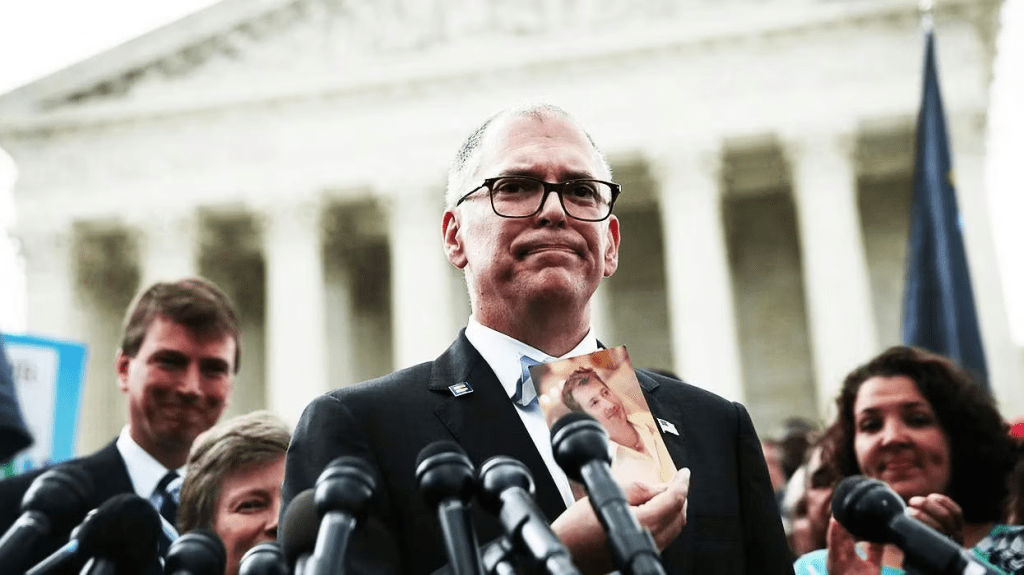
In separate interviews with The Advocate, Jim Obergefell, the plaintiff whose name now defines that right, and GLAD Law legal director Josh Rovenger described the moment as both surreal and revealing. One is the man who stood before the Court ten years ago and won the right to have his marriage recognized. The other works at the organization that helped secure that victory. Both see the Davis petition not just as a legal maneuver but as a test of whether the country can sustain a principle it once declared settled.
“A narrow case, shoehorning a broad agenda”
Rovenger explained what this case is and what it isn’t.
“This is a narrow case with a technical legal question,” he said, emphasizing that it concerns emotional-distress damages and qualified immunity, not marriage equality itself. “Attorneys who want to overturn Obergefell are trying to shoehorn that into a very narrow case.”
Davis, a former Rowan County clerk, was found liable for denying marriage licenses to same-sex couples in violation of clearly established law. A jury awarded damages to those couples, and the Sixth Circuit Court of Appeals affirmed the decision. Davis’s petition now asks the Supreme Court to review that ruling, Rovinger explained. While she has framed the case as one about her religious freedom, Rovenger said the issue before the Court remains technical.
“The Supreme Court receives thousands of petitions a year,” he said. “It would really be anomalous for them to take a case with such a narrow fact pattern and use it to revisit Obergefell.”
Still, Rovenger acknowledged why people are uneasy.
“Given the rollback of rights we’ve seen in other areas, Dobbs being the most prominent, that fear makes sense,” he said. “But this case is not the vehicle for that kind of sweeping reversal.”
The limits of the Respect for Marriage Act
Part of the current confusion, Rovenger said, stems from uncertainty about how the Respect for Marriage Act interacts with the Obergefell decision. The 2022 law, signed by President Joe Biden, requires states and the federal government to recognize marriages performed in other states. However, it does not compel every state to issue marriage licenses if Obergefell were to be overturned.
“In a world where Obergefell didn’t exist,” he said, “a couple married in one state would still have their marriage recognized federally and by other states, but not necessarily be able to marry everywhere.”
He called that distinction significant, not only for its practical consequences but for what it would signal about equality itself.
“A patchwork approach across states,” he said, “is fundamentally different from a nationwide right.”
Rovenger also pointed to the Supreme Court’s own language on “reliance interests” — the idea that people build their lives on the stability of established rights. Trump-appointed Justice Amy Coney Barrett, he noted, has recently said marriage equality has created such interests, making it less likely to be undone. Barrett had told the New York Times that Obergefell created “concrete reliance interests.”
“Those interests,” Rovinger said, “remain one of the critical factors the Court considers when deciding whether to revisit precedent.” According to Gallup, 68 percent of Americans support marriage equality.
Jim Obergefell: “Disgusted by this twisting of religious freedom”
For Jim Obergefell, the case is personal. He said he was “disgusted” that his fellow citizens would work against another group’s well-being and happiness, using religious liberty as an excuse.
“This modern version of religious freedom — this belief that one’s personal religion trumps everything else — is a twisting and perverting of what our founders intended,” he said.
Obergefell said Davis’s refusal to follow the law was emblematic of a broader problem: public officials placing private faith above civic duty.
“She swore an oath to serve all people,” he said. “And yet she used her government position to persecute others.”
His frustration extends to the justices themselves and their recent decisions, which have often ignored established understandings of the law. Justice Clarence Thomas recently said that past decisions “aren’t gospel.”
“Why should anyone feel secure about the right to marry,” he asked, “when this Court has proven it doesn’t believe in precedent?”
“One of those justices’ own marriage exists because of a Supreme Court decision,” Obergefell said, referring to Loving v. Virginia, the 1967 ruling that struck down bans on interracial marriage. Thomas is Black, and his wife, Ginny, is white. “If this Court overturns Obergefell, then what does that say about their own logic?” Obergefell added.
“People should be concerned”
Obergefell said that the LGBTQ+ community’s fear is warranted.
“Absolutely, people should be concerned. I’m concerned,” he said on Saturday. “Yesterday I officiated a wedding for a cousin who asked whether they should get married now instead of waiting. My answer was yes.”
He explained that even with the Respect for Marriage Act in place, states could still move swiftly to block new marriages if Obergefell were struck down.
“Ohio [where I live] still has a Defense of Marriage Act on the books,” he said. “If Obergefell is overturned, Ohio could immediately say, ‘no more marriage licenses for queer couples.’”
Obergefell warned that political forces aligned against LGBTQ+ rights have shown a willingness to manipulate electoral systems to maintain power.
“We have a political party that has turned its back on democracy,” he said. “They’re doing everything they can solely to remain in power — to punish and to be vindictive.”
A fragile majority, a durable principle
Despite deep pessimism about the Court, Obergefell said he still finds hope in younger generations.
“They don’t see difference the way older generations do,” he said. “There are millions of people out there who share my values, who believe in humanity, who believe every person deserves happiness and rights. That gives me hope.”
Rovenger echoed the sentiment, though his version is more procedural.
“We’re all watching closely,” he said. “We’ll keep an eye on whether the case gets relisted and on any separate statements that come out. But we’re not panicking. We’re prepared for all possibilities and ready to meet that moment if it comes.”
For now, the fate of Obergefell doesn’t hinge on oral arguments or public hearings but on what happens in a private conference room inside the marble halls of the Supreme Court. Whether the justices see the Davis case as a technical dispute or a cultural flashpoint will determine not only one woman’s liability but perhaps the trajectory of a right that has defined a generation.
If the Court declines to hear the case, the lower-court rulings stand, and marriage equality remains intact. If it grants review, the nation will enter another defining chapter in its legal history.
Either way, Obergefell’s warning lingers: “They’ve turned the idea of freedom on its head,” he said. “And unless we stand up for what it truly means, we risk losing more than marriage, and we risk losing the very promise of equality itself.”
Michigan Democrats are working to pass a bill that would enshrine same-sex marriage in the state’s constitution. This effort comes in response to concerns that the U.S. Supreme Court could overturn its 2015 ruling in Obergefell v. Hodges, which legalized marriage equality nationwide. Additionally, some Republican lawmakers, including one state congressman, have called to “make gay marriage illegal again.”
Although the Supreme Court’s decision in Obergefell declared state laws banning same-sex marriage unconstitutional, Michigan is among several states where outdated laws or constitutional amendments still prohibit same-sex marriage. As Fox 2 Detroit reports, voters in Michigan approved a constitutional amendment in 2004 that defined marriage as “the union of one man and one woman” for all legal purposes.
If the Supreme Court were to overturn Obergefell v. Hodges, as Justices Clarence Thomas and Samuel Alito have hinted they may, Michigan’s marriage equality ban would automatically be reinstated.
In response, Democratic state Rep. Jason Morgan introduced House Joint Resolution F last year, which aims to remove the 2004 constitutional amendment defining marriage as between a man and a woman. However, for this resolution to move forward, it must receive support from at least two-thirds of the state Legislature, a goal Morgan says will be difficult to achieve. “I believe the people will vote to support families,” Morgan told Fox 2, though he acknowledged that the legislative support isn’t there yet.
Meanwhile, Republican state Rep. Josh Schriver is actively calling for the reversal of marriage equality. In a recent post on X, Schriver stated that America only “accepted” gay marriage due to a “perverted Supreme Court ruling” and urged that marriage equality be overturned, calling it “not remotely controversial or extreme.” Schriver clarified that his post was meant to pressure the Supreme Court into reversing the ruling that equates “traditional marriage” with gay marriage.
Governor Gretchen Whitmer has strongly opposed any efforts to strip away marriage equality, stating, “Any attempt to strip away gay marriage is wrong.” She reaffirmed Michigan’s commitment to protecting the rights of all citizens, emphasizing that no one should face discrimination based on who they love.
With a 6-3 conservative majority in the Supreme Court that has shown a willingness to overturn longstanding precedents, as seen with the 2022 reversal of Roe v. Wade, and an incoming second Trump administration, many same-sex couples are rushing to marry before Inauguration Day to secure legal protections in states where marriage equality is still guaranteed.
Despite Trump spokesperson Karoline Leavitt stating that overturning marriage equality was never a campaign promise, Morgan remains concerned that the Trump administration poses a threat to marriage equality. “I do believe that marriage equality is at risk under the Trump administration,” he said.
If the resolution doesn’t pass through the legislature, Morgan is committed to continuing the fight to protect marriage equality in Michigan. As Fox 2 noted, a citizen-driven petition could also push the amendment to the ballot. “It’s just so important,” Morgan said. “This is something I’m very passionate about.”
New York City officials have corroborated reports from other local jurisdictions: there has been a noticeable uptick in the number of marriages across the country, often referred to as the “Trump bump.”
While the city doesn’t record details about couples’ gender or immigration status, anecdotal evidence suggests that many of these marriages stem from concerns about the potential rollback of marriage equality for same-sex couples under a possible second Trump administration.
The New York City Clerk’s Office, which manages the Marriage Bureau, reported 8,537 marriage license appointments in November 2024—the month Donald Trump was re-elected for a second term. This marks a 33% increase compared to November 2023, according to data provided by the agency to The City.
In the weeks leading up to the 2024 election, New York City recorded approximately 1,500 marriage license appointments per week. That number surged to 2,365 in the week immediately following Donald Trump’s re-election, representing a 55% increase. Appointments remained above average for the rest of November but dipped to 1,914 by the week ending December 3.
“We already fought for it. I don’t want to have to do it again,” said Ryan Addario, 36, referencing marriage equality as he exited the Marriage Bureau in Lower Manhattan with his new husband, Nicholas Caycedo, 39. The Bronx residents joined other couples voicing concerns about the future of same-sex marriage under a conservative Supreme Court.
“I just didn’t want to have any potential obstacles,” Addario explained.
Many couples interviewed shared similar fears that the 2015 Obergefell v. Hodges decision, which legalized same-sex marriage, could be overturned by the Court’s conservative supermajority. Justices Clarence Thomas and Samuel Alito have previously signaled their willingness to revisit the ruling.
Although Donald Trump has not campaigned on overturning marriage equality, his administration’s anti-LGBTQ+ appointees and policies have left many concerned. Trump’s incoming press secretary, Karoline Leavitt, dismissed these fears, stating to NBC News that concerns over marriage equality are “sadly mistaken” and fueled by “media fear-mongering.” She emphasized that overturning the decision “was never a campaign promise.”
However, legal experts warn that future changes remain possible. Slate’s legal analyst Mark Joseph Stern recently suggested on the Outward podcast that while the current 6–3 conservative majority might not immediately overturn marriage equality, a further shift—such as replacing Justice Sonia Sotomayor under Trump—could create the conditions for such a reversal.
Attorney Diana Adams, executive director of the Chosen Family Law Center, advised same-sex couples, particularly those with children, to secure their legal relationships through marriage. “Having a legal connection to your child, having a legal connection to your partner is very, very helpful,” Adams said. “If you were intending to get married, this is the time to get married.”
Some newlyweds may have simply been celebrating Trump’s electoral success as a New Yorker. Trump significantly improved his 2020 margins in his native Queens and won nearly 70% of Staten Island’s vote in 2024. Data on borough-specific marriage rates, however, was unavailable.
Outside the Marriage Bureau, the mood was a mix of urgency and joy. “There’s so much uncertainty in the world right now,” said Caycedo. “The one thing that is certain is our love. And I was like, ‘let’s surrender to that.’”
The Supreme Court has adjourned early, bringing an end to the oral argument session. A ruling in the case of US v. Skrmetti is expected to be issued by June 2025.
Tennessee Attorney Compares Trans Care to Lobotomies
Tennessee’s Solicitor General, Matthew Rice, in response to a question from Justice Brett Kavanaugh about why laws regulating gender-affirming care shouldn’t be left to the states, compared gender-affirming care to the discredited medical practice of lobotomies—removing part of the brain to treat mental illnesses.
He falsely claimed that lobotomies were widely supported by the medical community in the early 1900s, suggesting that gender-affirming care should be regulated in a similar manner. However, as Alejandra Caraballo, an attorney and instructor at Harvard Law CyberLaw Clinic, points out on BlueSky, leading medical organizations at the time opposed lobotomies, making Rice’s comparison highly inaccurate.
Sotomayor Asks How Banning Gender-Affirming Care Protects the Public
Justice Sonia Sotomayor questions how Tennessee Solicitor General Matthew Rice’s claims about banning gender-affirming care protect the public, emphasizing that “when you’re 1% of the population, it’s very hard to see how the democratic process will protect you.”
The Court’s decision could have broader implications, potentially affecting gender-affirming care for adults as well. If the Court accepts Tennessee’s argument about the possible medical risks, this reasoning could be used in future cases to restrict all forms of care.
Justice Amy Coney Barrett asks how Rice’s policies would apply to issues like bathrooms or sports. Rice attempts to distinguish transgender-based challenges from sex-based challenges, arguing that this case is about the medical risks of transgender healthcare, while bathroom and sports cases focus on gender rights and equity. However, he provides minimal rationale for how this distinction would work.
Justice Ketanji Brown Jackson raises concerns about how the gender-affirming care ban mirrors past racist laws, noting that both seek to deny access to public services based on personal characteristics.
Rice tries to differentiate gender-affirming treatments like hormone replacement therapy and puberty blockers, arguing that the medical justification differs when these treatments are administered to transgender children versus cisgender ones. Jackson counters, pointing out that the treatments affect the body similarly, and suggests that Rice is contradicting his own argument about the dangers of these treatments by claiming they have different effects based on gender identity.
Tennessee’s Lawyer Begins Arguments Against Gender-Affirming Care and Immediately Confuses Everyone
Tennessee Solicitor General Matthew Rice takes the floor, arguing in favor of restricting gender-affirming care and allowing Tennessee’s ban to take effect. He asserts that gender-affirming care for minors offers no benefits, a position that contradicts the views of leading medical organizations such as the Endocrine Society, the American Academy of Pediatrics, and the American Psychological Association.
Justice Sonia Sotomayor challenges this, noting that “every medical treatment has risks, even Aspirin,” and emphasizing that there is no valid reason to restrict gender-affirming care on those grounds. She also points out that halting the development of sex-based characteristics is inherently sex-based and therefore discriminatory. Justice Ketanji Brown Jackson echoes this argument, pushing back against Rice’s claims that the issue is not sex-based, highlighting that attempting to restrict breast growth, for example, is inherently sex-based.
The Court’s confusion deepens when Rice argues that boys with gynecomastia—a condition causing enlarged breast tissue—who take puberty blockers lack a “medical purpose” for doing so, further muddling his argument and drawing continued pushback from the Justices.
“6th Circuit Got It Wrong,” Strangio Says, Citing Flawed Reasoning for Upholding Health Care Ban
ACLU attorney Chase Strangio argues that the 6th Circuit Court of Appeals “got it wrong” in reinstating Tennessee’s S.B. 1 ban on gender-affirming care, asserting that the court incorrectly applied rational basis review to the case. He argues that intermediate scrutiny should have been applied instead.
Rational basis review is a type of judicial review used to assess whether governments are acting in accordance with regulations. In contrast, intermediate scrutiny involves a more rigorous constitutional review to determine if a legal action aligns with the U.S. Constitution, specifically the Equal Protection Clause of the 14th Amendment, which prohibits sex-based discrimination.
In response to Justice Amy Coney Barrett, Strangio also emphasizes that these issues are deeply intertwined with advocacy for gay rights, referencing historical bans on cross-dressing and transgender people entering the military—issues that have also impacted gay individuals.
Strangio further addressed Justice Brett Kavanaugh’s attempt to shift the discussion to transgender people in sports, briefly arguing that anti-discrimination measures could be used to support the inclusion of trans women athletes, while clarifying that this is not the central focus of the current case.
Justice Samuel Alito questioned ACLU lawyer Chase Strangio, asking whether gender identity is immutable, citing detransitioners and gender fluidity as reasons to suggest it might not be. Strangio responded by emphasizing that there is strong evidence supporting the idea that the underlying basis of gender is immutable. He explained that while individuals may experience changes in their conception of their gender identity, their gender itself is not something that can be willingly altered. What remains constant, he said, is that their gender is different from the sex assigned at birth.
Alito then compared trans people to individuals with schizophrenia, suggesting that both could have different treatments. Strangio rejected this comparison, arguing that these are fundamentally different issues. He clarified that, regardless of any variations in how trans people experience their identities, being trans is an immutable status that does not shift in the same way mental illnesses do.
Chase Strangio Draws from Court’s Role in Pandemic Regulations & Says Transition Regret is Rare
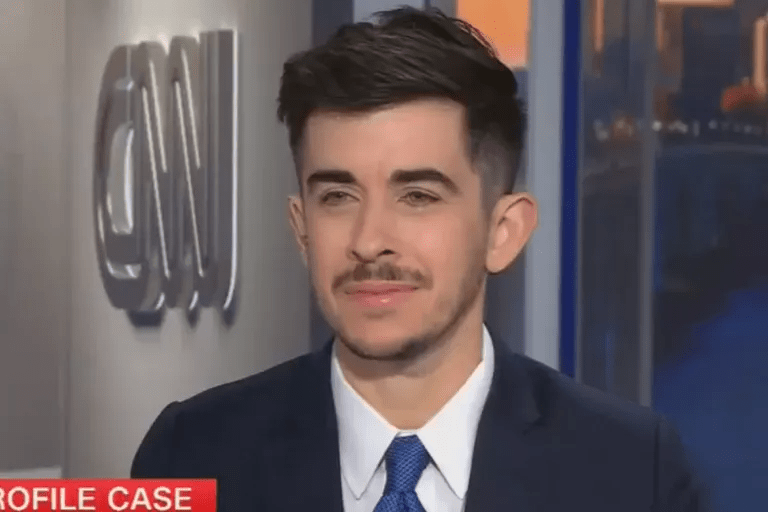
ACLU lawyer Chase Strangio drew parallels between the Court’s involvement in pandemic regulations and its role in evaluating gender-affirming care, emphasizing that the Court should respect expert medical opinions in both contexts. He also addressed concerns about transition regret, pointing out that it is rare and that the overwhelming majority of individuals who pursue gender-affirming care report positive outcomes. Strangio argued that this underscores the importance of allowing access to such care, as it is supported by medical evidence and expertise. ACLU lawyer Chase Strangio, the first openly trans person to argue before the Supreme Court, drew from the Court’s role in regulating public health during the COVID-19 pandemic to argue against Tennessee’s S.B. 1, asserting that SCOTUS should rule against the ban in the interest of the common good. He used the same rationale the Court applied in reviewing public health policies during the pandemic to advocate for the preservation of gender-affirming care.
Strangio also addressed claims about high regret and detransition rates, arguing that such figures are often misrepresented to serve a particular agenda. He referenced the ACLU’s reply brief submitted to SCOTUS, which details the organization’s response to these mischaracterizations.
In response to questioning from Justice Alito, Strangio maintained that gender-affirming care for minors is life-saving, noting that it significantly reduces the risk of suicide. He also pointed out that, contrary to claims in the Cass Review, numerous studies show improved mental health outcomes for transgender individuals following gender-affirming care.
Justice Ketanji Brown Jackson argued that the ban on gender-affirming care is discriminatory, highlighting how it targets a specific group based on their gender identity. She pointed out that such policies are a direct violation of equal protection principles.
ACLU lawyer Chase Strangio then spoke, making history as one of the leading voices in the case. Strangio reiterated the importance of respecting expert medical opinions and legal protections for transgender individuals, advocating for the right to gender-affirming care. His powerful arguments further cemented his role in the ongoing fight for transgender rights.
In response to a line of questioning from Justices Elena Kagan and Amy Coney Barrett, Justice Ketanji Brown Jackson illustrates how denying transgender people medical care is discriminatory, highlighting that such care is often granted to cisgender individuals. Jackson compares these discriminatory policies to those implemented in the 1950s and 1960s on the basis of race, referencing Loving v. Virginia, which overturned bans on interracial marriage.
U.S. Solicitor General Elizabeth Prelogar echoes this argument, drawing parallels between the logic used in Loving and the current case.
Shortly thereafter, Chase Strangio, the first openly trans lawyer to speak before the Supreme Court, argues in favor of overturning S.B. 1. Strangio, representing the American Civil Liberties Union and the plaintiffs, responds to Justice Clarence Thomas’s question about his proposed solution, stating that he would want to ensure gender-affirming care for minors is authorized, particularly for his plaintiffs.
Kavanaugh Presses Lawyer on Constitutionality & Veers into Asking About Sports
Justice Brett Kavanaugh presses ACLU lawyer Chase Strangio on the constitutionality of gender-affirming care bans, questioning whether such regulations are in line with constitutional protections. Kavanaugh’s line of questioning shifts when he asks about the implications for transgender athletes in sports, seeking to understand how anti-discrimination measures in this case could apply to sports-related issues. Strangio responds, emphasizing that while the inclusion of trans athletes is an important issue, it is distinct from the core question at hand, which focuses on the legality and necessity of gender-affirming care.
Supreme Court Justice Brett Kavanaugh asks U.S. Solicitor General Elizabeth Prelogar why SCOTUS should apply intermediate scrutiny (a type of judicial review to assess constitutionality) to Tennessee’s S.B. 1. Prelogar argues that by imposing restrictions based on assigned sex at birth, the law violates the Equal Protection Clause of the Constitution, which inherently calls for additional scrutiny.
Kavanaugh then shifts to a separate line of questioning, bringing up the issue of trans women in women’s sports. This leads Prelogar to admit that she believes there should be restrictions on trans women in sports. However, she tries to pivot back to arguing that such restrictions on gender-affirming care should not be in place.
Research indicates that trans women do not have an inherent advantage in sports after transitioning for the prescribed amount of time. Studies have shown their performance to be on par with cisgender women, and there is no evidence of trans women disproportionately dominating women’s sports.
Fertility Issues Don’t Just Affect Trans People, But Intersex People Too, Lawyer Argues at SCOTUS
During arguments at the Supreme Court, a lawyer emphasized that fertility issues are not exclusive to transgender individuals but also affect intersex people. The lawyer argued that restrictions on gender-affirming care could have broader implications, including for intersex individuals who may face similar challenges in accessing reproductive healthcare. This point was raised to highlight the intersection of medical and legal issues affecting both trans and intersex communities.
In response to a line of questioning from Supreme Court Justice Brett Kavanaugh about how gender-affirming care could impact fertility—one of the arguments for banning such care being that trans kids might face fertility issues later in life—U.S. Solicitor General Elizabeth Prelogar argues that while fertility issues are indeed a concern in transgender care, they are not unique to trans individuals. Prelogar points out that there are solutions available for these issues, which are also found in treatments allowed under S.B. 1, such as invasive surgeries on intersex infants.
Intersex individuals, whose genitalia do not align with typical male or female expectations, are often subjected to invasive surgeries in infancy, which can permanently restrict their ability to have children due to forced conformity to societal norms. Despite these concerns, many anti-transgender policies, including S.B. 1, allow for gender-affirming care for intersex minors, even though advocates call for restrictions on mandatory conforming surgeries and treatments.
Additionally, many intersex individuals identify as transgender, linking these issues inextricably in discussions about gender-affirming care and reproductive rights.
Sam Alito Brings Up Restrictions on Women’s Rights to Oppose Trans Care
Justice Samuel Alito raised concerns about restrictions on women’s rights while arguing against the case for gender-affirming care. He suggested that limiting certain aspects of gender-affirming care could be justified by broader discussions around women’s rights. In his questioning, Alito implied that policies restricting transgender care could be seen as part of a larger debate about the rights of women, sparking further discussions about the intersection of gender, rights, and healthcare.
Supreme Court Justice Samuel Alito argued that previous SCOTUS rulings, particularly Dobbs v. Jackson Women’s Health Organization (which overturned Roe v. Wade) and Geduldig v. Aiello (which allowed the denial of insurance benefits for work loss due to pregnancy), do not support the claim that Tennessee’s S.B. 1 constitutes sex-based discrimination. He pointed out that both rulings suggested that restrictions on pregnancy-related insurance coverage and abortion do not qualify as sex-based discrimination.
U.S. Solicitor General Elizabeth Prelogar countered, asserting that neither of these rulings applies to the current case. She argued that the previous decisions refer to more individualized healthcare concerns, which are unrelated to the broader, sex-based characteristics addressed by hormone replacement therapy and puberty blockers. These treatments, Prelogar emphasized, are inherently sex-based and therefore should not be governed by the same arguments made in those earlier rulings.
Justice Sonia Sotomayor joined the conversation, echoing Prelogar’s points that the issue at hand is fundamentally about sex classification. She also reiterated her criticisms of the Cass Review and responded to Alito’s claims about European countries restricting care, pointing out the inaccuracies in those statements. Sotomayor pressed for further clarity, helping to illuminate key aspects of Prelogar’s arguments.
U.S. Solicitor General States Her Case as Conservative Justices Bring Up Cass Review
U.S. Solicitor General Elizabeth Prelogar presented her case before the Supreme Court, defending the constitutionality of gender-affirming care and challenging the restrictions posed by Tennessee’s S.B. 1. As she argued, conservative justices, including Justices Samuel Alito and Brett Kavanaugh, raised concerns about the findings in the Cass Review, which suggests that gender-affirming care for minors may lead to negative psychological and medical outcomes.
Prelogar countered these claims by stressing that the Cass Review’s conclusions are not representative of the broader medical consensus. She pointed out that numerous studies and expert medical organizations, including the American Medical Association and the American Academy of Pediatrics, strongly support gender-affirming care as effective and essential for the well-being of transgender minors.
Her responses focused on the scientific evidence and medical expertise backing gender-affirming care, challenging the use of the Cass Review as a central argument for limiting such care.
U.S. Solicitor General Elizabeth Prelogar began outlining her case that Tennessee’s S.B. 1 constitutes discrimination based on biological sex. She argued that because testosterone and estrogen affect individuals differently depending on whether they were assigned male or female at birth, and because these medications vary based on assigned sex, the restriction of gender-affirming care amounts to sex-based discrimination.
Supreme Court Justices Clarence Thomas, Samuel Alito, and Chief Justice John Roberts then began their questioning. Alito referenced the controversial Cass Review, a report from the United Kingdom that has been used to justify restricting puberty blockers. The report has faced criticism from the World Professional Association for Transgender Health and Yale researchers for its unscientific approach.
Justice Thomas sought clarification on the specific effects of hormone treatments on youth, while Chief Justice Roberts asked about the Court’s role in regulating individualized care and whether such decisions should be left to the states.
Prelogar maintained that, regardless of the specific details or arguments presented, S.B. 1 is fundamentally discriminatory, emphasizing that no other medications are subject to such broad restrictions in other countries.
All three justices who questioned Prelogar were appointed by Republican presidents.
Supreme Court Hearing on Oral Arguments Begins; Protesters on Both Sides Outside Court
The Supreme Court hearing on the challenge to Tennessee’s S.B. 1 began, with oral arguments being presented inside the Court. Outside the building, protesters gathered on both sides of the issue, with supporters of transgender rights advocating for the protection of gender-affirming care, while opponents of the policy voiced their support for the restrictions. The atmosphere outside was charged with emotion as both sides made their voices heard in what is expected to be a pivotal case for transgender rights and healthcare access.
Live coverage of the oral arguments presented to SCOTUS is beginning on C-SPAN, with the session set to last until approximately 2 p.m. Eastern, when the oral arguments will conclude.
As the courthouse prepares for cameras inside, reporters outside the building are focusing on protests from both sides of the debate. While advocates for transgender care are present, they are scarcely featured in media coverage. In contrast, disproportionate attention is given to opponents of transgender care, including pseudoscience activist groups like Do No Harm and Gays Against Groomers, as well as anti-trans politicians such as Rep. Gary Palmer (R-AL).
People’s Lives Have Been Turned Upside-Down by Gender-Affirming Care Bans
The ongoing gender-affirming care bans have had a profound impact on many individuals, turning their lives upside-down. For transgender youth and their families, these bans have created uncertainty and fear, as they are now faced with limited access to essential healthcare. Many are grappling with the emotional and physical toll of losing access to treatments that are crucial for their well-being, while others are forced to relocate or seek care in more supportive states. The broader consequences of these bans are reshaping lives, highlighting the personal struggles tied to the political and legal battles surrounding transgender rights.
One family from Texas shared their experience of living out of their van in a truck stop in Connecticut, driven by the increased cost of living after relocating to escape Texas’ anti-trans laws. Another parent who made a similar move from Texas to Connecticut remarked that while Connecticut launched a campaign inviting families from anti-trans states to relocate, the state did little to address the issue of affordability. These families are facing significant financial and emotional challenges as they seek safety and access to gender-affirming care in a more supportive environment.
The Trans Rights Supreme Court Case Is Also About Whether Sexism Is Now Legally Allowed in America
The ongoing Supreme Court case challenging gender-affirming care is not just about healthcare access for transgender individuals—it also raises broader questions about whether sexism is now legally permissible in the United States. At the heart of the case is the argument that restricting gender-affirming care based on assigned sex at birth constitutes sex-based discrimination, which may set a dangerous legal precedent. If the Court rules in favor of such bans, it could embolden future policies that discriminate on the basis of sex, further entrenching harmful gender stereotypes and limiting the rights of transgender individuals and other marginalized groups.
Slate’s legal writer Mark Joseph Stern explained in an article the critical stakes in U.S. v. Skrmetti, the challenge to Tennessee’s gender-affirming care ban currently being heard by the Supreme Court. Stern outlines how this case goes beyond the rights of transgender individuals, addressing broader questions about gender equality and the legal protections against sexism.
Stern notes that the pro-trans side argues that banning a trans boy from receiving testosterone therapy while allowing a cisgender boy to receive the same treatment is blatantly sexist. The only difference between the two is their assigned sex at birth, which makes the restriction inherently discriminatory. However, the appeals court disagreed, creating a new “biological difference” exception and arguing that the ban hurts both trans boys and trans girls equally, thereby making it not a violation of sex-based discrimination.
According to Stern, Skrmetti isn’t just about transgender rights—it’s a case that questions the future of gender equality under the law. The key legal issue is whether laws that deny medical care based on sex should trigger heightened scrutiny by the courts. Stern emphasizes that, according to long-established legal precedent, the answer should be yes. If the Court rules otherwise, it could undermine constitutional protections against sex discrimination and pave the way for laws enforcing harmful gender stereotypes. While transgender Americans would be most immediately affected, Stern argues that the case has broader implications for everyone’s ability to reject rigid gender roles without facing state-enforced oppression.
LIVE UPDATES: Supreme Court Hears Arguments in Challenge to Gender-Affirming Care Ban By Mira Lazine
Today, the United States Supreme Court is hearing oral arguments in the case United States v. Skrmetti, which centers on Tennessee’s 2023 bill, S.B. 1, that bans gender-affirming care for minors. While no decision will be made today, the arguments presented are expected to have far-reaching implications for transgender rights across the nation, particularly concerning access to gender-affirming care for minors.
The case involves three families of transgender youth in Tennessee who are challenging the state’s ban on providing their children with life-saving healthcare. The ban also impacts several doctors who seek to provide care to consenting patients. The U.S. District Court for the Middle District of Tennessee initially ruled to overturn the ban, but the 6th Circuit Court of Appeals allowed it to go back into effect, prompting the case to be brought before the Supreme Court for a final ruling.
The plaintiffs in this case are supported by the Biden-Harris administration and the Department of Justice, which challenge the legality of such a broad ban on gender-affirming care. They are represented by the American Civil Liberties Union (ACLU) and attorney Chase Strangio, along with Lambda Legal and Akin Gump Strauss Hauer & Feld LLP. On the opposing side, Tennessee Attorney General Jonathan Skrmetti, along with Tennessee Solicitor General Matthew Rice, represents the state of Tennessee. The United States government is also involved as a third party and is represented by U.S. Solicitor General Elizabeth Prelogar.
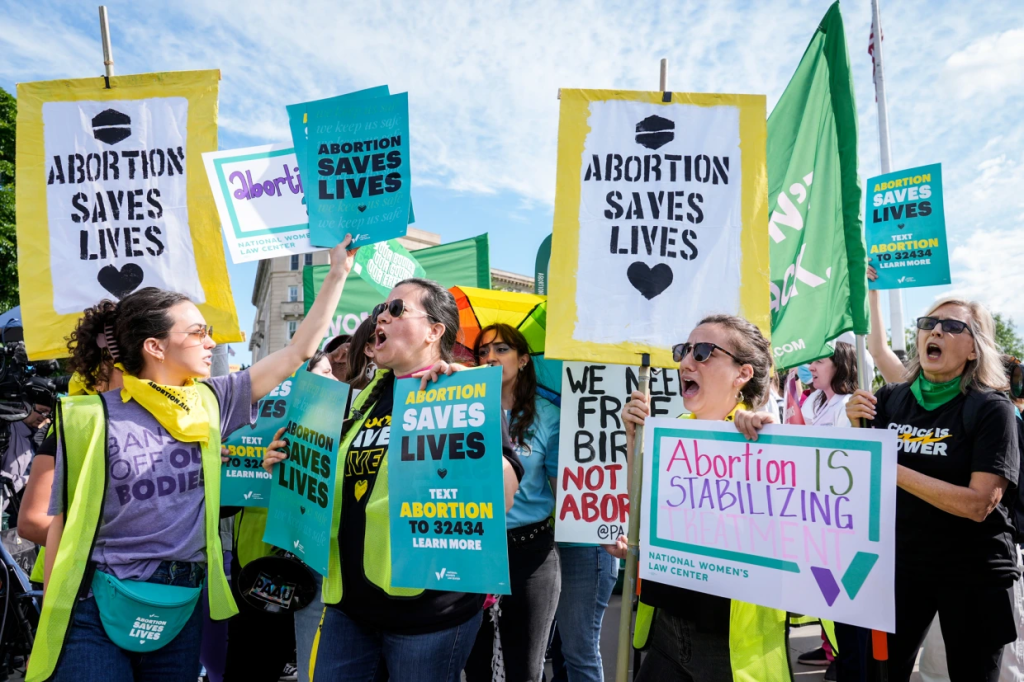
The justices will decide whether to impose new restrictions on the abortion pill mifepristone, and whether a federal law requiring emergency room treatment conflicts with a state abortion ban.
WASHINGTON — The Supreme Court is poised to rule this month on two significant abortion cases that could have nationwide repercussions. This marks the first time the justices are revisiting the issue since overturning Roe v. Wade.
The 2022 decision to revoke the right to obtain an abortion caused widespread upheaval, prompting a wave of new state-level abortion restrictions and encouraging anti-abortion activists to seek further limitations.
The most closely watched case involves the court deliberating whether to implement new restrictions on the widely used abortion pill mifepristone, including tighter regulations on mail-order access.
In a less publicized yet potentially impactful case, the justices are examining whether Idaho’s near-total abortion ban conflicts with a federal law mandating emergency medical care for patients, including pregnant women.
Rabia Muqaddam, a lawyer at the Center for Reproductive Rights, which supports abortion rights, referenced the 2022 ruling in Dobbs v. Jackson Women’s Health Organization “set off a chain reaction that we are seeing in all sorts of ways,” including the two cases now before the court.
Theories that were previously considered “the fringe of the fringe” are now “sufficiently mainstream to make it to the Supreme Court,” she added.
The new cases show that the court’s stated aim of getting out of the business of deciding what conservative Justice Brett Kavanaugh called “difficult moral and policy questions” was easier said than done. As such, the upcoming rulings will provide further evidence of how far the court, which has a 6-3 conservative majority, is willing to go in curbing abortion access.
In the mifepristone case, the court is weighing whether to impose new restrictions on the pills’ availability, including access by mail. Such a move would dramatically decrease the ability of women to obtain the pills, especially in states with new abortion restrictions.
The legal question in the Idaho case is whether a federal law that requires stabilizing treatment for patients in emergency rooms trumps the state restrictions in certain circumstances when doctors believe an abortion is required to protect the health of a pregnant woman.
Jim Campbell, chief legal counsel of Alliance Defending Freedom, the conservative Christian legal group that is representing anti-abortion interests in both cases, said the legal issues in each of them reflect overreach by the Biden administration in response to Roe being overturned.
“They’re both instances where the federal government is doing things, whether directly or indirectly, to interfere with state pro-life laws,” he added.
Based on oral arguments earlier this year, it seems likely that anti-abortion groups will lose in the mifepristone case, leaving the status quo unchanged. That means the Idaho case could have a bigger practical impact if the court backs the state, which seems possible based on questions asked by the justices.
Rulings are expected by the end of the month when the court traditionally concludes its nine-month term that begins in October. The court will also be issuing a slew of other rulings on hot-button issues, including former President Donald Trump’s claim of immunity from prosecution in his election interference case.















 fleeredstates.blog
You must be logged in to post a comment.