Texas A&M committee rules professor’s firing over gender identity lesson was unjustified

Read more at CNN.

A Texas A&M committee agreed that the university was wrong to fire a professor earlier this year after a controversy over a classroom video that showed a student objecting to a children’s literature lesson about gender identity.

The internal committee ruled that the university didn’t follow proper procedures and didn’t prove there was good cause to fire Melissa McCoul, who was a senior lecturer in the English department with over a decade of teaching experience. Republican lawmakers, including Gov. Greg Abbott, had called for her termination after seeing the video.

The committee unanimously voted earlier this week that “the summary dismissal of Dr. McCoul was not justified.”

The university said in a statement that interim President Tommy Williams has received the committee’s nonbinding recommendation and will make a decision in the coming days or weeks after reviewing it.

McCoul’s lawyer, Amanda Reichek, said this dispute seems destined to wind up in court because the university appears to plan to continue fighting and the interim president is facing the same political pressure.

“Dr. McCoul asserts that the flimsy reasons proffered by A&M for her termination are a pretext for the University’s true motivation: capitulation to Governor Abbott’s demands,” Reichek said in a statement.

The video showing a student questioning whether the class discussion was legal under President Trump’s executive order on gender roiled the campus and led to sharp criticism of university president Mark Welsh, who later resigned, but he didn’t offer a reason and never mentioned the video in his resignation announcement.

The opening of the video posted by state Rep. Brian Harrison showed a slide titled “Gender Unicorn” that highlighted different gender identities and expressions.

Students in the class told the Texas Tribune that they were discussing a book called “Jude Saves the World” about a middle schooler who is coming out as nonbinary. That was just one of several books included in the course that highlights LGBTQ+ issues.

After a brief back-and-forth discussion about the legality of teaching those lessons, McCoul asked the student to leave the class. Harrison posted other recordings of the student’s meeting with Welsh that show the university president defending McCoul’s teaching.

The Tribune reported that McCoul had taught the same course at A&M at least 12 times since 2018. University officials decided to end this particular summer class early after the confrontation, but McCoul returned to teach in the fall until after the videos were published online.

Welsh had said when McCoul was fired that he learned she had continued teaching content in a children’s literature course “that did not align with any reasonable expectation of standard curriculum for the course.” He also said that the course content was not matching its catalog descriptions. But her lawyer disputed that, and said McCoul was never instructed to change her course content in any way, shape or form.

Earlier this month, the Texas A&M Regents decided that professors now need to receive approval from the school president to discuss some race and gender topics.

The new policy states that no academic course “will advocate race or gender ideology, or topics related to sexual orientation or gender identity” unless approved in advance by a campus president.

Various universities and their presidents around the country, including Harvard and Columbia have come under scrutiny from conservative critics and President Donald Trump administration over diversity, equity and inclusion practices and their responses to campus protests.

Texas A&M System to vote on requiring prior approval for lessons on “race and gender ideology”

Read more at Texas Tribune.

The Texas A&M University System’s board of regents will vote on Thursday on whether to prohibit faculty at its 12 universities from teaching “race or gender ideology” unless those lessons are pre-approved by each campus president or a delegate.

The proposal appears to be the first time that a Texas public university system offers definitions of what kind of instruction related to race and gender should not be permitted. 

“Race ideology,” the draft of the proposal says, would encompass any concept that “attempts to shame a particular race or ethnicity” or “promotes activism on issues related to race or ethnicity rather than academic instruction.” The proposal would define “gender ideology” as “a concept of self-assessed gender identity replacing, and disconnected from, the biological category of sex.” 

The policy does not say how the university would decide what constitutes “race ideology” or “gender ideology,” or what would happen if a faculty member is accused of violating the rule. A Texas A&M University System spokesperson did not respond to a request for comment.

The regents’ Committee on Academic and Student Affairs will hear presentations and consider the proposed policy on Thursday morning, according to the agenda for the meeting. The full board of regents will take public testimony on the proposal and vote on it later that day. The meeting will be livestreamed and the public is invited to testify.


Leonard Bright, president of the Texas A&M Chapter of the American Association of University Professors, said faculty were not consulted on the proposed changes, which he called “a direct violation” of their expertise and freedom to teach. 

“And if that’s the case, there’s just going to be a further black eye on higher education here in Texas,” he said.

Robert Shilby, special counsel for campus advocacy at the Foundation for Individual Rights and Expression, said the proposal would “invite unlawful censorship, chill academic freedom, and undermine the core purpose of a university,”

“Hiring professors with PhDs is meaningless if administrators are the ones deciding what gets taught,” he said. “Faculty will start asking not, ‘Is this accurate?’ but ‘Will this get me in trouble?’ That’s not education, it’s risk management.”

In a Monday email to faculty, Simon North, interim dean of Texas A&M’s College of Arts and Sciences, acknowledged that the proposal raised many questions about its implementation, “such as the criteria that will determine when course content is considered relevant, controversial, or inconsistent with a syllabus; the mechanisms by which course material would be approved and compliance evaluated; and the timing of implementation.” He added that he is working with the provost’s office to answer those questions and that he will seek input on the proposal from other leaders in the college and department heads. 

“Approval of these revisions could have far-reaching implications for undergraduate education, and the scope of the implications will depend on the answers to these questions,” North said.

Faculty are already signaling they will show up in force to the regents’ meeting to push back against the proposal. Bright, a professor at Texas A&M’s Bush School of Government and Public Service, said professors are organizing testimony, drafting statements and coordinating with colleagues across Texas to oppose the revisions. 

He said the policy would affect disciplines across the university — from political science and history to public service and biology — and that some faculty fear it would shift control over classroom content from faculty to administrators. He added that some of his colleagues believe the revisions are an attempt to “institutionalize indoctrination” and that if the proposed changes are approved, they will likely be challenged in court.

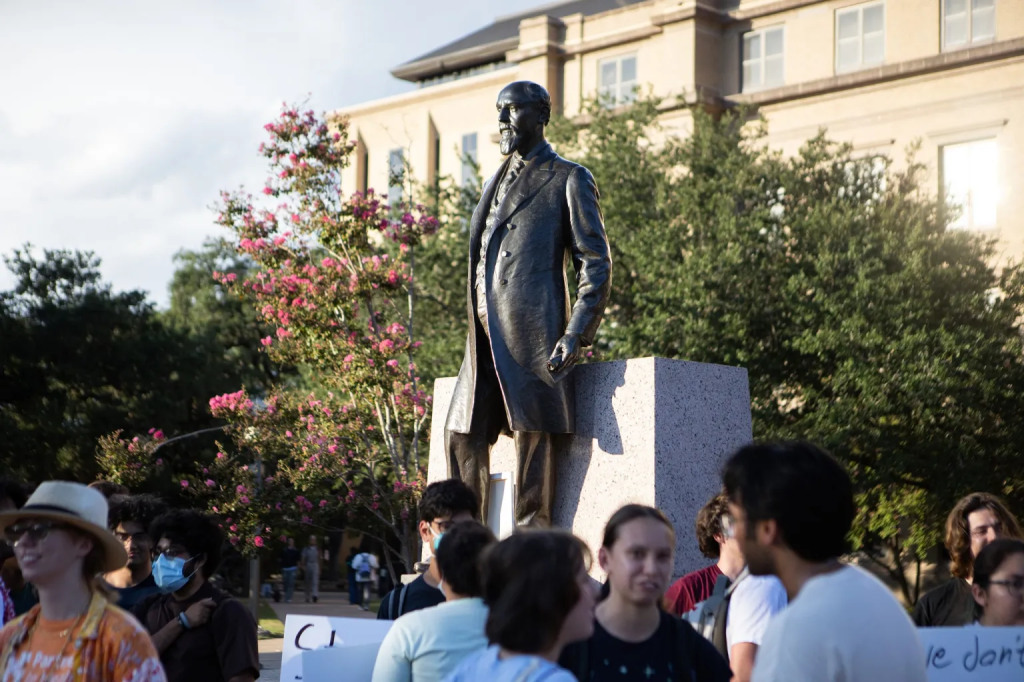
The proposed prohibition comes two months after the system’s College Station flagship fired Professor Melissa McCoul, whose discussion of gender identity in a children’s literature class was secretly recorded by a student and later circulated online, drawing fire from Republican lawmakers and ultimately toppling the university’s former president

Since McCoul’s firing, other university systems have begun imposing their own restrictions on classroom content. 

On Sept. 25, the Texas Tech University System instructed its faculty to ensure their courses comply with a federal executive order, a letter from Gov. Greg Abbott and a new state law that recognizes only two sexes. In the weeks that followed, Texas’ other public university systems — including the University of Texas, University of North Texas, Texas State and Texas Woman’s University — announced or began internal audits of their course offerings. All said they were acting to ensure compliance with state or federal law, though few detailed what they were looking for or what changes might follow. 

No state or federal law prohibits instruction on race, gender or sexual orientation in universities. However, recent state legislation has put direct and indirect pressure on how universities implement policies related to race and gender. 

In 2023, the Texas Legislature approved Senate Bill 17, which banned diversity, equity and inclusion offices and initiatives at the state’s public universities. Earlier this year, lawmakers approved Senate Bill 37, which gave governor-appointed university regents the final say on whether to approve new courses and prohibited lessons that “advocate or promote the idea that any race, sex, or ethnicity or any religious belief is inherently superior to any other.” An earlier version of the legislation would have required that college courses “not endorse specific public policies, ideologies or legislation,” but the proposal was narrowed down after pushback from professors who said such a restriction would lead to self-censorship and infringe on academic freedom. 

The Texas A&M Board of Regents will also consider on Thursday a new policy that would bar faculty from teaching material “inconsistent with the approved syllabus for the course.” The clause mirrors the reason university officials gave McCoul for firing her. They said she refused to change her course content to match the catalog description, but McCoul and other faculty have countered that course descriptions are often broad and that professors are expected to design their own syllabi and teach according to their expertise.

McCoul has appealed her termination through the university’s Committee on Academic Freedom, Responsibility and Tenure, which concluded its hearing last week. The committee is expected to share a recommendation with interim university President Tommy Williams in the coming weeks on how to respond to McCoul’s appeal, but Williams is not obligated to follow it.

Texas A&M President resigns over controversy in LGBTQ teachings

Read more at Yahoo.

The President of Texas A&M University, Mark Welsh, resigned last week amid controversy over a viral video between a professor and a student debating gender ideology.

Welsh stepped down officially on Friday, September 19, according to a press release where the Chancellor Glenn Hegar thanked Welsh for his service to the university and the nation.

“President Welsh is a man of honor who has led Texas A&M with selfless dedication,” said Hegar. “We are grateful for his service and contributions. At the same time, we agree that now is the right moment to make a change and to position Texas A&M for continued excellence in the years ahead.”

The former president resigned while the university faces heated backlash after a video was posted of a student calling out a professor for teaching gender ideology in the classroom.

Professor Melissa McCoul was sharing an image of a “gender unicorn” that demonstrates concepts of gender expressions, identity and sexuality while reading “Jude Saves the World,” a novel about a 12-year-old who comes out as nonbinary, according to The Texas Tribune.

The student said it was illegal according to an executive order signed by President Trump and went against her religious beliefs.

“[M]y Administration will defend women’s rights and protect freedom of conscience by using clear and accurate language and policies that recognize women are biologically female, and men are biologically male,” Trump wrote in the executive order.

State Rep. Brian Harrison, R-Texas, reposted the video on X.

“The governor and lieutenant governor and speaker have been telling everybody for two years now that we passed bans on DEI and transgender indoctrination in public universities,” Harrison wrote on his X account. “The only little problem with that? It’s a complete lie. … The state of Texas — despite what the governor said in his tweet yesterday, that this is a violation of law — there is no state law that we passed.”

Professor McCoul was later fired, according to press reports.

Former A&M President Welsh allegedly defended the inclusion of LGBTQ content in the classroom.

“Those people don’t get to pick who their clients are, what citizens they serve and they want to understand the issues affecting the people that they’re going to treat,” Welsh said in an audio recording posted by Harrison on X. “So there is a professional reason to teach some of these courses.”

In the past few years, Texas has been one of many states fighting LGBTQ and diversity, equity and inclusion efforts in schools.

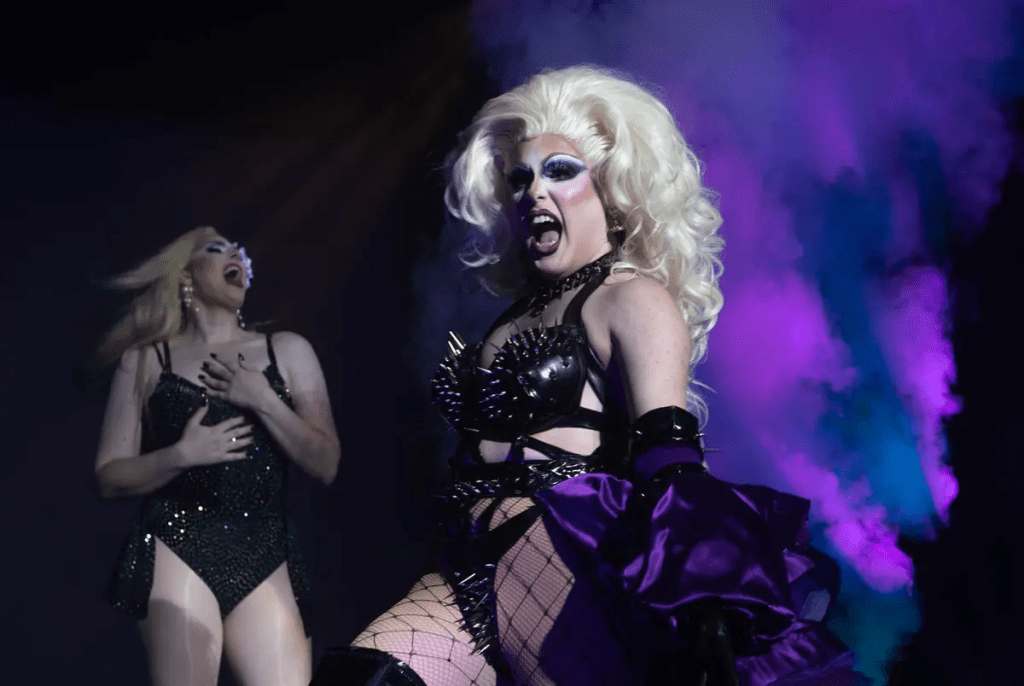
Student group challenges Texas A&M drag ban

*This was reported by The Hill.

A group of students is suing the Texas A&M University System after a vote last week banned all drag performances from taking place on its 11 campuses. 

The resolution and subsequent lawsuit, filed Wednesday in the Southern District of Texas, are the latest developments in a yearslong battle within one of the nation’s largest university systems over on-campus drag performances. 

Texas A&M’s Board of Regents voted almost unanimously late last month in favor of a resolution that states drag events are inconsistent with the system’s “mission and core values, including the value of respect for others.” 

The resolution says drag shows are “likely to create or contribute to a hostile environment for women” in violation of university anti-discrimination policies and Title IX, the federal civil rights law against sex discrimination. “These events often involve unwelcome and objectively offensive conduct based on sex for many members of the respective communities of the universities, particularly when they involve the mockery or objectification of women,” the resolution says. 

The document directs the system’s chancellor and the president of each university to prohibit drag shows from taking place on campus, citing an executive order from President Trump that proclaims the government recognizes only two sexes, male and female, and broadly prevents federal funds from being used to promote what Trump and his administration have called “gender ideology.” 

The resolution also acknowledges a Jan. 30 letter from Texas Gov. Greg Abbott (R) commanding state agencies to implement Trump’s order. 

“Given that both the System and the Universities receive significant federal funding, the use of facilities at the Universities for Drag Show Events may be considered promotion of gender ideology in violation of the Executive Order and the Governor’s directive,” the resolution says. 

federal lawsuit filed Wednesday by students at Texas A&M University, the system’s flagship institution, argues the resolution violates their First Amendment rights and the Texas Open Meetings Act, which requires governmental bodies to post a meeting’s location and agenda at least 72 hours in advance. 

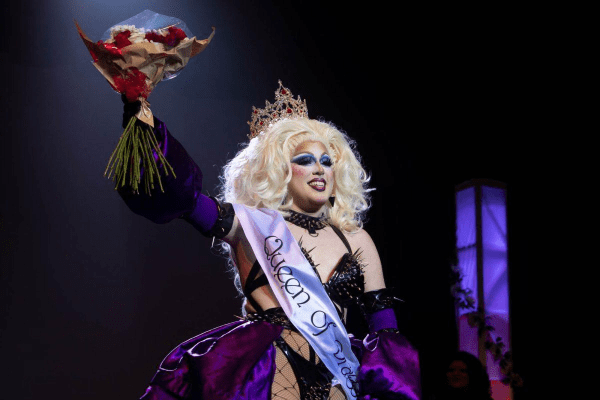
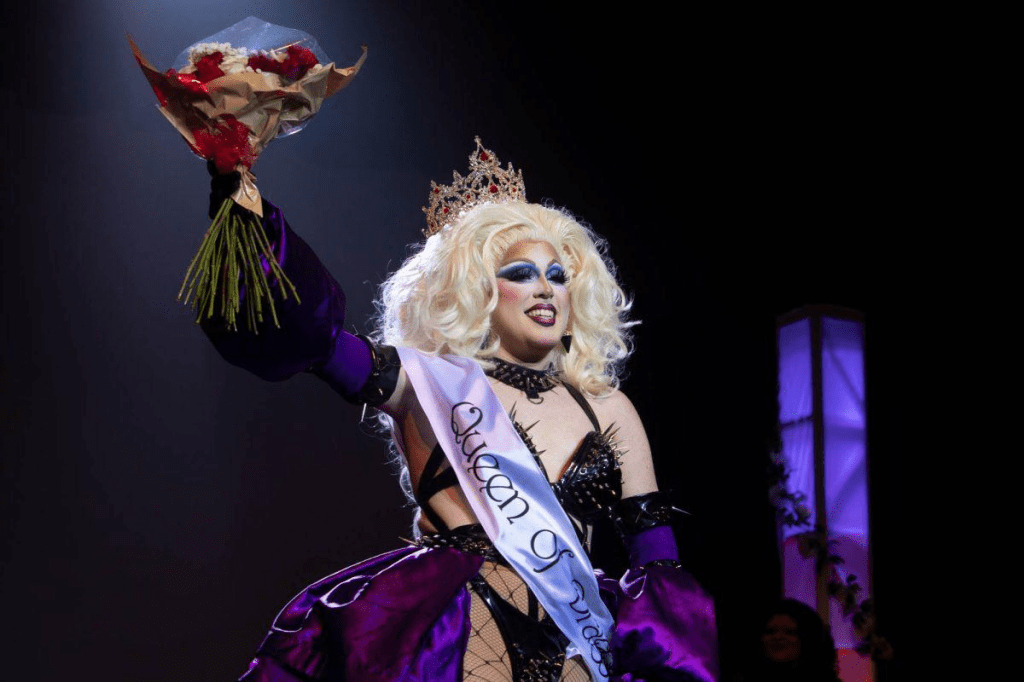
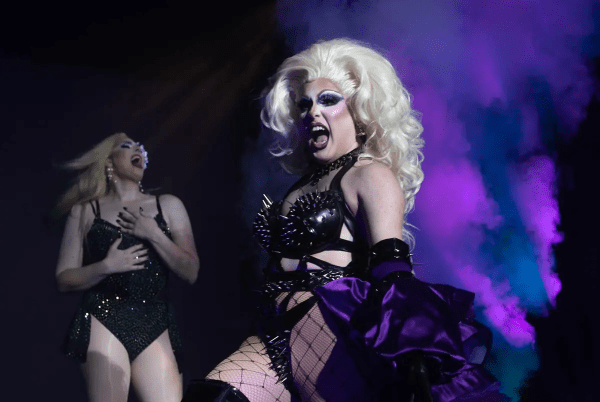
The resolution’s adoption means “Draggieland,” an annual drag competition at A&M, will need to find a new host. The event scheduled for March 27 had been set to take place at the school’s Rudder Theater. 

“We refuse to let Texas A&M dictate which voices belong on campus,” the students, known collectively as the Queer Empowerment Council, said in a statement. “Drag is self-expression, drag is discovery, drag is empowerment, and no amount of censorship will silence us.” 

A spokesperson said the A&M University System had received the lawsuit and was in the process of reviewing it.

“Public universities can’t shut down student expression simply because the administration doesn’t like the ‘ideology’ or finds the expression ‘demeaning,’” said Adam Steinbaugh, an attorney at the nonprofit Foundation for Individual Rights and Expression (FIRE), which is representing the Queer Empowerment Council in court. 

The organization also represented students at West Texas A&M University in a 2023 lawsuit over the university president’s decision to cancel a charity drag show on campus. West Texas A&M University President Walter Wendler argued drag performances degrade women and compared them to blackface. 

“If other students dislike or disagree with Draggieland, the solution is simple: don’t go,” said Jeff Zeman, another FIRE attorney. “Or they could organize a protest, as students opposing drag have in the past. The First Amendment protects drag and the ability to criticize drag — and it forbids the government silencing the side it disagrees with.” 

A Texas state law against drag performances was ruled unconstitutional in 2023. U.S. District Judge for the Southern District of Texas David Hittner, a former President Reagan appointee, ruled that drag is expressive conduct protected by the First Amendment.

Last week, the Supreme Court turned away a case challenging similar restrictions on drag in Tennessee, leaving that law partially intact.

Texas A&M System bans drag shows from its universities

*This was reported by The Texas Tribune.

The Texas A&M University System Board of Regents on Friday passed a resolution banning all drag performances from taking place on its 11 university campuses.

This means that Draggieland, a beloved annual event scheduled for March 27 at the Rudder Theatre on the College Station campus, will have to find a new venue. Students have also held drag shows at Texas A&M University Corpus Christi and East Texas A&M University.

The move potentially sets up another First Amendment fight between students and university administrators.

The resolution says the board recognizes the need for universities to foster a sense of community and belonging among students but adds that drag shows are “inconsistent with [the system’s] mission and core values, including the value of respect for others.”

The resolution also says drag shows are “likely to create or contribute to a hostile environment for women,” contrary to university and federal anti discrimination policies.

“These events often involve unwelcome and objectively offensive conduct based on sex for many members of the respective communities of the universities, particularly when they involve the mockery or objectification of women,” the resolution says.

The resolution says having on-campus drag shows may be seen as promoting gender ideology and that both President Donald J. Trump and Gov. Greg Abbott have said federal and state funds may not be used for that purpose. It directs the system’s chancellor and the president of each institution to implement the policy, including canceling any upcoming drag shows.

The vote was unanimous. Regent Mike Hernandez III was absent.

The Queer Empowerment Council, a student group that hosts Draggieland and other LGBTQ+ events at Texas A&M University, said in a statement Friday evening that it was “profoundly disheartened” by the decision.

“The power of drag as a medium of art is undeniable, serving as a platform for self-discovery, inclusivity, and celebration of diversity. QEC firmly believes that the Board of Regents’ decision undermines these values, which are vital to fostering a supportive and inclusive environment for all students,” the council said.

It is exploring whether it can hold Draggieland on the same or a different date at a different venue.

“We are committed to ensuring that our voices are heard, and that Draggieland will go on, no matter the obstacles we face,” the group said.

In 2023, West Texas A&M University President Walter Wendler canceled an on-campus drag show, similarly arguing such performances degrade women.

The students said his comments were off base and sued him for violating their First Amendment rights as well as a state law that prohibits universities from barring student organizations from using their facilities on the basis of the political, religious, philosophical, ideological or academic viewpoints the organizations express. The court has allowed Wendler’s cancellation to stand while it makes a decision.

“They are imposing a restraint on an entire category of protected speech under the First Amendment and in no public college campus should that ever occur per our Constitution,” said JT Morris, senior attorney at the Foundation for Individual Rights and Expression, of the regent’s decision Friday. Morris is representing the students in the West Texas A&M case.

Civil rights groups also condemned the resolution. Ash Hall, policy and advocacy strategist for LGBTQIA+ rights at the ACLU of Texas, said the West Texas A&M lawsuit plus one her organization spearheaded and ultimately blocked a statewide ban on drag shows “makes this kind of absurd.”

“To do this now, while that’s already happening, is a waste of time and resources and makes it seem like the Board of Regents is more focused on culture wars than educating their students,” they said.

Sofia Sepulveda, field director for Equality Texas, noted that not all drag is performed by men.

“Women performers also delight in a chance to poke fun at stereotypes that have held women back for generations,” she said.

She also criticized the gender disparities among the flagship’s faculty.

“If A&M is worried about creating a hostile environment for women, then why don’t they hire more women?” Sepulveda said. “Right now, only 40% of the faculty at Texas A&M are women, 60% are men. That’s a serious issue.”

Draggieland organizers have said the event is an important outlet for the LGBTQ+ community at a time when it has come under attack from conservative policymakers in Texas and across the nation.

Students raised funds to keep the show going when the university stopped sponsoring it in 2022. In the years since, they’ve seen LGBTQ+ representation and resources on campus diminish.

Last year, Texas A&M University cut an LGBTQ+ studies minor and stopped offering gender-affirming care at the Beutel Student Health Center. In a statement Friday afternoon, the university said it had begun coordinating with the division of student affairs to notify student organizations about the board’s decision.

Regents were also expected to discuss Friday who should be the system’s next leader after Chancellor John Sharp retires this year. Regents met in Houston earlier this week to interview candidates. They did not make a decision on a finalist Friday.

Blog at WordPress.com.

Up ↑