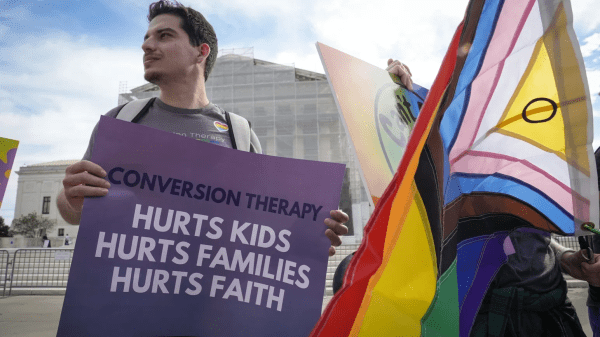
GOP lawmakers in Utah to “permanently” ban gender-affirming care even after their own report supported it

Read more at LGBTQ Nation.

Utah House Speaker Mike Schultz (R) says his Republican majority intends to permanently ban gender-affirming care for minors this year. The move comes more than seven months after the release of a Utah Department of Health and Human Services (DHHS) report, mandated by a Republican-backed state law, which found that medical evidence actually supports access to gender-affirming healthcare for minors, a different result than many conservatives were hoping for.

Utah already has what former state Rep. Mike Kennedy (R) — who now represents the state’s third district in Congress — described to Deseret News as a “permanent” ban on gender-affirming care for minors. Passed in January 2023, S.B. 16 banned gender-affirming surgeries for minors — despite such surgeries being exceptionally rare — and instituted an indefinite moratorium on providing puberty blockers and hormone replacement therapy (HRT) to minors for the purposes of gender-affirming care.

Kennedy, who co-sponsored S.B. 16, admitted to Deseret News that characterizing the law’s ban on puberty blockers and HRT as a “moratorium” was essentially a tactic to win over lawmakers who wanted more data on the effects of such treatments. The ban, he said, is already effectively permanent unless Utah lawmakers act to lift it.

S.B. 16 also ordered the state DHHS to commission a review of medical evidence around puberty blockers and HRT prescribed for the treatment of gender dysphoria in minors, with the goal of lawmakers using the report’s findings to inform future policy decisions.

That review, conducted by the University of Utah’s Drug Regimen Center, was released last May, and as Mother Jones reported at the time, its conclusions “unambiguously” supported the benefits of gender-affirming care for trans young people.

However, Utah Republicans, including Schultz, Kennedy, and state Rep. Katy Hall — who co-sponsored S.B. 16 — have dismissed the report.

“Common sense is common sense,” Schultz told Deseret News. “I don’t need a report, one way or the other, to tell me that. I just firmly believe that minors should not be transitioning.”

At the same time, however, Schultz told the outlet that he agrees with a separate review of the DHHS report by anti-trans advocacy group Do No Harm. The group’s review, published early last month, claims that the DHHS report does not meet the standards of a true systematic review of medical evidence, according to Deseret News.

“Unlike true systematic reviews, it does not assess the reliability of studies and whether the research can provide guidance for weighing the risks and benefits of medical intervention for children with gender dysphoria,” Do No Harm’s report claims.

Deseret News — which is owned, through a subsidiary, by the Church of Jesus Christ of Latter-day Saints — also notes that the Utah DHHS review’s findings contradict those in both the Cass Review and one released by the U.S. Department of Health and Human Services last year. Both of those reviews have been widely criticized.

A spokesperson for University of Utah Health defended the Utah DHHS review, telling Deseret News in a statement that it was based on “an extensive body of research regarding the safety and efficacy of these treatments.”

“Our review also found that the consensus of that evidence is that the treatments are safe in terms of changes to bone density, cardiovascular risk factors, and metabolic changes; and they are effective in terms of positive mental health and psychosocial outcomes,” the statement read, according to Deseret News.

Two ballot initiatives gathering signatures target transgender kids in Colorado

Read more at Colorado Newsline.

A Colorado organization is leading two ballot measures that would restrict rights for transgender children in the state. 

Protect Kids Colorado, a coalition led by prominent anti-LGBTQ activist Erin Lee, is gathering signatures for ballot measures that would prevent transgender children from participating in school sports and receiving gender-affirming surgeries. Lee led several anti-LGBTQ initiatives that the Colorado Title Board rejected ahead of the 2024 election. 

The group has until Feb. 20 to submit 124,238 valid signatures from registered voters for each initiative to the Colorado secretary of state’s office. If that threshold is met, the measures would be placed on the November 2026 ballot. 

Z Williams, co-director of the Denver nonprofit Bread and Roses Legal Center, said both of the issues the ballot measures seek to address are relatively minute. Williams said they have yet to see “actual validated science” that supports the need for the initiatives. 

“The number of trans athletes is incredibly small, and the number of gender-affirming surgeries done for transgender youth or minors is even smaller,” Williams said. “We have two ballot measures … that are going to require hundreds of thousands of dollars, waste a lot of time, create a lot of confusion during the election over two pretty much manufactured issues.”

Protect Kids Colorado did not respond to Newsline’s request for comment on the initiatives.

Coloradans value freedom, a freedom that belongs to everyone, including transgender youth and their families.

– Cal Solverson, spokesperson for One Colorado

There isn’t clear data on the number of transgender student athletes in Colorado, and the two major hospitals that provide gender-affirming care to minors do not offer surgeries to minors.

Cal Solverson, spokesperson for LGBTQ+ advocacy organization One Colorado, said the ballot measures are ill-informed and jeopardize individual freedom. They also put transgender people, their families and health care providers across the state at risk, Solverson said. 

“Coloradans value freedom, a freedom that belongs to everyone, including transgender youth and their families,” Solverson said in a statement. “The right to exist as we are extends beyond the exam room to the playing field, where every child deserves the opportunity to stay active, develop life skills, and experience the deep camaraderie of a team.”

If the measures make it to the ballot, Solverson said One Colorado trusts that Colorado voters will defend transgender youth and “ensure that freedom continues to exist for all Coloradans and not just some.”

Prohibit certain surgeries on minors

Ballot Initiative 110 would prohibit health care professionals from knowingly performing any surgery on a minor “for the purpose of altering biological sex characteristics.” 

The measure would also prohibit state and federal funding including Medicaid from being used to pay for gender-affirming procedures.  

Children’s Hospital Colorado and Denver Health have paused gender-affirming care for youth amid the Trump administration’s threats to pull Medicaid and Medicare funding entirely.   

document on Protect Kids Colorado’s website says that Children’s Hospital Colorado performs gender-affirming surgeries on minors, but Children’s Hospital said in a statement that it has never provided gender-affirming surgical care to patients under 18, and it stopped offering such surgeries to adults in 2023. Denver Health stopped offering surgeries to minors in early 2025.

The document also says that while the ballot measure only targets gender-affirming surgeries, the organizations has “a multi-pronged plan to outlaw puberty blockers and cross-sex hormones for minors as well.”

The language in the initiative includes medical terms that aren’t necessarily related to surgery, such as prescriptions. It also applies to health care professionals such as podiatrists, dentists and chiropractors, who wouldn’t be performing gender-affirming surgeries in the first place. That adds concern about how the measure would affect other elements of gender-affirming care, according to Mardi Moore, CEO of LGBTQ+ advocacy group Rocky Mountain Equality. 

“It’s kind of like they’re throwing the spaghetti at the wall to see what’s going to stick,” Moore said. “There’s not a lot of people you can trust anymore, and I think Protect Kids Colorado is one of those groups that cannot be trusted to think they will keep all children safe.”

If the measure passes, it would lead to discriminatory practices in medical care, affecting all children, not just transgender children, Moore said. 

Male and female participation in school sports

Ballot Initiative 109 would create definitions in state statute aiming to define boys and girls based on physical anatomy, excluding transgender people. 

Sports teams sponsored by schools or athletic associations would be required to expressly designate those teams as for men, women or co-ed. Schools and their athletic departments would be required to adopt policies implementing the requirements of the initiative.

The measure would not affect any student’s ability to participate in co-ed sports. 

The state’s commissioner of education would be tasked with enforcing the measure, and would have discretion to determine how to “take appropriate remedial action” against any school not in compliance with its requirements. 

“It would mean a little 8-year-old who loves to play soccer and who happens to be trans couldn’t play anymore,” Moore said of Initiative 109. 

Colorado is known to be a safe place for LGBTQ+ people, Williams said, and families have moved to the state from around the country because they share those values. 

“When I was a kid, we were ‘the hate state,’ and Colorado has unequivocally disavowed that stance,” Williams said. “So I think we need to remember that these are folks that are trying to use a very marginalized community to rebuild a political ideology that’s been rejected for a very long time here.” 

Protect Kids Colorado is running a third ballot measure to increase penalties for people convicted of human trafficking of a minor. 

Trans sports ban that could require genital exams will appear on the ballot in Washington

Read more at LGBTQ Nation.

A far-right political action committee says it has collected enough signatures to potentially get a trans sports ban onto Washington state’s ballot in November, and that ban would require girls to undergo physical examinations to participate in school sports.

As the Washington State Standard reports, Let’s Go Washington collected 445,187 signatures in support of Initiative Measure No. IL26-638, exceeding the 386,000 needed to advance the measure. The initiative would ban transgender girls from competing in girls’ school sports statewide

IL26-638 interprets existing state law as requiring students “to undergo a routine physical examination prior to participation in interscholastic sports, which includes documentation of the student’s sex assigned at birth.” It would require school districts and nonprofit entities to “prohibit biologically male students from competing with and against female students in athletic activities with separate classifications for male and female students.”

Under the proposed measure, students who want to participate in girls’ sports would be required to provide “a health examination and consent form or other statement signed by the student’s personal health care provider that verifies the student’s biological sex, relying only on one or more of the following: The student’s reproductive anatomy, genetic makeup, or normal endogenously produced testosterone levels.”

As journalist Erin Reed notes in her newsletter Erin in the Morning, trans sports bans with similar requirements have been highly controversial, as they could potentially result in minors being subjected to invasive physical exams simply to participate in school sports.

Reed cites the failure last March of the so-called Protection of Women and Girls in Sports Act, which would have amended Title IX — the federal civil rights law prohibiting sex discrimination in government-funded schools and education programs — to prohibit schools from allowing trans female athletes to participate in athletic programs or activities “designated for women or girls.” The Congressional Equality Caucus noted that the bill could have forced “any student to answer invasive personal questions about their bodies & face humiliating physical inspections to ‘prove’ that they’re a girl.”

Along with the signatures in support of IL26-638, Let’s Go Washington also submitted 416,201 signatures in support of a measure repealing changes to another of the PAC’s recent initiatives. The Let’s Go Washington-backed Initiative 2081, approved in 2024, codified the rights of the parents of public school students into law. As Reed notes, however, state lawmakers watered down provisions that would have reportedly mandated that schools out trans students to their parents.

According to Reed, Let’s Go Washington’s IL26-001 would restore language to the 2024 parental rights law that would effectively require the forced outing of trans students to their parents.

As the Washington State Standard reports, Let’s Go Washington submitted signatures in support of both measures to the Washington Secretary of State’s office on Friday. The Secretary of State’s office told the outlet that it may take up to four weeks to verify the signatures for the initiatives. Once verified, the initiatives will go before the state legislature, which can either approve them or reject them. If the state legislature rejects them, they will either appear on the November ballot on their own or alongside alternatives proposed by lawmakers.

Brian Heywood, the millionaire hedge fund manager and Republican megadonor who leads Let’s Go Washington, claimed that roughly half of the signatures the PAC had collected in support of the initiatives were from independent voters and Democrats. “This is not a partisan issue, this is a common sense issue,” Heywood said, according to the Standard. “This has broad support.”

However, in a statement issued by WA Families for Freedom, Gender Justice League board member Sophia Lee accused Let’s Go Washington of “playing political games with the lives of vulnerable trans and queer kids.”

Reed, meanwhile, notes that the trans sports ban is likely to face constitutional challenges should it become law. But it’s unclear whether the measure would succeed on the ballot. Reed notes that anti-trans messaging from Republicans last year coincided with significant GOP losses across the country in November’s off-year elections.

2025 LGBTQ rights update: African activists resist growing repression

Read more at Erasing 76 Crimes.

North Africa

Morocco: Morocco has been under a long-term project to revise its legal system, and this year published reforms to the code of criminal procedure that ought to at least make the justice system more fair and limit pre-trial detention. Then again, we’ve also heard reports this year of continued crackdowns on queer people for pro-LGBT expression on the internet. [See “Coalition demands release of Morocco LGBT activist after 100 days in prison” (November 2025)]

Morocco also intends to revise its penal code, and some campaigners have been pushing to delete its sodomy and extramarital sex provisions when that happens, but no progress was made this year. I think the likelihood Morocco actually deletes its sodomy law is very slim.

Meanwhile, in October, the UN Security Council backed Morocco’s plan to resolve the dispute over the Western Sahara/Sahrawi Arab Democratic Republic, which would make it autonomous under Moroccan rule. The UN called on both sides to negotiate an actual settlement, but this seems like a big step toward eliminating an entire country from the map (which would decrease by one the number of states that criminalize homosexuality).

Tunisia: Multiple mass arrests of queer people were reported this year. [For example, “Tunisia steps up anti-LGBTI crackdown with wave of arrests” (February 2025), “Queer people suffer double punishment in Tunisian prisons” (June 2025),  “Tunisia and Malaysia arrest dozens of queer people in escalating crackdowns” (July 2025), and “More than 70 arrested in Tunisia’s anti-LGBT crackdown” (November 2025).]

Chad: The government launched a commission on reinstating the death penalty, which was abolished in 2020.

West Africa

Burkina Faso, Mali and Niger: These three states run by military juntas following coups over the past half-decade took steps to deepen their integration into the Alliance of Sahel States (yes, the ASS), which is something between a supranational organization and a proto-state in its own right. They all withdrew from the Economic Community of West African States (ECOWAS), and they announced their intention to withdraw from the International Criminal Court. The states are motivated in part by antipathy to France and the West, Islamic faith, and support for and from Russia, all of which is exemplified in their pursuit of anti-LGBT policies.

Mali criminalized gay sex and promoting homosexuality in 2024, and Burkina Faso followed up in 2025. Niger has promised to enact a similar law but has not done so yet. Notably, as former French colonies, none previously had a sodomy law on the books.

Burkina Faso is also considering reinstating the death penalty as it overhauls its penal code, which ought to be a worrying sign. The new code also includes a crime of “promotion of homosexual practices and similar acts.”

Niger held a national conference that voted to extend the junta’s rule by five years and also to oppose any effort to legalize same-sex marriage.

Worryingly, some other neighbors, Chad and Togo (which both criminalize gay sex) have publicly mused about joined the ASS and have even taken some steps to integrate with them.

Of course, if the ASS ever does replace these three to five states, it would at least reduce the number of criminalizing states on the chart.

Ghana: A draconian anti-LGBTQ bill modelled after Uganda’s Anti-Homosexuality Act was reintroduced to parliament after a previous version lapsed without the president’s signature before the end of the term. This one is sponsored by a group of opposition MPs, but the government has said it intends to introduce its own version at some point. The current president has strongly suggested he will sign it.

Ghana also ratified the Treaty on the Prohibition of Nuclear Weapons.

The Trump administration used Ghana and Togo as places to deport asylum seekers, including at least one who was seeking asylum due to his sexual orientation.

The constitution review committee proposed an amendment to specifically bar the use of the death penalty. Ghana abolished the penalty in 2023 for ordinary crimes only, and the repeal was not retroactive, so those on death row still face execution.

Liberia: The government undertook a review of its laws for gender discriminatory effects – particularly around marriage, citizenship, rape, and children’s rights – but the review did not take sexual orientation or gender identity into account. I haven’t heard of further action being taken on this file.

The government intervened in the United Methodist Church over its support of same-sex marriage, including a senate investigation and even police detention. The local church has made clear its opposition to same-sex marriage.

A lawmaker was removed from a session of parliament after he disruptively attempted to introduce an anti-LGBT bill that would have imposed criminal penalties on same-sex marriage. Watch out for this to come back.

Nigeria: In a climate of regular violence against queer people, the governor of Kano state submitted a bill to the legislature to criminalize same-sex marriage. It’s already criminalized federally.

The senate was also considering a bill to expand the use of the death penalty.

Senegal: The government forced the UN and the Dutch embassy to cancel a planned film screening and discussion of LGBT issues. [Dozens of LGBTI Senegalese were arrested in police crackdowns as 2025 drew to a close.]

Cameroon: Erasing 76 Crimes reported on numerous cases of men being jailed for homosexuality. The government also accused the country’s most prominent human rights lawyer of money laundering and terrorism.

Gabon: A constitutional ban on same-sex marriage, passed in 2024, took effect in 2025.

Eastern Africa

Kenya: In August, the high court directed the government to protect transgender peoples’ rights, including recognition of their chosen gender and dignified treatment in government custody. The court ordered the government enact a specific Transgender Protection Rights Act or add amendments to that effect to the Intersex Persons Act.

Meanwhile, an MP vowed to bring forward a bill to criminalize LGBTQ advocacy, but he hasn’t done so yet. Parliament was also considering a bill to abolish the death penalty.

Uganda: The World Bank has ended its suspension of lending to Uganda, which was imposed in 2023 after the passage of the Anti-Homosexuality Act. The Bank now claims it has put in place mitigation measures to ensure its funds won’t be used to discriminate, which, frankly doesn’t make a lot of sense.

Erasing 76 Crimes filed multiple reports on attacks and human rights violations against queer Ugandans during 2025

Tanzania: The government has announced it is moving forward with toughening existing criminal laws banning same-sex intercourse to further ban same-sex relationships and marriages, but I haven’t actually seen legislation come forward yet.

Rwanda: Parliament passed a new health care law that specifically excludes same-sex couples from accessing surrogacy and assisted reproduction.

Mauritius: The UK and Mauritius finalized and published a treaty on the handover of the British Indian Ocean Territory, with the UK maintaining sovereignty over the military base on Diego Garcia. While the treaty hasn’t yet been ratified, once it does the BIOT will cease to exist as a separate jurisdiction where same-sex marriage is legal – unless the UK recreates it in some form to cover Diego Garcia only.

Comoros: Joined the Biological Weapons Convention.

Eritrea: Ratified the Convention on the Rights of Persons with Disabilities.

Southern Africa

Botswana: A lesbian couple filed a constitutional challenge seeking the right to marry, saying the current ban violates various sections of the constitution guaranteeing the right to equality. The high court struck down Botswana’s sodomy law in 2019, in part after finding that the constitutional prohibition on sex discrimination included sexual orientation discrimination, a decision that was upheld by the court of appeal in 2021.

Namibia: We’re still waiting on a ruling from the supreme court on the government’s appeal of 2024’s lower court decision decriminalizing sodomy.

The former president officially vetoed a bill that aimed to criminalize same-sex marriage and LGBT advocacy before leaving office (he signed a different bill late in 2024 that banned same-sex marriage, however). His successor – the country’s first female president – says she’ll fight for equality for everyone but has avoided saying anything about LGBT people. Meanwhile, Equal Namibia was seeking couples who want to challenge the country’s ban on same-sex marriage.

South Africa: The government continued to work on a unified marriage act which will combine several marriage laws for different religious communities and the same-sex Civil Union Act into a single law. It has not yet cleared parliament.

Eswatini: The leading LGBT advocacy group Eswatini Sexual and Gender Minorities went back to court to challenge the government’s decision to deny them a company registration. The supreme court had ordered the government to reconsider their application back in 2023, but the minister’s decision remained the same.

Malawi: The Minister of Justice said the country is committed to abolishing the death penalty, having already completed public consultations, but no bill has been brought forward yet.

Zambia: The constitutional court dismissed a challenge to the country’s sodomy laws, ruling that the court lacked jurisdiction as the challenge needed to be filed before the country’s high court first. The Zambia Civil Liberties Union says they will refile the case.

Zimbabwe: In July, the government launched a legal reform process to recognize the rights of intersex people. We’ll see what comes of this.

The ruling party’s national conference also vowed to intensify and enforce laws banning homosexuality in late 2024, though no new legislation has been put forward.

2025 LGBTQ rights update: Many bright spots in Asia amid the gloom

Read more at Erasing 76 Crimes.

East and Southeast Asia

Japan: The long slow march to eventual same-sex marriage continued in Japan in 2025, with resolution still looking a year or more away. Three more high courts ruled on the constitutionality of the same-sex marriage ban. Those in Nagoya and Osaka found the ban unconstitutional, but a Tokyo high court ruled it constitutional. Together with three other courts that found the ban unconstitutional, that creates a circuit split that will have to be resolved by the supreme court, where a case has already been filed.

A further case has also been filed to the supreme court by a transgender woman who is seeking to have her legal gender changed without ending her marriage to her wife. Lower courts in Kyoto and Osaka ruled against her this year.

In what’s perhaps a bad sign for all this, the supreme court ruled against a married binational same-sex couple who were seeking a residence visa for the non-Japanese partner.

But that hasn’t stopped other progress on relationship recognition. Following last year’s supreme court ruling that same-sex partners should be entitled to surviving family benefits for victims of crime, the government announced in January that dozens of laws that applied to common-law couples would now apply to same-sex couples. These included domestic violence laws, leases and rents, and disaster support, but excluded over 120 laws such as social security and pensions. And the government proposed an assisted reproduction bill that specifically excludes same-sex couples and bans surrogacy.

And Okinawa prefecture enacted a same-sex partnership registry in 2025, while Nagasaki has announced plans to introduce one in 2026. That’ll bring the total to 32/47 prefectures and more than 500 municipalities representing more than 90% of the population.

Japan elected its first female prime minister this year, and she’s a conservative hardliner who has expressed strong opposition to same-sex marriage, so the odds of legislative advancements look slim for the next few years.

China: The government’s attitude toward the LGBTQ community turned icy again this year, with a deepening crackdown on queer expression, including ordering the removal of gay networking apps from app stores, censorship of foreign films to remove queer characters, and arrests of gay erotica writers.

In Hong Kong, the government failed to meet a court-imposed deadline to enact a civil partnership bill, after the legislature voted down the government’s very weak bill in September by a 71-14 margin. It’s unclear what couples can do from here.

Earlier in the year, a Hong Kong court ruled that banning trans people from using gender appropriate toilets was unconstitutional.

Taiwan: The government introduced bills that would open assisted reproduction to single women and same-sex couples, although it does not include surrogacy, which it says will be considered later.

A lawsuit was filed challenging the surgery requirement to change legal gender.

Taiwan was supposed to host WorldPride this year, but it withdrew back in 2022 when WorldPride ordered that it should not use the name “Taiwan” in the event name. The event was instead held in Washington, DC.

South Korea: A life partnership bill was proposed but has not advanced at all in the legislature. Meanwhile, two couples filed a case at the supreme court seeking same-sex marriage rights. And the government announced it would count same-sex couples as “spouses” in its next census.

The newly appointed minister for gender equality said she would make passing a long-stalled anti-discrimination bill, with protections for LGBT people, a priority. So far, no news on that front.

Thailand: Last year’s same-sex marriage and adoption law came into effect in January 2025, making Thailand the first place in southeast Asia to legalize it. Still, married couples continue to face legal discrimination when it comes to accessing surrogacy and residency permits for binational couples.

But a promised gender recognition law never materialized.

Vietnam: The government cracked down on some gay events this year, following a change in leadership of the Communist Party. Talk of expanding LGBT rights and possible same-sex marriage is likely dead for a while.

A long-stalled gender affirmation bill did not advance in 2025.

The government reduced the number of crimes that are eligible for the death penalty from 18 to 10, which it is explicitly pitching as a step toward abolition.

Indonesia: Multiple raids took plays on gay events and gay bars, in what looks like a deepening crackdown on queer people. A bill was also introduced that would ban LGBTQ behavior online.

Indonesia’s new criminal code moves the death penalty from the primary form of punishment to an alternative punishment, which is a baby step toward abolition.

Malaysia: You guessed it, crackdowns on gay events here, too.

Kelantan state amended its shariah-based criminal code to remove sections on sodomy, which the constitutional court said were redundant considering it’s already covered under federal law.

One bright spot – the government is beginning a study in the new year on full abolition of the death penalty. It took a step toward this in 2023 by abolishing mandatory death penalties from its criminal code.

Singapore: Parliament passed a workplace discrimination law that specifically excludes protections for LGBTQ people.

The high court dismissed an appeal seeking abolition of mandatory death penalties from the criminal code, but plaintiffs have said they will appeal.

Philippines: The supreme court ruled that homosexuality was grounds for annulment of a marriage.

Aklan province passed a non-discrimination ordinance.

Timor-Leste: The country joined the ASEAN bloc, and also the Southeast Asian Nuclear Weapons Free Zone.

Central and South Asia

Kazakhstan: The nation enacted a Russia-inspired “LGBT propaganda” law, which includes punishments of a fine and ten days in prison.

Krygyzstan: The government attempted to reintroduce the death penalty for sex crimes involving children this year – which seems to me like a common pretext for a witch hunt against queer people. Fortunately, the president submitted the proposed constitutional amendments to the constitutional court, which ruled that they were unconstitutional, as the current constitution explicitly prohibits reintroducing the death penalty, and doing so would violate Kyrgyzstan’s obligations under international treaties it has signed.

Kyrgyzstan also signed, but has not ratified the Treaty on the Prohibition of Nuclear Weapons.

Afghanistan: In July, the International Criminal Court issued warrants for two Taliban leaders for their alleged crimes against women, girls, and the LGBTQ community – the first time the ICC has sought warrants for crimes against LGBTQ people.

Pakistan: The government introduced a bill to eliminate the death penalty for two crimes, part of an association agreement with the European Union.

India: The central government took steps to ensure equality for same-sex couples under a number of laws and programs – though it still opposes same-sex marriage. The government was ordered to review all laws and promote equality when the supreme court shot down a marriage case in 2023. The court also considered and refused a petition to revisit that decision this year. Still, lots of other laws are being challenged in the courts by queer couples, including a domestic violence law which is phrased such that it only applies to husband-and-wife pairs, and equal income tax treatment.

Also this year, the court directed the government to review how it is implementing rights for trans people and to review sex education to ensure it is inclusive. A separate case was filed at the supreme court seeking distinct legal recognition for intersex people, as apart from transgender people. The high court of Andra Pradesh state ruled that transgender women are women under domestic violence law. The Kerala high court ruled that the state must issue a birth certificate to a child of a trans person that identifies its parents as “parents,” not “mother and father.” A judge in Madras ruled that same-sex couples have a right to a family life together, and cannot be forcibly separated by disapproving parents.

Karnataka state passed a hate crime and hate speech law that includes protections for LGBT people, and issued new regulations banning anti-LGBTQ discrimination in child protection services. Tamil Nadu state has made LGBTQ sensitivity training mandatory for all doctors.

Bangladesh: I must’ve edited a dozen or more stories about violent attacks on queer people in Bangladesh at 76crimes.com this year.

Bhutan: The government issued a set of film regulations that includes a prohibition on incitement to hatred or violence based on sexual orientation or gender.

Nepal: We still haven’t gotten a final decision from the supreme court on same-sex marriage, but the leading LGBT organization has counted 17 same-sex couples who’ve gotten married in the country since the 2023 ruling legalized it. Nevertheless, Wikipedia editors continue to claim that Nepal is not a same-sex marriage country.

The first gender-affirming surgery was performed in the country in June, and it is now considered available there.

Sri Lanka: There has been no progress on a bill to decriminalize gay sex – and the local Catholic bishop is whipping up conspiracy-based opposition to it. Last year, the island passed a Women Empowerment Act that included a prohibition on discrimination based on sexual orientation or gender identity.

Middle East

Israel: Well, at least the war in Gaza has mostly cooled down this year, although it’s clear that the suffering continues and it looks like we’ve just reached a pause in hostilities rather than a cessation.

On LGBT issues, Israel registered its first adoption by a same-sex couple in January. Same-sex adoption had been legal on paper for years, but in practice, the administration threw up so many roadblocks, it couldn’t happen until a supreme court ruling last year ordered the government to stop putting same-sex couples at the back of the adoption queue.

The opposition brought a bill to create civil (secular) marriage (including same-sex marriage) and a couples registry to a vote in the Knesset last week, but despite getting some cross-party support, it failed to pass.

Israel is expected to go to vote on a new Knesset by October 2026, and polling is currently very tight between the government and opposition blocs, but ten months is a long time in Israeli politics. While we can all hope that Netanyahu and his allies are given a thumping defeat next year – anything would be better than this government’s record on Palestinian and LGBTQ rights – the opposition may not be able to deliver same-sex marriage, as its current leading figure has stated his opposition to it in the past.

Lebanon: The state ratified the Convention on the Rights of Persons with Disabilities.

Oman: The country ratified the International Covenant on Civil and Political Rights, effective Feb 2026. This is a pretty major development, as international jurisprudence holds that the ICCPR requires decriminalization of sodomy.

NYC to distribute $2 million in emergency funding to organizations serving transgender people

Read more at Gay City News.

With less than 48 hours remaining in office, outgoing Mayor Eric Adams rolled out a plan to distribute $2 million in what the city is describing as “emergency funding” to 20 organizations serving transgender, gender non-conforming, and non-binary individuals in a bid to counteract federal budget cuts.

The Department of Health and Mental Hygiene will administer the funding across organizations delivering the most pressing community services, including in the areas of health and wellness, legal advocacy, youth and family support, safety and crisis response, community building, and economic empowerment, according to the mayor’s office.

Organizations are eligible to receive up to $92,000, which can be used for staff, travel, supplies, and services — so long as most of the clients are transgender, gender non-conforming, or non-binary.

Organizations seeking to apply for the grant must fill out an application by Monday, Jan. 5 at 5 p.m.

CitizensNYC, a non-profit which helps cut through red tape and act as an intermediary between the city and applicants to disburse city funding to various organizations in a timely manner, is partnering with the city to help facilitate the funding, though the city will ultimately determine which organizations receive it.

The funding follows a tumultuous year during which the Trump administration repeatedly moved to slash funding for LGBTQ community services in New York City and elsewhere.

After President Donald Trump issued several executive orders early this year targeting funding for LGBTQ organizations and other groups, federal agencies warned non-profits that their budgets could be slashed if they served transgender individuals or conducted what officials described as “equity-related” work. Lambda Legal, which led a lawsuit against the Trump administration in February, later won a court order restoring $6 million in funding for nine nonprofits serving LGBTQ people and individuals living with HIV.

In September, the Trump administration announced it was cancelling around $36 million in funding for the city as punishment for its policies protecting transgender individuals — a move that prompted the city to sue the Trump administration.

Most recently, the Trump administration issued multiple proposed rules that would require healthcare providers participating in Medicare and Medicaid programs to stop providing gender-affirming care for youth.

“We saw a need after federal budget cuts, and we are responding to it,” First Deputy Mayor Randy Mastro said in a written statement. “There are essential services at stake for this community. Therefore, it was an imperative for us to take action and fill that need.”

In a written statement, Adams said the city is “putting our money where our values are and stepping up to serve those who need our care.”

Dr. Michelle Morse, the acting city health commissioner, said the federal government’s attacks on trans and gender non-conforming individuals are “unconscionable.”

“Supporting New York’s community organizations that provide lifesaving services and are eligible for the emergency funds is a key part of the Health Department’s commitment to supporting the health and well-being of all New Yorkers,” Morse explained.

The mayor’s announcement comes roughly three months after Adams sparked widespread criticism when he attacked trans-inclusive bathroom policies in a series of comments. At the time, Adams said he opposed what he described as “girls and boys using the same restroom,” saying he would evaluate his “authority” to change laws on that issue, but ultimately conceded he lacked the power to do so.

California Policy on Disclosing Student Gender Identity Blocked by Judge

Read more at Newsweek.

A federal judge in California has struck down a state policy that prevented teachers from informing parents when their child identified as a different gender at school, calling the rule unconstitutional and a violation of parental and teachers’ rights.

U.S. District Judge Roger Benitez, sitting in San Diego, ruled Monday that California’s policy—meant to protect LGBTQ students’ privacy—improperly restricted communication between parents and educators. The decision delivers a major setback to state officials and LGBTQ advocacy groups that had defended the policy as essential to student safety.

Why It Matters

The ruling stems from a 2023 lawsuit filed by Escondido Unified School District teachers Elizabeth Mirabelli and Lori Ann West, who challenged a district policy requiring staff to keep a student’s gender identity confidential from parents. The pair, represented by the Thomas More Society, a religious liberty law firm, argued that the rule forced them to violate their faith and the trust of parents.

The ruling directly conflicts with California’s Safety Act (AB 1955), signed by Governor Gavin Newsom in 2024, which banned schools from disclosing students’ gender identity or pronouns to parents without the students’ consent.

What To Know

In a 40-page opinion, Benitez said the rules “place a communication barrier between parents and teachers” and “harm the child who needs parental guidance.” He added that such policies deprive parents of their 14th Amendment right to direct the care and upbringing of their children and infringe upon teachers’ First Amendment rights.

“Parental involvement is essential to the healthy maturation of schoolchildren,” Benitez wrote, according to Courthouse News Service. “California’s public school system parental exclusion policies place a communication barrier between parents and teachers… That, this court will not do.”

Benitez’s ruling also issued a permanent injunction, blocking school districts from reinstating similar “gender secrecy” policies. He acknowledged the state’s intent to protect LGBTQ youth from possible abuse or rejection at home but concluded that the policy was overly broad and not narrowly tailored to that goal.

“When the state drops an elephant in the middle of its classrooms,” he wrote, “it is not a defense to say that the elephants are too heavy to move.”

In his order, Benitez framed the issue as a constitutional matter rather than a cultural one.

“Historically, school teachers informed parents of physical injuries or questions about a student’s health and well-being,” he wrote. “But for something as significant as a student’s expressed change of gender, California public school parents end up left in the dark.”

The decision intensifies a legal and political struggle over how schools handle issues of gender identity. Supporters of the Safety Act cited Centers for Disease Control and Prevention data showing that about 25 percent of transgender youth attempted suicide in 2023, underscoring the risks of forced disclosure. LGBTQ groups, including the American Civil Liberties Union and Equality California, have argued that involuntary outing can lead to family rejection, homelessness or self-harm.

Conservative lawmakers and parental rights groups have opposed such secrecy policies. Tech executive Elon Musk also criticized California’s gender identity disclosure law, saying it was among the reasons he decided to move the headquarters of SpaceX and X (formerly Twitter) from California to Texas.

What People Are Saying

Elizabeth Mirabelli and Lori West, in a joint statement shared on Monday: “We are profoundly grateful for today’s ruling. This has been a long and difficult journey, and we are humbled by the support we’ve received along the way. We want to extend our deepest thanks to Thomas More Society and to everyone who stood by us, prayed for us, and encouraged us from the very beginning.”

California State Senator Scott Wiener, on X days before the ruling: “I’ve passed some of the strongest protections for trans people in the country—from safeguarding gender-affirming care to protecting youth and families fleeing hostile states. As the federal government ramps up its attacks, I will always stand between trans people and harm.”

What Happens Next

The California Attorney General’s Office has not said whether it will appeal the ruling to the Ninth Circuit. For now, the court’s decision halts enforcement of policies that restrict teachers from sharing students’ gender information with parents across California’s public schools.

Malaysia’s LGBTQ Community Lives In Fear As Raids Drive Them Underground

Read more at South China Morning Post.

In Chow Kit, a crowded district of Kuala Lumpur forever caught between progress and prejudice, Amy* moves quietly through narrow alleys – a transgender outreach worker tending to lives the city prefers not to see.

Her evenings begin with small rituals: a backpack filled with condoms, test kits and pamphlets; a quick text to let her friends know that she is safe.

Then, when she steps out, much of her work happens in passing conversations – careful not to draw too much attention.

“The girls know they’re high-risk,” Amy said of the transgender sex workers she visits. “They want to stay healthy. But also … they just want to live.”

Yet even basic healthcare work can feel dangerous when you’re constantly looking over your shoulder. And furtiveness comes naturally if your very existence can be construed as a crime. Some of the women worry about being seen entering clinics for fear of who might recognise them.

“When people are scared to be seen, they stop showing up,” Amy told This Week in Asia. “Fear doesn’t just affect our lives; it affects public health.”

Malaysia does not legally recognise LGBTQ identities. Same-sex relations are federally banned under colonial-era anti-sodomy legislation, while parallel Islamic laws in Muslim-majority states prohibit cross-dressing and “posing” as another gender.

Such laws are often used not to intimidate as much as to prosecute. Over the years, Amy has watched how enforcement ebbs and flows – and how it always seemingly comes back stronger.

Few know that cycle better than Erina*, 55, a transwoman who spent decades performing in Kuala Lumpur’s drag circuit. She remembers when the scene was small but defiant, when glitter and high heels meant joy instead of danger.

“There was a time when we could perform without constantly looking over our shoulders,” she said. “It wasn’t easy, but there was space. That space has shrunk.”

The contraction feels literal now. Venues where she once worked have closed. Others stopped booking drag performers, terrified of raids. The most recent ones, on November 28 and 29, still ripple through the LGBTQ community. Police and religious officers stormed two men-only spas in Chow Kit and Penang, detaining hundreds.

It was the largest crackdown on queer spaces since a Halloween-themed party raid in 2022, activists say.

‘Shells of people’

Police later released the men who were rounded up in Kuala Lumpur, saying they had found no evidence of exploitation, coercion or “abnormal sexual activity”. Muslim detainees remained under investigation by Islamic authorities, however.

In Penang, the spa owner was fined 8,000 ringgit (US$1,960) after pleading guilty to owning obscene material and exposing others to HIV. Several other men were charged with offences ranging from gross indecency to possessing pornography.

For the community, the raids came as a shock. “People are now more afraid to go out,” Erina said. “Honestly, we’re not asking for special treatment … we’re asking to live without fear.”

Community groups rallied in support of the detainees. Members of Jejaka – a network supporting gay and bisexual men in Malaysia – gathered outside the police station in Kuala Lumpur where the men were being held, joined by volunteers, lawyers and family members calling for their release. They also pooled resources to provide legal aid, food and temporary housing.

In a statement, the group condemned the raids, arguing that the law used to justify them was “a relic of colonial morality” wielded to “target, stigmatise and endanger LGBTQ communities”.

“People are hiding,” said Pang Khee Teik, co-founder of LGBTQ organisation Seksualiti Merdeka (Sexuality Independence). Discriminatory laws had reduced members of the community to “shells” of people who “are navigating life with constant vigilance”, he said.

“It’s very sad to see that this is what we have done to our fellow Malaysians in the name of protecting ‘morality’.”

Amir*, a gay man in his twenties, remembers the brief sense of liberation he felt dancing in a club before what he called “the infamous raid”.

“It felt empowering,” he told This Week in Asia. “For a moment, I forgot I was in Malaysia. That’s how free it felt.”

Now, such gatherings are invite-only, with locations shared selectively through personal networks, often at the last minute. Amir says he has stopped going after the raids.

“This is Malaysia,” he said. “Hatred towards the LGBTQ community isn’t just normalised, it’s encouraged.”

Upholding morality

Authorities insist enforcement actions are necessary to uphold public morality. Days after the raids, members of the Malay nationalist group Pekida gathered outside one spa, plastering stickers and planting banners describing the venues as “immoral”.

Home Minister Saifuddin Nasution Ismail later said Malaysia might “revisit” certain provisions of its Penal Code, but only in ways consistent with “religious and moral values”.

Prime Minister Anwar Ibrahim has ruled out legal recognition of LGBTQ rights during his tenure.

Advocates say the result of the crackdown has been a deepening atmosphere of fear. In June, police raided what NGOs said was an HIV awareness event in Kelantan, calling it a “gay sex party”. Authorities have also cracked down on cultural symbols, seizing rainbow-themed Swatch watches and banning books deemed to “promote” LGBTQ lifestyles.

Through it all, Amy keeps walking her route through Chow Kit, never knowing when the next knock on a clinic door might provoke suspicion, or when a familiar face might vanish for weeks.

*Name changed to protect interviewee’s identity

Texas unveils “tip line” to report & send pictures of suspected trans women using the restroom

Read more at LGBTQ Nation.

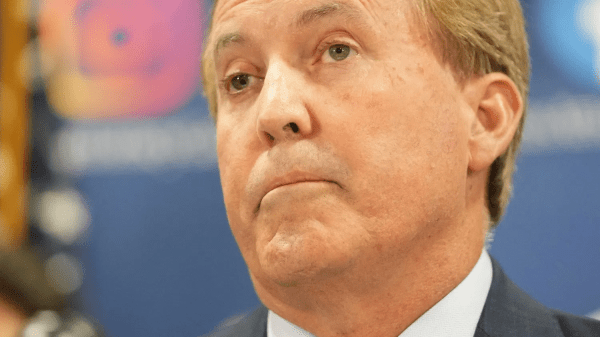
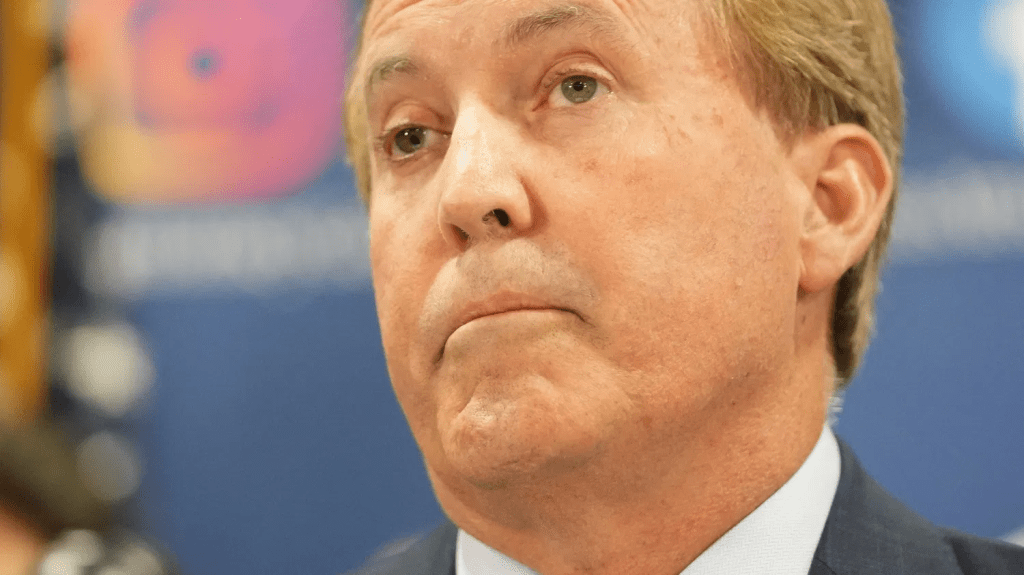
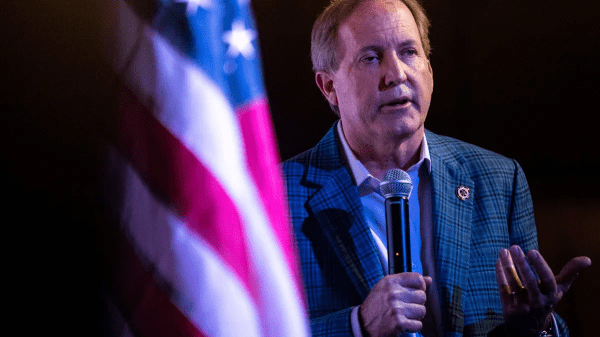
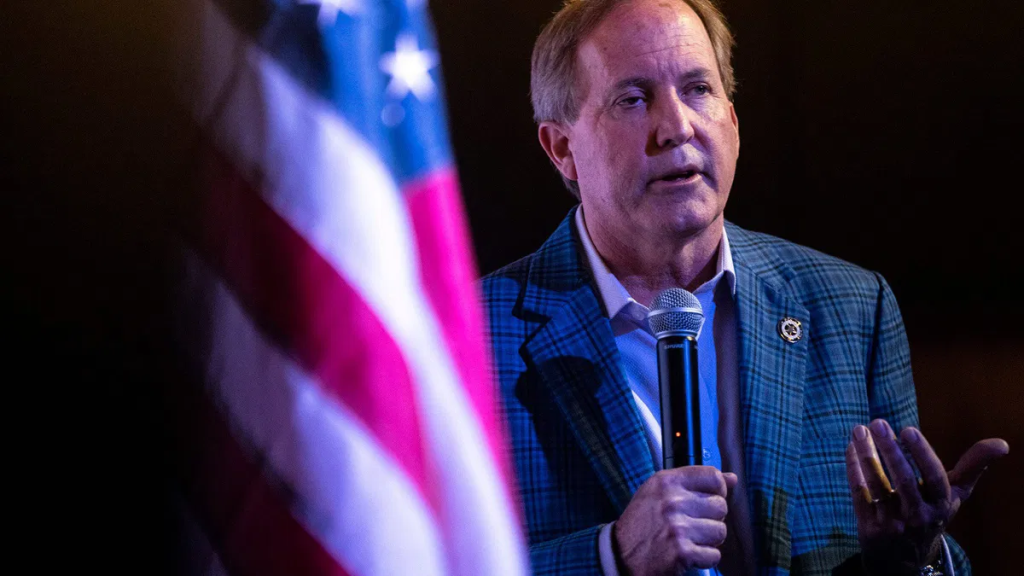
Texas’ virulently anti-trans attorney general, Ken Paxton (R), has launched a tip line that allows people to report on suspected trans people they believe are violating the state’s new bathroom ban.

In a statement announcing the tip line, Paxton said the Texas Women’s Privacy Act – which requires people in public buildings to use bathrooms based on sex assigned at birth – “was passed to ensure that women and girls in Texas are protected from mentally ill men wanting to violate their basic right to privacy.”

“It’s absolute insanity that action like this is even needed,” he claimed, “but unfortunately, in the day and age of radical leftism, it is.”

In reality, research has shown no evidence that allowing trans women access to single-sex spaces like bathrooms poses a safety risk to cisgender women.

In fact, forcing trans people to use facilities that do not align with their gender identity can result in “high rates of harassment and violence against transgender people as well as cisgender people, particularly women who do not conform to traditional ideas of femininity,” according to the Movement Advancement Project. A 2021 study from UCLA’s Williams Institute found that trans people are four times more likely than cis people to be victims of violent crime.

Nevertheless, the enactment of the legislation marks the culmination of a 10-year effort by Texas Republicans. The law does not allow an individual to be punished or fined by the state; rather, it fines the institution that allowed the infraction $25,000, plus an additional $125,000 per day for additional violations.

The law also requires the attorney general’s office to investigate complaints, but first, complaints must be filed with the accused agency. “Together, we will uproot and bring justice to any state agency or political subdivision that opens the door for men to violate women’s privacy, dignity, and safety,” Paxton said.

Paxton’s tip line requires folks to submit the original complaint that was filed with the accused agency in addition to filling out the online form and providing “evidence” that a trans person used the restroom. Perhaps most concerning, it also includes an option to submit up to five photos, even though taking pictures in restrooms is illegal.

Brian Klosterboer, senior staff attorney for the American Civil Liberties Union of Texas, said the tip line “wrongly encourages Texans to violate each other’s privacy in bathrooms.”

“The Attorney General has tried for years to vilify and dehumanize transgender Texans,” Klosterboer said, “but he can’t strip away every person’s right to privacy and right to live our lives free from gender stereotyping.”

Critics of the law have worried that it will spark violent over-policing by the institutions at risk of these massive fines. This policing will affect both trans and cis people who don’t fit strict gender norms.

The law has already been used in ways that lawmakers may not have intended. Students at the University of Texas San Antonio (UTSA), for example, are being forced out of their current dorm rooms and made to relocate because of the ban.

At UTSA, mixed-gender dorms include pairs of rooms separated by a shared bathroom; often, those rooms are occupied by people of different genders. Any students sharing a bathroom between their rooms with someone of a different sex assigned at birth are being forcibly rehoused to comply with the new law.

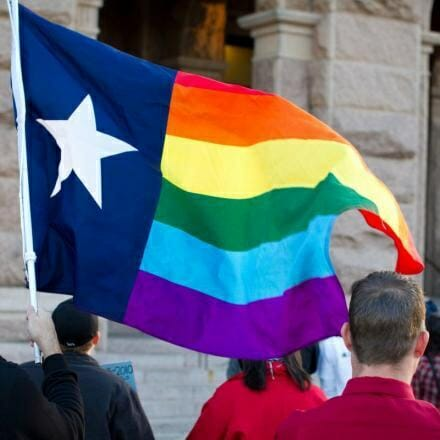
On December 6, transgender protestors with a group called the 6W Project visited the Texas Capitol and attempted to use the restrooms that aligned with their gender identities to make a point about the lack of enforcement mechanisms in the law.

At first, they easily entered the bathrooms of their choice, then proceeded to give speeches in the Capitol Rotunda, The Texas Tribune reported. But when they attempted to use the restrooms a second time, officers stopped them and asked to see their IDs.

Officers claimed in a statement that the ID requests were voluntary, though those who did not show their IDs were barred from entering the bathroom. The officers did allow two trans women with female markers on their IDs to enter the women’s restrooms. Officers also reportedly only guarded the women’s restroom and not the men’s.

“I think that the Texas government just established that they have no consistent enforceable standards for this law,” protester Matilda Miller told the Texas Tribune.

“What we did was not radical, it was not profound,” added 6W Project co-founder Ry Vazquez. “People use the restroom every day in a public setting, and for it to become what it is now, where it is now an active threat to someone who is not prepared, is utterly abysmal.”

Blog at WordPress.com.

Up ↑