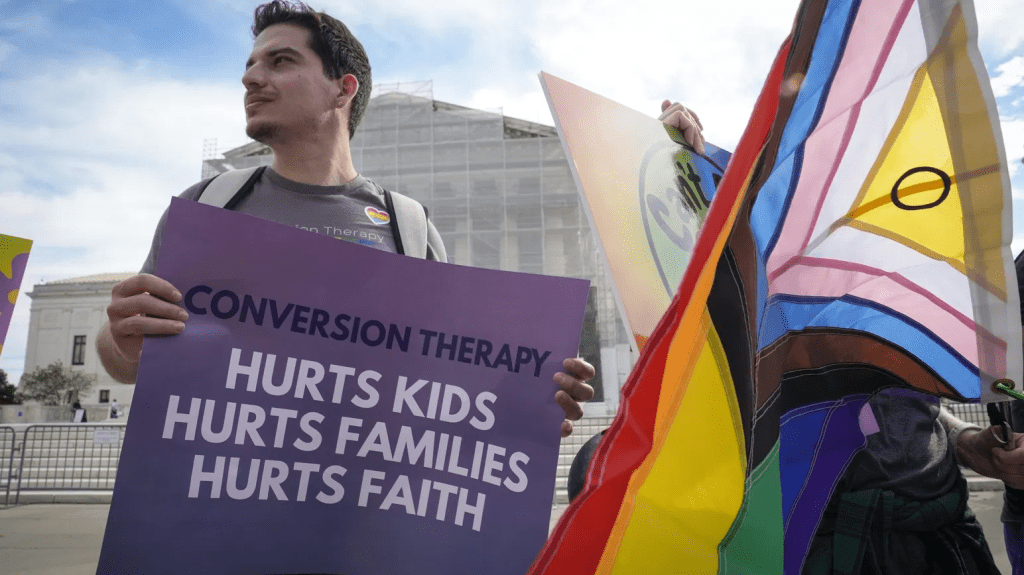
A Texas A&M committee agreed that the university was wrong to fire a professor earlier this year after a controversy over a classroom video that showed a student objecting to a children’s literature lesson about gender identity.
The internal committee ruled that the university didn’t follow proper procedures and didn’t prove there was good cause to fire Melissa McCoul, who was a senior lecturer in the English department with over a decade of teaching experience. Republican lawmakers, including Gov. Greg Abbott, had called for her termination after seeing the video.
The committee unanimously voted earlier this week that “the summary dismissal of Dr. McCoul was not justified.”
The university said in a statement that interim President Tommy Williams has received the committee’s nonbinding recommendation and will make a decision in the coming days or weeks after reviewing it.
McCoul’s lawyer, Amanda Reichek, said this dispute seems destined to wind up in court because the university appears to plan to continue fighting and the interim president is facing the same political pressure.
“Dr. McCoul asserts that the flimsy reasons proffered by A&M for her termination are a pretext for the University’s true motivation: capitulation to Governor Abbott’s demands,” Reichek said in a statement.
The video showing a student questioning whether the class discussion was legal under President Trump’s executive order on gender roiled the campus and led to sharp criticism of university president Mark Welsh, who later resigned, but he didn’t offer a reason and never mentioned the video in his resignation announcement.
The opening of the video posted by state Rep. Brian Harrison showed a slide titled “Gender Unicorn” that highlighted different gender identities and expressions.
Students in the class told the Texas Tribune that they were discussing a book called “Jude Saves the World” about a middle schooler who is coming out as nonbinary. That was just one of several books included in the course that highlights LGBTQ+ issues.
After a brief back-and-forth discussion about the legality of teaching those lessons, McCoul asked the student to leave the class. Harrison posted other recordings of the student’s meeting with Welsh that show the university president defending McCoul’s teaching.
The Tribune reported that McCoul had taught the same course at A&M at least 12 times since 2018. University officials decided to end this particular summer class early after the confrontation, but McCoul returned to teach in the fall until after the videos were published online.
Welsh had said when McCoul was fired that he learned she had continued teaching content in a children’s literature course “that did not align with any reasonable expectation of standard curriculum for the course.” He also said that the course content was not matching its catalog descriptions. But her lawyer disputed that, and said McCoul was never instructed to change her course content in any way, shape or form.
Earlier this month, the Texas A&M Regents decided that professors now need to receive approval from the school president to discuss some race and gender topics.
The new policy states that no academic course “will advocate race or gender ideology, or topics related to sexual orientation or gender identity” unless approved in advance by a campus president.
Various universities and their presidents around the country, including Harvard and Columbia have come under scrutiny from conservative critics and President Donald Trump administration over diversity, equity and inclusion practices and their responses to campus protests.
Ethan Brignac, a transgender student at Wylie East High School, has been “Ethan” since seventh grade — to his friends, family and teachers. When he reached high school, his dad further validated his chosen name by requesting “Ethan” be used in school records, including in his email, class rosters and ID, which his teachers honored until this fall.
Three weeks after Brignac started his senior year, Wylie East administrators called him to the library and gave him a new ID. On it, in white capital letters, was a name he hadn’t been called in five years.
“In the first week of school, when I was kind of trying to convince my teachers to call me Ethan, I was like, ‘Hey, look, it’s still on my ID,’” said Brignac, who did not want The Texas Tribune to publish his birth name because it causes him discomfort. “Then one of my teachers this year said, ‘Okay, they’re gonna fix that soon.’”
Now, he said, some teachers seem to wedge his legal name into every interaction, outing him to peers and resurrecting the dread he felt before school records reflected his chosen name.
“It was definitely a big change having my deadname kind of sprawled everywhere,” Brignac said, referring to a derogatory practice of calling a trans person by their birth name. “It was like, wow, okay, that wasn’t just a social media post I saw, this is real life.”
A Wylie spokesperson said the move was “to ensure full compliance with state law, including Senate Bill 12.”
A sweeping piece of legislation that went into effect Sept. 1, SB 12 bars public school employees from socially transitioning a student, which it defines as helping to change a student’s sex assigned at birth by using a different name, pronoun or other practice that denies the birth sex. Dubbed the “Parents’ Bill of Rights,” the law allows guardians to report school-supported social transitioning to the school board, among other powers.
The law also prohibits K-12 faculty from referencing LGBTQ+ identities in class instruction and casual conversations, and it bans school-sanctioned clubs that center sexual orientation or gender identity.
Several transgender students at Texas schools that enforce birth names told the Tribune the new policies have transformed school from a place of support to one that rejects who they are. Considered a derogatory practice in the LGBTQ+ community, dead-naming undermines the wishes of trans people and in some cases, forcibly reveals their trans identity, which can cause or worsen mental health problems among these children, studies have found.
Some parents of trans Texas students say they are frustrated because the law appears to ignore their rights for those of other guardians. A few of these parents joined advocacy and teacher groups to file a lawsuit against SB 12 in August, seeking to pause districts from enforcing the law while the case proceeds.
Parents who support SB 12 say the law boosts their role in their children’s education. Many of them want to erase LGBTQ+ topics from K-12 schools, saying they prompt children to question their identities or that schools force progressive views onto their kids.
“We live in an insane world where a school board has to remind teachers that they cannot tell children, you know, suggest to kids they might be homosexual or they might be actually a girl if they’re a biological male,” said Jeffrey Keech, whose children go to Wylie schools. “It’s unbelievable to me that this even is an issue.”
The Tribune contacted two dozen districts across the state, including districts in the Austin, Houston and San Antonio areas, and spoke with a dozen teachers, parents and transgender students about how schools are implementing SB 12, finding that administrators are taking varied approaches. This is because the law leaves the Texas Education Agency and school districts to decide how to implement it, said Rachel Moran, a law professor at Texas A&M University who directs the education law program.
Some Texas school districts and boards, like Wylie, have adopted policies to ban teachers from aiding in social transitioning, but many have not yet — and are still allowing teachers to honor students’ preferred names and pronouns.
TEA would not respond to questions about how school districts are implementing SB 12, how many districts have complied with the law or deadlines for doing so.
Moran said schools might adopt hard-line policies to shield themselves from retribution.
“This is true with any broad mandate — some are going to be overcomplying,” she said. “It has a real chilling effect. They’re afraid to get anywhere close to a perceived line.”
Teachers told the Tribune the law leaves them anxious and confused because they are unsure when they can use nicknames or how they should respond to parents who request their children’s preferred names and pronouns be used. They lament that they won’t be able to support students who come out as queer. School district officials also worry how the policies will interfere with federal and district rules and daily affairs.
Now, Texas public school students sit in the crosshairs of debates over free speech, race, religion and gender and sexuality in school.
SB 12 is part of a slate of laws that increase oversight of K-12 schools, including new rules that mandate the Ten Commandments in classrooms and clear the way for book bans. In federal and state governments and now school board meetings, disagreements have escalated from “I don’t think that you have the right idea,” to “I don’t think you’re the right kind of person,” Moran said.
Once a place to hear diverse perspectives, she worries schools will leave children unable to tolerate different views.
“The stakes are not just whether I win or lose this particular culture war,” Moran said. “It’s whether I preserve a tradition that has been so formative of our democracy.”
School policies vary
In addition to the ban on social transitioning, SB 12 prohibits hiring, training, programs and activities centered on race, ethnicity, gender identity and sexual orientation — referenced in the law as diversity, equity and inclusion, or DEI, initiatives.
It also requires schools to tell parents their rights, such as allowing them access to school records and course content, and requiring that they give permission for their child to receive health care, hear lessons about sexuality and join clubs.
Among parts of the bill that confuse teachers and administrators is how to respond when parents ask that schools use their child’s preferred name and pronouns or what to call students who have already transitioned.
More than two months after the deadline to comply with SB 12, districts are implementing the bill differently.
Conner Carlow, a former registrar who now works as a classroom support specialist in the Leander school district, said faculty can continue to call students by their preferred name if that was done prior to SB 12 going into effect. However, faculty cannot use new names or new pronouns moving forward, and administrators must approve fresh changes on a case-by-case basis through a form parents submit. These updates are only allowed if they appear unrelated to social transitioning, he said.
The name change form is the only written directive Carlow has gotten regarding SB 12. Leander spokesperson Crestina Hardie would not say how the school district is handling name changes because the board has no policy about it. Hardie said the school district is waiting to enact new rules while it reviews the law and gets clarification from TEA and the district’s legal counsel.
“SB 12 deeply impacts personal and highly complex areas of school life, and the biggest challenge for districts statewide is the lack of clarity and consistency in how these laws intersect with existing Board policy, federal protections and day-to-day school operations,” Hardie said.
The Cypress-Fairbanks and Conroe school districts adopted policies that ban DEI practices and prohibit social transitioning or providing information about it.
Argyle and Academy school districts have posted parental rights resolutions, but nothing on social transitioning.
Deer Park linked SB 12 on its website, but it is unclear how the district will implement the law, including gender-affirming names and pronouns.
Wylie distributed a fact sheet advising employees to use the names and pronouns in school records and barring them from discussing race, color, ethnicity, gender identity and sexual orientation.
Although officials disagreed with parts of the law, Houston-based DRAW Academy rolled out the new rules. The 98% Hispanic charter district issued parental notices and consent forms, banned DEI and limited instruction about sexual orientation and gender identity, according to superintendent and CEO Patricia Beistegui.
“DRAW Academy stands for Diversity, Roots, and Wings, founded under the core belief that diversity and inclusivity is a strength in our democracy,” Beistegui said in an email. She said SB 12 is designed to make positive changes but actually revokes protections.
SB 12 and the way schools are implementing it forces teachers to blindly try to follow the law, said Charlotte Wilson, a Garland ISD special education teacher.
“It’s not clear to teachers what we can say or even do,” Wilson said, referencing instruction about race and LGBT topics. “Teachers are afraid because we don’t want to lose our certifications.”
Wilson wants a say in her children’s learning, but she thinks the law might lead teachers to skip lessons that touch on prohibited themes, undermining students’ quality of education.
“We already highlight different cultural historical events throughout the year, like MLK Day, Hispanic Heritage Month, women’s history,” Wilson said. “If we approach Pride Month the same way, as part of America’s inclusion, and communicate about what’s being taught, that shouldn’t violate anyone’s rights.”
Carlow said Leander’s bar on LGBTQ+ topics makes it hard to support his students. He remembers grappling with his sexuality as a middle schooler and how hard that was.
“I wasn’t telling my parents what was going on, so I imagine these kids aren’t either,” Carlow said. “The fact they’re willing to tell us before even the parents is a big deal, and now the fact that we have to just not accept them, I mean, it’s awful.”
“Called something I’m not”
The varied approaches to SB 12 means transgender students across Texas are experiencing different levels of alienation.
Pride flags fly and teachers use gender-affirming pronouns at Alief Early College High School, said Marshall Romero, a transgender third-year. The only change he noticed was a permission slip to join the speech and debate club.
An Alief spokesperson said the district also sent parents an opt-in and opt-out form for school health services.
Romero said the school remains largely supportive of LGTBQ+ students.
“I never had to worry about the teacher or any instructor telling me, like, ‘Hey, I can’t call you that, or I’m not going to call you that,’” Romero said. “Being able to be called by a name that reflects who I am, being called by certain pronouns, just really gives me a quality of life that I feel like I can hold on and is worth living.”
Cassie Hilborn, a Woodlands High School junior, yearns to be called her gender-affirming name at school. One of Hilborn’s earliest memories is looking in the mirror and wishing she was a girl. During the pandemic, she watched a YouTube video explaining what it meant to be transgender and finally understood why she felt misaligned with her body.
But the past year’s onslaught of transgender-focused federal and state policies stripped her confidence and dashed her plan to wear feminine clothes and ask her teachers to use her chosen name.
“It feels like every day I look at the news and then the headline just reads, ‘Sorry, more things you’ve lost,’” Hilborn said.
The Conroe school board, which governs Woodlands High School, was among the first in Texas to bar teachers from using gender-affirming names and pronouns.
At the school Dungeons & Dragons club, Hilborn’s peers and faculty adviser call her “Cassie,” but everyone else uses the legal name on her ID, which she hides under blue masking tape. She wants her classmates and teachers to know she’s transgender, but laws like SB 12 have discouraged her from coming out.
“Now, even teachers that might have respected my identity have been told that they unequivocally are not allowed to do so,” Hilborn said.
Once school records reflected Brignac’s preferred name, his grades climbed. He became president of the National Art Honor Society and founded an art mentorship program. He raised his hand so often that one teacher joked about it.
His stepmom Shannon Keene worries that being misgendered at school will thrust him back into isolation, like she saw before he entered high school.
This year’s reversal “made him feel rejected as a human being,” she said.
Having socially transitioned in seventh grade when he cut his hair and asked to go by Ethan, Brignac’s peers have been confused to hear his feminine name now used.
He’s reminded every day that his state and school deny his identity. “It’s rough being called something I’m not,” said Brignac, who now avoids talking in class.
Queer young people have disproportionate rates of depression and mental illness. But a study of 129 transgender and gender nonconforming students found that having their identities affirmed decreases symptoms of severe depression. Being called preferred names and pronouns is correlated with a drop in suicidal thoughts by 29% and suicidal behavior by 56%, according to the study published in the Journal of Adolescent Health in 2018.
Refusing to use preferred names tells transgender and nonbinary students they’re unworthy of respect, said Johnathan Gooch of Equality Texas, a nonprofit that advocates for LGBTQ equality.
“It’s as if someone else picked a nickname for you that you didn’t want, a malicious nickname, that they repeatedly use despite the fact they know what you prefer to be called,” Gooch said.
Parental rights for all?
Some parents who support expelling discussions about queer identities from schools say SB 12 protects children from viewpoints that might spur them to question who they are.
Around three years ago, after Kevin Brooks’ then-middle school daughter returned from school in the Wylie district and said her friend used nonbinary pronouns, he responded: “Sweetheart, don’t buy into that foolishness.”
The army veteran thinks children are too young to learn about LGBTQ+ identities and that it confuses them to hear that gender and sexuality are spectrums, like some schools have taught.
“Why are you teaching these kids that are as young as 5 and 6 years old all this stuff that they don’t need to deal with?” Brooks said. “I told my son the other day, I wish you’d stay innocent till you’re 35 years old, because the stuff that’s going on in the world right now absolutely just, it not only mortifies me, it terrifies me. It just really pisses me off.”
Brooks hasn’t heard of teachers at Wylie discussing LGBTQ+ identities, but he’s terrified to imagine them pledging allegiance to a rainbow flag, which happened in a California classroom in 2021.
In May, Don Zimmerman participated in a protest against a transgender teacher at Cedar Ridge High School in the Round Rock district, where he lives and previously ran for the school board.
Students and at least one faculty member stood across the street with posters saying, “Y’all means all.” To Zimmerman, the faculty member’s presence is proof of schools “coaching children and encouraging them to embrace and publicly protest in favor of this transgender extremism.”
“The school is so hell bent on this agenda of promoting transgenderism and the LGBT lifestyle, …and the parents feel so powerless at stopping the public schools agenda that they go to the Legislature and get these laws passed,” said Zimmerman, who sent his third grader to private school to shield him from LGBTQ+-themed lessons.
Parents of transgender students say new policies complying with the so-called “parents’ bill of rights” are a slap in their face. Keene, Brignac’s stepmom, said policies against using gender-affirming names and pronouns pander to conservative views and hurt gender-queer children, who are 3.3% of youths ages 13-17 in the U.S.
Brignac’s biological mom told the Tribune she is now seeking to change her son’s legal name so he hears Ethan when he graduates.
“I fail to see the correlation between a parent asking that their child be called by their preferred name and pronouns and providing direct instruction on gender identity,” Keene said. “It’s about control, not about rights. And it’s also just blatant disregard for a person’s sense of self. And to do that to kids is unconscionable.”
A Dutch court has upheld the decision to reject an American trans woman’s application for asylum after the 28-year-old challenged the decision earlier this year.
Veronica Clifford-Carlos, a visual artist from California, applied for asylum in the Netherlands in the wake of the president’s continued targeting of trans rights and villainization of the trans community.
With the support of Dutch advocacy group LGBT Asylum Support – which is working with about 20 other trans Americans on asylum claims as well – Clifford-Carlos said the anti-trans administration has made her feel unsafe remaining in the United States.
The court, however, disagreed that Clifford-Carlos personally faces a legitimate risk of persecution, Reuters reported. The judge also said she did not prove she systemically lacks protection or access to essential services.
The court sent her case back to immigration authorities to review again due to a procedural error the first time around.
A statement from LGBT Asylum Support in August explained that the Netherlands’ Immigration and Naturalisation Service (IND) “generally states that discrimination by authorities and fellow citizens can be considered an act of persecution if it is so severe that victims can no longer function socially and societally” but that it “maintains that there are no grounds for exceptional treatment of transgender and queer refugees from the U.S.”
Clifford-Carlos was the first trans American to legally challenge an asylum rejection in the Netherlands. In September, she toldReuters how bad it had become in the States for her since the new administration took office.
“I have people screaming f**got at me in the street… I have people threatening my life, threatening to assault me, threatening to follow me home and kill my family.”
She spoke to The World in September from a Dutch refugee camp, where she explained, “It feels like the U.S. doesn’t see me as human. I am not seen as a woman in the eyes of the government, and because of my transition, I am technically not a man either.”
She said the thought of returning to the U.S. gives her “more dread than I have ever experienced in my entire life.”
The Netherlands has long been considered a refuge for LGBTQ+ acceptance. In 1981, it was the first country in the world to grant refugee status to someone due to their sexual orientation, and in 2001, it became the first country to grant marriage equality.
But Marlou Schrover, an economic and social history professor in the country, told The World that reality has not lived up to the reputation. She said it is extremely rare for someone to be given refugee status based solely on LGBTQ+ identity, and that one must not only prove they have experienced physical violence, but that the police refused to help when it was reported.
Schrover explained that Dutch immigration authorities still view the United States as mostly safe for trans people because there are many other states they can move to if they don’t feel safe in their own.
The administration’s anti-trans policies may also not be enough, she said. “Exclusion from the military or exclusion from sports may be unpleasant and horrible, but it’s not seen as persecution in the eyes of Dutch immigration officials.”
She added that granting asylum to trans people from the U.S. is a risky decision because it makes a big statement about the U.S. and could affect relations between the two countries.
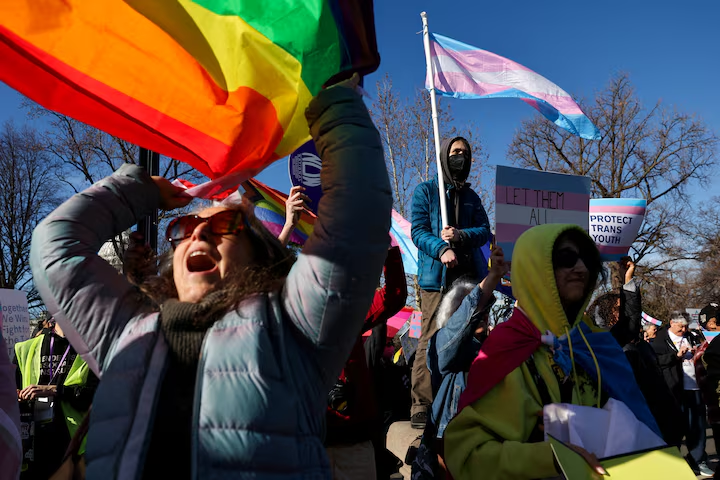
Arlington Mayor Jim Ross stood under the June sun and delivered an impassioned speech in front of a crowd awash in rainbows and glitter.
“You know Martin Luther King taught us way back in the ‘60s, that there’s only one thing strong enough to overcome hate,” the North Texas mayor said.
“Love! Love!” the crowd gathered at the city’s annual Pride celebration shouted, answering his call.
His faith, he continued, instructed him to love his neighbor regardless of their differences.
“So I wanted to come here and say thank you for loving us,” he said. “And I love you!”
Five months later, Ross faced a similar crowd at City Hall on Oct. 14. There was no love in the room.
The Dallas-area suburb was — in an effort to comply with new presidential executive orders — considering eliminating the city’s protections for LGBTQ+ people that prohibit employers and any business providing accommodation from discriminating against them.
More than $60 million in federal funds for parks, roads and public safety were at stake, city leaders said.
“It’s a horrible balancing attempt,” Ross said in a recent interview with The Texas Tribune, referring to protecting the city’s budget and its residents.
Other Texas cities, including Dallas and Fort Worth, have revised city policies and ended programs that comply with Trump’s executive orders that end diversity and inclusion efforts. Arlington is believed to be the first city to consider ending explicit protections for LGBTQ+ residents.
The City Council tabled its vote and is expected to revisit the issue Monday night. The impending vote is the result of a pressure campaign waged by conservative activists, state Republican lawmakers and the White House to roll back protections for LGBTQ+ people they say are unfair and harm women and children.
LGBTQ+ advocates, meanwhile, argue that such revisions push residents further away from public life. And these decisions erode the recognition and acceptance this community worked for decades to secure.
Texas — like many states — has a long history of criminalizing certain acts by LGBTQ+ people. While the U.S. Supreme Court has overturned sodomy laws and legalized same-sex marriage, Texas state lawmakers and Gov. Greg Abbott have since 2023 sought to undo those victories by passing a suite of laws that put new limits on how LGBTQ+ people live their lives and express their identities in public.
Meanwhile, at the federal level, President Donald Trump has, since returning to office in January, instructed government agencies to remove words and phrases associated with diversity, race and transgender people — exerting the full strength of the federal government across the U.S. to achieve its agenda.
It’s those executive orders that triggered the Arlington City Council to review its policies, which LGBTQ+ advocates fought to put in place to provide protections that don’t exist at the state and federal levels.
Brad Pritchett, interim CEO of Equality Texas, one of the state’s oldest advocacy groups, said the policies at the city level are one of this community’s few available safeguard.
“It has fallen on local municipalities to find a way to protect the folks that live in their communities,” he said. “And I think when we see these types of non-discrimination laws passed at the local level, what that’s really doing is sending a message to the residents of these cities that who you are should not impact whether or not you have a job, a roof over your head, or can access basic services.”
Many of the recent efforts to curtail the LGBTQ+ community have been largely targeted toward transgender people. However, Pritchett said the Arlington debate shows more is on the line for all LGBTQ+ people.
“When they shift their gaze to another group of people that they don’t like,” he said, “they’ve proven that they can weaponize government to harm anyone they want.”
Conservative leaders say they aim to reset an imbalance pushed by former Democratic presidential administrations and to protect women. Passing these laws and executive orders, conservatives argue, is a necessary step toward acknowledging the differences between the two genders.
“I think what’s been missing a lot of times from the opposition is the recognition of the rights of women and the vulnerability that women have in these private spaces,” said Mary Elizabeth Castle, director of government relations at Texas Values, a statewide nonprofit that advocates to end abortion, expand religious liberties, and other conservative causes. “It’s very important to have that in law because the dignity of the two sexes is not recognized. A lot of rights and modesty that belong to women are diminished.”
“I promised to obey the law”
Ross, the Arlington mayor, first learned the city might have to revisit its anti-discrimination policies when the city’s lawyer told him the municipality lost out on a $50,000 federal grant because a certain policy used the word “inclusive.”
Ignoring Trump’s orders could come at too great an economic loss for the city. And his job is to obey the law, he said.
“I took an oath, and I promised to obey the law,” Ross said. “I didn’t say I’ll follow the law unless I disagree with it, so I’m torn. I don’t want to do things that are harmful to any part of our community or that paint the perception that we don’t love every single person here.”
To be sure, executive orders are not laws. They serve as marching orders for agencies across state and local governments, said Cathryn Oakley, senior director of legal policy at the Human Rights Campaign, a nationwide LGBTQ+ advocacy group.
The manner in which the Trump administration has issued its orders is meant to intimidate and bully, Oakley said.
“It’s really frustrating if you’re a person who cares about the rule of law,” Oakley said. “It is not clear how folks are supposed to implement these things, and it sets up this culture of fear and intimidation because there’s no safe harbor. Either the president will come after you, or the governor will come after you.”
Presidents of both political parties have used executive orders increasingly to drive policy outcomes. For example, President Joe Biden used executive orders to push a climate-friendly agenda and diversity efforts in the wake of the 2020 Black Lives Matter movement.
Sherry Sylvester, a senior fellow at the conservative Texas Public Policy Foundation, said rolling back Biden-era DEI efforts was a return to the status quo — and fundamentally American.
“When you remove Diversity, Equity and Inclusion policies from agencies, universities and public schools, all you’re saying is all decisions must be made on merit,” Sylvester said. “When you interview people for a job, you’ve hired a person who is most qualified for the job. You get no points if you’re African American, no points if you’re female, no points if you have a gender identity based on your sexual preference.”
Executive orders are meant to spur local governments to act quickly and comply to win much-needed capital to keep their cities operating. Conservatives supporting Trump’s efforts say the tactic began with former President Barack Obama.
In 2011, Obama issued a directive intended to crack down on sexual violence in public schools and universities. In 2016, the U.S. Department of Education updated those rules and said that schools receiving federal funding had to respect a transgender student’s gender identity, which Castle said sparked a movement to oppose such acknowledgements, including in Texas.
In 2017, the Texas Legislature attempted to pass a bill restricting transgender people’s access to restrooms. It died in the legislative process. With Trump back in office this year, the movement to regulate transgender people’s actions in public gained momentum and lawmakers passed a bill restricting the restrooms transgender people can use in government buildings and schools. Castle insisted that such a bill would promote safety in restrooms.
“No one is being denied going to the restroom,” Castle said. “They just have to go to the restroom based on their biological gender.”
The result of Trump’s orders naming transgender people undermines decades of work by the LGBTQ+, the scientific and medical community to participate in public life, said Elana Redfield, federal policy director for UCLA’s School of Law. And they undermine years of scientific research that helped governments and communities understand transgender people’s place in society.
“We can’t function in society without bathrooms,” Redfield said. “It’s very difficult to have a job, take public transportation, travel long distances, go shopping, or do anything without access to bathrooms. These kinds of laws really do have the potential to deeply, deeply exclude transgender people from all aspects of society.”
A renewed movement for queer equity
LGBTQ+ Texans are familiar with laws regulating their right to exist publicly and have fought for an equal standing with everyone else for just as long. The modern movement can be traced back to the 1960s, said Wesley Phelps, a historian at the University of North Texas whose focus is the LGBTQ+ community in the south.
At the time, Texas advocates fought sodomy laws banning sex for gay men and lesbian women.
“There were activists all over Texas who understood that as long as that sodomy law was on the books, as long as it was illegal to engage in sex with someone of the same sex, queer people would always wear that stigma of criminality,” Phelps said. “You could be denied employment, you could be denied housing, you could be denied food stamp assistance, because if you were gay, you were an admitted criminal.”
By the 1970s, advocacy groups had been established in major cities, including Dallas and Houston. And in these cities, activists formed political advocacy groups. The sentiment eventually spread farther, reaching Austin, San Antonio and El Paso. Part of that movement included adding local protections to city charters that prohibited housing and employment discrimination that don’t exist at the state or federal level.
And in 2003, the Texas Supreme Court ruled the sodomy law unconstitutional.
The push to eliminate protections for the broader LGBTQ+ community will trigger a backlash, Phelps said.
“I think things like that have reignited a movement for queer equality today,” Phelps said. “It’s not just that we’re entering a period where it’s going to be difficult to win victories, but the ones already achieved are under threat.”
Many Texans told The Texas Tribune that they plan to stay put, regardless of the policies seeking to regulate their everyday lives. They are turning to optimism and each other, reminding themselves of their right to live openly, they said.
In Houston, Daron Yanez Perez hosts support groups for transgender men. Trans Men Empowerment, which he founded in 2023, has more than 200 members and hosts meetings in person and online. As part of the programming, Perez invites policy and mental health experts who help the members understand how the policies affect them.
Many of Perez’s members are reluctant to use public restrooms, he said, out of fear for their safety. Perez said he would not use the women’s restroom because he does not think women would feel comfortable sharing a restroom with him.
“They’re using restrooms to go after us because they don’t like us, but we’re not going anywhere, we’ve always been here,” Perez said.
In Dallas, Javier Enriquez helps LGBTQ+ people who struggle with loneliness. Enriquez, who is president of the Dallas Social Queer Association, hosts about a dozen events a month. Up to 40 attended each event, which include gay trivia and activities tailored for disabled, elderly people, Hispanic and Asian Pacific Islanders who identify as LGBTQ+.
Enriquez said directives that spell out limits for transgender people and rainbow crosswalks are a distraction from real issues like potholes and unmet trash service. And LGBTQ+ Texans as a community are used to enact that distraction, he said. The resources spent on removing the rainbow colors from the crosswalks, he said, could be put to better use on the city’s infrastructure.
Still, he acknowledged that the orders have instilled fear.
“There are people, especially our transgender siblings, who are worried about being able to call Dallas their home with everything going on, and not all of them have the privilege of the resources to be able to move out,” he said. “And to some of them, this is home, where they built their lives and families… and despite what happens in this world, we are here and we aren’t going anywhere.”
Are you thinking about leaving the United States for safety, stability, or a better quality of life? In this powerful conversation, we sit down with Dan Brotman, an American expat based in Montreal who specializes in investment migration—including Golden Visas, Digital Nomad Visas, and residency-by-investment options tailored to the LGBTQ+ community.
With an academic background in immigration policy, multiple citizenships, and years of frontline experience helping people relocate, Dan brings unmatched insight into how Americans can legally, safely, and strategically build a future outside the U.S. Follow Dan on Instagram: @danbrotman linktr.ee/danbrotman
🏡 IN THIS VIDEO, WE COVER:
🌍 Why Americans—Especially LGBTQ+ People—Are Exploring Life Abroad
We discuss political extremism, threats to civil rights, financial instability, and what it means to live somewhere your rights are not up for debate.
💶 Golden Visas & Migration Pathways
Dan explains the residency-by-investment programs opening doors across Europe, Latin America, and beyond—and why securing a visa before your “red line” is crossed is essential.
❤️🩹 Healthcare Without Fear
Real stories from Spain, Uruguay, and Canada:
€80/month private healthcare in Spain
A 5-day ICU stay for $19
An emergency room visit in Canada that cost $0
A U.S. insurance premium high enough to rent an apartment in Valencia
🧠 Financial Relief & Peace of Mind
We explore how predictable, low-cost healthcare abroad reduces anxiety for families who worry about a single medical emergency derailing their finances.
🎓 Education & Opportunity
Why families are sending their children to Europe—especially the Netherlands—for nearly free, world-class university education.
🏳️🌈 Rights, Safety & Community
Dan discusses LGBTQ+ rights, abortion access, universal healthcare, and gun laws in Canada—issues considered settled and not weaponized politically.
🚨 Red Lines & Safety Planning
We explore how LGBTQ+ people can assess danger, decide their personal boundaries, and obtain the documentation needed to leave quickly if the situation in the U.S. deteriorates.
This is an essential conversation for anyone considering relocation for safety, rights, opportunity, or long-term stability.
🔔 Subscribe for more guides on LGBTQ+ migration, Golden Visa pathways, and global relocation options.
Explore how to choose countries where you can live authentically and safely. We’ll discuss rights, culture, and communities for LGBTQ+ expats worldwide. You’ll finish with both encouragement and practical strategies for finding your ideal destination.
The State Department quietly updated its website this week to signal that the Trump administration may move to invalidate passports held by transgender Americans, following a Supreme Court emergency ruling that overturned earlier protections on gender-marker updates. The change was first spotted by journalist Aleksandra, who writes as Transitics on Substack. Until recently, the website assured transgender passport holders that their documents would “remain valid until [their] expiration date.” As of Thursday morning, that language had been replaced with: “A passport is valid for travel until its date of expiration, until you replace it, or until we invalidate it under federal regulations.” The new phrasing has sparked alarm across the transgender community, with one government source telling Erin in the Morning that there is growing interest within the administration in exploring some level of revocations.
The change comes one week after the Supreme Court issued an emergency ruling allowing the Trump administration’s passport restrictions on transgender people to take effect. In that decision, the Court concluded that the administration is likely to prevail in ongoing litigation, and rejected the argument that the policy was driven by “a bare desire to harm a politically unpopular group.” This conclusion stands in stark contrast to the administration’s own executive orders enabling the passport crackdown, which describe transgender people as inherently “wrong,”“dishonorable,” and “socially coercive.”
“The Court ignores these critical limits on its equitable discretion today. The Government seeks to enforce a questionably legal new policy immediately, but it offers no evidence that it will suffer any harm if it is temporarily enjoined from doing so, while the plaintiffs will be subject to imminent, concrete injury if the policy goes into effect,” responded Justice Jackson in her dissent.
Previously, there were signs that a Trump administration victory in court could trigger efforts to invalidate transgender people’s passports. As first reported by Erin in the Morning, a single paragraph in a government filing stated that “if the government prevails in this case and the Department proceeds to revoke and replace passports issued pursuant to the preliminary injunction, the Department will incur additional administrative costs.” At the time, some observers dismissed this as routine legal positioning. But the State Department’s latest website change suggests the administration may, in fact, be preparing to take exactly that step.
One government source familiar with internal discussions said such conversations are indeed underway, though any revocation effort would be difficult to carry out and would almost certainly ensnare some cisgender people by mistake. According to the source, the most likely targets would be passport holders with X markers and those who updated their documents through the affidavit process—a temporary pathway created under lower-court rulings that allowed transgender people to obtain corrected passports if they signed a sworn statement attesting to their gender identity. At the time, EITM reported that the State Department was collecting data on every person who signed the affidavit in case a ruling like this arrived, enabling the government to potentially invalidate those passports. Now, that appears to be one of the avenues the administration is actively considering.
For those who updated their passports before this administration, any attempt to revoke those documents would be far more complicated. The process would be costly, the relevant information is not easily accessible, and such actions would almost certainly run into additional legal hurdles and face separate court challenges. And for anyone whose passport the government does seek to change, the law guarantees an appeal with a hearing on request—an extraordinarily expensive and resource-intensive process for an agency that is not equipped to handle a surge of such cases.
When asked what the process would look like for transgender people traveling overseas if their passports were revoked, the source told EITM that those individuals would likely be contacted and instructed to report to the nearest U.S. embassy or consulate to replace their passport or receive special guidance. Such a requirement could severely disrupt international travel for transgender people. For now, however, any move in this direction appears to be weeks or even months away—if the administration chooses to pursue it at all.
Meanwhile, the case will continue in the lower courts, a process that could drag on for years. And while those courts could, in theory, rule in favor of transgender plaintiffs, recent Supreme Court actions suggest the justices are prepared to side with the administration on virtually any policy targeting trans people. The Court is already set to hear a case in January that will determine whether transgender Americans receive equal protection under the law at all, and the memory of the Skrmetti decision—upholding bans on trans youth care—still hangs heavily over the legal landscape. In the meantime, transgender people in the United States are left to navigate shifting rules in nearly every aspect of daily life under an administration and a Republican Party intent on making that life as difficult as possible.
A Moscow court Friday found an LGBTQ travel agent who had killed himself in custody a year ago guilty of extremism, as Russia increasingly targets individuals it says undermine “traditional” values.
The posthumous ruling came a year after 48-year-old Andrei Kotov was found dead in his cell in a Moscow pre-trial detention centre.
Russia has heavily targeted the LGBTQ community under President Vladimir Putin, and Friday’s ruling against somebody who had died a year earlier is seen as a particularly symbolic example of how zealous the crackdown is.
Kotov, who ran a travel company called Men Travel, had said he was beaten by 15 men when he was arrested in November 2024.
The Moscow Golovinsky court found him guilty of taking part in “extremist activity” as well as using underage people for pornography, the independent Mediazona website reported from inside the court.
His lawyer had said in December 2024 that Kotov’s body was found in his cell and that investigators told her he died by suicide.
Rights groups have accused authorities of using the case as a show trial — not dropping it after his death to scare LGBTQ people.
In November 2024, Kotov described his arrest in court: “Fifteen people came to me at night, beat me, were punching me in the face.”
Putin has for years denounced anything that goes against what he calls “traditional family values” as un-Russian and influenced by the West.
In 2023, Russia’s Supreme Court banned what it called the “international social LGBT movement” as an “extremist organisation”.
Human Rights Watch has said that the ruling “opened the floodgates for arbitrary prosecutions of individuals who are LGBT or perceived to be, along with anyone who defends their rights or expresses solidarity with them”.
Russia has never been a hospitable environment for LGBTQ people, but has become far more dangerous since Moscow’s Ukraine offensive, which massively accelerated the country’s hardline conservative turn.
In 1980, Cuban police detained Fidel Armando Toboso-Alfonso without charge, encouraged co-workers to publicly shame him, and warned he faced four years in prison unless he fled the country. His “crime” was being gay. Having previously faced 60 days in a labor camp, Toboso-Alfonso chose exile. When he reached the United States, an immigration judge made a historic ruling: He granted Toboso-Alfonso refuge. That decision became a lifeline for countless LGBTQ people.
The United States was once considered a place where LGBTQ people could claim asylum. Today, under a harsher immigration system shaped by Trump-era judges, this image is slipping away.
In June, U.S. Citizenship and Immigration Services issued an alert reminding officers that marriages must be legally valid where celebrated to qualify for immigration benefits. For queer couples from countries that criminalize or refuse to recognize same-sex marriage, that’s an impossible standard. They must present a marriage certificate that, in their home country, they could be jailed or killed for attempting to obtain.
This is just one part of the Trump Administration’s broader rollback of protections for immigrants and LGBTQ people.
Under Presidents Barack Obama and Joe Biden, the United States resettled tens of thousands of refugees annually, including LGBTQ people fleeing persecution, arrest, torture, or death. Today, that number has been slashed to just 7,500—a fraction of its former scale and overwhelmingly skewed toward white applicants from South Africa.
The Trump Administration has also ordered federal agencies to remove recognition of transgender and nonbinary identities from official documents. Because the asylum process demands consistency across forms, nonbinary refugees now face an impossible choice: misrepresent themselves on paper or risk rejection for “inconsistency.”
These bureaucratic changes to passports, marriage certificates, and federal forms carry devastating consequences. By narrowing who counts as married or whose gender “exists” on paper, the White House has effectively barred countless queer individuals from asylum protections. Bureaucracy has become a new border wall, keeping the most vulnerable people out.
The United States does not jail or execute people for being LGBTQ. But the government is asking queer people to erase themselves to remain here—a quieter, procedural form of violence. A nation cannot call itself a refuge while demanding that those seeking safety deny who they are.
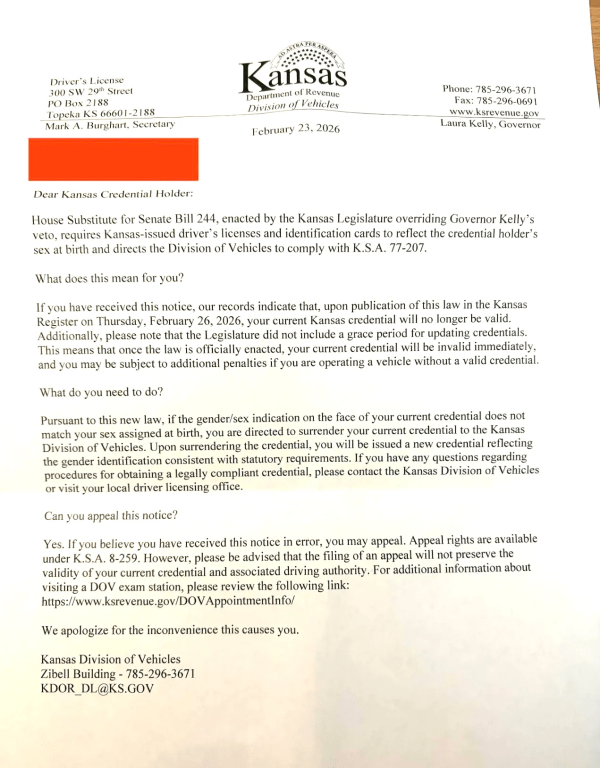
Last week, the Supreme Court allowed the Trump Administration to require that U.S. passports list only the sex assigned at birth. The decision halts lower-court efforts to block the policy, meaning the State Department may now refuse to process passports reflecting a person’s self-identified gender. The change may seem technical, but it signals something larger: When combined with other anti-LGBTQ measures, it threatens not only the rights of citizens, but also the safety of queer immigrants and refugees.
Meanwhile, some lawmakers are pushing to overturn Obergefell v. Hodges, the 2015 Supreme Court decision that recognized same-sex marriage as a constitutional right. The Court recently declined to hear one such challenge, but its mere consideration shows how precarious equality has become.
For queer asylum seekers already in the United States, the situation remains perilous. Claims based on sexual orientation or gender identity are often met with skepticism, as adjudicators demand “proof” of identity—an impossible expectation when visibility itself can be a death sentence. Instead of offering protection, the system pressures applicants to conform to stereotypes of what being “gay enough” looks like.
Worse still, immigration judges may now deny asylum applications without hearings, silencing stories that could save lives. Bureaucracy, once again, has become a weapon.
The next generation must do more than defend LGBTQ people—they must reclaim the promise of this country. A true refuge is defined not by paperwork or policy, but by the belief that every person deserves to live in truth and safety.
State Representative David Borrero (HB 347) and Senator Clay Yarborough (SB 426) filed the first anti-LGBTQ bill of Florida’s 2026 legislative session — the Pride Flag Ban. The legislation seeks to prohibit state and local government buildings from displaying any flag representing “race, gender, or sexual orientation,” including the Pride flag. The bill also attempts to strip cities and counties of the power to design or adopt their own municipal flags, while carving out protections for “historical” flags — including Confederate symbols. This proposal follows a summer of state action to remove LGBTQ visibility, when Governor Ron DeSantis ordered the removal of rainbow crosswalks and street murals in cities across Florida. Now being introduced for the fourth year, the legislation has been widely rejected three years in a row.
Statement from Joe Saunders, Senior Political Director, Equality Florida:
“This bill is a direct attack on LGBTQ visibility and a textbook example of government overreach and censorship. The Pride flag is a symbol of safety, inclusion, and community for millions of Floridians. After DeSantis spent the summer ripping up rainbow crosswalks and street murals for his own political agenda, legislative extremists are now attempting to finish the job by banning Pride flags in public facilities. These bills prevent local cities and counties from using flags to recognize their own communities or make them welcoming to residents and tourists. Floridians deserve leaders focused on solving real problems, not weaponizing government to erase LGBTQ people from public life. We’ve defeated this bill before, and we will defeat it again.”
You must be logged in to post a comment.